Sorae Port: A Seafood Market Visit with Boats, Railway History, and Wetlands
Ez2AC · Original · CC BY-SA 4.0 ·
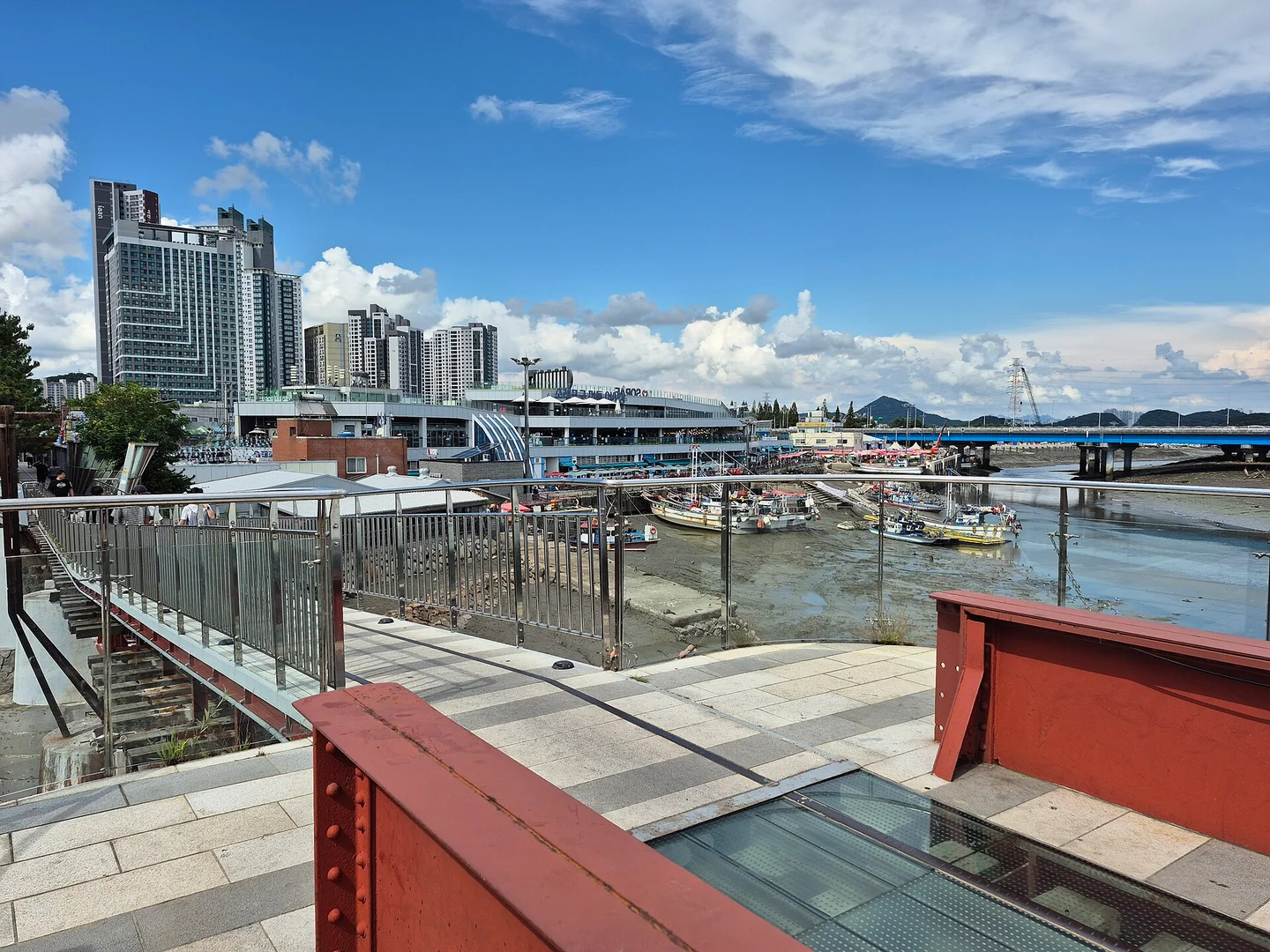
At Sorae Port, fishing boats can sit on exposed mud beneath a skyline of apartment towers. When the tide returns, the same harbor fills with water. Fish markets, an old railway bridge, and traces of the salt industry make this a particularly revealing corner of Incheon: a working coastal landscape surrounded by the modern city. Seafood is the obvious reason to come, but leave time to walk beside the harbor. A market browse, a meal, and a look from the old bridge make a manageable outing of roughly two to three hours. Add Sorae History Museum for context, or set aside a longer half-day if you want the wetlands as well. Soraepogu Station on the Suin-Bundang Line is the simplest arrival point. The market and harbor can be reached on foot, avoiding the search for parking on busy weekends. If you are meeting someone, choose a specific market entrance or restaurant: “Sorae Fish Market” can refer to several neighboring spaces.
How to Order a Seafood Meal at Sorae
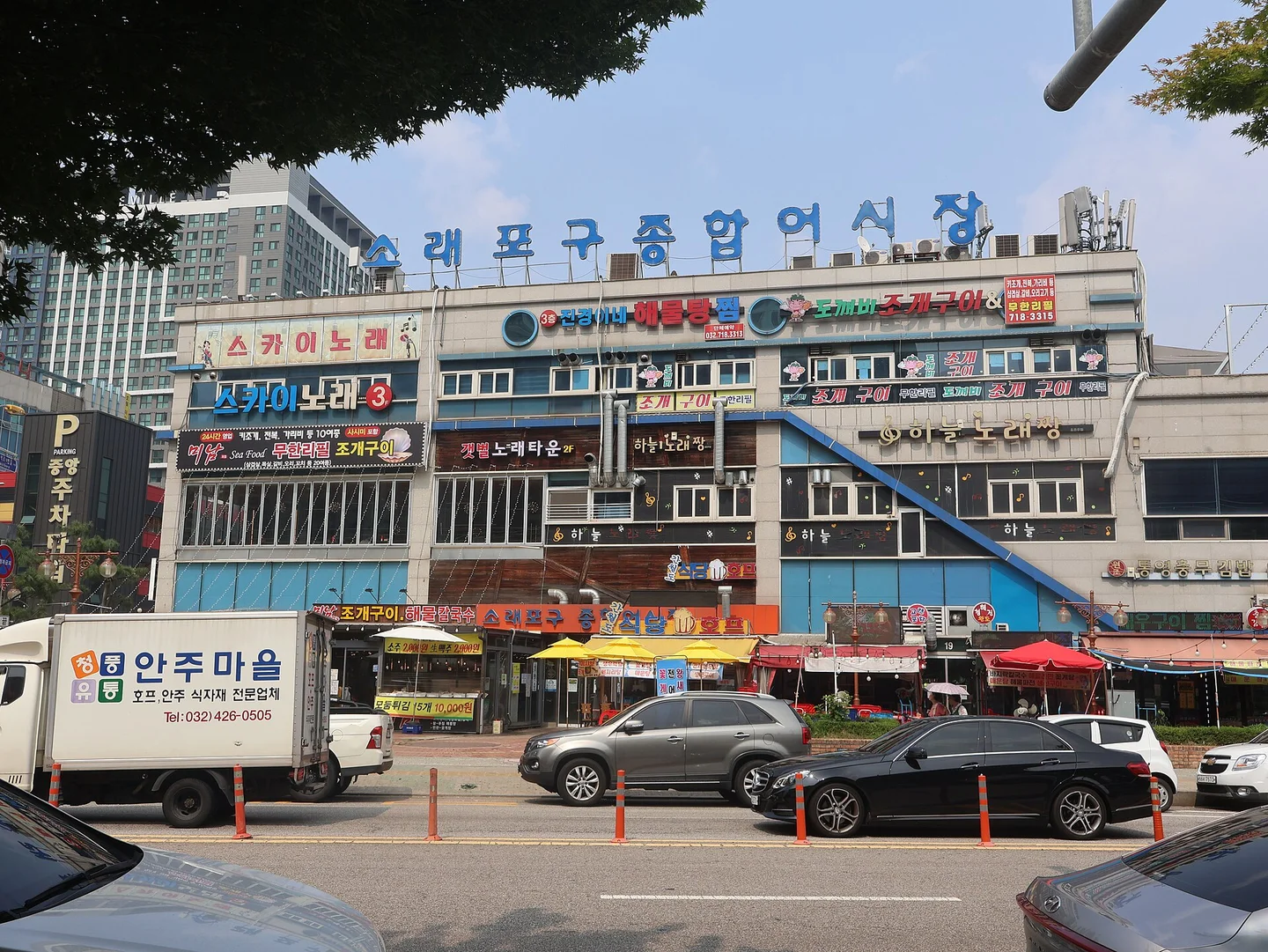
The traditional fish market and Soraepogu General Fish Market are distinct places, with more restaurants around them. A saved restaurant name is most useful when you also have its building and floor. Incheon's market guide distinguishes the market areas and describes the mix of seafood stalls and cooked-food businesses. Decide first whether you want to select seafood from a stall and have it prepared, or order a priced dish from a restaurant menu. The first option gives you more choice over the fish or shellfish, while the second is easier if you want a straightforward meal without several purchasing steps. When buying from a stall, establish the total before ordering. Ask whether the seafood price is per item or by weight, what weight is being used, and whether cleaning or cooking is included. For a sit-down meal, clarify any table-setting charge, steaming or slicing fee, and the cost of soup and drinks. Comparing two offers only works when the species, quantity, and included services are comparable. “What is the total for two people, including cooking and eating here?” is a useful question to translate or show the seller. Hoe is sliced raw fish; maeuntang is a spicy fish stew that may be offered with the meal. If raw seafood is not what you want, look for grilled fish, fried seafood, or kalguksu, a soup with knife-cut noodles. Seafood versions of the noodle soup commonly use shellfish, so the main ingredient is not the only thing to ask about if an allergy matters. Choose a restaurant around the preparation you want rather than assuming every stall offers the same service. Save take-home seafood purchases for the end. Tell the seller how long the journey will be and request suitable chilled packaging. That allows you to enjoy the harbor or park without carrying a perishable purchase through the rest of the afternoon.
Watch the Harbor Change with the Tide
이강철 · Original · CC BY-SA 4.0 ·
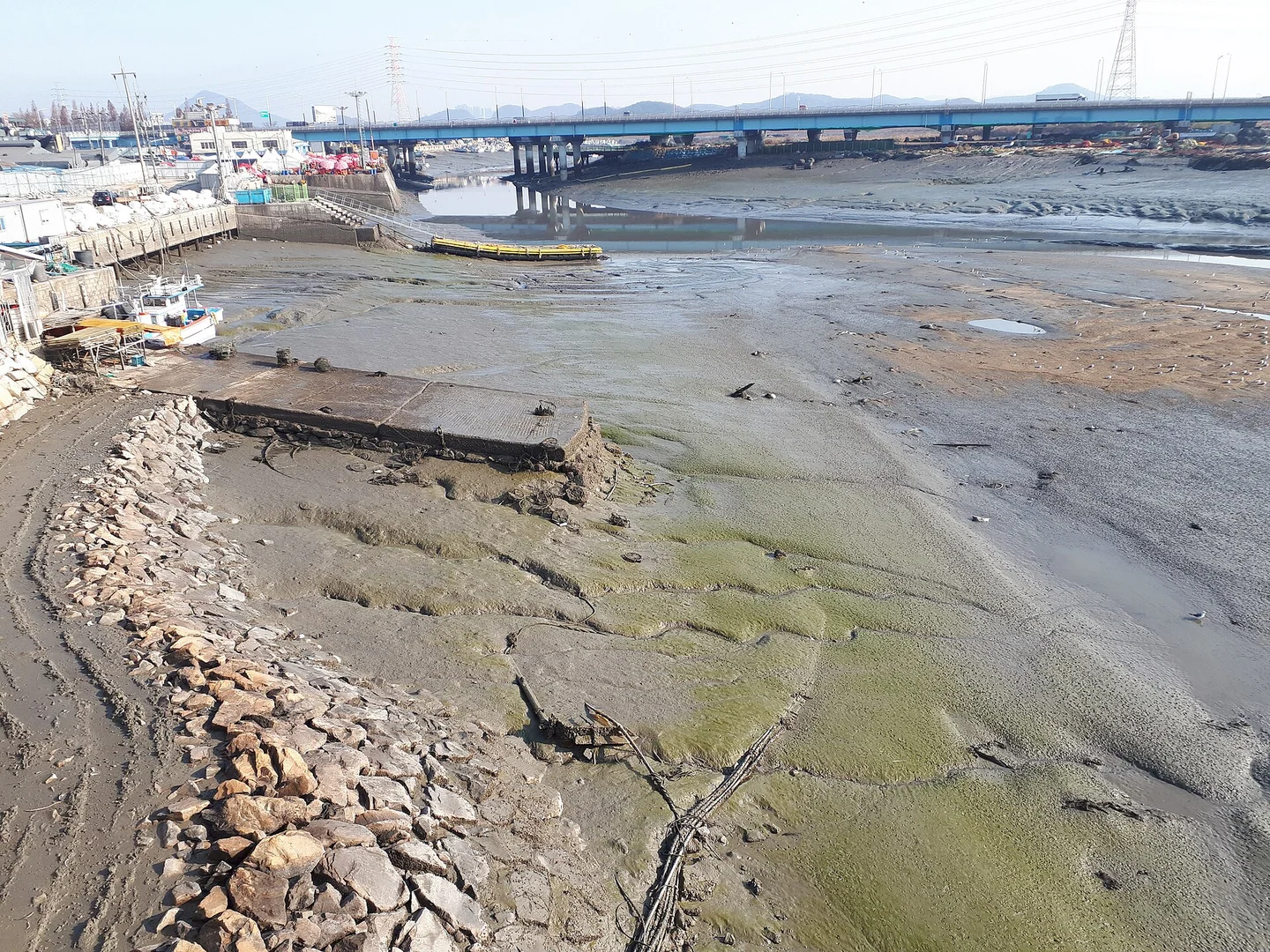
Sorae is a tidal port rather than an open-ocean beach. At low water, channels cut through mud around the boats and the exposed bases of the quays. High water changes the same view into a compact harbor of floating vessels and reflections. Both are characteristic of the place; arriving at low tide has its own visual reward. The public waterfront paths provide the best way to follow this change. Stay above the working landing areas, where ropes, equipment, and unloading activity belong to the port's daily business. The mudflat below is part of the harbor, not an informal route to the boats. This short walk is especially worthwhile before a meal. It gives the seafood stalls a setting and helps explain the location of the markets along the waterway. You can then return to the restaurant you chose, rather than making a purchase first and trying to fit a walk around it.
Cross the Old Railway Bridge, Then Visit the Museum
Ez2AC · Original · CC BY-SA 4.0 ·
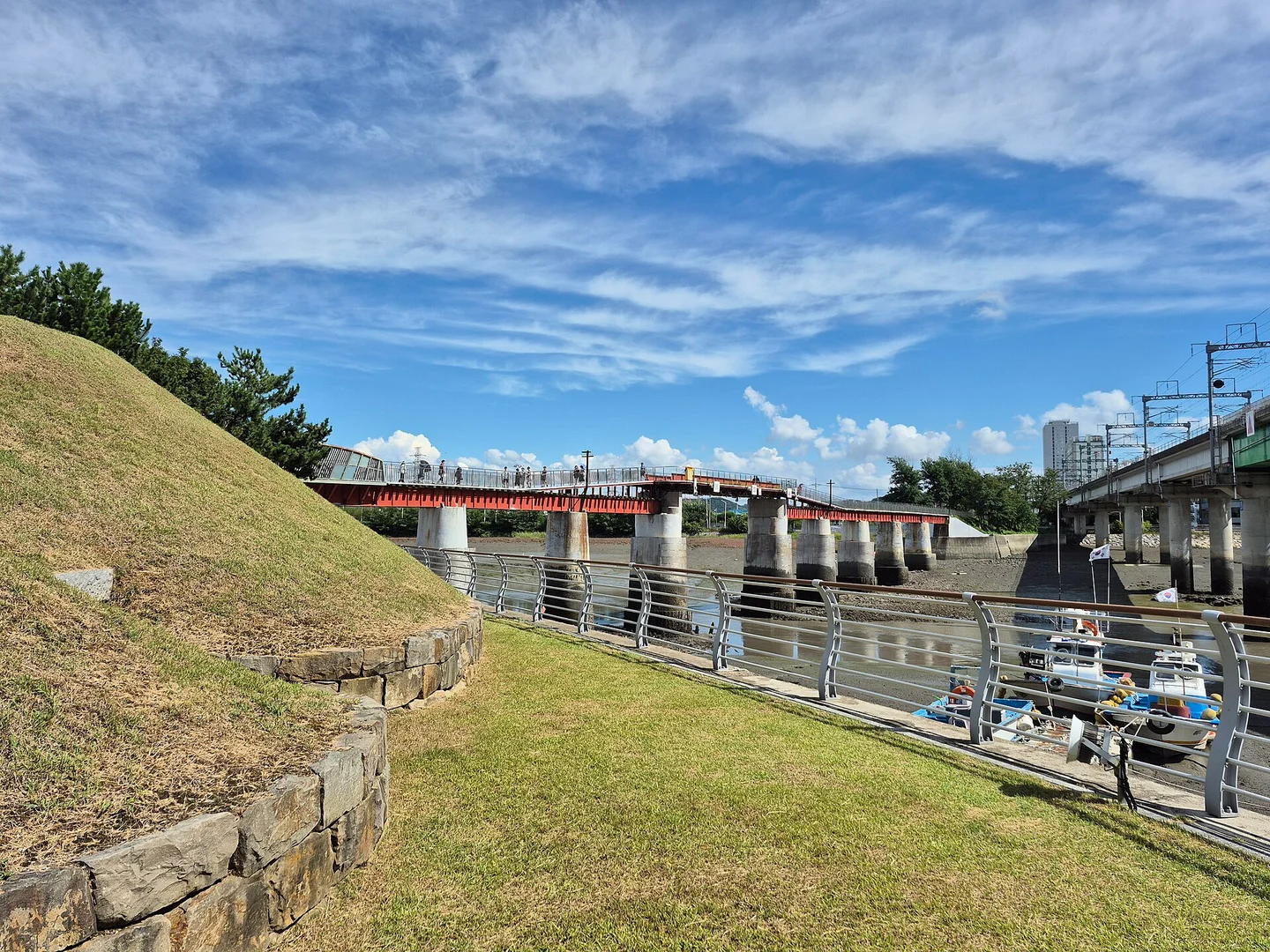
Sorae Railway Bridge once carried the narrow-gauge Suin Line. Today, its pedestrian route offers a view along the harbor, while the much larger active railway nearby shows how transport through the area has changed. Use the marked walkway on the old bridge; the modern tracks are a separate facility. The crossing leads toward Wolgot in Siheung. If you plan to return to Soraepogu Station, treat it as an out-and-back walk or map the continuation before setting off. A brief bridge visit works well with lunch, while a longer cross-water stroll changes where you will finish the day.
Ez2AC · Original · CC BY-SA 4.0 ·
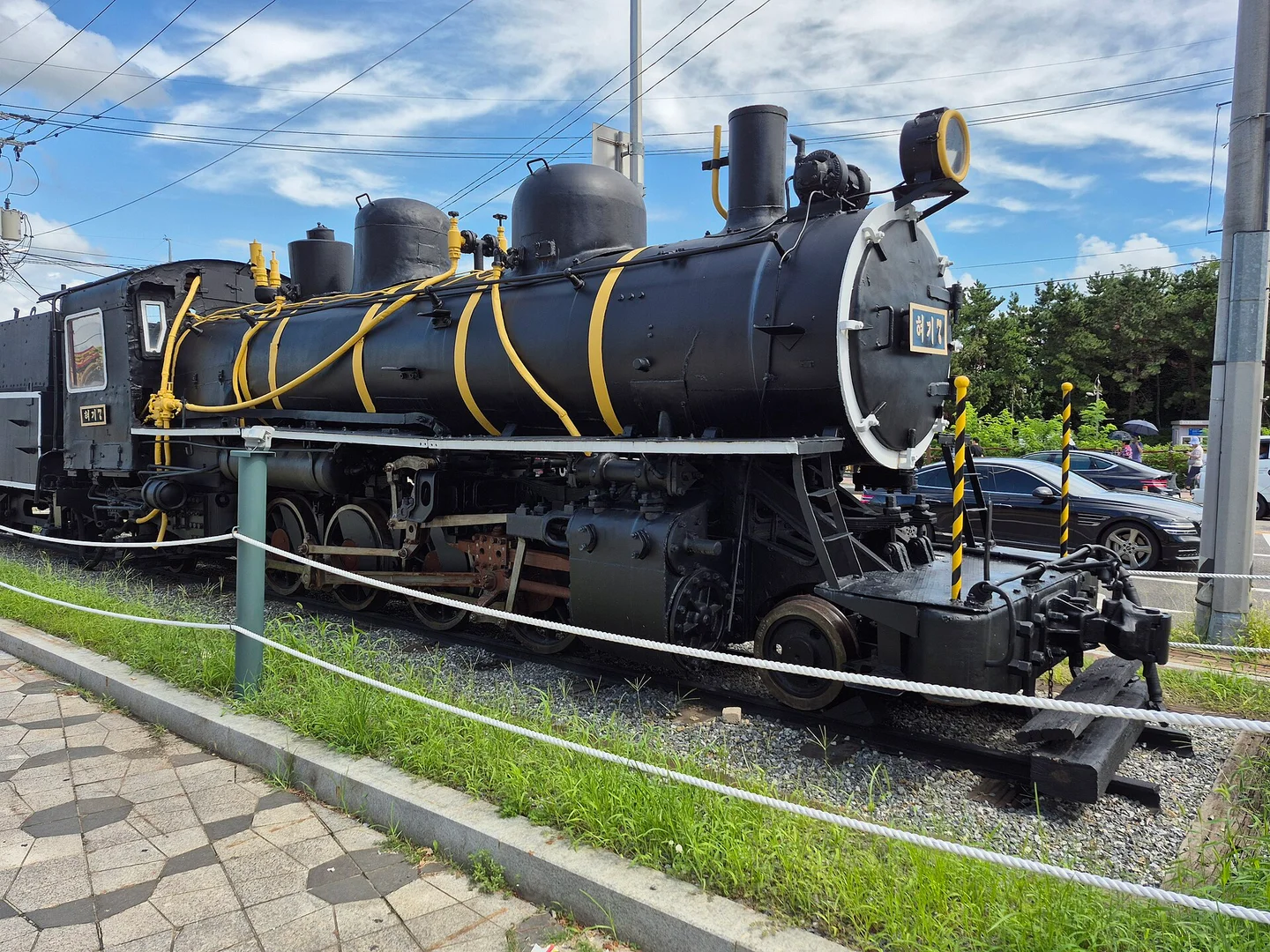
The narrow-gauge steam locomotive displayed near Sorae History Museum makes the railway's smaller scale tangible. It is a preserved exhibit, with a very different profile from the commuter trains now passing nearby. Inside the museum, the story connects the railway with the salt fields, tidal environment, and harbor community. As checked on October 12, 2026, the Namdong Cultural Foundation's visitor information lists 10 a.m.–6 p.m. opening, with last admission at 5 p.m. Adult entry is ₩500. The museum closes on Mondays, moving the closure to the next day when Monday is a public holiday, and on January 1 and the days of Seollal and Chuseok. Put the museum before dinner if you want to see the exhibits. Incheon's museum overview also lists English-language leaflets, useful for an independent visit.
The Wetlands Deserve Their Own Part of the Day
Ez2AC · Original · CC BY-SA 4.0 ·
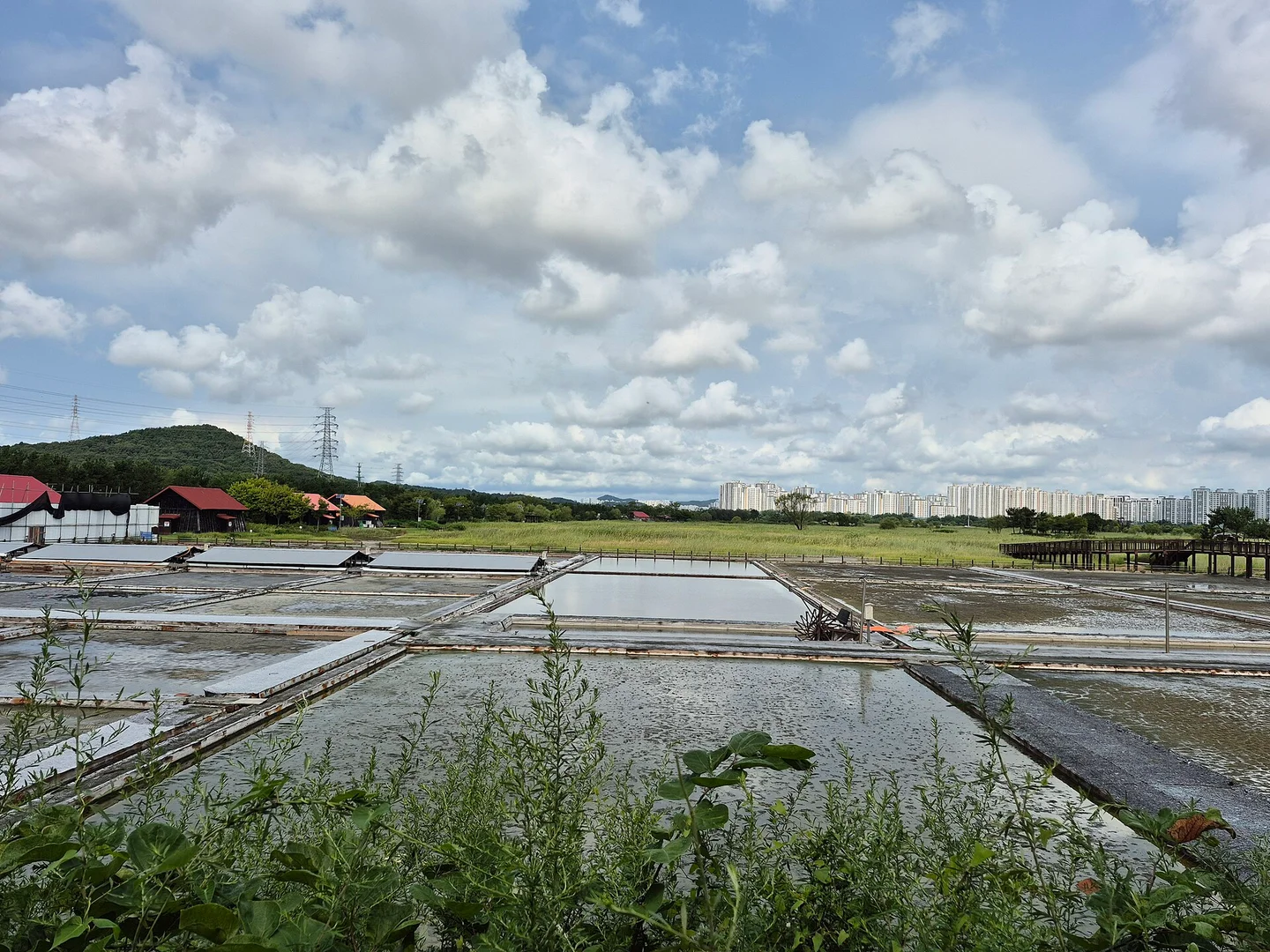
Sorae Wetland Ecological Park expands the story beyond the harbor. Former salt-production areas, storage buildings, reeds, and tidal channels show how the coast supported both industry and wildlife. The familiar windmills are only one feature; the geometry of the salt pans and the movement of water through the site are just as revealing. Plan the journey to the entrance as well as the walk inside. This is a substantial landscape, not a small garden directly beside the market. An hour or more in the park, plus the connection, is a reasonable starting allowance for a short visit. If walking is the main purpose of your day, visit the wetlands first and make the market meal your finish. The city's park guide explains the restored wetland habitats and salt-making facilities. It also distinguishes the exhibition building's hours from the outdoor visit. Choose marked paths through the open areas, and use a scheduled program if you want to take part in an activity involving the salt pans. The broad, exposed setting makes a shorter route more appealing in strong sun or wind.
An Optional Evening on the Waterfront
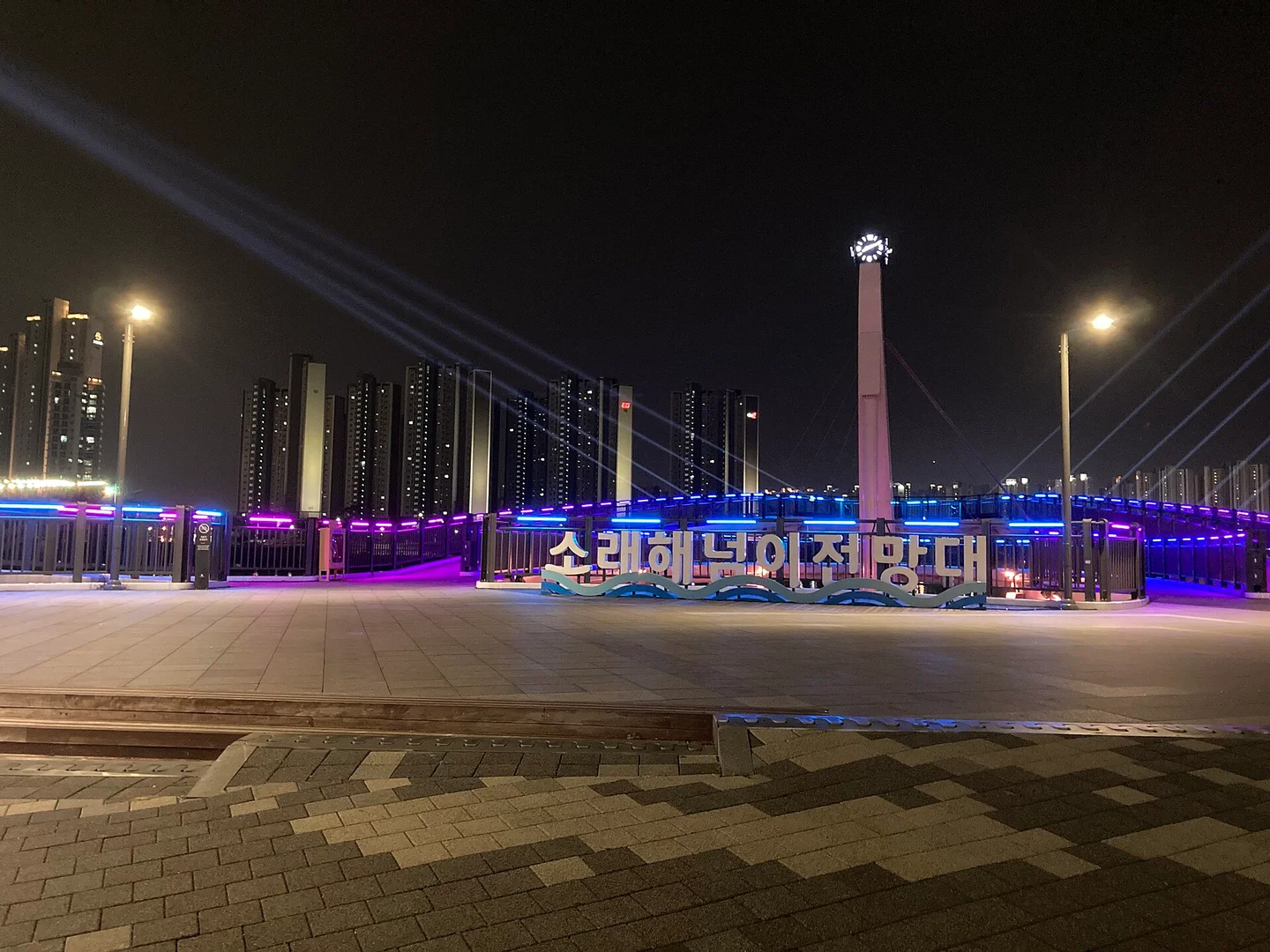
For an evening extension, Sorae Haeneomi Observatory is a waterside viewing space linked to Haeneomi Bridge. It is separate from Shrimp Tower and from the old railway bridge beside the market, so use its full name when checking the route. Incheon's observatory page describes the waterfront setting and decorative lighting. The practical choice is whether you want another walk after the meal. Check the distance and the best station for the journey home before heading along the coast. For a shorter visit, the market, port, and railway bridge already make a coherent route. For a longer one, choose either the wetlands in daylight or the evening waterfront, with seafood shopping saved for the final stop.