Dongseongno, Daegu: Shopping, Local Snacks, and a Walk into the Old City
Choi2451 · Original · CC BY-SA 3.0 ·
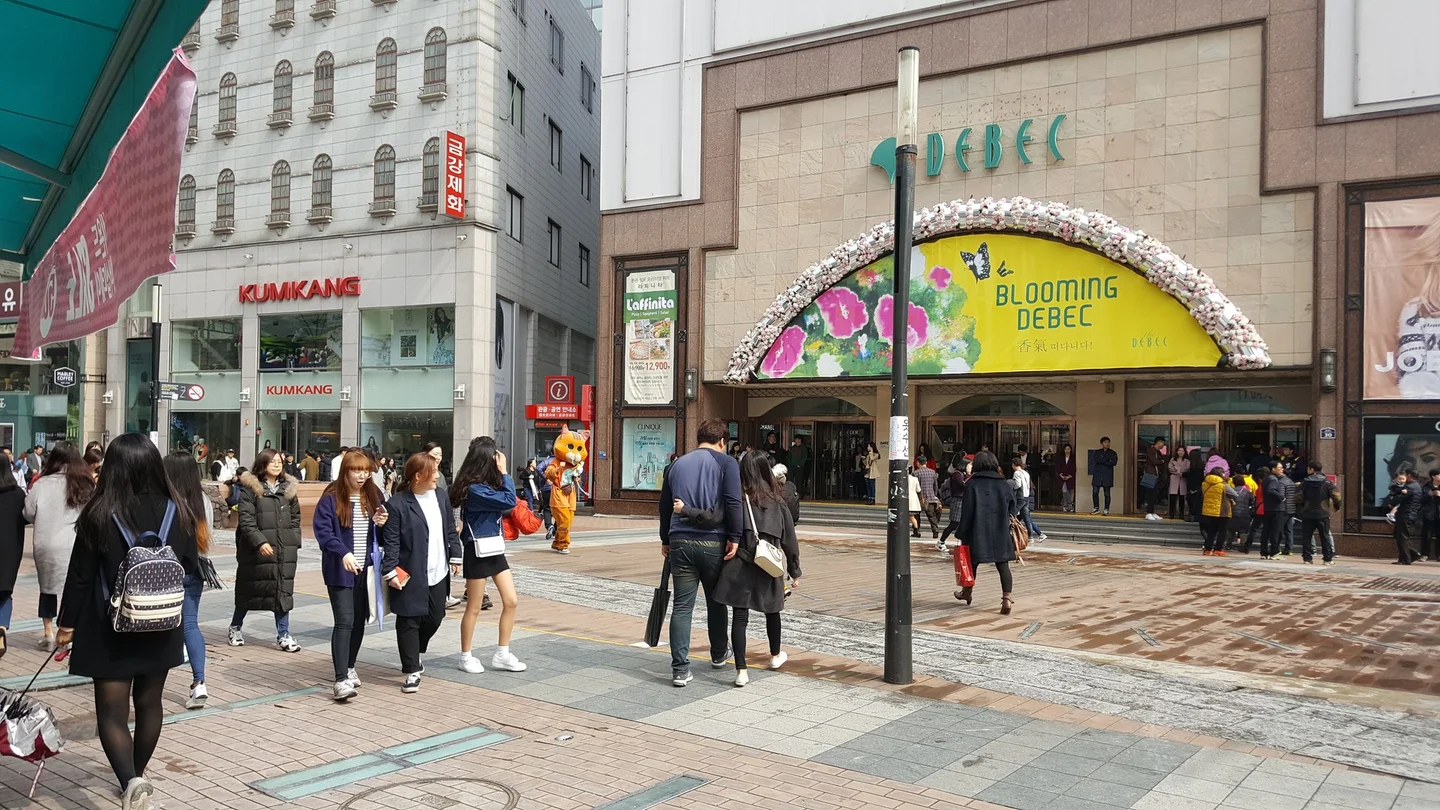
Dongseongno is an easy place to spend an unstructured afternoon in Daegu. Fashion stores, cosmetics shops, cafés, and snack restaurants fill the streets around a pedestrian shopping spine, with smaller lanes inviting you away from the main flow. Come to browse, eat something local, and see a busy part of the city at street level. There is no single attraction to queue for or fixed circuit to finish. It also works as the eastern end of a broader downtown walk. Head west and the setting changes from shop windows to Yangnyeongsi’s herbal-medicine district, Gyesan Cathedral, and the historic paths around Cheongna Hill. Shopping alone can easily occupy a couple of hours; combining it with the museum and western lanes is better treated as a half-day outing. One old landmark needs updating in your plans: Daegu Department Store’s Dongseongno main branch, known locally as Daebaek, suspended trading in July 2021. The surrounding square remains a recognizable point in the district, but the former department store should not be your shopping destination. Use the public outdoor stage as an easy meeting point instead.
Choose Your Shopping Lanes
Choi2451 · Original · CC BY-SA 4.0 ·
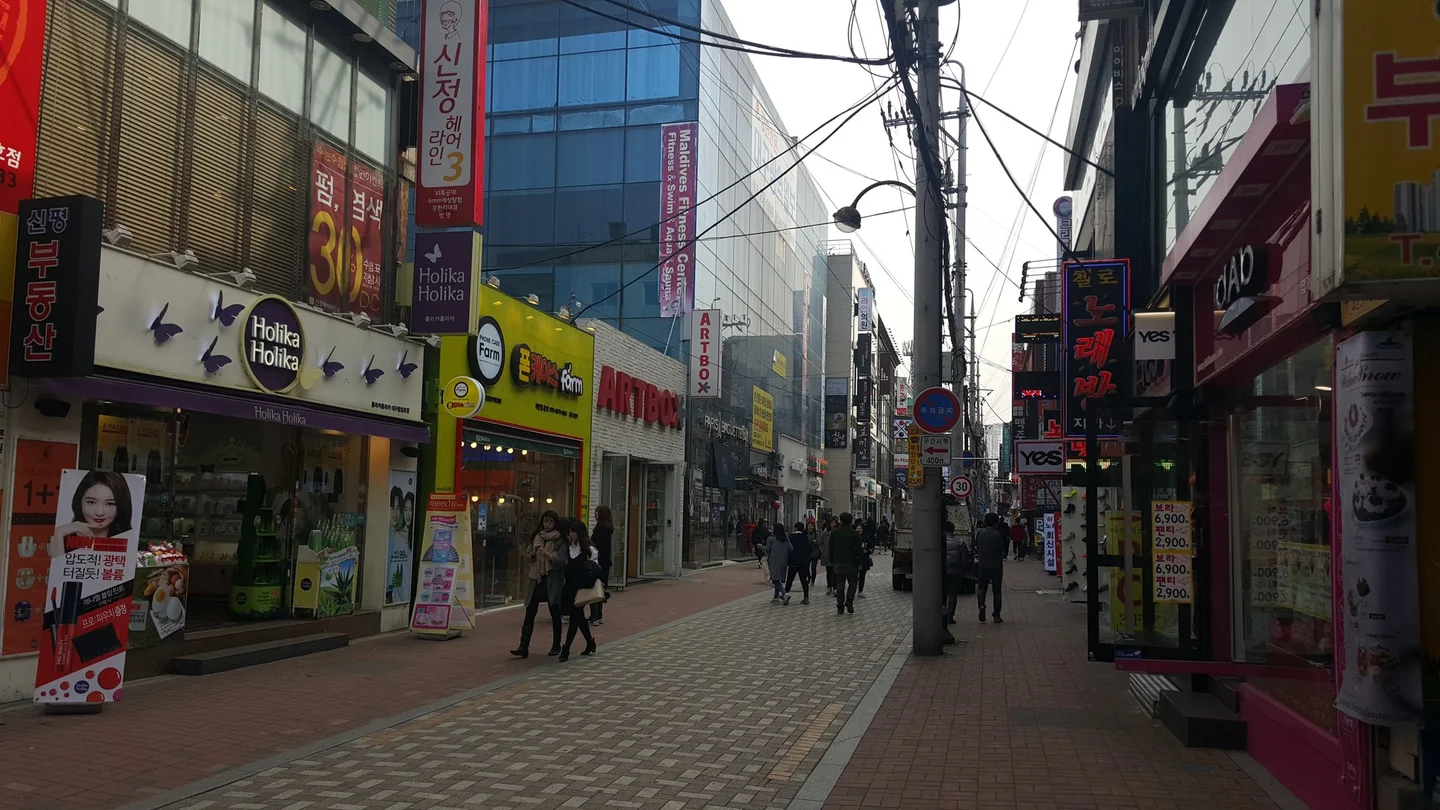
The name Dongseongno, also written Dongseong-ro, recalls Daegu’s eastern fortress wall. The wall was removed in 1907, and a commercial street developed along its former course. Today, the shopping area spreads beyond that original line into jewelry, bag, vintage-clothing, and food alleys. Jungangno Station and Banwoldang Station are useful anchors. Start from the one that best suits your arrival and the shops you have saved, rather than searching for a formal entrance to the district. Walk along the main pedestrian route first, then work through one or two side lanes. It is more enjoyable than crossing the same intersections repeatedly to chase a long list of stores. For accessories and small gifts, look beyond the clothing displays to jewelry and lifestyle shops. For fashion, leave time to compare styles and sizes before committing to a purchase. Each shop sets its own fitting and exchange policy, so ask at the counter if either matters to you. This is a collection of independent businesses and chains, with individual opening hours rather than one shopping-center timetable. Late morning onward is a more useful starting point for browsing than an early-morning sightseeing round. If you want a café break, check upper-floor signs as well as street-level storefronts; much of the district’s commercial life occupies the buildings above the pedestrian lanes.
Two Very Different Snack Stops
Samsong Bakery’s main store is a good introduction to a Daegu-born bakery that dates to 1957. Start with the whole-corn bun, filled with sweet corn and the bakery’s sauce. Despite the English “corn bread” wording sometimes used for it, this is a filled bakery bun, not an American-style slice of cornbread. The chain also makes oven-baked croquettes and cream-cheese sticky-rice bread, useful alternatives if you want to compare textures rather than buy several of the same item. For something spicy, Jungang Tteokbokki is an established Dongseongno option identified by the Korea Tourism Organization. Tteokbokki consists of chewy rice cakes in a chili-based sauce; dumplings are a natural accompaniment. Daegu is especially associated with pairing the dish with flat mandu. The contrast between tender rice cakes and thin, pan-fried dumplings is part of the appeal, so this makes a more distinctive snack stop than defaulting to a familiar international chain. A bakery stop and a tteokbokki meal need not both fit before lunch. Choose according to appetite, or separate them with the walk to the museum. Save exact shop hours for your actual visit date rather than assuming the whole district stays open together.
Yangnyeongsi: Understand the Trade behind the Herb Shops
Mobius6 · Original · CC BY-SA 4.0 ·
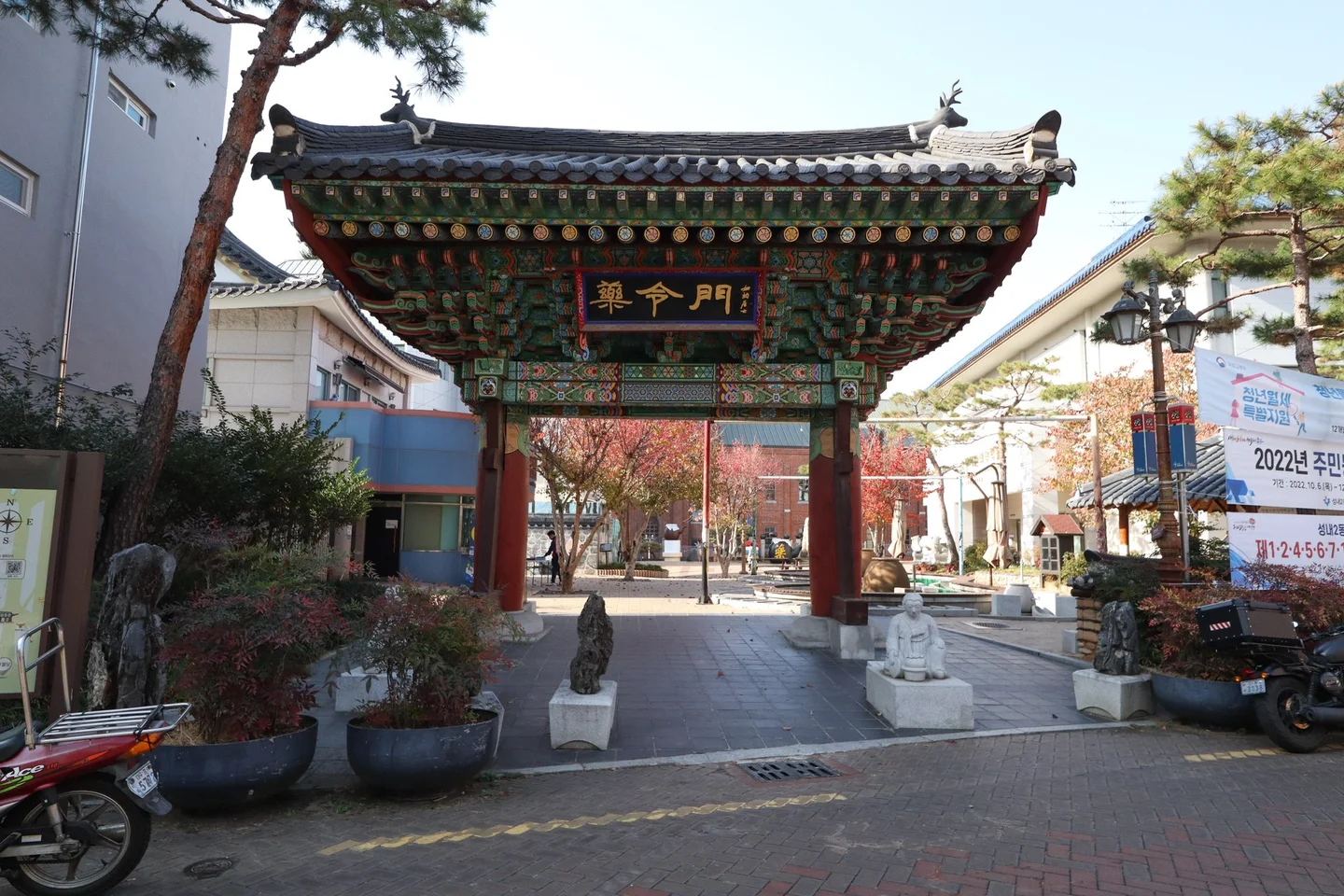
West of Dongseongno, the Yangnyeongsi area offers a different kind of shopping history. Its traditional-medicine businesses grew around the trade in medicinal ingredients. The decorated Yangnyeongmun gate is a useful landmark as you explore the lanes, but the most accessible introduction for a first-time visitor is the Daegu Yangnyeongsi Museum of Oriental Medicine. Start on the third floor, where the history galleries recreate an early-twentieth-century medicine-trading street. A merchant’s premises, an inn, and an herb shop give the district a social history beyond rows of unfamiliar ingredients. Displays of preparation tools and old medical texts help explain what the surrounding businesses do. The museum is worthwhile as an account of trade and daily life even if you have no intention of buying herbal products. English audio guidance is available through a phone app; ask at the third-floor information desk or follow the instructions by the elevator. The museum also has an elevator, an accessible entrance route, and accessible toilets, making it a useful indoor stop for visitors who will not be taking the stairway walk farther west. Admission is free. The current official schedule, checked in October 2026, is 9 a.m. to 6 p.m., with last entry at 5:30 p.m. It normally closes on Mondays, January 1, and the actual days of Seollal and Chuseok. Public-holiday exceptions can shift the closure to the next weekday. If the museum is a priority, visit before the shopping session stretches into the evening.
Red Brick and Spires at Gyesan Cathedral
기여자 · Original · CC BY-SA 4.0 ·
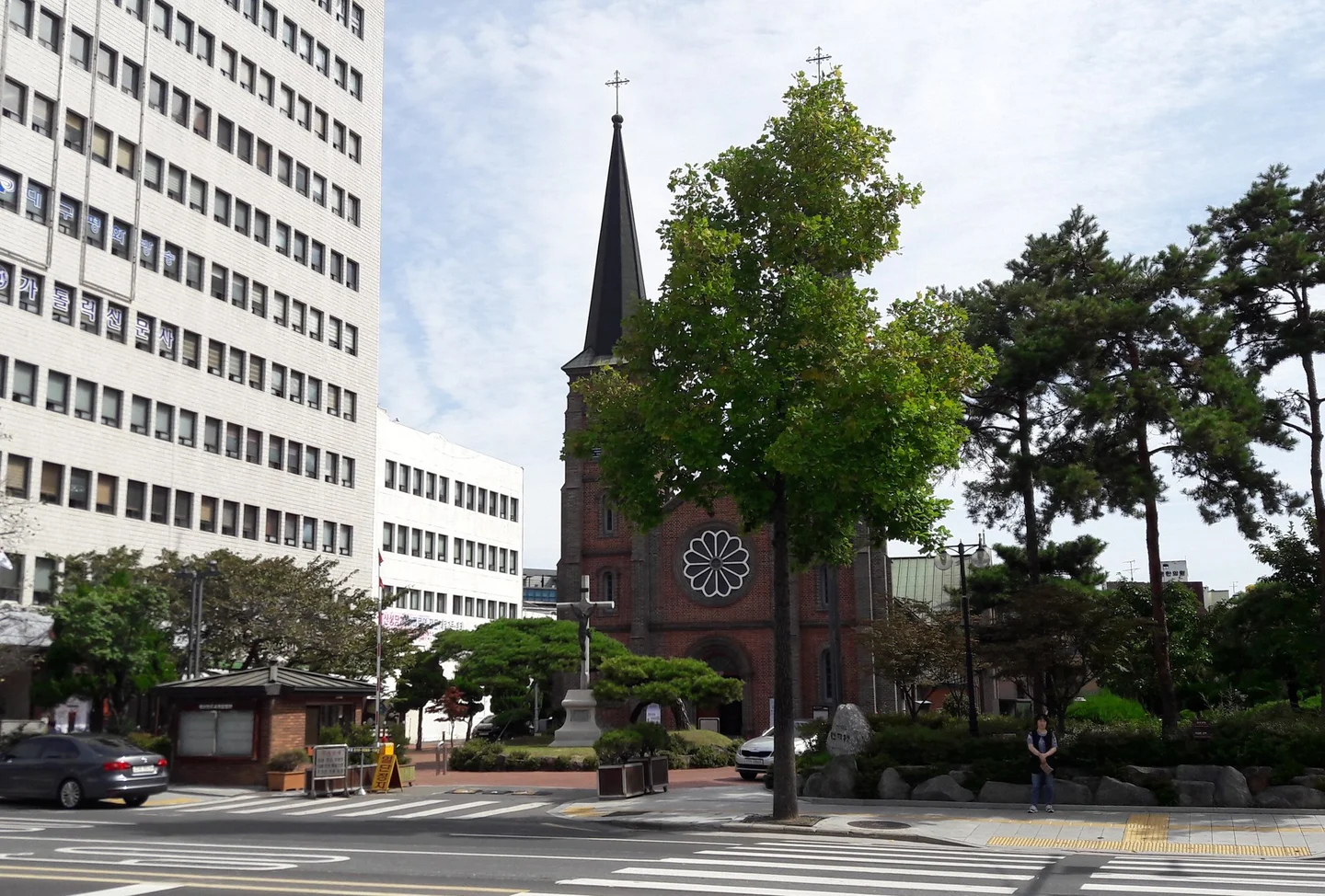
Continue west toward Gyesan Cathedral for another change in the cityscape. Its red-brick exterior, tall spires, and circular window stand out among much newer buildings. The present church dates to 1902, following a fire that destroyed an earlier building, and it is an important stop on Daegu’s architectural walks. The interest is in the details as well as the skyline: the rhythm of the windows, the brickwork, and the way the towers rise above the entrance. If the interior is open for visitors, stained glass adds color to the experience. The cathedral remains an active place of worship, so follow its visiting arrangements around services rather than expecting unrestricted access. There are roads to cross between the shopping district, the museum, and the cathedral. Think of them as neighboring parts of downtown, not one continuous car-free precinct. Staying on foot is practical, but a map helps you keep the western sights in a sensible order.
The March First Movement Road and Cheongna Hill
Ycho410 · Original · CC BY-SA 4.0 ·
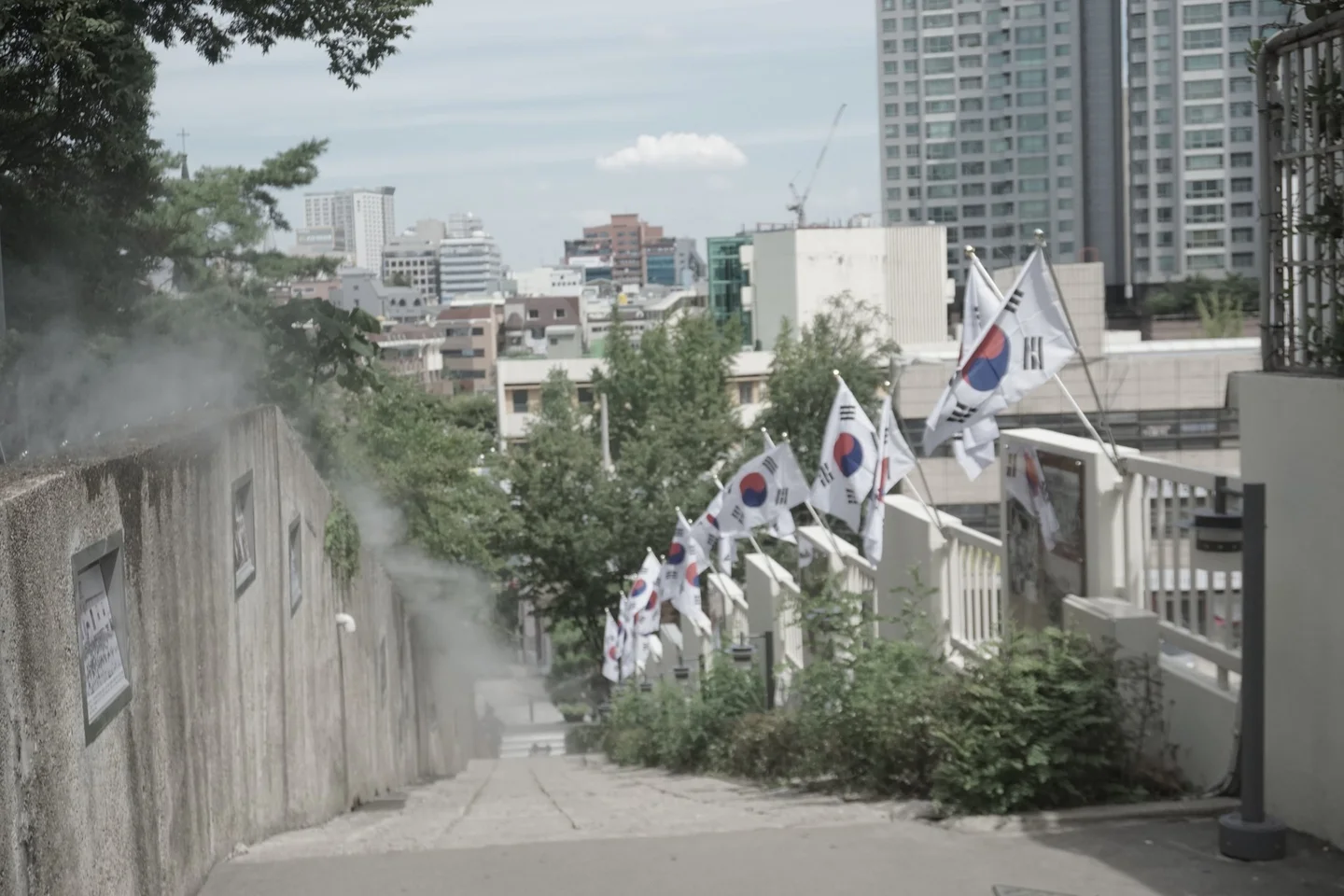
The flag-lined steps near Cheongna Hill carry a specific story. During the 1919 independence movement, students used the wooded route to gather downtown while avoiding Japanese military surveillance. Photographs and interpretation along the path connect the present-day walk with that history. The stairway also changes your perspective on the city. Shopfront-level views give way to glimpses across roofs and streets, with trees softening the uphill surroundings. Take time to read a few of the historical panels instead of treating the flags solely as a photographic backdrop. This final section involves stairs. For a gentler outing, keep the walk to Dongseongno, Yangnyeongsi, and the cathedral, or establish a suitable alternative approach to the hill rather than assuming the stepped route has a parallel ramp. If you are arriving late in the day, reverse the emphasis: see any time-limited indoor attraction first, then return to Dongseongno for dinner and browsing. If you finish in the western historic lanes, choose your departure station from there. Seomun Market is a further extension to the west and deserves its own allowance for walking and eating; it is not another name for Dongseongno.