Jusangjeolli Cliffs: Jeju's Lava Coast in Geometric Detail
Engin Cukuroglu · Original · CC BY-SA 4.0 ·
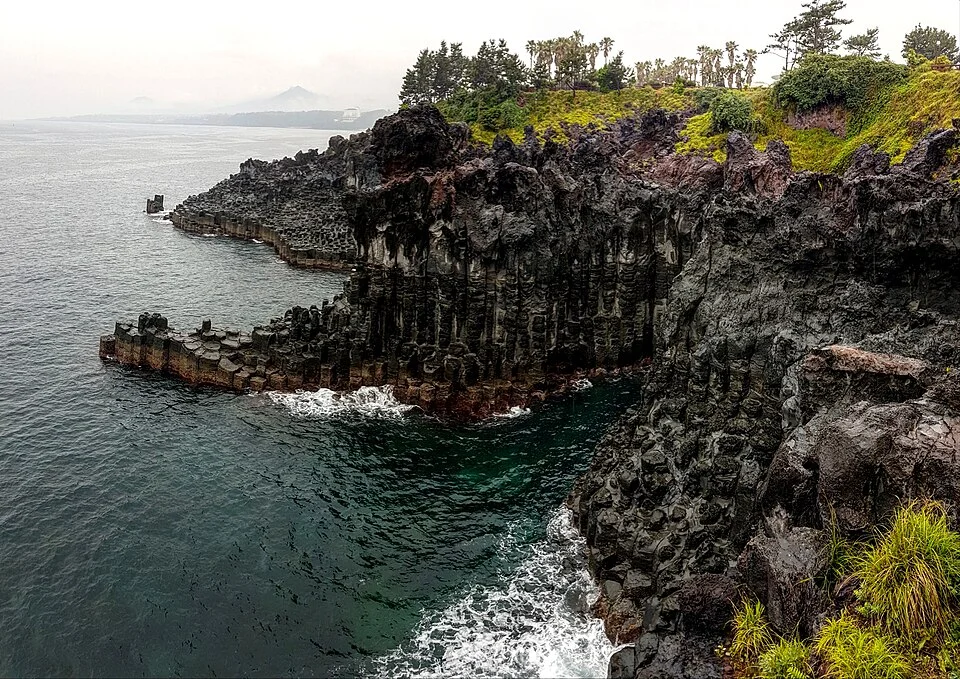
From the lookout at Jungmun–Daepo Jusangjeolli, the coast seems to have been cut into columns. Tall, dark pillars face the sea, while lower shelves reveal tightly fitting shapes across their tops. White surf moves between them, then drains away to expose the edges again. It is one of the clearest places to see how differently a volcanic shoreline can take shape from a sandy beach. The appeal is close observation rather than a long hike. In about 45 minutes to an hour, you can follow the visitor route, compare the rock formations from several angles, and spend time watching the sea. It is an especially useful stop for travelers staying in Jungmun who want a distinctive natural sight without committing to a mountain trail. On maps, look for Jungmun–Daepo Jusangjeolli or Daepo Jusangjeolli Cliff. Jisatgae Rocks is another name for this stretch of coast. Jusangjeolli itself means columnar jointing, a rock structure found elsewhere on Jeju too, so including Jungmun or Daepo helps identify the right entrance.
Getting There and Making Time for the View
The visitor entrance is on the convention-center side of Jungmun. A taxi or rental car can bring you to the attraction's parking and ticket-office area. If you arrive by bus, Seogwipo City's directions describe an approximately 15-minute walk from the Jeju International Convention Center stop and list airport bus 600 among the nearby services. Plan to the attraction entrance, since reaching the convention center does not place you at the cliff viewpoint. As checked on October 12, 2026, the same city page lists opening from 9 a.m. to 5:50 p.m., with last admission at 5:30 p.m. Standard individual adult admission is ₩2,000. Sunset can alter the hours, and weather can restrict entry. A late-afternoon visit works best with a comfortable margin before the ticket office closes. Inside, follow the signed walkways above the coast. The viewing experience is from these paths and lookouts, not a route over the columns at sea level. If steps are difficult for anyone in your group, ask which viewpoints are reachable before purchasing admission. An accessible entrance does not necessarily mean every coastal lookout has the same approach. Choosing a manageable section still allows you to concentrate on the formations rather than on completing every branch of the route.
How the Columns Formed
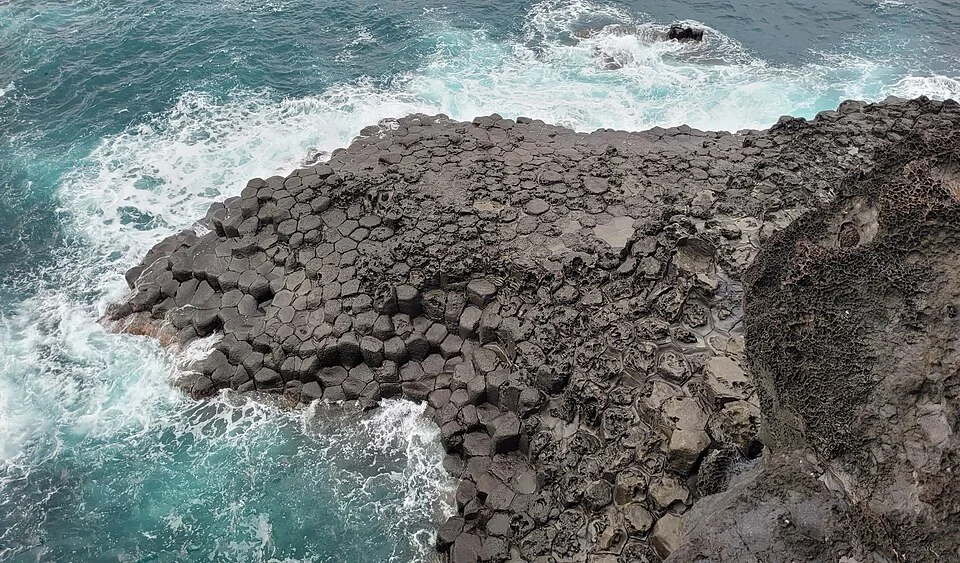
The basic process is cooling and contraction. As a body of lava loses heat and hardens, it shrinks and cracks. Those fractures can divide the rock into long columns. What looks like a collection of individual blocks was once part of a continuous lava flow. Look at the tops first, where the rock resembles a fitted mosaic. Then find an exposed side, where the same divisions run downward. Connecting those two views makes the term columnar jointing much easier to understand. The forms are not all identical hexagons: sizes, angles, and heights vary across the shoreline. The Academy of Korean Studies' account of Jungmun–Daepo also explains the contrast between the strongly columned lower rock and the rougher upper part of the lava flow. You can see that difference without needing to identify every geological term. Above the more regular pillars, irregular dark rock and vegetation make a much less orderly edge. For children interested in shapes, the lookout provides a simple activity: find a visible column top, count its sides, and compare it with a neighbor. For anyone with an interest in geology, spend longer comparing the top and side views before moving on. The details reward a pause more than a quick glance at the horizon.
The Sea Changes What You Notice
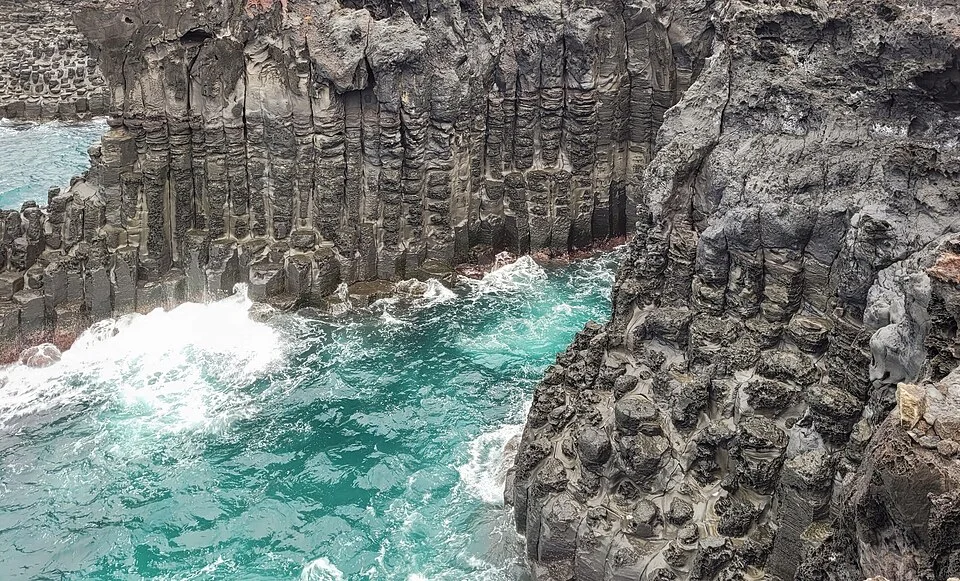
Waves give these fixed shapes a changing outline. Foam briefly covers the lower shelves, then receding water reveals the dark faces beneath. On a calmer day, the colors and polygonal surfaces can be easier to distinguish. On a rougher day, the movement of the water dominates the scene. There is no need to wait for the largest possible splash. Watching a few ordinary wave cycles tells you more about the way the shelves step down toward the sea. Start with a broad view of the cliff, then pick one cluster of columns and watch how the water moves around it. Strong surf is also a reason for possible restrictions, so do not plan a visit around storm conditions. Remain behind the barriers and follow any closed-section signs. If you are traveling with a pet, Visit Jeju's current guide asks visitors to inquire about admission by phone. The contact listed is 064-738-1521. Confirm that specific point before setting out rather than relying on a general description of the grounds as a park.
What to Pair with Jusangjeolli
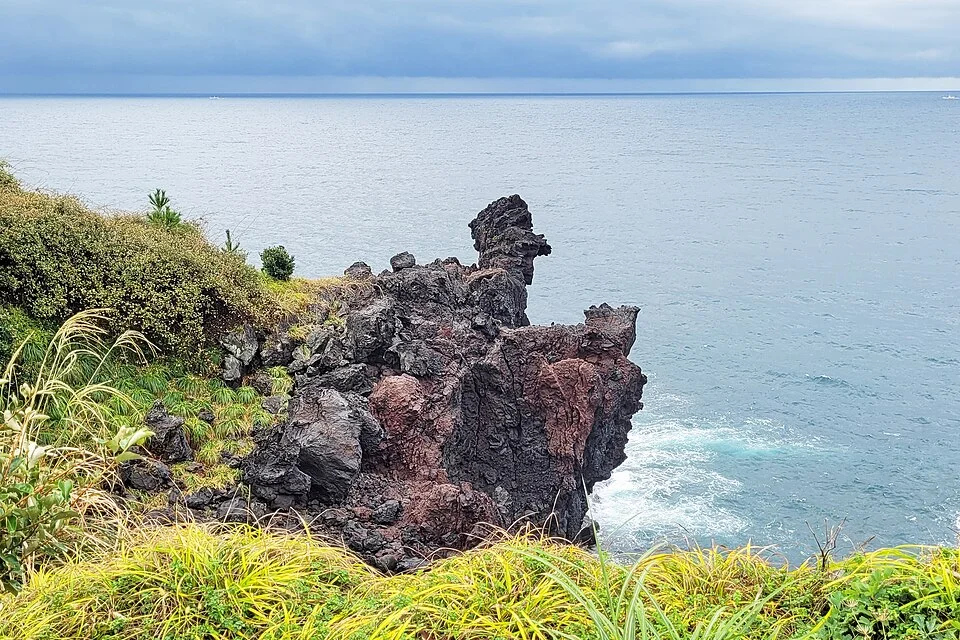
For another view of the south coast, continue to Jungmun Saekdal Beach. The contrast is immediate: here you look down at the edges of columns; there you follow the broad curve of sand and surf. Leave through the official Jusangjeolli exit and use the road and pedestrian network for the transfer. The coast beneath the cliffs is not a through-path to the beach. For a different kind of afternoon, choose Yeomiji Botanical Garden. Its greenhouse collections make a useful counterpart to the exposed shore, and you can add the outdoor gardens when the weather suits. Cheonjeyeon Falls is another nearby option if your group would enjoy a longer valley walk with stairs.