Hallim: Gardens, Lava Caves, and a Beach Afternoon in West Jeju
mattk1979 · Original · CC BY-SA 2.0 ·
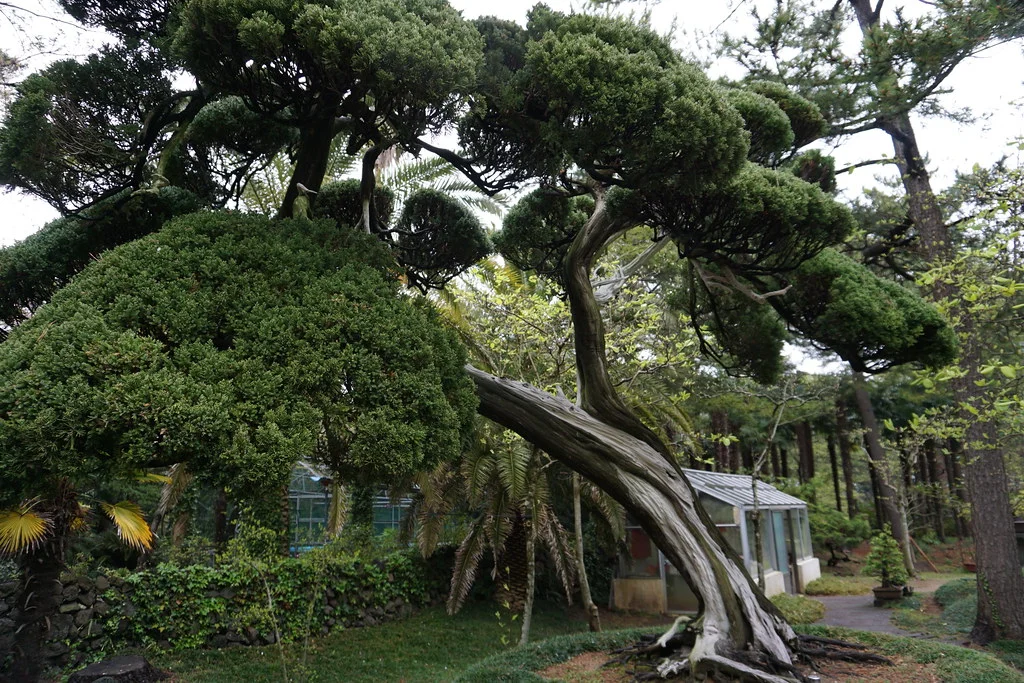
Hallim Park brings together several sides of Jeju that a drive along the coast can miss: sculptural trees, volcanic stone, thatched houses, and caves beneath the gardens. Add the pale sand and island views of nearby Hyeopjae or Geumneung, and you have a varied day in western Jeju without spending most of it moving between attractions. The park suits travelers who enjoy looking closely. A twisted trunk, the shape of a small tree trained over years, or the way black stone frames a courtyard can hold your attention as much as the larger displays. Families can alternate gardens with caves and birds, while plant enthusiasts may want to spend much longer among the collections. Be precise when choosing your destination. Hallim is a wider district with a harbor, markets, and residential neighborhoods; Hallim Park is a paid attraction by Hyeopjae. Arriving in central Hallim does not put you at the park entrance. For a first visit, allow roughly two to three hours for an unhurried garden visit and then choose either the nearby beaches or the town and harbor as your next stop.
Find your own route through the gardens
Matt Kieffer · Original · CC BY-SA 2.0 ·
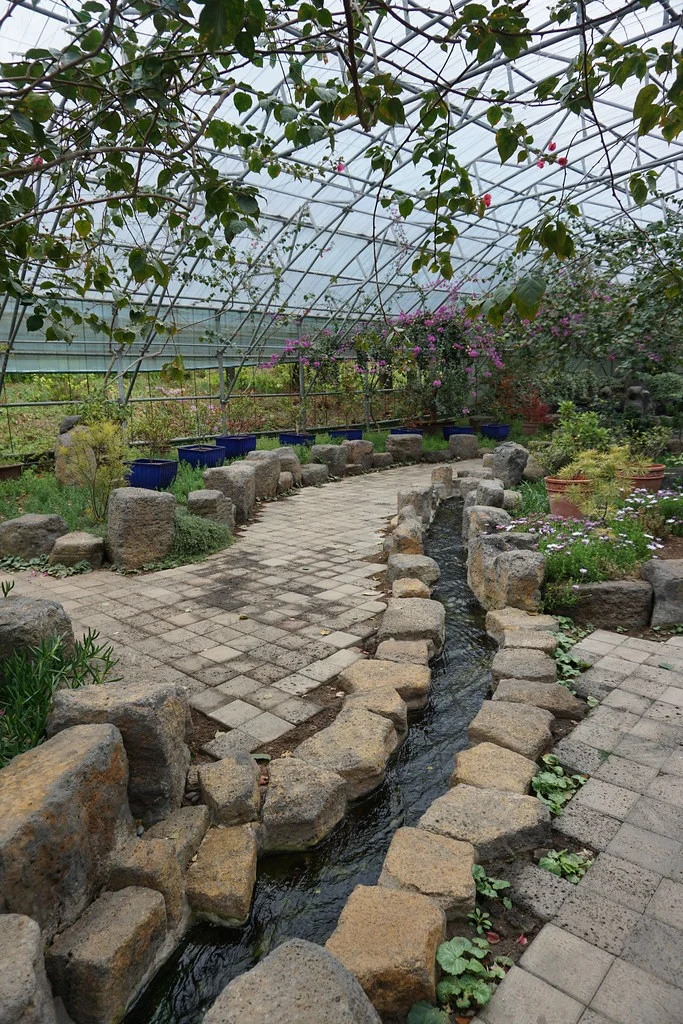
Start with the park map and mark the areas that interest you most. The nine themed sections include subtropical plants, a palm avenue, caves, a stone-and-bonsai garden, a folk village, birds, and a pond garden. You can follow the main visitor circuit while giving extra time to two or three favorites instead of trying to examine every display equally. The greenhouses make a useful first stop for their different leaf shapes, climbing stems, and dense planting. Outside, the palm avenue changes the scale entirely. According to the park's history of the palm walk, these trees began as seeds planted in sandy ground in 1971. The mature landscape is the result of decades of cultivation, which helps explain why this is a garden destination as well as a sightseeing stop. Flowers add another reason to return in a different season. The park's seasonal flower guide associates June with hydrangeas, autumn with cosmos and chrysanthemums, and winter with camellias and narcissus. Treat that calendar as a guide to what to look for; flowering depends on the year's weather. The trees, stone collections, and contrasting garden spaces give the visit substance beyond a single bloom. Although some sections are covered, much of the circuit is outdoors. On a rainy day, decide whether you want a garden walk with sheltered stops or a fully indoor outing before buying admission.
Thatched houses and an unexpected bird stop
mattk1979 · Original · CC BY-SA 2.0 ·
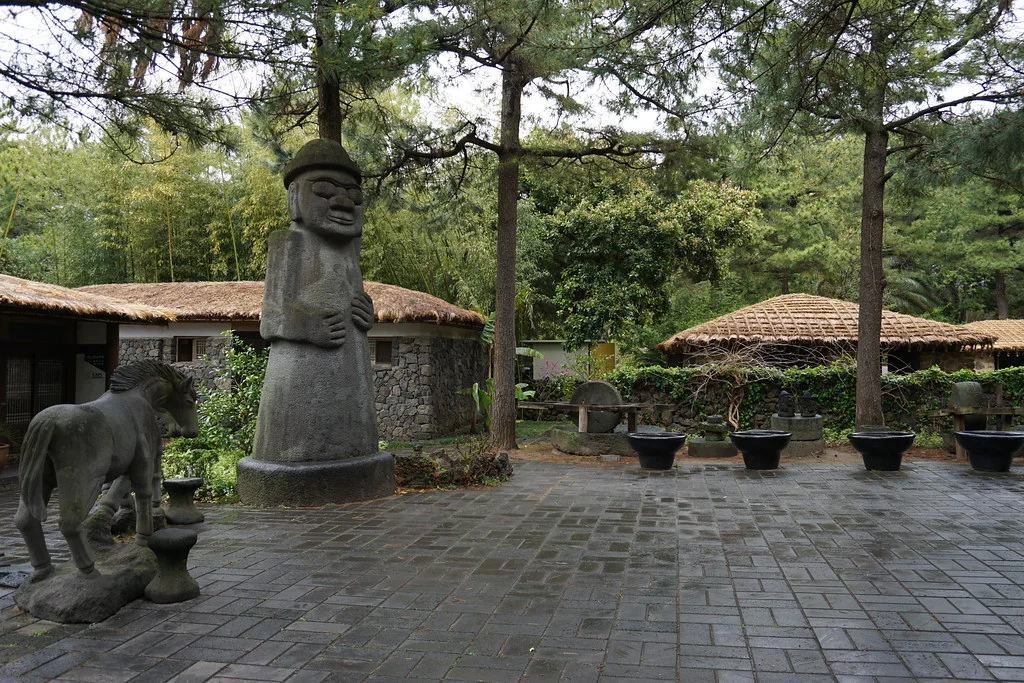
Jaeam Folk Village offers a closer look at Jeju's traditional domestic architecture. The park says that actual thatched houses were relocated from the island's upland communities and restored here, with household objects displayed alongside them. It is a curated heritage setting within the gardens, rather than a residential village you happen to be walking through. Look at the low rooflines, stone walls, and the arrangement of buildings around their outdoor space. These details are more revealing together than any one building in isolation. The dol hareubang, Jeju's recognizable stone figures with rounded hats and hands resting on their bodies, add another use of the island's dark volcanic stone. Younger visitors can compare faces and roof shapes while adults follow the architectural details. Peacocks among the planting
Matt Kieffer · Original · CC BY-SA 2.0 ·
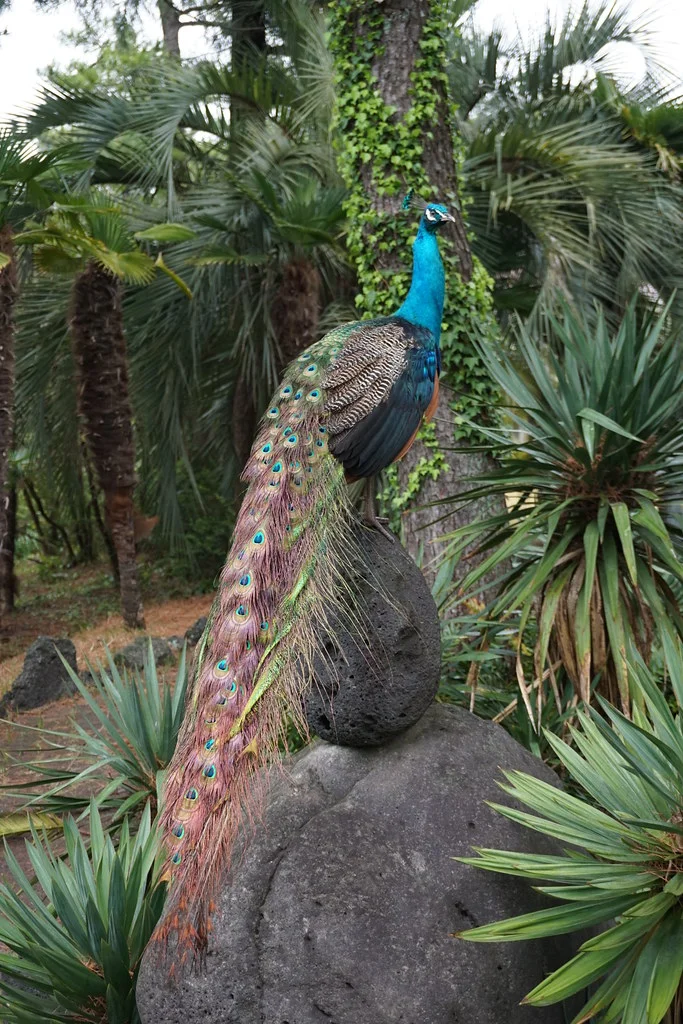
The bird garden changes the pace of the circuit. Peacocks provide the most striking color, particularly when their long tail feathers catch the light, but waiting quietly often reveals more than trying to approach them. Keep any food for the designated feeding arrangements, if offered. A stop here can be brief, leaving more time for the gardens or caves according to your group's interests.
Volcanic stone above and below ground
mattk1979 · Original · CC BY-SA 2.0 ·
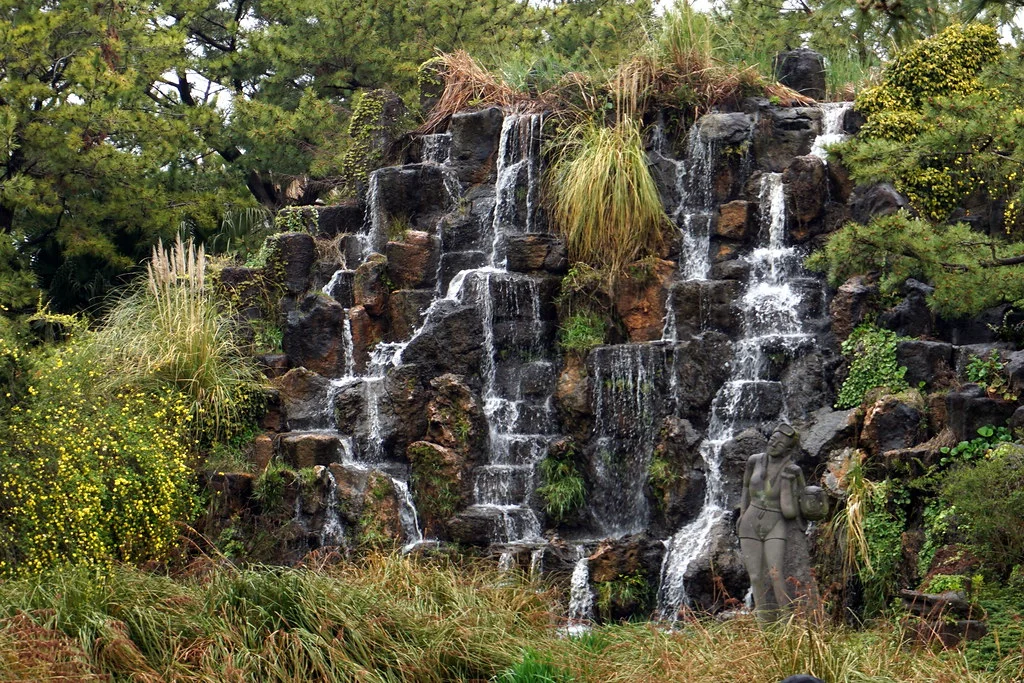
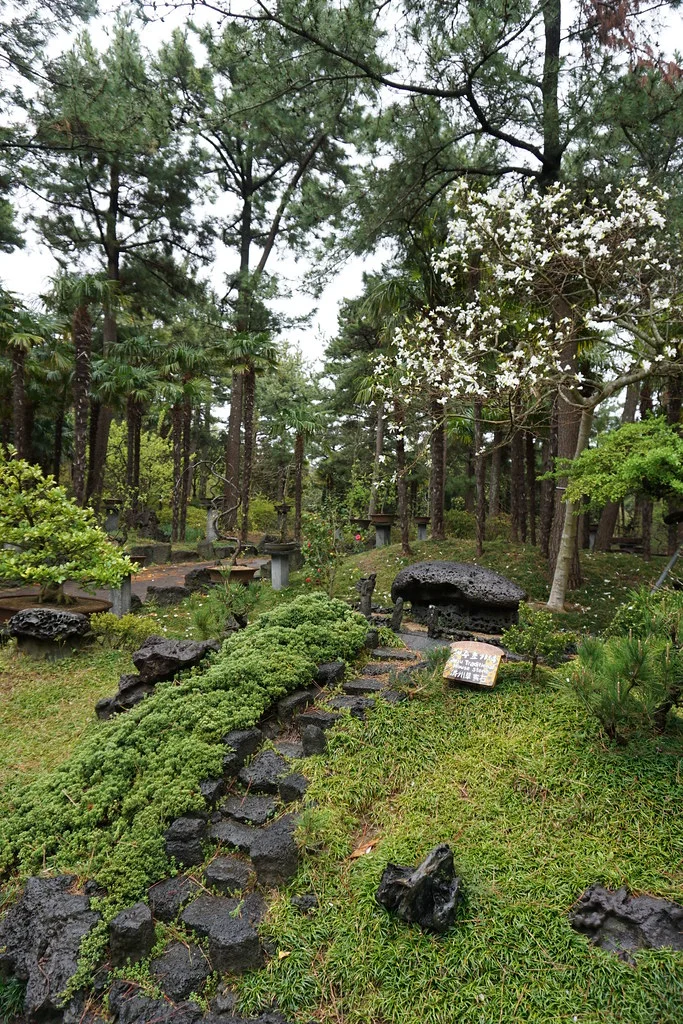
Waterfalls and pools within the landscaped gardens are part of the park's design. Watch how the planted edges soften the dark rocks and how water changes their texture. The stone-and-bonsai area offers a smaller scale of landscape: shaped branches, exposed roots, and individual stones arranged to suggest a much larger scene. Choosing a few trees to study is more rewarding than treating each pot as another item to pass. Hyeopjae and Ssangyong caves add a different kind of interest below ground. They are lava caves with mineral formations associated with limestone caves. The operator's cave explanation describes calcium-bearing water entering through the ceilings and walls, leaving deposits that include stalactites and stalagmites. That combination is the feature to look for, rather than expecting the garden visit to become a long underground expedition. The cave sections also change the walking conditions. Steps, dimmer light, and lower spaces can matter even when the outdoor garden paths suit your group. If someone uses a wheelchair or stroller, or would rather avoid enclosed spaces, ask at the entrance for a route around these sections. You can still build a worthwhile visit around the outdoor collections.
Admission and the time you actually need
Matt Kieffer · Original · CC BY-SA 2.0 ·
As checked October 12, 2026, the park's visitor guide lists ordinary adult admission at ₩15,000 and suggests about 90 minutes for a visit. Allow longer if you want to pause at the bonsai, take photographs, and have a break. A morning arrival leaves the afternoon open for the coast; arriving close to the ticket cutoff gives you much less flexibility. The official site displays differing seasonal cutoff tables, so do not plan around the latest time shown on an older listing. Use the current visitor guide or contact the park if arriving late. Ticket sales ending and visitors having to leave are separate times. For travelers bringing a dog, the same guide specifies a dog under 5 kilograms, one per adult, with a leash and waste bags. Confirm those conditions before making the park your main stop with a pet. For everyone else, the more useful planning choice is simply how much of the day to reserve for the gardens and where to eat afterward.
Beach views or Hallim's working town?
Hyeopjae and Geumneung are the natural next stops for a coastal afternoon. Their beaches face Biyangdo, the small island offshore, and give you open sea views after the enclosed garden spaces. Have lunch nearby, walk along the shore, and choose whether to linger on the sand. A swimming visit depends on the managed season and local conditions; a beach walk fits a much wider range of days. For markets and a working harbor, head toward central Hallim instead. Include the bus or car transfer when planning: the harbor and town are not part of the park grounds. Hallim Daily Market and Hallim Minsok Five-Day Market are separate destinations. The latter operates on dates ending in 4 or 9, as listed in the Jeju Tourism Organization's market guide. That means the 4th, 9th, 14th, 19th, 24th, and 29th, not five consecutive days. Choose the market on a market day if you want to see produce, seafood, household goods, and the practical shopping of a farming and fishing community. Choose the beaches if you want a simpler continuation on foot near the park. A ferry trip to Biyangdo deserves its own time allowance rather than being squeezed in after both.