Jeju City's Old Town: A Walk from Historic Walls to Dongmun Market
J. Patrick Fischer · Original · CC BY-SA 3.0 ·
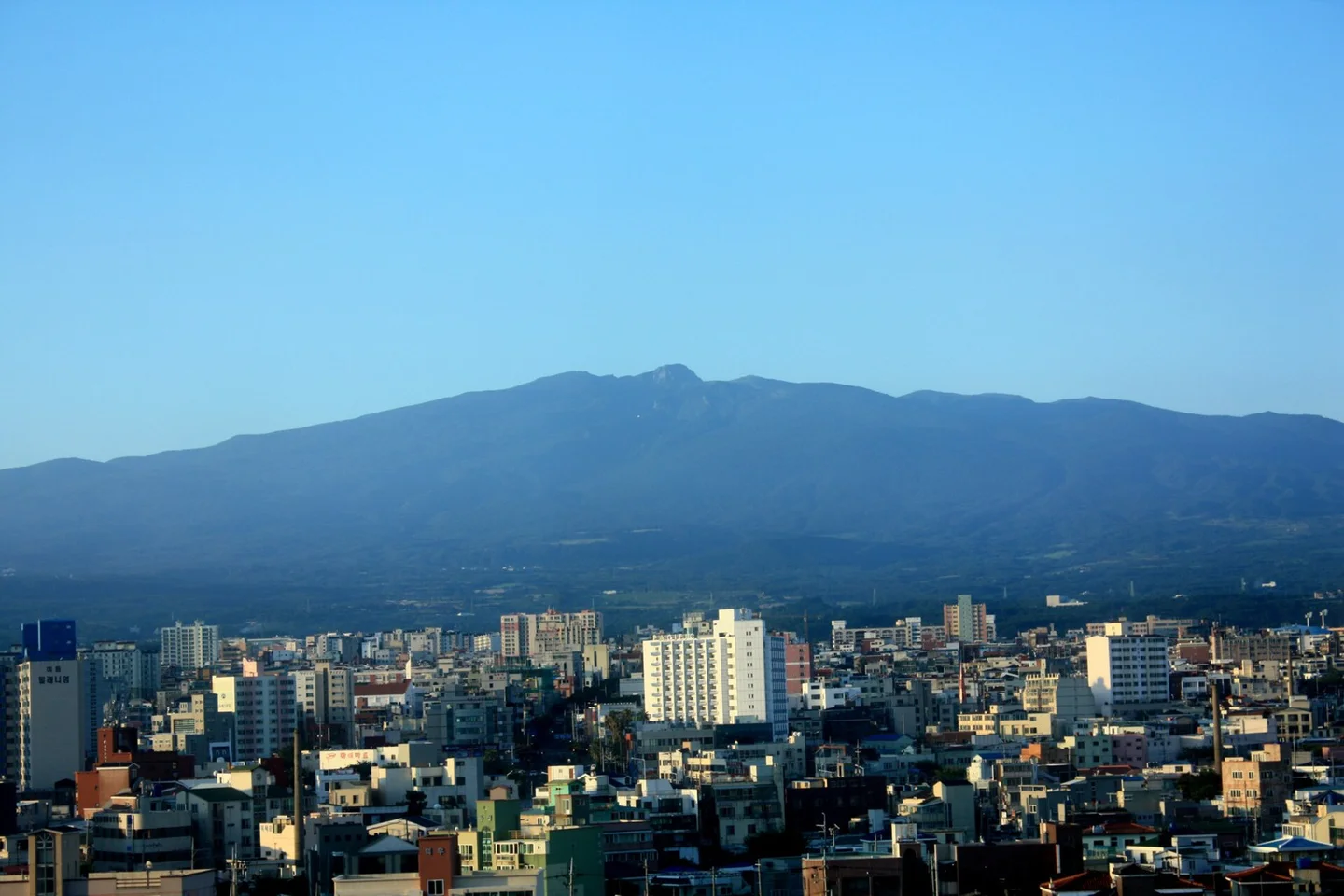
Jeju City is worth more than the drive between the airport and your hotel. In the old town, dark stone walls survive beside modern streets, a former government compound opens onto courtyards, and Dongmun Market brings the island's produce and food into one busy neighborhood. This is a good place to spend a half day on foot, especially if you're traveling without a rental car or want some urban history between coastal outings. Build the walk around three places: Gwandeokjeong and Jeju Mokgwana, Dongmun Market, and Sanjicheon Stream. Add the old fortress remains and Ohyeondan if history interests you. The distances between the central sights allow you to explore them as a neighborhood rather than repeatedly getting in and out of a car. For a daytime route, visit the government compound first, continue to the fortress area, and finish with food at the market and a walk by the stream. If the night market is your priority, shift the start into the afternoon. Allow roughly three to four hours for a few heritage stops, food, and pauses; browsing every market aisle or adding museums would make it a longer outing.
Jeju Fortress and Ohyeondan: finding the older city
Thddbwnd · Original · CC BY-SA 3.0 ·
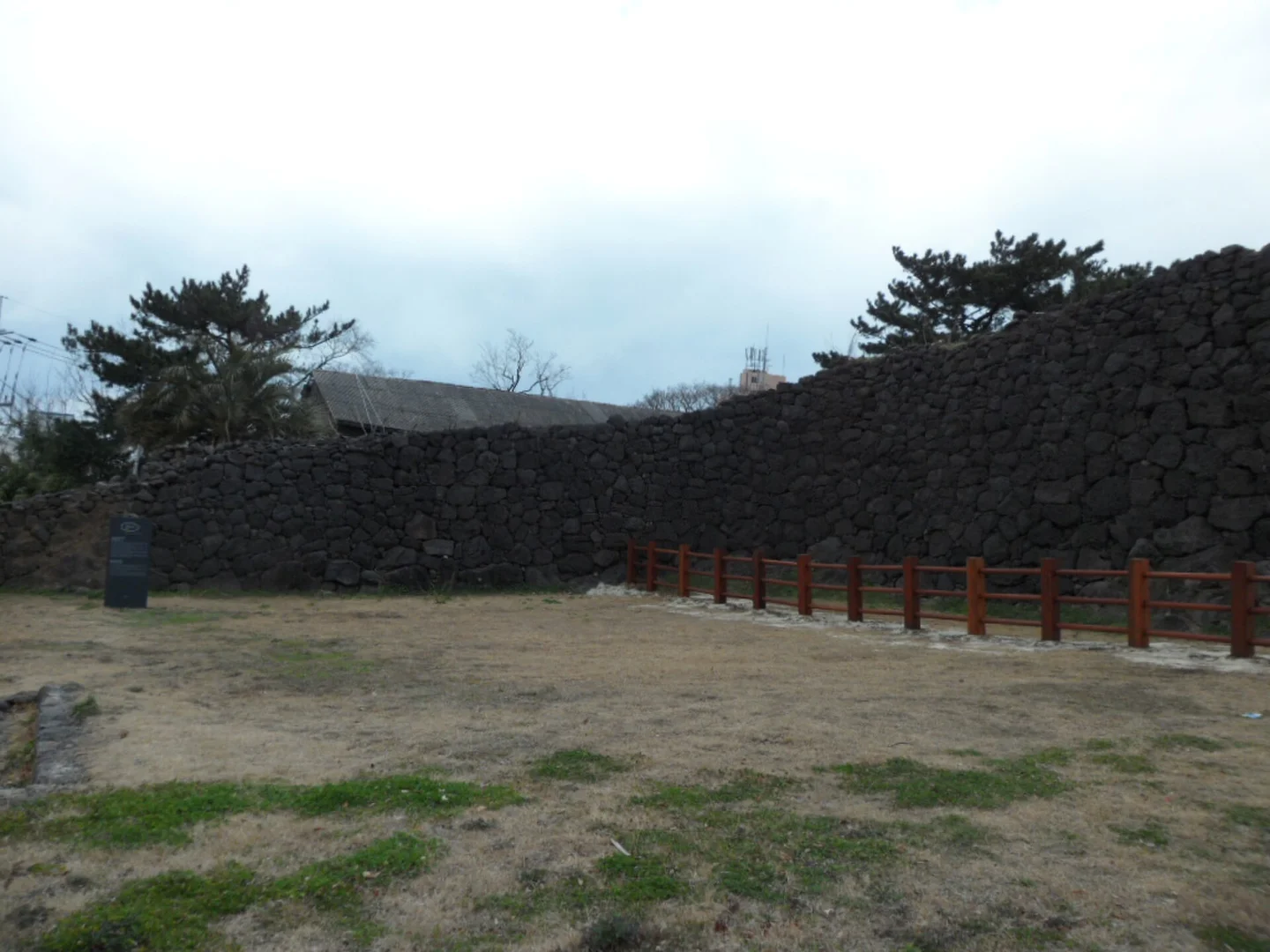
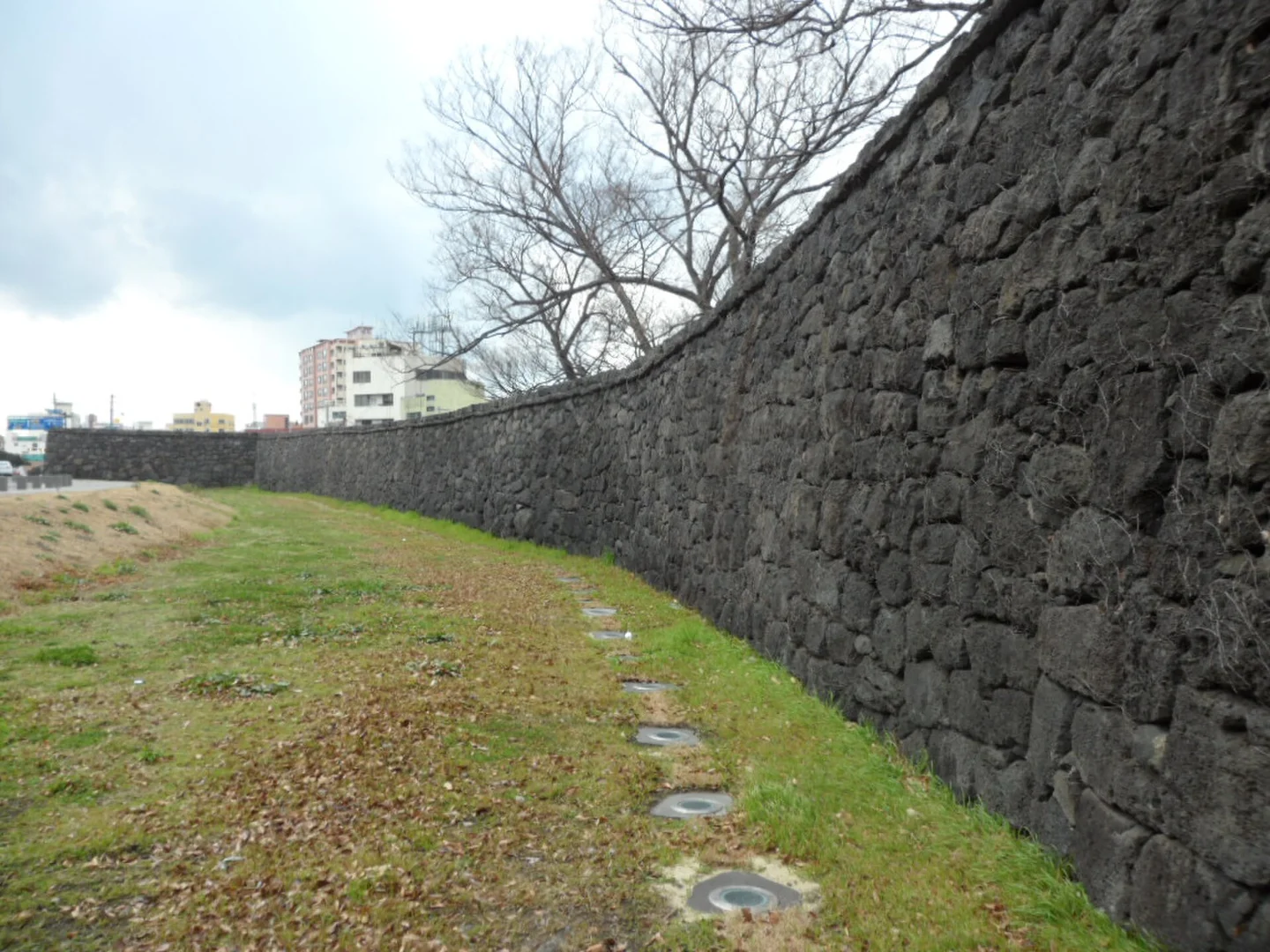
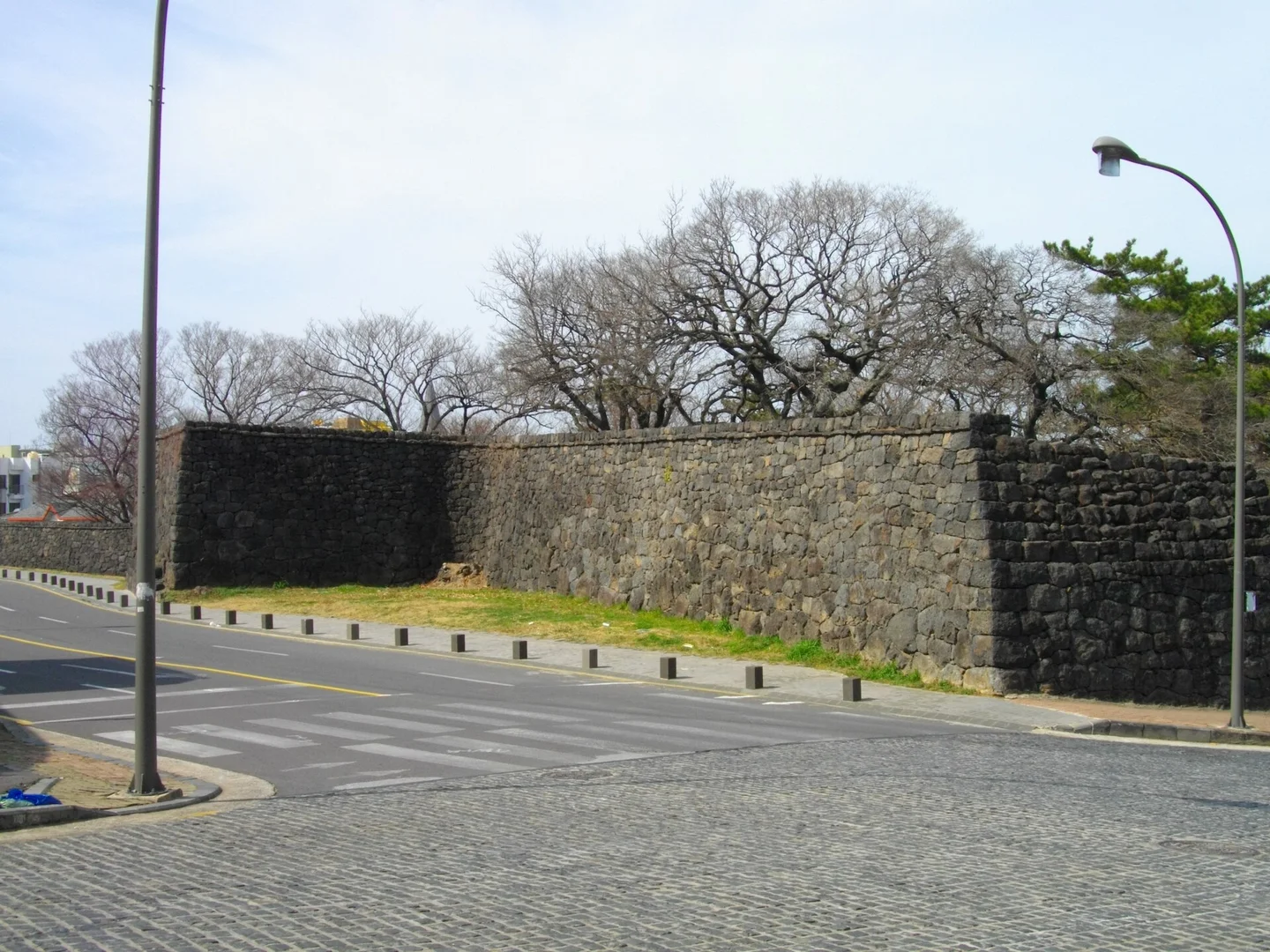
South of Dongmun Market, Jejuseongji marks part of the old Jeju Fortress. It isn't a complete defensive circuit that you can follow around the city. What survives is a chance to see the former boundary within the present street plan, where dark stonework stands close to roads and everyday buildings. Nearby Ohyeondan commemorates five figures whose lives and work influenced education and scholarship on the island. Some arrived as officials, others in exile. Reading that context adds meaning to a place that might otherwise seem like a small, quiet historical enclosure. The altar and the fortress have different functions, even though they fit naturally into the same stop. Look at the walls at street level
Thddbwnd · Original · CC BY-SA 3.0 ·
The uneven surfaces and closely fitted stones are worth studying from the public approach. Then step back to see the wall against the city around it. That relationship is the distinctive sight here: the old boundary has become part of a neighborhood people still pass through daily. Use the signed paths rather than treating the masonry as a walking route. Changes in level and narrow approaches can make this section less straightforward for a stroller or wheelchair than the broad market streets. A short view from an accessible outer section is a sensible alternative to trying to trace every remaining stretch.
Put Jeju Mokgwana before the market if you want to go inside
Gwandeokjeong's broad tiled roof is one of the old town's key landmarks. Beside it, Jeju Mokgwana was the center of local government during the Joseon period. Visiting the compound gives you a clearer sense of how official buildings, courtyards, and gates were arranged than simply looking through the entrance. The distinction between surviving heritage and reconstruction matters here. Much of the government compound was dismantled during the Japanese colonial period. Archaeological work and historical records informed the reconstruction completed in 2002, while Gwandeokjeong survived. The official site history explains how the present complex took shape. As checked October 12, 2026, the visitor guide lists daily daytime opening from 9 a.m. to 6 p.m., with last admission at 5:30 p.m. Standard admission for ages 25–64 is ₩1,500. Put this stop earlier if you intend to enter, since a long market lunch can easily push a later visit beyond the admission cutoff. Evening openings and performances follow separate seasonal announcements. You can spend time looking at the pavilion from outside without committing to the full compound visit. If architecture is a main interest, allow enough time inside to compare the gates and individual buildings rather than rushing straight through to the far end.
Dongmun Market: what to eat, and when to arrive
Dongmun is both a market for everyday shopping and a destination for travelers. Produce, seafood, dried goods, clothing, and souvenir stalls share the area with snack counters. Daytime gives you the broader market experience; the night-food section has its own schedule and atmosphere. For a taste specific to Jeju, try omegi-tteok, a chewy local cake traditionally made with glutinous millet and red beans. Modern versions vary in their fillings and coatings. Bingtteok offers a savory alternative: cooked radish rolled in a thin buckwheat pancake. It has a much milder character than a spicy rice-cake dish. The Jeju Tourism Organization's food guide explains both, making them useful names to recognize as you browse. For the night market, head toward gate 8. The current official market listing gives a 7 p.m. start from May through October and 6 p.m. from November through April, with closing by midnight or earlier when ingredients sell out. These hours were checked October 12, 2026; ordinary shops keep their own schedules. Arriving early in the evening gives you more room to choose than relying on a last-minute stop near closing. Note your entrance number before getting absorbed in the aisles. If you buy fresh food or a box of cakes, ask how to store it and how soon to eat it. Choose quantities that fit the rest of your day, particularly if refrigeration won't be available. Heavy shopping is easiest at the end of the walking route.
Link the sights on foot, with a pause by Sanjicheon
Abasaa · Original · Public domain ·
Sanjicheon runs beside the market area toward Jeju Port, creating a more open stretch after the crowded aisles. Bridges, waterside paths, and the surrounding buildings make it a useful place to slow down between stops. You can enjoy the water from street level if you prefer to avoid stairs down to lower paths. During heavy rain or a closure, stay on the open upper route. For your arrival, use the name of a specific landmark in your map: Gwandeokjeong, Dongmun Market, or Ohyeondan. “Jeju City” covers a much larger area. There is no subway on the island, so a car-free plan combines local buses or a taxi with walking. Check the actual stop and road side for the route you choose, especially for the return journey. Drivers can often simplify the outing by parking once and making a loop. Choose parking in relation to the last stop, particularly if you expect to carry market purchases. The walk includes outdoor monuments and exposed roads as well as covered shopping aisles, so it's only partly sheltered on a rainy day.
City Hall is an optional extension, not the next old-town block
Abasaa · Original · Public domain ·
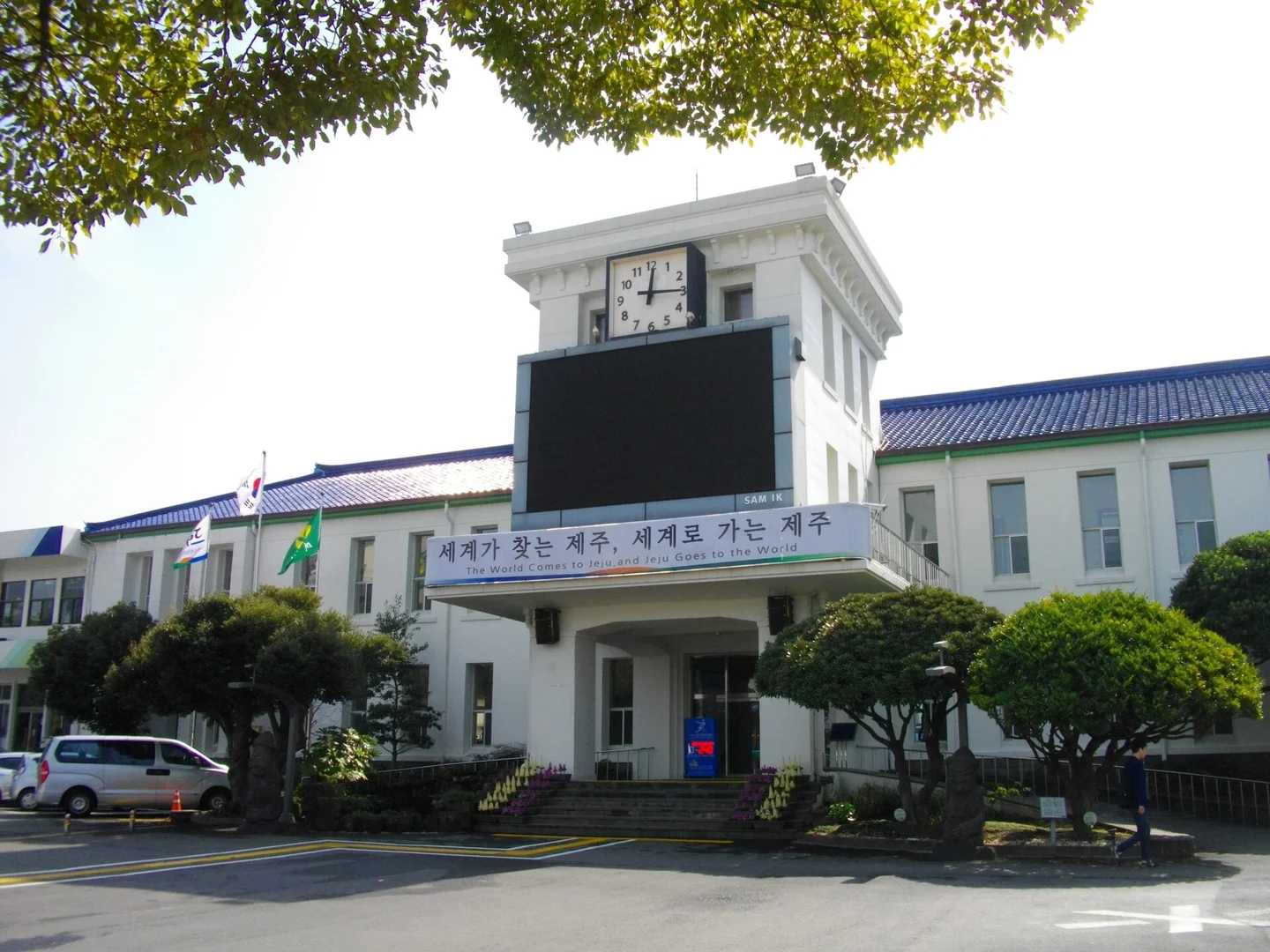
If you're interested in the city's everyday commercial life, continue south along the Jungang-ro corridor toward Jeju City Hall after finishing the core route. Its clock-tower façade offers a civic landmark in a different part of town. This is a separate extension, not a building immediately beside Dongmun Market or Gwandeokjeong, and the municipal offices aren't a walk-in sightseeing attraction. For a shorter visit, finish near the stream or market and return to your accommodation. Jeju's Traditional Five-Day Market is a different destination, and the shopping districts of Yeon-dong and Nohyeong-dong are not part of this compact old-town walk. Keeping those places separate on your map avoids turning a relaxed afternoon into several unexpected transfers. On a flight day, end the walk with enough time for the airport journey and check-in. The old town's relative proximity to the airport makes it convenient, but traffic and airport procedures still need their own allowance. A morning heritage visit followed by lunch at Dongmun is an easier fit than trying to squeeze the entire district in just before departure.