Gwangju's ACC and Chungjang-ro: Art, History, and Downtown Streets
Lain4lest · Original · CC BY-SA 3.0 ·
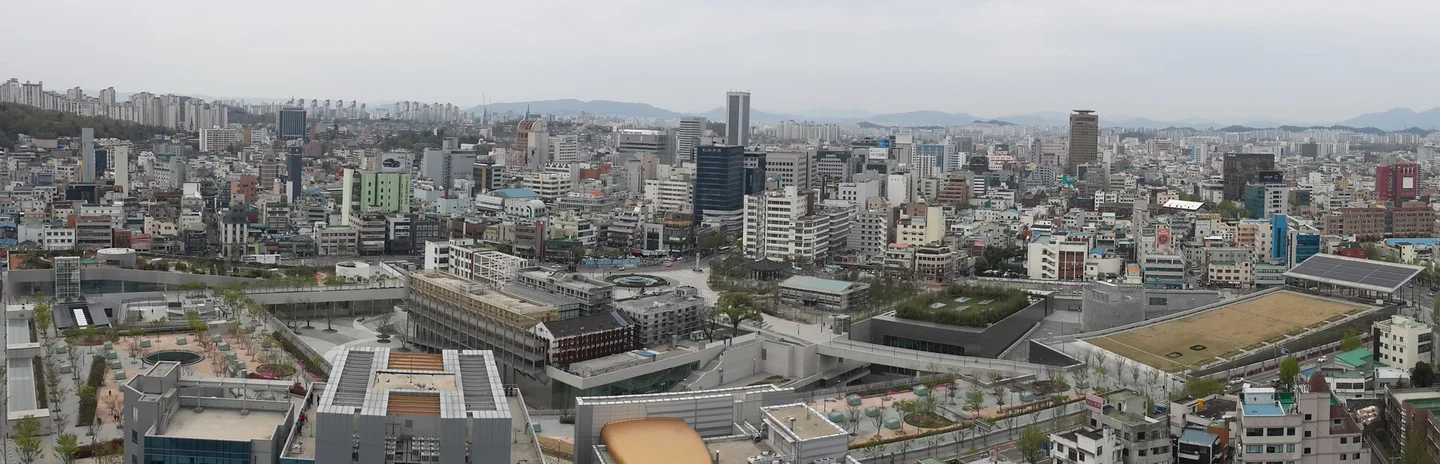
Gwangju's Asia Culture Center, usually called ACC, and the shopping streets of Chungjang-ro make an easy pairing for a day downtown. Begin with an exhibition or performance, step outside into a square closely tied to the city's modern history, then continue among clothing shops, cafés, and smaller cultural venues. The change of scale, from expansive arts complex to busy neighborhood streets, gives the route its variety. Culture Complex Station, also labeled Munhwajeondang, is a convenient starting point on Gwangju Subway Line 1. ACC directs visitors toward exits 5 and 6, but reaching the complex is not the same as reaching your particular hall. Save the venue name and floor shown on your reservation. For a group meeting, choose the visitor center or the information desk for the program you are attending. A first visit works well with one substantial ACC program followed by a walk through May 18 Democracy Square and Chungjang-ro. After a meal, choose between a film at Gwangju Theater and a look around Art Street. There is enough here for a full day without trying to attend several scheduled events back-to-back.
Choose the Program Before the Building
ACC brings together exhibitions, performances, collections, and children's activities. Admission works by facility or program rather than as a single all-access ticket. Start with what is on and what interests you: a large contemporary-art exhibition, an Asian-culture collection, a theater performance, or a family activity. Read the description and audience information before reserving. Much of the complex sits below ground level, connected through open plazas, stairs, and passageways. An apparently nearby venue can require a change of level and a longer walk than expected. Use the space guide to find elevators if you are traveling with a stroller or wheelchair. The visitor center and individual facility desks can help match the route to your destination. The children's experience hall uses timed sessions, and activities can have age requirements. Families should choose an appropriate session first, then arrange adult exhibitions and meals around it. This avoids arriving at a children's venue between sessions or assuming every area is an unrestricted play space. As checked October 12, 2026, ACC lists general indoor hours as 10 a.m.–6 p.m., with extended Wednesday and Saturday hours for specified facilities. Regular closures are Monday and January 1; the FAQ explains that when Monday is a public holiday, closure moves to the next working day. Program schedules can differ, so use the details of your chosen exhibition or performance for the final plan.
May 18 Democracy Square
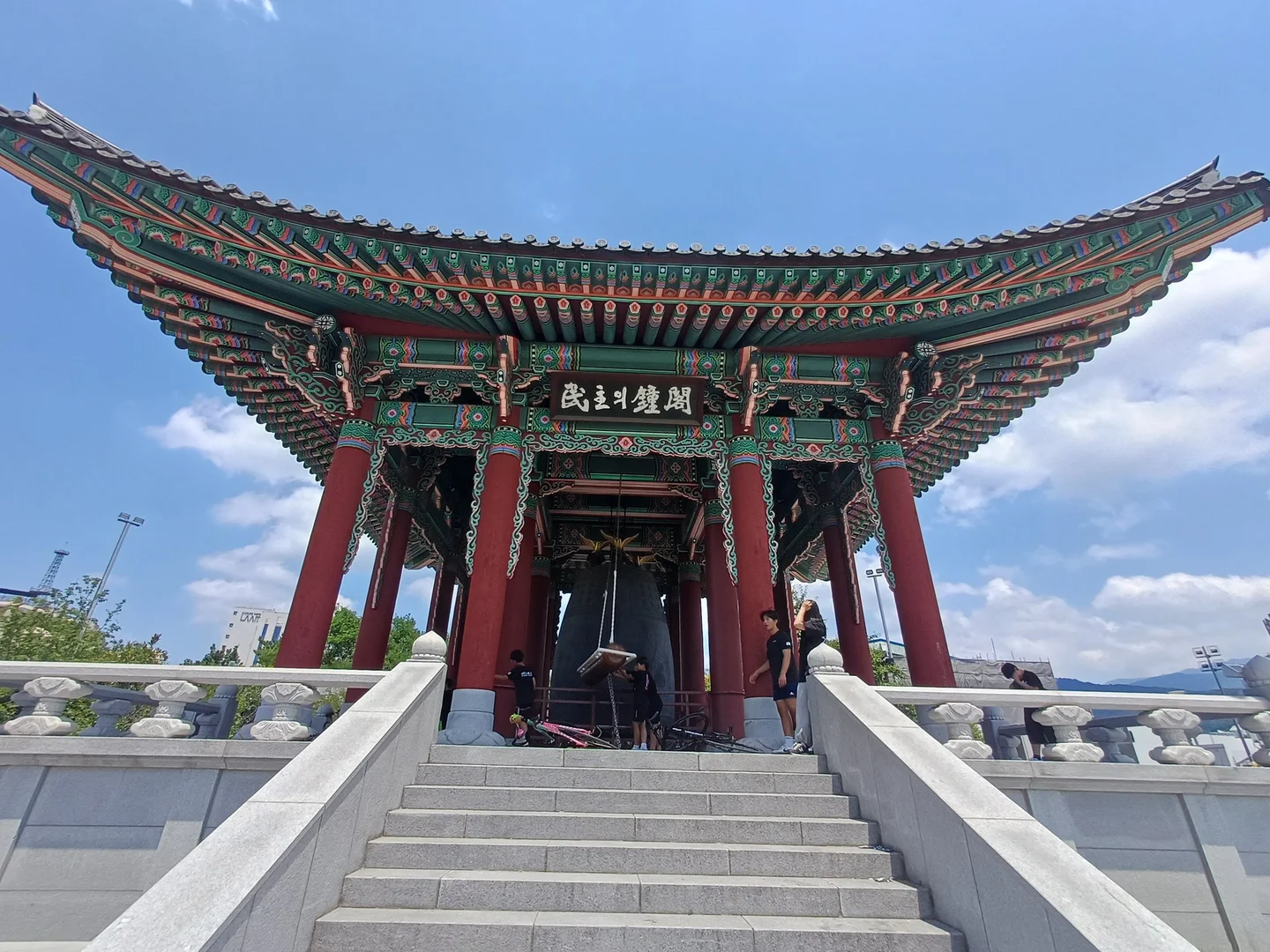
May 18 Democracy Square and the former Jeollanam-do Provincial Office place this part of downtown in the context of the 1980 Gwangju Democratic Uprising. Taking time to understand that history changes the way you see the buildings and public space. The nearby Democracy Bell is another memorial landmark, associated with the city's commitment to democracy, human rights, and peace. The square can be a short stop between the arts complex and the shopping streets, or the beginning of a deeper historical visit. Read the on-site explanations and allow more time if you want to explore the former provincial office. ACC's current visitor information confirms that the restored complex formally reopened in May 2026. Use its present visitor guidance when planning access. The bell pavilion itself is visible as part of the square area; ringing events follow particular arrangements. A visit need not coincide with a ceremony to be meaningful. If the history is new to you, begin with the basic relationship between the uprising, the square, and the provincial office before moving on to the surrounding streets.
Chungjang-ro Above and Below Ground
Minseong Kim · Original · CC BY-SA 4.0 ·
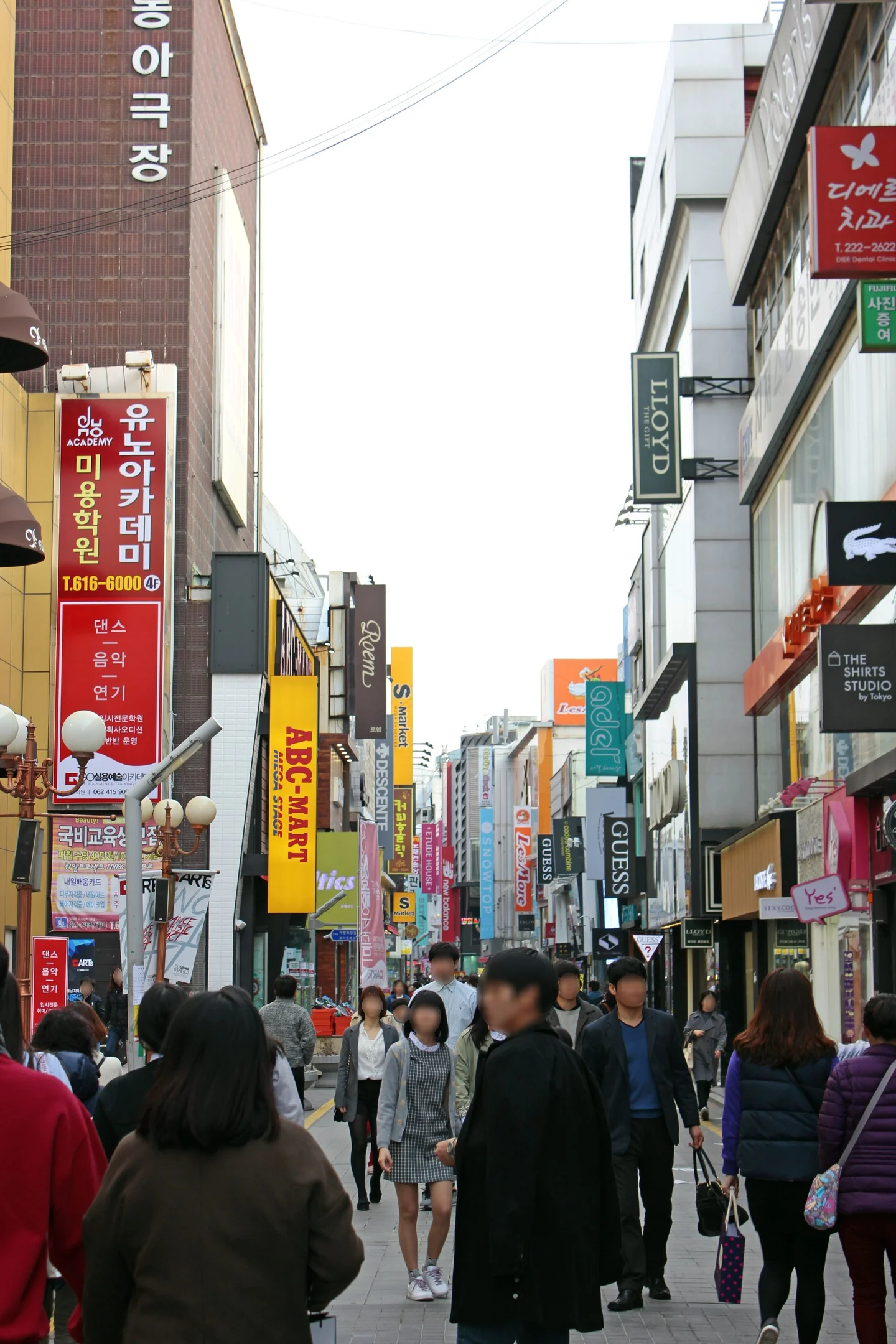
Chungjang-ro brings you into a denser shopping district, with storefronts, side streets, and signs competing for attention. Clothing and accessories are a major draw, while restaurants and cafés provide natural breaks after time in the galleries. The farther sections of the district also have a tradition of hanbok and fabric shops, adding another kind of browsing beyond everyday fashion. Choose a few streets or stores that interest you rather than treating the district as one long shopping checklist. If meeting companions after browsing separately, save a specific shop or café as the meeting point. Businesses set their own opening hours, and some are upstairs, so a Korean shop name saved alongside the map pin can be useful.
Kimge2020 · Original · CC BY-SA 4.0 ·
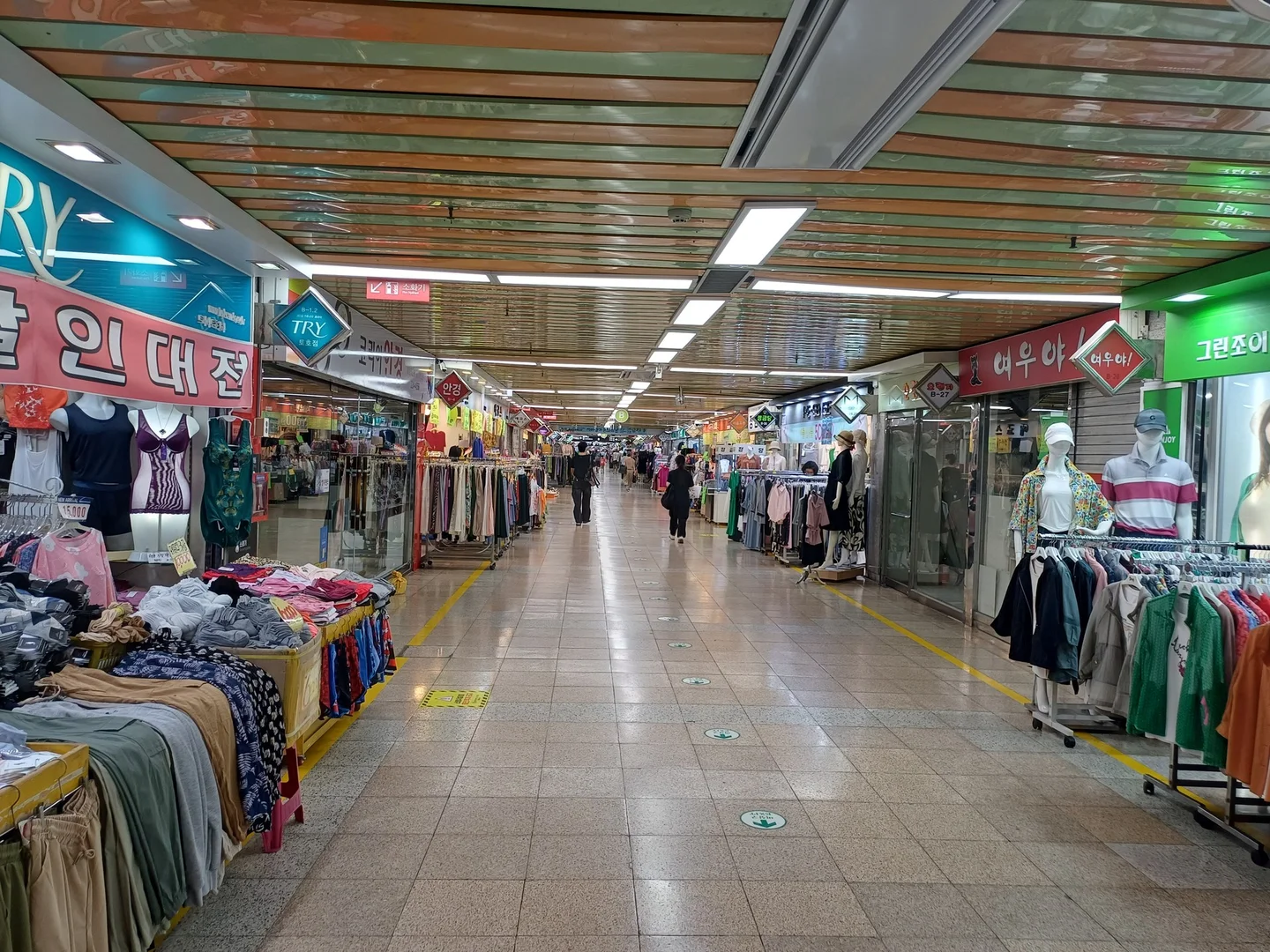
Geumnam-ro's underground shopping area offers another set of stores and a sheltered stretch of walking when rain or strong sun makes the streets less comfortable. Keep track of which exit leads toward your next destination. The underground passages are useful connections, but they do not put every downtown attraction on a single indoor route. When buying clothing or accessories, check fit, material, and the shop's exchange policy before paying, particularly if you will soon leave Gwangju. If shopping is secondary, use the district simply as the place for lunch or coffee between cultural stops. A sit-down break can make the second half of the day more enjoyable than adding another venue immediately after ACC.
Make a Film Part of the Visit
Noropdoropi · Original · CC BY-SA 3.0 ·
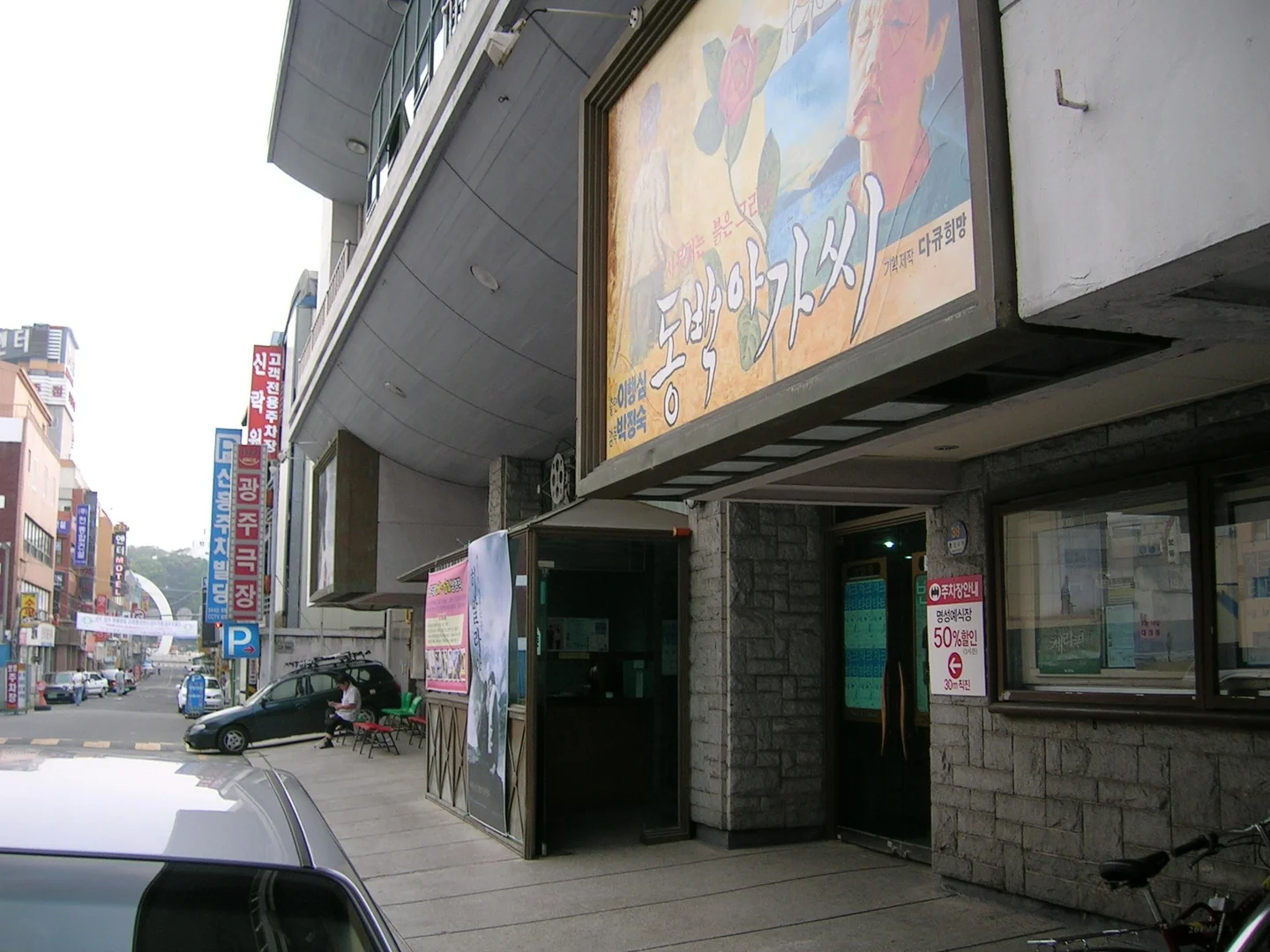
Gwangju Theater dates to 1935 and continues as a venue for independent and art-house cinema. It offers a different experience from a multiplex, with its long history tied to the older commercial streets. Film lovers can make a screening the main event after ACC, leaving the intervening time for a meal and the walk to the theater. Check the current film, running time, and language or subtitle information before buying. An overseas film shown in Korea may have Korean subtitles, while a Korean film may not provide English ones. The title alone does not tell you whether the screening will suit an English-speaking visitor. A brief look at the theater exterior is easy to fit into a downtown walk, but watching a film needs a proper place in the schedule. Allow time to leave the ACC venue, reach the cinema, and collect or confirm your ticket. For a late screening, plan your return to the hotel from the theater rather than automatically heading back to the morning's starting point.
Art Street for Galleries, Crafts, and Antiques
Steve46814 · Original · CC BY-SA 3.0 ·
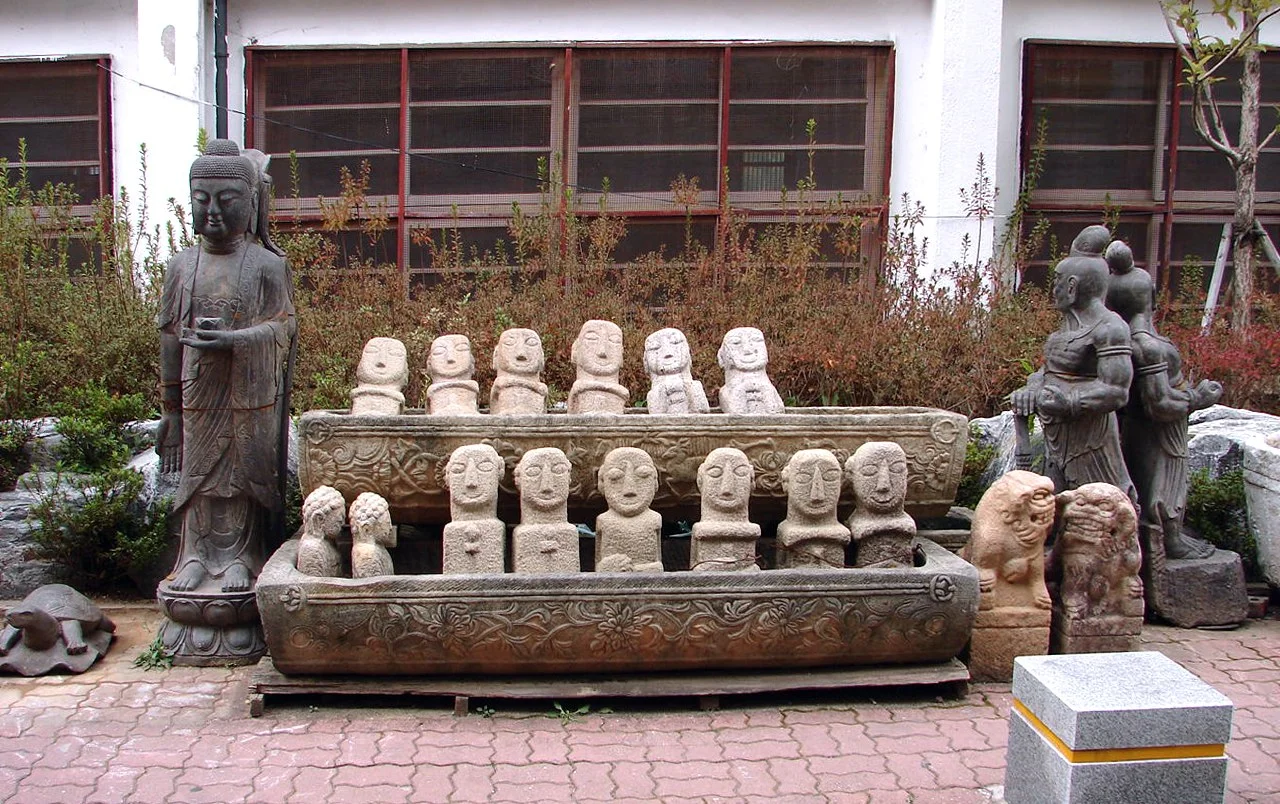
Art Street, near Geumnam-ro, shifts the emphasis from fashion toward galleries, art materials, framing, and antiques. It is a good choice if you enjoy looking closely at objects and asking about how they were made or used. Stone figures, ceramics, old books, and other shop displays can turn a short walk into a series of individual discoveries. Visit with curiosity rather than expecting a market or performance on every day. Individual galleries and stores determine what is open, and a specific exhibition deserves its own opening-time check. Ask before handling objects or photographing inside a shop, especially where the display includes works for sale. If your ACC visit runs long, choose Art Street or Gwangju Theater according to your interests. Finish near a convenient subway station for your next journey. The district is easier to enjoy as a connected walk with a few well-chosen stops than as a succession of short car trips between addresses.