Seongan-gil, Cheongju: Shopping Streets with History Close at Hand
Minseong Kim · Original · CC BY-SA 4.0 ·
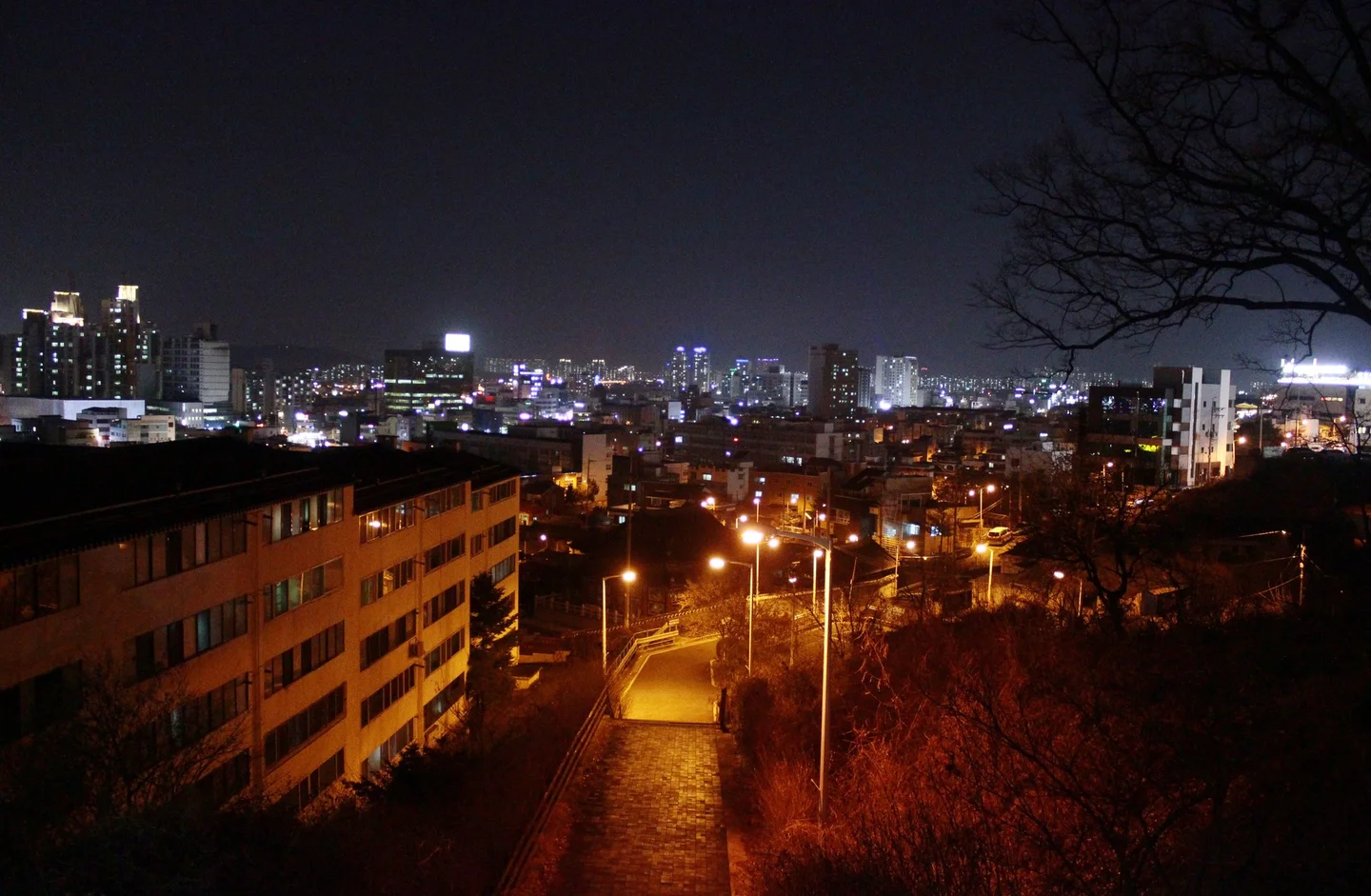
In central Cheongju, an ancient iron flagpole rises among modern shops, and a short walk leads to a park filled with old trees and historic structures. Seongan-gil brings those places together with clothing stores, cafés, and everyday downtown life. It suits an afternoon that leaves room for browsing instead of moving from one ticketed attraction to the next. Use the shopping streets, the Yongdusa Temple Site flagpole, and Jungang Park as the core of the outing. Afterward, choose between a walk beside the Musimcheon and a visit to Yukgeori Market. Keeping one of those as an optional extension gives you time to stop for a meal or investigate a side street without constantly watching the clock. Seongan-gil is a district of streets and lanes, so there is no single visitor entrance. Save a precise meeting point on your map. The flagpole and Jungang Park are particularly useful landmarks for finding your bearings and reconnecting with anyone who has gone off to shop.
Start at the Iron Flagpole
The Iron Flagpole at Yongdusa Temple Site is an unusually immediate encounter with the city's past. The temple is gone, but its tall ceremonial pole remains in a busy commercial setting. It once held a Buddhist banner for important events at the temple entrance. The national heritage record dates the flagpole to 962, in the Goryeo period. Cylindrical iron sections fit together to form the shaft, supported at the base by two stone pillars. An inscription records its construction, making the date unusually clear. Looking from the stone supports up through the connected sections helps explain how this slender structure was assembled. Its setting is part of what makes the visit memorable. Rather than separating history behind a museum door, the streets bring it into the same view as shopfronts and pedestrians. Pause outside the protected area to look at the materials and proportions, then continue into the surrounding lanes. If you arrive by taxi, agree on a nearby road where stopping is permitted. A map pin on the monument does not necessarily mean a car can pull up beside it. For a meeting point, choose a recognizable spot nearby that leaves room for people passing through.
Make the Transfer into Downtown
Travelers arriving by intercity bus or train still need to get from their terminal or station to Seongan-gil. Include that city connection when judging how much time remains for sightseeing. Search the route to the flagpole or Jungang Park, rather than treating arrival in Cheongju as arrival in the shopping district. For a bus trip, save both the arrival stop and the stop for your return direction. They may be on different streets. Use current local transport information rather than a timetable from an older city guide, especially if you have a fixed departure later in the day. If driving, park before entering the smaller shopping lanes and keep the lot's location on your map. Walking through the district is easier with a clear starting point. Check any parking validation with the individual shop; a purchase in one business does not establish a district-wide parking benefit.
Slow Down in Jungang Park
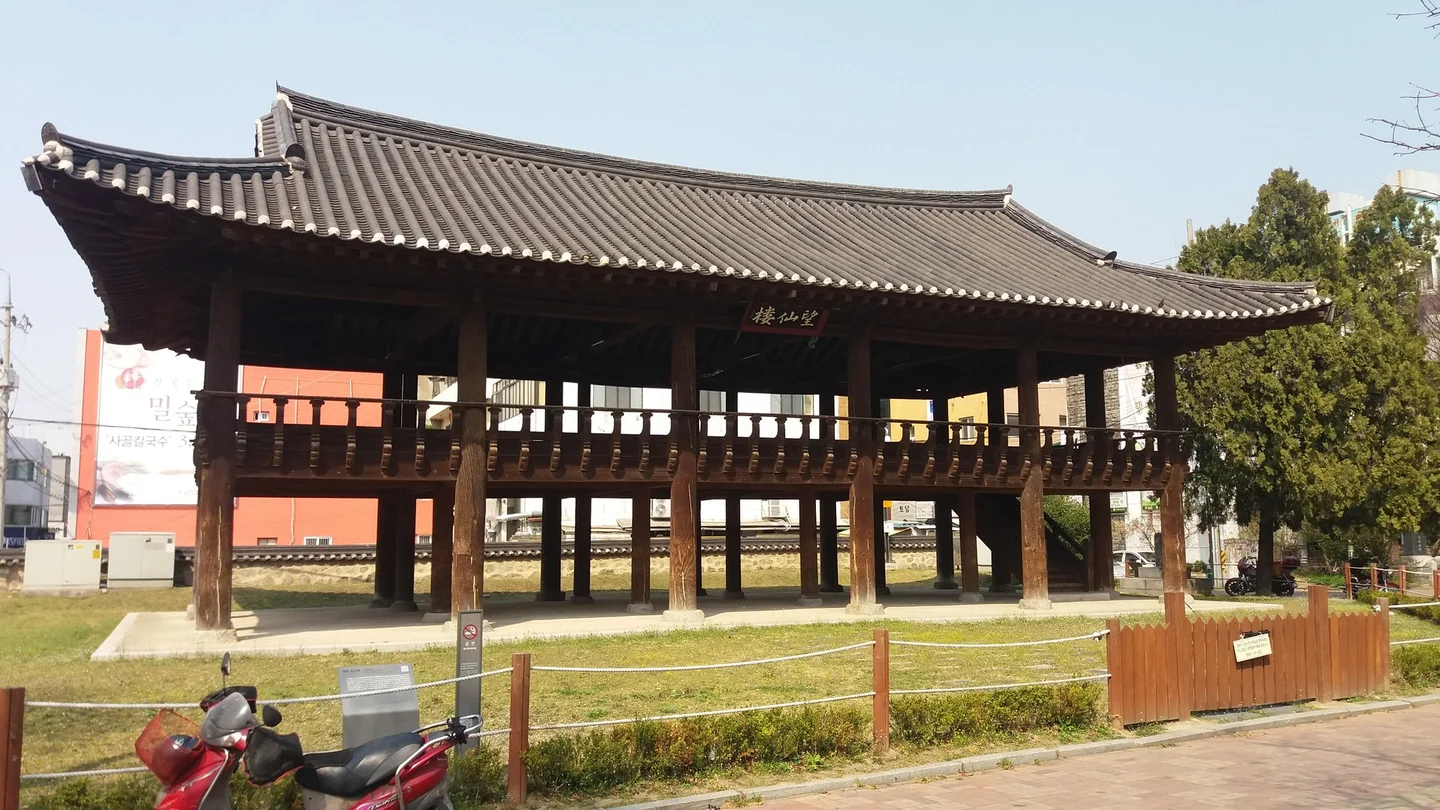
Jungang Park is a local resting place as well as a collection of historical landmarks. Paths, benches, trees, and monuments occupy a site associated with Cheongju's former administrative center. Admission is free, and the park makes a convenient pause between shopping and the next part of the walk. Mangseonnu, the long wooden pavilion, has a history of relocation and reuse. The city restored it in its current park setting in 2000 after earlier moves and periods serving educational purposes. Its raised floor, repeated posts, and broad tiled roof give the space a different scale from the surrounding commercial streets.
Trainholic · Original · CC BY-SA 4.0 ·
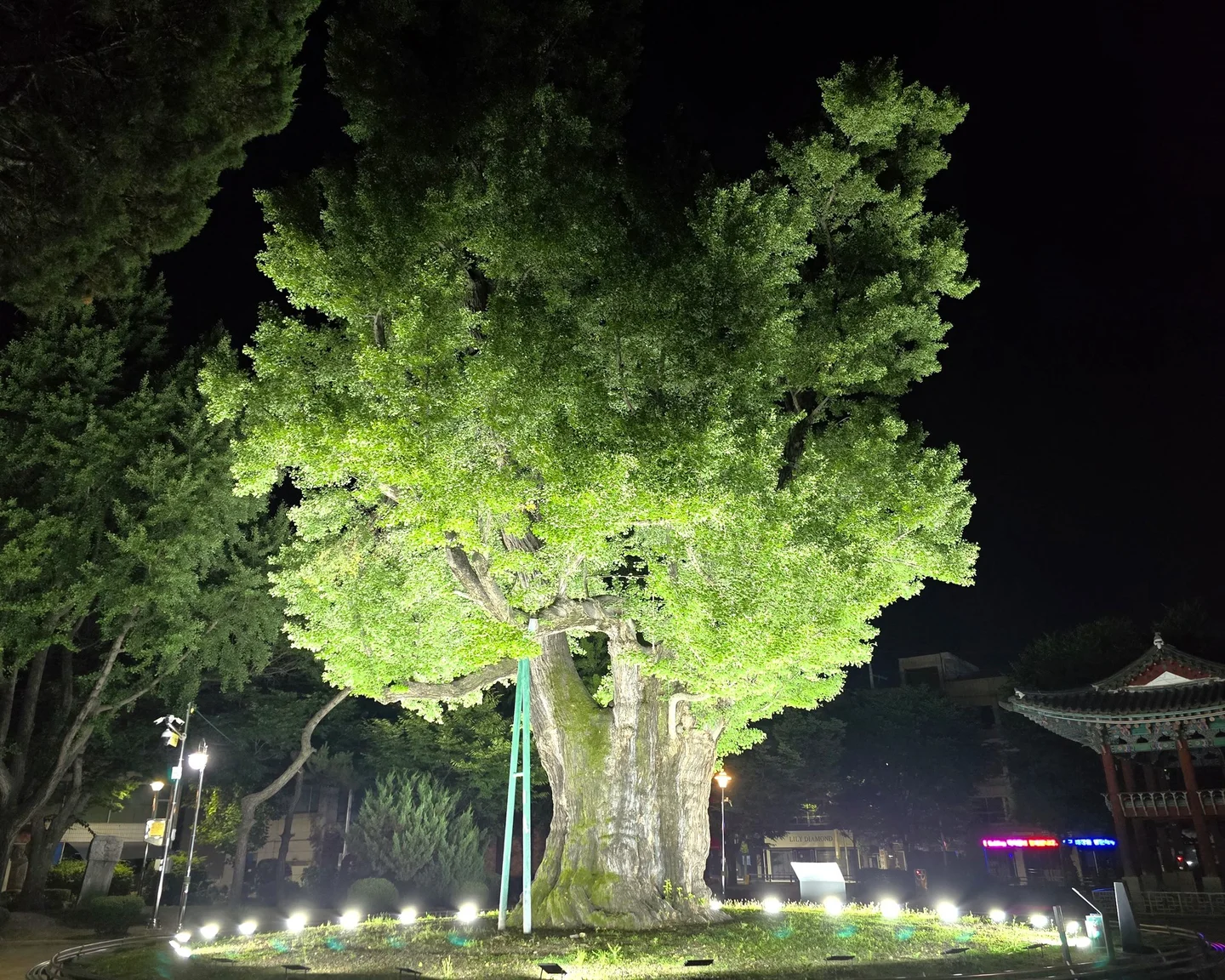
The large ginkgo known as Apgaksu is another focal point. Its substantial trunk and spreading branches are worth looking at in any season, whether the leaves are green, turning color, or absent. Respect the protected ground around it and view it from the park paths. You will also encounter the gate associated with the former provincial military headquarters and commemorative stones. Read a few signs that catch your interest rather than turning the whole stop into a list to complete. Access inside individual structures follows the on-site arrangements; their presence in an open park does not make every interior or raised platform accessible.
Leave Space for Shopping and a Meal
The commercial streets work best when you give them some unplanned time. Look through clothing and accessory shops, take a café break, or settle on a restaurant after seeing a few menus. Individual businesses set their own opening days and hours, so check ahead only when a particular store is essential to the visit. For clothes or gifts, ask about fitting and exchange conditions before paying. That matters more when you are leaving Cheongju soon and will not easily be able to return to the same shop. Keep the receipt with the purchase until you have checked the size and condition. Yukgeori Market, south of Jungang Park, is an option for travelers who want to add traditional-market browsing. Give it its own portion of the afternoon instead of treating it as a quick detour on the way to the river. If the shopping bags are already full, a meal near the park followed by the journey back may be the more comfortable finish.
Add a Stretch of the Musimcheon
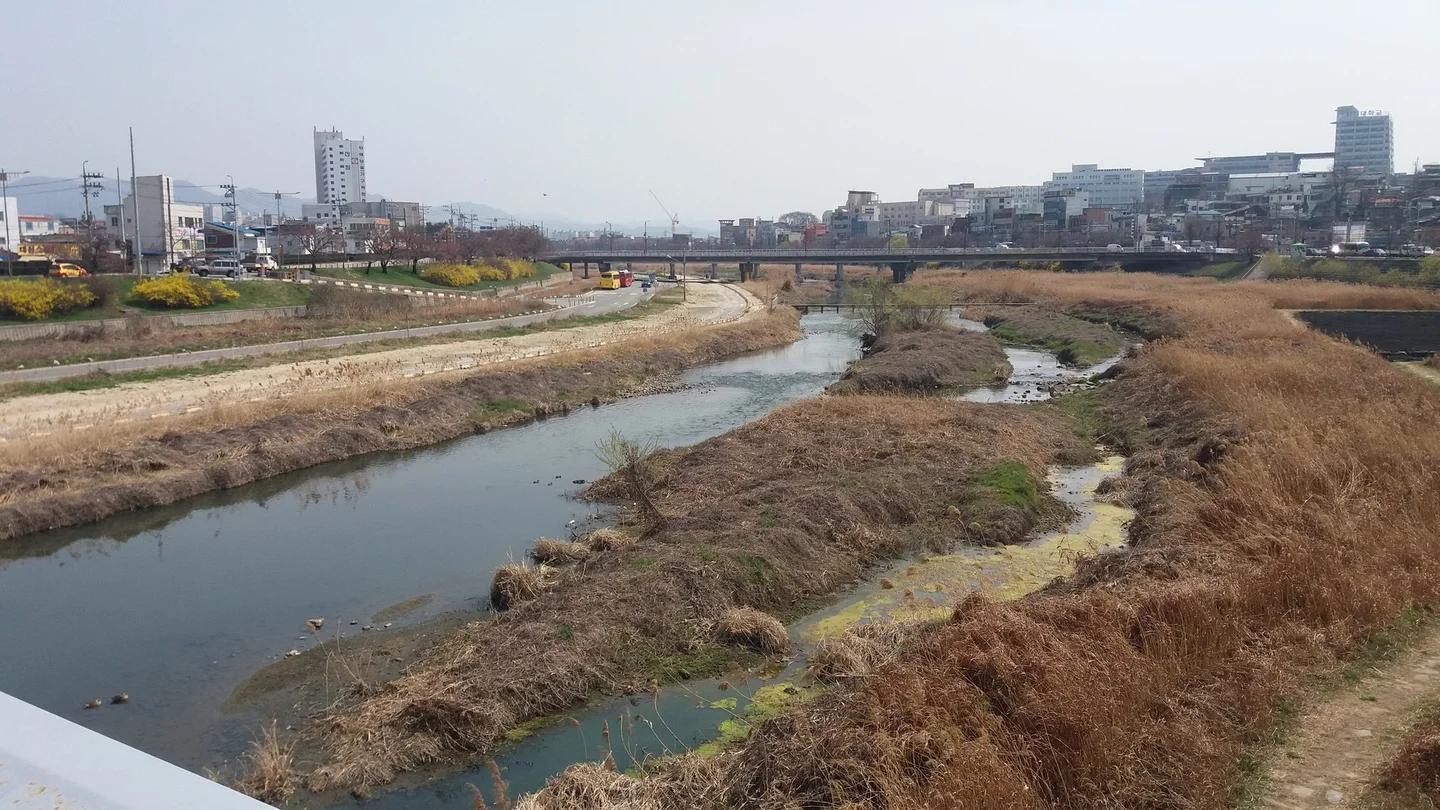
The Musimcheon opens up the city after the closer views of shops and park buildings. Water, broad banks, bridges, and longer sightlines give a riverside walk a different feel. Choose a nearby access point and an exit that works for your return journey; the stream extends well beyond this downtown outing. Follow the marked pedestrian route where walking and cycling paths are separated. If you only want a brief look, a bridge or street-level viewpoint may be enough. Descending to the water is optional, particularly when carrying purchases or approaching the time of an onward bus or train. Observe closures after heavy rain and stay out of restricted river paths. For an evening walk, choose a section with a clear, familiar exit rather than continuing until the route becomes difficult to recognize. Finish where you can conveniently rejoin city transport, leaving the longer stretches for a visit planned around the river itself.