Jungangtap and Tangeumho: A Stone Pagoda and a Walk Along Chungju’s Water
Seungh · Original · CC BY-SA 4.0 ·
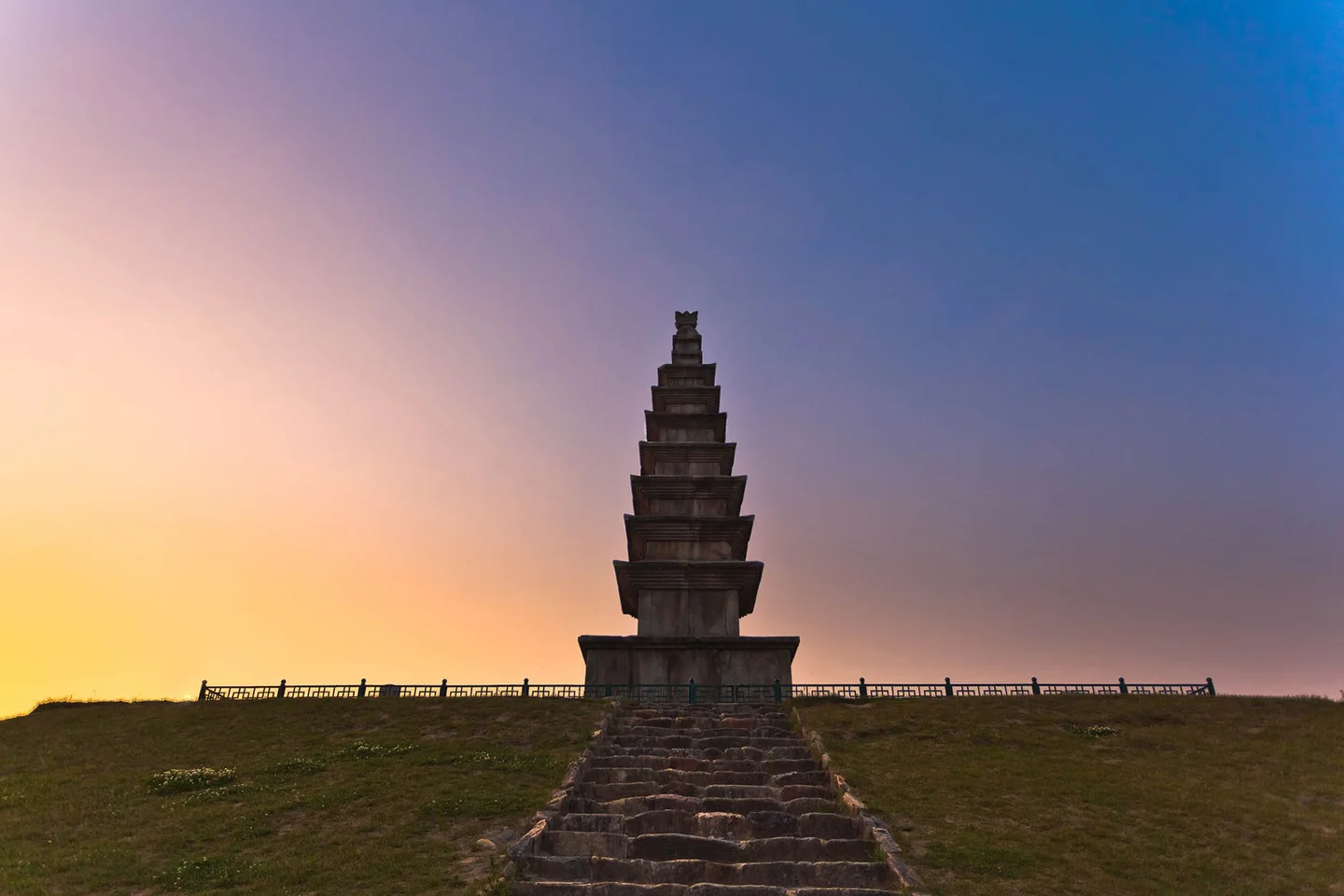
Jungangtap makes a striking starting point for a relaxed day in Chungju. A tall stone pagoda stands above the park on a raised mound, its stacked roofs narrowing into the sky. Below it, tree-lined paths lead toward the open water of Tangeumho. You can spend most of the visit outdoors, then step into Chungju Museum when you want more context for the region’s history. Jungangtap is the familiar name for the Seven-story Stone Pagoda in Tappyeong-ri. For navigation, look for Jungangtap Historic Park or Chungju Museum; both place you in the right area for the pagoda and waterfront. Chungju Station and the main bus terminal require an onward local connection. Plan that bus or taxi ride first, then explore the park on foot. The route is flexible. A shorter visit can combine the pagoda, museum, and nearby park paths. A longer outing adds Tangeumho’s Rainbow Path and the rowing venue. Decide how far you want to follow the water before leaving the park, particularly if your car or return bus is near the original entrance. The waterfront can draw you considerably farther than the compact pagoda-and-museum visit.
Looking Up at the Seven-story Pagoda
Republic of Korea from Seoul, Republic of Korea · Original · CC BY-SA 2.0 ·
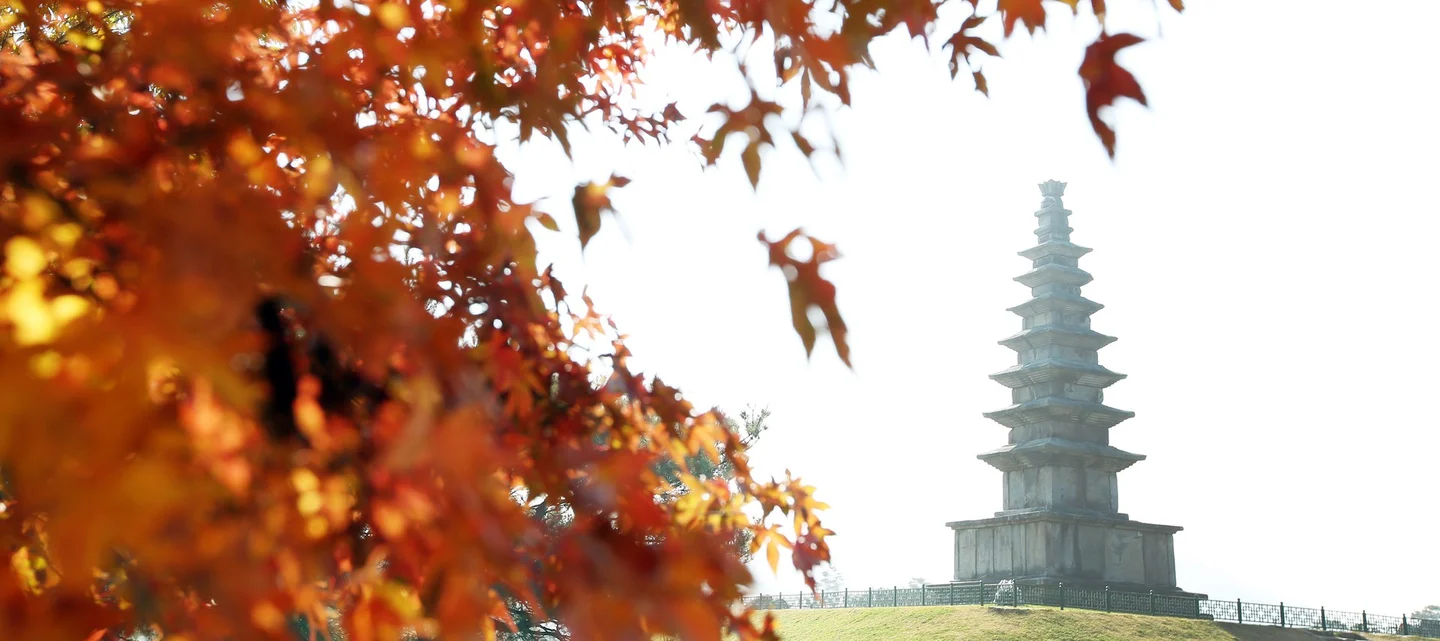
The pagoda is thought to date from the Unified Silla period. Its elevated earthen platform was intended to protect it from flooding, and the broad stone base gives the tall structure a firm visual foundation. From nearby, you can distinguish the assembled stones and layered roof supports. From farther down the mound, the whole profile becomes clearer, with each story slightly smaller than the one below. Try both views. Approach to study the masonry, then step back onto a park path to see how the monument sits against the trees. Autumn foliage adds color around the gray stone, while the more open branches of winter reveal its outline. The changing setting is part of the pleasure of returning to a monument that otherwise seems so still. Stone steps climb toward the pagoda’s platform. They are a separate access consideration from a walk through the lower park, so visitors with limited mobility can choose a ground-level view without attempting the stairs. If your group splits, arrange to meet at a bench or path junction below. Keep off the pagoda’s base and protective barriers; the public approach already offers clear views of its structure.
A Park Walk With a Museum Along the Way
Republic of Korea from Seoul, Republic of Korea · Original · CC BY-SA 2.0 ·
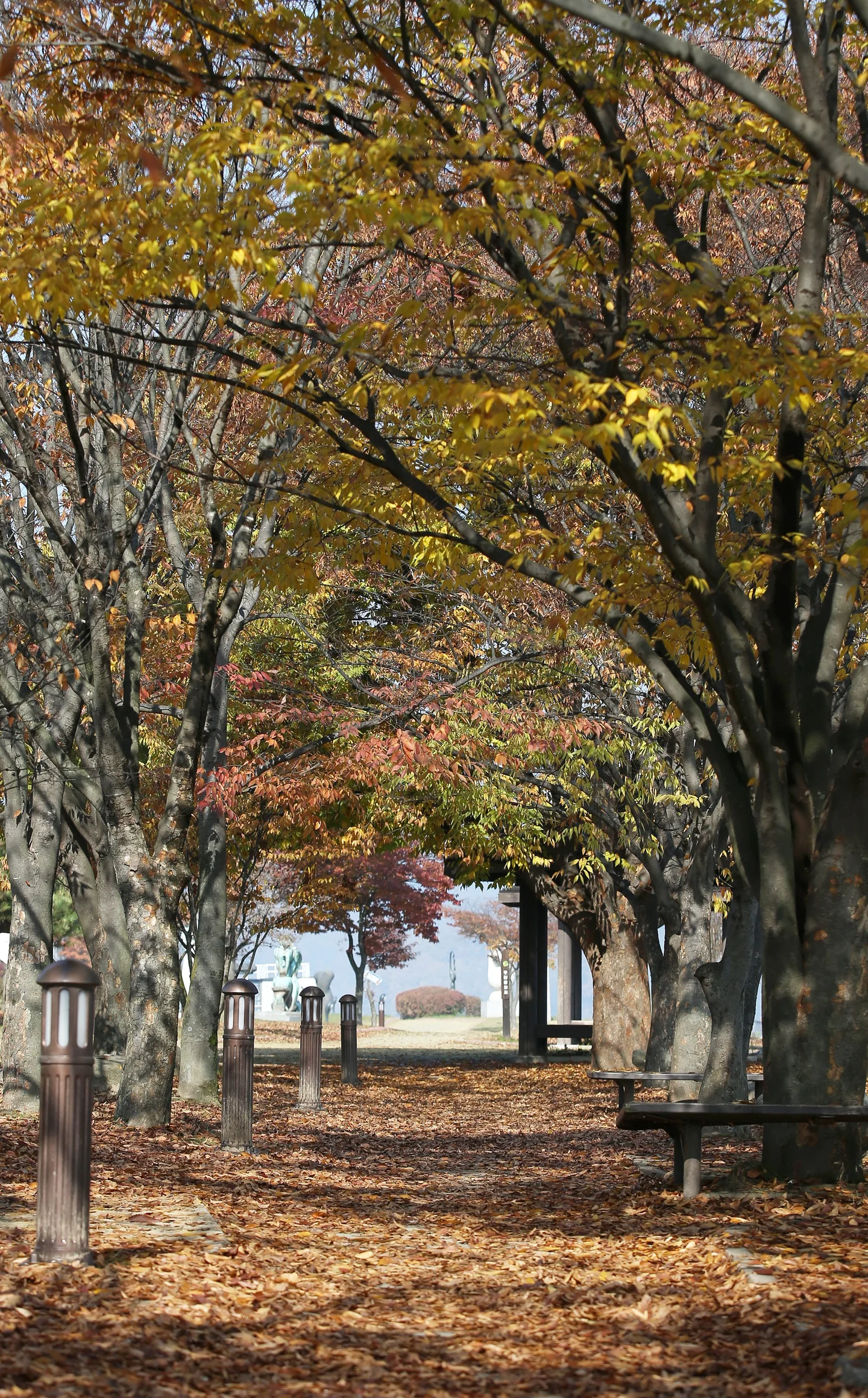
The paths beneath the trees are worth allowing time for in their own right. Benches provide places to pause between the monument and the water, and the foliage changes the character of the route through the year. This is a useful place for a mixed-interest group: someone can linger around the stonework while others take a quieter break nearby, without turning the outing into separate excursions. Chungju Museum brings the city’s regional history indoors through local artifacts and displays. It works especially well after the pagoda, when you already have one substantial landmark to connect with the collection. For a family visit, choose a small theme, such as the difference between objects made for everyday life and objects made to commemorate or symbolize something. That gives children a way into the displays without requiring a long chronology. Chungcheongbuk-do’s official tourism guide, checked October 12, 2026, lists museum hours as 9 a.m. to 6 p.m., with closure on Mondays, January 1, and the days of Seollal and Chuseok. If you arrive late, see the museum before taking the longer waterfront walk. On a Monday, build the visit around the outdoor park rather than counting on an indoor break.
Tangeumho’s Rainbow Path, Close to the Water
Republic of Korea from Seoul, Republic of Korea · Original · CC BY-SA 2.0 ·
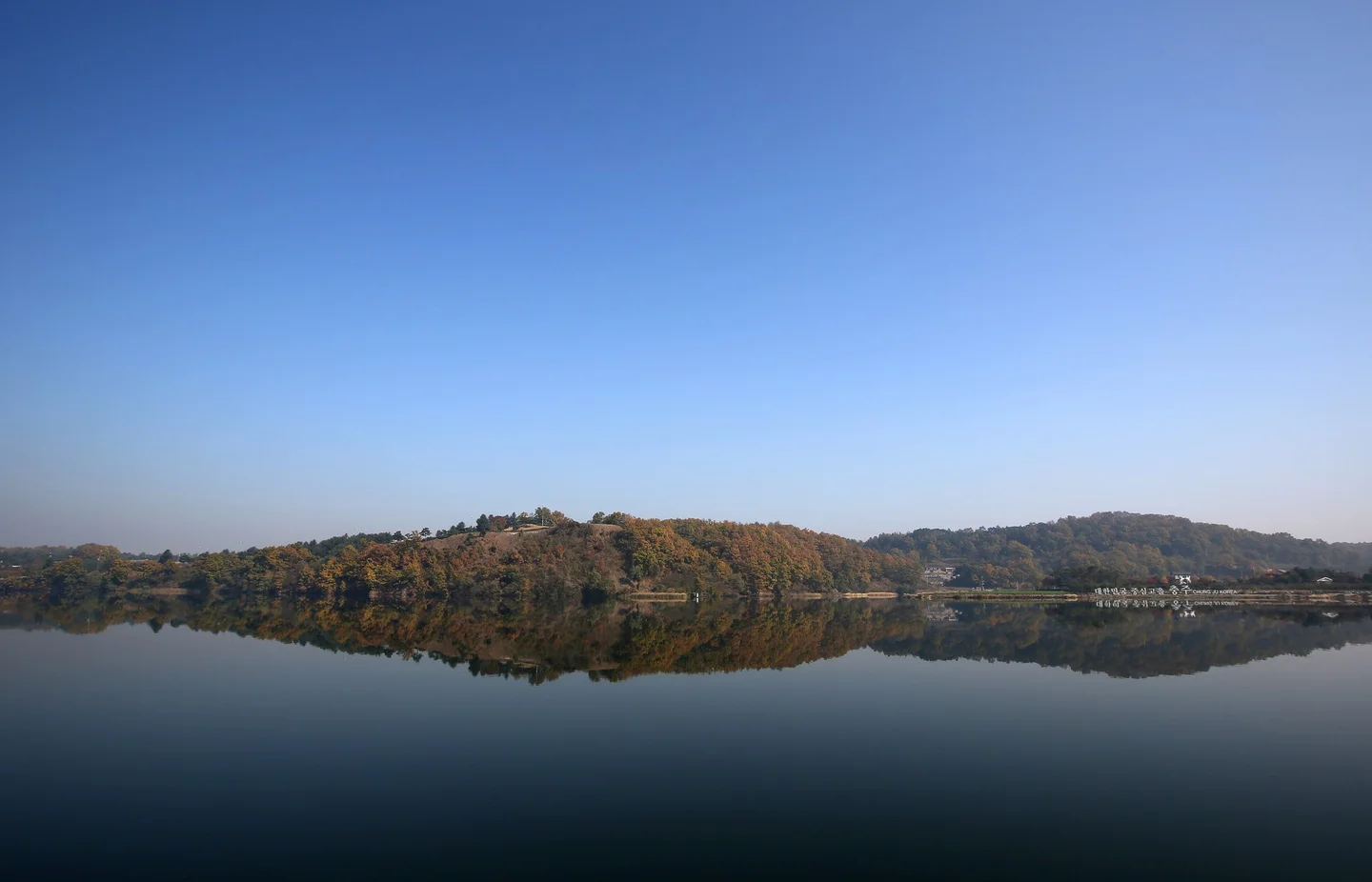
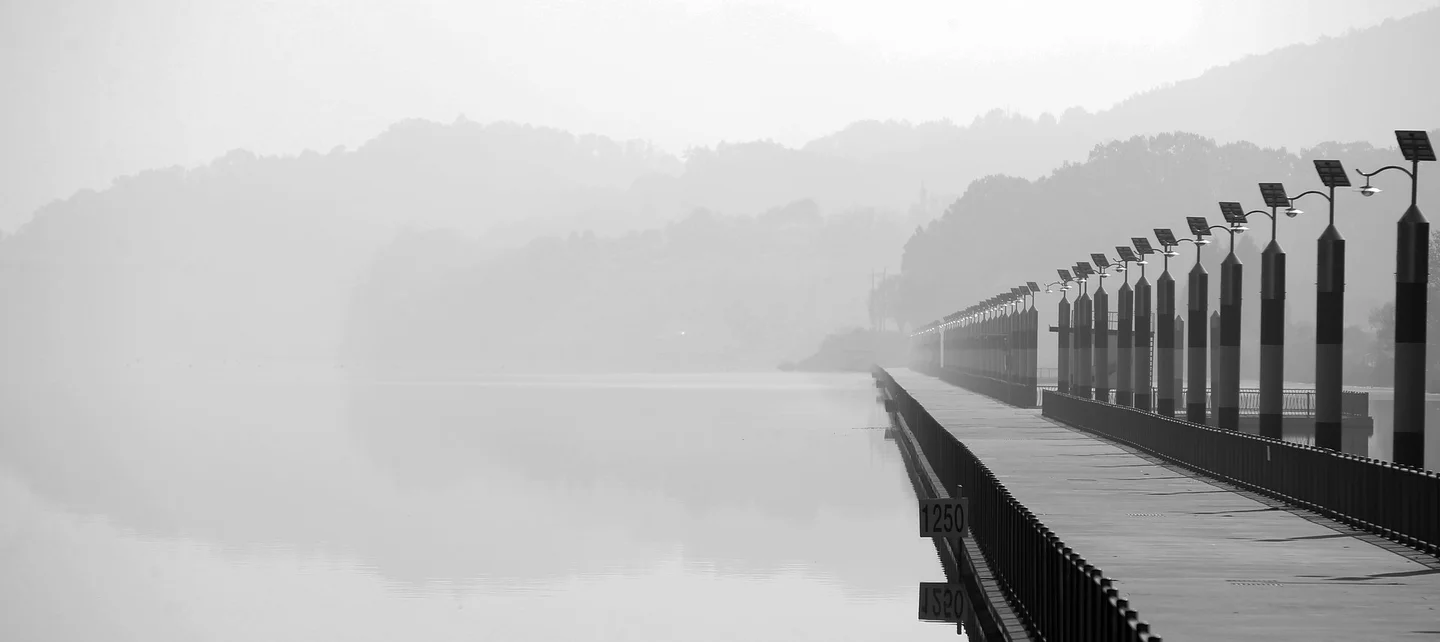
At the waterfront, the view opens out to low mountain ridges across Tangeumho. On a calm day, the reflection can make the opposite shore look almost doubled; in mist, the same ridges recede into pale layers. A clear daytime walk is rewarding too. You do not need to organize the whole trip around catching fog or a perfect reflection.
Republic of Korea from Seoul, Republic of Korea · Original · CC BY-SA 2.0 ·
The Rainbow Path, or Mujigaegil, began as a floating road used to film races during the 2013 World Rowing Championships. It was later adapted for walking and cycling. Its closeness to the surface is the distinctive experience: the broad water lies immediately beside you, rather than below a high bridge or beyond a wooded bank. Check the entrance map and choose a turnaround point before you continue. An out-and-back walk is often simpler than assuming the route will make a short loop to the pagoda. Pedestrians and cyclists share parts of the way, so move aside at a wider point when stopping to admire the view. Wind, wet surfaces, or ice can make this exposed section less comfortable than the park paths; follow any temporary access signs at the entrance. Colored lighting gives the path another character after dark. If that is part of your plan, arrange the journey back into Chungju before spending the evening by the water. A late waterfront walk is easier to enjoy when you already know where to meet a taxi or catch your return bus.
The Rowing Venue and Your Return Route
Kimhs5400(블루시티) · Original · CC BY-SA 4.0 ·
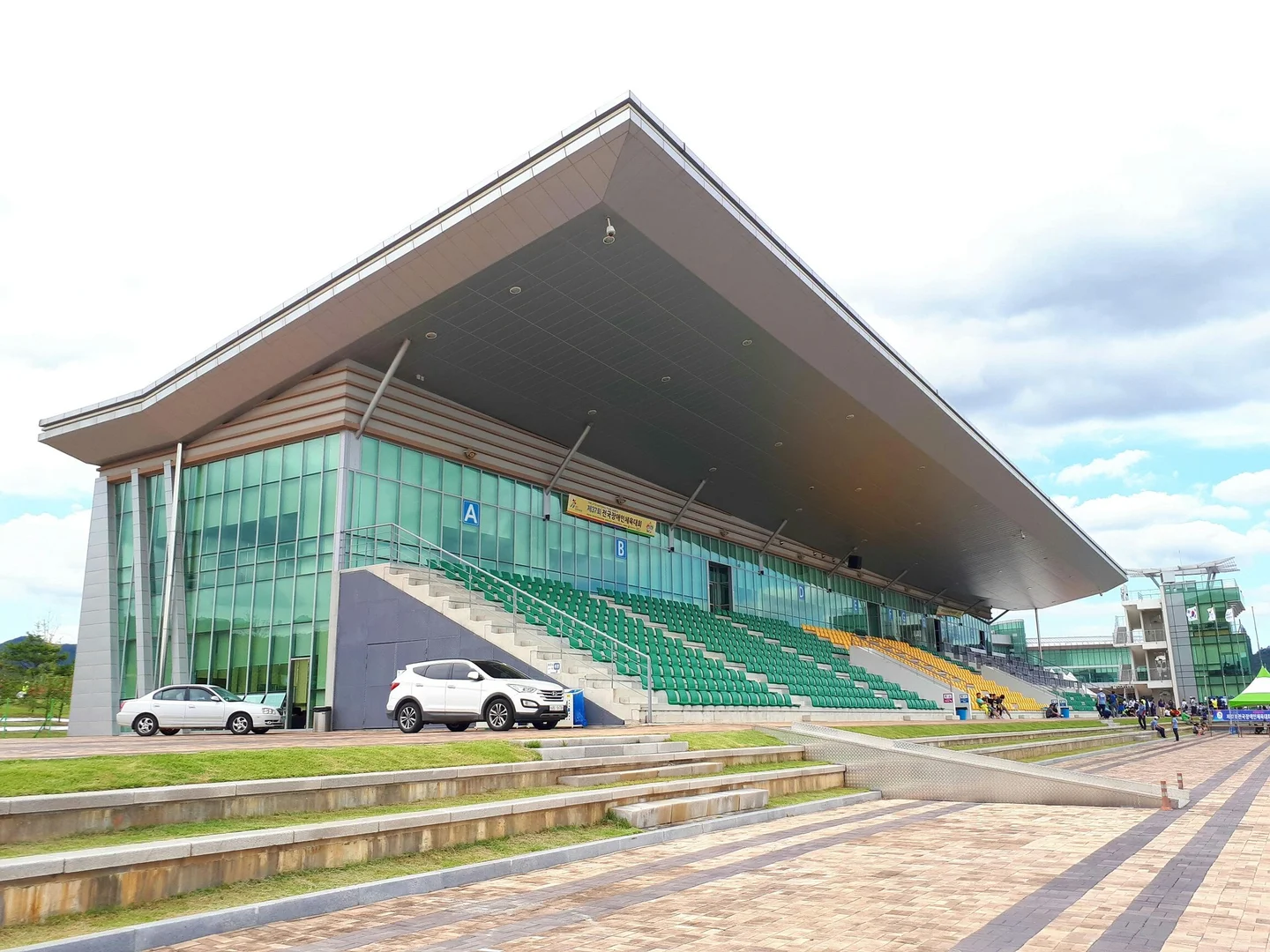
Tangeumho International Rowing Stadium explains why such a long, purposeful route follows the lake. The grandstand faces a sporting landscape as well as a scenic one. Its broad roof and seating form a noticeable change from the pagoda and the smaller spaces beneath the park trees. Seeing the venue does not require making rowing part of the day. If you do want an introductory session, establish availability, booking requirements, and participant conditions with the operator before adding it to your itinerary. Viewing the grounds and joining an organized water activity are different plans. For a visit centered on walking, use the stadium as a possible endpoint, then return along your chosen route. For a shorter day, stay near the pagoda and museum and leave the longer shore walk for another time. In either case, set your pickup or bus stop by name; “Tangeumho” covers a much larger area than the place where your visit began.