Gungnamji, Buyeo: A Pavilion, Lotus Ponds, and Time by the Water
우승민 · Original · CC BY-SA 4.0 ·
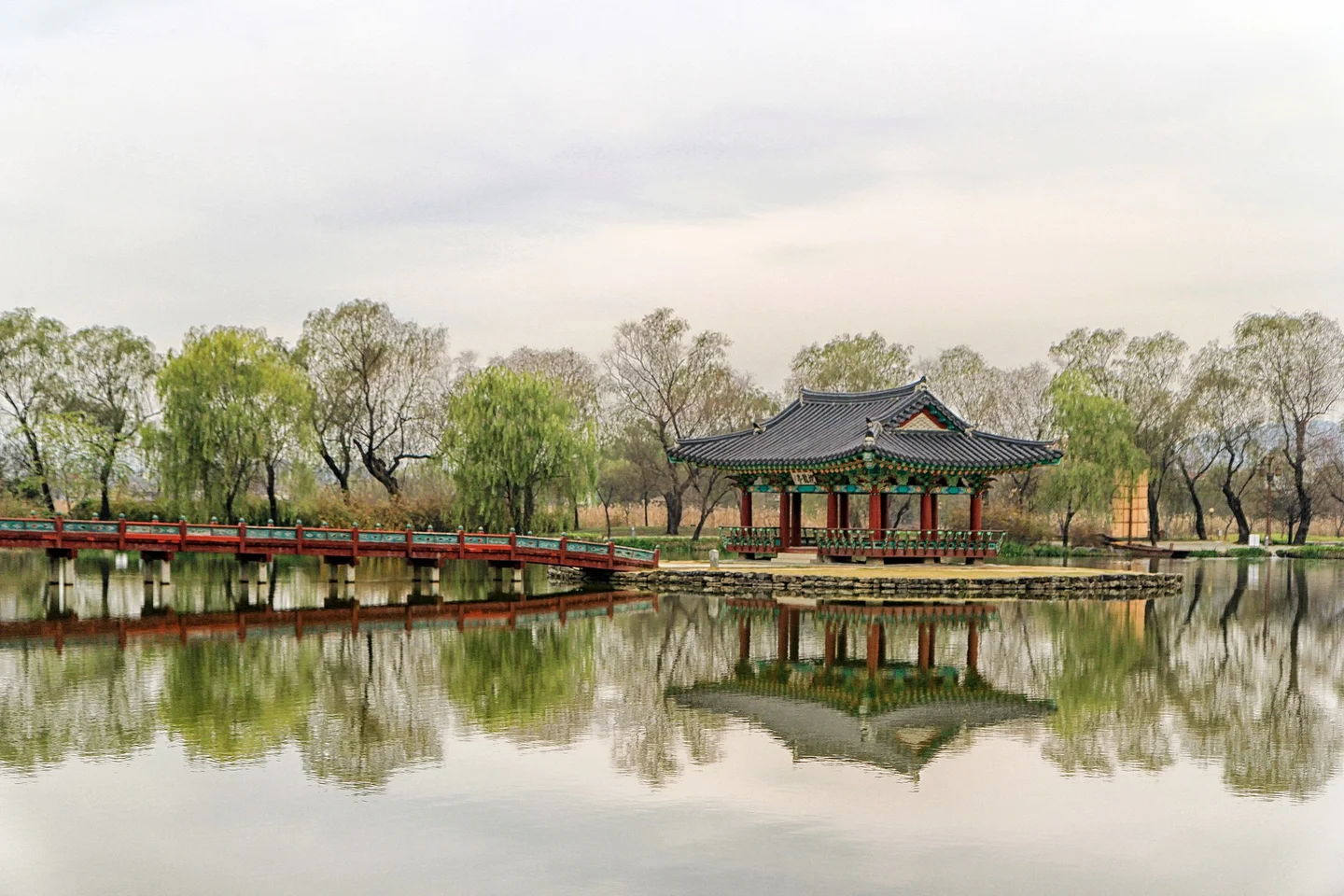
Poryongjeong Pavilion stands on a small island in Gungnamji, linked to the shore by a red-railed wooden bridge. Around it, willows lean toward the water and paths continue into ponds filled with aquatic plants. After Buyeo's temple sites and museum galleries, this is a place to trade close reading for a walk with changing views. Think of Gungnamji and the surrounding Seodong Park as one visiting area. A circuit of the central pond is a different outing from exploring the more extensive lotus beds. Start by locating the pavilion and your exit on the site map, then choose how far to go according to the weather and the rest of the day. Summer draws visitors for flowers, but the central pond has an appeal beyond lotus season. The bridge, pavilion, trees, and water hold the scene together even when the flowers are absent. If a particular bloom is the reason for traveling, check recent conditions rather than judging the garden by its best-known summer images.
Approach Poryongjeong from the Shore
Sadopaul · Original · CC BY-SA 4.0 ·
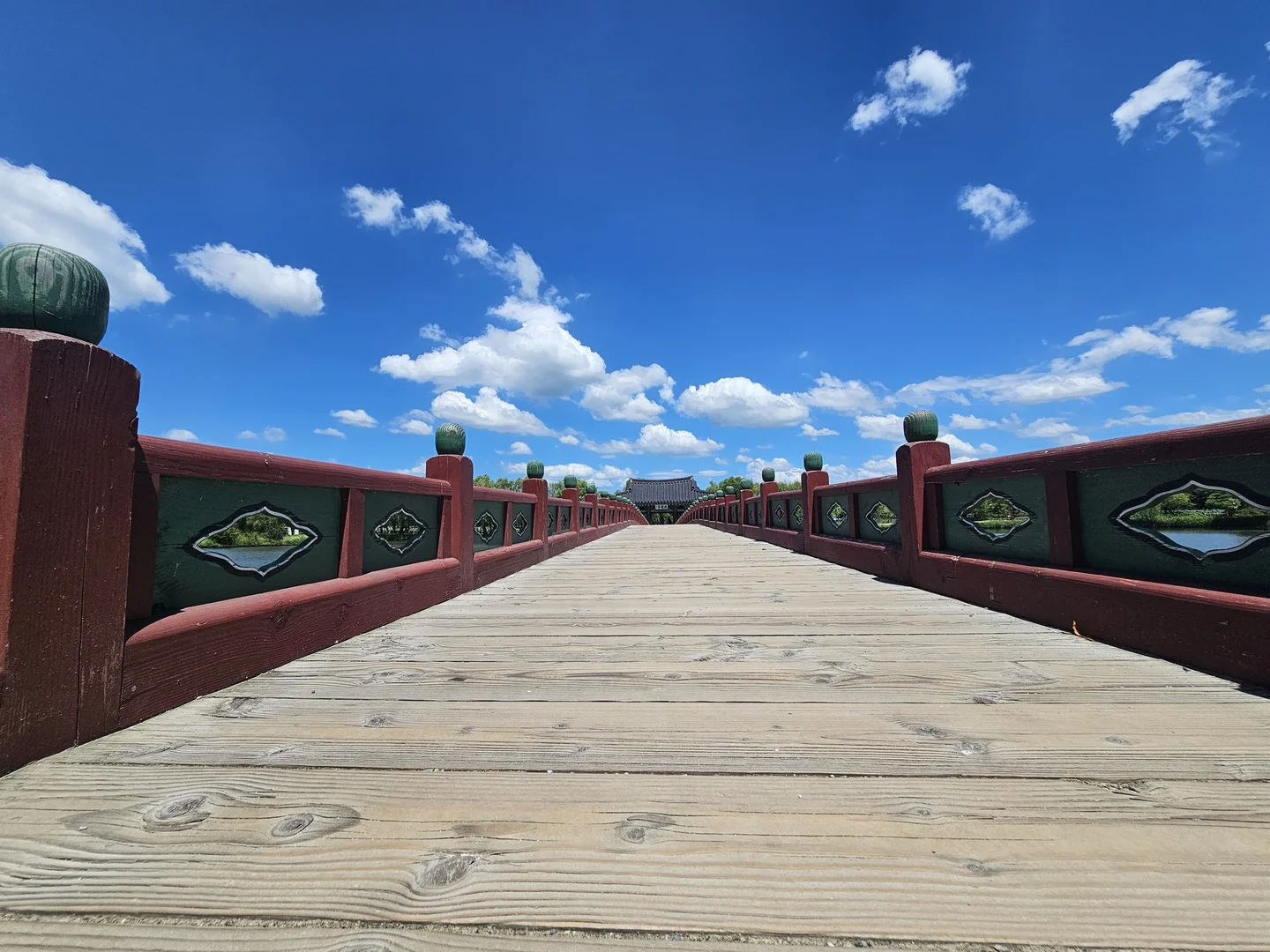
Before crossing the bridge, spend a moment looking at the pavilion from the pond's edge. From there, you can see the island, bridge, and surrounding planting together. On the crossing, the water opens out on both sides; near the pavilion, the view turns back toward the trees and paths around the bank. Follow any current access directions and keep the bridge clear for people moving both ways. If you want a straight-on view, wait briefly for a gap rather than stopping in the middle for a long photo session. There are plenty of other angles from the shore. Gungnamji is associated with a Baekje royal pleasure garden south of the palace, described in the Samguk Sagi in connection with King Mu. The account mentions water brought through a long channel, willows, and an island inspired by an imagined mountain of immortals. It gives the place a historical depth that is not immediately obvious from a casual stroll. The present landscape has also undergone modern restoration. The exact form of the ancient watercourse, shoreline, and island is not fully known, and today's pavilion and bridge are not surviving Baekje buildings. Read the site as a historic garden setting shaped for present-day visitors, rather than an untouched ancient complex.
Lotus Flowers and Water Lilies
The surrounding ponds include different aquatic plants, and a little attention to their form makes the walk more interesting. Water-lily leaves spread close to the surface, while lotus leaves and flowers can rise well above it. Look for plant labels and compare what is growing in adjacent beds. Summer is the main season to consider for lotus viewing, but varieties and weather affect what is flowering on a given day. Buds, open flowers, seed heads, and broad leaves may appear together. An early visit can also be more comfortable than a long midday walk through the exposed beds; the shade near the main pond does not continue along every path. Bring drinking water and sun protection if you plan to explore widely. After a morning among the ponds, lunch or an indoor attraction provides a welcome change of setting. Avoid treating a published opening time for one flower variety as a guarantee that every pond will look the same at that hour. The Seodong Lotus Festival is a separate reason to visit. Its performances, activities, temporary facilities, and traffic arrangements can change the atmosphere considerably. Check the year's official program if you want the festival experience, or choose an ordinary day if your priority is a quieter look at the garden. Boat or canoe activities advertised for an event should not be assumed to operate throughout the year.
Choose Your Own Length of Walk
Korearoadtour · Original · CC BY-SA 4.0 ·
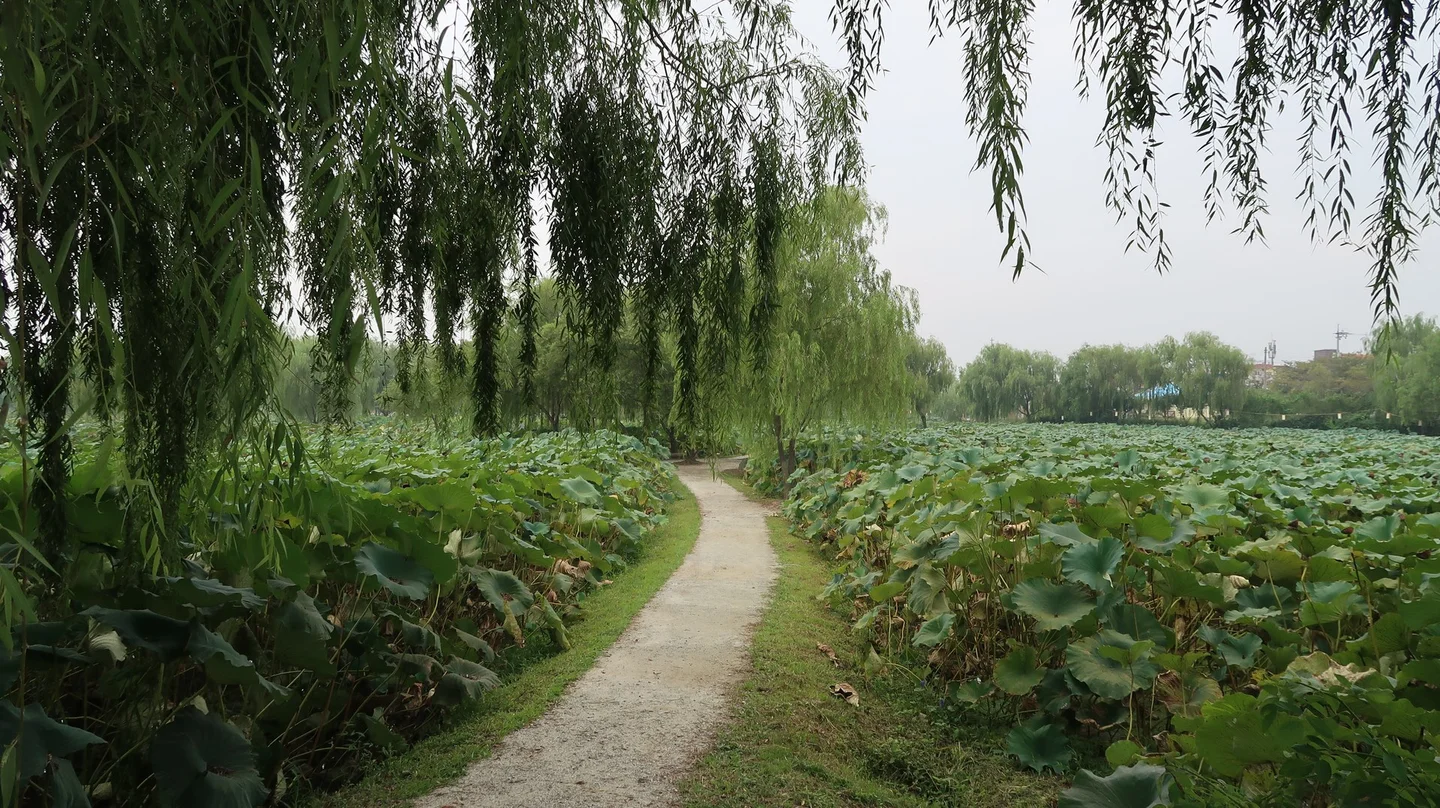
Paths between the lotus beds bring the plants close to eye level. From the wider routes, smaller branches offer different views into the garden. Before taking one, notice where it rejoins the main path so the return remains straightforward. Visitors with a stroller or wheelchair can begin with the main approaches and consult the accessible route information. Gungnamji has visitor-access facilities, but surface conditions, narrow side paths, and any stepping-stone crossings should be considered individually. After rain, an otherwise easy earth path can feel different underfoot or wheels. A shorter route with a comfortable place to stop may be preferable to completing every section. The Travel Lounge is in the east-entrance parking area. It is a useful first stop for information and questions about visitor facilities. Buyeo's current tourism homepage, checked October 12, 2026, lists seasonal hours of 10 a.m.–5 p.m. in summer and 10 a.m.–4 p.m. in winter. Check which seasonal arrangement applies if you depend on the lounge being open. Identify toilets and any equipment-loan point before setting off on a longer circuit. Keep to the visitor paths when looking closely at flowers, leaving the water's edge and planted beds undisturbed. You can often find a better view by moving along the path rather than leaning into the planting.
Fit Gungnamji into a Buyeo Day
On a calm day, the pavilion and bridge reflect in the pond; with a breeze, ripples and moving willow branches change the view. Walk part of the bank rather than waiting at one spot for a perfectly still reflection. The central pond makes a good final pause before returning to your exit. Save the actual parking area or entrance you used. “Meet at Gungnamji” is too broad if your group has split up on different sides of the grounds. For a taxi, choose an accessible entrance or parking area as the pickup point rather than the pavilion itself. Without a car, include the connection from Buyeo's intercity bus terminal as well as the walking inside the park. Gungnamji can be combined with Jeongnimsa Temple Site or Buyeo National Museum, but check those attractions' individual hours, closures, and current access before fixing the order. Their indoor or ticketed facilities operate differently from an open garden. The Korea Tourism Organization's listing, updated in September 2026, describes Gungnamji as open year-round without fixed closing hours. That does not mean the lounge, toilets, lighting displays, and every path provide the same experience late at night. Learn the way back in daylight and use the main illuminated routes if you stay into the evening. For a relaxed first visit, walk around the central pond, add one area of lotus beds, and leave time for a meal. A longer circuit is there when the season and your energy make it worthwhile.