Jeongnimsa Temple Site, Buyeo: From a Stone Pagoda to Baekje's Great Incense Burner
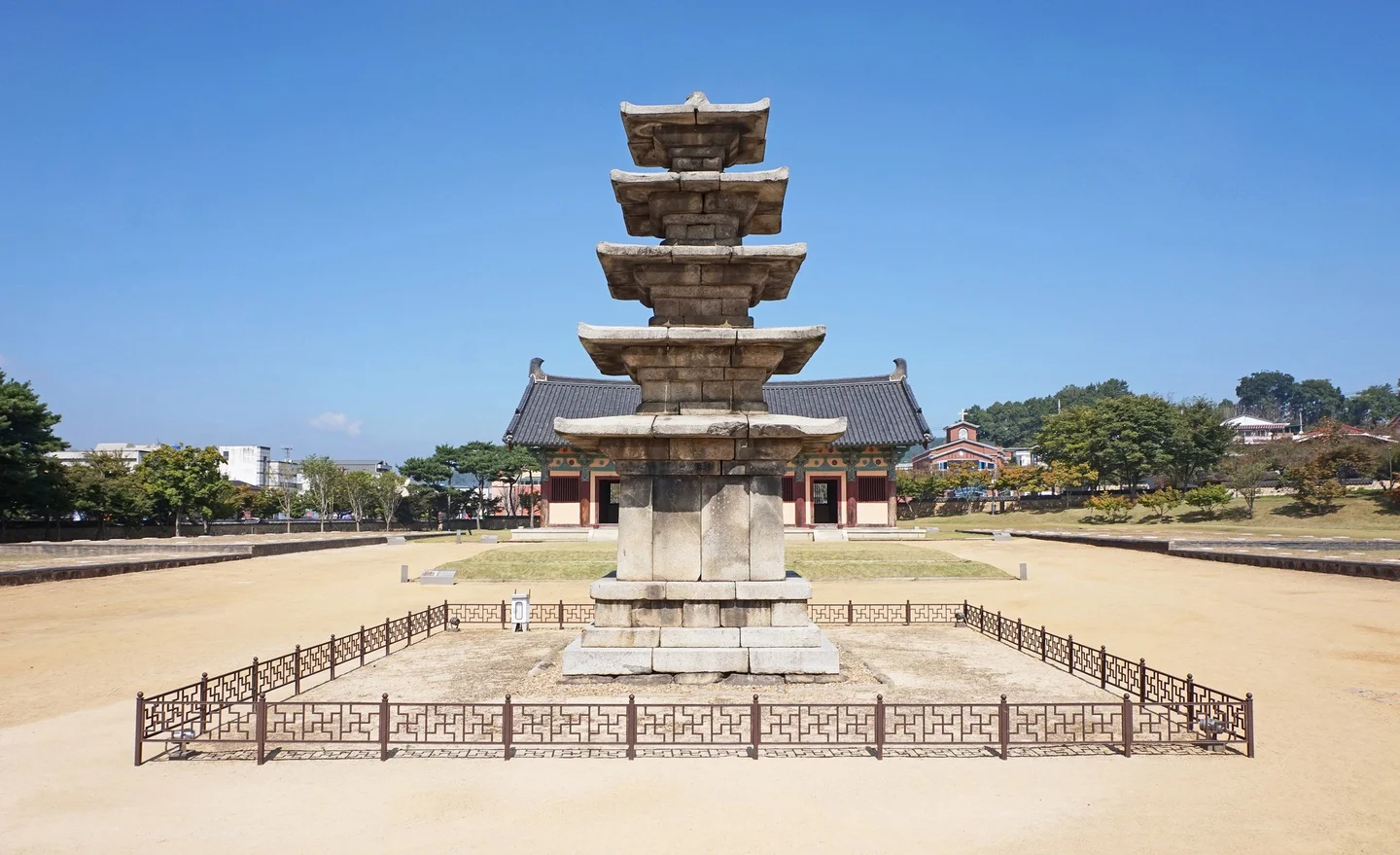
The five-story stone pagoda at Jeongnimsa rises from an open temple site in the middle of Buyeo. Its broad eaves and narrowing upper stories give it a remarkable lightness, while the space around it allows you to follow the outline of a temple that once stood at the center of Baekje's last capital. Start here for an introduction to the city's Buddhist heritage, then continue to Buyeo National Museum to see the Great Gilt-bronze Incense Burner of Baekje. The two stops approach the same culture at very different scales: monumental stonework and an intricate landscape of mountains, animals, and musicians cast in metal. Jeongnimsa Temple Site Museum and Buyeo National Museum are separate institutions. The first helps explain the temple grounds; the second holds the incense burner. Save both names if you intend to visit both, and check their individual admission arrangements rather than assuming one museum ticket or timetable covers the whole route.
Read the Pagoda from the Ground Up
Begin far enough away to see the pagoda's full proportions. The first story has a strong presence above the low base, while the upper levels become progressively smaller. Move a little around the protected perimeter to see how the roof stones extend beyond the body and turn upward at their edges. This is a Baekje stone pagoda whose details retain the influence of wooden construction. The stone corner elements and roof forms suggest a building assembled in another material. The inscription associated with Tang general Su Dingfang belongs to a later event: the defeat of Baekje in 660. It was added to an existing Baekje monument. The presence of that victory text should not be taken to mean that the Tang army originally built the pagoda. The surrounding site also matters. Temple buildings once followed a north–south axis, with the gate, pagoda, main worship hall, and lecture hall arranged in sequence. Use the ground plan and visible remains to imagine that relationship. The open space is not simply a lawn around one surviving object; it records a much larger religious complex.
A Seated Buddha from a Later Chapter
The weathered stone Buddha belongs to the site's Goryeo-period history, later than the Baekje pagoda. It stands on the former lecture-hall area, where the temple was used again after Baekje's fall. An inscribed roof tile naming Jeongnimsa in 1028 is another clue to that later life.
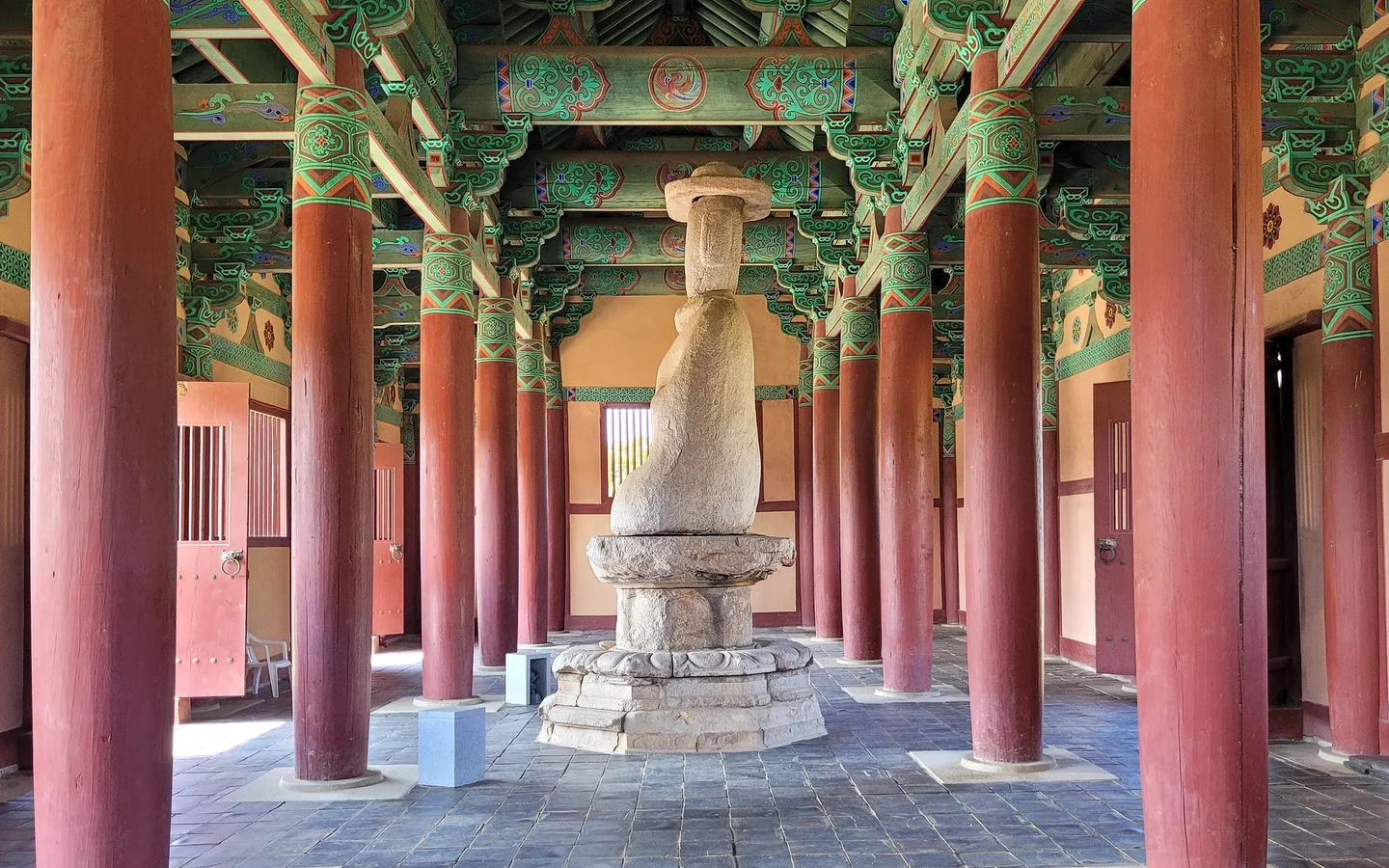
Time and damage have softened much of the sculpture's detail. The head and headdress are later replacements. Look as well at the lotus-shaped pedestal and the relationship between the figure and its base. The painted protective building around it is modern. It helps visitors approach the sculpture while sheltering it, but it is not an original Baekje temple hall. Follow the permitted route and take time to look from the designated viewing space rather than approaching the stone itself. At the site museum, models and interpretation help connect these different periods with the lost buildings. It is particularly useful if the outdoor plan initially feels abstract. Check the current arrangements for the museum and archaeological grounds together; a statement about one part's admission does not necessarily describe the other.
Buyeo National Museum: Check the Current Entrance Procedure
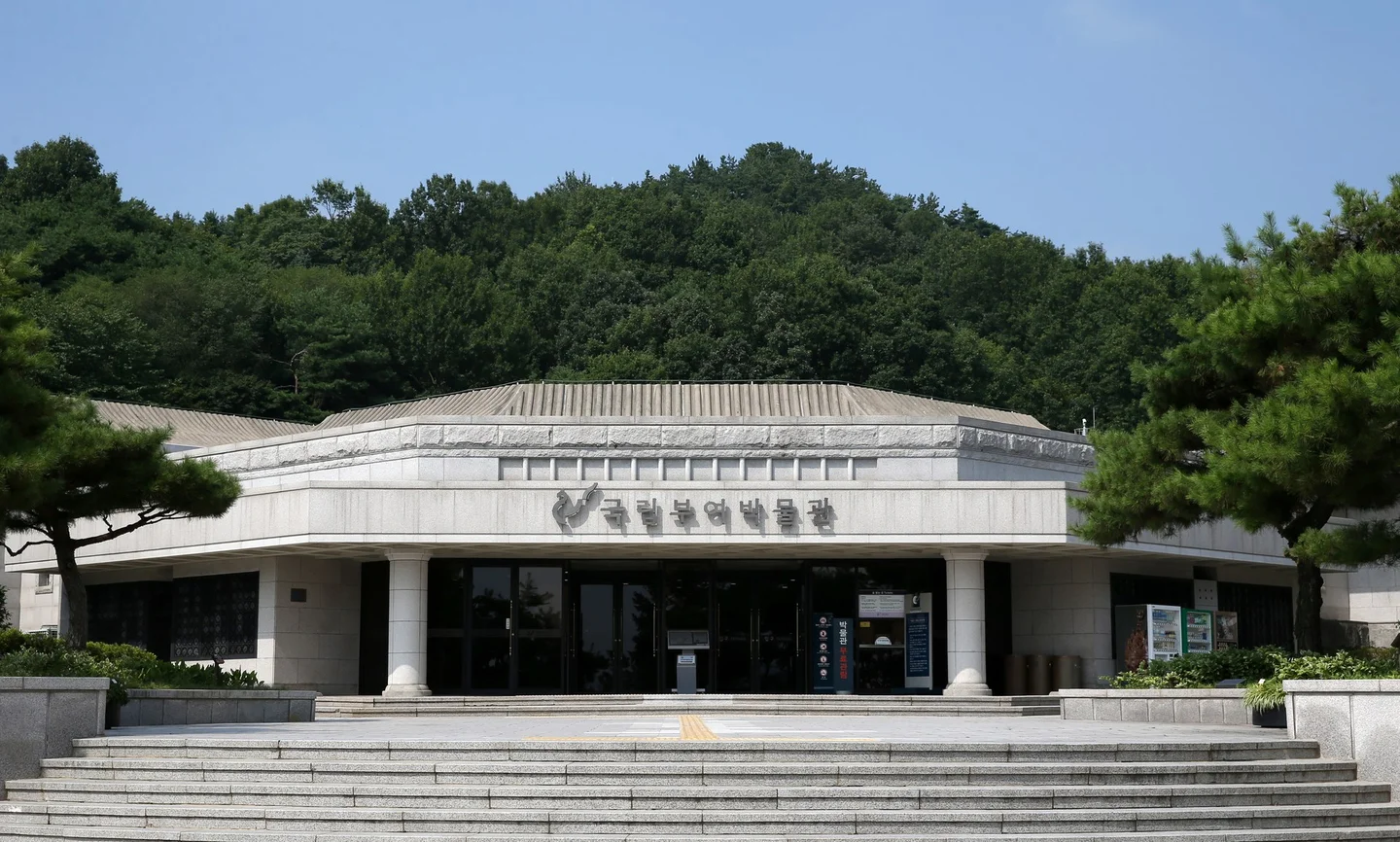
Republic of Korea from Seoul, Republic of Korea · Original · CC BY-SA 2.0 ·
Buyeo National Museum is a separate stop in the town center, close enough to combine with Jeongnimsa when you allow time for the transfer. Enter the museum by name on your map and follow current signs on arrival, particularly while renovation changes the usual route. An important temporary arrangement was confirmed on October 12, 2026. The museum's permanent galleries and main lobby are closed for renovation from July 28 through December 14, 2026, as scheduled. During that period, the Baekje Incense Burner Hall and Children's Museum remain the two operating exhibition facilities. Check the notice again for your date, especially near the planned end of the work. Admission is free, but the temporary system requires a same-day, timed QR ticket. Collect it at the kiosks inside Sabimaru Performance Hall, not at the exhibition-hall entrance. Select the facility, session, and number of visitors, then allow time to walk to the correct entrance. The museum states that tickets are issued on site rather than by advance reservation during this arrangement, and sessions can fill. The regular museum hours are 9 a.m. to 6 p.m., with the standard last entry 30 minutes before closing. Monday is the usual closing day, with holiday substitutions; January 1, Seollal, and Chuseok also have closures. Your timed ticket determines admission to the chosen session. The temporary system should not be assumed to continue unchanged after the renovation.
Look for a Whole Landscape in the Incense Burner
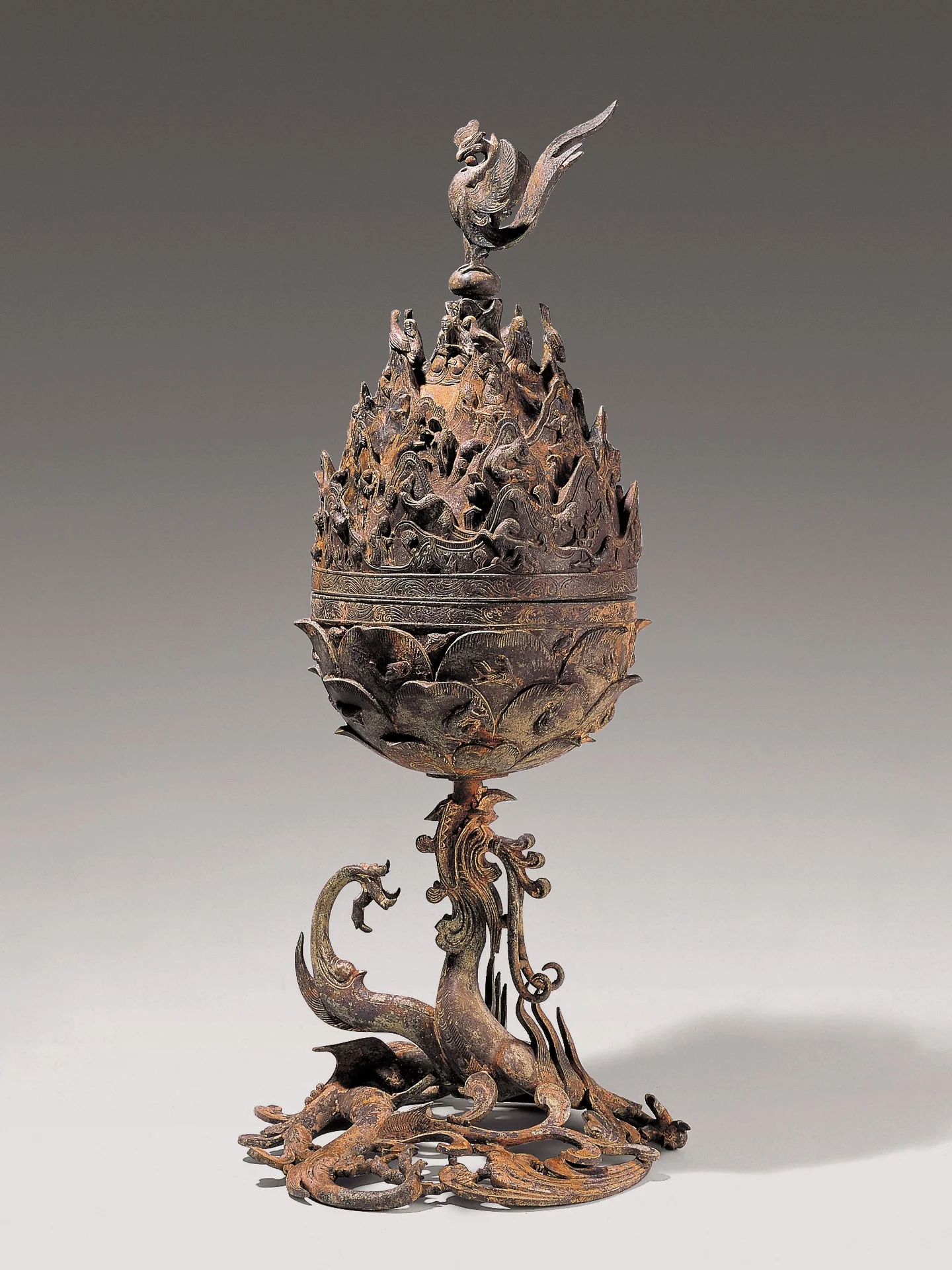
National Museum of Korea · Original · KOGL Type 1 ·
The Great Gilt-bronze Incense Burner of Baekje was excavated at the Neungsan-ri temple site in 1993. It is now the focus of a dedicated hall that opened in December 2025. Follow the current museum signs for that hall rather than older guides directing visitors to a numbered permanent gallery. Begin at the base, where a dragon supports the vessel. Above it, the body takes the form of a lotus, while the lid becomes a mountain landscape topped by a phoenix. Between the peaks are people, musicians, real animals, and imagined creatures. Looking from bottom to top reveals a carefully organized composition rather than a mass of decorative detail. The mountain-shaped lid also relates to the object's function. Openings allow incense smoke to emerge among the peaks, linking the practical use of a burner with the idea of an imagined realm. In the gallery, look for those openings and smaller figures instead of concentrating only on the phoenix at the top. The dedicated hall includes a dimly lit viewing room and brighter interpretation spaces. Take time to let your eyes adjust and share the viewing area with others. Follow the museum's photography rules, keeping flash and additional lighting off.
Make the Rest of the Day Fit
The temporary museum ticket can determine the order of your outing. If the incense burner is your priority, establish an available session first, then decide where Jeongnimsa and lunch fit around it. Leave room for the actual walk between entrances rather than treating the two sites as adjacent rooms. For families, check the Children's Museum's separate session and entry requirements before adding it. For visitors who would rather finish outdoors, Gungnamji offers a waterside walk elsewhere in town. Adding Busosanseong instead means more slopes and walking, so choose according to the time and energy left after the two main stops.