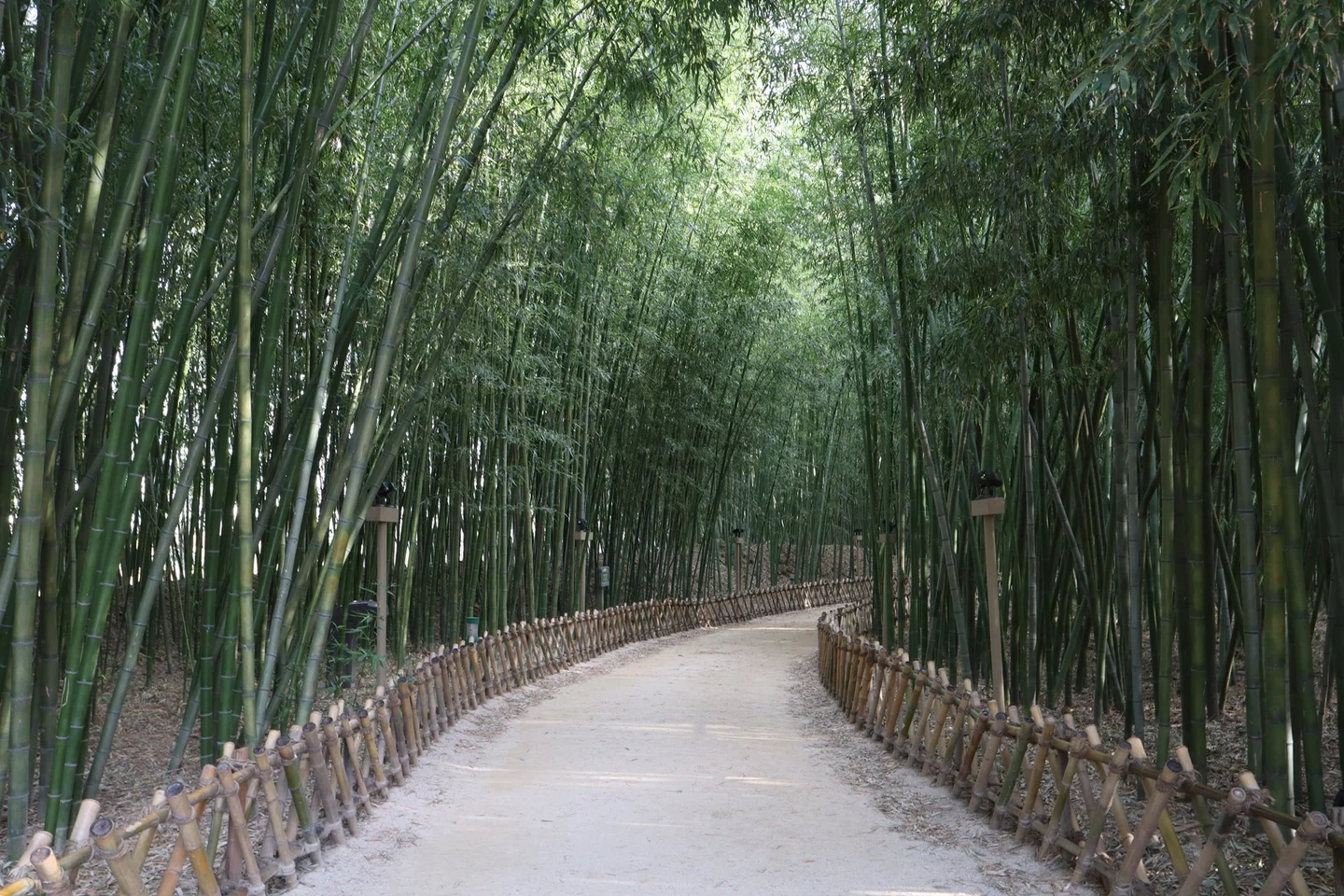
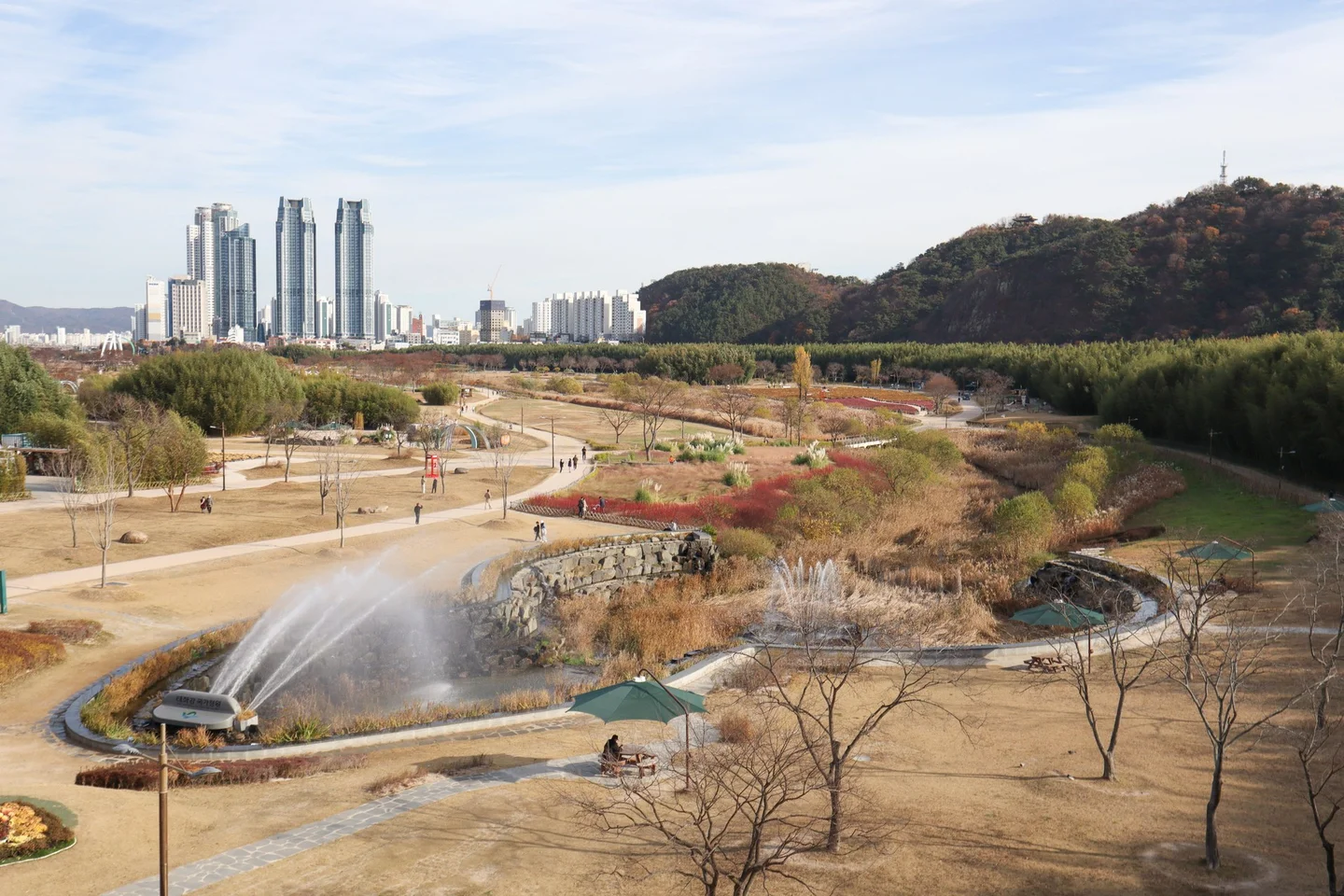
A path curves between tall bamboo stems, with green leaves closing overhead. A few minutes later, the view opens onto lawns, garden beds, and the river running through central Ulsan. That easy shift between enclosed woodland and open water is the pleasure of Taehwagang National Garden. It suits a short daytime walk, a longer afternoon outdoors, or an evening built around the illuminated bamboo grove.
The garden also tells a larger story about Ulsan. A river once badly affected by industrial pollution has recovered through sustained restoration, and the gardens make that change visible in the middle of the city. The setting remains urban, with bridges and apartment buildings beyond the planting, but the riverbank gives you room to walk at a different pace.
For a first visit, concentrate on the Taehwa district’s Simnidaesup bamboo grove, a few nearby gardens, and the river. The national garden extends across a much wider area that includes the Samho district. You can enjoy its defining landscapes without attempting a complete circuit.
Start at the visitor center
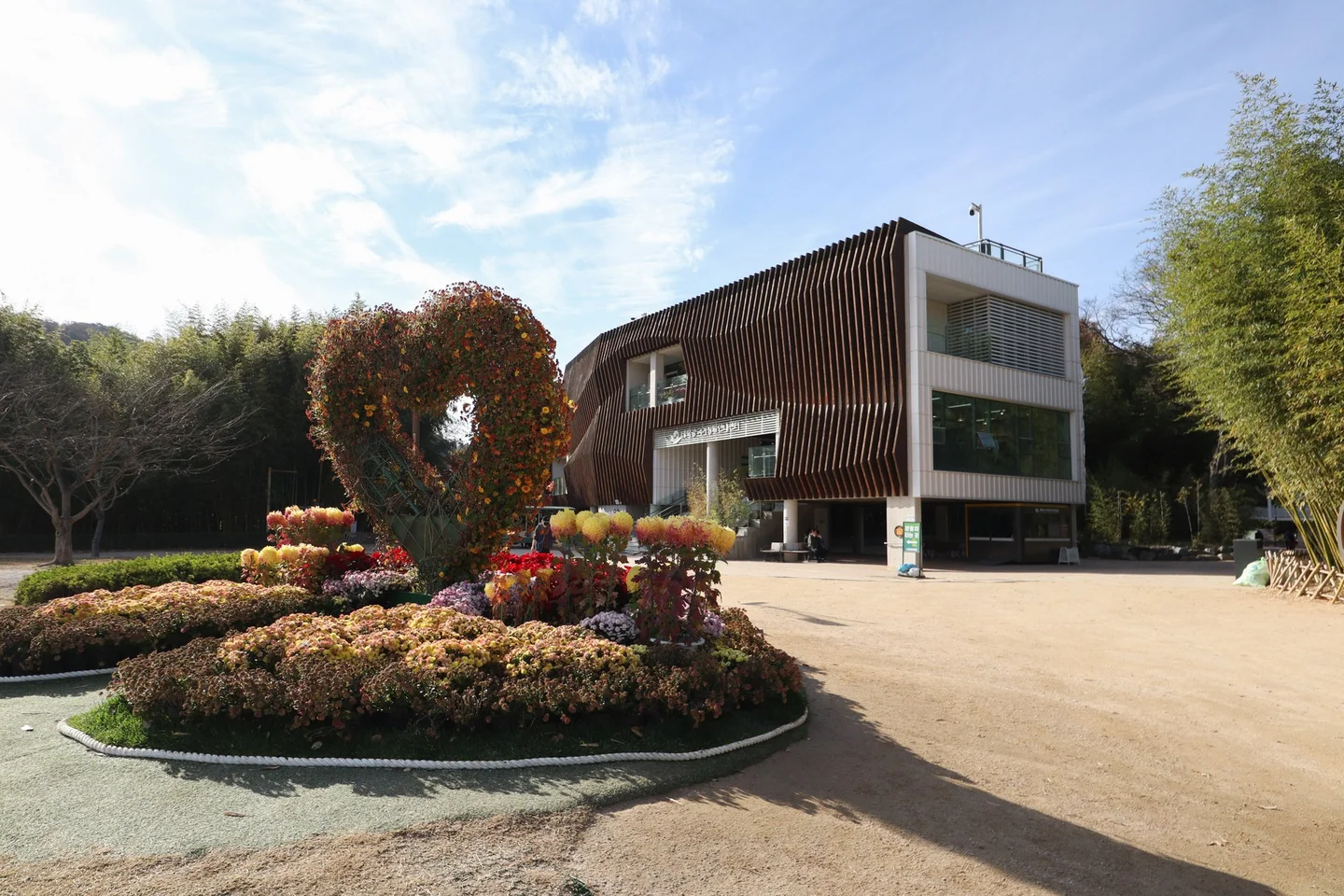
Flower beds and information center at Taehwagang National Garden
Taehwagang National Garden Visitor Center makes a clear arrival point. Use the map to locate the bamboo paths, the nearest river crossing, and your return stop or parking area. Choosing those landmarks first is more useful than trying to follow every garden name at once.
Both Ulsan’s KTX station and Taehwagang Station require an onward journey to the garden. Taehwagang Station shares the river’s name, but it is not the garden entrance. When using a bus or taxi, choose the visitor center or another specific access point rather than the broad destination “Taehwa River.” Drivers should likewise match the parking lot to the district they want to explore.
As checked on October 12, 2026, the official garden FAQ lists free access to the outdoor grounds around the clock, while the visitor center opens from 9 a.m. to 6 p.m. Wheelchair and stroller loans are available through the staffed information point, with an ID required and a 4:50 p.m. return deadline. Confirm availability on arrival if your plan depends on a loan. Some unpaved paths can be restricted after rain.
Simnidaesup is the garden’s signature walk. Straight stems rise closely together, while the paths bend through them and patches of light reach the ground. The name refers to a long bamboo belt, but it does not prescribe how far you must walk. Explore a comfortable section, then emerge into the more open gardens for a change of scale.
Outside the grove, look at the planting as a landscape rather than a collection of flower displays. Low ground cover, taller grasses, trees, and water features create different textures and sightlines. A few contrasting areas can give you more to notice than a hurried tour of every named garden.
If planting design interests you, look for the Hoes-Oudolf Ulsan Garden, or HOUG. Piet Oudolf worked with landscape architect Bart Hoes on this naturalistic garden. Its planting was planned around changing seasons, colors, heights, and textures, so look beyond whichever flowers happen to be in bloom.
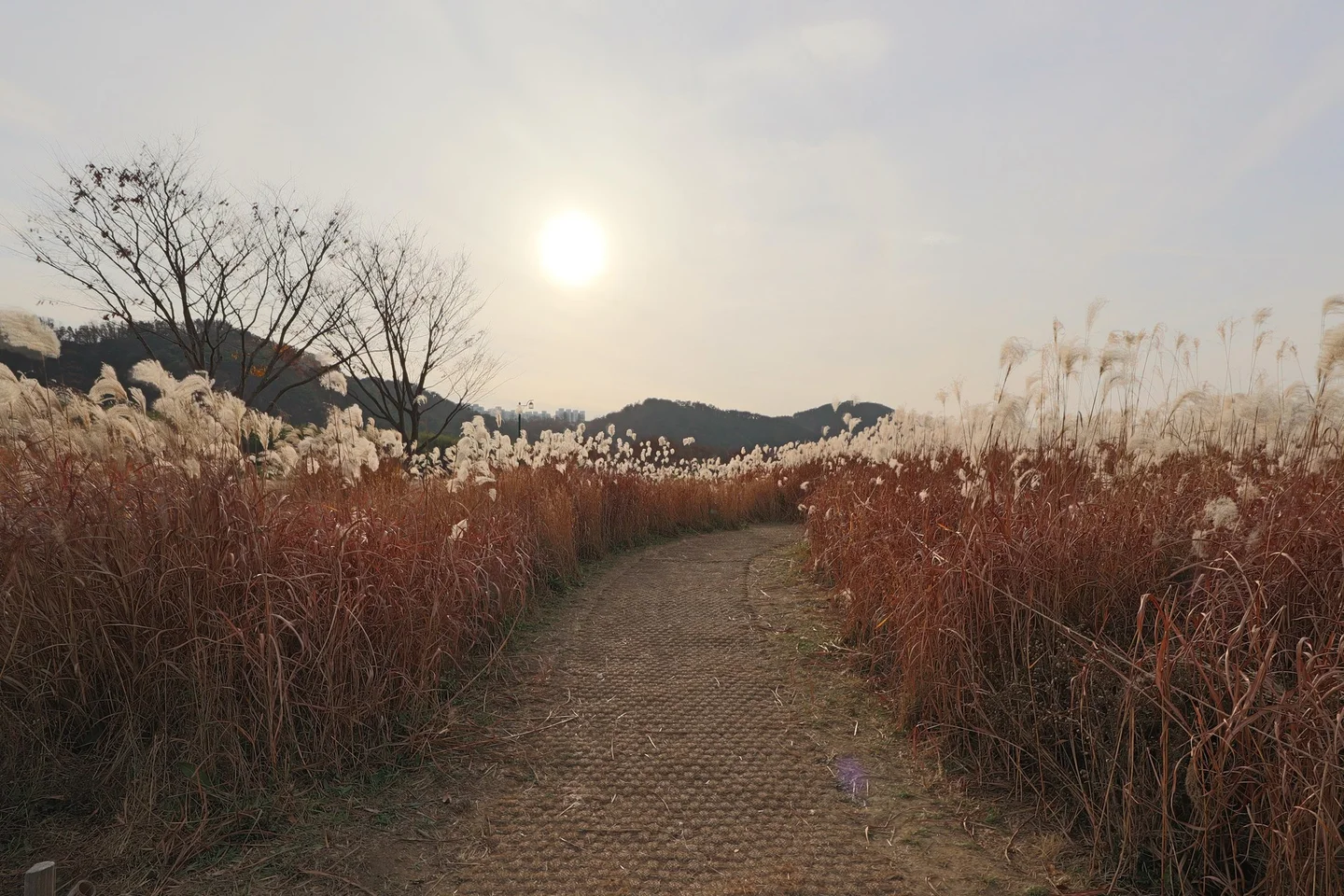
Walking path through reed-like grasses in autumn light
Autumn brings particular interest to the grasses. Low sunlight catches pale plumes and the browns and golds of drying stems, giving the paths a different character from spring flower beds. Stay with the designated routes and use the changing angle of light as you walk. Seasonal displays vary, so the current planting is a better guide than expecting one older view to be repeated exactly.
An afternoon that includes both gardens and evening lights works best with a break between them. The streets outside the park provide places to eat before returning to the river. Note the exit nearest your chosen restaurant so you can find your way back to the illuminated section without repeating a long part of the walk.
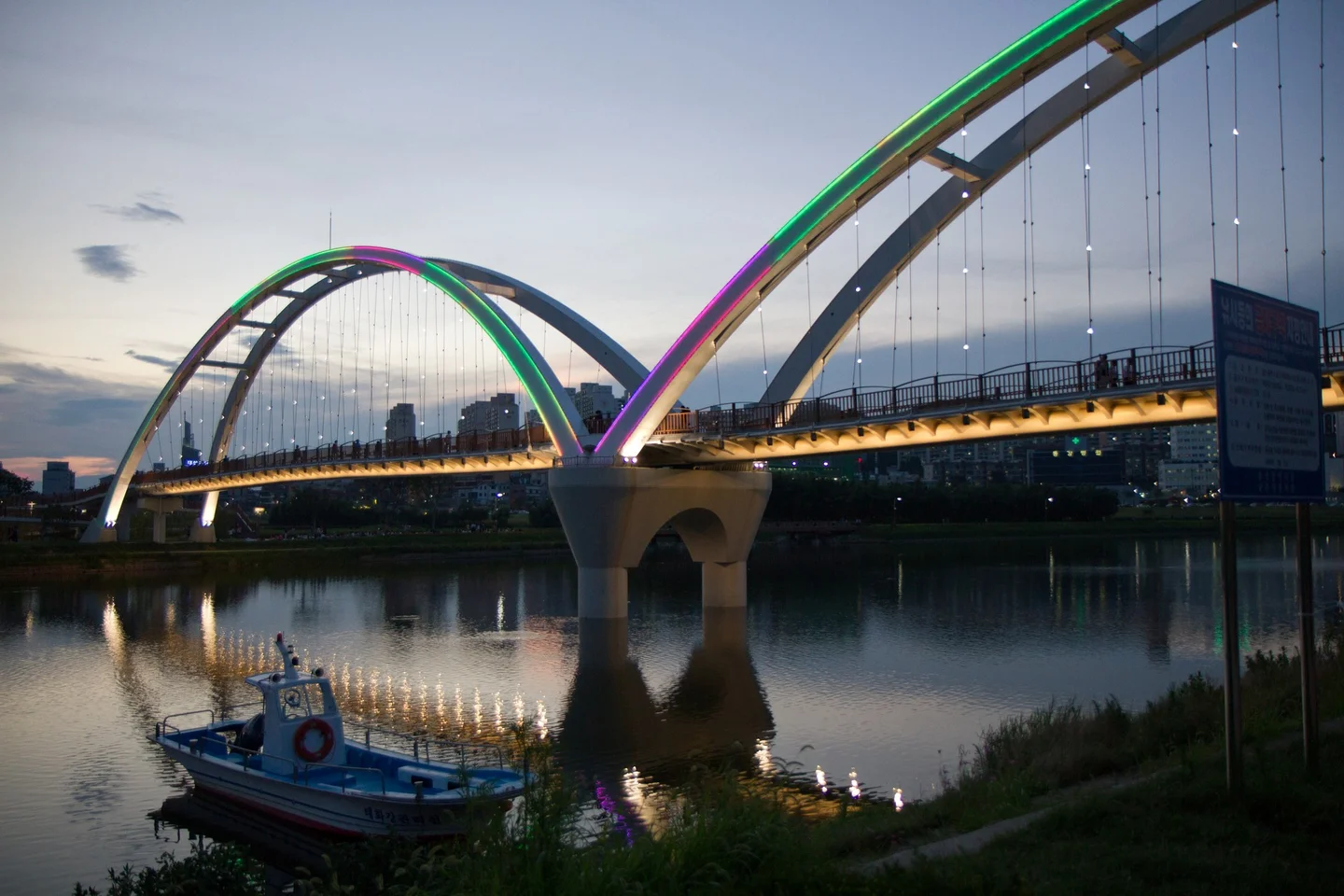
The sweeping arches of Simnidaebat Bridge provide a strong landmark along the river. From the bank, the structure frames the water; from the crossing, you can see how the gardens relate to the neighborhoods on either side. Lighting changes its appearance after sunset, making it a natural stop between a daytime garden walk and the bamboo grove at night.
You do not need to cross simply to appreciate the bridge. If your car or return bus is on the visitor-center side, a walk along that bank may suit the evening better. During heavy rain or high river levels, follow any closures affecting low-lying paths.
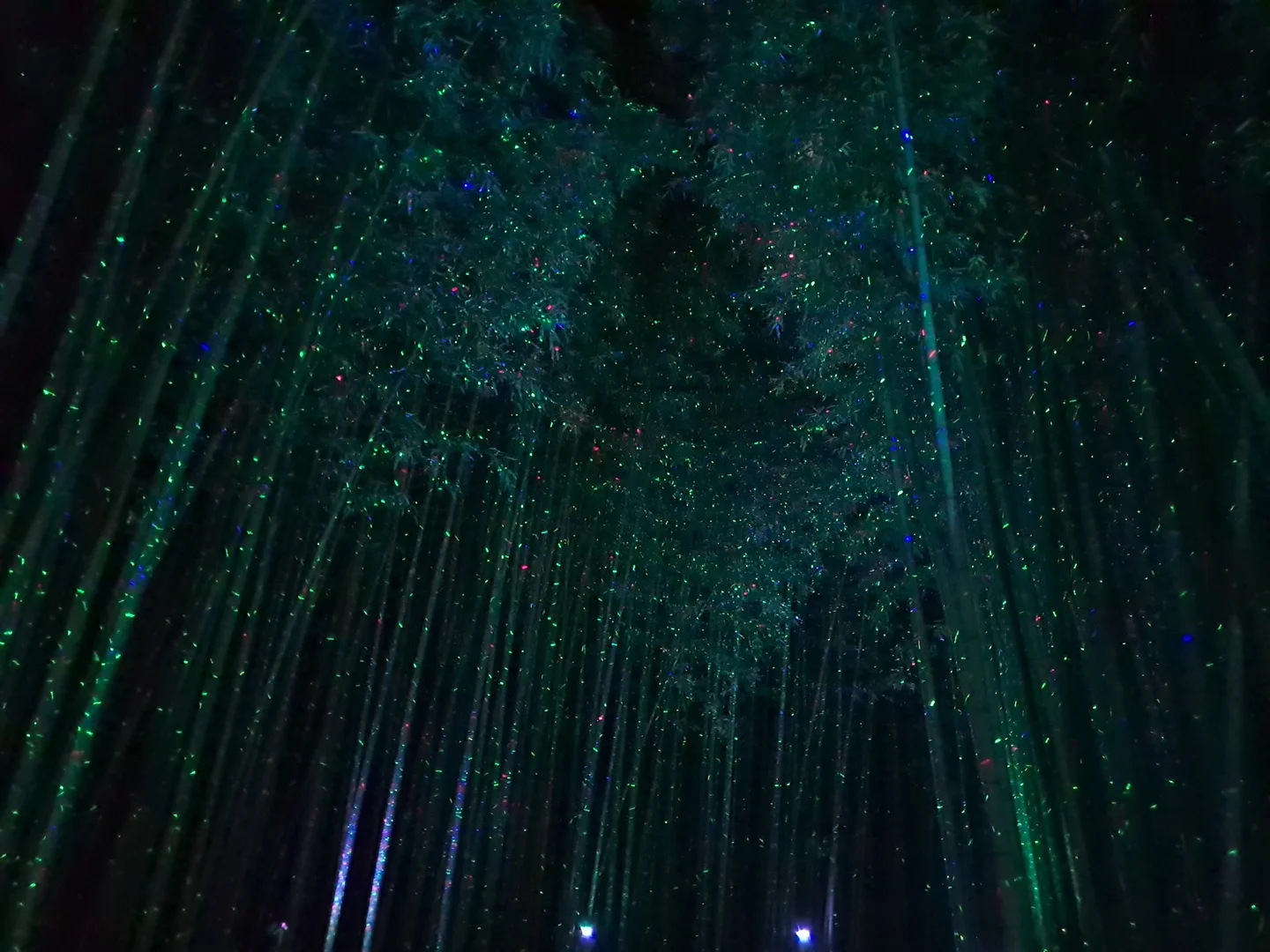
Night lights along the Bamboo Forest Milky Way Trail
The Eunhasu-gil, or Milky Way Path, adds scattered points of light to a section of the bamboo forest. Stems that read as green columns by day become a dark backdrop for the small lights after sunset. It is a specific illuminated route within the grove, so follow its signs rather than assuming every bamboo path is lit.
The official FAQ checked October 12, 2026, gives operating hours from sunset to 11 p.m., with the start adjusted to the day’s sunset. Check the garden’s current notices before a late arrival, since maintenance and weather can affect access. Arriving before dusk lets you see the planting in daylight and find the relevant entrance before the paths darken.
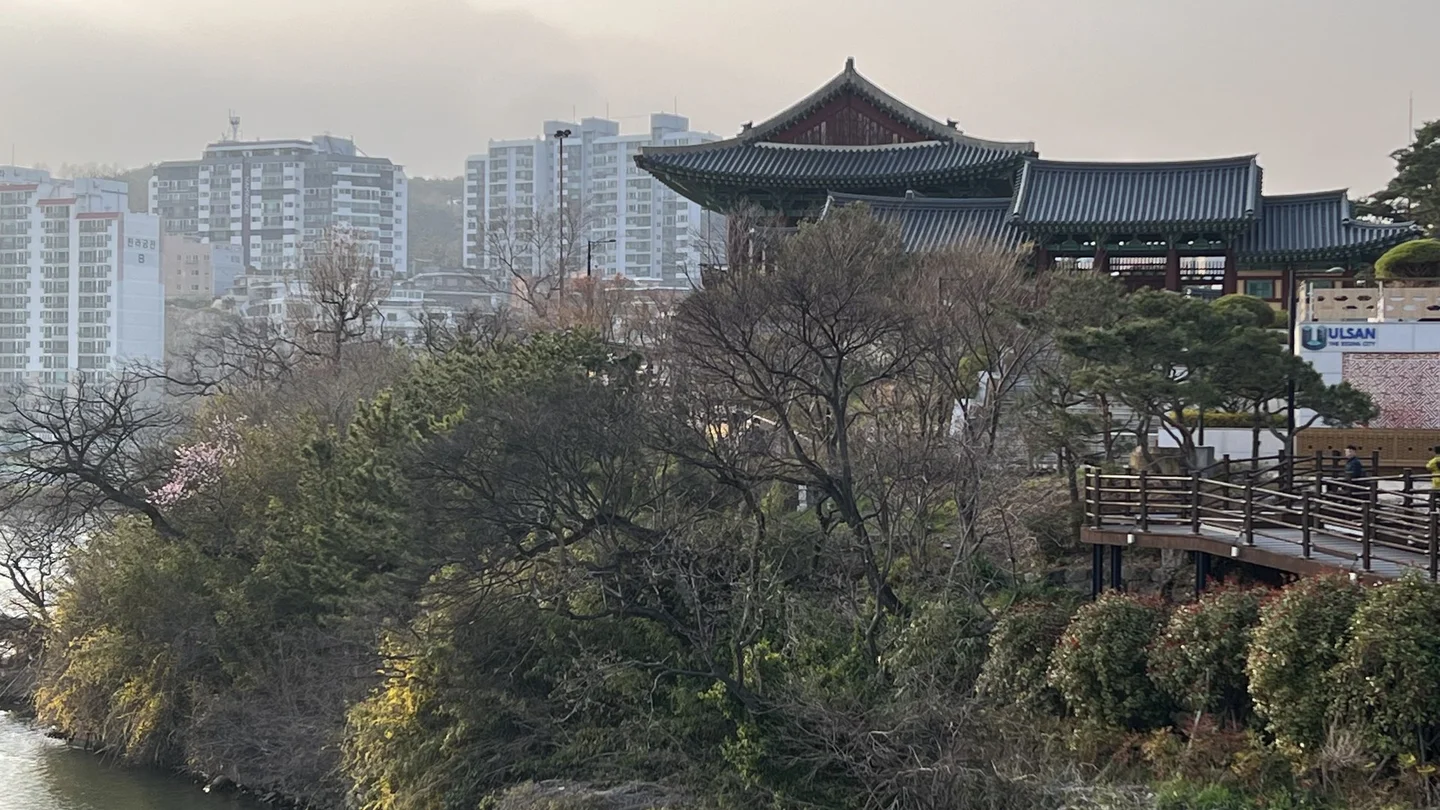
If you want a longer outing, make Taehwaru Pavilion a separate stop along the urban river corridor. Its elevated position and broad roof offer a different experience from the close-set bamboo paths. From the pavilion area, the river and city become the main subject, framed by timber columns and the wooded bank.
The present building was completed in 2014, reviving a historic pavilion lost centuries earlier. It is a modern reconstruction connected to a much older place in Ulsan’s history. That distinction helps explain the fresh timber architecture without reducing the significance of the site.
Allow for the walk between Taehwaru and the garden areas you have chosen. The pavilion is not immediately beside the visitor center, and its opening hours are separate from the garden’s unrestricted outdoor access. Use the operator’s Taehwaru guide if entering the pavilion is important to your visit. For a shorter evening, keep the bridge and Milky Way Path together and leave Taehwaru for a daytime walk.
SourcesOfficial FAQ directly read: zones, river restoration, bamboo, free24h grounds, center9–18, loans and Eunhasu sunset23: https://www.ulsan.go.kr/s/garden/contents.ulsan?mId=001004004000000000
Official HOUG plant catalog directly read: perennial, grass, bulb and tree categories: https://www.ulsan.go.kr/s/garden/contents.ulsan?mId=001006001000000000
Ulsan Facilities Corporation pavilion guide directly read:2014 reconstruction and separate seasonal hours: https://www.uic.or.kr/institution/ins02_8.do
Official current notices destination for maintenance/weather; no unavailable cafe recommended: https://www.ulsan.go.kr/s/garden/main.ulsan
확인일: 2026-10-12 (Asia/Seoul). 기본 근거: gyeongnam-ulsan-018 한국어 완료 원고의 사실·선택 사진. 영어는 독립 구성·집필.
2026-10-25 최종 검수: 참여 식물공급사 Rijnbeek의2022프로젝트원문 직접 확인, Oudolf/Hoes협업·계절/색/높이/질감고려 설계 근거 확보. 재확인못한 시식물목록4분류 단정은 영어본문에서 제거. 과거계획을 현재개화보장으로 쓰지 않음.
https://rijnbeek.com/2022/10/27/taehwagang-national-garden/