Jeonju Beyond the Hanok Village: Jeolla Gamyeong and Gaekridan-gil
Jeonju's old downtown is easy to overlook on a visit built around the Hanok Village. A short walk through its former government quarter opens up a different part of the city: a governor's compound, a ceremonial guesthouse, busy shopping streets, small cafés, and a neighborhood with a genuine filmgoing culture. The appeal lies in how close these places sit to everyday city life. Start at Jeolla Gamyeong for the historical context, continue to Pungpaejigwan, then leave time for the cafés around Gaekridan-gil. This makes a relaxed half-day walk with a meal. If a movie is the main attraction, choose the screening first and fit the outdoor stops around it. You can combine the district with the Hanok Village, but there is enough here to spend an afternoon without retracing the same tourist streets. The names take a little untangling. Gamyeong was the provincial governor's headquarters. Pungpaejigwan, also called Jeonju Gaeksa, was a separate official guesthouse and ceremonial site. Gaekridan-gil is the nearby café and restaurant neighborhood. They belong to the same downtown story, rather than a single historic enclosure.
Inside the Governor's Headquarters
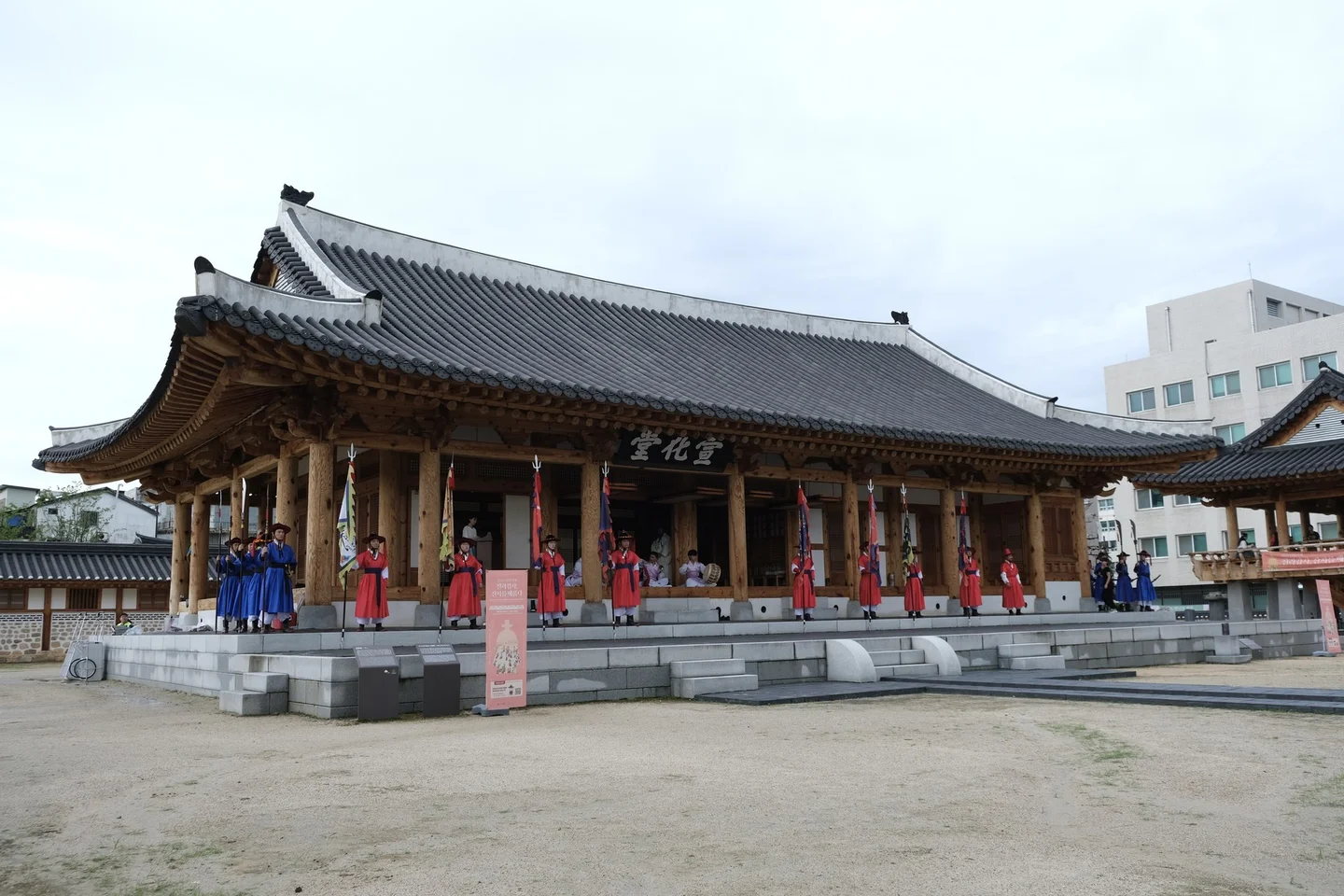
For centuries during the Joseon dynasty, Jeolla Gamyeong administered a territory that included today's northern and southern Jeolla provinces and Jeju. Jeonju was a seat of regional power, and the scale of the compound helps explain why the city has more to its history than royal associations and traditional houses. Seonhwadang, the governor's working hall, gives the visit its focal point. Enter the courtyard and take in the broad roof and ordered frontage before looking at the interpretation inside the accessible buildings. The layout separated official work from the household behind it. Naea housed the governor's family, while Yeonsindang provided a place for the governor to rest between duties.
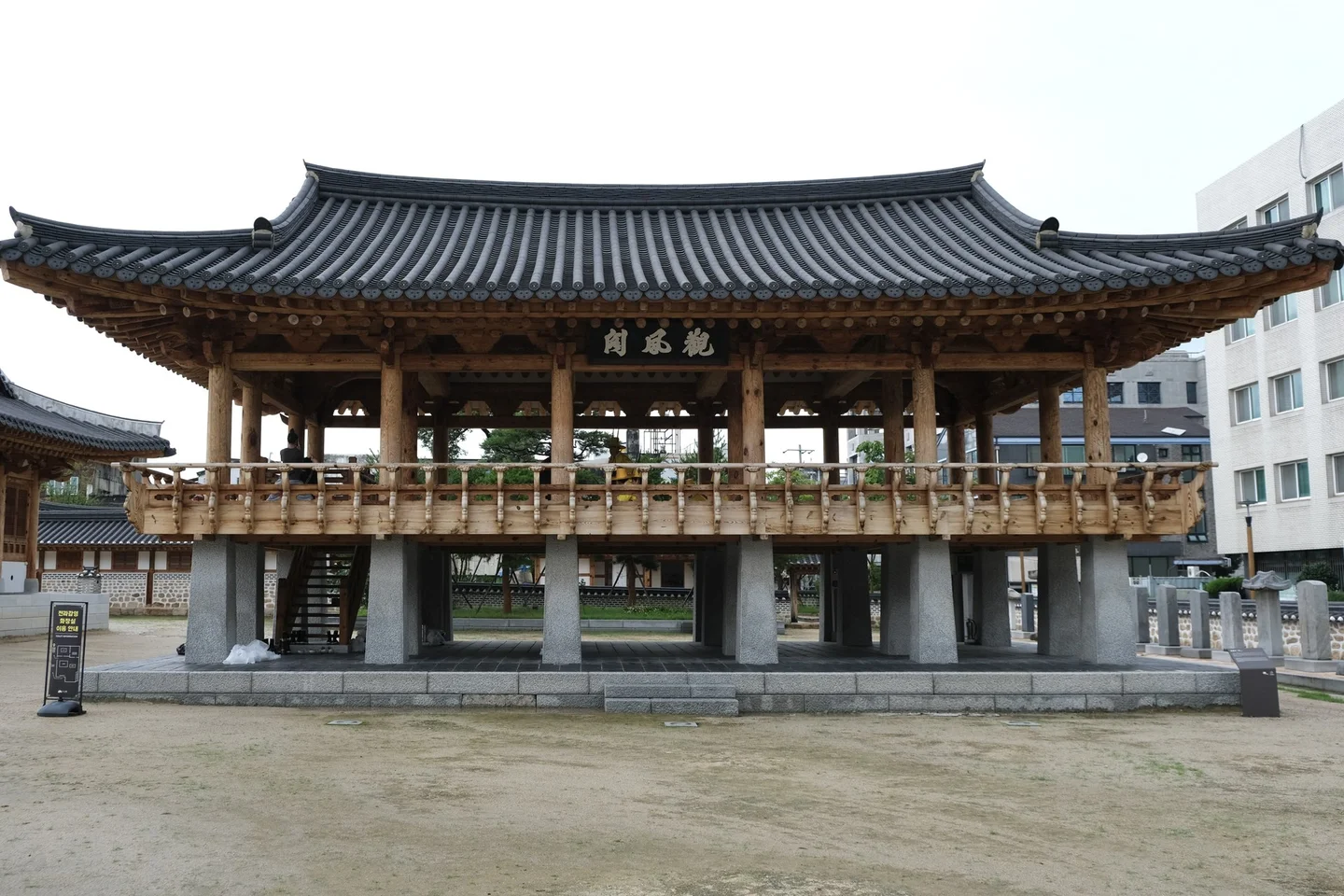
Gwanpunggak introduces a lighter, more open form. Its raised floor, pillars, and broad eaves offer a useful contrast to the main hall. Spend a moment looking across the spaces between buildings: the courtyards and changes in elevation are as important to understanding the compound as the individual names. The buildings require one essential qualification. Most of the old complex was lost, and the surviving Seonhwadang burned in 1951. The present group is a reconstruction; the first phase opened in October 2020. Knowing that makes the experience clearer: you are exploring a recovered layout and its explanation of provincial government, not an intact collection of centuries-old wooden buildings. As checked in October 2026, city guidance lists free admission and opening hours of 9 a.m.–9 p.m. from March through October, and 9 a.m.–6 p.m. from November through February. This gives a warm-season visit some flexibility, though exhibitions and individual interiors may have their own access arrangements. Guided tours are also listed; confirm the available language and departure when you arrive if you want more than a self-guided look.
Pungpaejigwan and the Meaning of Gaeksa
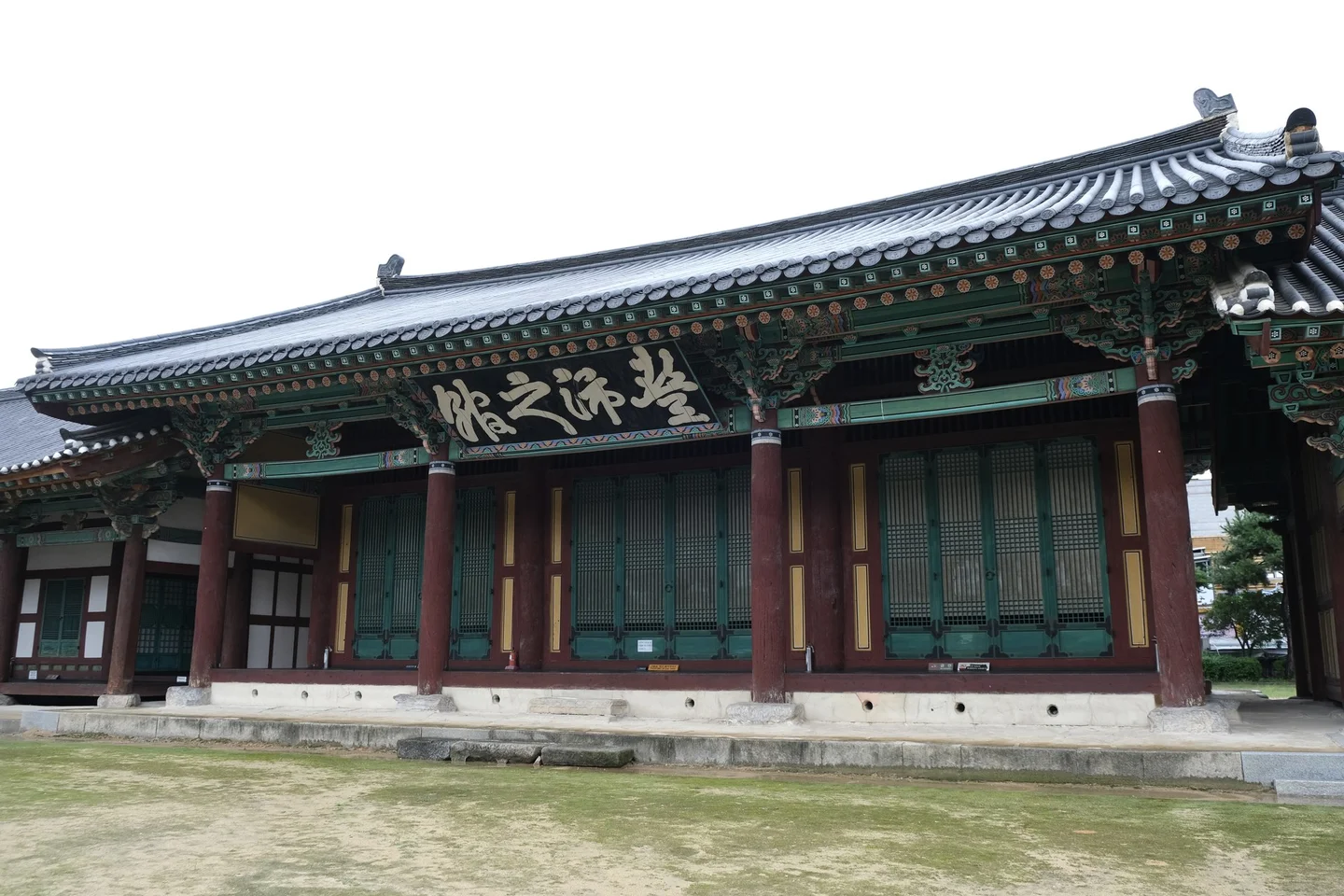
Continue to Pungpaejigwan, the building that gives the surrounding Gaeksa area its everyday name. The large signboard and low sweep of tiled roof make it a strong landmark amid the shops. It had an official role: guesthouses of this kind received visiting officials, while the site also hosted ceremonies honoring the king from afar. The name carries another Jeonju connection. Pungpae refers to the home region of a dynasty's founder, invoking the city's association with the family of Yi Seong-gye, founder of Joseon. You do not need to master the court terminology to appreciate the building. The open frontage, timber columns, and roofline are a satisfying stop after the more extensive Gamyeong grounds. Gaeksa can also mean the surrounding downtown area in ordinary conversation. For navigation, search for Pungpaejigwan when you want the historic building, and Gaekridan-gil when you want the café streets. That small distinction helps when a map result points to a restaurant several blocks from the monument.
Lunch and a Café in the Old Downtown
Shamus7792003 · Original · CC BY-SA 4.0 ·
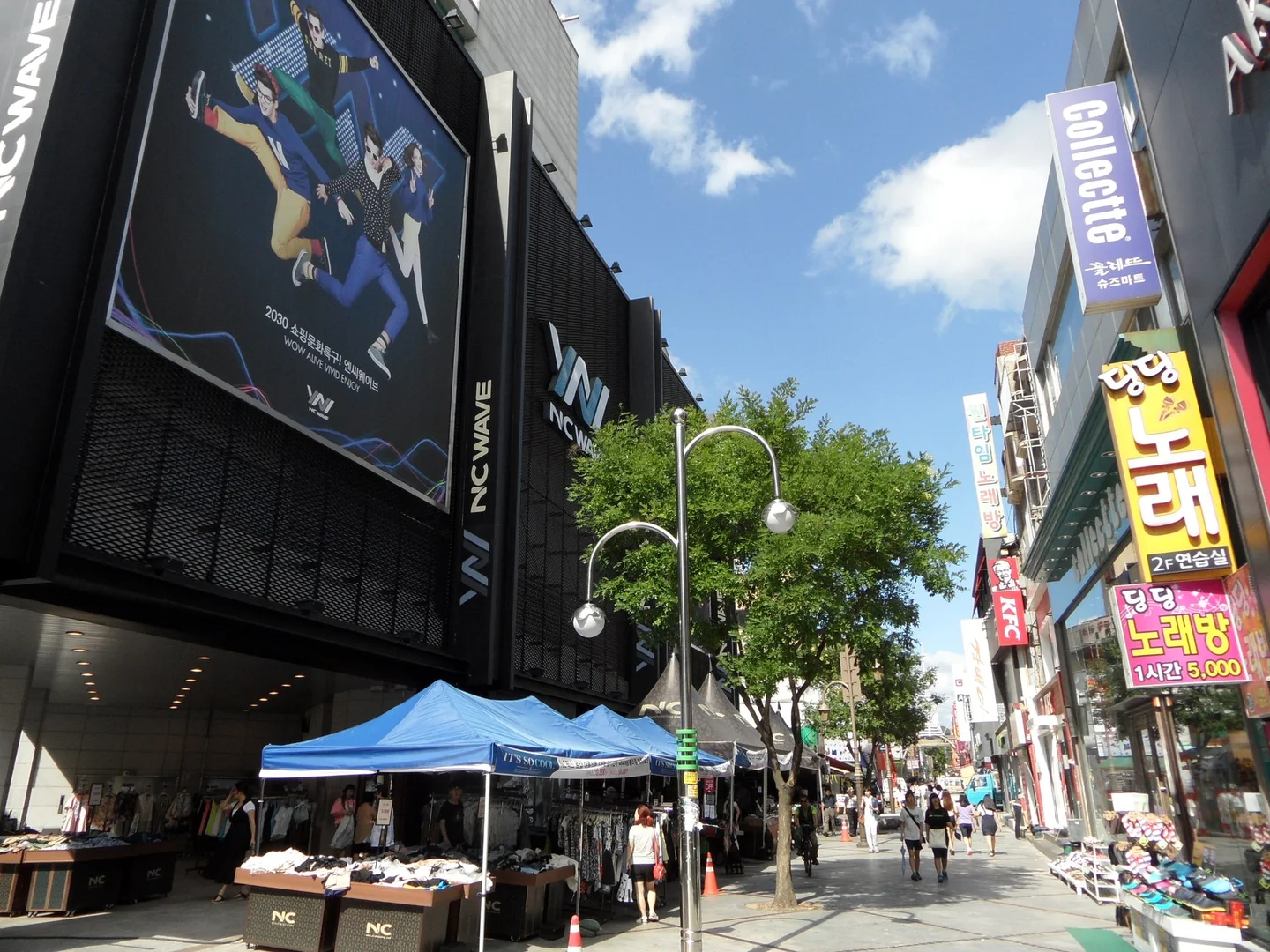
Around Gaeksa, the city becomes busier and more commercial: clothing stores, signs, pedestrians, and shopping streets. Gaekridan-gil's smaller café and restaurant lanes occupy the nearby area around Gaeksa 1-gil and 2-gil. Give yourself room to explore both, rather than expecting every block to look like a traditional-house district. The neighborhood grew as younger independent businesses moved into older commercial and residential streets. That history is still part of its appeal. A café might make creative use of an older building while the next storefront looks entirely contemporary. The pleasure is in the mix, especially after the formal symmetry of the government compound. For lunch, decide whether you want a Jeonju specialty or a longer café break before choosing a place. A bowl of bibimbap or bean sprout soup works well if local food is the priority; the surrounding restaurants also give you plenty of scope to choose something else. Menus and tenants change, so the neighborhood is more useful as a place to browse than as a rigid list of must-visit businesses.
Leave Time for a Film
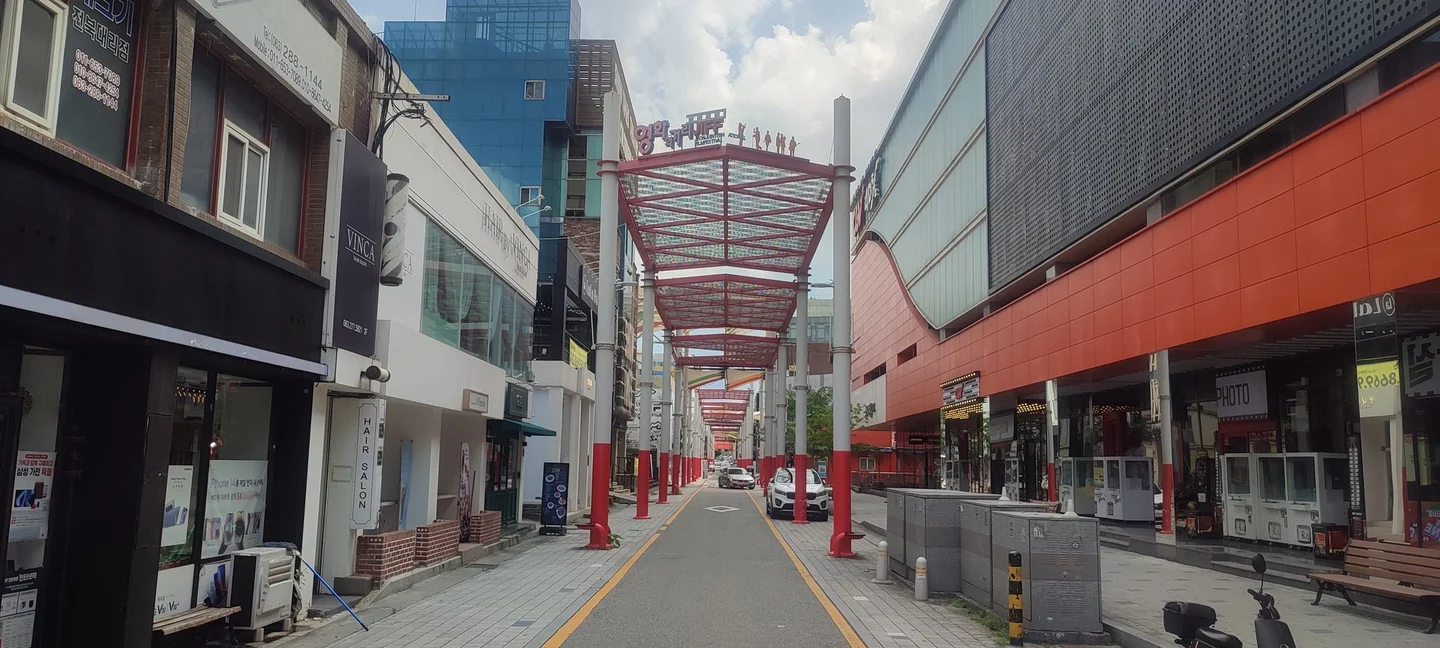
Nearby Film Street connects this downtown walk with Jeonju's international film festival and its wider cinema culture. Outside festival dates, it remains a working commercial district rather than a permanent outdoor festival. Movie theaters, cafés, and shops give the area a reason to visit throughout the year. For an independent-film option, look at the program at Jeonju Digital Independent Cinema in the Jeonju Cine Complex. The festival organization used the venue for its September 2026 screenings, but those event dates are not a standing schedule. Choose from the program for your actual travel day. Check both the spoken language and subtitle language before buying a ticket. A foreign-language film does not necessarily come with English subtitles, and a Korean film may not have them either. Once you have a suitable screening, let it anchor the end of the walk: historic courtyards first, time for food in the lanes, then a seat in the cinema. If nothing suits, stay for dinner and leave the evening open.