Mireuksaji, Iksan: Two Pagodas and the Story Beneath Them
문화재청(현 국가유산청) 제공 · Original · KOGL Type 1 ·
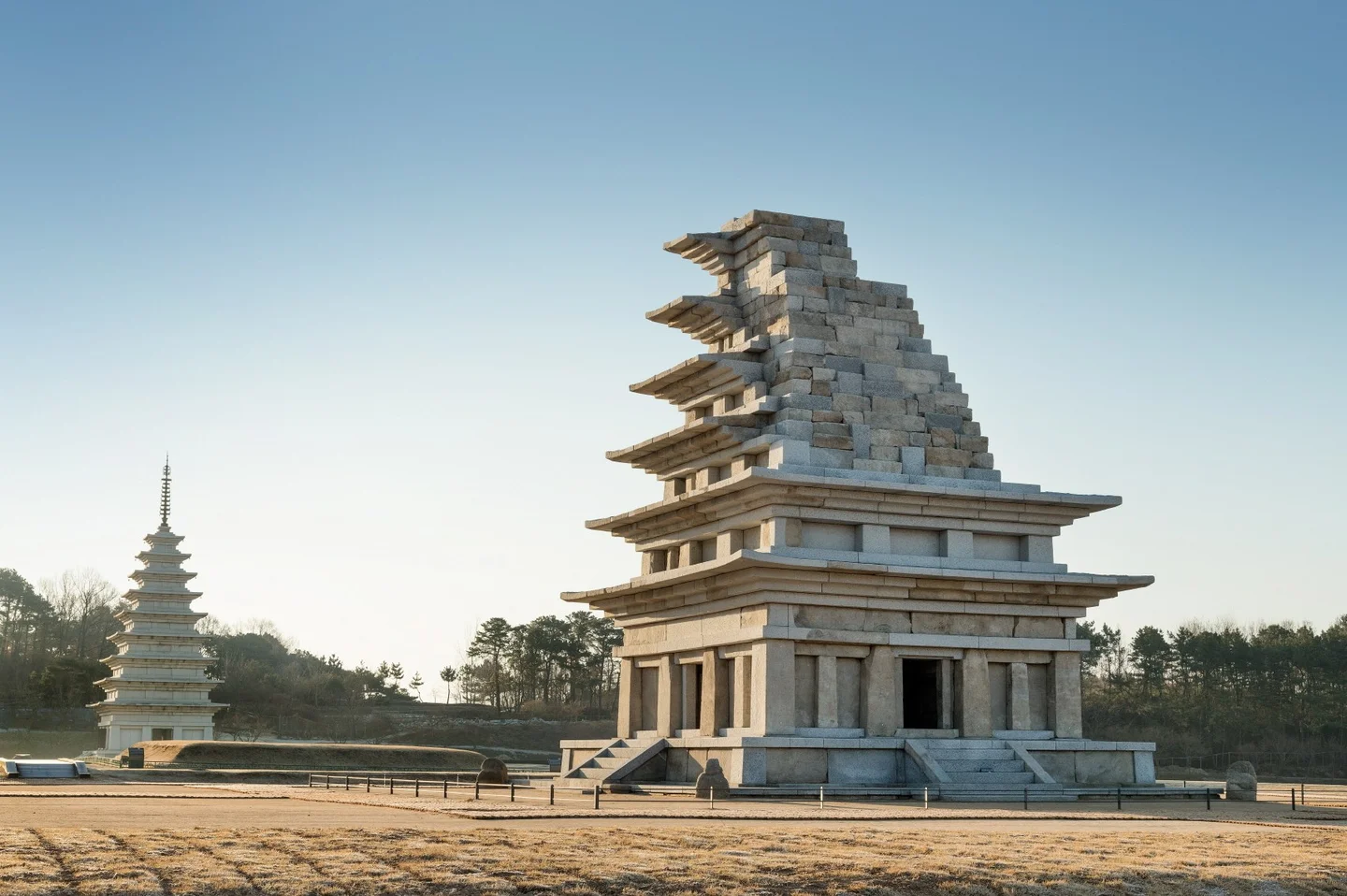
At Mireuksaji, space is part of the spectacle. Two stone pagodas stand across a broad temple site beneath Mireuksan, with low foundations marking buildings that have long disappeared. The contrast between the open ground and the scale of what once occupied it is what makes this one of Iksan's most rewarding historical stops. Come for both the ruins and Iksan National Museum beside them. A museum visit gives the foundations a plan and the pagodas a human story; walking outside then restores a sense of their scale. Together, they explain far more than a brief stop in front of the most prominent tower. Mireuksaji belongs to the UNESCO-listed Baekje Historic Areas, a group of sites associated with the kingdom's later period. Baekje was deeply involved in exchanges of Buddhist ideas, art, and building techniques across East Asia. Here, that wider history becomes tangible in stone architecture and objects small enough to fit in a hand.
Start With the Temple Plan
Avemundi · Original · CC BY-SA 4.0 ·
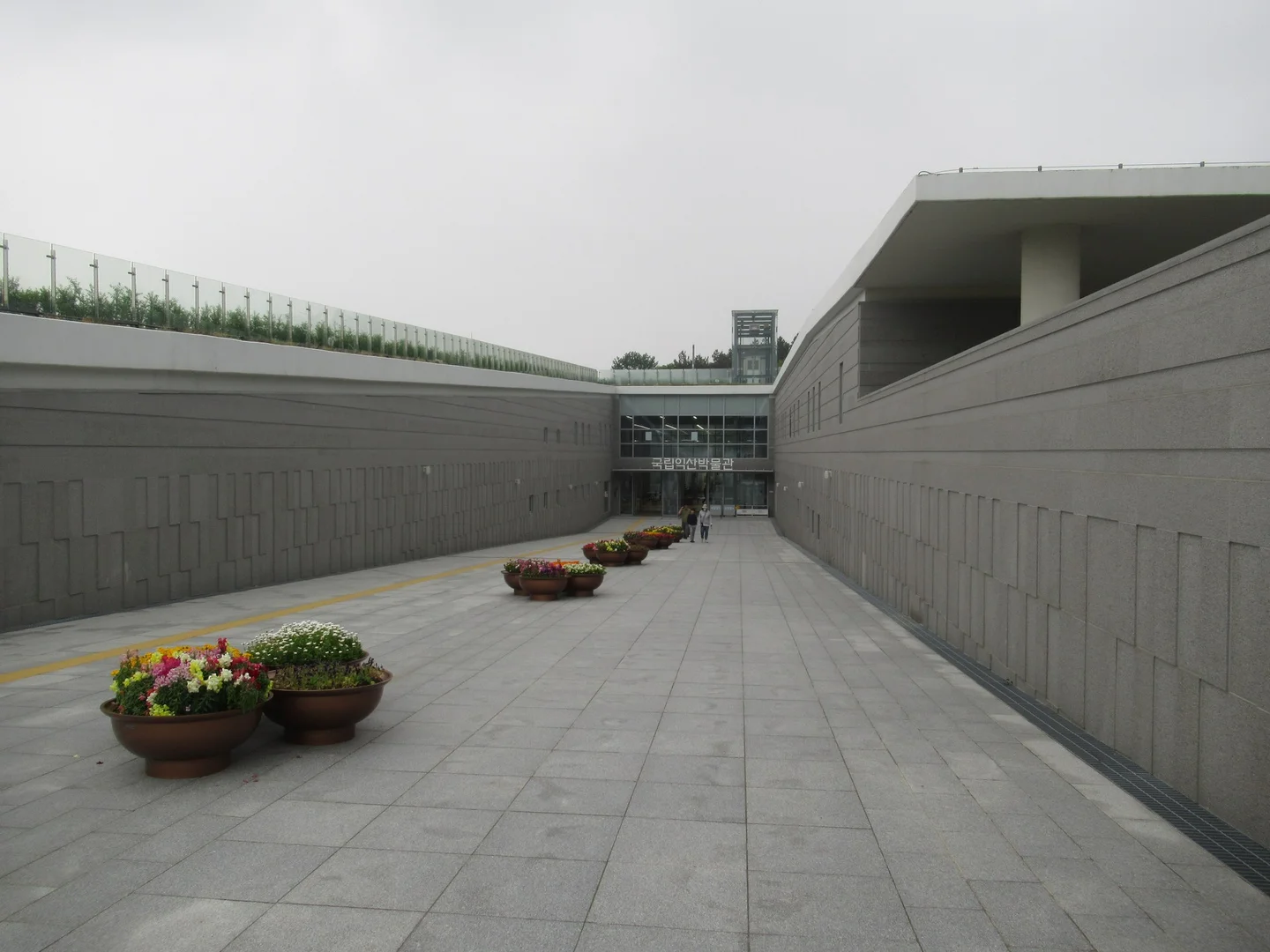
Iksan National Museum's low approach leads down toward galleries set into the landscape. Begin with a model or plan of Mireuksa before trying to absorb every artifact label. The crucial point is that the temple had three adjoining worship compounds: east, center, and west, each organized around a pagoda and a main hall. The middle compound was larger, and its pagoda was wooden. The east and west compounds had stone pagodas. Once you understand that arrangement, the gap between today's two towers becomes meaningful: it includes the place where the central timber tower stood. The site is not simply a pair of pagodas with an empty lawn between them. Other foundations help establish the direction of movement through the temple, from the gates toward the halls. You can use that simple sequence outside without needing a detailed knowledge of Buddhist architecture. English guide materials are listed among the museum's visitor resources, so pick one up at the entrance if it helps you follow the layout. As checked in October 2026, the museum is free and opens from 9 a.m. to 6 p.m., with last admission at 5:30 p.m. It normally closes on Mondays, January 1, and the days of Seollal and Chuseok. When Monday is a public holiday, it opens and closes on the next weekday instead. These are the museum's rules; do not assume the outdoor archaeological grounds follow the same schedule.
A Royal Dedication Written in Gold
Avemundi · Original · CC BY-SA 4.0 ·
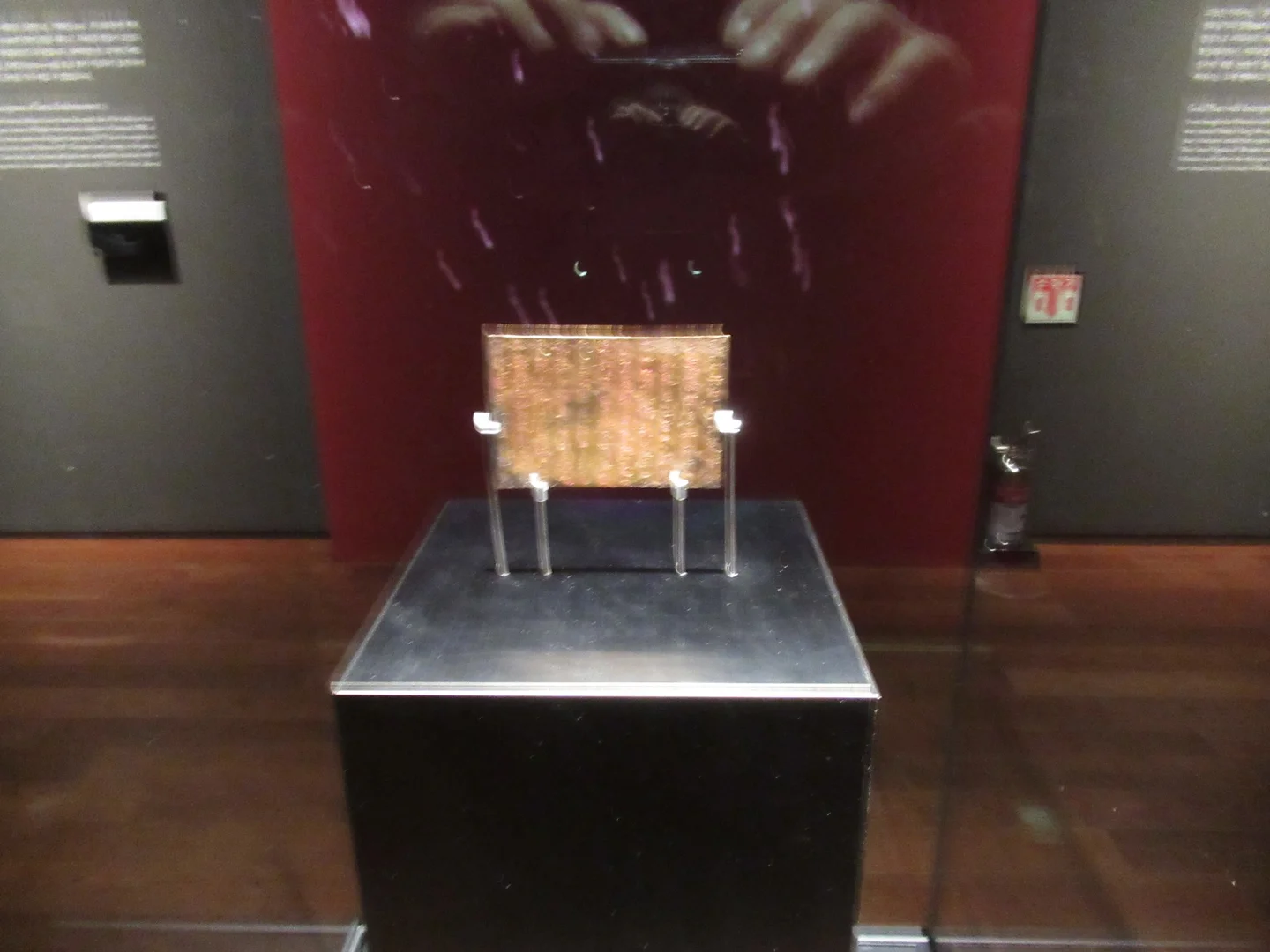
One of the most revealing finds from Mireuksaji is a thin gold plate discovered inside the west pagoda. Its inscription records the enshrinement of Buddhist relics in 639 and identifies a Baekje queen, daughter of the high official Sataek Jeokdeok, as the donor. The dedication also expresses wishes for the royal household's well-being and the enlightenment of others. This turns the temple from an anonymous ancient ruin into a place shaped by named people and specific intentions. Notice the orderly lines of characters and the small scale of the object. It was made to preserve a record inside a monumental structure, rather than to be read by a crowd in a public square. The inscription is also important because Mireuksa's founding story is often told through the legend of Seodong and Princess Seonhwa. The excavated record and the later legend are different kinds of evidence. There is no need to settle every historical debate during a visit; recognizing the distinction is enough to make the museum's explanation more interesting. The museum lists the gold dedication among its collection highlights. If this particular object is your main reason for coming, check its current display status, since conservation and exhibition arrangements can change. For most visitors, the broader group of objects from the pagoda helps explain why so much care went into a structure that is now largely appreciated from the outside.
Why the Two Pagodas Look Different
LandAndTree · Original · CC BY-SA 4.0 ·
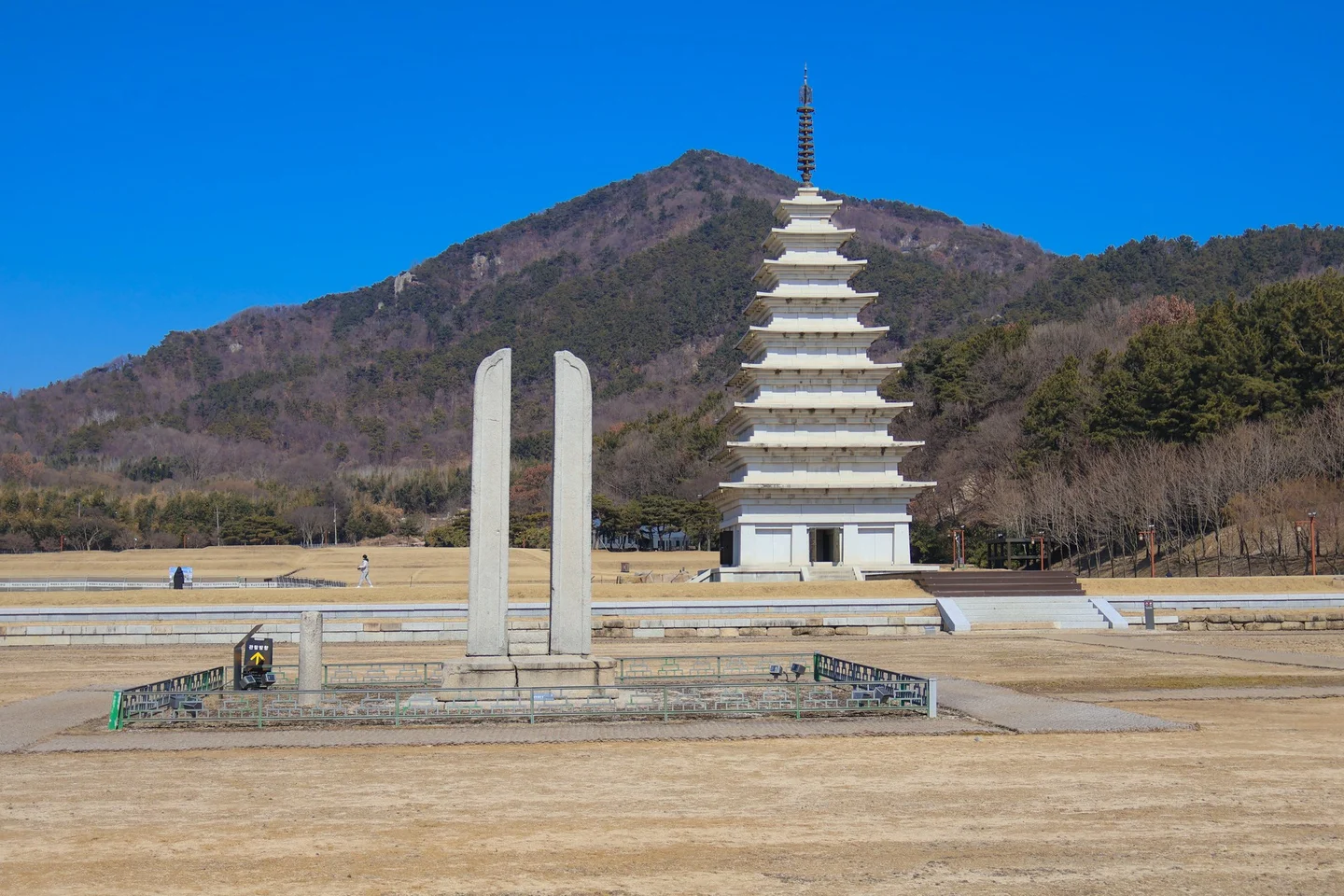
Back on the grounds, compare the towers before approaching either one closely. The west pagoda incorporates surviving ancient stonework and the results of a long dismantling, research, and conservation project. The east pagoda is a modern reconstruction on the former tower site. Their different outlines reflect those different histories. At the west pagoda, look for the ways stone imitates timber construction. The columns and projecting roof forms suggest a wooden building translated into granite. Moving from a distant view to the details at the base makes this easier to see than treating the tower as a solid stack of stone. Its recent conservation was also an archaeological investigation. Work begun in 2001 exposed information about the structure and eventually brought the relic deposit to light in 2009. The conserved tower was reassembled to six stories, with as much original material retained as possible. It is a record of survival and careful repair, rather than an attempt to make both pagodas look identical. Nearby pairs of tall, narrow stones are flagpole supports, or dangganjiju. They held the poles used for temple banners. Their role helps you read the approach to the temple, adding another layer to a walk that might otherwise focus only on the towers. Keep to the visitor routes as you move between the foundations. The spaces between buildings are worth noticing too: they reveal the breadth and organization of a temple whose walls and roofs are mostly gone.
Step Back Toward the Pond
문화재청(현 국가유산청) 제공 · Original · KOGL Type 1 ·
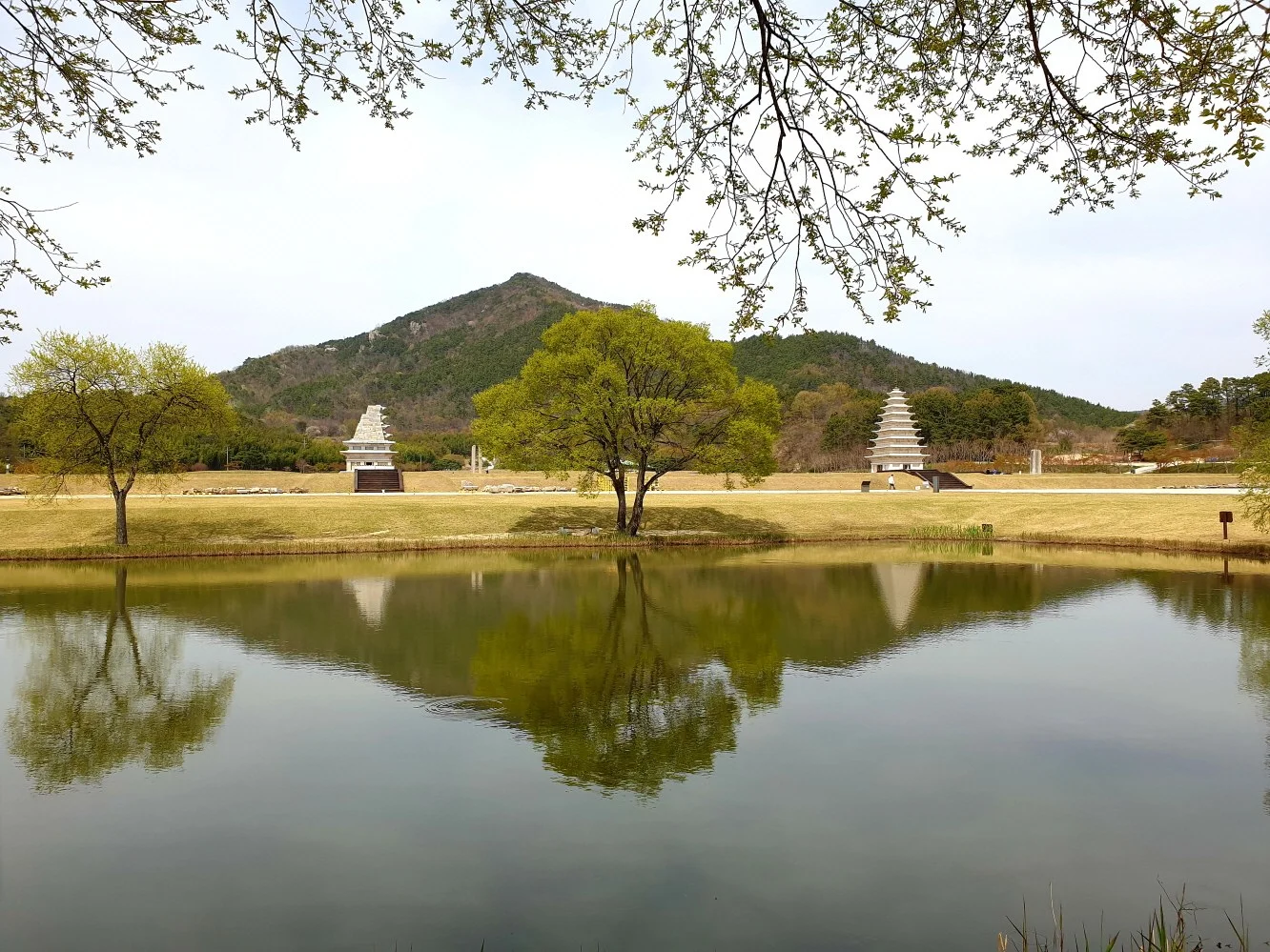
The pond provides a good place to take in the wider setting after looking closely at stonework. Mireuksan rises behind the site, the towers sit apart across the open ground, and trees soften the edges. When the water is still, reflections draw these elements together; on a breezier day, the broad view is still the reason to pause. The grounds are exposed, so weather can determine the balance between indoors and out. On a hot day, put the museum between shorter outdoor sections. In colder weather, start with the galleries and choose the parts of the site you most want to see. The museum lists wheelchair and stroller loans, but ask about the outdoor route as well if surface conditions or distance are a concern. Iksan Station is a convenient arrival point for the city, not the entrance to the ruins. Plan the onward bus or taxi journey to Mireuksaji or Iksan National Museum, and leave time to get back for your train. Wanggung-ri is a worthwhile second Baekje site if you have transport and time, but it requires a separate transfer. There is plenty to absorb here before adding another set of ruins.