Wanggung-ri, Iksan: Why Is There a Pagoda in a Palace Site?
Seong Ilhan · Original · CC BY-SA 4.0 ·
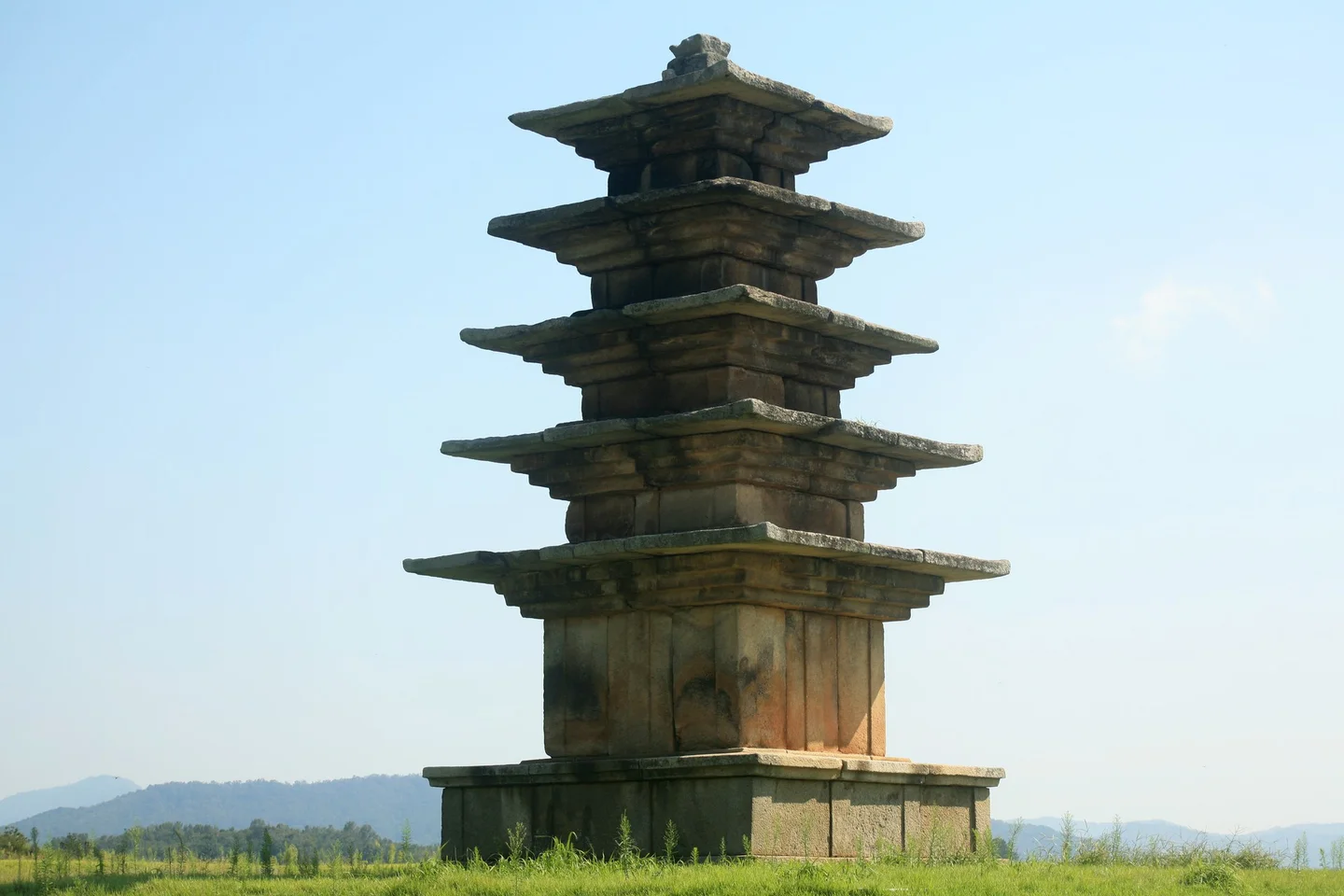
The five-story pagoda at Wanggung-ri raises a good question: what is a Buddhist tower doing in the middle of a royal palace site? The answer is the key to the visit. This ground was developed as a Baekje palace and later adapted for a temple. Its low foundations and solitary tower belong to a place whose purpose changed over time. There are no furnished royal rooms to walk through. Instead, broad stretches of grass and stone outlines preserve the arrangement of a complex built on gently rising ground. For travelers interested in archaeology, the reward comes from understanding how the pieces fit together, then walking across a space that is much larger than the pagoda alone suggests. Start at the Baekje Royal Palace Museum beside the ruins. Its site models and excavation story help distinguish the palace from the later religious buildings. With that orientation, continue to the main building remains and the pagoda, then take a section of the outer path for a wider view.
Reading the Palace Beneath the Lawn
Jjw · Original · CC BY-SA 4.0 ·
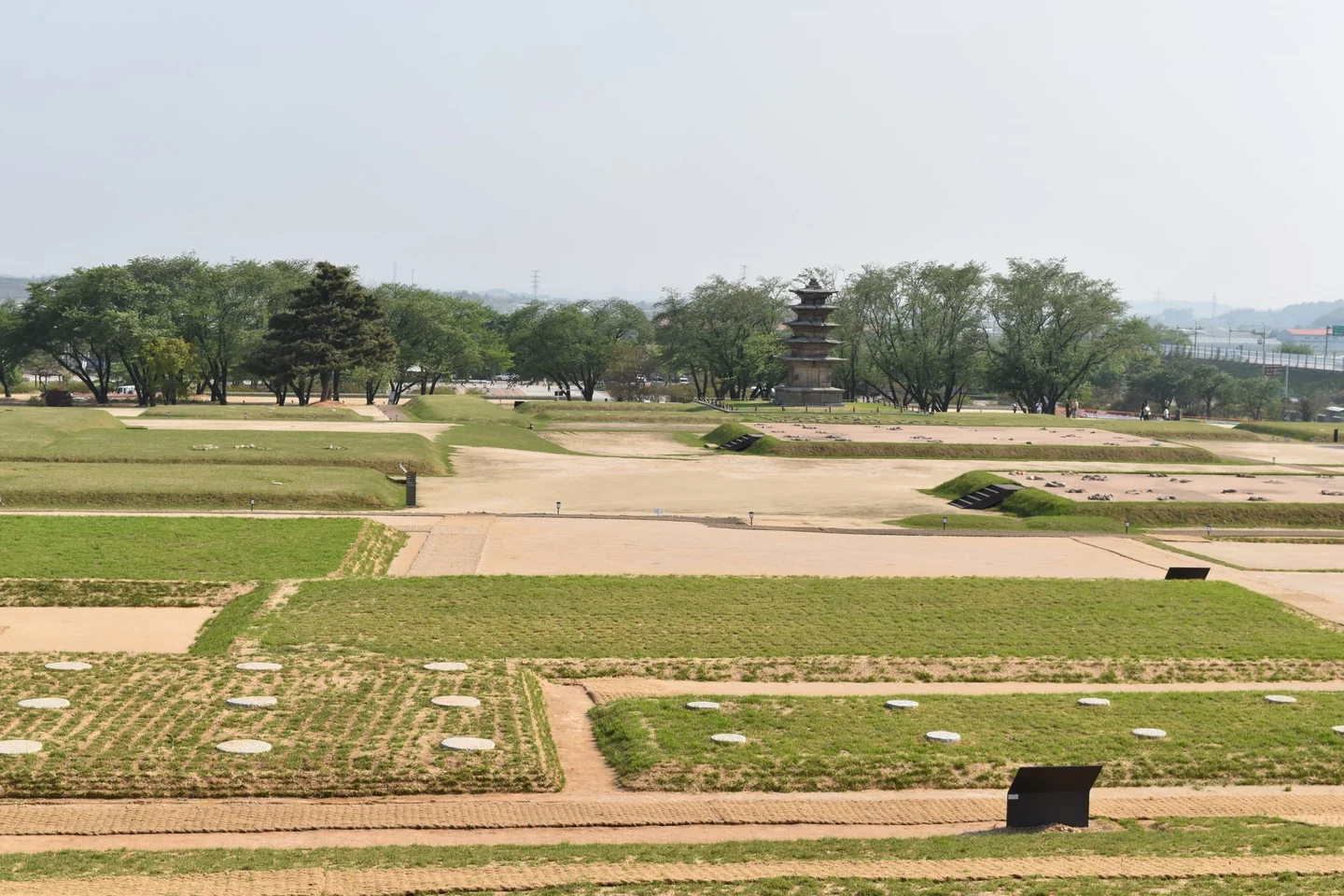
Wanggung-ri was laid out during the reign of King Mu, who ruled Baekje from 600 to 641. Excavation has revealed a planned complex with distinct areas for official business, ceremonies, royal living quarters, gardens, and production. The name “palace” describes an organized working environment, not just one large residence. The southern part contained the principal buildings for court life. Terraces divided the ground into levels, and a large hall faced a courtyard where people could gather. Farther north were gardens and spaces for royal recreation. Workshops in the northwest produced gold and glass objects, connecting the ceremonial side of the court with highly skilled practical work. Pick one major building footprint and compare it with the open space in front. Even without walls, the relationship between hall and courtyard is easier to grasp when you pause than when you try to identify every excavated feature. The low changes in height also become more apparent as you move along the visitor paths. Some remains have been covered or conserved, so what you see on the surface is not the complete excavation. The museum supplies the missing detail through plans, objects, and explanations. Children's excavation activities are separate educational programs, not permission to join an active archaeological dig on the grounds.
The Pagoda and Its Remarkable Contents
작자 미상 (출처: 공유마당·한국저작권위원회) · Original · Public domain ·
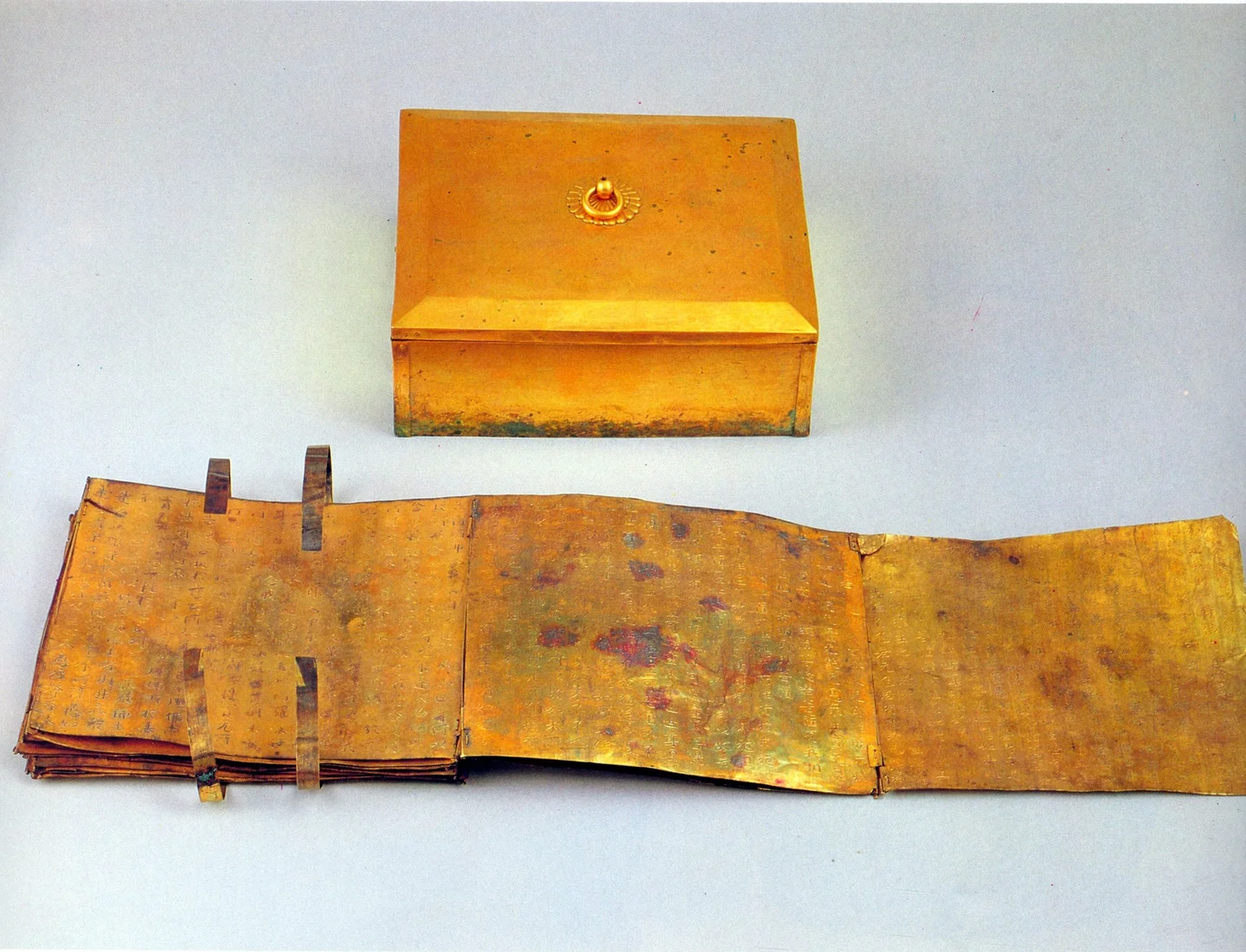
When the palace became a temple, key buildings were replaced by religious structures, while other parts of the earlier complex continued in use. The exact chronology of that change and the date of the pagoda remain subjects of research. It is more accurate to recognize the different phases than to assign every visible stone to King Mu's palace. The pagoda is worth seeing from more than one distance. Its broad roof stones create a strong horizontal rhythm, while the stories narrow toward the top. From farther away, it serves as a landmark across the site; closer up, you can appreciate the weathered surfaces and the way the upper mass rests on the lower body. Objects discovered during dismantling and repair reveal another scale of craftsmanship. Among them are nineteen metal plates carrying the Diamond Sutra, a Buddhist scripture. Hinges connected the plates so they could fold together. The care taken with the characters and the folding structure makes a compelling counterpart to the heavy stone tower that held them. There is an important museum distinction for anyone hoping to see those plates. The Baekje Royal Palace Museum is here at Wanggung-ri. Iksan National Museum is beside Mireuksaji, at a different location, and its exhibition catalog lists the Wanggung-ri sutra plates. Check the national museum's current display if that particular object is a priority; do not assume all finds remain at the site where they were excavated. For a combined visit, this division is useful rather than inconvenient. Wanggung-ri's museum explains the palace layout and excavation, while the national museum adds major artifacts within a broader account of Iksan's Baekje history.
Follow Part of the Outer Boundary
Sadopaul · Original · CC BY-SA 4.0 ·
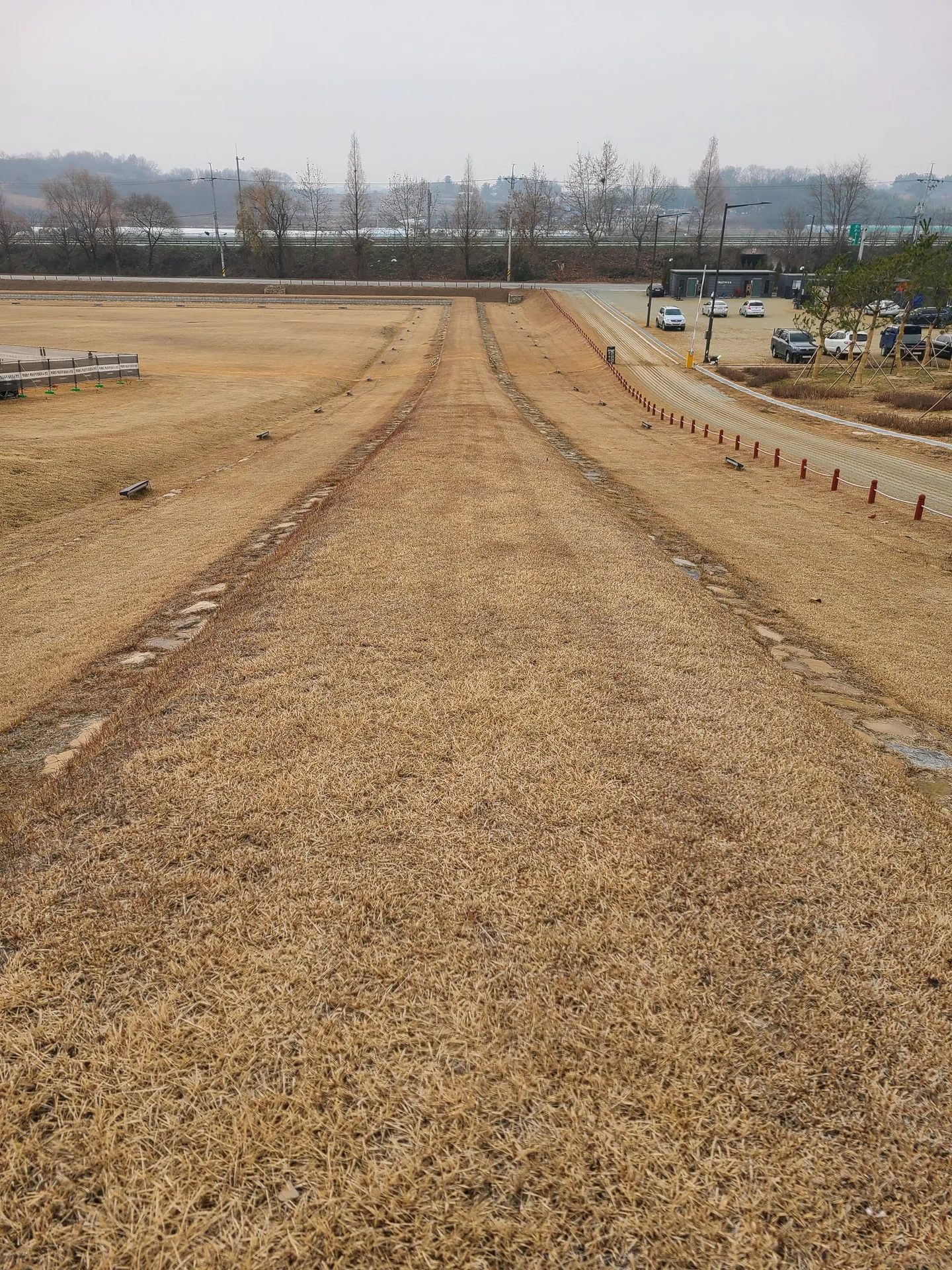
After looking closely at the building remains, step out toward the permitted perimeter paths. The long boundary changes your sense of scale. It once separated a controlled royal compound from the world outside, and the surviving traces help show how much space the court occupied. Only portions of the wall survive at low level. Archaeologists can read its construction from those remains, but the present ground line should not be mistaken for a fully preserved wall or a complete picture of its former height. What is clearest to a visitor is the organization inside the boundary: buildings, courts, gardens, and workshops arranged as parts of one complex. This outer stretch also gives you a different view of the pagoda. Instead of standing directly beneath it, you see the tower against the wider archaeological landscape. You can keep the walk short by returning after one section of the perimeter rather than following every edge.
A Museum Stop, a Rest, and the Onward Journey
Sadopaul · Original · CC BY-SA 4.0 ·
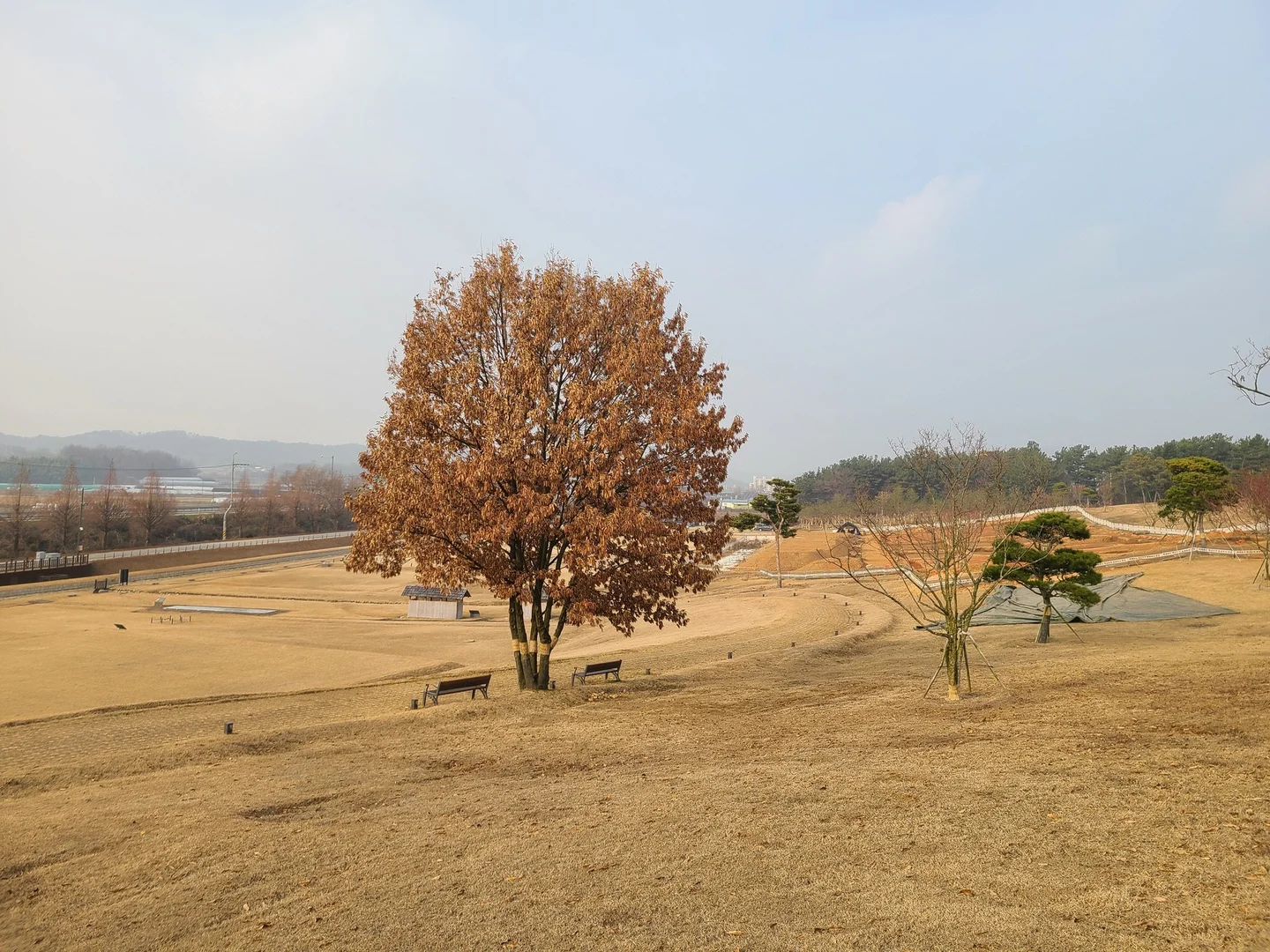
Trees and benches offer places to pause, but much of Wanggung-ri is open to the sun and wind. In warm weather, divide the outdoor walk with time in the museum. In cooler seasons, the more exposed outlines of the land and stonework can make the site's structure easier to notice. The Baekje Royal Palace Museum's official guidance, checked in October 2026, lists free admission and hours of 9 a.m.–6 p.m. It closes on Mondays and January 1. When a Monday is a public holiday, the museum opens and takes its substitute closure on the first weekday after the holiday. Families can also look at its virtual-experience and simulated-excavation programs. The current guidance lists excavation activities for children from age five through third grade, and VR for ages ten and up, with advance online reservations. These activities have their own sessions and eligibility rules, separate from ordinary gallery admission. Visitors using a powered wheelchair or mobility scooter should contact the museum ahead, as its published guidance asks for advance arrangements. For the outdoor visit, check the actual route surfaces rather than relying only on the shortest line across a map. From Iksan Station, the museum's public-transport directions use a connection at Geumma Terminal. Check the current departure times and the return journey before setting out. A taxi or car makes it easier to pair Wanggung-ri with Mireuksaji, but the two sites still require a transfer. Seen together, they offer different perspectives: the planned spaces of a royal court here, and the great Buddhist temple complex beneath Mireuksan.