Gamcheon Culture Village: Colorful Hillside Streets with a Harbor View
Basile Morin · Original · CC BY-SA 4.0 ·
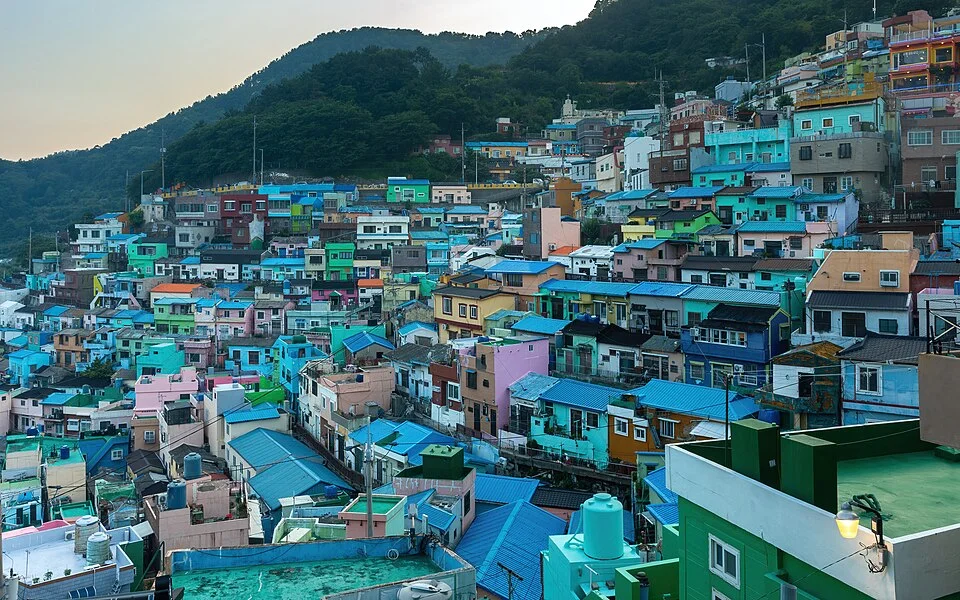
Gamcheon is one of the clearest places to see how Busan fits itself around the mountains. Blue roofs, pastel walls, stairways, and narrow lanes overlap on a steep hillside, with the harbor opening in the distance. The pleasure is in changing your point of view: first take in the whole neighborhood, then look more closely at a painted wall or a small artwork along the route. It is worth coming if you enjoy urban landscapes, photography, and wandering between small cultural stops. This is a hillside neighborhood with sea views, rather than a beachfront walk. Give it a daytime slot and leave time for a break; the distance you cover matters less than the climbing involved. The houses also tell a story beyond their colors. Refugees settled here during the Korean War, and the Taegeukdo religious community helped shape the neighborhood in the 1950s. Homes were arranged along Cheonmasan's slopes with consideration for the light and views of those behind them. The resulting terraces are a record of people making a place to live, not a set built for visitors.
Start high and save your energy for the village
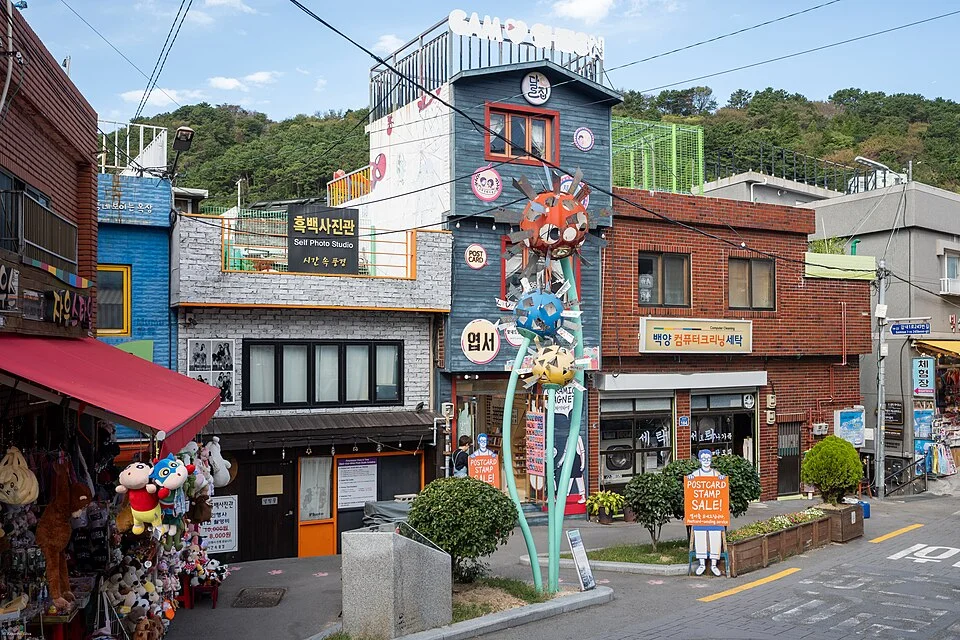
A practical starting point is the Gamcheon Culture Village Information Center on Gamnae 2-ro. From Toseong Station on Line 1, use Exit 6 and transfer near the hospital to a village bus heading toward Gamcheon. The village's current directions list Seogu 2, Seogu 2-2, and Saha 1-1 for this transfer. Include the district name when checking the bus: the number alone is less helpful than the full route label. Walking all the way from the subway involves an uphill approach before your village visit even begins. A bus or an appropriately located taxi drop-off can save energy for the lanes. Use the official entrance or a permitted drop-off point as your destination, rather than asking a driver to take you deep into the residential streets. At the information center, get a walking map and ask about luggage storage if needed. Mark three things first: where you are starting, the viewpoint you want, and the bus stop you will use afterward. For a first visit, a manageable sequence is the Small Museum, a designated overlook, and the shops and artworks along the upper visitor route, with only a few side lanes added. The main route has postcard shops, small souvenirs, and places to sit down. Choose a café for what you need at that moment, whether it is a view, a comfortable seat, or an entrance with fewer steps. A rooftop terrace or window seat may be part of a business, so check the ordering conditions rather than assuming every attractive outlook is a free public deck.
Put the harbor and the rooftops in the same picture
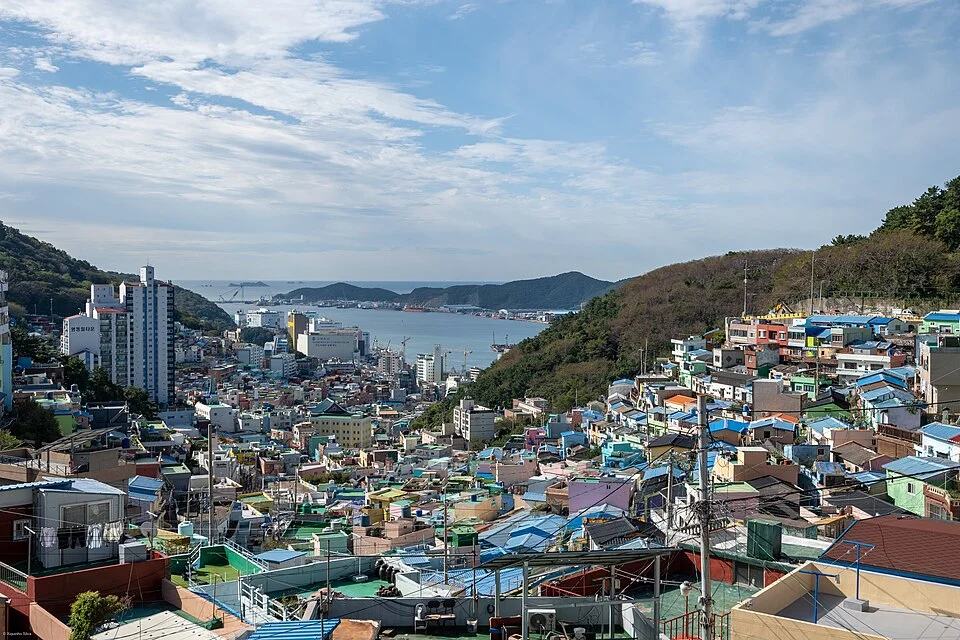
From a high public viewpoint, the neighborhood's structure becomes easier to understand. Nearby roofs fill the foreground, houses descend through the valley, and the water lies beyond. A close framing emphasizes color and pattern; a wider view explains the geography of the port city around it. Haneul Maru is an identified visitor viewpoint and exhibition space created from a former home. It is a useful alternative to searching for an unmarked rooftop. Check which parts of the facility are open when you arrive, and use the designated visitor entrance. The Small Museum adds context through old photographs and everyday objects collected by residents. It also traces the village's development following the art project that began in 2009. A short stop helps separate the older settlement from its more recent identity as an art destination. If history interests you, visit before taking the panorama; the pattern of houses will mean more once you know something about the people who built the community. For a break nearby, Gamnae Café is operated by the residents' association at the entrance to the lane leading toward Haneul Maru. Its official listing includes coffee, juice, traditional tea, and cookies, with proceeds supporting community projects. It gives you a named place to look for without needing to turn the walk into a tour of cafés.
Look for art at street level
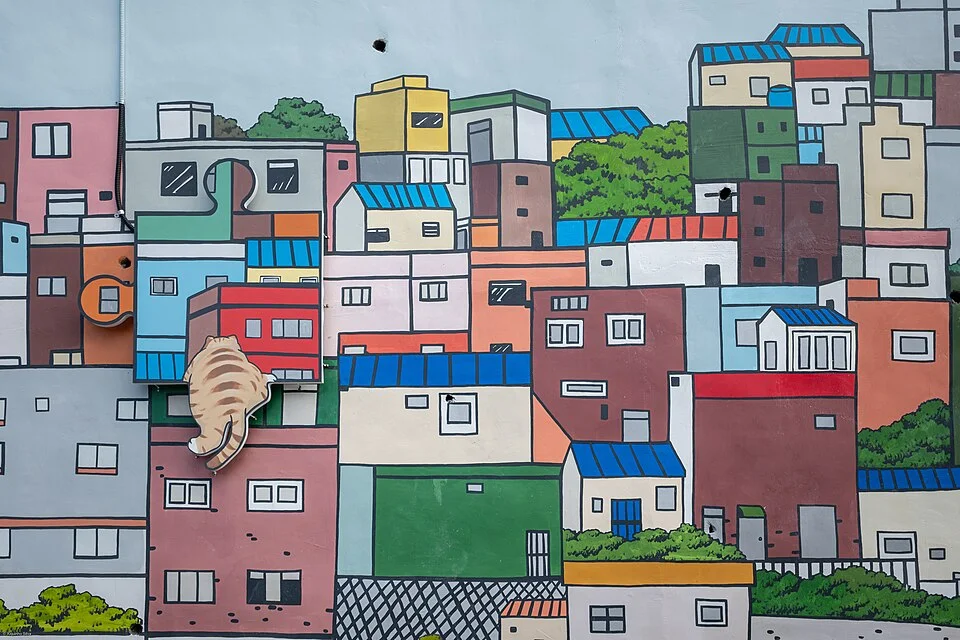
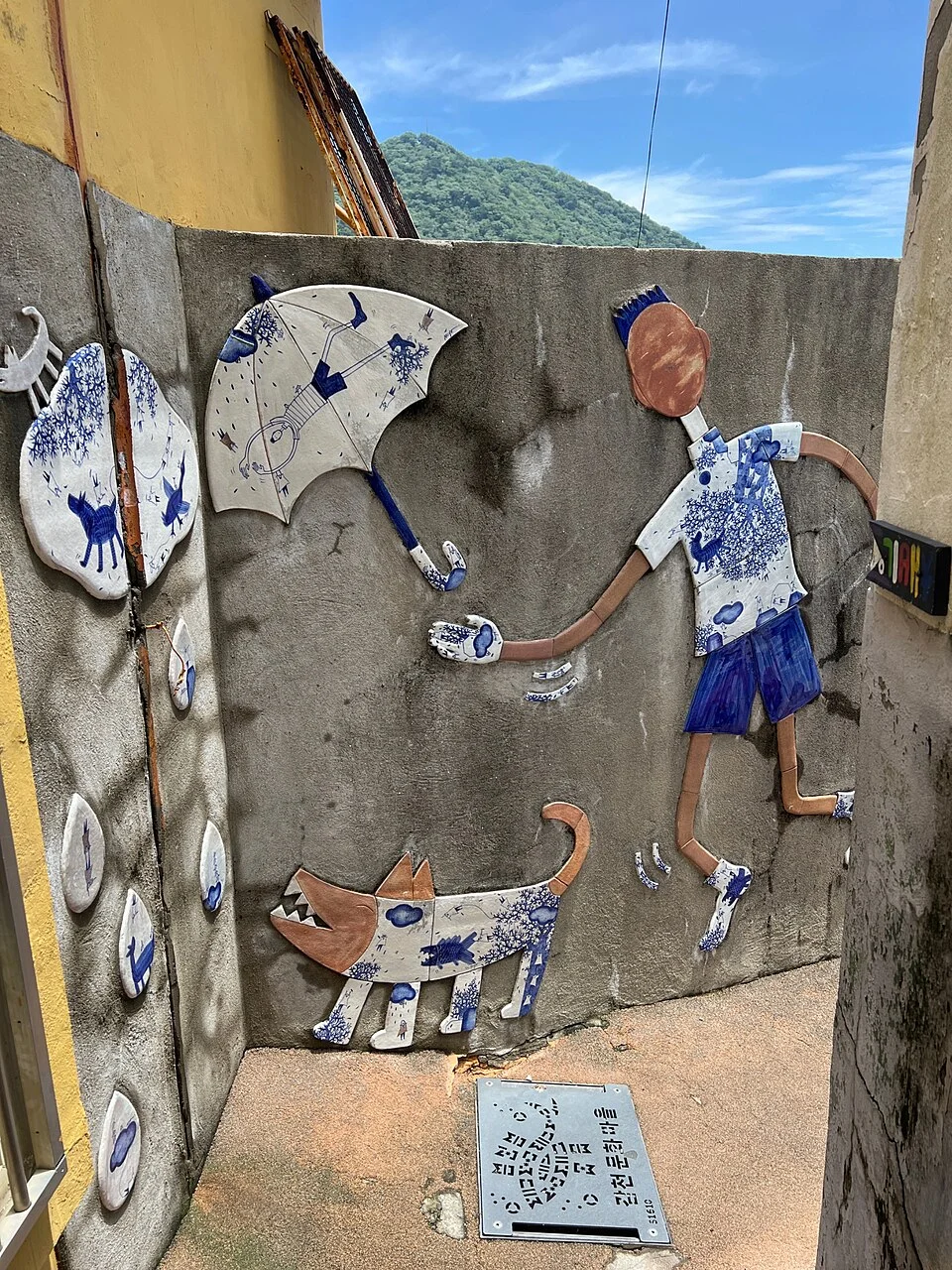
The murals and small installations reward a different pace from the overlooks. Painted houses echo the actual buildings around them, animals appear on walls, and sculptures make use of corners you might otherwise pass. After photographing the broad view, concentrate on a few details: the outline of a roof, a color repeated along a lane, or an artwork fitted into an awkward piece of wall. There is no need to locate every installation. Follow the marked visitor route and use the map to choose a short branch that interests you. That leaves room to notice the street itself, instead of spending the entire visit checking off photo spots. The Little Prince and fox sculpture is a well-known stop, and a line may form for photographs. Decide whether that particular portrait matters enough to wait for. If not, move on to another public outlook and return later if time allows. The village's layered rooftops are not dependent on one sculpture or one camera position.
Choose side lanes with the return climb in mind
Aintzane (Tagzania user ID: 8274) · Original · CC BY-SA 4.0 ·
A staircase that looks inviting on the way down can become the most tiring part of the return. Before descending far, find where that lane reconnects with the visitor route. For a shorter outing, explore a few nearby branches and return to the upper road. A longer route is worthwhile if you enjoy the walking itself and have a clear exit in mind. The terrain makes good footwear more useful than an ambitious list of stops. Wet paving and steps can be slippery, and some overlooks have little shade. Leave rolling luggage at your accommodation or a suitable storage point. If using a wheelchair or stroller, ask the information center about the currently accessible road sections and facilities rather than expecting a continuous route through every lane. People still live behind the decorated walls. Keep doorways clear, avoid photographing into homes, and leave room for residents to pass. A mural does not make a private stairway or roof public. These are simple boundaries to follow as you explore, not a reason to avoid the neighborhood's cultural spaces and businesses.
Visit during the day and check the new access rules
Gamcheon has been designated a Special Management Area, with different measures for residential lanes, mixed commercial streets, and vehicle access. As checked October 12, 2026, the official notice gives January 1, 2027, as the main implementation date. The announced measures limit visits to designated residential areas to 9 a.m.–6 p.m. and restrict tourist-carrying vehicles, including taxis, on the specified Gamnae 2-ro section during those hours. These are zone-specific rules, not a statement that every shop in the village has identical hours. One measure already has an earlier start date: organized groups of 10 or more must purchase the official visitor map from August 1, 2026. Tour buses also require advance reservation arrangements. Use the official Special Management Area guide and map for the boundaries and the rules applying on your travel date. A daytime visit beginning at the information center is the simplest approach during this transition. After Gamcheon, return toward Toseong or Nampo-dong for a meal, BIFF Square, or the market streets. That pairs the hillside with a different part of Busan without adding another steep village walk. Huinnyeoul Culture Village is on Yeongdo and needs its own transport leg; it is not the next neighborhood along the same walking route. If you want both in one day, allow for the journey and the cumulative steps before adding an evening plan.