Yongdusan Park and Busan Tower: See How the Port City Fits Together
From the shopping streets of Nampo-dong, Busan can feel like a maze of signs and narrow lanes. Yongdusan Park gives you some room to step back. A plaza, trees, sculptures, and a painted bell pavilion occupy the hill above the shops; Busan Tower adds a much wider view of the harbor, bridges, and buildings packed between the water and the mountains. The park is a good stop on an old-downtown walking day, particularly between shopping and dinner. The tower is worth considering if you want to understand the city's geography or see the port lights after dark. Its view is rooted in the working harbor and older downtown, giving it a different character from the beachfront high-rises around Haeundae. You can make the visit as short or as involved as you like. The park is free to enter, while the tower's observation deck requires a separate ticket. For a quick stop, allow roughly half an hour to look around the main plaza and monuments, plus the approach from the street. Add about an hour if you want to take your time in the tower. These are planning allowances, not fixed tour lengths; queues and how long you spend looking will change the total.
Reach the hill from Gwangbok-ro
Christophe95 · Original · CC BY-SA 4.0 ·
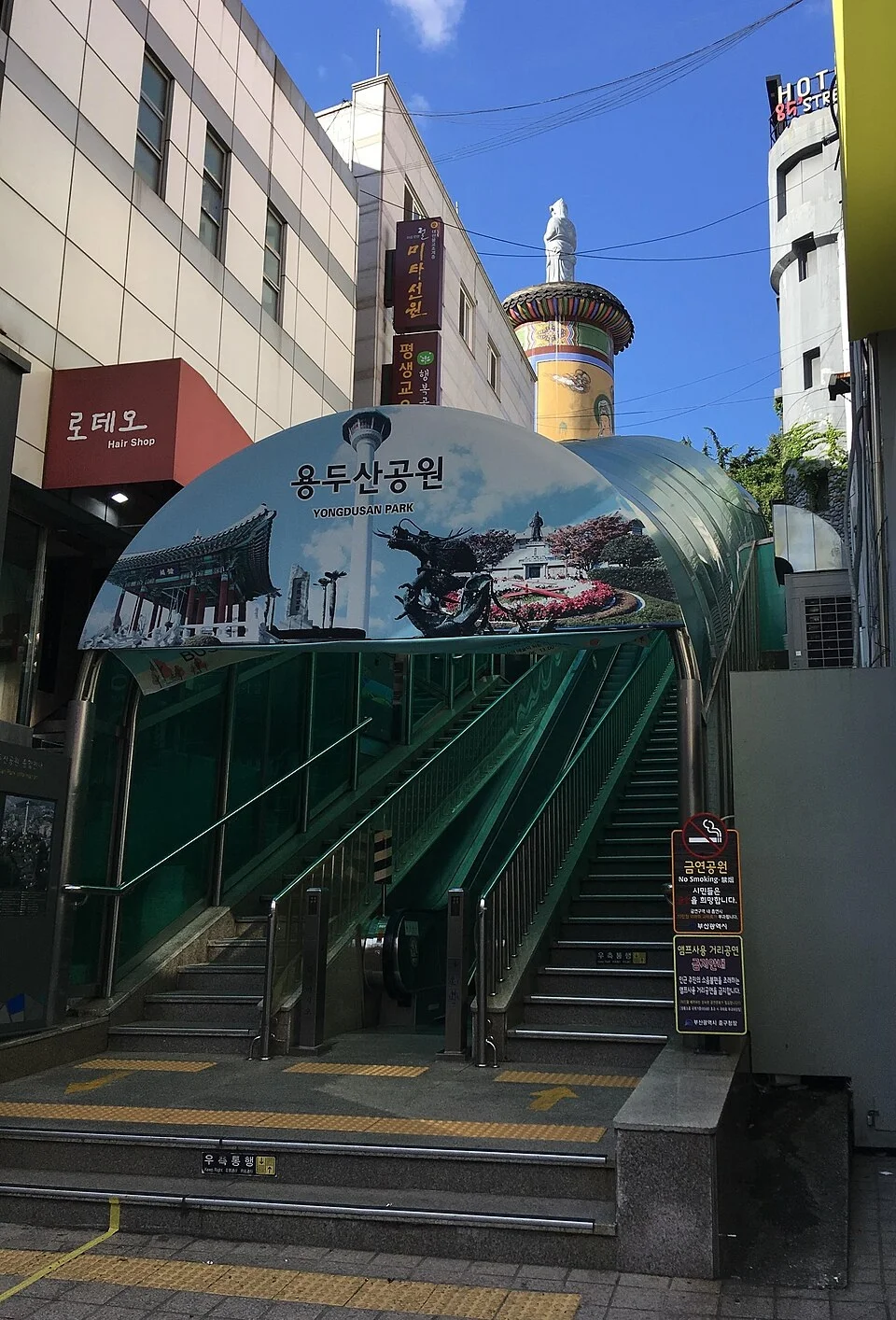
Nampo Station on Line 1 is a convenient starting point. Head into the Gwangbok-ro shopping area and follow signs for Yongdusan Park to the escalator connection. Looking for the park entrance is more useful at street level than following a straight line toward the top of the tower on your map. The transition is part of the appeal: shopfronts give way to an uphill connection, then to a more open space above the commercial streets. You can browse on Gwangbok-ro first and go up when you want a break, or visit the tower early in your walk to locate the neighborhoods you plan to explore afterward. An escalator does not make every approach step-free. There are stairs and slopes around the hill, and the route down may differ from the route up. With a wheelchair, stroller, or a companion who cannot manage steps, ask the park about the current accessible approach before choosing an entrance. If arriving by taxi, confirm the permitted drop-off point and the remaining distance to the plaza. Decide where you want to go afterward while you still have the area map open. Returning toward Gwangbok-ro works well for shopping or Nampo Station. If you are continuing to the markets, choose the appropriate downhill route instead of descending at random and discovering you need to circle the hill.
Spend a little time in the plaza
Abasaa · Original · Public domain ·
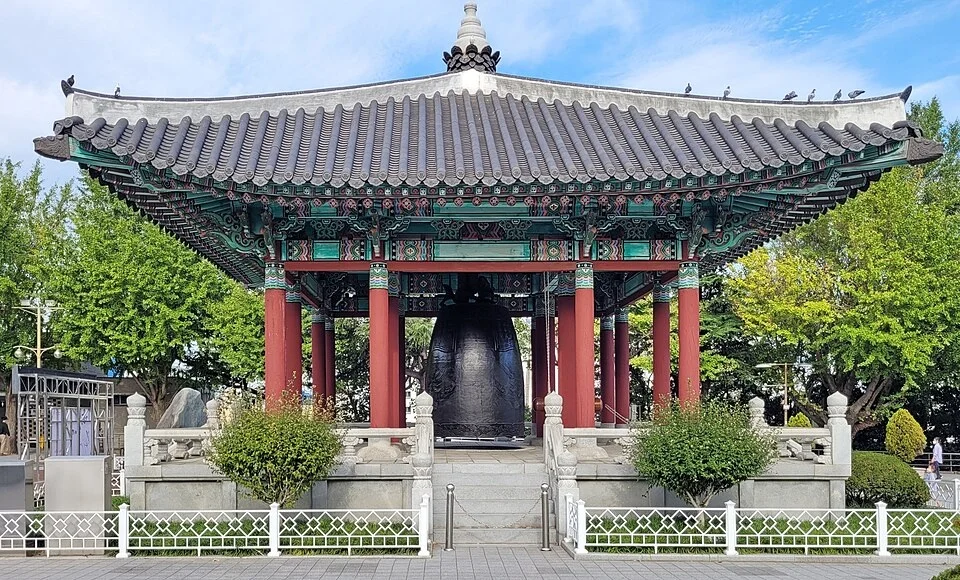
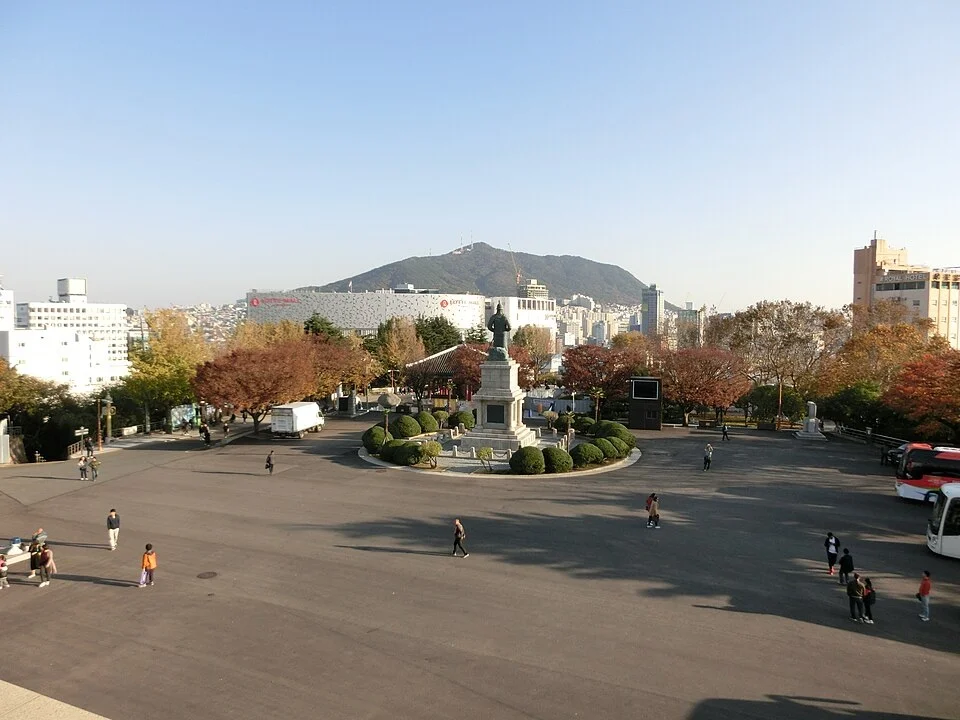
The statue of Admiral Yi Sun-sin is a useful landmark in the park's open plaza. Trees, planted borders, and monuments give you several small stops without needing a long walking circuit. The space also lets you stand far enough back to appreciate the tower's full shape, which can be difficult when looking almost straight up from its base. The Citizens' Bell sits inside a traditional pavilion with painted brackets and a tiled roof. It was created with donations from Busan residents, giving this central landmark a civic role beyond decoration. Look at the bell's scale and surface details, then at the wooden structure around it. The pavilion and the modern tower make an interesting architectural pairing within a very small area. Bell-ringing takes place for designated civic occasions, including New Year's celebrations; it is not a regular hands-on activity for passing visitors. On an ordinary day, the pavilion is a place to look around and photograph from the public viewing area. If a ceremony is your reason for coming, use that year's event announcement for arrangements. For a portrait with the tower in the background, try a wider position in the plaza rather than standing directly underneath it. For a closer architectural photograph, concentrate on the bell pavilion's painted eaves and the contrast between the dark bell and red columns.
Find the dragon among the gardens
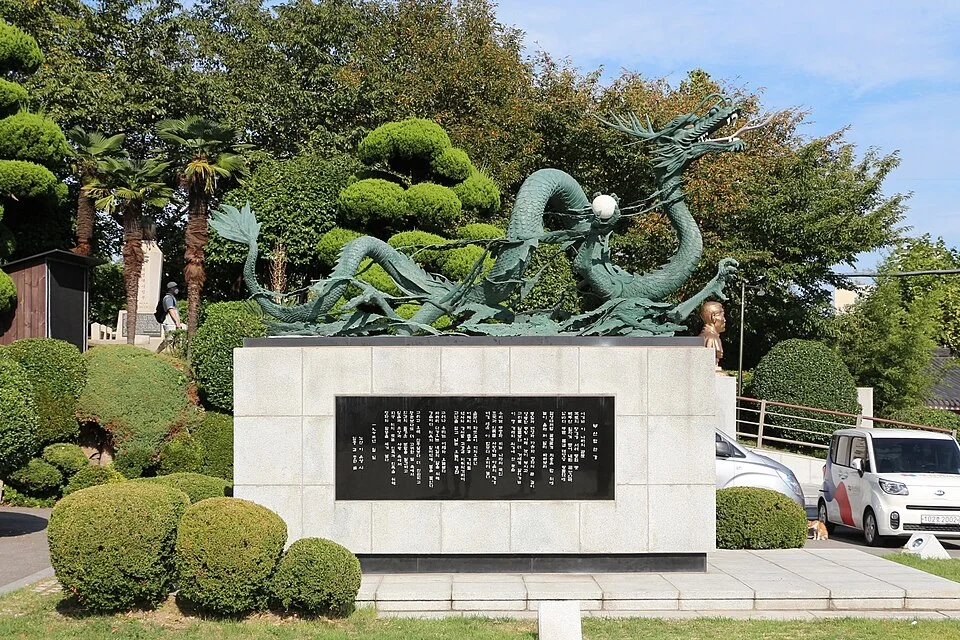
The dragon sculpture provides another focal point on a short park circuit. Its long, twisting body and branching whiskers invite a closer look after the strong vertical line of the tower. The surrounding trimmed shrubs and trees make it feel part of the garden rather than a separate indoor exhibit. This is an easy way to give a family visit a little structure: find the dragon, the bell, and the admiral, then choose a place to sit. You do not need to read every plaque or add the tower if the group is happier staying outdoors. The main sights are close enough together to choose just a few. The park also works for people who prefer a lower viewpoint. You can enjoy the plaza and look up at the landmark without entering the observation deck. On a hazy day, spending more time among the trees and monuments may be more rewarding than paying mainly for a distant view.
Use the tower to read the harbor
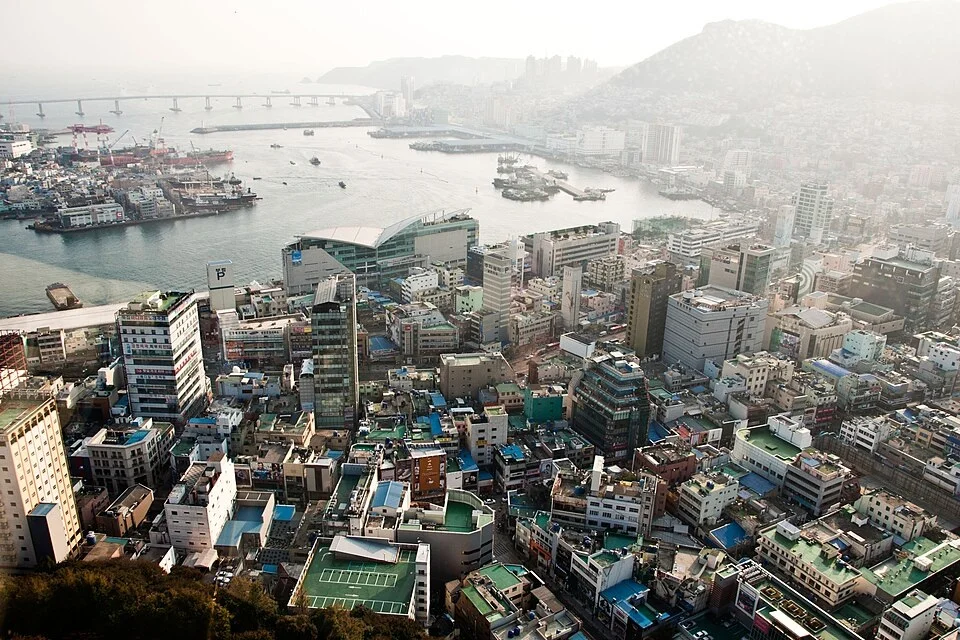
Ingrid Truemper · Original · CC BY-SA 2.0 ·
Busan Tower stands 120 meters tall. From the observation area, start by finding the places nearest to you: the dense Nampo-dong streets and Jagalchi Market by the water. Then let your eye move across the harbor toward Yeongdo and the bridges. Locating a street you have just walked makes the view more meaningful than simply taking a wide photograph and leaving. The water is the key to understanding this part of Busan. Buildings follow the waterfront, boats occupy the harbor, and routes continue over bridges to the island. Look inland as well, where the city rises into the hills. Walking around the observation space reveals those relationships more clearly than staying at the first window you reach. Daylight is best for picking out the terrain and the shape of the port. After dark, the interest shifts to illuminated roads, buildings, and reflections. If both appeal, arrive before sunset and leave time for the lights to emerge. Check the sunset time for your date rather than assuming the same evening schedule throughout the year. For photographs through glass, turn off the flash and change your angle to reduce reflections from interior lights. A broad view works well in clear weather; in haze, nearby roofs, streets, and ships may give you a more satisfying subject than the distant horizon. The tower also has themed indoor displays, but the view is the clearest reason to decide whether to buy a ticket.
Plan the tower before dinner, not at closing time
As checked October 12, 2026, the Korea Tourism Organization lists Busan Tower as open daily from 10 a.m. to 10 p.m., with last admission at 9:30 p.m. The listed admission is ₩12,000 for adults and ₩9,000 for children and visitors aged 65 or older. Check the current tower listing and ticket conditions when planning; these hours and charges apply to the tower, not to walking through the park. Arriving just before last admission gives you little flexibility. A more relaxed evening is to reach the park before sunset, visit the tower if visibility looks worthwhile, and then head down for dinner around Nampo-dong or the markets. If shopping is your priority, browse Gwangbok-ro first and keep the park as a shorter break before eating. Although the observation deck is indoors, reaching it involves an outdoor hilltop walk. Rain can make the steps slippery, and the park may feel breezier than the streets below. Keep the circuit short in poor weather and use the signed routes back down. On a clear evening, leave a little time in the plaza after the tower so the return to the busy shopping streets feels unhurried.