Gukje Market and Bupyeong Kkangtong Market: What to Browse and What to Eat
Ahmed · Original · CC BY-SA 4.0 ·
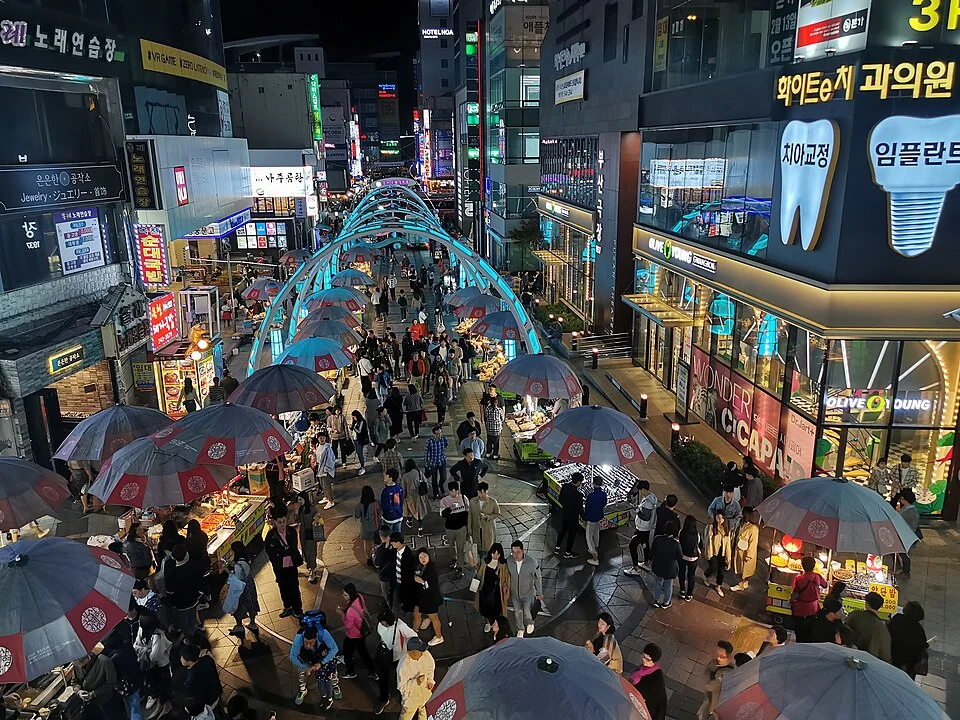
Gukje Market is where a Busan shopping trip can turn into a hunt through bags, clothing, kitchenware, and small everyday objects. Nearby Bupyeong Kkangtong Market shifts the emphasis toward food: ingredients to take home, something warm to eat on the spot, and an evening market built around sampling different dishes. Together, they offer a close-up view of the old port city's trading streets. Choose the part that interests you most before setting out. Gukje makes sense for daytime browsing; Bupyeong is the better target for an evening food outing. If you want both, arrive while the shops are still open, leave time for a break, and continue to the night-food stalls later. Going only after dinner risks missing much of the shopping that makes Gukje worth exploring. The variety has a history. Gukje developed as a trading place after liberation in 1945 and expanded as refugees and goods arrived during the Korean War. Bupyeong's nickname, kkangtong, means “tin can,” recalling the imported canned goods once traded here. The international connection comes from the movement of people and merchandise through Busan, not from a modern mall filled only with global brands.
Follow your interests through Gukje's lanes
Christophe95 · Original · CC BY-SA 4.0 ·
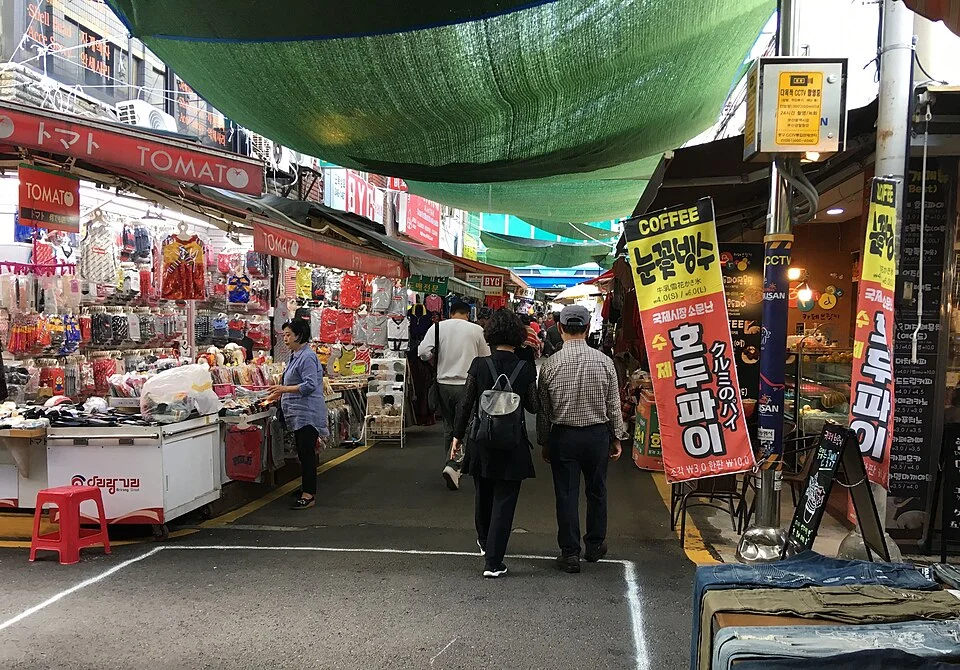
There is no single display to queue for and no essential route through every aisle. Pick a subject, perhaps clothing, accessories, or household goods, and start where the merchandise catches your eye. You may find a run of stores specializing in similar items, followed by a lane with a completely different mix. For someone who likes looking at the everyday life of a city, this is as interesting as souvenir shopping. Notice the way goods are arranged, how much fits into a small storefront, and how covered passages connect with open streets. The market's dense layout rewards a slow browse more than a quick attempt to cover the largest possible area. Jagalchi Station on Line 1 is a useful starting point. Walk inland toward BIFF Square and the market district; arriving from Nampo Station via Gwangbok-ro also works if you want to include the main shopping street first. Save Gukje Market and Bupyeong Kkangtong Market as two separate places on your map. A familiar shopfront or a numbered section sign is a better reference for finding your way back than remembering the color of an awning. For shopping, favor Monday through Saturday. As checked October 12, 2026, the Korea Tourism Organization lists Gukje's general hours as 9 a.m.–8 p.m. with Sunday closure. Visit Busan also lists Sundays closed. Individual shops may follow their own pattern, so contact a particular seller if that purchase is the main reason for your trip.
Buying something useful can be part of the visit
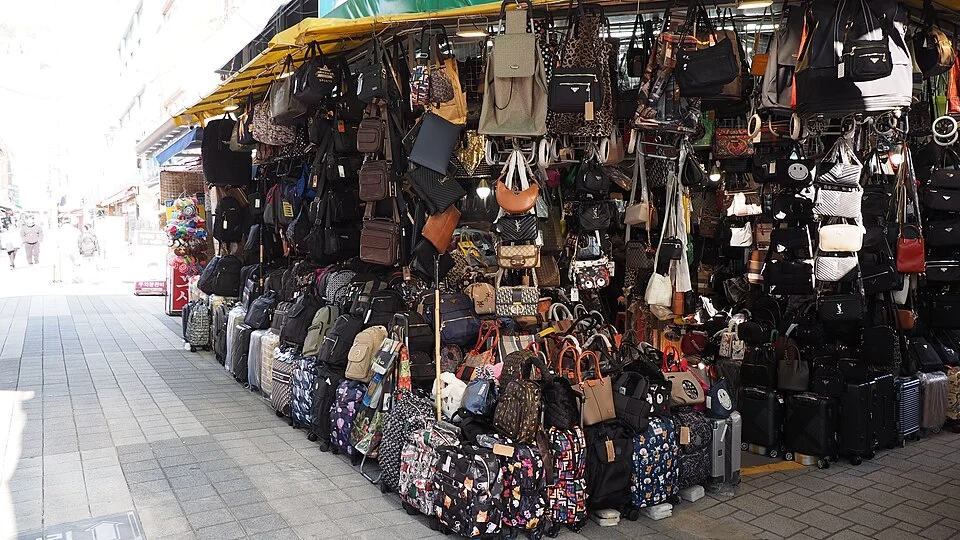
A wall of bags is an invitation to compare details. Open the zipper, check the strap attachments, and consider whether the size is useful for the way you travel. For wheeled luggage, test the handle and wheels before deciding. A low price is less appealing if the item is awkward to carry for the rest of the trip. The same approach works for small household goods and accessories: look closely, ask the price for the quantity you want, and decide on the item rather than the excitement of finding a bargain. A traditional market does not mean every price is negotiable or every product is cheaper than elsewhere. A polite question is enough; there is no need to make bargaining the point of the encounter. If you see something you may buy later, save the shop's name and location. For bulky purchases, consider returning near the end of your visit instead of carrying them through the food lanes. That leaves your hands free and makes it easier to stop for a meal.
Cross into Bupyeong for the food
User:Altostratus · Original · CC BY-SA 4.0 ·
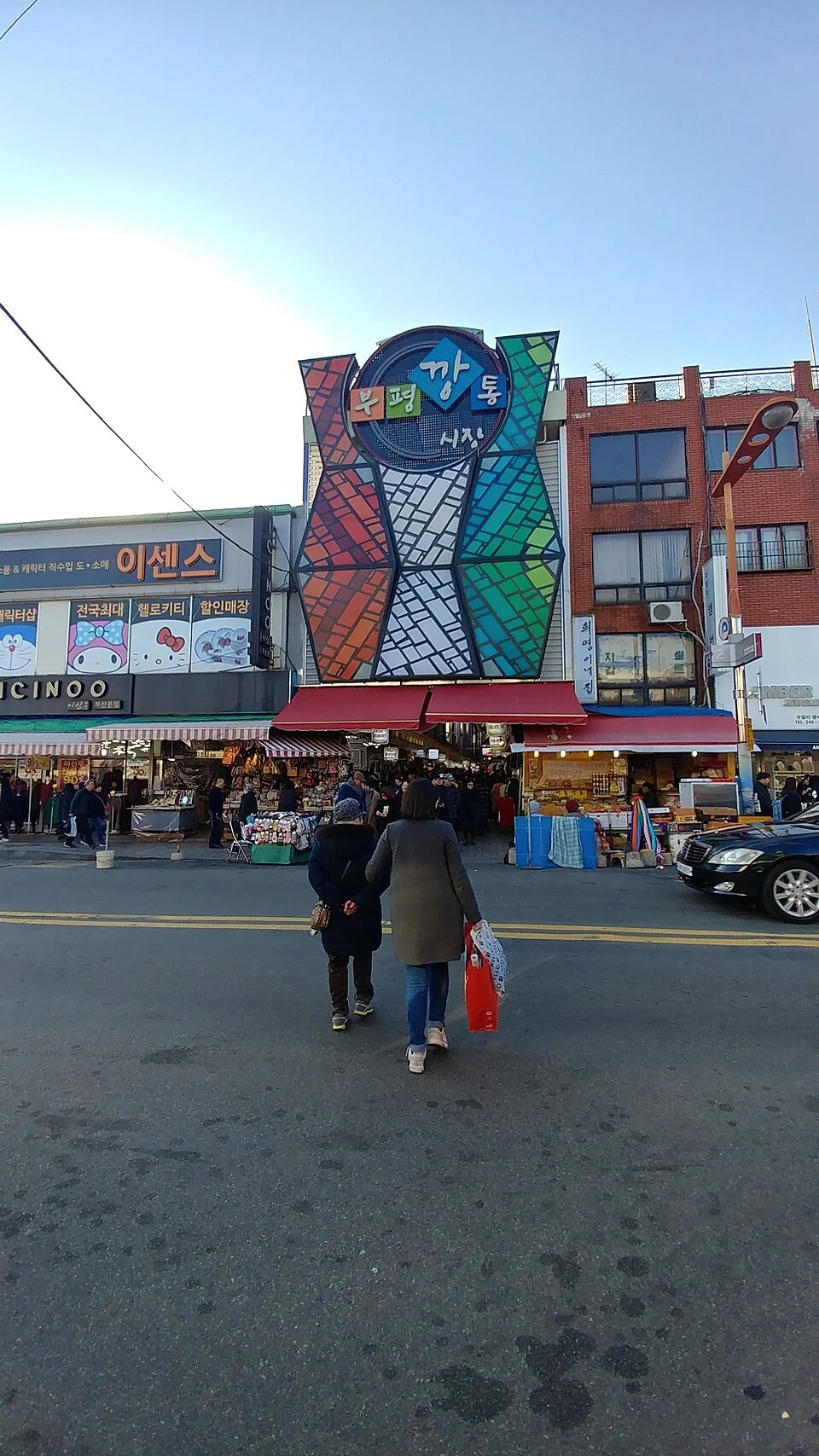
Bupyeong is a neighboring market, not another name for Gukje. Look for its entrance sign and head into the covered passages. During the day, the interest includes groceries, prepared side dishes, and takeaway food. At night, additional food stalls create a different kind of visit. The daytime market is worth seeing in its own right, especially if you enjoy looking at ingredients and the food people buy for home. For a savory introduction, look for eomuk, Korean fish cake, and yubu-jumeoni, fried-tofu pouches filled with ingredients such as glass noodles. The pouch adds a soft, absorbent wrapper around the filling; how it is served and what goes inside depend on the vendor. Ask for the version you want rather than assuming every stall makes the same dish. Bibim-dangmyeon is another local market food to recognize: glass noodles mixed with vegetables and seasoning. It offers a different texture from tteokbokki, the chewy rice cakes served in a spicy sauce. Naming two or three dishes before you arrive makes the menu easier to navigate while still leaving room for something unexpected. If you prefer a seat and a full meal, choose a restaurant or a stall with suitable seating before starting a snack crawl. A tofu wrapper or vegetable garnish does not establish that a dish is vegetarian; ask about the filling and broth when it matters to your order. For food to take away, consider how soon you will be able to eat or refrigerate it.
Treat the night market as a tasting walk
Christophe95 · Original · CC BY-SA 4.0 ·
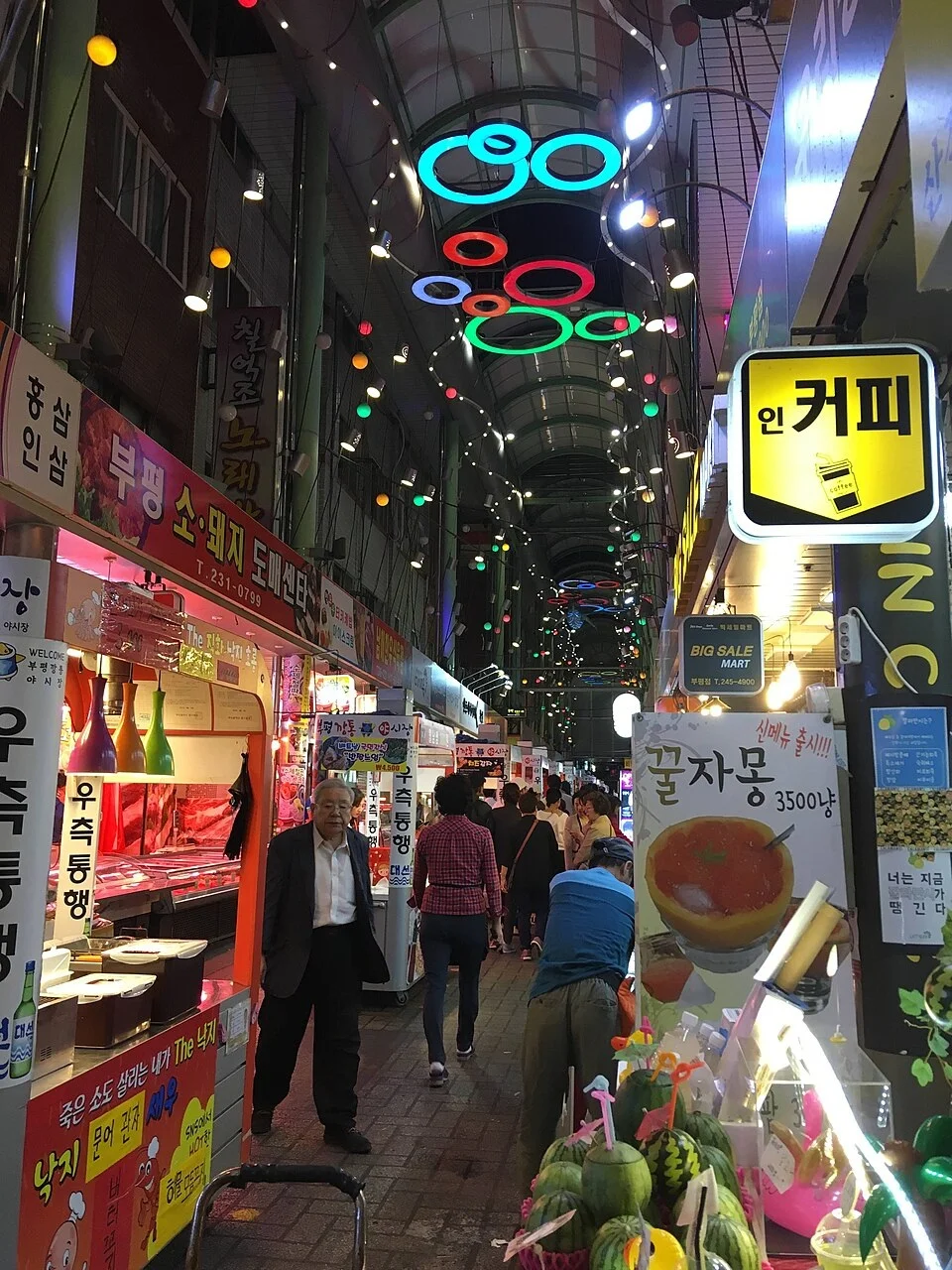
The evening market brings lights, portable stalls, and a mix of Korean snacks and dishes inspired by other cuisines. Walk through once before buying. Seeing the menus and portions first makes it easier to put together a meal you actually want, rather than filling up at the first stand. For planning, aim to eat here around 8–10 p.m. Visit Busan currently lists the night market from 7:30 p.m. to midnight, but official listings differ on the closing time. An earlier evening visit is a better bet than counting on a full choice after midnight. If arriving especially late, confirm that night's operation with the market using the contact details in the city tourism listing. Hours were checked October 12, 2026. Order one or two things at a time. Hot food, sauce containers, skewers, and a drink quickly use both hands, and the covered passage is also a walking route. Find a place to eat before adding the next dish. With friends, sharing gives you more variety without needing to turn dinner into a competition to try everything. Bring a little cash for small purchases and ask about payment at the stall you choose. There is no single payment rule or menu covering the whole market. The food lineup can change, so let current menus guide the evening rather than building it around one item from an old video.
Fit the markets into an old-downtown day
For a daytime visit, combine Gukje with Bosu-dong Book Street and finish with food in Bupyeong. If the night market is the main attraction, keep the earlier part of the day elsewhere and come directly to Bupyeong in the evening. You do not need to walk every shopping lane first. Many passages are covered, but the route from the subway and between the markets includes outdoor sections. A compact umbrella is useful in rain. Narrow aisles, displays, and evening crowds can also slow movement with a stroller or wheelchair; choose the wider passages and a shorter route rather than expecting every interior lane to be equally easy. Before the last food stop, check the return journey from Jagalchi Station to your accommodation. If you are staying around Haeundae, include the transfer and cross-city travel time. Leaving enough room for that journey lets the evening end with a meal you enjoyed instead of a hurried search for the subway entrance.