Haedong Yonggungsa Temple: A Seaside Visit in Eastern Busan
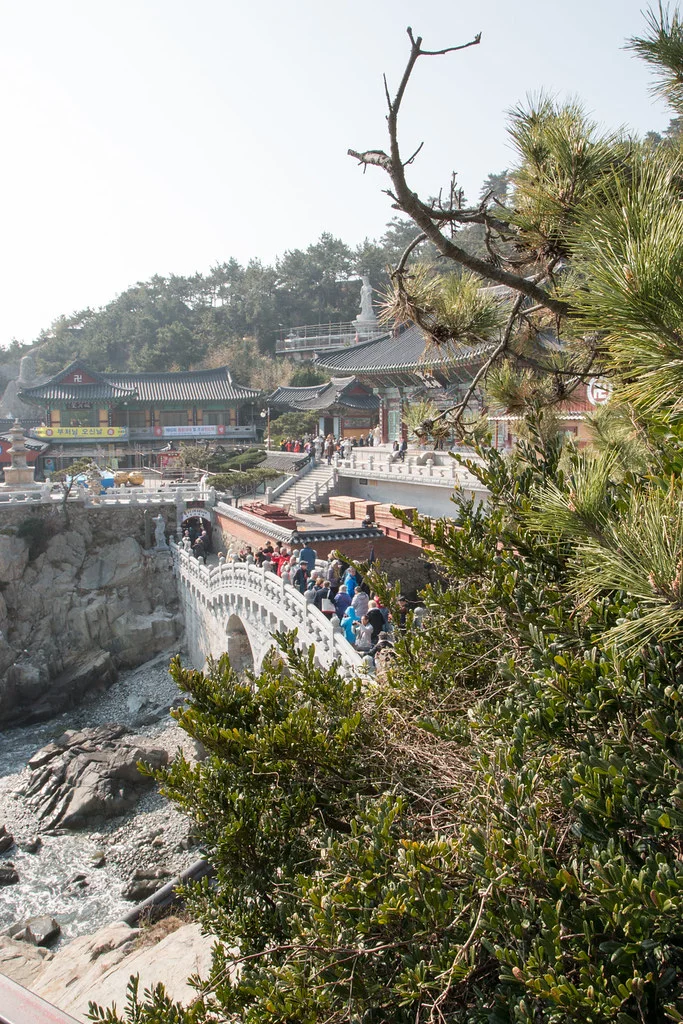
Temple roofs above breaking waves are the reason to make the journey to Haedong Yonggungsa. On Gijang's rocky coast, northeast of central Busan, the buildings sit close to the water, linked by steps, terraces, and a bridge. The approach gradually reveals the scene: pine trees give way to sea, then the tiled roofs and stone railings come into view together. It is an especially rewarding stop if you want to combine Korean temple architecture with the coast in one outing. The setting is compact enough to explore without a mountain hike, but it involves substantial stairs. Think of a visit as moving through several levels, with a climb back out at the end, rather than strolling along a flat waterfront. For an unhurried first visit, allow around 90 minutes to two hours at the temple, plus transportation. That is a suggested allowance for the approach, main grounds, and viewpoints, not an official tour duration. You can add it to an eastern Busan day with Songjeong Beach or Osiria, giving each place its own time instead of racing across the city between attractions.
The approach is part of the visit
yunlin2003 · Original · CC BY-SA 2.0 ·
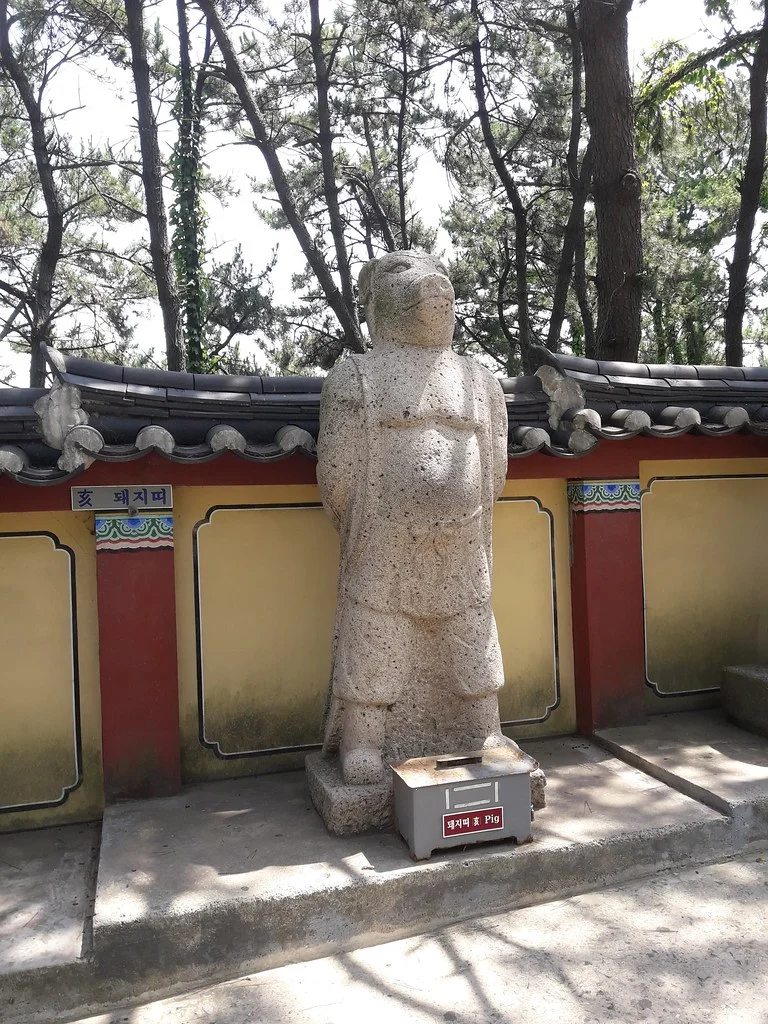
The line of zodiac guardians near the entrance offers an easy introduction to the temple's many sculptures. Each has an animal head and a human body, representing one of the twelve animals associated with birth years in the East Asian zodiac. Looking for your own animal is a simple way to notice the individual figures before continuing toward the sea. Beyond the entrance, the route includes the well-known 108 steps. They connect the upper approach with the lower temple grounds, so the descent also commits you to an uphill return. The number is part of the site's Buddhist symbolism; you do not need to count every step to appreciate how the landscape opens as you go down. Pause where the path widens, especially when people are moving in both directions. If stairs are difficult, settle the access question before making the trip. Arriving by taxi or parking near the entrance does not remove the steps within the temple. Wheelchair users and families with strollers should ask the temple which areas are reachable under current arrangements; the complete coastal route should not be assumed to be step-free. With a mixed-ability group, choose a realistic shared route rather than making the highest viewpoint the goal for everyone. Weekday mornings are a sensible choice if you prefer a less hurried approach. On a busy weekend, the narrow passages can slow the visit considerably. An early start gives you more flexibility to stop and look, even if you have no interest in arriving for sunrise.
Look at the temple as well as the horizon
yunlin2003 · Original · CC BY-SA 2.0 ·
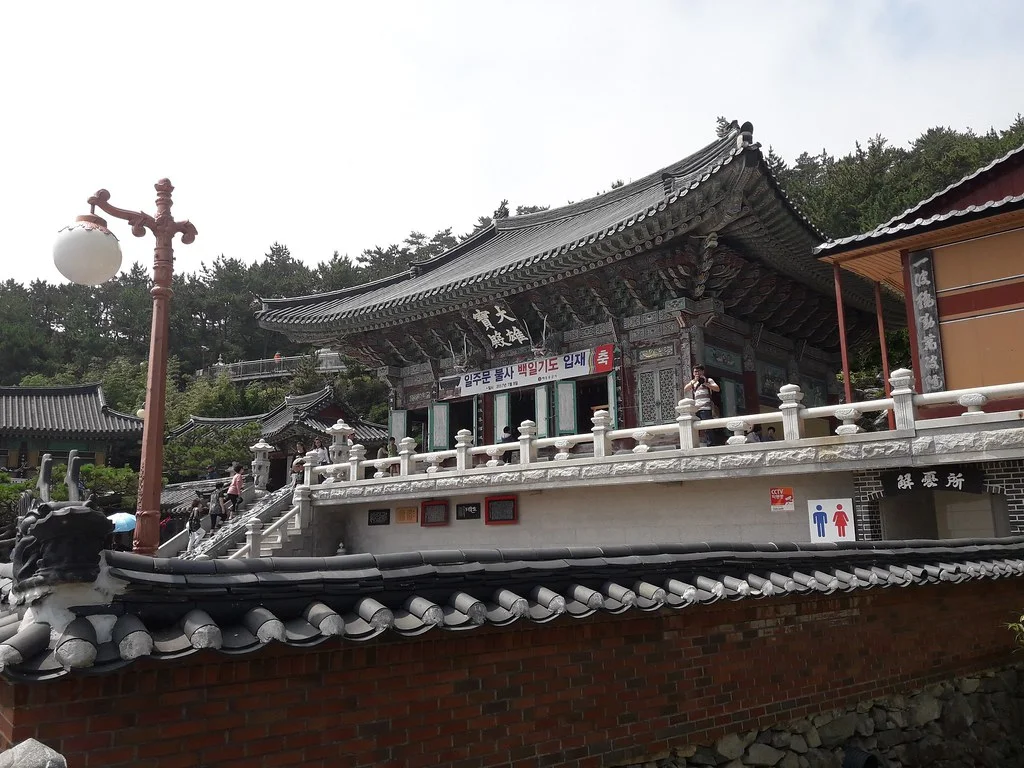
Once inside, spend some time with Daeungbojeon, the main hall. Its curved roof, layered brackets, and richly painted eaves reward a closer look after the broad coastal panorama. Stone terraces and railings hold the buildings above the rocks, creating changing views as you move around the grounds. A few steps to one side can bring a roofline, a pine tree, and the water into a different relationship. The temple's name is tied to a religious account of a monk dreaming of Avalokiteshvara, the bodhisattva of compassion, rising to heaven on a dragon. In Korea, this figure is commonly called Gwaneum or Gwanseeum. Knowing that connection helps make sense of the dragon imagery and the prominent sea-facing Gwaneum statue. It is a story of the temple's faith and identity, rather than a promise about what a visitor's wish will bring. The large Haesu Gwaneum statue provides an optional higher stop. Follow its signs if you want another angle across the roofs and coastline, allowing for more steps. If the lower approach has already been enough, stay with the main grounds and sea-facing terraces. Much of the pleasure here comes from the way architecture fits the shoreline, and that is visible from more than one height.
A working temple with room for curious visitors
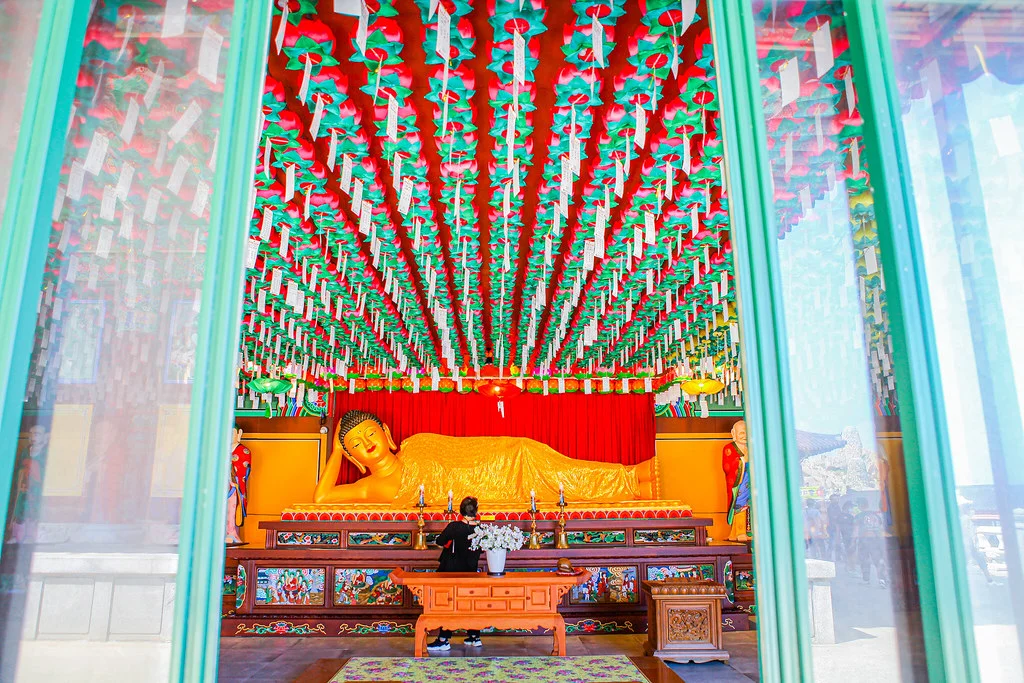
Haedong Yonggungsa can be lively with visitors while remaining a place of prayer. Its different halls and Buddha images invite a slower look than the busiest outdoor viewpoints sometimes allow. A reclining Buddha, lantern-filled spaces, and small details around the shrines bring another scale to the visit after the open sea. Interior access depends on the hall and what is taking place at the time. You do not need to be Buddhist to appreciate the grounds or to watch respectfully from an appropriate spot. Before entering a hall, follow its footwear and photography notices, and leave worshippers a clear route. Outdoor photography does not automatically mean photography is allowed inside. One quiet pause can be more meaningful than trying to enter every building. Lantern dedications, candles, and other devotional activities are optional. If you want to take part, ask how that particular offering works rather than copying an action without knowing its purpose. Visitors who simply want to look at the architecture and coast can do that without purchasing or making an offering.
Sea views, sunrise, and opening hours
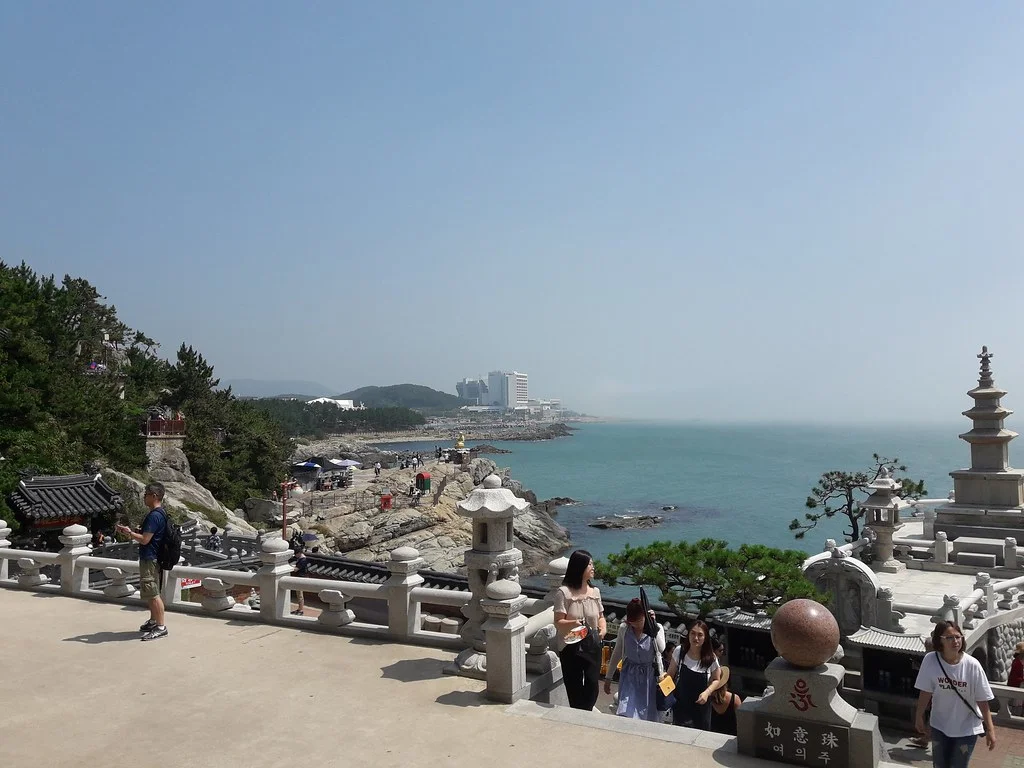
yunlin2003 · Original · CC BY-SA 2.0 ·
The open terraces bring the rocky shore and horizon back into focus. Watch how waves move between the rocks below, then turn back toward the roofs and stone lanterns. This combination of sea and built detail is what makes the temple different from a beach stop. The rocks outside the designated paths are not an extension of the viewing area, particularly when wet or exposed to strong waves. Sunrise is a popular reason to arrive early, but it takes more planning than a daytime visit. You need transportation before ordinary daytime services, time to negotiate the approach, and suitable conditions at the coast. For a first visit, clear daylight makes the steps and architectural details easier to enjoy. Choosing a morning visit does not require choosing the earliest possible one. As checked October 12, 2026, the Korea Tourism Organization's current visitor listing gives free admission and daily hours of 4:30 a.m.–7:20 p.m., with last entry at 6:50 p.m. These are the listed visiting hours, not a guarantee that every hall stays open throughout. If planning a dawn visit or arriving near closing, confirm the day's arrangements with the temple rather than treating the grounds as a round-the-clock coastal park.
Getting there and choosing the next stop
Osiria Station on the Donghae Line is one useful rail approach, followed by a local bus or taxi. The bus stop commonly shown in English directions is Yonggungsa Temple & National Institute of Fisheries Science. There is still a walk from that stop to the entrance, followed by the temple steps. Search for the full journey from your starting point; the station name alone does not tell you how long the visit will take door to door. Afterward, Songjeong Beach makes a natural change of pace: open sand and a beachfront break after the temple's terraces and stairs. Osiria offers other dining and shopping choices if you would rather sit down or spend time indoors. Both need their own onward transfer, so choose one based on how much day remains. If you are staying in western or central Busan, keep the return journey in mind before adding a third stop farther along the coast.