Beomeosa Temple: Forest Paths and Buddhist Architecture in Busan
Mansegmj · Original · CC BY-SA 4.0 ·
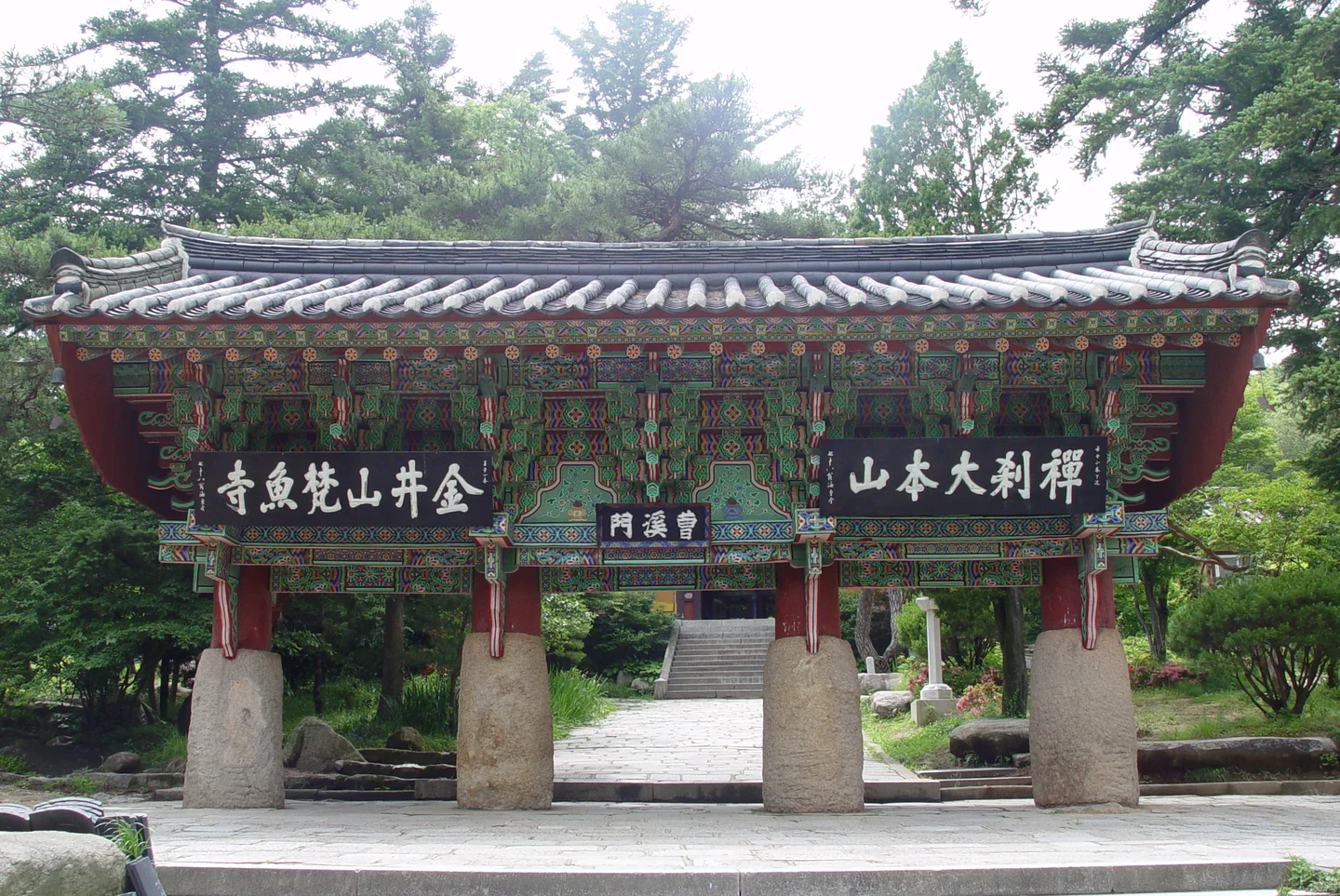
Four stone columns, a richly painted roof, and pine branches overhead make a memorable entrance to Beomeosa. This mountain temple brings together the things that can be hard to find along Busan's busy waterfront: forest shade, stone courtyards, and buildings arranged around the contours of a hillside. Come for a closer look at Korean Buddhist architecture or for a half-day outing into the city's greener northern reaches. You don't need a hiking itinerary to enjoy the temple. Beomeosa traces its founding to the Silla period and remains a working Buddhist monastery. The appeal is in exploring a place that still has a daily purpose. Worshippers move between halls, monks study and practice, and visitors follow a sequence of gates toward the main courtyard. There is plenty to take in from the public paths, even if you know little about Buddhism. Allow roughly 90 minutes to two hours on the grounds for an unhurried first visit, with additional time for the metro and uphill bus ride. That is a planning suggestion for the temple, not a summit-hike estimate. If you're deciding between Beomeosa and Haedong Yonggungsa, the clearest distinction is setting: Beomeosa offers wooded mountain slopes and a layered approach through gates, while Yonggungsa faces the sea. Choose according to the landscape you want to spend time in and the part of Busan you're staying in.
Getting from Beomeosa Station to the temple
Beomeosa Station isn't at the temple entrance. The temple's directions put the remaining uphill journey at about 3.5 kilometers, so the practical option for most visitors is Metro Line 1 followed by local bus 90. From station exit 5 or 7, head toward the lane between the exits and walk to the bus stop by B.I. Mart. The temple describes this as a walk of less than five minutes. Take the Beomeosa-bound bus to the temple entrance stop. Nopo Station, one stop farther along Line 1, provides another bus 90 connection from exit 2. These are the temple's published directions, checked October 12, 2026. Using the bus leaves more energy for the stairs inside the grounds. Walking all the way from the station is an additional uphill outing, particularly in summer, rather than a shortcut. On arrival, identify the return stop before continuing into the temple so you can head down without retracing the parking area later. The approach itself deserves a little time. Paving leads between trees toward the gates, with a gradual transition from the road to the temple precinct. Lantern displays add color around Buddhist celebrations, but their arrangement changes with the event calendar. The forest and stonework are the lasting features of this walk. For visitors using a wheelchair or stroller, reaching the entrance by vehicle doesn't establish access to every hall. The main route climbs through several levels. Ask the temple about the current accessible approach and usable areas before choosing a visit length.
What to look for beyond the One Pillar Gate
Mobius6 · Original · CC BY-SA 4.0 ·
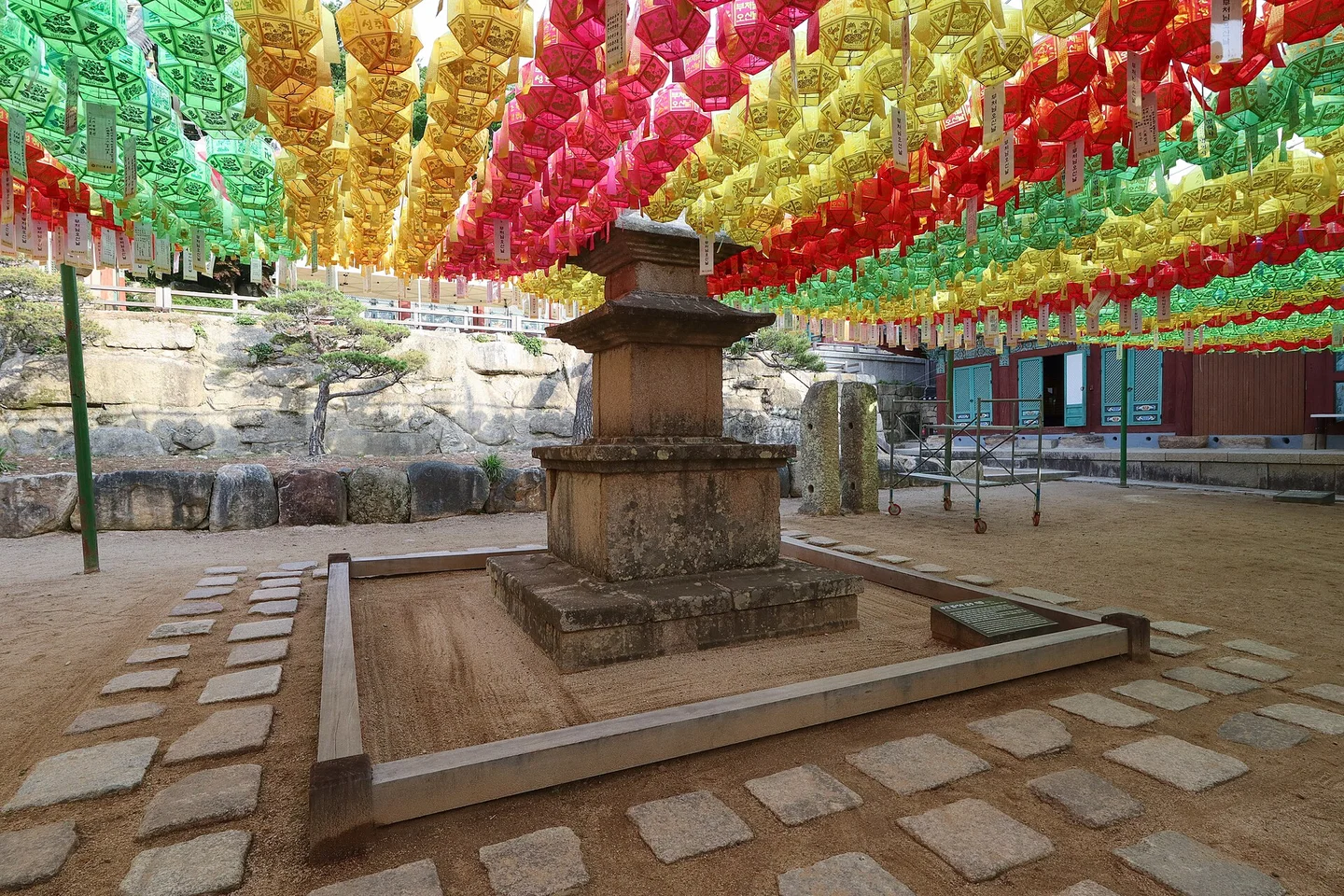
The first gate, Jogyemun, rewards a second look before you continue uphill. Its four tall stone supports stand in one row beneath the wooden upper structure. The familiar English term “One Pillar Gate” refers to that single alignment, not to a building balanced on one column. Looking from the side makes the arrangement much easier to understand. The route continues through Cheonwangmun, the Gate of the Four Heavenly Kings, and Burimun before reaching Bojeru and the main temple area. The succession matters more than memorizing every name. Each threshold changes the view, and the higher courtyards gradually reveal roofs that were hidden below. On the way back, look downhill from a level landing to appreciate how the whole approach fits together. Daeungjeon is the main worship hall. Around its courtyard, the three-story stone pagoda and stone lantern provide a quieter counterpoint to the painted woodwork. The pagoda's diminishing upper tiers are easier to appreciate at close range than as part of a distant panorama. Allow time to look at both the architecture and the spaces between the buildings; the stairs, retaining walls, and open courtyard are integral to the design. For a shorter visit, make the entrance gate, this courtyard, and the exterior of Daeungjeon your priorities. You can see the core of the temple without trying to enter every hall or follow every path. The temple's site guide identifies the buildings and their positions.
Smaller halls built around the mountainside
Basile Morin · Original · CC BY-SA 4.0 ·
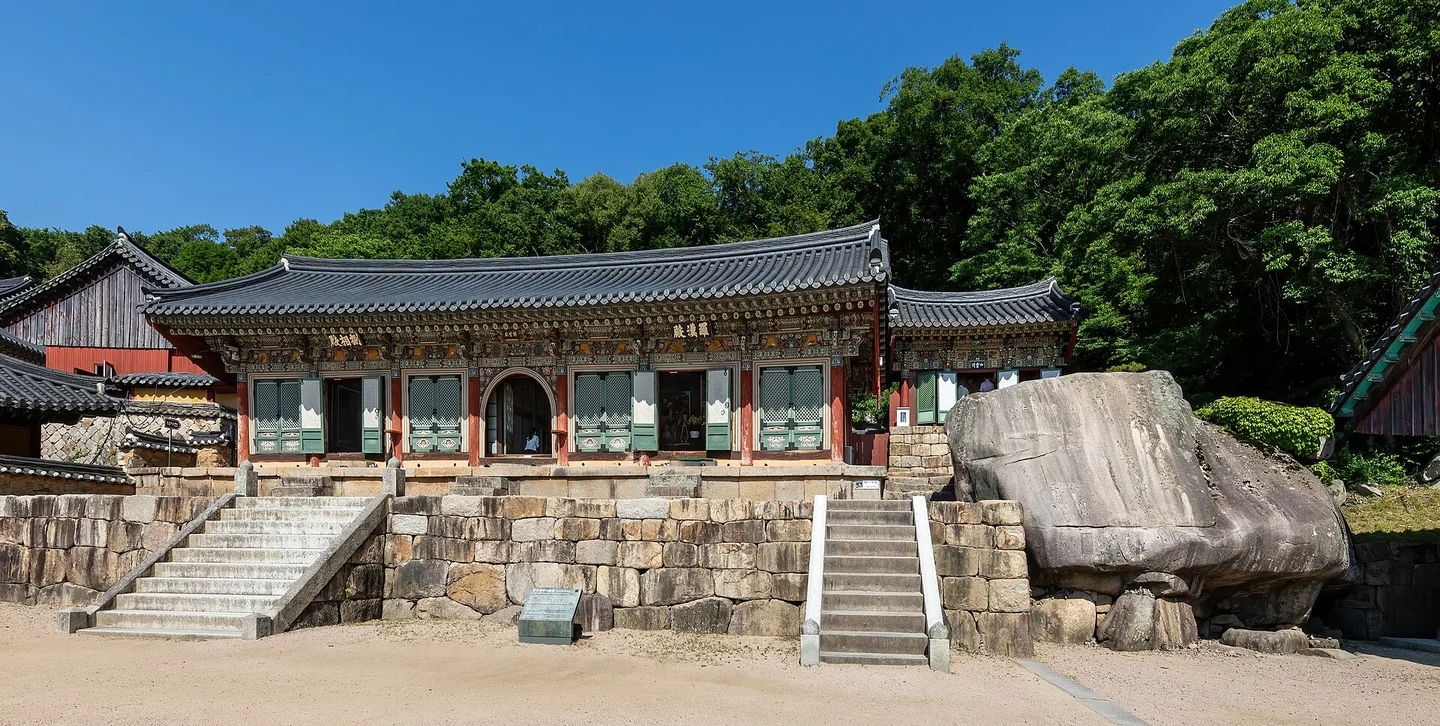
The group containing Palsangjeon, Dokseongjeon, and Nahanjeon adds another architectural highlight. An enormous boulder sits beside the halls, while stone platforms and separate stairways negotiate the uneven ground. This is a particularly good place to notice how the temple accommodates the mountain rather than flattening it into a uniform courtyard. Look at the changes in roof height, the carved brackets under the eaves, and the patterns of the doors. The painted details can hold your attention as effectively as a sweeping mountain view. A slow circuit of the public courtyard gives you several perspectives without needing to step into a worship space. If a hall is open to visitors, follow its entrance and photography notices and remove your shoes where indicated. Give ceremonies and people praying space. Closed practice areas and residential buildings are part of the monastery's everyday life, so an open gate elsewhere on the grounds isn't an invitation to wander inside. The steps are uneven in places, and wet stone can make the descent slower than the climb. Allow some flexibility on rainy days rather than packing the temple between two tightly timed reservations. For current daytime planning, Visit Busan lists free admission and visiting hours of 8 a.m. to 5 p.m., checked October 12, 2026. Individual halls and religious activities have their own access arrangements.
A daytime visit, a temple stay, or a mountain hike?
by sparklig · Original · CC BY-SA 2.0 ·
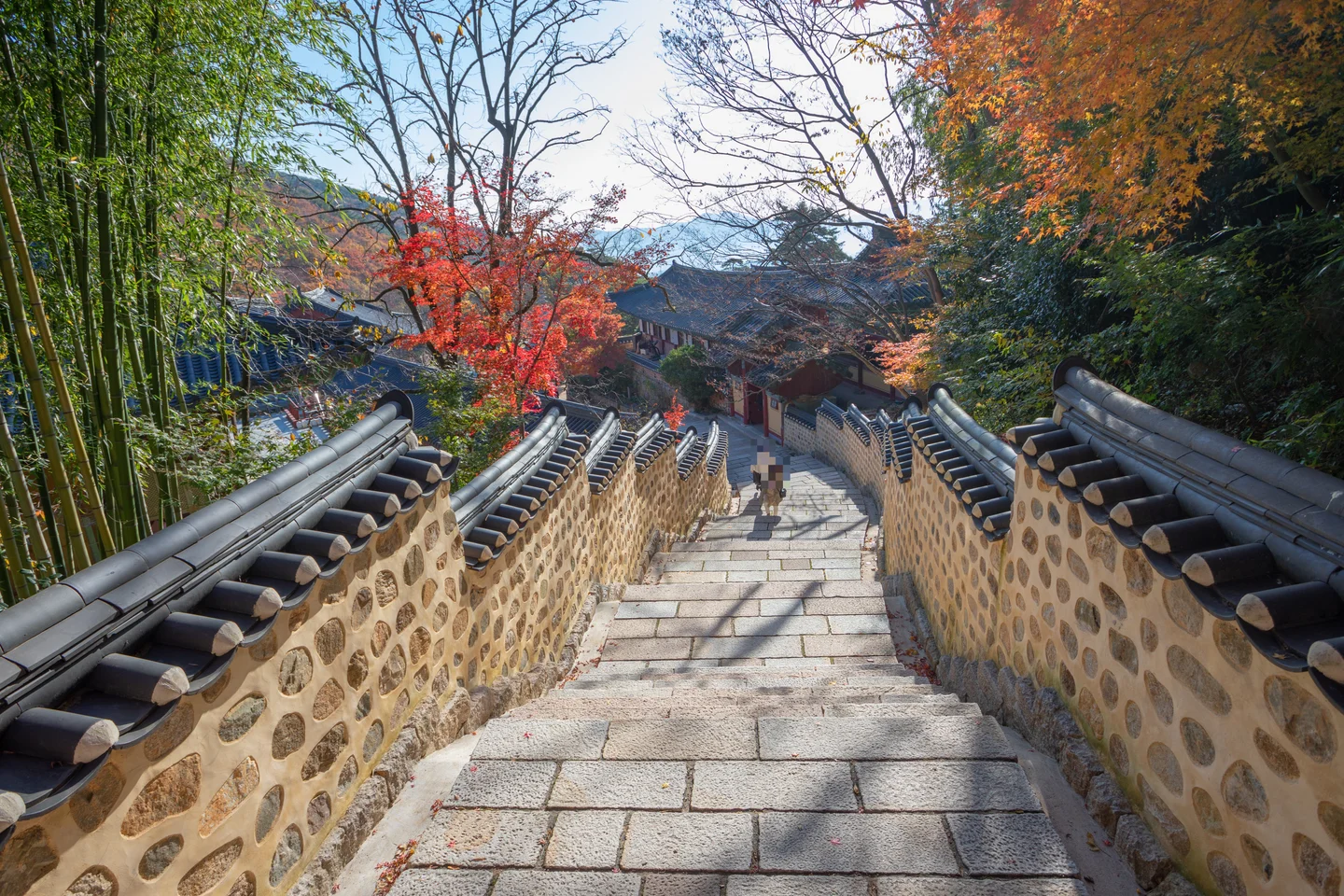
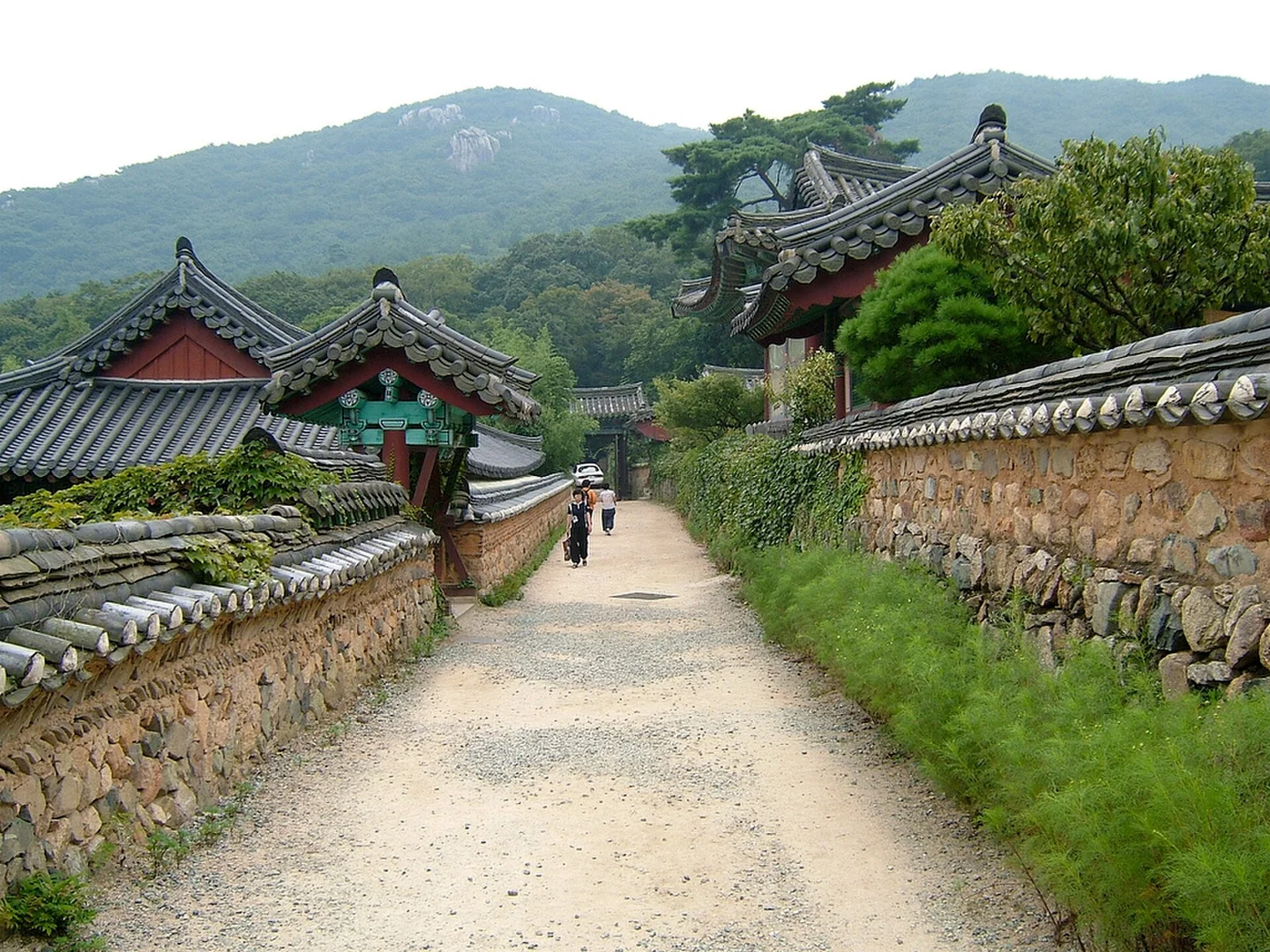
Before leaving, follow the public stone-walled lanes for a different view of the complex. Rooflines overlap with trees and the mountain behind them, and the narrower paths reveal the scale of the buildings more clearly than the central courtyard. Keep to the signed visitor route as it passes areas used for study and residence. If you want more time here, Beomeosa offers separately booked temple-stay programs. The official English reservation listings distinguish a relaxation stay from a weekend experiential program. Choose by the activities you want to join, and confirm the language and schedule for your date. The accommodation and check-in are at the Seon Culture Education Center outside the main temple grounds, so follow the booking's arrival instructions rather than going straight to the main courtyard. A hike toward Geumjeongsan's North Gate or Godangbong requires a separate route and enough daylight for the return. Decide on that before leaving your accommodation, with the trail distance, weather, and descent point worked out. For a temple-only half day, return by bus to Line 1 and continue to a meal around your next stop. The station connection makes it straightforward to leave the mountain in the afternoon without committing to a long ridge walk.