Suncheon Bay Wetland: Reed Walk or Yongsan Observatory?
Jjw · Original · CC BY-SA 4.0 ·
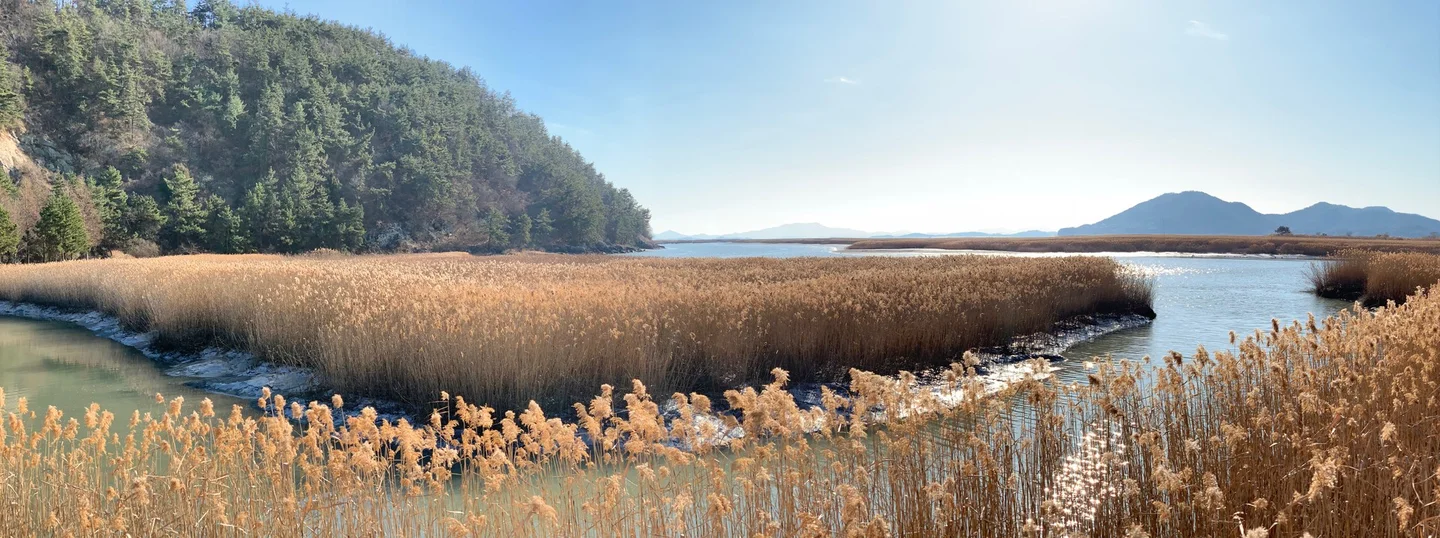
At Suncheon Bay Wetland, the first choice is how you want to see the landscape. The boardwalk brings you into the reeds, close to moving stems, narrow channels, and small creatures on the mud. Yongsan Observatory gives you the wider view, with curving watercourses and islands of vegetation spread across the bay. Reaching it adds an uphill walk beyond the reed beds. This is an estuary, where river water meets the sea and sediment creates mudflats and salt marsh. Its pleasures are gradual: a change in the wind, the movement of a crab, or the shape of a channel becoming clear from higher ground. Allow time to observe rather than expecting a succession of large attractions. Be precise when planning the journey. Suncheon Bay Wetland and Suncheon Bay National Garden are separate destinations with different entrances. For the wetland alone, navigate to the wetland entrance or parking area. A combined ticket does not make the two places one continuous walking route.
Walk Among the Reeds
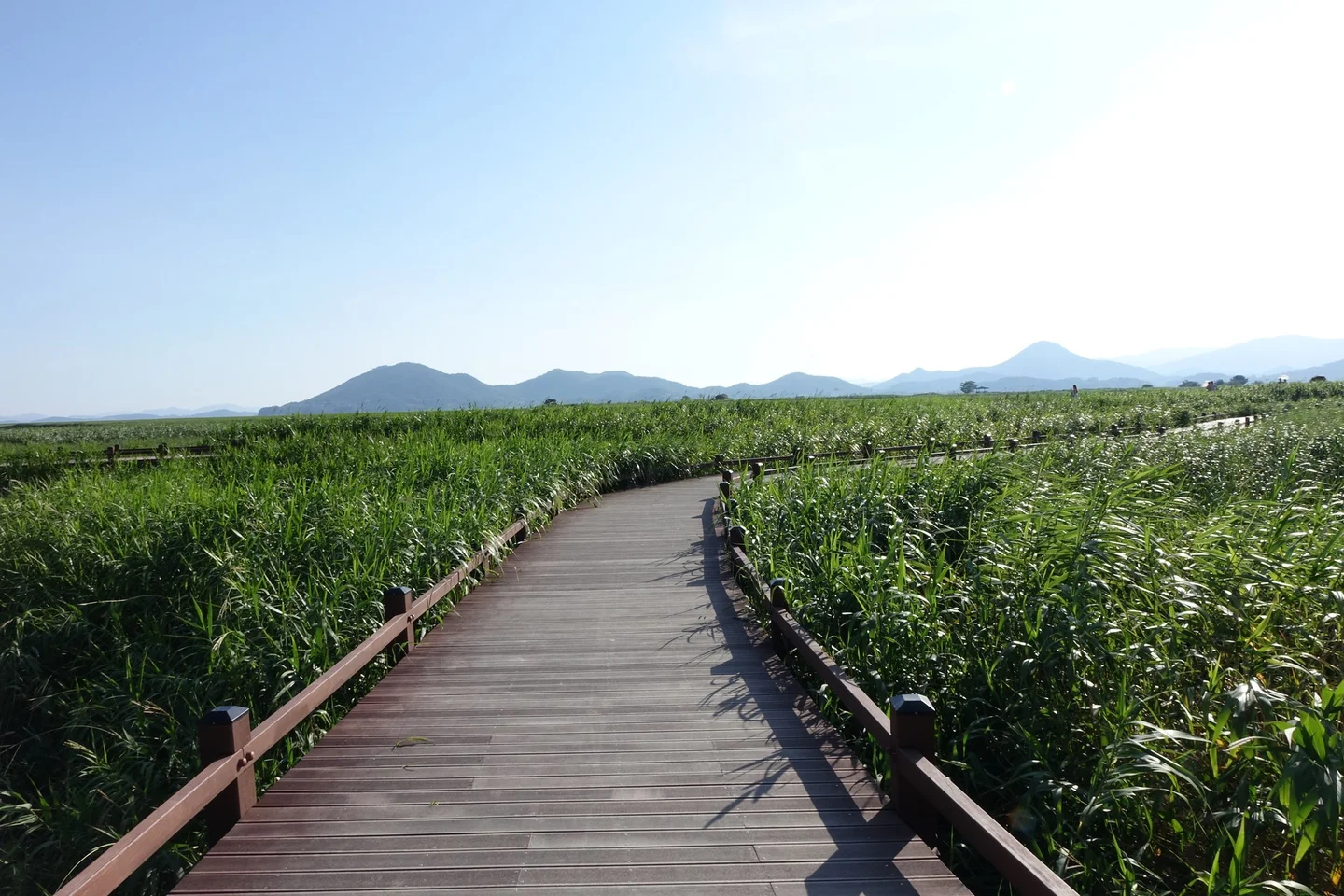
Beyond the entrance area and Mujingyo Bridge, the raised path takes you into the reed beds. The view changes from a distant mass of plants to individual stems and seed heads close beside you. At bends in the boardwalk, the route can seem to disappear into the vegetation ahead. The reeds are not golden throughout the year. In the growing season, green leaves dominate; later, dry stems and pale plumes change the color and texture. In winter, the more open vegetation can reveal channels and ground that were hidden earlier. Each season gives you a different way to read the wetland. The low boardwalk was designed to sit unobtrusively in the habitat. It also keeps feet off the sensitive mud. Stay on the designated paths even when an open patch looks like a shortcut; the apparent firmness of the surface can be misleading, and the ground supports wildlife as well as plants. A boardwalk-focused visit is a complete outing in its own right. Travelers using a wheelchair or stroller should ask which sections suit their needs and where to turn back before the hill route begins. The availability of loan equipment at the entrance does not mean the climb to the observatory follows the same kind of surface.
Add Yongsan for the S-Shaped Channel
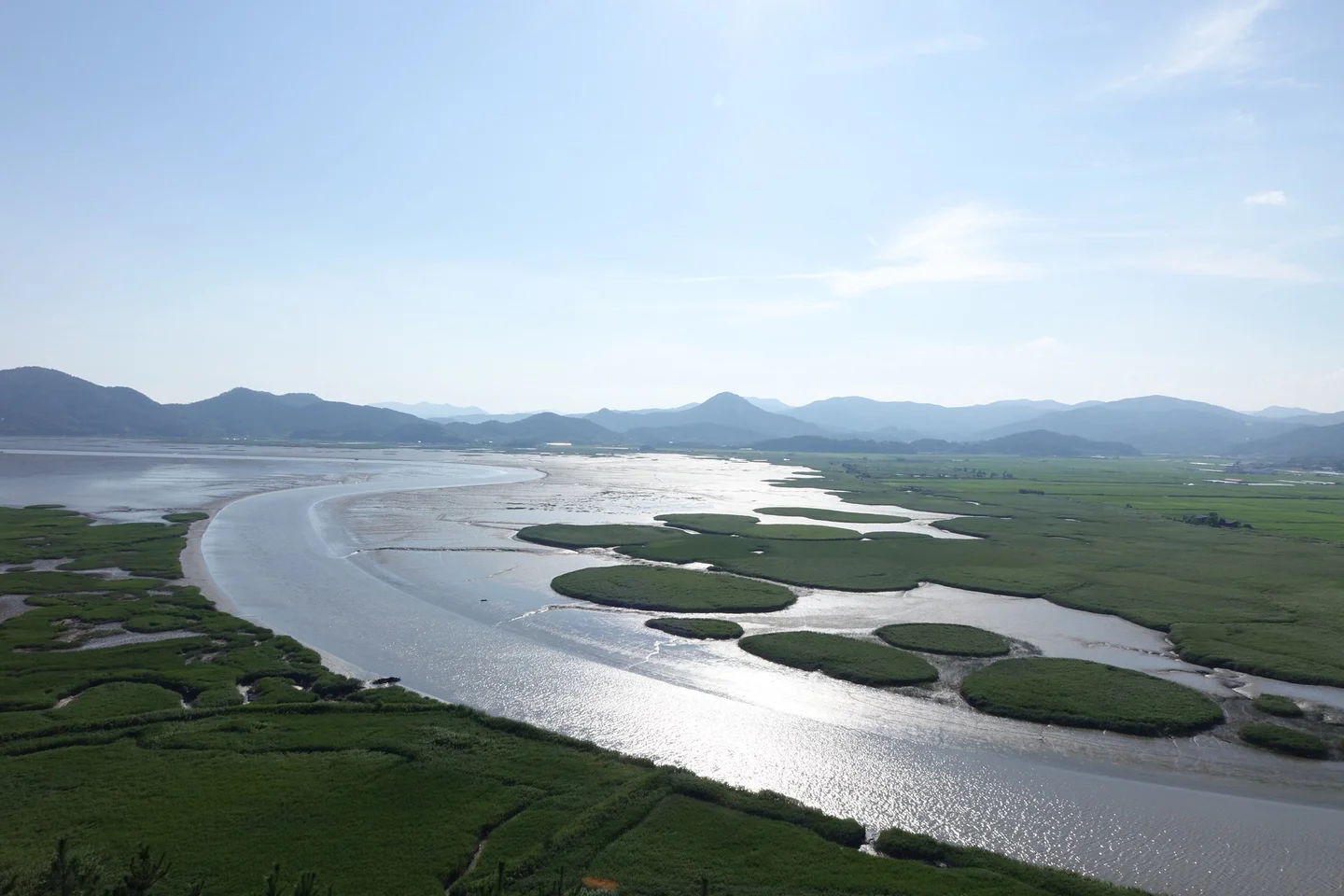
After crossing the reed area, the approach toward Yongsan changes from level walking to an ascent. The reward is the broad curve of the water, including the bay's well-known S-shaped channel. From above, you can see how larger reed patches, smaller channels, and exposed tidal ground relate to one another. The official observatory guide, checked in October 2026, gives about thirty minutes on foot from the entrance to Yongsan itself. That is not the total journey from the wetland ticket gate. Add the walk through the reeds, stops along the way, the descent, and the route back to the exit when deciding whether it fits your day. At the top, let your attention move beyond the single famous curve. Smaller waterways thread between rounded or elongated patches of vegetation, and the amount of exposed mud changes with the tide. The scene is a functioning estuary, not a fixed pattern reproduced identically every afternoon. Keep enough energy for the return. If the boardwalk has already been a long walk for your group, there is no obligation to add the hill. Conversely, if the panoramic channel view is your main reason for coming, allow it enough time rather than leaving the climb until the end of a rushed garden-and-wetland combination.
Watch the Mud as Well as the Horizon
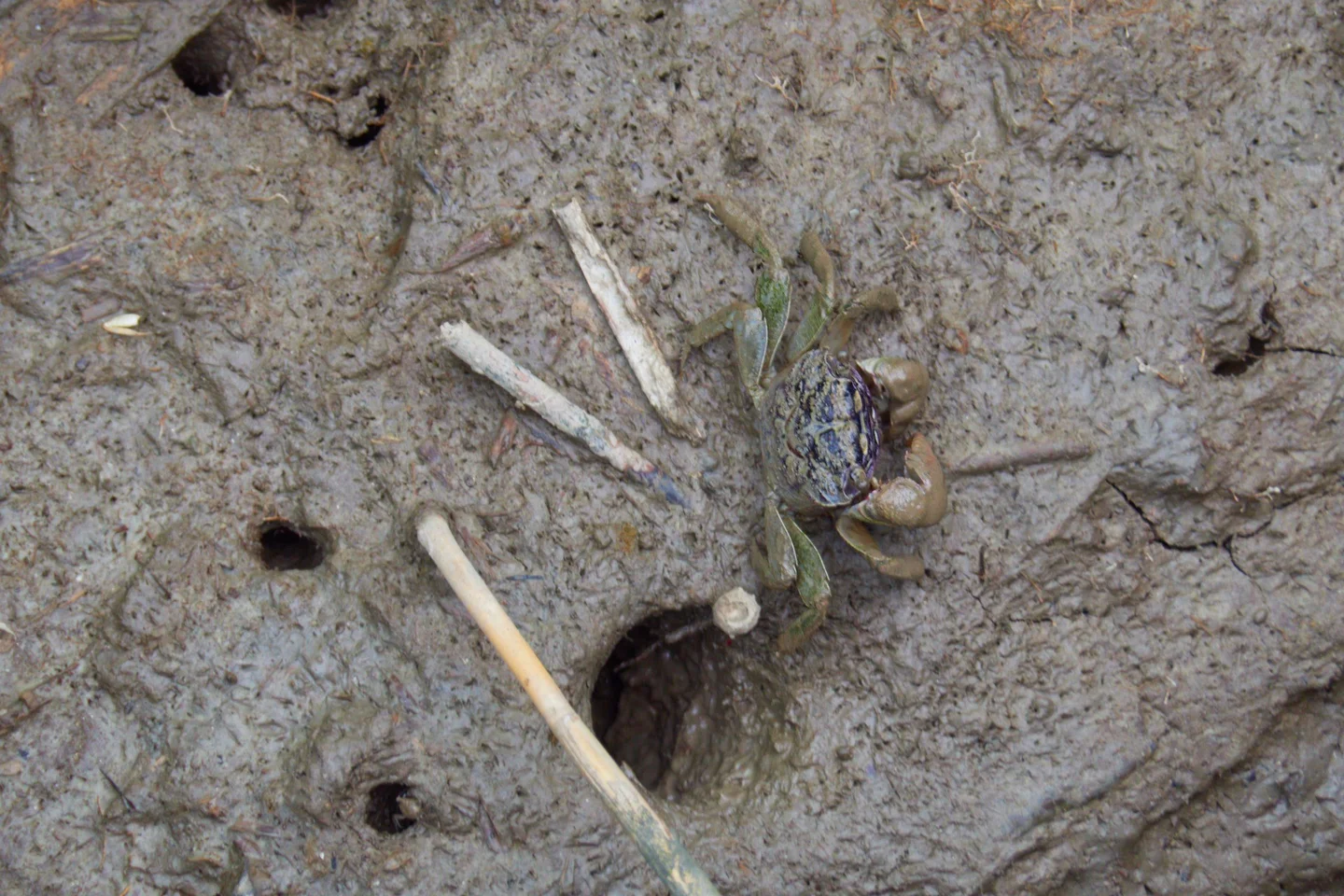
The mud below the path can be as absorbing as the distant view. Small holes mark burrows, and a still moment may reveal a crab moving between them. Slow down at a place where you can pause without blocking the boardwalk and see what becomes visible once your eyes adjust. What you encounter depends on tide, season, and weather. A photograph of one animal is not a promise that it will be in the same spot on your visit. If you want to identify something, record its appearance and use the nature interpretation or visitor information rather than picking it up. Winter brings an additional reason to visit: migratory birds, including hooded cranes, use the wider Suncheon Bay landscape. A bird-focused trip is best planned around the appropriate observation areas and current guidance. Bring binoculars and keep your distance; walking the reed boardwalk does not guarantee a close view of cranes. The wetland's published rules prohibit collecting plants or animals, bringing pets, bicycles, drones, and other recreational riding equipment. Food is also restricted, so plan a meal before entry or after leaving rather than treating the reed beds as a picnic park. Ask staff about the appropriate arrangements if you rely on powered mobility equipment, since the posted rules also address motorized devices.
Sunset Requires a Return Plan
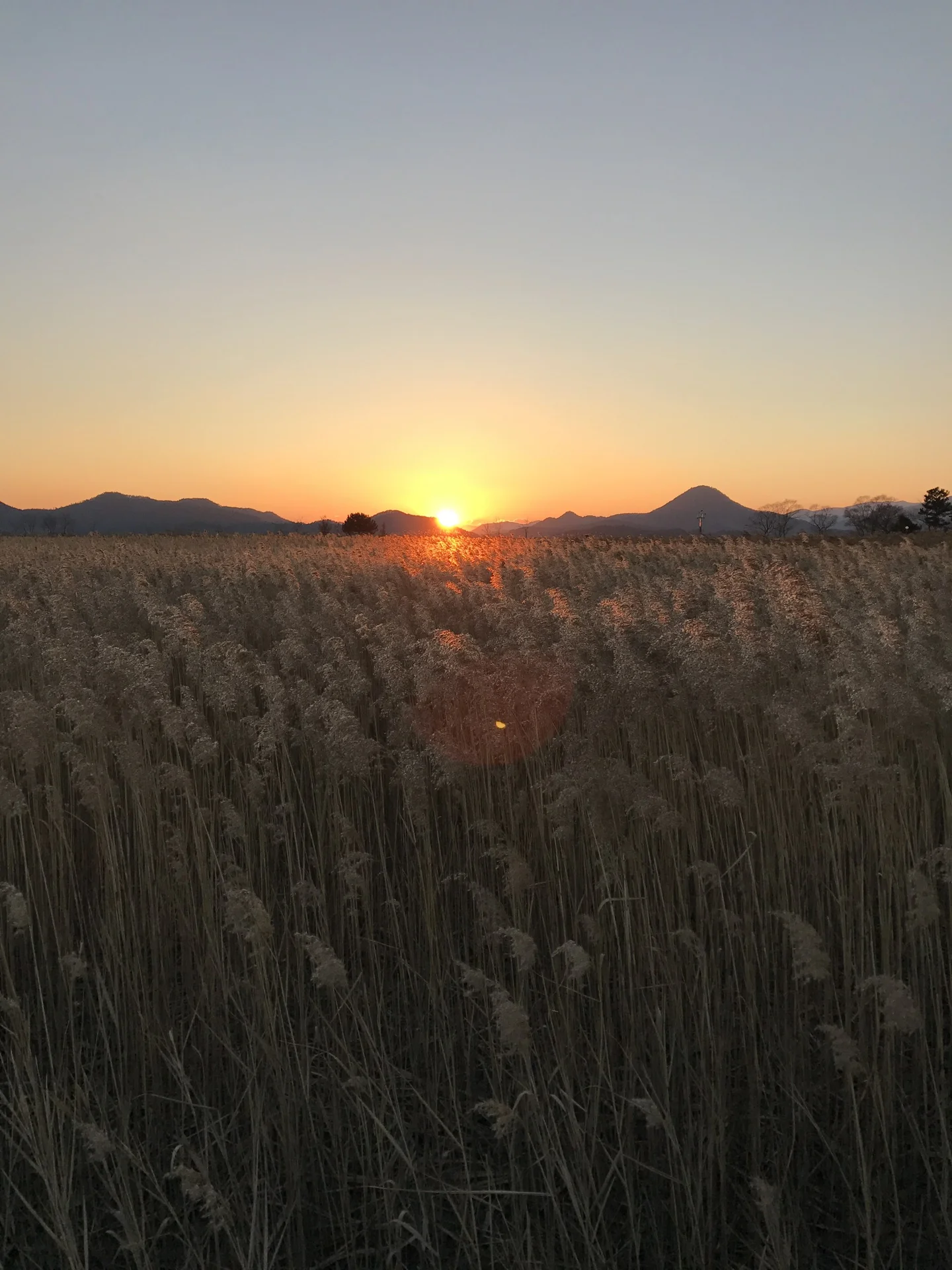
Chicant22 · Original · CC BY-SA 3.0 ·
As the sun drops, light catches the reed plumes and the water changes tone. You can appreciate that from the permitted lower paths as well as from the higher panorama. Choose the viewpoint around the amount of walking you want, rather than assuming sunset requires a last-minute climb. The wetland paths are not lit like an urban evening promenade. Its official visitor guidance explicitly warns that the trails have no lighting. Know how far you are from the exit and begin the return while useful daylight remains; the walk back is part of the sunset plan. Entry cutoffs also change with the season. As checked in October 2026, the official schedule lists last entry at 5 p.m. from November through February, 6 p.m. in March–April and September–October, and 7 p.m. from May through August. Final entry and the end of the permitted visit are different times, so check the day's closing guidance before walking far into the site. If you are taking a bus back into Suncheon, allow for the walk from the last viewing point to the gate and then to the stop. A photograph taken near sunset is not the time you will be ready to board.
Combining the Wetland With the National Garden
The current admission guidance allows a regular same-day ticket to be used for both the National Garden and wetland. Keep the ticket to present at the second entrance, and check the conditions if you are using a discounted or special pass. Buy the itinerary you need, rather than paying twice because the two sites have different names. Transport and walking still need separate time. If you plan to use SkyCube, confirm its boarding points, the onward route to the wetland, and the final return service. After a long garden visit, a shorter reed walk may be a better choice than adding Yongsan as well. For a direct trip from Suncheon Station or the bus terminal, the wetland's official directions identify city bus 66. Check the current route and departures for your travel day rather than relying on a fixed frequency. A taxi is another option if the connection would leave too little time for the part of the wetland you most want to see.