Dolsando, Yeosu: Hyangiram, Mustard Kimchi, and the Harbor Lights
JayHyuck Shin from Seoul, Korea · Original · CC BY-SA 2.0 ·
Dolsando has two quite different faces. At its northern end, Dolsan Park looks back toward Yeosu's busy harbor and illuminated bridge. Farther south, Hyangiram sits among the rocks of Geumosan above the sea. Both belong to the same island, but they are not neighboring stops on a short walk. Choose the southern temple as the main destination for a longer outing, adding a meal and a coastal pause before returning north. If you only have an evening, the park and bridge views make a simpler plan. Road bridges connect Dolsando with Yeosu, so there is no need to arrange a ferry for either trip. The drive itself reveals a change of pace. City buildings give way to cultivated fields, low villages, and bends in the coastline. Enter the particular destination on your map, rather than just “Dolsando”: reaching the island's northern entrance is not the same as reaching Hyangiram.
Hyangiram: The Climb Is Part of the Visit
Moonhayun · Original · CC BY-SA 4.0 ·
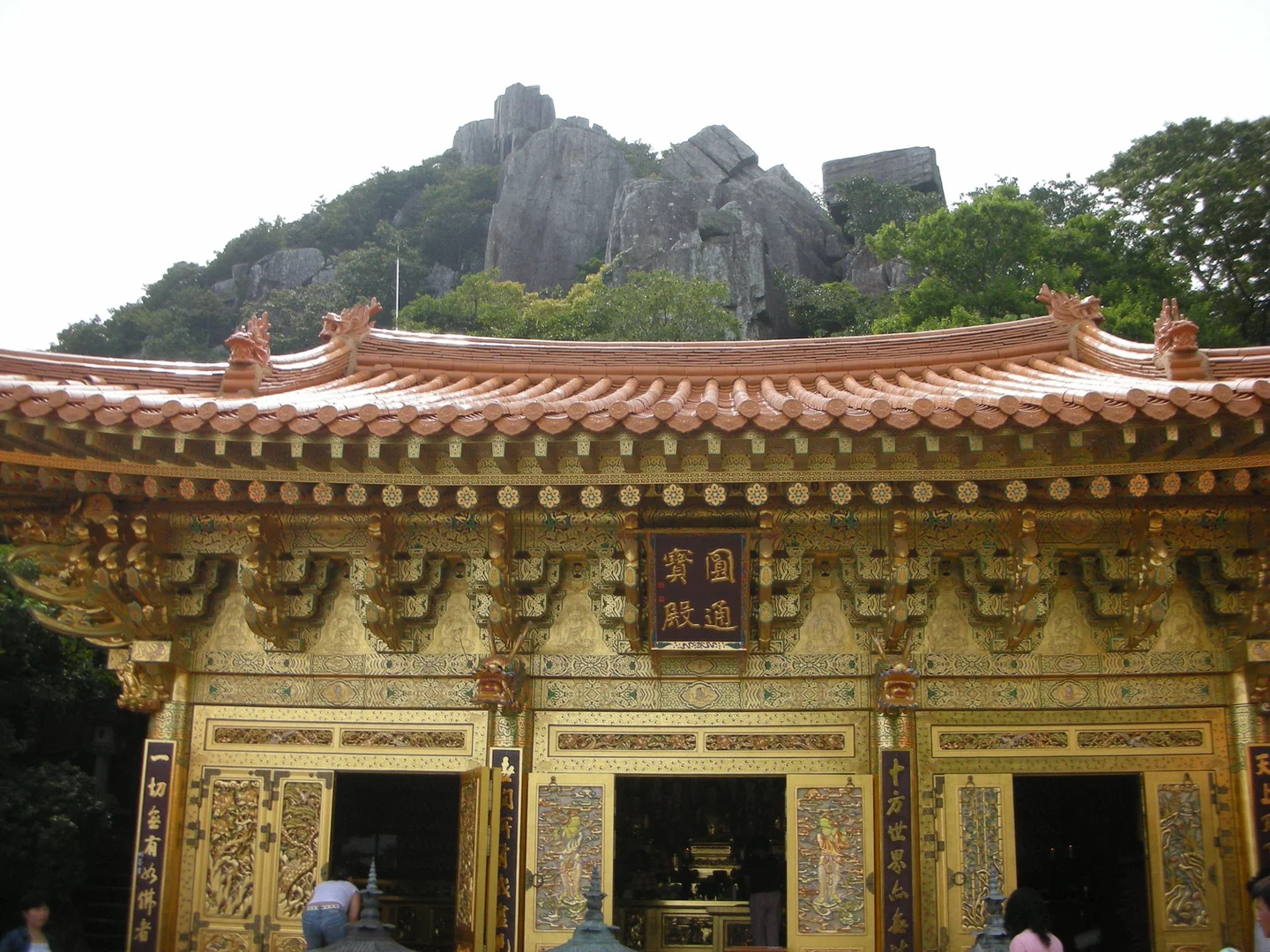
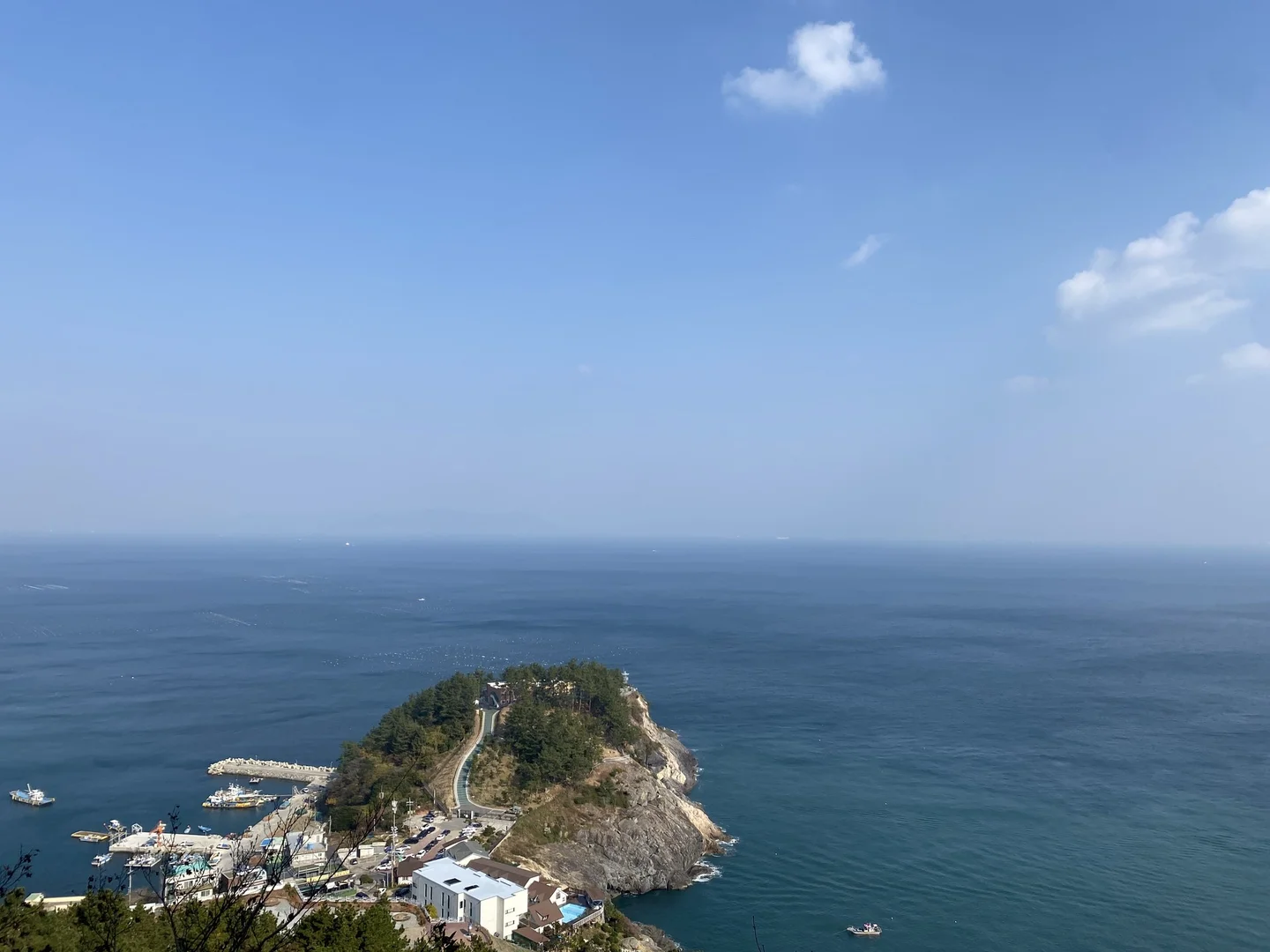
Hyangiram's setting is the reason to make the journey south. From Imopo village, the approach climbs through stairs and narrow openings between large rocks before reaching the temple's sea-facing spaces. The view opens outward across the water, while the mountain's rock formations press close behind the buildings. It is a more physical visit than a temple on level ground. At some of the stone passages, you need to bend to pass through. If stairs or confined spaces are difficult, ask about the approach before planning the day around the temple. A car or bus gets you to the village area, not to a flat entrance beside the main hall. Around Wontongbojeon, spend time looking in both directions: toward the rocks that shape the site and out across the sea below. The buildings fit into the terrain rather than standing in a broad regular courtyard. Follow the permitted paths and viewing areas to appreciate that relationship. Hyangiram is associated with welcoming the sunrise, but a dawn visit is optional. Daylight makes the rock passages and steps easier to negotiate and gives a clearer sense of the coast. A sunrise plan needs suitable transport and preparation for the dark approach; it should not depend on finding a convenient local bus before dawn. Leave a further hike on Geumosan for an itinerary planned around walking. Visiting the temple and climbing beyond it are different commitments. After descending, a meal or a rest in Imopo makes more sense than interrupting the temple visit and climbing back up a second time.
Dolsan's Fields and Its Famous Kimchi
Smiley.toerist · Original · CC BY-SA 4.0 ·
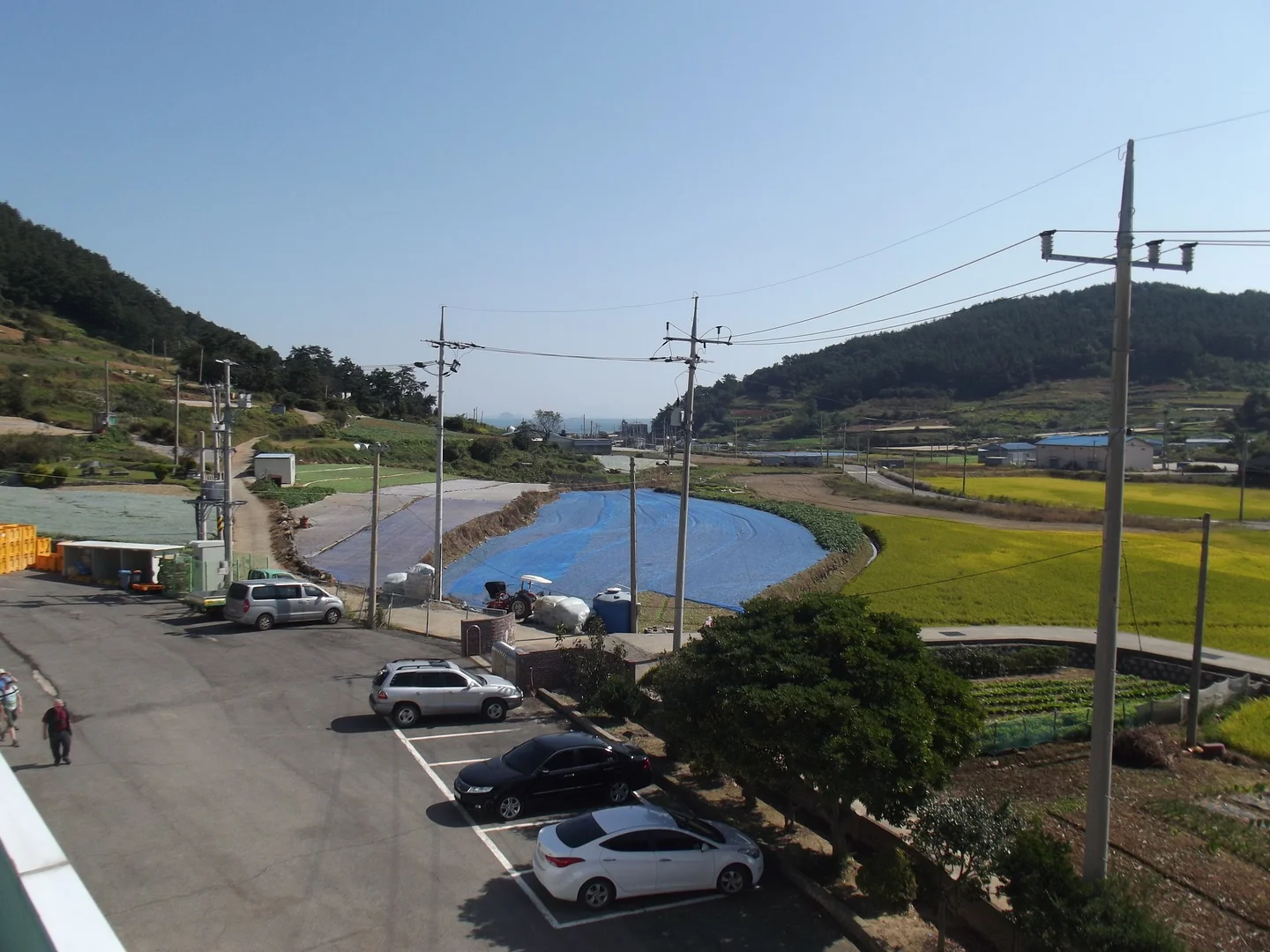
Dolsando's rural landscape is an important part of the outing. Rice fields, vegetable plots, and scattered homes sit between the roads and coast. The scenery explains why this island is known for something grown on land as well as for its sea views. Its signature product is Dolsan gatkimchi, made with mustard greens. The local greens are valued for their aroma and relatively tender texture. In the finished kimchi, the leafy bite combines with chili seasoning and the flavor developed through fermentation. It is different from the napa-cabbage kimchi many visitors already know. Try a little with a meal before deciding whether to buy a larger container. Freshly made and more mature kimchi can taste quite different, so ask which version you are sampling. Recipes commonly use anchovy fish sauce and shrimp as well as garlic, ginger, and chili; a vegetable-based appearance does not mean the dish is vegetarian or free of seafood ingredients. There is a useful connection between the food and the bridge you cross. Yeosu's local food history credits the opening of Dolsan Bridge in 1984 with making it easier to bring the island's kimchi to mainland markets and visitors. Transport helped turn a local crop into one of the city's best-known foods. If you buy some for the rest of your Korean trip, tell the seller how long you will be traveling before reaching refrigeration and ask for suitable packaging. There is no need to identify every green field along the road as mustard: crops vary by plot and season, and the landscape is worth noticing on its own terms.
Pause at a Working Coast
Smiley.toerist · Original · CC BY-SA 4.0 ·
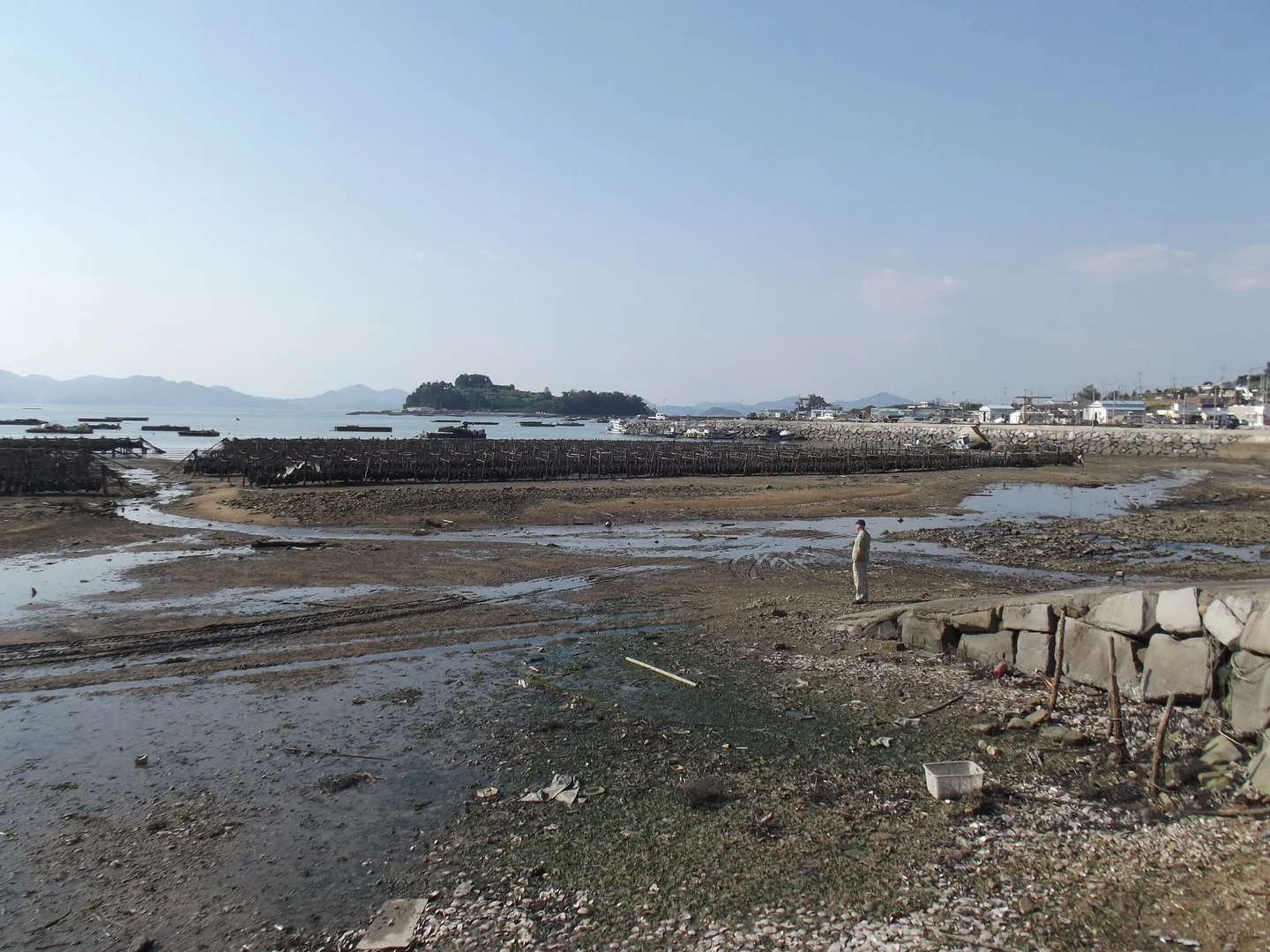
The island's shoreline changes from place to place. Some stretches expose tidal ground and aquaculture areas; others have small harbors, boats, and narrow village roads. These are working coastal landscapes, with a different appeal from a sandy beach or a formal viewpoint. A short village stop can add variety to the day if there is a suitable place to park and walk. Stay on public approaches, leaving boat access and equipment areas clear. An exposed shore at low tide does not automatically provide a visitor walking route, and aquaculture facilities are not open-air attractions. For a car-based trip, choose one coastal break along the wider route instead of turning down every road toward the water. Pull in where parking is intended, rather than stopping at a bend because the view is good. This also makes the journey less tiring for anyone who dislikes winding roads. Without a car, concentrate on the main return journey to Hyangiram before adding villages. Yeosu's official city tour lists a Hyangiram route with advance booking and several other stops. It can be an alternative to coordinating local buses, but compare the current itinerary with what you actually want to see; it is not a flexible island shuttle.
Return North for Dolsan Bridge
허지호 · Original · CC BY-SA 3.0 ·
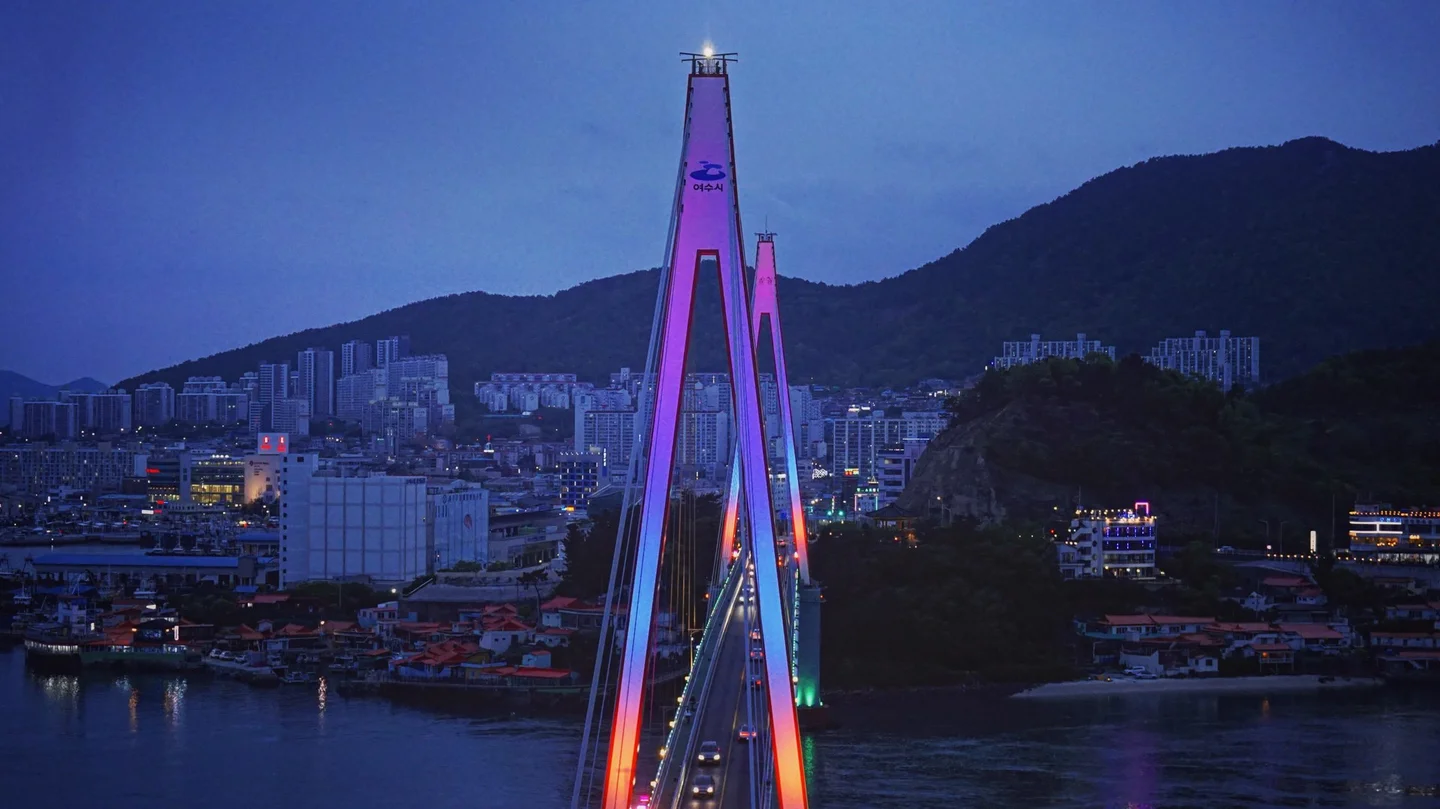
Back at the island's northern end, Dolsan Park offers a view toward Dolsan Bridge and the city. The harbor returns to the foreground, with boats, buildings, and the bridge's cables replacing the open sea around Hyangiram. Arriving around dusk lets you see the bridge while there is still color in the sky, then watch the city lights become more prominent. The appeal is the combination of structure, water, and urban backdrop. Lighting colors and visibility can vary, so treat photographs as an impression of the scene rather than a promise of the exact display. Dolsan Park and the marine cable-car station are nearby but serve different plans. If a bridge view is the goal, navigate to the park and its viewing area. If you intend to ride, organize the cable-car trip around the correct terminal and ticket rather than assuming it is simply part of the park visit. For a city-based stay, visiting the south first and the northern park later avoids another long drive after the night view. If your accommodation is on Dolsando, check its actual location before deciding the order. The island name covers a substantial area, and a room near the bridge can be a very different base from one near the southern coast.