Juknokwon, Damyang: A Bamboo Walk With Time for Lunch
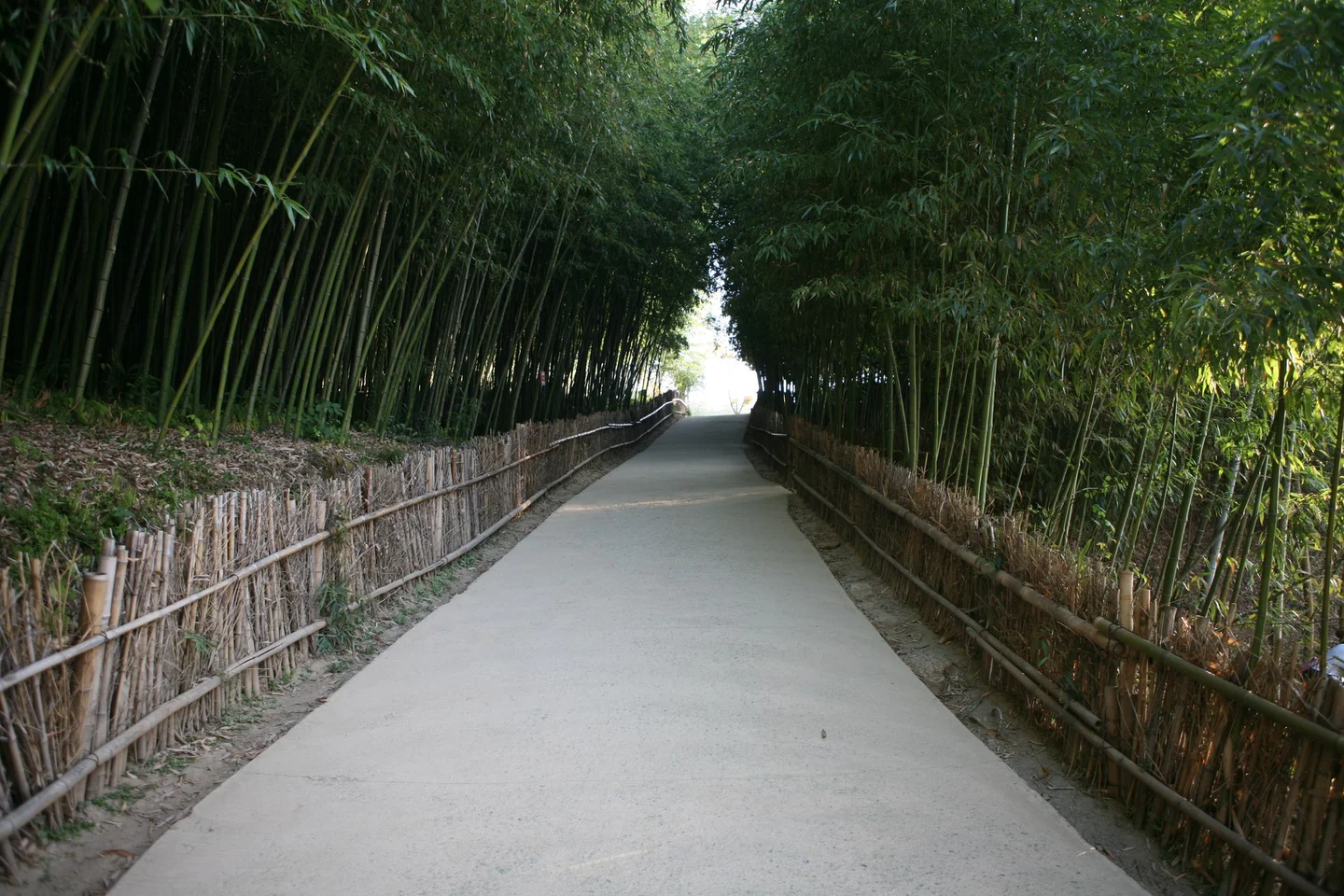
Juknokwon is a good place to make walking the main event. Tall bamboo closes around the paths, sunlight shifts through the leaves overhead, and the sound of the grove changes with the wind. You can follow a short route with plenty of pauses or continue toward the traditional-style buildings of the poetry culture village. It fits naturally into a half day in central Damyang. Start with the bamboo, stop for a local lunch, then stretch the afternoon along the riverside trees of Gwanbangjerim. That gives you two very different kinds of shade without building the day around repeated transfers. Choose your entrance before setting off. Juknokwon has front and rear approaches, and the order of the bamboo paths and cultural spaces changes depending on where you begin. The front entrance is a useful starting point for a later walk toward the noodle street and Gwanbangjerim. Tell a taxi driver which entrance you want, and consider where you plan to come out if a car is waiting on the other side. From Damyang's bus terminal, allow for the local connection to the garden as well as the journey into town. Once you enter the grove, you will be happier without a rolling suitcase in tow.
Choose a Few Paths, Not Every Named Route
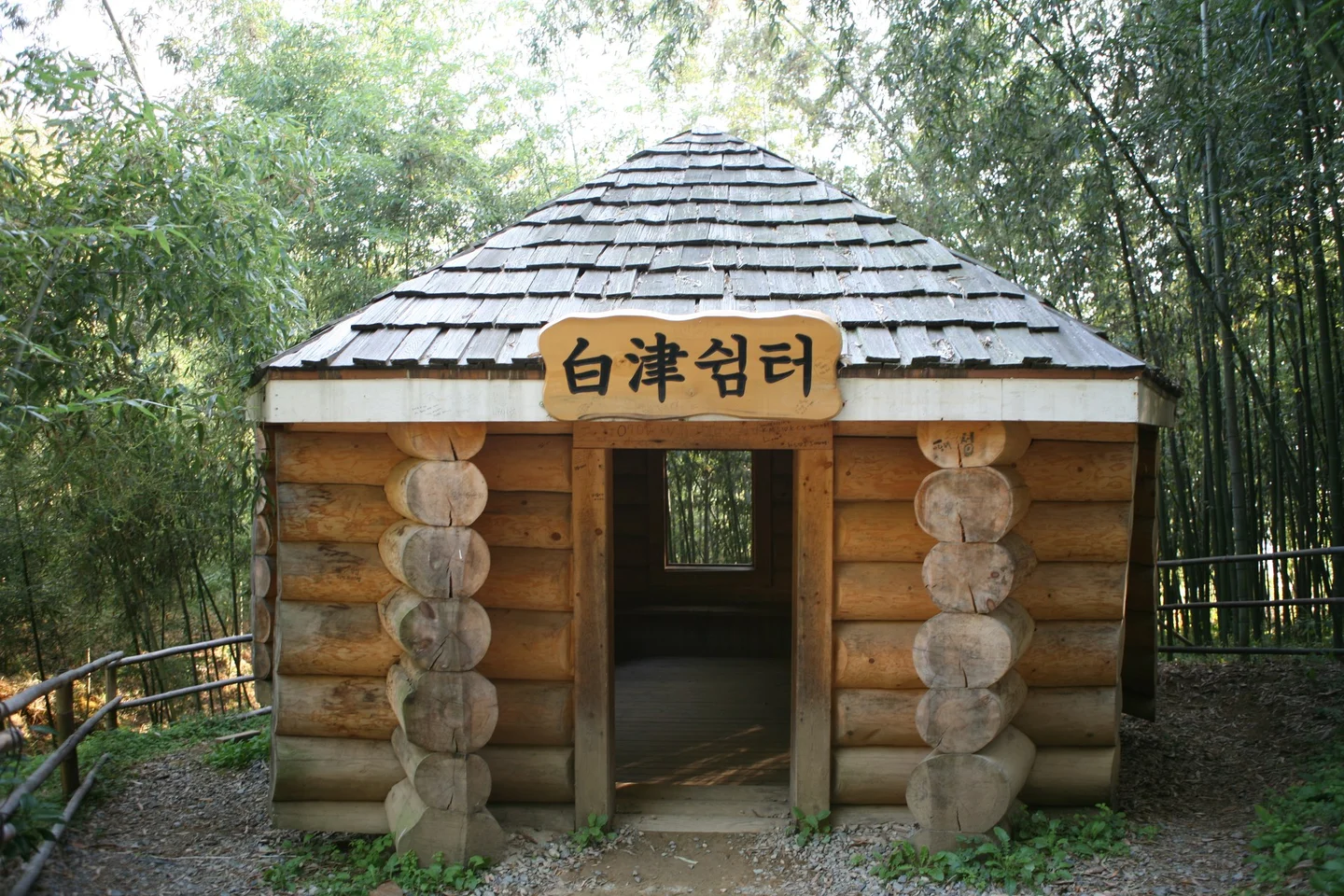
Juknokwon's eight themed paths have names associated with ideas such as good fortune, friendship, and reflection. Treat them as ways to organize a walk, rather than a list to complete. A look at the entrance map will help you connect the sections that interest you and keep track of the return direction. Shelters and sitting places break up the grove. Pause long enough to notice details that disappear when you keep moving: the joints in the stems, the texture of older bamboo, and the leaves overlapping high above the path. The sound of wind through the canopy is part of the visit too. The routes are not all level. Slopes and steps can make a longer loop more demanding than a short distance on the map suggests. If you are using a wheelchair or stroller, ask at the entrance which route and approach will work best. A shorter bamboo walk with a comfortable rest stop is preferable to discovering an awkward section after crossing most of the garden. For photographs, look upward as well as along the path. The dense vertical stems create a different composition from the leafy canopy. You do not need an empty grove to enjoy it, and waiting indefinitely for everyone to leave a popular stretch can use up the time you meant to spend walking.
Water and Clearings Between the Bamboo
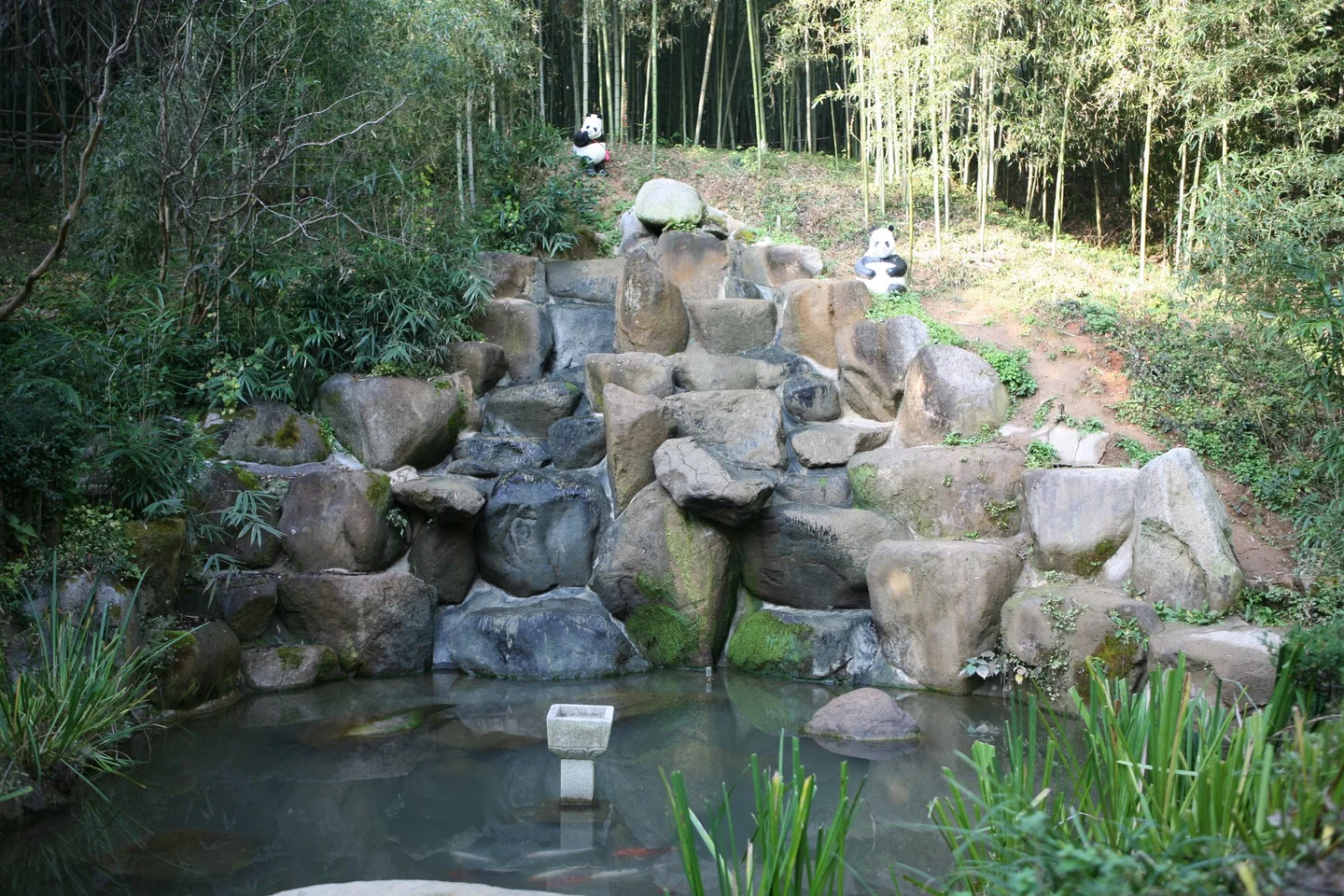
Small landscaped ponds and rock features create pauses between the densely planted paths. After the tall stems and enclosed views, a low patch of water opens the scene in a different direction. These are garden details to enjoy along the route, rather than a separate lake outing. Weather changes the experience. After rain, the bamboo can look darker and more saturated, while earth, stone, and wooden surfaces may be slick. Summer shade offers relief from direct sun but does not remove the humidity. In winter, the green canopy remains, though shaded sections can still feel cold. With children, a few simple observations can replace a long mileage goal. Look for bamboo joints, compare leaf shapes, or listen to the difference between a breezy stretch and a sheltered clearing. Keep to the paths and leave new shoots undisturbed; they are part of the grove's growth, not objects to handle or take home. The small changes from enclosed bamboo to water and open sky are a reason to walk slowly. There is no need to add a scheduled activity for the garden to fill a worthwhile part of the day.
Hanok Spaces and the Poetry Culture Village
Christian Bolz (크리스티안 볼츠) · Original · CC BY-SA 4.0 ·
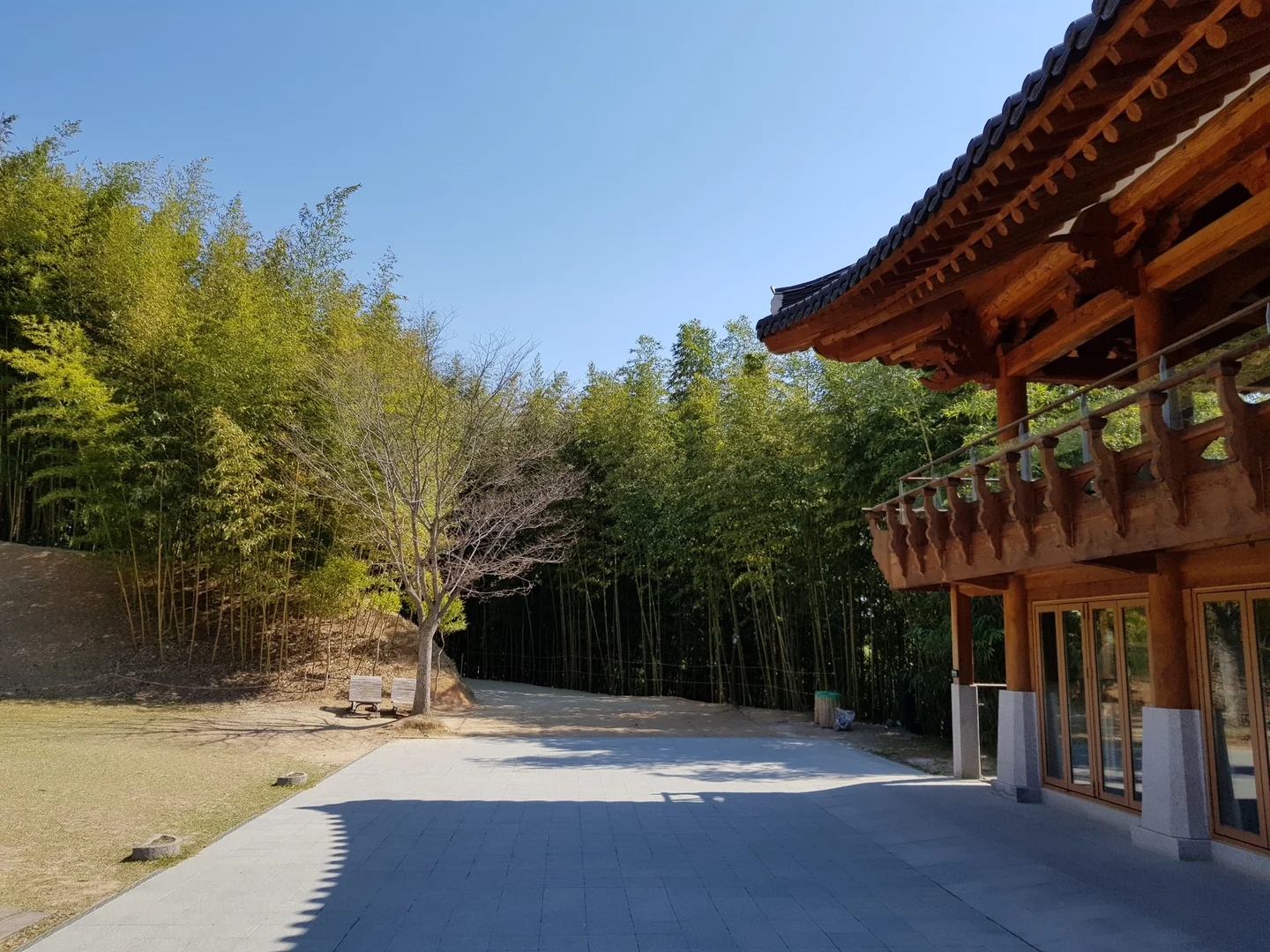
Traditional-style timber buildings sit among the bamboo, creating places to pause and another set of lines to look at beneath the trees. A café can be a welcome break, but choose it when the walk calls for one rather than treating a particular drink or window seat as essential. Toward the rear entrance, the Poetry Culture Village introduces Damyang's pavilion tradition. It brings together re-created pavilion forms and cultural spaces associated with the area's literary heritage. Think of it as an introduction to that tradition, not as a visit to all the original historic sites scattered around Damyang. That distinction matters if you have seen names such as Myeonangjeong on a wider travel itinerary. The original pavilion and a representation within Juknokwon are different destinations. A separate trip to a historic garden or pavilion needs its own transport plan. Juknokwon's official site also lists an art center, a footbath facility, hanok cafés, and bookable hanok accommodation. Their opening arrangements and any extra charges are separate from simply following the garden paths. If one of those facilities is the reason for coming, check its current operation along with the garden's admission hours and final entry time. For an ordinary visit, the combination of bamboo and traditional architecture is enough. Leave room to sit, then decide whether you want more of the garden or are ready to head into town for food.
Damyang Hyanggyo, Noodles, and the Riverside
Twotwo2019 · Original · CC BY-SA 4.0 ·
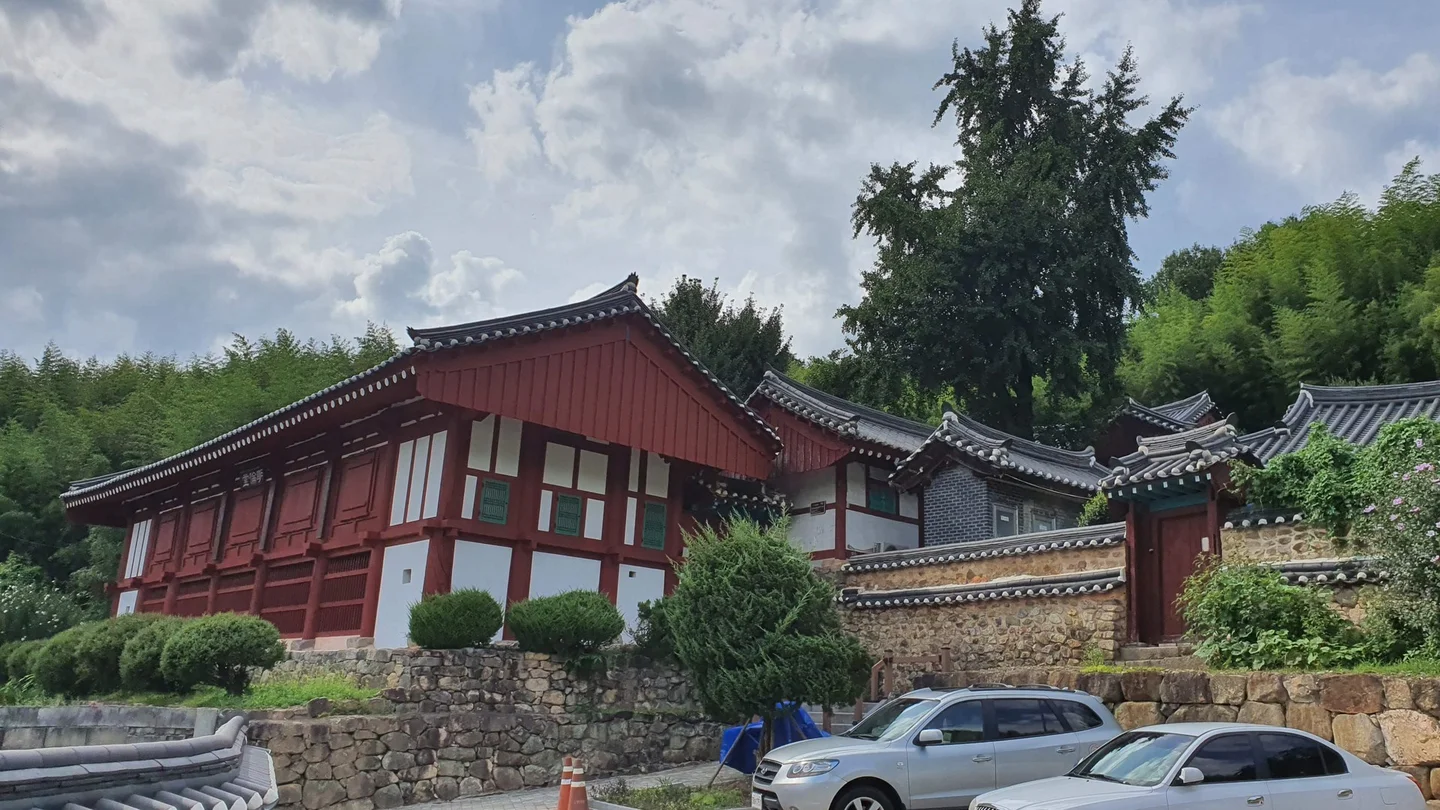
Damyang Hyanggyo offers a different kind of traditional architecture nearby. This Confucian school served education and ritual, rather than the recreation of a garden. Its tiled roofs, timber hall, and enclosing walls make a useful short stop if you want to see another aspect of the town. Follow the access signs, and treat an exterior visit as worthwhile if the buildings are closed. You can appreciate the school's more formal arrangement without assuming that every room or courtyard is open. For lunch, the area around Juknokwon and the river gives you several local choices. Daetongbap is rice steamed in a bamboo container, often with additions such as chestnuts or jujubes. Tteokgalbi is a seasoned, formed meat dish associated with Damyang, and bamboo-shoot dishes make another connection with the landscape you have just visited. Check the set-menu size if you are traveling alone. For a simpler meal, explore the noodle street near Gwanbangjerim. Options include noodles in anchovy-based broth and spicy mixed noodles, with recipes and side dishes varying by shop. Choose the meal you want rather than assuming every restaurant serves the same Damyang combination. Afterward, Gwanbangjerim's riverside trees provide a wider, more open walk than the bamboo grove. The Metasequoia Road is another appealing Damyang destination, but it is a separate stop requiring additional travel. If your time is limited, lunch and the river make a natural finish without adding another long walk.