Jinhae cherry blossoms: Yeojwacheon, Gyeonghwa Station, and the naval-port festival
날개 · Original · CC BY-SA 3.0 ·
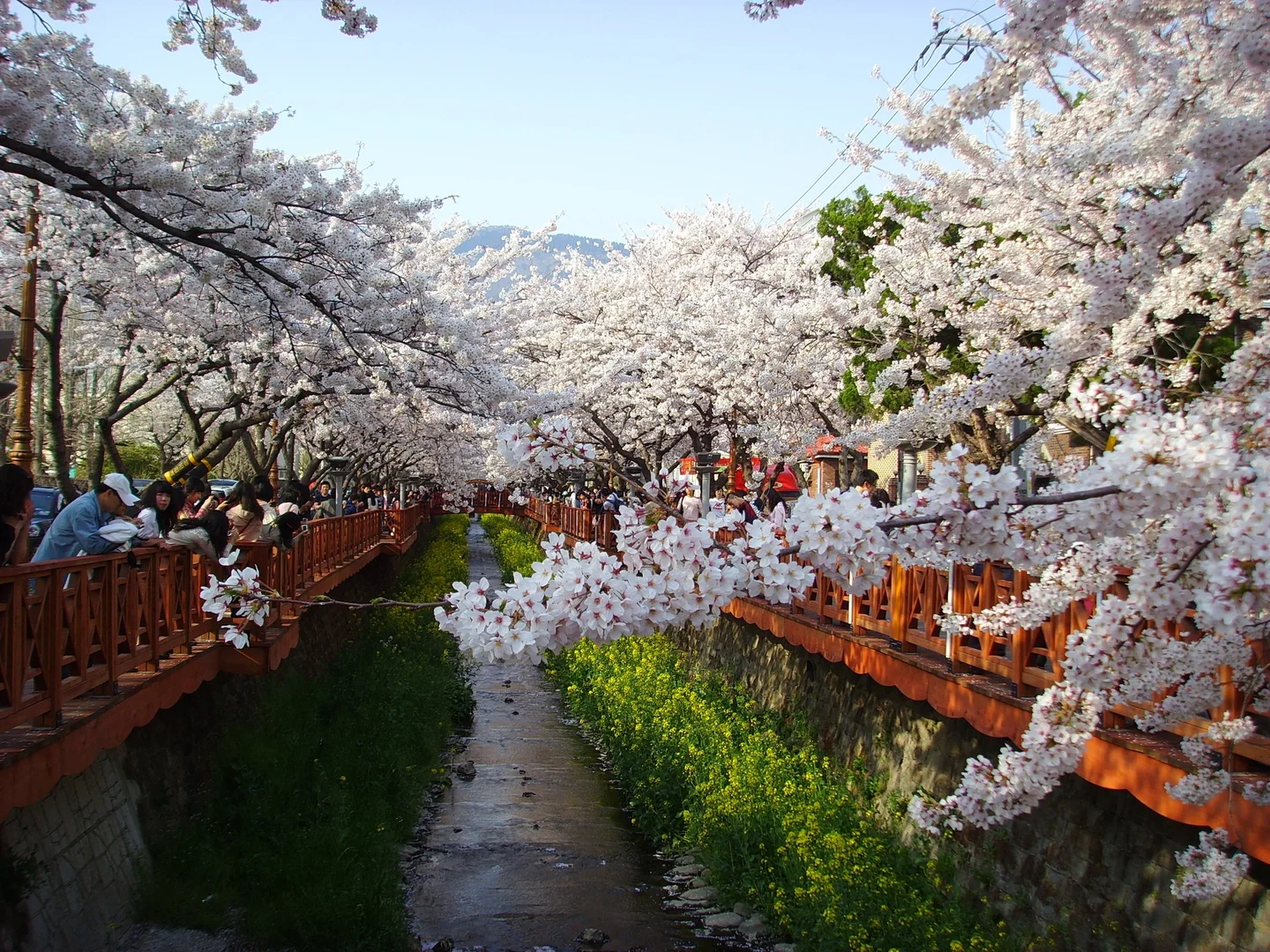
Cherry trees change the scale of Jinhae in spring. Branches meet above a narrow stream, soften the lines of an old railway, and turn ordinary neighborhood streets into long ribbons of pale flowers. The best-known scenes are at Yeojwacheon Stream and Gyeonghwa Station, but the pleasure of a visit comes from moving through a city where the blossoms extend well beyond a single park. Jinhae, now part of Changwon, is also a naval port. Its spring celebration, Jinhae Gunhangje, grew from commemorations of Admiral Yi Sun-sin into a festival combining blossoms, performances, and military traditions. For a first visit, allow a full day if you want both major flower spots and time in the old downtown. With only a few hours, choose Yeojwacheon or Gyeonghwa Station and enjoy it without squeezing in a rushed cross-town transfer.
Yeojwacheon for blossoms over the water
Yeojwacheon is the strongest choice if you want the classic combination of flowers, water, and small bridges. Wooden walkways follow both sides of the stream, with mature trees leaning inward above the channel. From a bridge, you see the line of water receding beneath the branches; from the banks, the flowers are closer and the scene feels more enclosed. Use Yeojwacheon Romance Bridge, 여좌천로망스다리, as a map search rather than the broad phrase “Jinhae cherry blossoms.” The bridge took its popular name from the television drama Romance. It is a convenient landmark, but there is more to enjoy by continuing along the stream and crossing at another bridge. Choose the length of your walk according to the crowds and the rest of your day. Around peak bloom, narrow bridge approaches can become bottlenecks. If you are traveling with a stroller or wheelchair, a ramped entrance alone does not tell you how easy the whole visit will be: pedestrian density and temporary crowd routes matter too. An early start gives you more time to adjust the walk. The nearby Inland Water Environment Eco Park offers a different kind of greenery, centered on a reservoir and trees, if you want to extend the outing beyond the busiest stream section.
Gyeonghwa Station for the old railway scene
Gyeonghwa Station is a separate stop across town. Its appeal is the long perspective of railway tracks beneath cherry branches, with an old train displayed among the trees. Passenger service ended here in 2006. The train is part of the visitor setting, so this is a place to walk and photograph the railway landscape rather than board a blossom-viewing train. Look beyond the familiar front-of-train composition. The parallel rails, rows of trunks, and canopy of flowers create different views along the public viewing area. Underfoot, gravel, rails, and paved sections vary considerably, so the easiest route may be alongside the tracks rather than directly over them. Stay within the areas opened for visitors. Plan a bus, taxi, or officially operating festival connection between Gyeonghwa and Yeojwacheon. They are not neighboring attractions that naturally merge into one short stroll. During the festival, road restrictions and queues can make a seemingly simple transfer take much longer than an ordinary map estimate. If one location is especially important to you, visit it first and treat the other as a flexible addition.
Step back and see the city from Jehwangsan
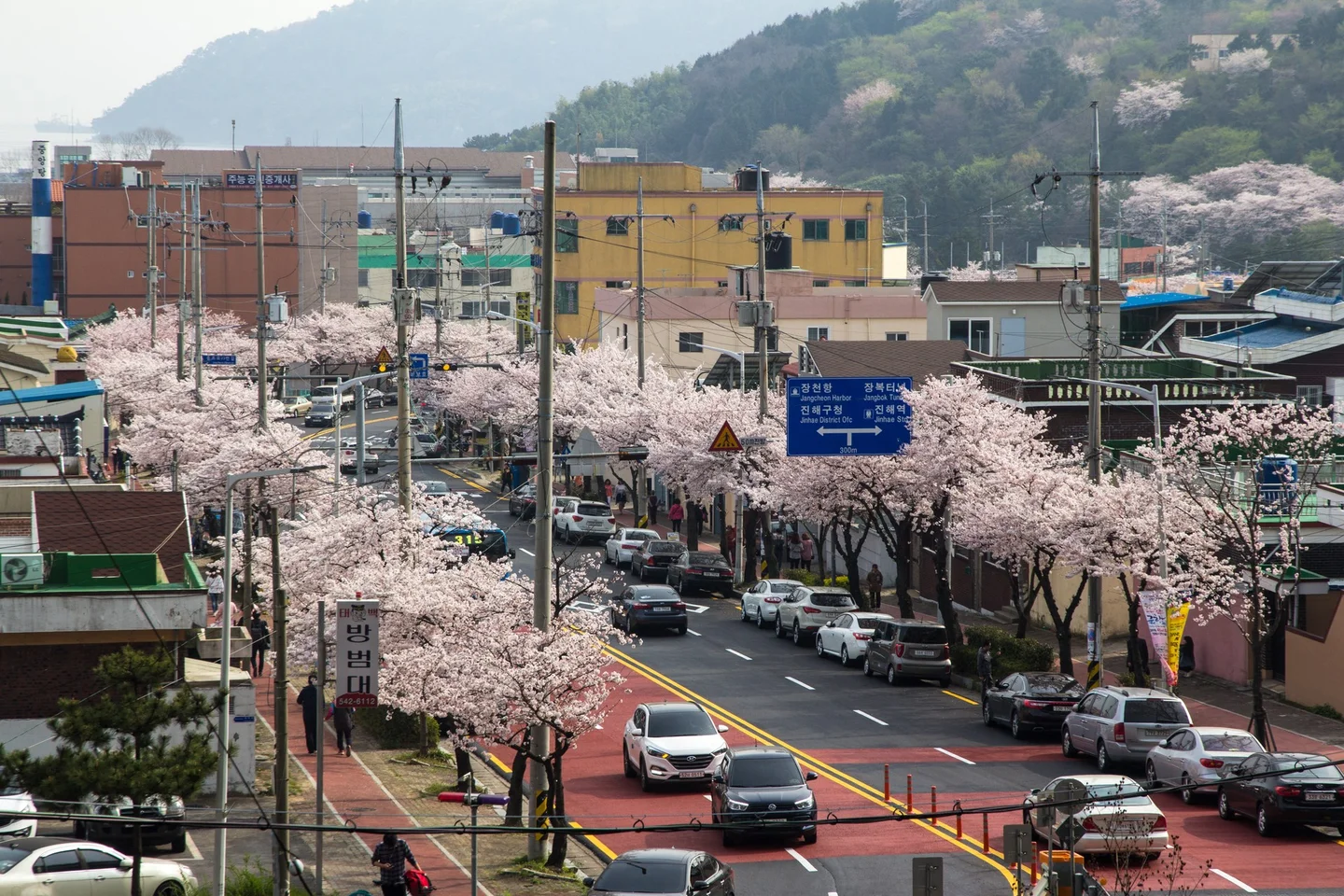
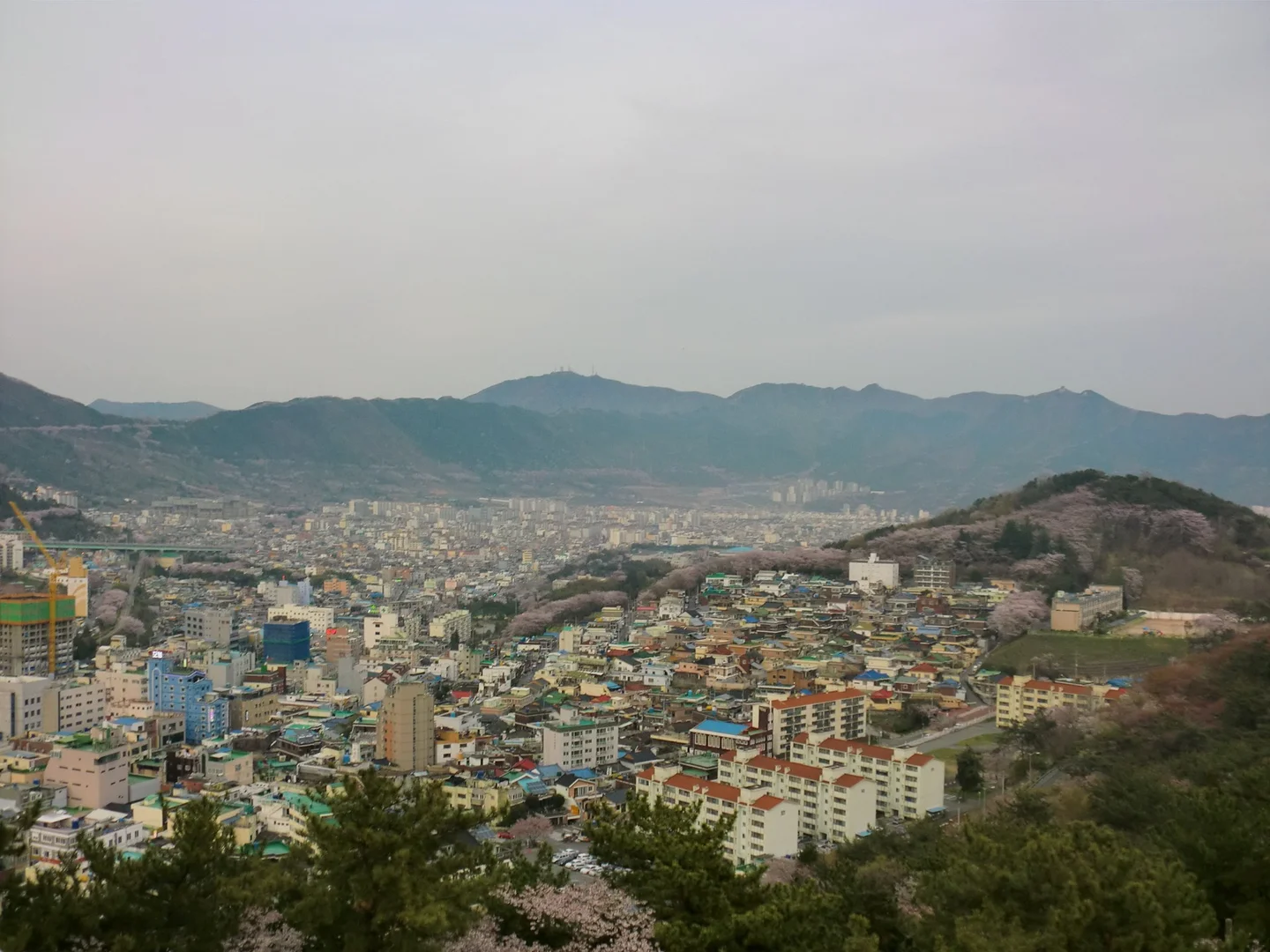
Between the major blossom sites, Jinhae remains a working city of shops, houses, buses, and traffic circles. The streets around Jungwon Rotary make a useful break for a meal before heading up to Jehwangsan Park. From higher ground, the view shifts from individual branches to rooftops, flowering slopes, roads, and the mountains enclosing the city.
hyolee2 · Original · CC BY-SA 4.0 ·
Jinhae Tower stands in the park, with the municipal museum in its lower section and elevated views above. The museum adds local history to the scenery through archaeological objects and displays on the area’s past, including fishing and older settlements. It is a worthwhile option when you want some context for the naval city beyond the festival atmosphere. A long stairway leads up the hill, while the monorail offers a less strenuous approach when operating. The operator’s guide, checked in October 2026, lists Monday closure and a noon-to-1 p.m. service break, with special hours around the festival. Use its current notices if the monorail is essential for your visit. The park, monorail, and museum have separate operating arrangements; buying a ride does not make the exhibition rooms available at every hour.
Make festival performances part of the plan
hyolee2 · Original · CC BY-SA 4.0 ·
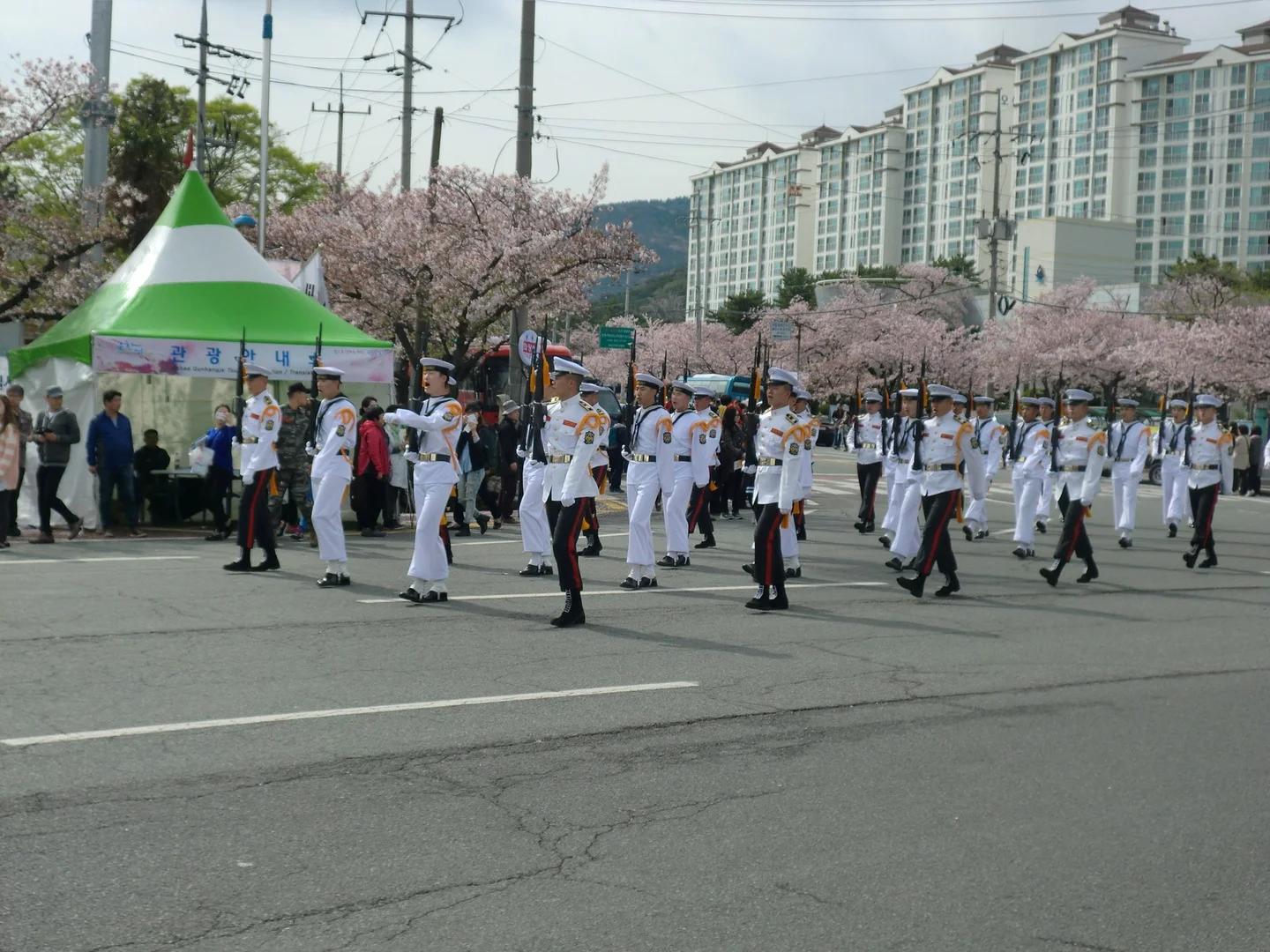
Military bands, ceremonial drill teams, and parades give Gunhangje a character distinct from a simple flower-viewing event. Pick one performance you particularly want to see and build the blossom walks around its location and start time. A parade route can also change how you move through downtown, so arriving nearby with time to spare is more useful than attempting a last-minute dash from the other side of Jinhae. Naval-facility open days require their own planning. Areas such as the Korea Naval Academy or naval base are not ordinary parks with unrestricted public access. International visitors should check the relevant year’s eligibility, identification requirements, and photography rules before including an open-day visit. The public blossom walks make a complete day even without entry to a military facility. Festival dates and peak bloom answer two different questions. The schedule tells you when programs take place; temperatures and weather determine how the trees look. When booking a spring trip, compare the announced dates with blossom updates closer to departure. For any future visit, use that year’s program on the official Jinhae Gunhangje website rather than an old calendar embedded in a travel article.
Food stops and an evening by the bay
hyolee2 · Original · CC BY-SA 4.0 ·
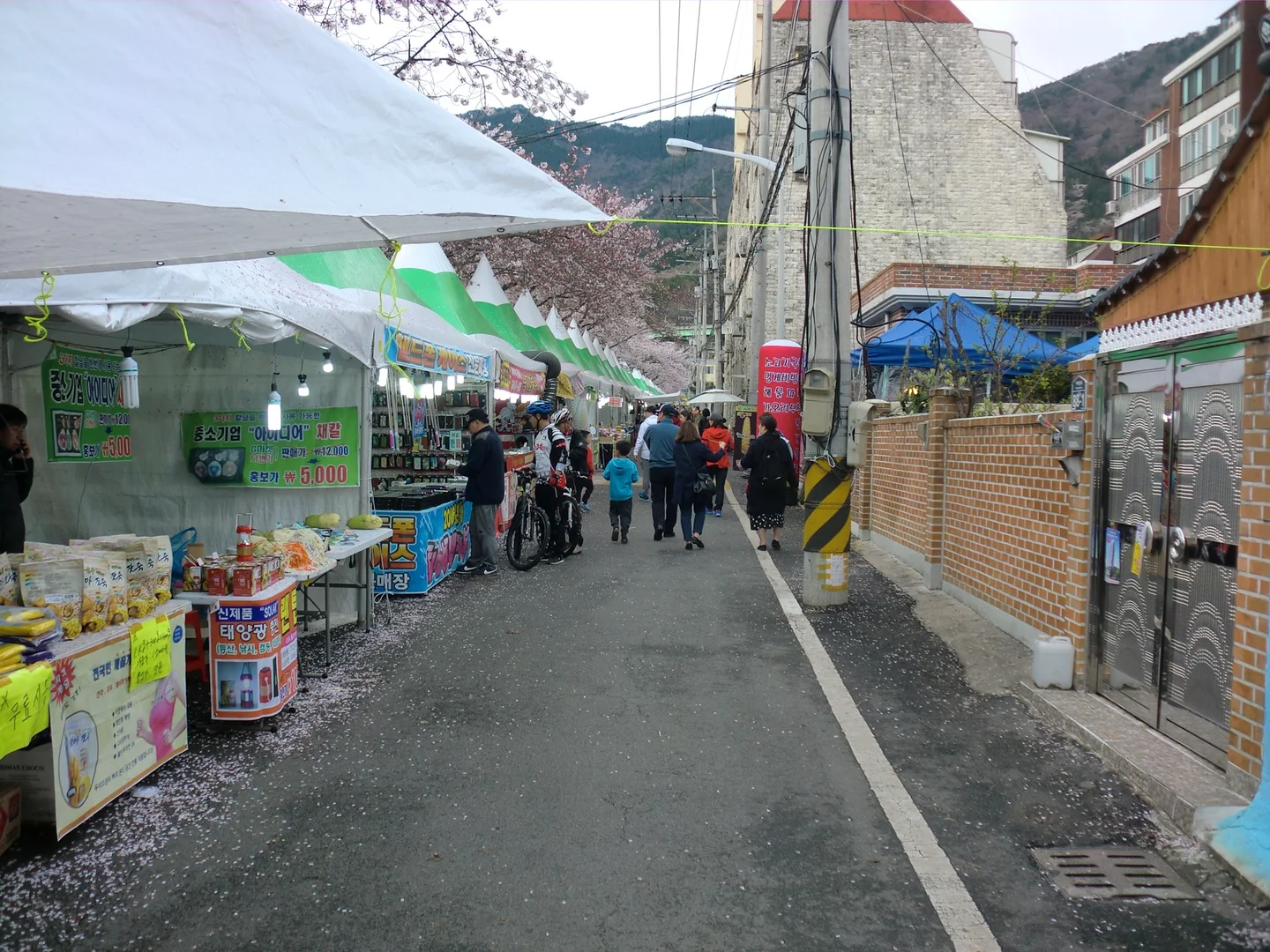
Festival stalls bring snacks and temporary food areas into the spring itinerary, while the old downtown has places to sit down between walks. If you would like a locally themed souvenir, Jinhae Jegwa is known for cherry-blossom-shaped pastries with pink filling. They are an easy bakery stop to combine with time around Jungwon Rotary, without making lunch depend on finding a particular temporary stall. Choose a sit-down meal before a scheduled performance if you need a dependable break. During a crowded flower-viewing day, repeatedly joining food lines can consume more time than expected. Temporary vendor locations and menus change between festivals, so use the current site map for the nearest food area rather than looking for a booth shown in an older photograph.
Choi2451 · Original · CC BY-SA 4.0 ·
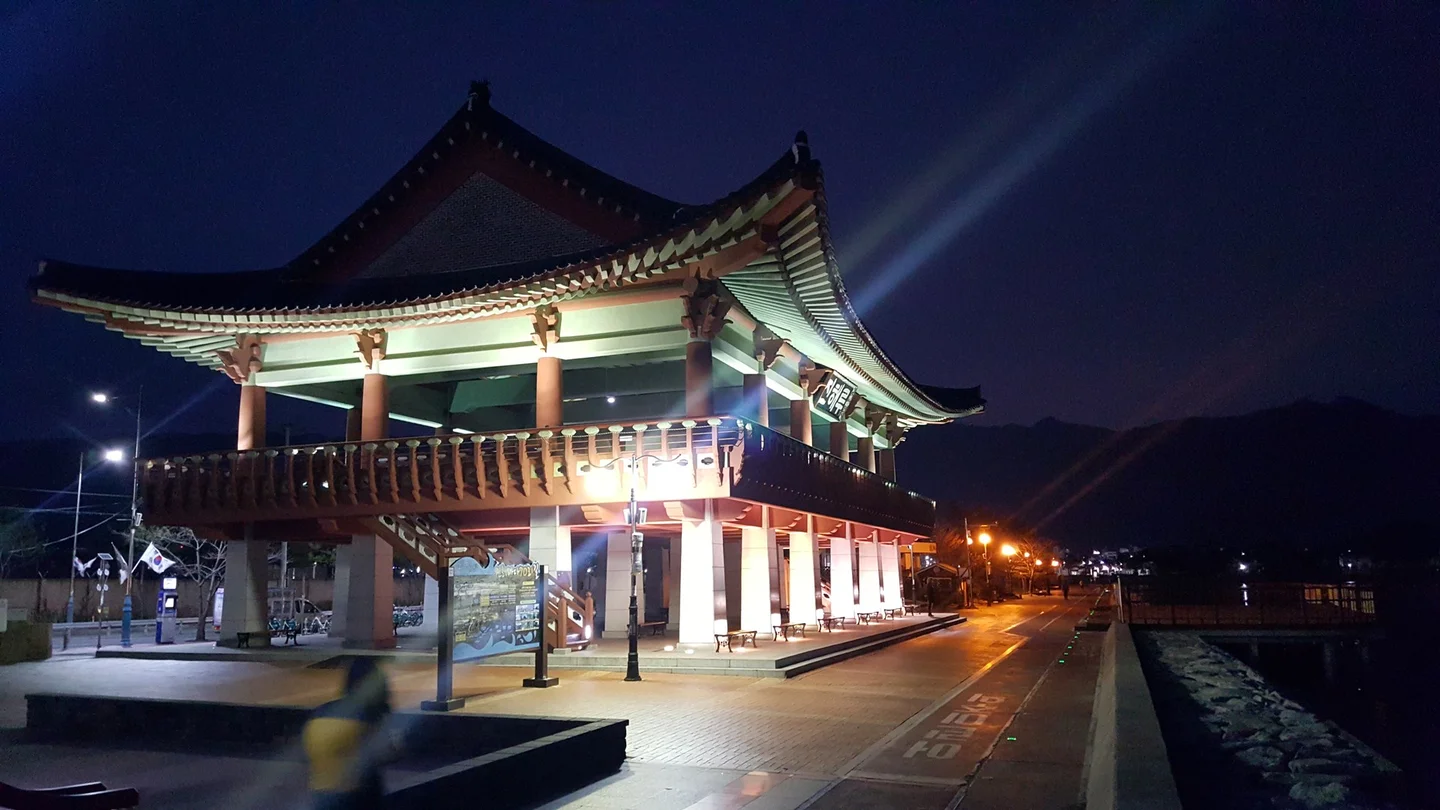
Jinhaeru offers a change of setting on the waterfront. The open-sided pavilion overlooks Jinhae Bay, and its illuminated roof and columns make an attractive evening stop beside the coastal walkway. It is separate from Yeojwacheon’s streamside setting and seasonal lighting. Include the trip to the shore only if it fits comfortably before your return bus or onward journey. For navigation, group Yeojwacheon, the old downtown, and Jehwangsan together, then plan Gyeonghwa Station and Jinhaeru as additional transfers. Save the return stop or parking location before the day becomes busy. Outside blossom season, the stream, railway park, city views, and waterfront can still form an enjoyable outing; simply give more time to the museum and coastal walk rather than expecting the spring festival’s stalls and performances.