Miryang: Yeongnamnu’s river views and Wiyangji’s quiet water
최옥석 · Original · CC BY-SA 4.0 ·
Miryang offers two rewarding ways to spend time beside the water. At Yeongnamnu Pavilion, a raised wooden hall looks across the river and the city. At Wiyangji, a country reservoir surrounds small islands, mature trees, and a pavilion reflected in the water. Together they make a varied day of architecture, walking, and a market lunch, with the busy center balanced by a quieter rural stop. The important planning detail is the distance between them. Yeongnamnu, Miryang Arirang Market, and the old town-fortress area can be grouped into a downtown walk. Wiyangji is out in Bubuk-myeon and needs a separate road journey. If you have only a few hours or uncertain return transport, the pavilion and market make a satisfying outing on their own.
Plan the country stop around your transport
한국관광공사 이범수 (공공누리 제1유형) · Original · KOGL Type 1 ·
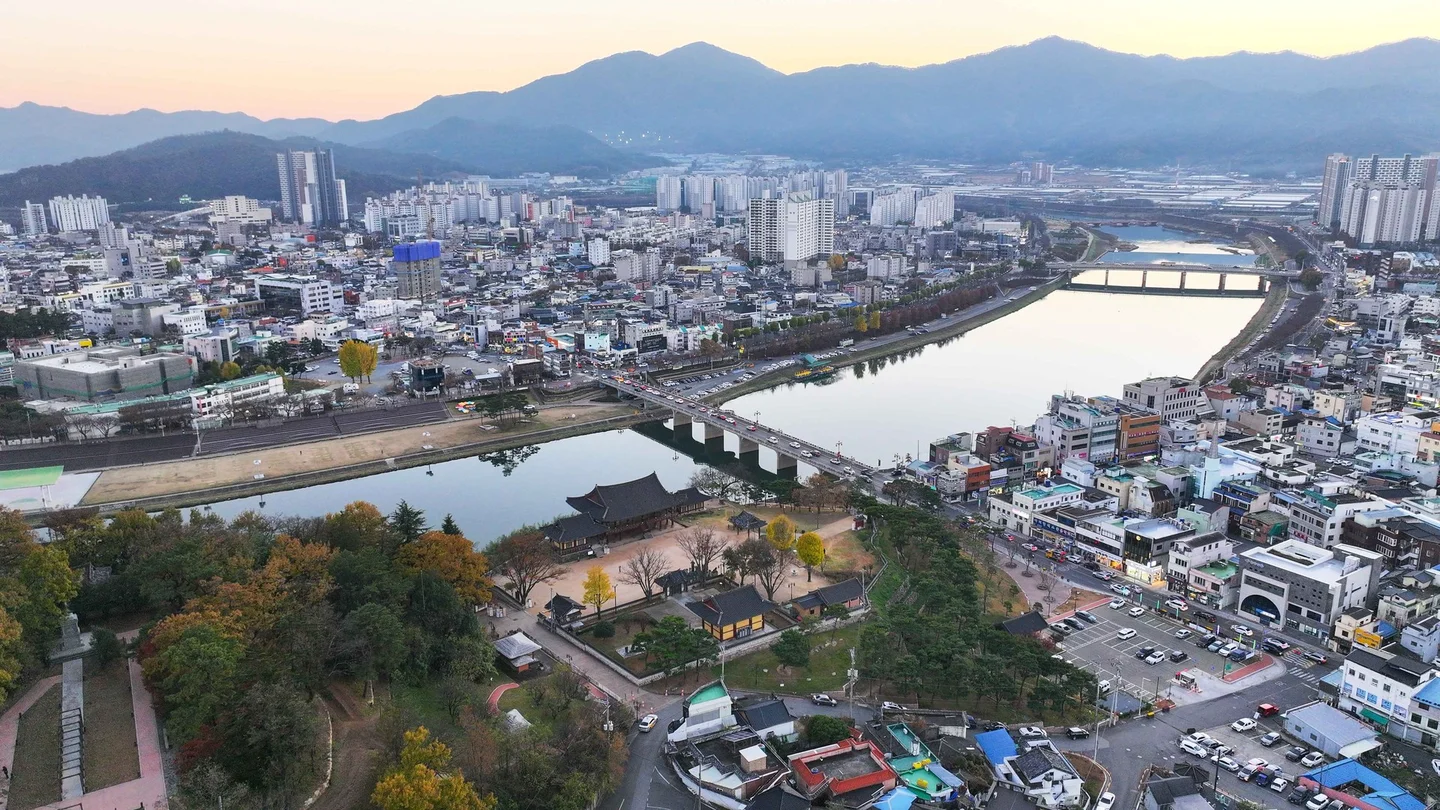
Travelers arriving by train should allow for a bus or taxi transfer from Miryang Station to the Yeongnamnu area. The station is a useful arrival point, but the historic center is a separate part of the journey. Choose your onward destination before setting out, especially if a booked return train limits the afternoon. With a car, you can visit Wiyangji first and return downtown for the pavilion and lunch, or reverse the order. Plan separate parking for the reservoir and the center, then leave the car in one place for the compact riverside-and-market circuit. Adding the fortress means more climbing, so keep that optional for anyone who prefers a mostly level walk. Without a car, settle the return from Wiyangji before making the outbound trip. For a bus journey, check the actual stop and both directions on your travel date; for a taxi, discuss the return pickup rather than assuming another vehicle will be waiting at the reservoir. Keeping the rural visit earlier in the day leaves more flexibility before your train home.
Yeongnamnu: the architecture makes room for the view
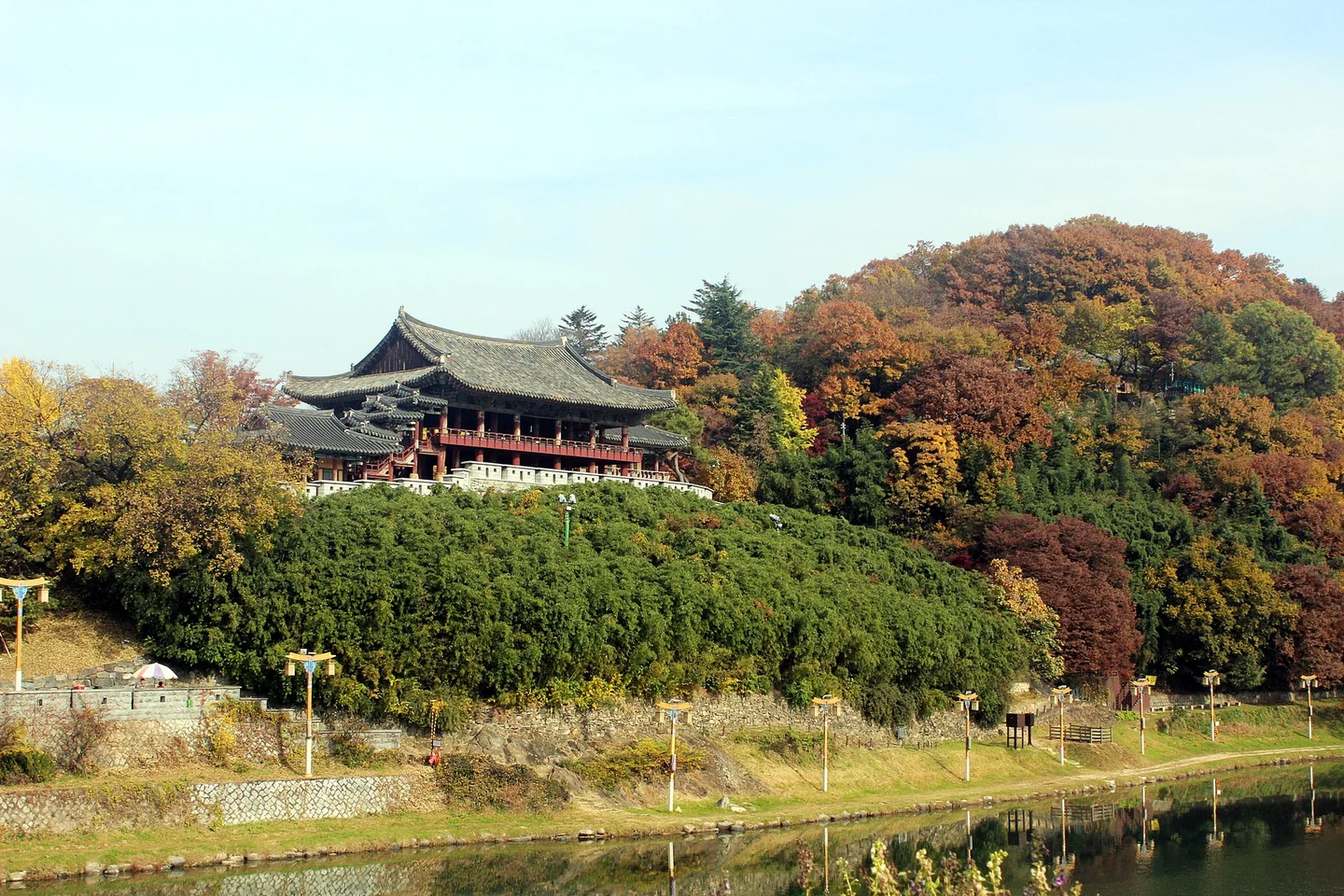
Yeongnamnu stands above the Miryang River, supported by substantial wooden columns. Its broad floor and open sides make the landscape part of the building. When the main platform is open, follow the entrance guidance and remove your shoes where indicated, then take time to look between the columns toward the water and the neighborhoods beyond. The pavilion’s history includes repeated rebuilding, with the present main structure dating to 1844. It once formed part of a government guesthouse complex, where officials received guests and enjoyed the surroundings. It is now a National Treasure. You can appreciate its scale without knowing the whole chronology: notice the deep roof, the painted brackets, and the smaller attached buildings stepping down toward the west. Wooden signboards add another layer to the interior. Their lettering and placement help convey the pavilion’s role as a place admired by writers and visitors over many generations. Nearby Cheonjingung and Mubongsa offer further historic stops, but the main hall and river views deserve time before extending the route. For a wider view of Yeongnamnu itself, cross toward Sammun-dong and look back across the river. The roof, trees, and hillside are easier to see together from that side. Exterior night views and admission to the raised hall are separate possibilities, so check the city’s visitor information if you want to enter late in the day. Riverside paths may also close during high water.
The fortress walk adds height
경상남도 밀양시 (공공누리 제1유형) · Original · KOGL Type 1 ·
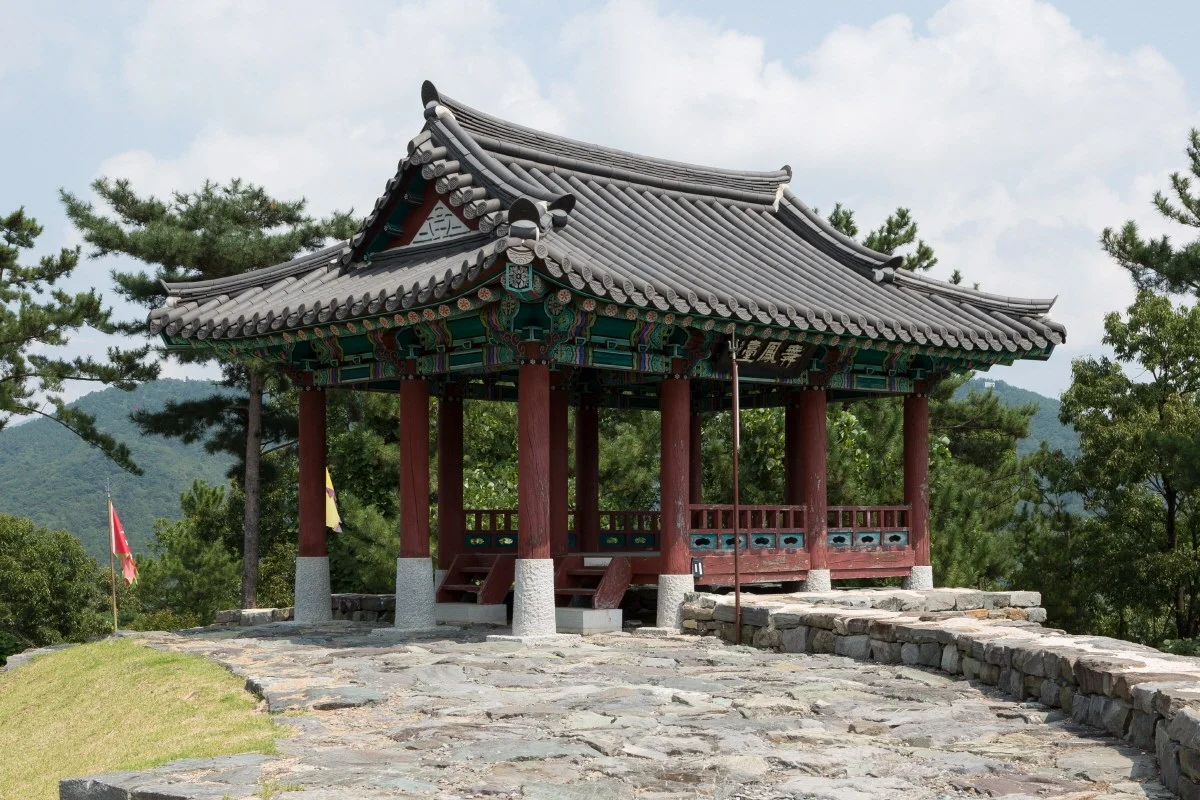
The Miryang Eupseong area behind Yeongnamnu takes the outing uphill. Stone paths, surviving or restored fortress features, and Mubongdae Pavilion give a different perspective from the riverbank. It suits travelers who want to stretch the walk beyond the main pavilion and have time for steps and uneven ground. The old town walls once enclosed a much larger area. They suffered extensive losses as the modern city developed, so the visit is best understood as a walk through remnants and later restoration rather than a circuit of an intact medieval fortress. The Academy of Korean Studies’ history explains how railway, bridge, and wartime works altered the defenses. Follow the signed trail and choose a clear turnaround point. If slopes are the concern, continue along the downtown streets toward the market instead; the hill route is an addition to the day rather than the only way to connect its main stops.
Lunch and everyday shopping at Miryang Arirang Market
Trainholic · Original · CC BY-SA 4.0 ·
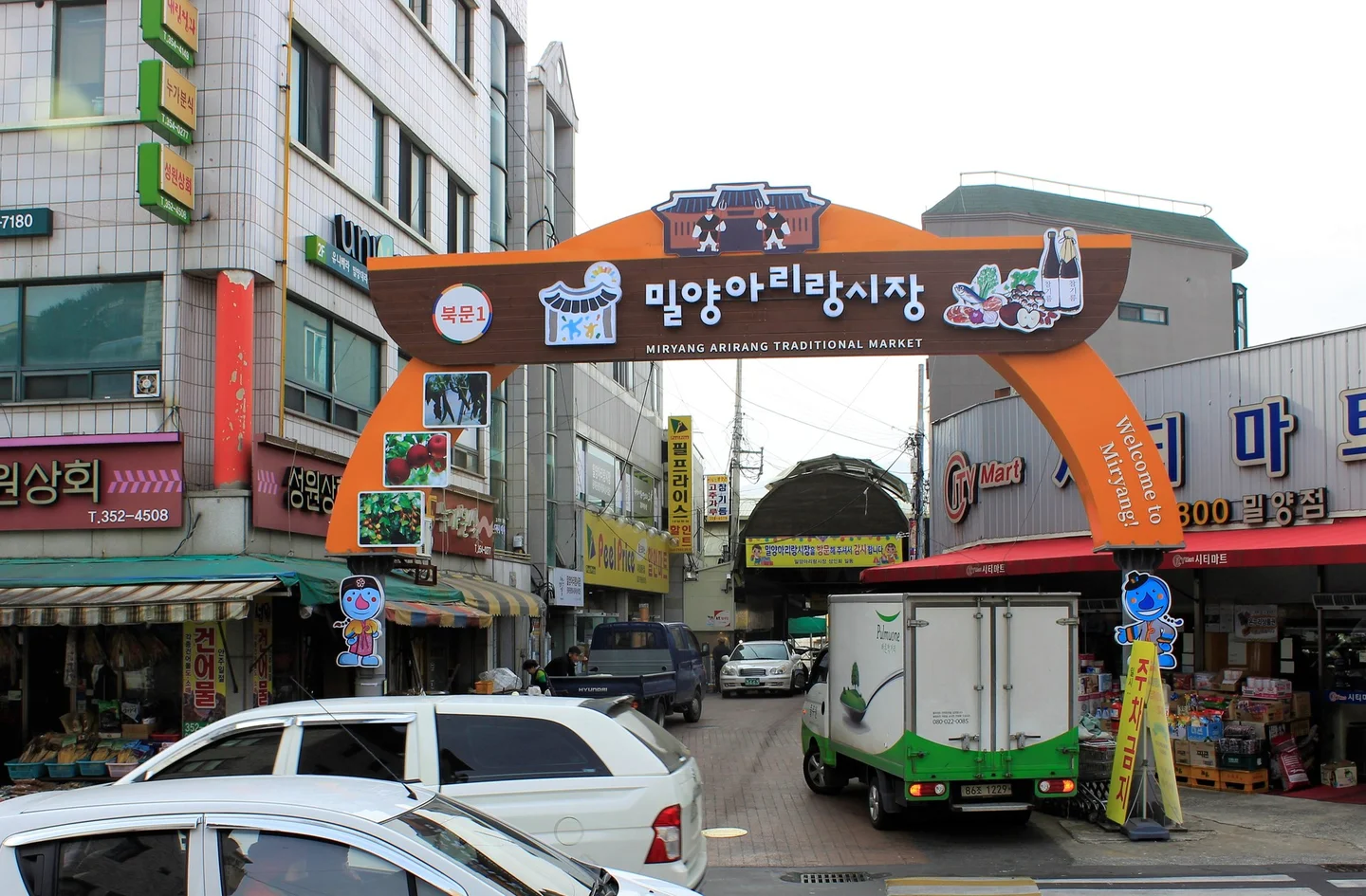
The market’s large entrance signs lead into covered lanes where groceries, household goods, and places to eat sit close together. It is a convenient lunch stop after the river walk, with the added pleasure of seeing the center in everyday use. Browse a little before choosing a meal, especially if you want a simple noodle dish or a rice-based lunch rather than a long restaurant stop. Miryang Arirang is a permanent market with an additional five-day market cycle. The city’s market directory, checked on October 12, 2026, lists market days on dates ending in 2 and 7: the 2nd, 7th, 12th, 17th, 22nd, and 27th. Those dates matter if you want the extra stalls and livelier trading atmosphere. Permanent shops can operate on other days, with individual business hours. Place lunch in the daytime portion of the itinerary rather than treating the market as a late-night food district. If you plan to buy fresh ingredients, do that after the reservoir visit so they do not spend the afternoon traveling with you. The market is also a useful point to pause and decide whether there is enough time for Wiyangji before your return connection.
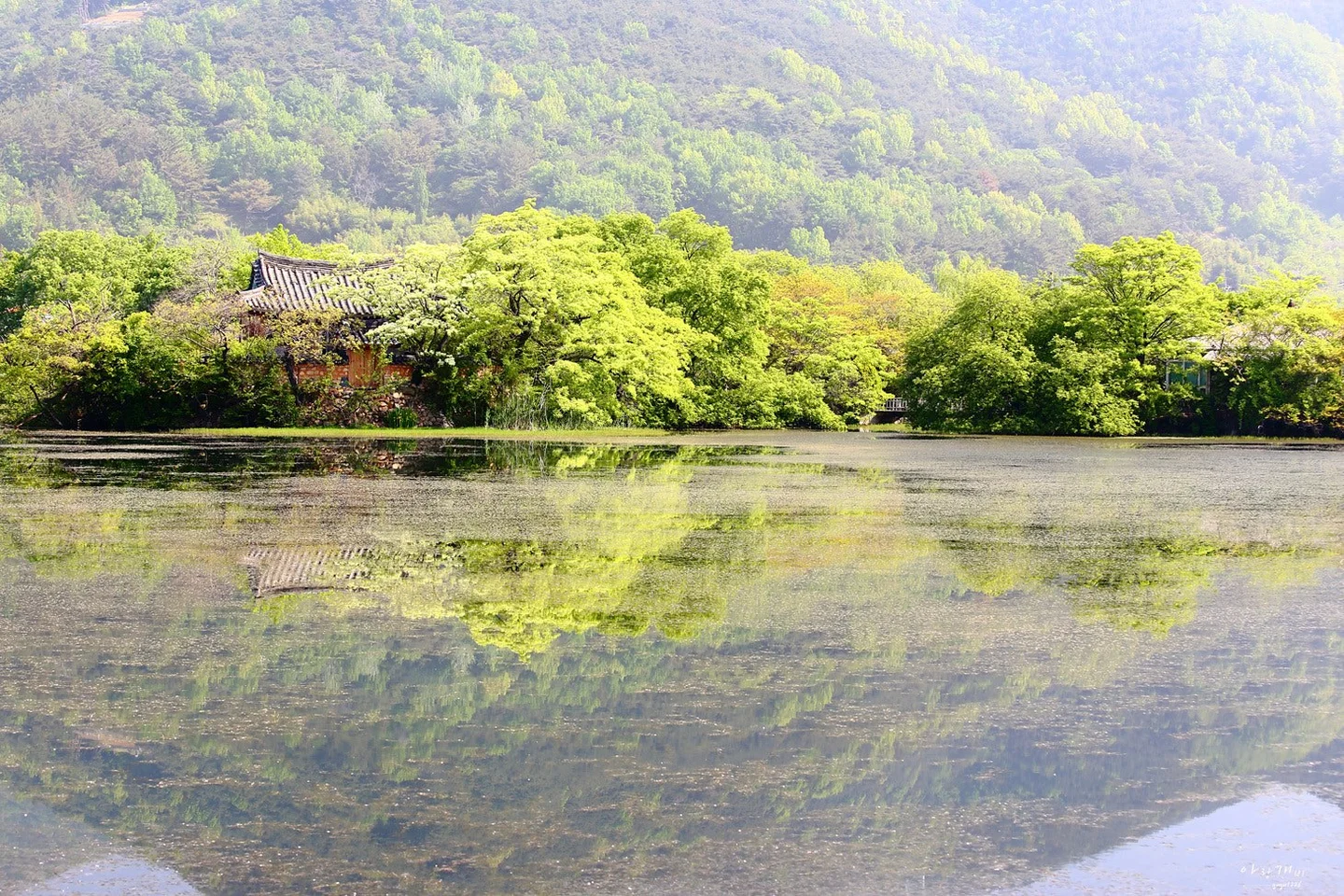
Wiyangji: an island pavilion and changing reflections
Seong Gyu Eok Men · Original · CC BY-SA 3.0 ·
Wiyangji, also called Wiyangmot, began as an irrigation reservoir. Its small islands and tree-lined shore now draw walkers and photographers, with Wanjaejeong Pavilion tucked among the greenery. Start across the water from the pavilion, where you can see how its tiled roof sits among the branches, then follow the shore to find different angles. Late spring is known for the white fringe-tree blossoms, called ipapnamu in Korean. Flowering varies with the weather, so travelers coming specifically for the bloom should check conditions close to departure. At other times, the appeal shifts to summer foliage, autumn color, or the shape of bare branches. Still water produces the strongest reflections, while a breeze changes the pond’s surface throughout the walk. Give the trees and paths as much attention as the pavilion. Twisting trunks and low branches create a sequence of small views as you move around the water. The bridge and pavilion entrance can become busy at popular times; use the open shore paths if interior access is closed or you prefer more room to linger. The reservoir is a walking stop rather than a place for climbing onto roots or waterside structures for a better angle. After rain, allow for soft ground along the paths. Finish with enough time to reach your pickup point or bus stop comfortably, especially when the next leg includes a train from Miryang Station.