King Suro’s Tomb: a walk through Gimhae’s Gaya history
This file is a Work of Kwj2772 · Original · CC BY-SA 3.0 ·
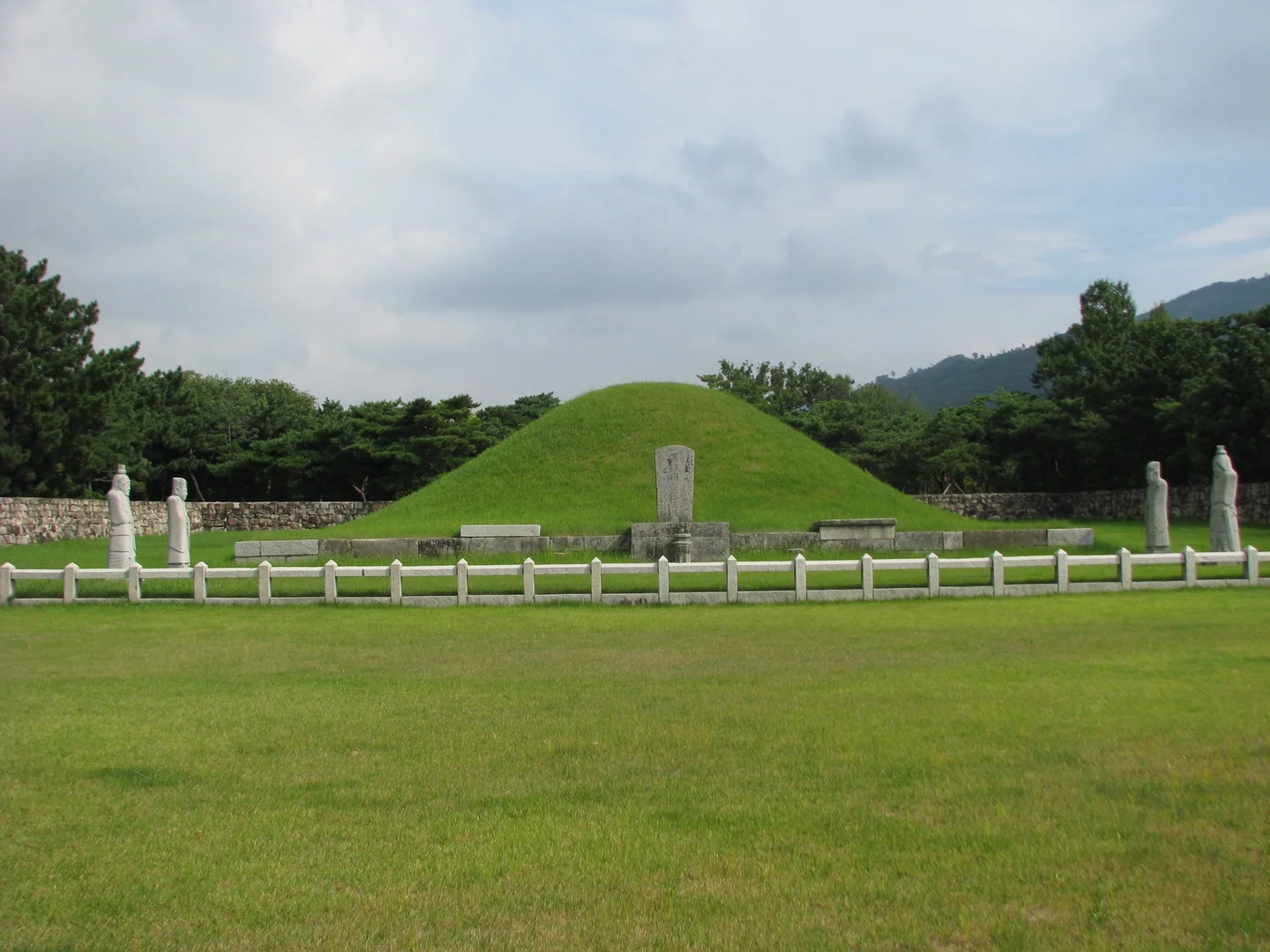
A grassy burial mound, brightly painted gates, and a pond garden sit among the streets of central Gimhae. The Royal Tomb of King Suro is an approachable starting point for exploring Gaya, the ancient societies that flourished in this part of southern Korea. You can enjoy the grounds as a short historic walk, then continue to nearby museums to see the pottery, ironwork, and burial objects that give the wider story substance. The site is traditionally associated with Suro, the founding king of Geumgwan Gaya. Visiting means walking through the memorial precinct and viewing the mound from outside; there is no burial chamber to enter. Allow around an hour for the grounds, or set aside half a day for the tomb, a museum, and a meal in town. These are flexible planning estimates, with more time useful if you enjoy reading exhibits. For travelers based in Busan, the Busan–Gimhae Light Rail makes this a practical car-free outing. Arrive at Royal Tomb of King Suro Station, walk to the tomb, and continue toward the museums. Ending near Gimhae National Museum lets you return from Museum Station instead of retracing the whole route.
A founder’s story and a place of remembrance
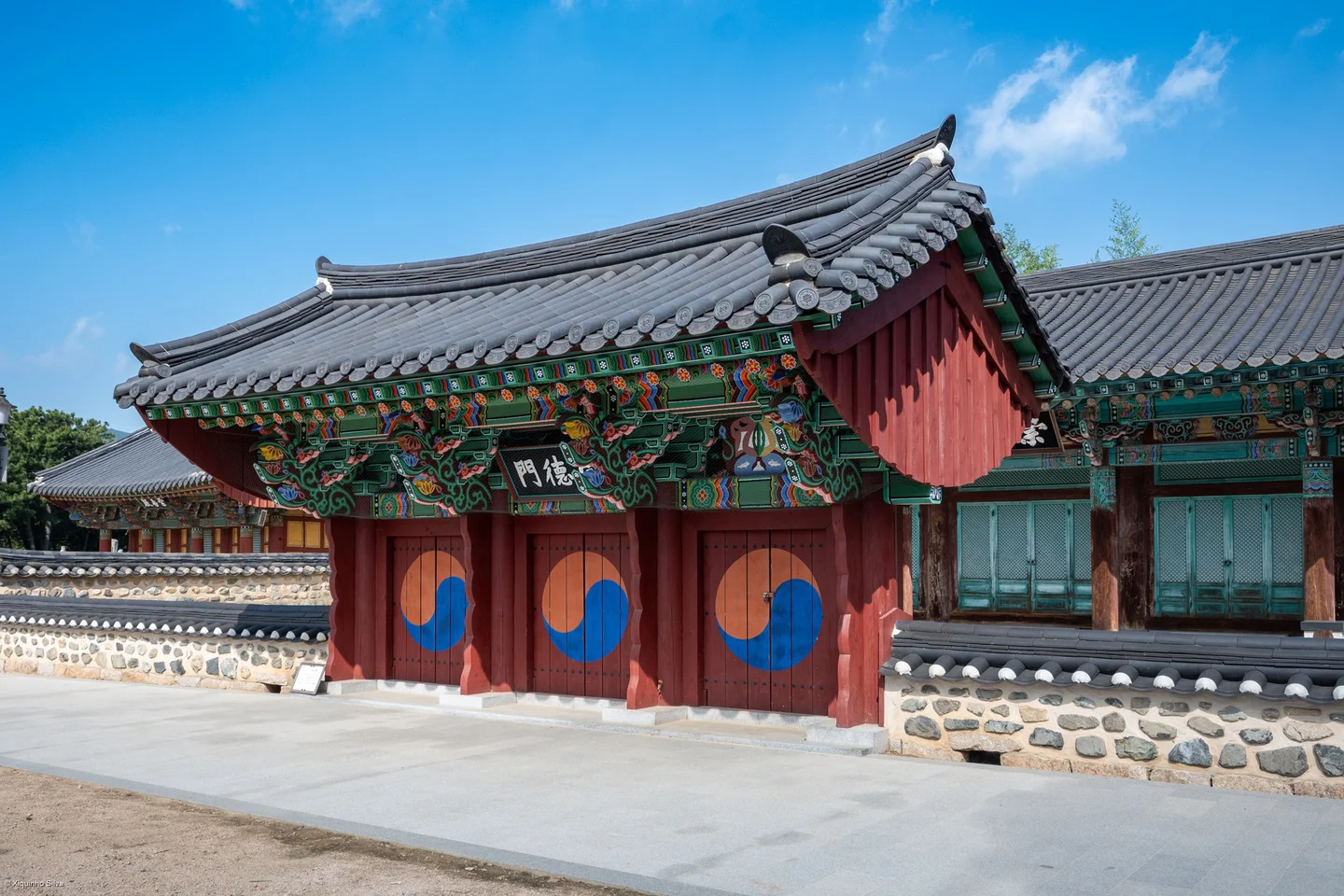
Suro’s origin story begins with golden eggs descending from heaven. He emerges first and becomes king; the other children become rulers of neighboring Gaya states. Read this as a foundation myth expressing the king’s sacred authority. The Academy of Korean Studies’ account distinguishes the legend from historical evidence, an important distinction when you later encounter excavated objects in the museums. Within the tomb grounds, gateways, courtyards, and ritual buildings frame the approach to the mound. Sungseonjeon Shrine honors Suro and Queen Heo, and ceremonies remain part of the site’s purpose. Some doors lead into ceremonial spaces rather than a through-route for visitors. Follow the open paths and use the site plan to distinguish the shrine from the burial area. The architecture reflects centuries of maintenance and commemoration. The tiled roofs and stone monuments should not all be understood as surviving unchanged from Gaya’s early years. That long afterlife is part of what makes the precinct interesting: an ancient founding figure has remained important to later generations and to present-day Gimhae. Pause where the mound, low stone balustrade, and surrounding trees come into view together. The rounded earthwork has a striking simplicity beside the richly colored timber gates. Where thresholds or steps are difficult, concentrate on the accessible courtyards and views from the open paths rather than trying to enter every enclosure.
The pond garden changes the pace
Republic of Korea · Original · CC BY-SA 2.0 ·
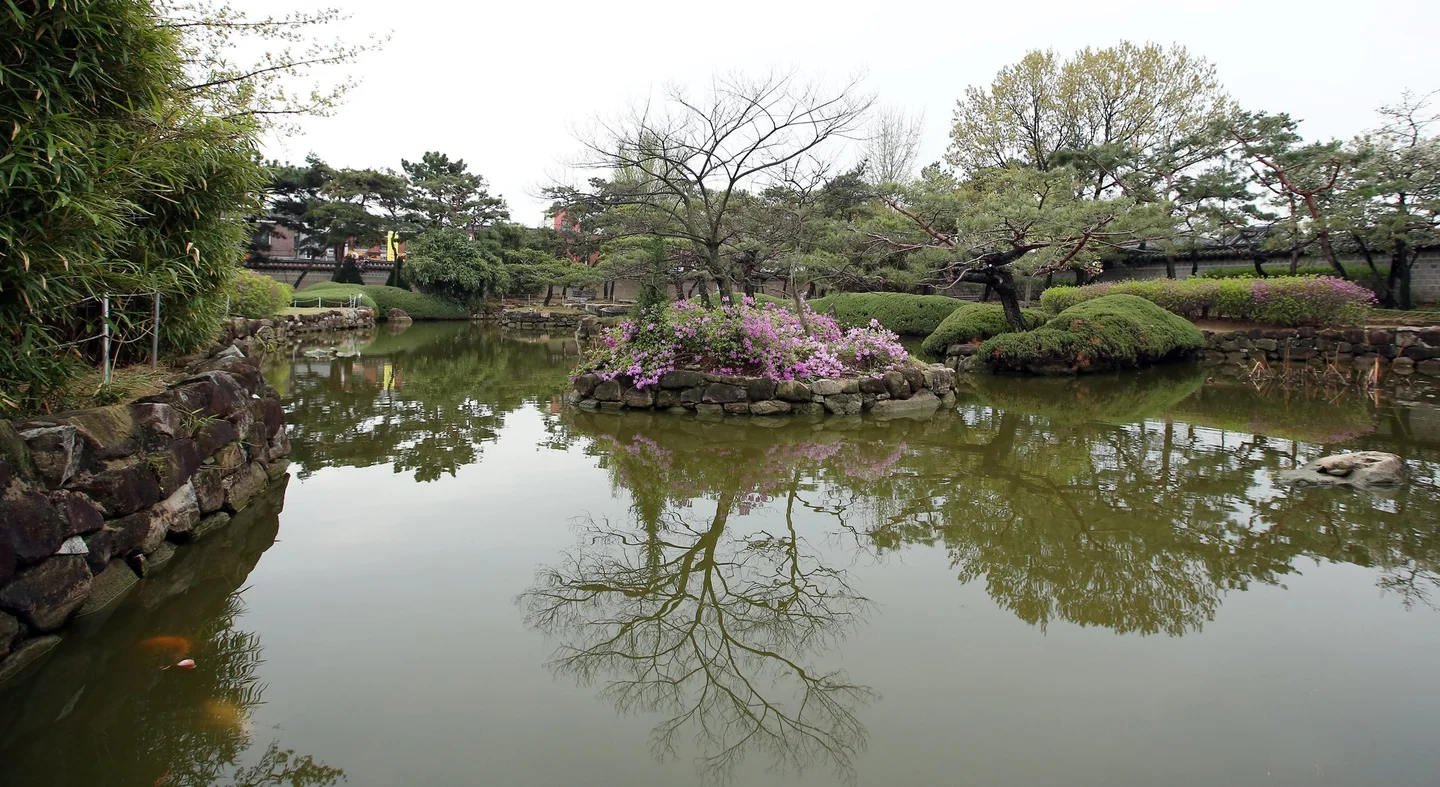
Before leaving, take the path around the garden pond. Small islands, rocks, and overhanging branches break up the formal lines of the tomb precinct. Reflections give the trees as much presence in the water as above it, while flowers and foliage change with the season. This is a good place to slow down after reading the historical signs. The tomb has seasonal visiting hours, so treat it as a gated heritage site when planning a late arrival. The Gimhae tourism page is the relevant place to check the closing time for your month. Museum hours create a separate deadline: on a short afternoon visit, see your chosen indoor collection first and fit the grounds around it. Food and cafés are available in the surrounding downtown streets. A break outside the precinct also helps divide a longer itinerary into two manageable parts: the tomb and garden, followed by the archaeological sites.
Daeseong-dong: what the excavations reveal
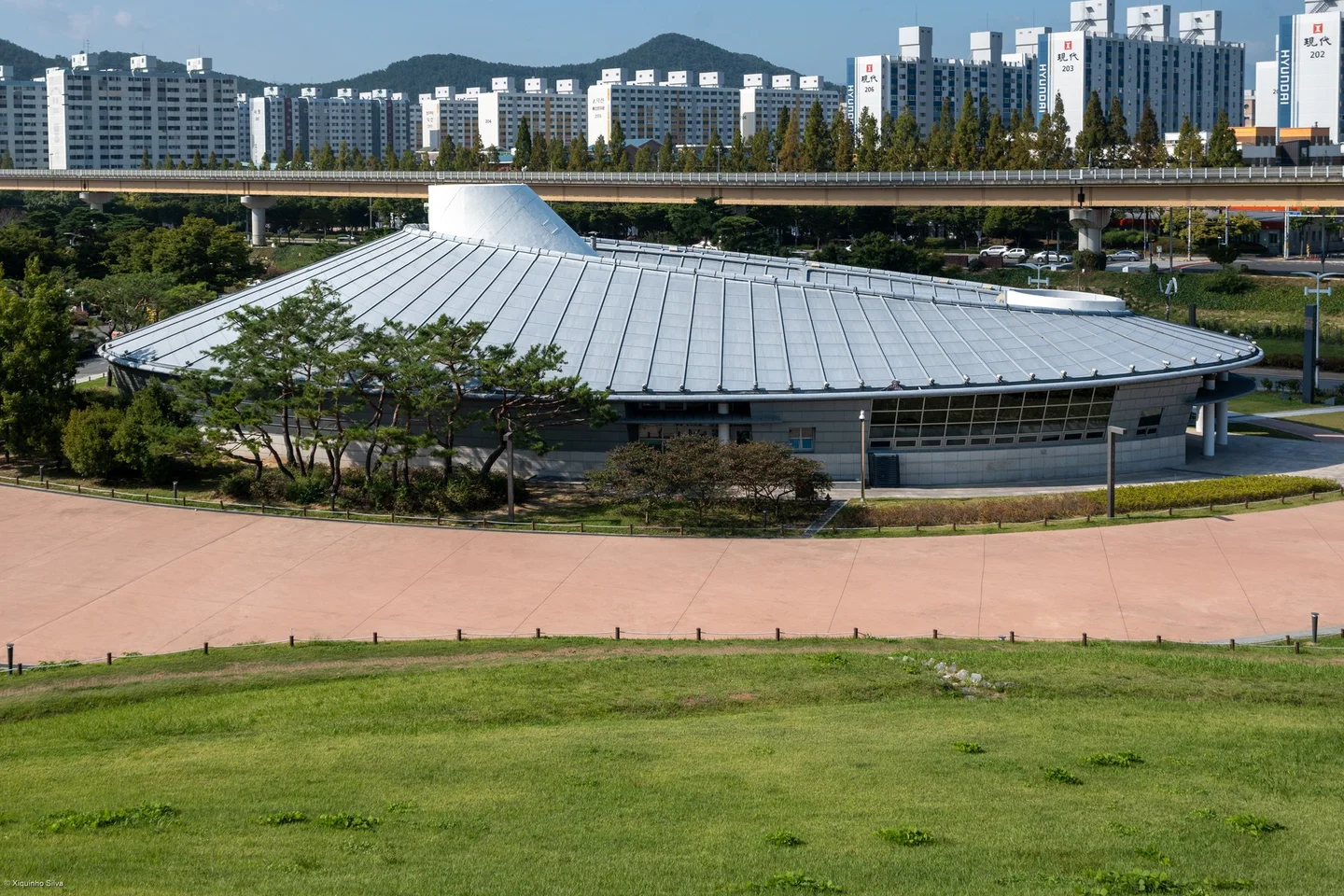
Continue through the Sureungwon area toward Daeseong-dong Ancient Tombs Museum. Its low, broad roof sits beside the grassy burial-ground hill. Inside, reconstructed tomb forms and excavated grave goods explain how Geumgwan Gaya’s ruling community buried its dead and what those finds reveal about daily life and status. This is a separate archaeological site from King Suro’s Tomb. Its objects offer evidence about the wider society, rather than a collection of possessions identified as Suro’s. Seeing both places makes their different roles clear: one centers on a remembered founder, while the other uses excavations to investigate the people who lived here. Choose the indoor displays alone or add the outdoor hill paths according to your time and comfort with slopes. If you plan to visit both museums, spend your time here on tomb construction and burial customs; you can explore other aspects of Gaya at the national museum.
Gimhae National Museum: pottery, iron, and connections overseas
hyolee2 · Original · CC BY-SA 3.0 ·
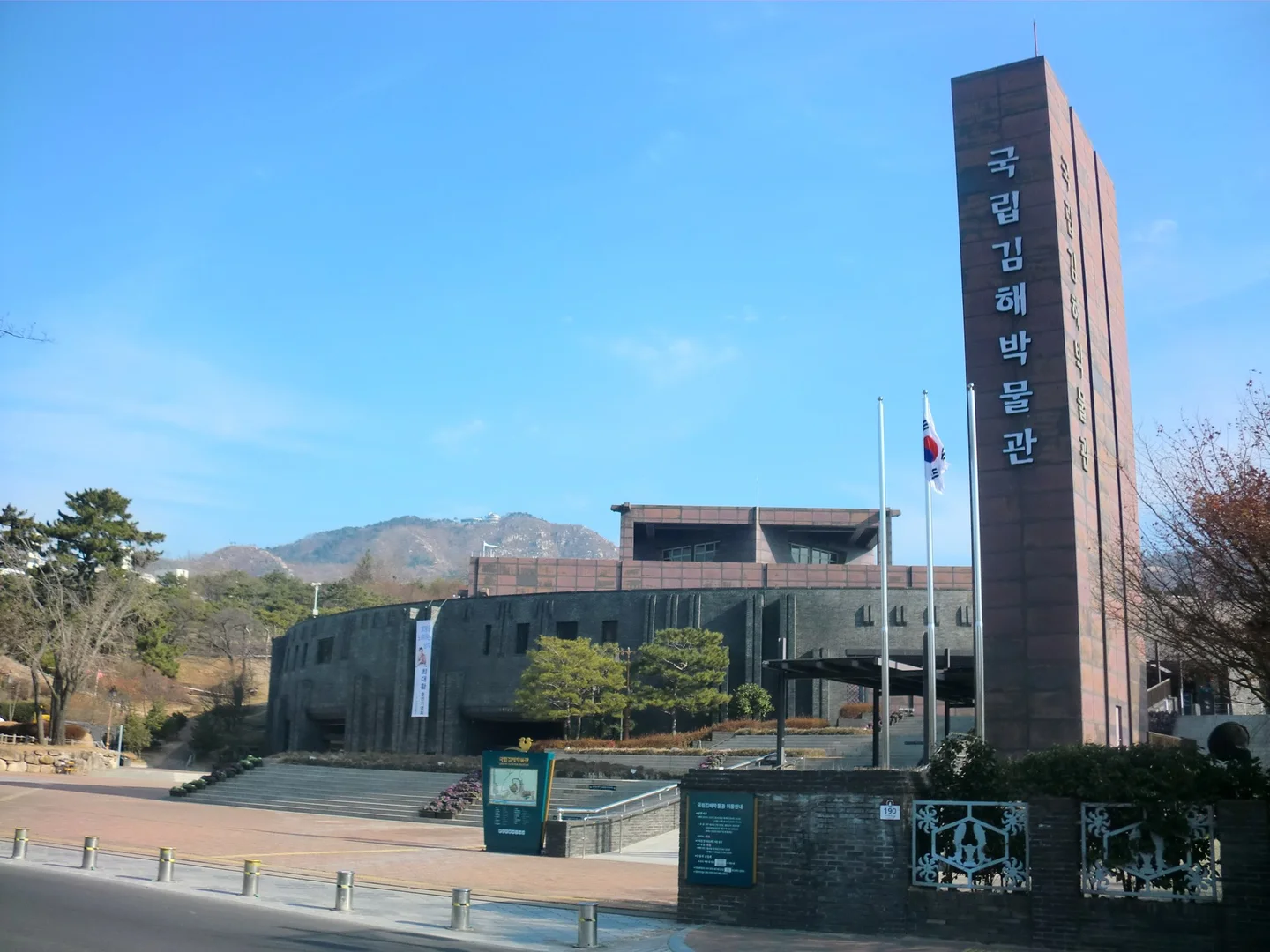
Gimhae National Museum broadens the picture beyond royal commemoration and burial. Its permanent galleries cover Gaya pottery, iron production, everyday life, and maritime connections. Comparing a vessel’s shape with its likely use, or examining the difference between a tool and a weapon, offers an easy way into the collection without memorizing a sequence of rulers. As checked on October 12, 2026, both this museum’s permanent galleries and Daeseong-dong Ancient Tombs Museum open from 9 a.m. to 6 p.m., with entry ending at 5:30 p.m. Both close on Mondays and designated holidays; when Monday is a public holiday, the closure moves to the first following weekday. Their regular exhibitions are free, though special exhibitions at the national museum may charge separately. These details can change, so use the national museum visitor guide and Daeseong-dong visitor guide when choosing your day. The children’s museum has a separate admission process. As checked on October 25, 2026, the museum’s official notice says online booking is temporarily unavailable during system work. For reservations and available sessions, call +82-55-320-6827 before visiting; this booking outage does not itself mean the permanent galleries are closed. It needs its own place in a family itinerary. Queen Heo’s Tomb is also a separate destination, north of King Suro’s precinct, rather than a second mound to look for inside the same grounds. If you are ready to finish after the galleries, follow the museum’s directions to Museum Station for the light-rail journey back.