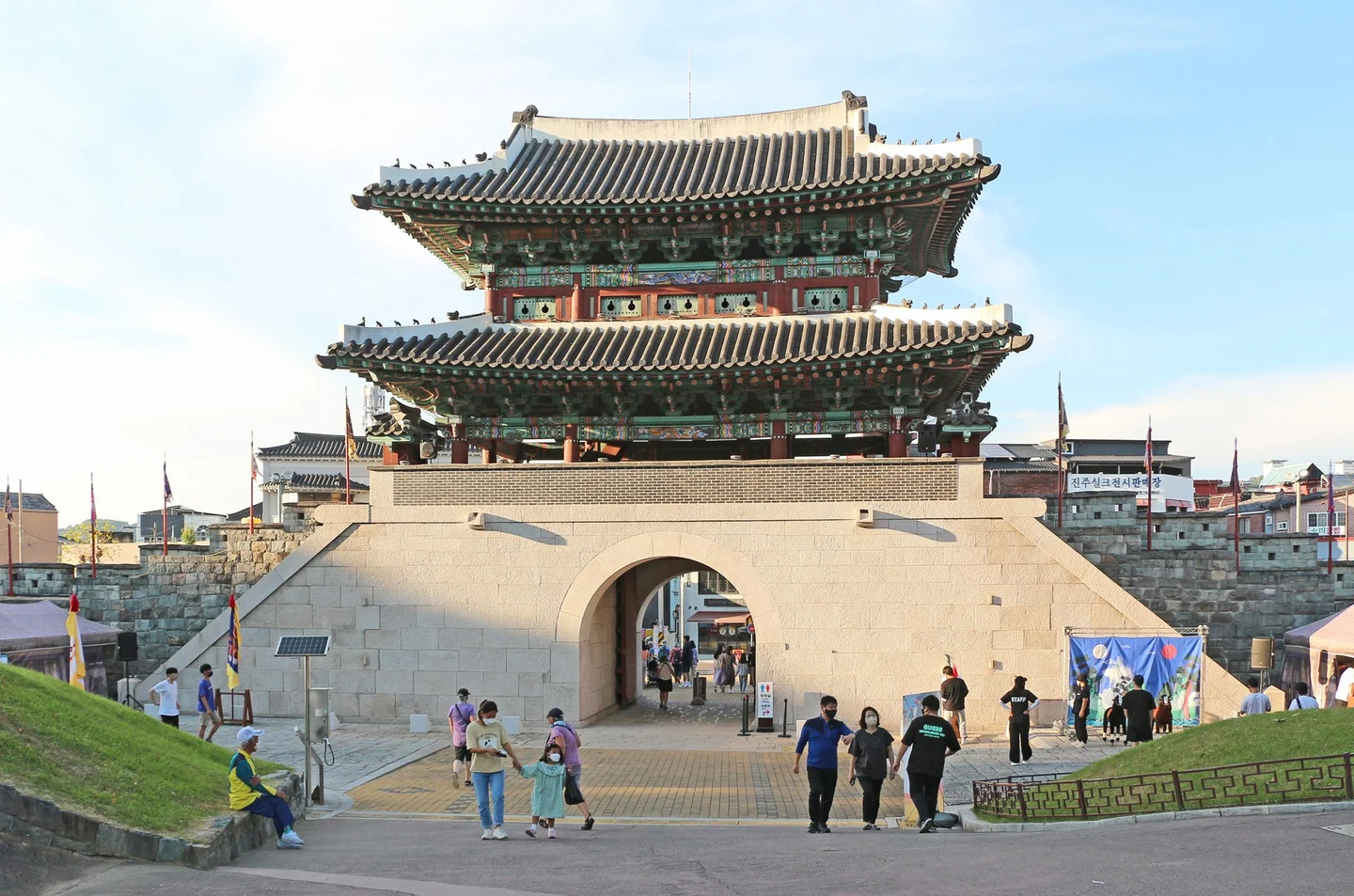
Jinju Fortress gives you an unusually easy way into Korea’s history: walk through a grand gate, follow the grounds toward the river, and let the landscape explain why this place mattered. Stone defenses rise above the Namgang, with an open-sided pavilion overlooking the water. Inside are shrines, a Buddhist temple, shaded paths, and a national museum devoted to the Japanese invasions of the late 16th century. It’s a substantial historic site in the middle of a working city, with enough variety for travelers who don’t normally organize a day around military history.
For a first visit, allow roughly two hours for the grounds and river views, or a half day with the museum and lunch outside the walls. Those are planning estimates rather than a prescribed tour. Gongbukmun, the northern main gate, makes an easy starting point; Chokseongmun is closer to the riverside pavilion. Decide whether the museum is a priority before setting out, since its opening hours will shape an afternoon visit.
The dates to remember are 1592 and 1593. In the first year, Kim Si-min led the defense that repelled an invading Japanese army. A much larger attack the following year ended with the fortress falling and heavy loss of life. The distinction explains why Jinju celebrates a famous victory while also maintaining so many places of mourning. Both stories belong to this small stretch of river.
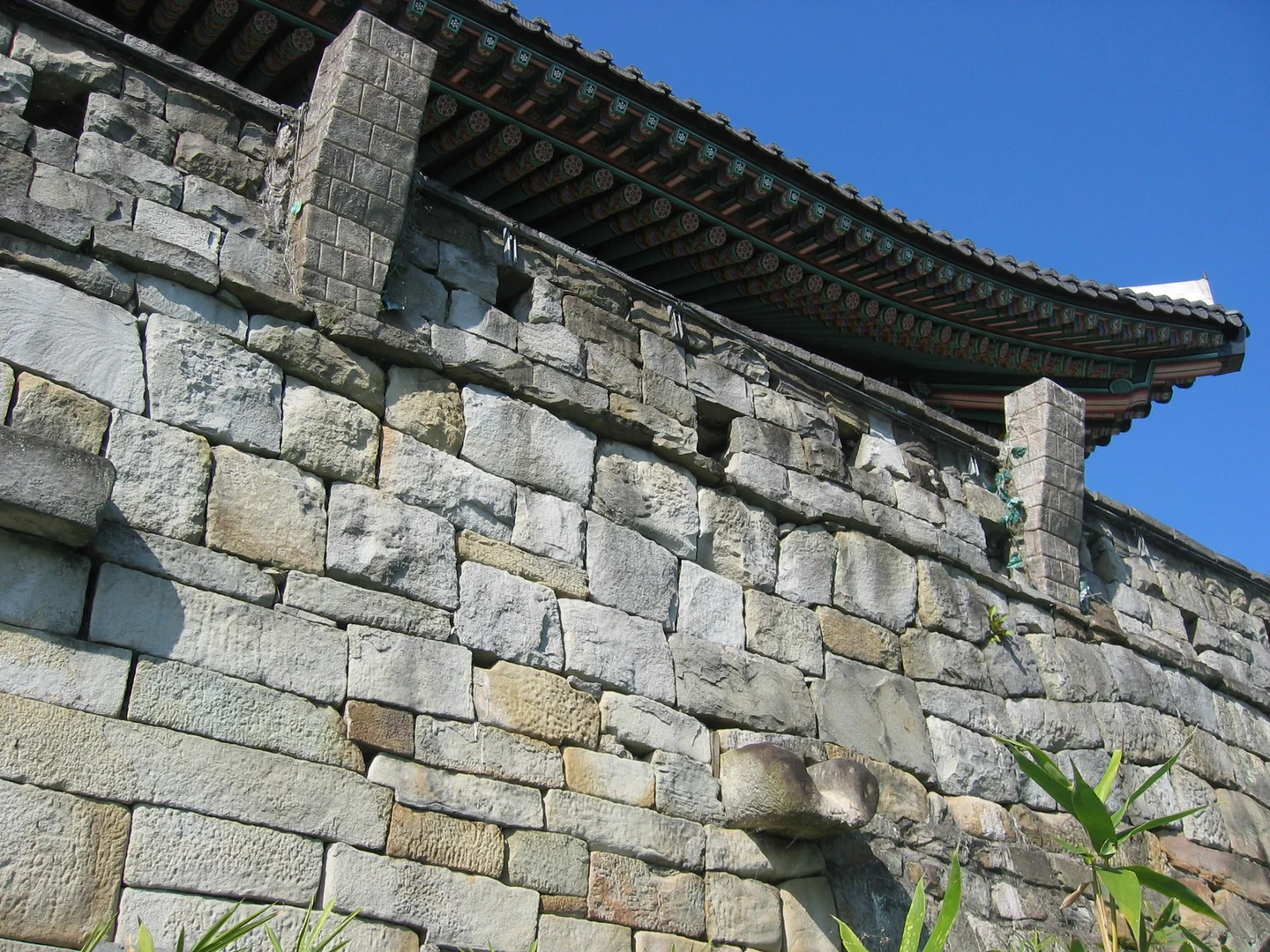
The present fortress combines old foundations with later repairs and reconstruction. Gongbukmun was rebuilt in 2002, while major restoration of the walls took place in the 1970s. Don’t expect every gateway and stone course to have survived intact from the battles. The Korea Heritage Service’s site description traces those changes and identifies the principal buildings within the walls.
From the gate, pick out the high ground and the river-facing edge. You can grasp the defensive logic without following every historical name: steep terrain reduced the approaches an enemy could use, while elevated command posts offered a broader view. The grounds are spacious enough to wander, but this is also a good place to choose a few meaningful stops rather than chase every marker on the map.
Chokseongnu: The River Is Part of the Architecture
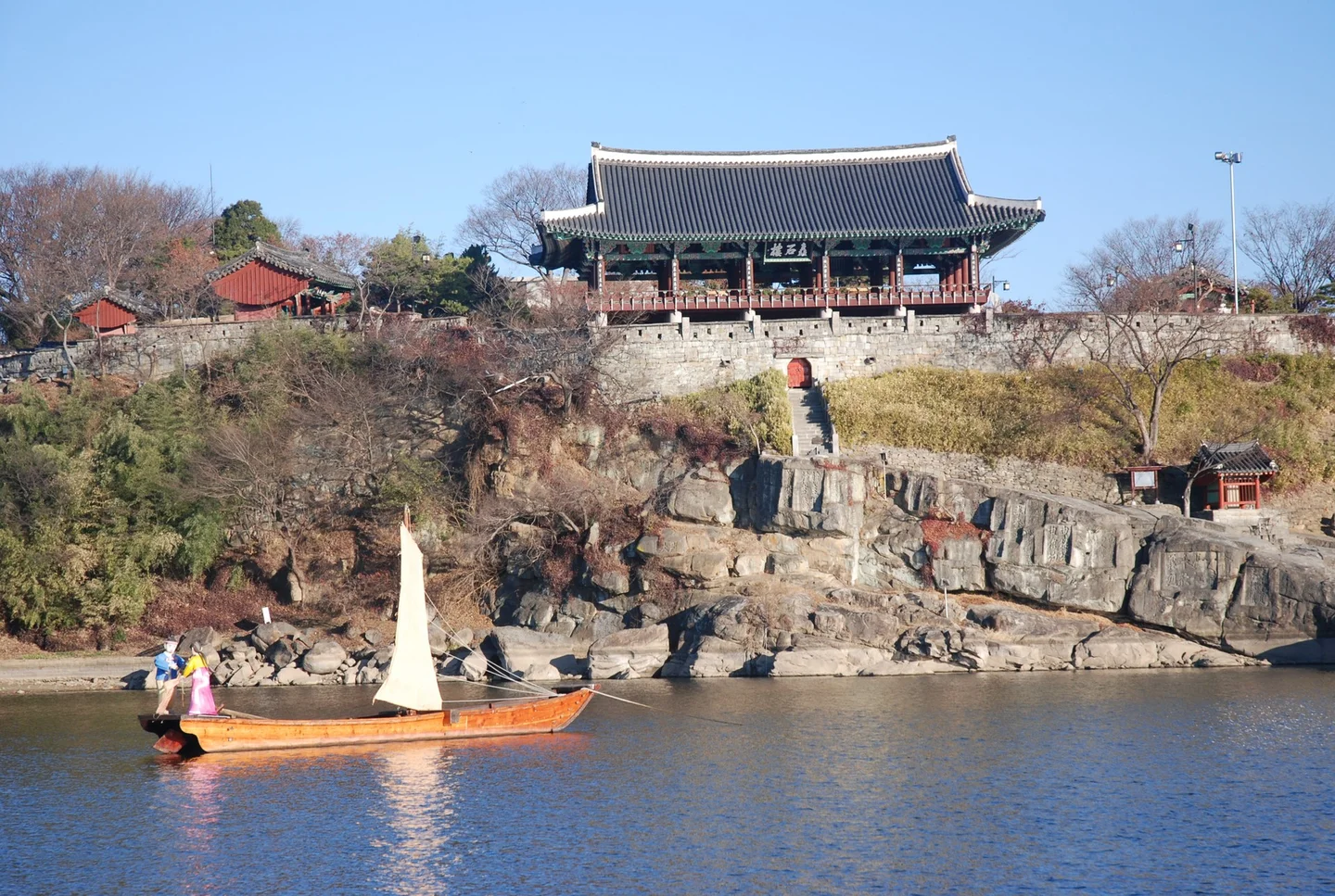
Chokseongnu Pavilion above the Namgang River cliff
Chokseongnu is the building most worth lingering over. Its wide roof shelters an open platform, allowing the river to remain visible between the columns. Historically, it served as a military command post and a venue for civil-service examinations. The current structure dates from 1960, following destruction in the Korean War. Its restoration is part of Jinju’s modern history as well as its older identity.
Look up at the painted brackets and suspended wooden signboards, then turn toward the water. The appeal is the combination of shelter and openness: an elaborate timber structure with a view extending well beyond its roof. Where the raised floor is open to visitors, follow the shoe-removal signs before stepping up.
Nearby Uigisa Shrine commemorates Nongae. In the story associated with the fortress’s fall, she took a Japanese commander into the river with her, and both died. Uiam, the rock below, and the shrine above connect the riverbank to her later commemoration. The route down is steeper than the main paths, so seeing the shrine and river from above is a reasonable choice if steps are difficult.
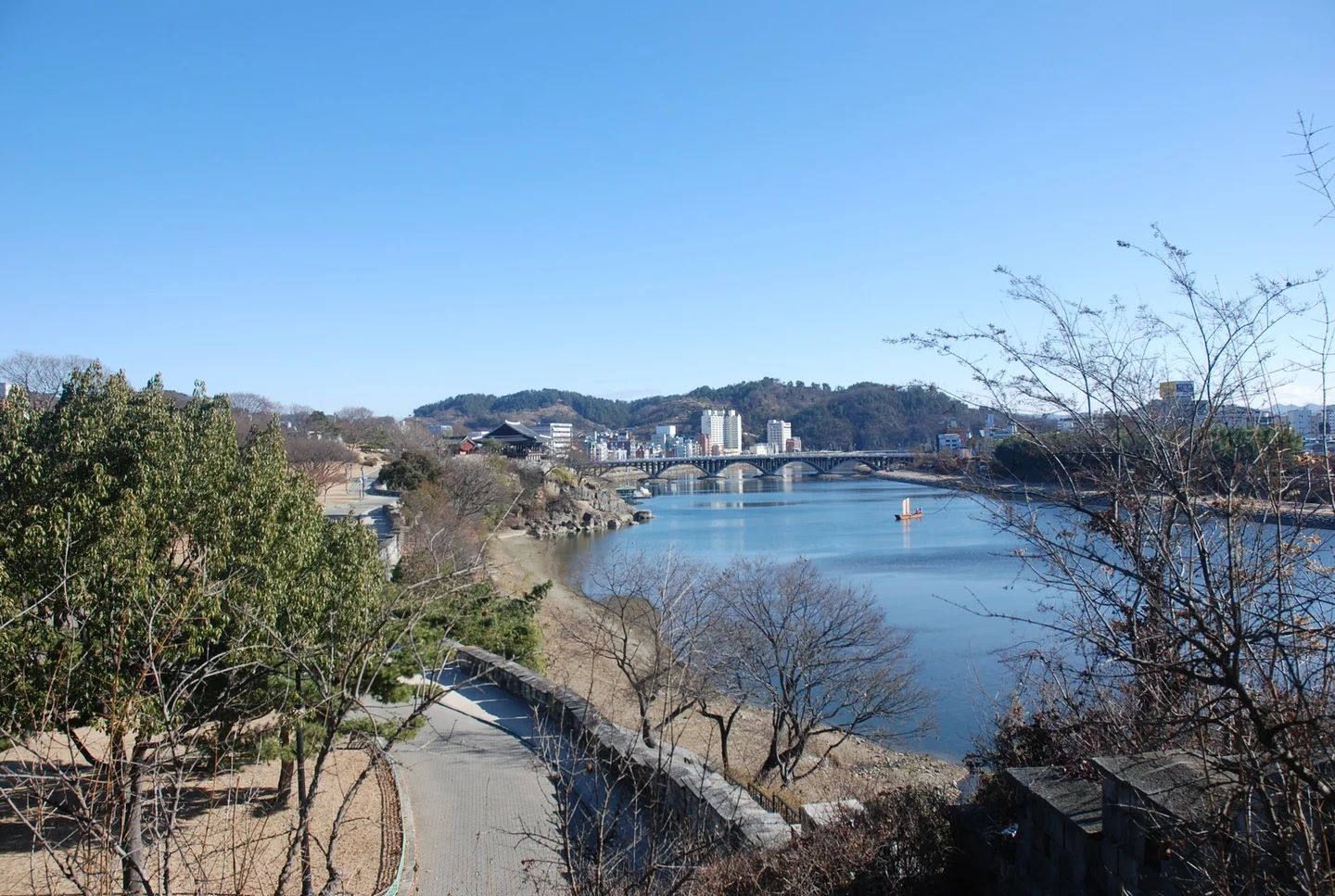
Continue along the river-facing paths for views of the cliffs, bridges, and city. For a wider perspective, finish the interior visit and cross to the opposite bank: the pavilion, rock face, and walls are easier to appreciate as a whole from there. Allow for the walk out through a gate and around to a bridge, rather than treating the riverside as an immediate exit from every viewpoint.
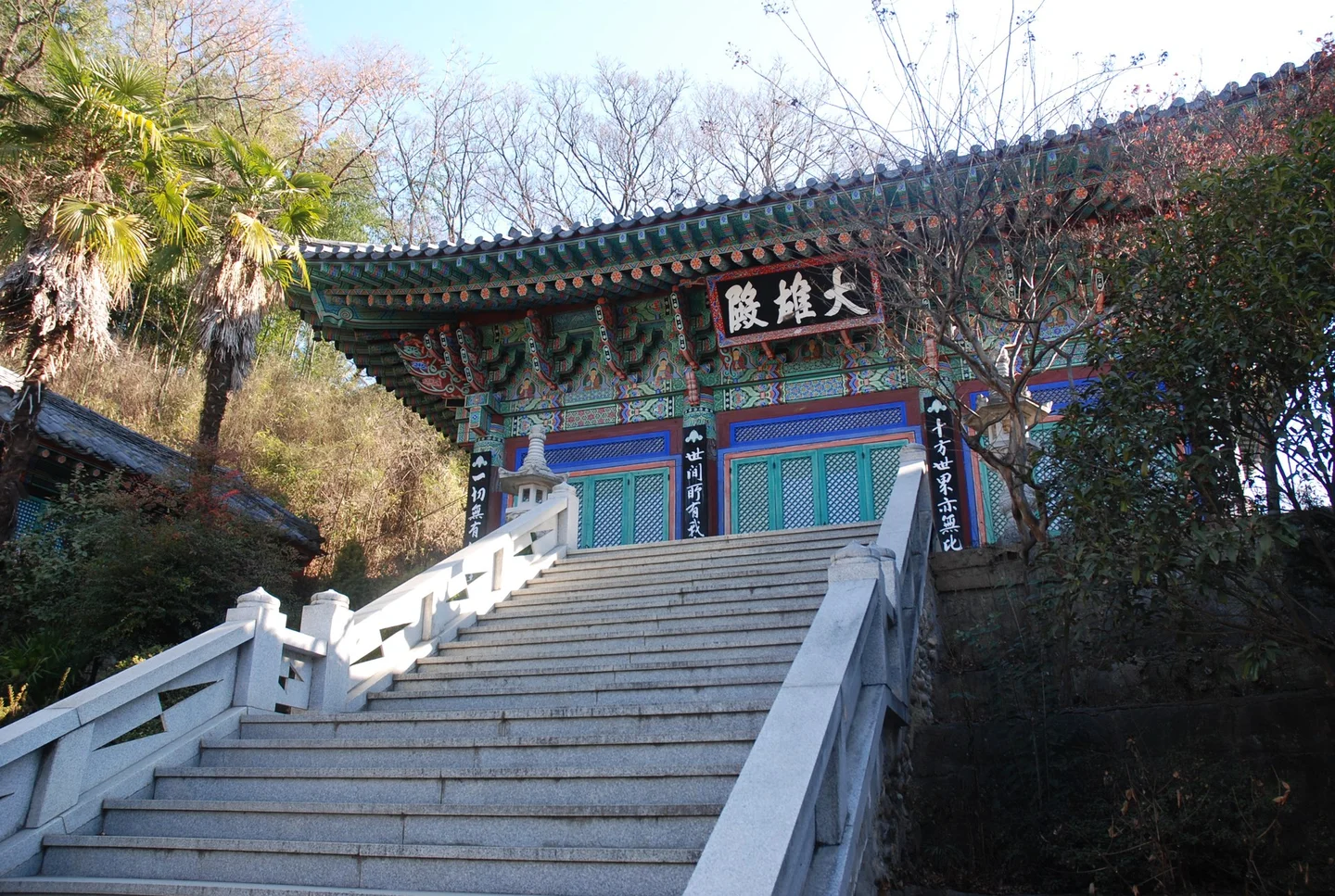
Hoguksa adds a different scale to the visit. Its painted main hall sits above a broad stone staircase, with smaller buildings gathered beside a tree-lined lane. The temple’s connection to the fortress is historical: Buddhist monk-soldiers trained and fought here, and the site was rebuilt after wartime destruction. That background makes its presence within a military enclosure less surprising.
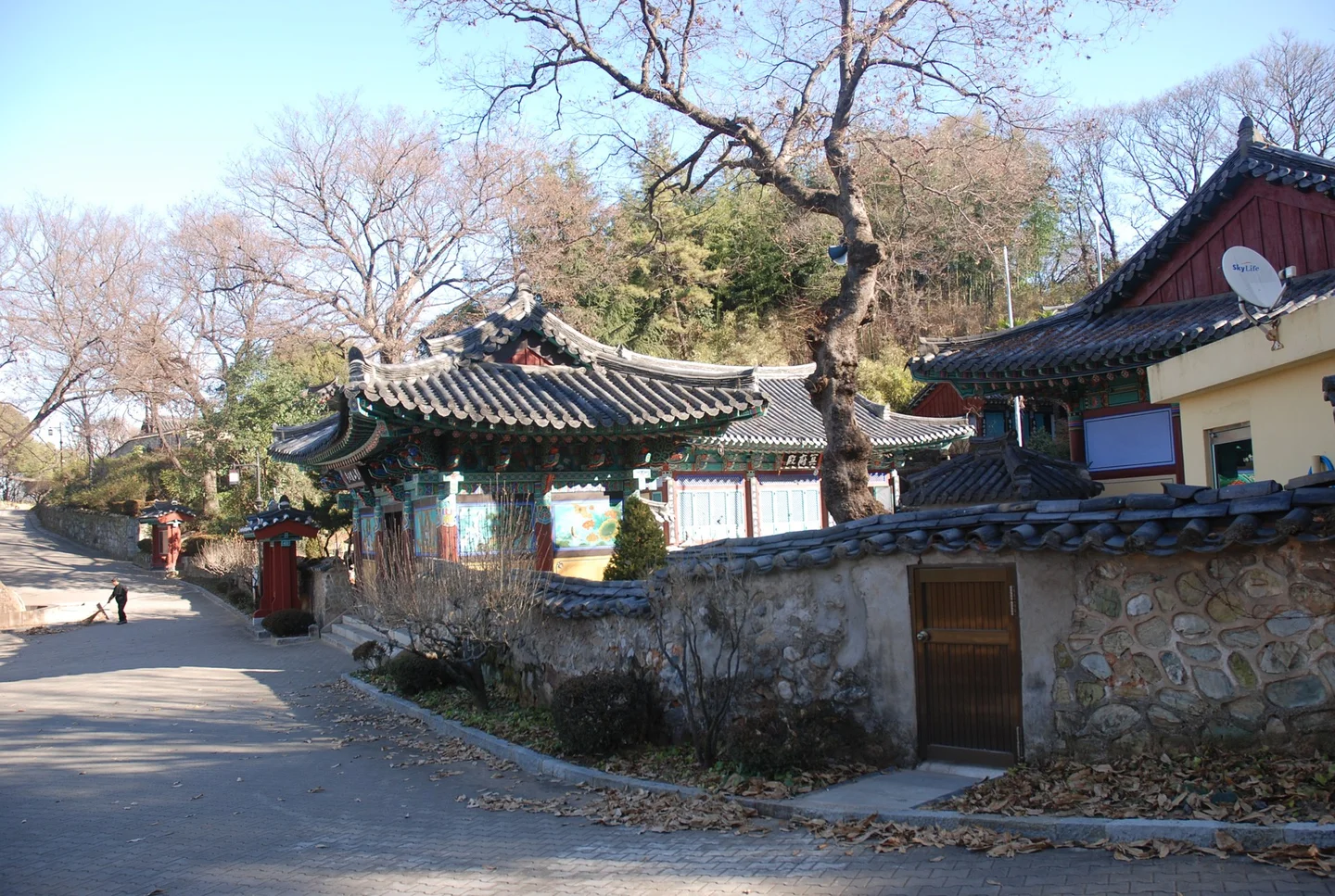
The lane beside the tiled wall is useful if you prefer to stay on the lower paths. It offers a close look at the temple’s arrangement without requiring the climb to the main hall. This remains a place of worship, so an exterior visit works well when a service is underway.
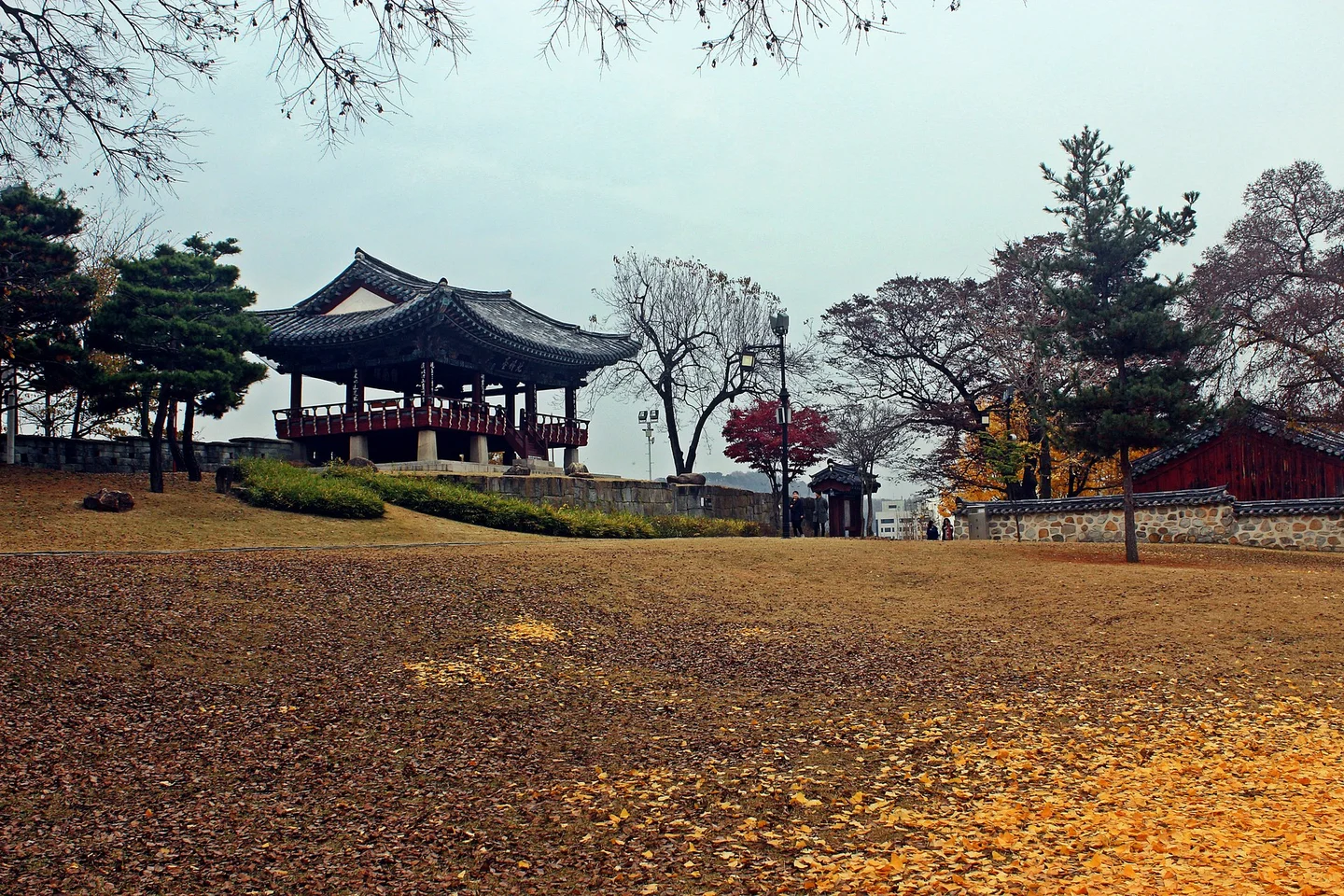
Bukjangdae, the northern command pavilion, is another worthwhile stop if you have time for the wider grounds. A jangdae was a place from which troops could be directed; its position matters as much as the building itself. Trees and open lawns now soften that military setting. You can make a longer circuit linking the pavilion, temple, and museum, or keep your visit concentrated around the eastern gates and Chokseongnu.
Give the Museum Its Own Hour
Jinju National Museum helps connect the individual memorials to a much larger conflict involving Joseon Korea, Japan, and Ming China. The Imjin War gallery includes documents, weapons, and accounts of the fighting. One particularly relevant object in its collection is the royal certificate honoring Kim Si-min, bringing a name encountered around the fortress into focus. Other galleries introduce the history and art of the surrounding Gyeongnam region.
As checked October 12, 2026, the museum’s visitor guide lists 9 a.m.–6 p.m., with final admission at 5:30 p.m. It normally closes Mondays, January 1, and the days of Seollal and Chuseok; a Monday public holiday shifts the closure to the next weekday. Museum admission is free, but most visitors from outside Jinju still pay the fortress entrance fee. The museum’s hours are separate from those of the grounds, so visit indoors first if you arrive late.
When Lanterns Take Over the Namgang
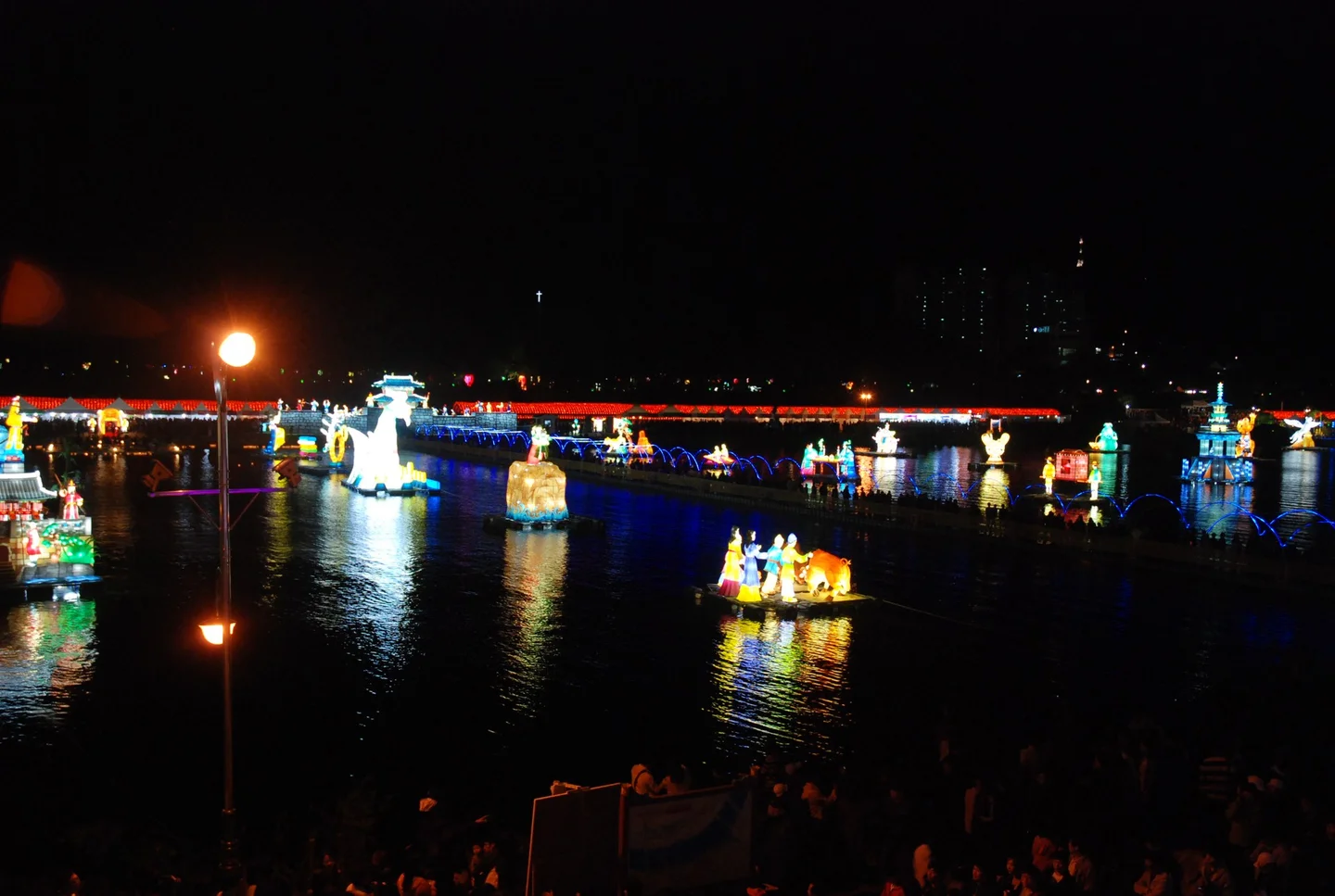
Lanterns on the Namgang River during the Lantern Festival
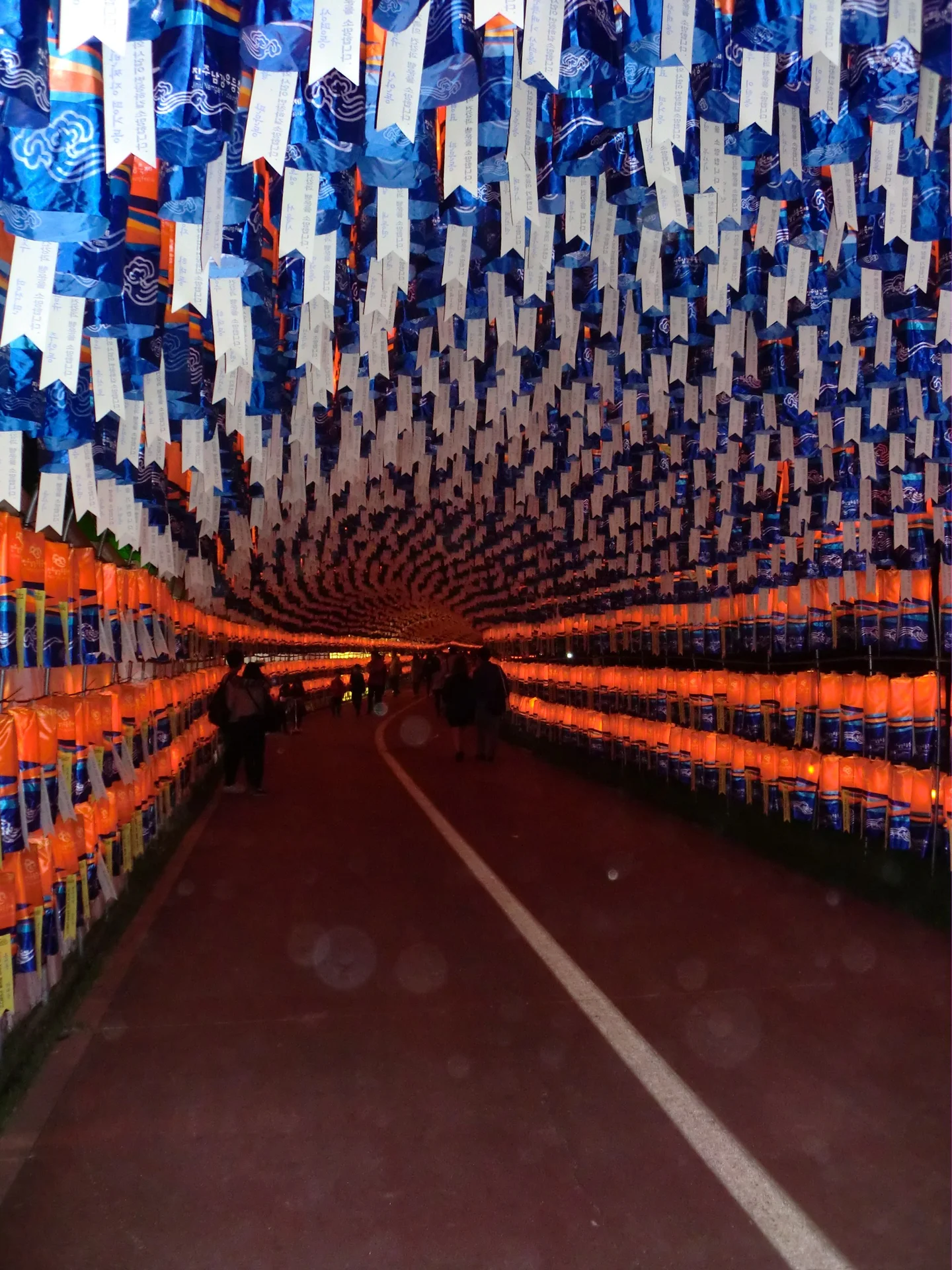
The Jinju Namgang Yudeung Festival transforms the river and fortress each autumn. Large illuminated figures stand on the water, reflections spread across the current, and temporary displays turn a familiar daytime walk into a night outing. Plan around the event if this is your main reason for coming; the river installations aren’t a year-round attraction.
Lantern tunnels and floating bridges can form part of the festival route. Consult the festival’s current program for dates, entrance arrangements, and any separate charges for crossings or activities. A daylight fortress visit followed by dinner and the evening displays lets you enjoy both settings without rushing the museum near closing time.
For ordinary visits, the museum’s directions place the fortress about a ten-minute walk from Jinju Intercity Bus Terminal. Jinju’s rail station and Express Bus Terminal require a separate local transfer. If you’re driving, use the fortress parking areas outside the gates; there’s no visitor parking lot at the museum itself. During the festival, leave substantially more time for the final approach and your return journey.
SourcesKorea Heritage Service site panel, full direct TinyFish read: two battles, restoration dates, layout: https://heritage.go.kr/heri/cul/culGuidePostDetail.do?ccbaCpno=1333801180000&ccgbGbtype=UNI&ccgbGbtypeNo=1&pageNo=1_5_0_0
National Institute of Korean History, direct primary battle report read: https://contents.history.go.kr/front/hm/view.do?levelId=hm_079_0050
KTO Chokseongnu, directly opened history and architectural use; no erroneous Jinju Palace wording copied: https://english.visitkorea.or.kr/svc/contents/contentsView.do?vcontsId=86040
AKS Hoguksa entry directly read: monk-soldier connection: https://encykorea.aks.ac.kr/Article/E0063678
AKS Nongae entry directly read: shrine, rock and historical commemoration; no speculative biography: https://encykorea.aks.ac.kr/Article/E0013009
Museum current visitor guide directly read: 9-18 final17:30, Monday holiday rules, fortress ticket distinction: https://jinju.museum.go.kr/kor/html/sub01/0101.html
Museum current permanent-gallery page directly read, Kim Si-min royal certificate: https://jinju.museum.go.kr/kor/html/sub02/020101.html
Museum official directions directly read: 10min intercity terminal, other arrival transfers and outside parking: https://jinju.museum.go.kr/kor/html/sub01/0106.html
Festival official search index read; web zero content and TinyFish CSS rendering error, not claimed full direct read. Seasonal program link only, no fixed dates/prices: https://yudeung.com/?lang=ko
확인일: 2026-10-12 (Asia/Seoul). 기본 근거: gyeongnam-ulsan-007 한국어 완료 원고의 사실·선택 사진. 영어는 독립 구성·집필.