Tongyeong Jungang Market and Gangguan: seafood, local snacks, and a harbor walk
by Junho Jung at Flickr from South Korea · Original · CC BY-SA 3.0 ·
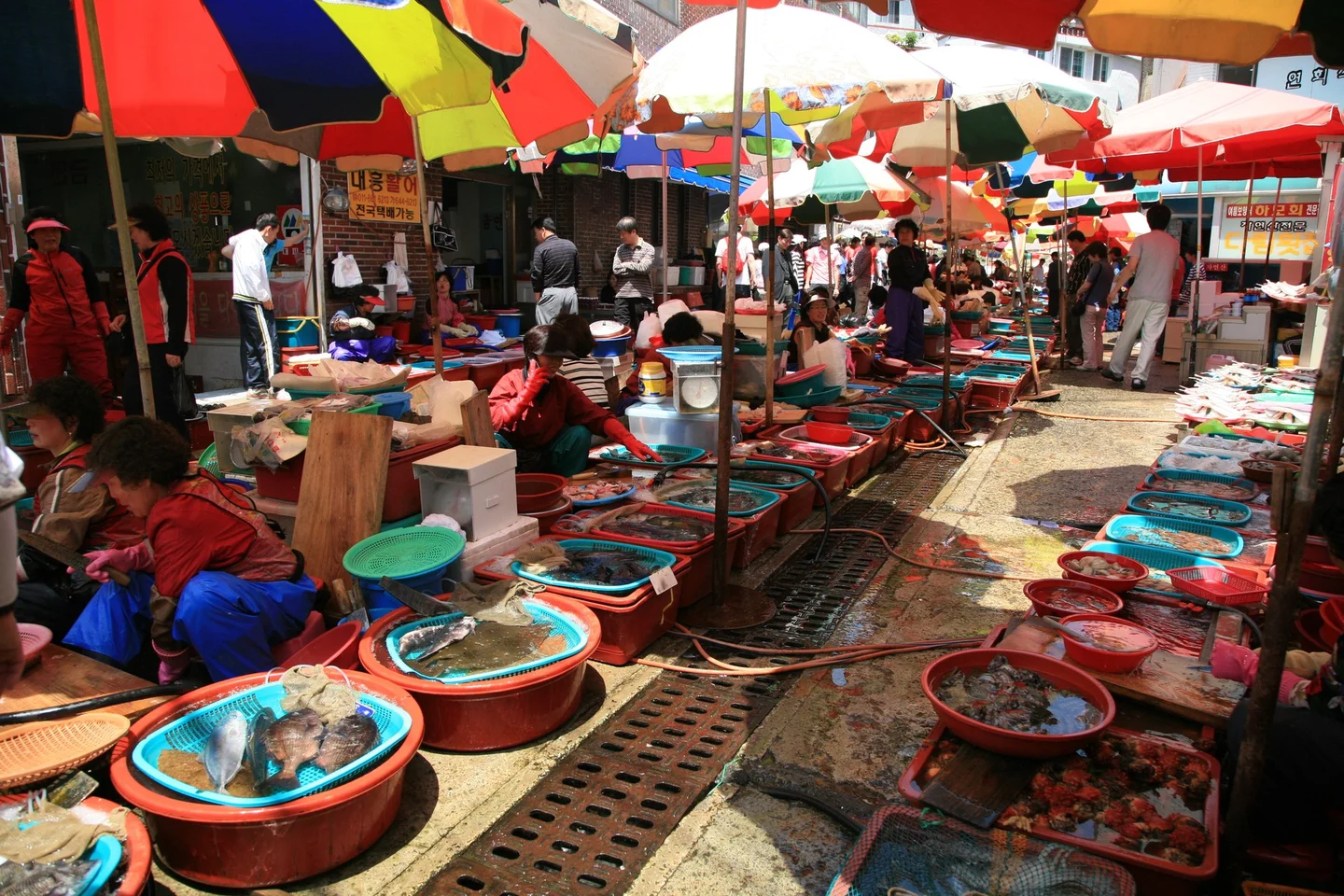
A visit to Tongyeong can begin with a very practical question: what would you like to eat? Around Jungang Market, live seafood, little rice rolls, and syrup-coated buns put several of the city’s specialties within a short walk. Step out of the market lanes and Gangguan Harbor opens up in front of you, with boats on the water and houses climbing the surrounding hills. This is one of the easiest parts of Tongyeong to explore without a car. Set aside half a day for browsing, a meal, and the waterfront. Add the mural lanes of Dongpirang if you want an uphill walk, or stay near the harbor for a gentler outing. The market and waterfront are close enough that you can return for a snack rather than trying everything at once. Come during the day if seeing the seafood stalls is your priority. For a first visit, late afternoon can work especially well: explore while there is daylight, eat nearby, and finish beside the harbor as its lights come on.
How to approach the seafood market
by Junho Jung at Flickr from South Korea · Original · CC BY-SA 3.0 ·
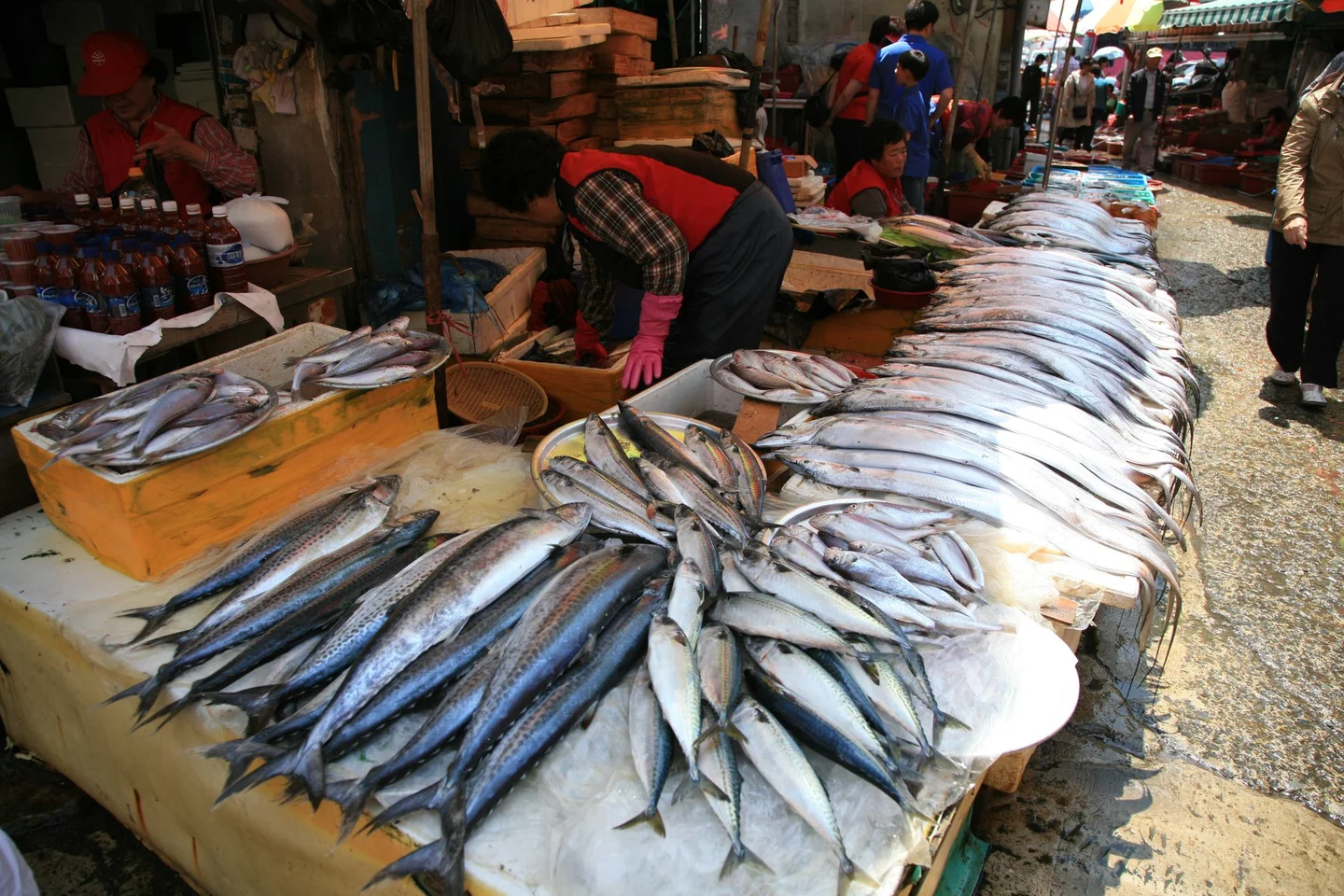
Jungang Market has distinct areas for live fish, fresh fish, dried seafood, side dishes, and sweets. A first circuit without buying anything is a useful way to understand the choice. Live seafood sits in tubs and tanks; elsewhere, silver fish cover low counters and dried ingredients are packed for the kitchen. If you want a meal of hoe, Korean-style sliced raw fish, tell the seller how many people are eating, your budget, and whether you want takeout or a place to sit. Then establish the total order before the fish is prepared. Ask whether the quote is per fish or by weight, and whether preparation, restaurant seating, side dishes, and a pot of spicy fish soup are included or charged separately. Those questions are more useful than trying to memorize every fish name. You can also choose a restaurant with a clearly described set meal if negotiating a market purchase feels cumbersome. Raw seafood is only one option for lunch; browse the surrounding menus before deciding. There is no single closing time for every stall. The Korea Tourism Organization’s market listing, checked October 12, 2026, lists hours and days off as shop-specific. It also records step-free access at the main entrance and an accessible restroom. Inside, narrow passages and working seafood stalls can still make movement slower.
What to order: Chungmu gimbap and kkulppang
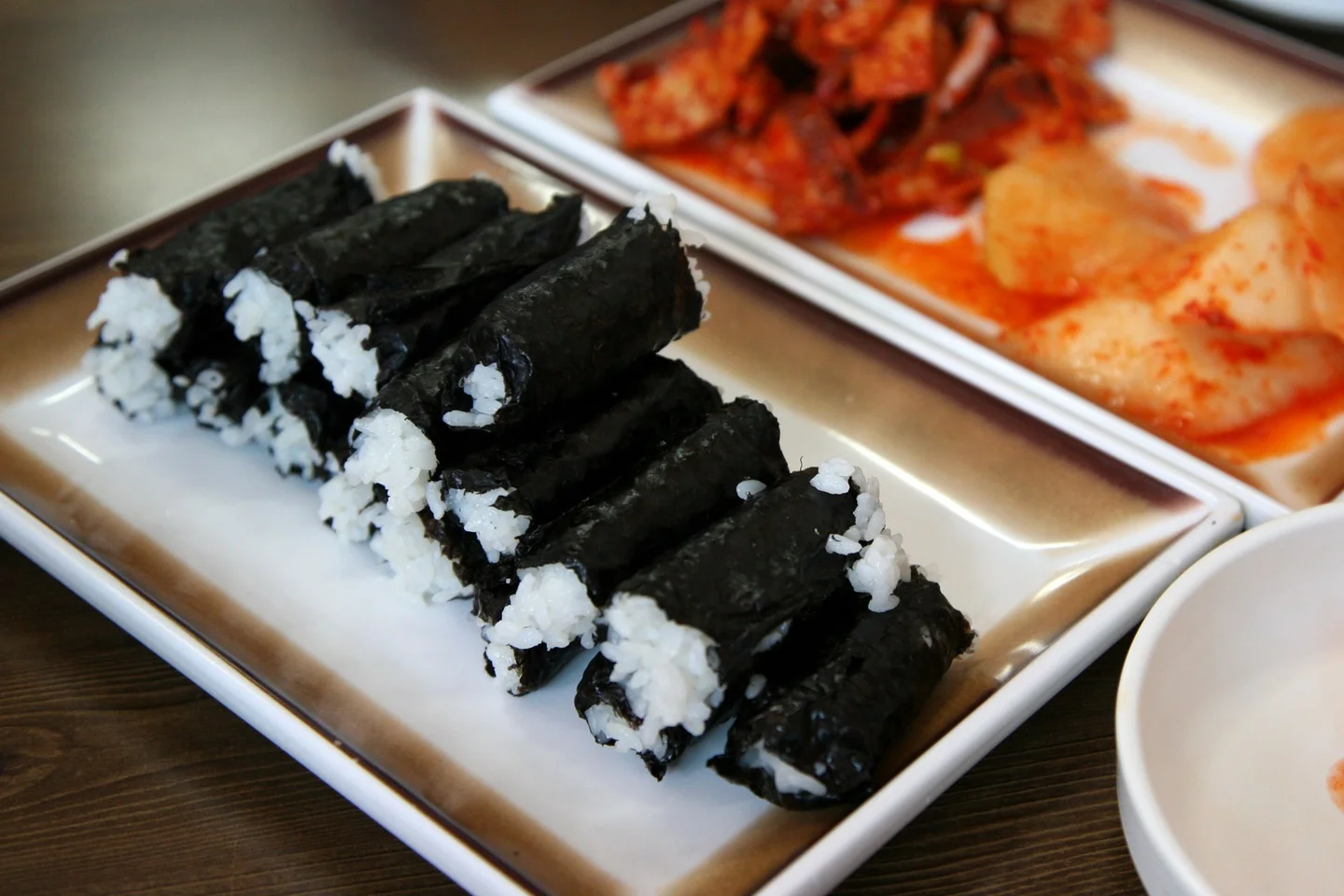
Chungmu gimbap looks unusually simple if you are used to colorful, filled Korean rice rolls. Here, the seaweed wraps plain rice in small pieces, while the flavor comes from the accompaniments: radish kimchi and seasoned squid, often with fish cake. Eat a roll with a little of the side dish rather than expecting the filling to be hidden inside. The side dishes can be spicy, so taste them separately first if you prefer milder food. The plain appearance of the rice rolls also does not make the full meal vegetarian. Ask how many rolls come in the smallest order, particularly if you are saving room for seafood or sharing several snacks.
KOREA.NET · Original · CC BY-SA 2.0 ·
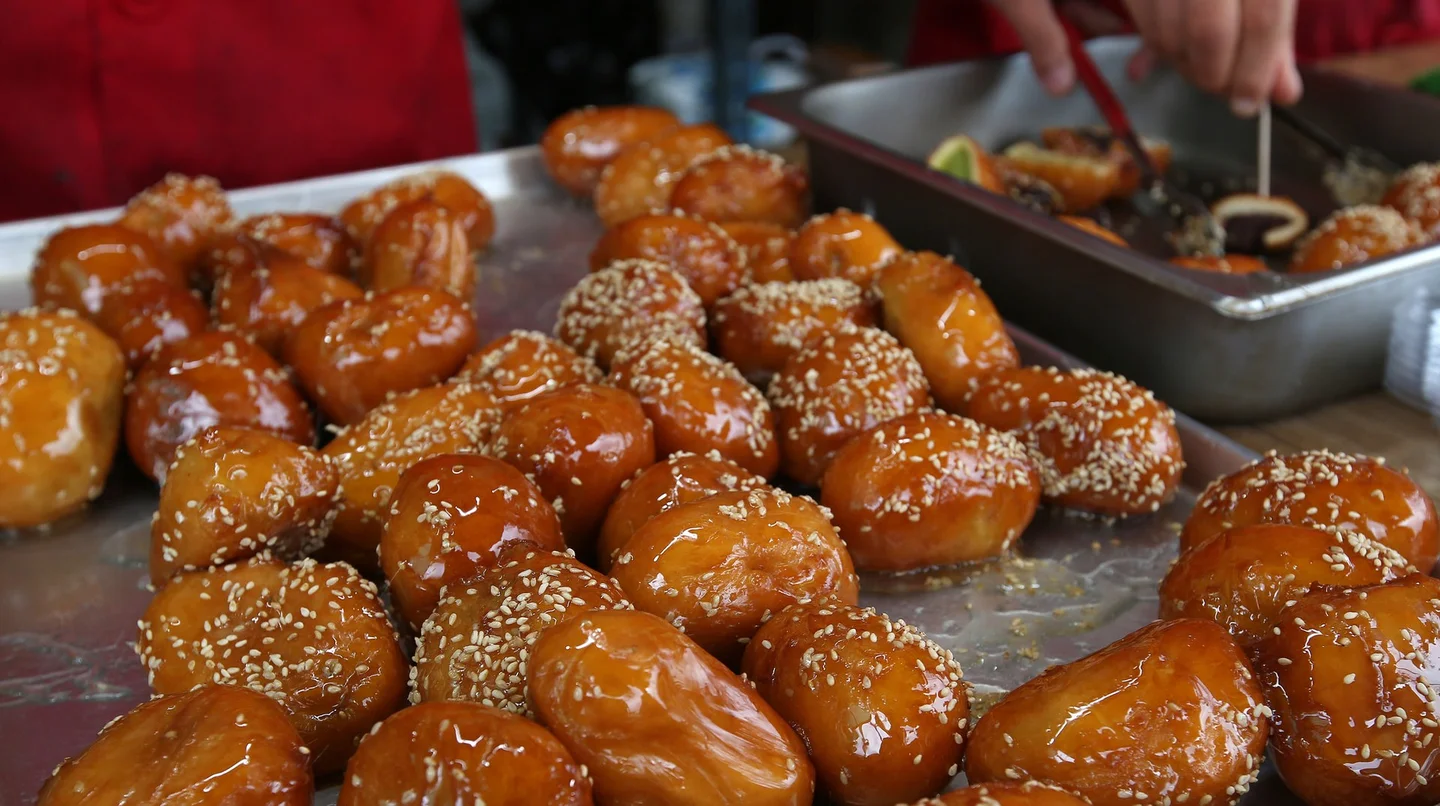
For something sweet, look for kkulppang, commonly translated as “honey bread.” These are closer to filled, fried buns than to a sliced loaf. The familiar version has red bean paste inside, a sticky syrup coating, and sesame seeds outside. Other fillings may include sweet potato, yuja citrus, or cheese. The name describes the sweet style; check the ingredients if actual honey or a particular allergen matters to you. A small portion is enough to decide whether you want a gift box. Buying the box near the end of your walk saves carrying it up Dongpirang. If a warm bowl sounds more appealing, ppaettegijuk is another Tongyeong specialty: a thick porridge made with dried sweet potato and grains or beans. These dishes offer quite different ways to eat locally without making every stop a large seafood meal. KTO’s guide to Tongyeong snacks explains their ingredients and origins.
Follow the waterfront into Tongyeong’s naval history
by Junho Jung at Flickr from South Korea · Original · CC BY-SA 3.0 ·
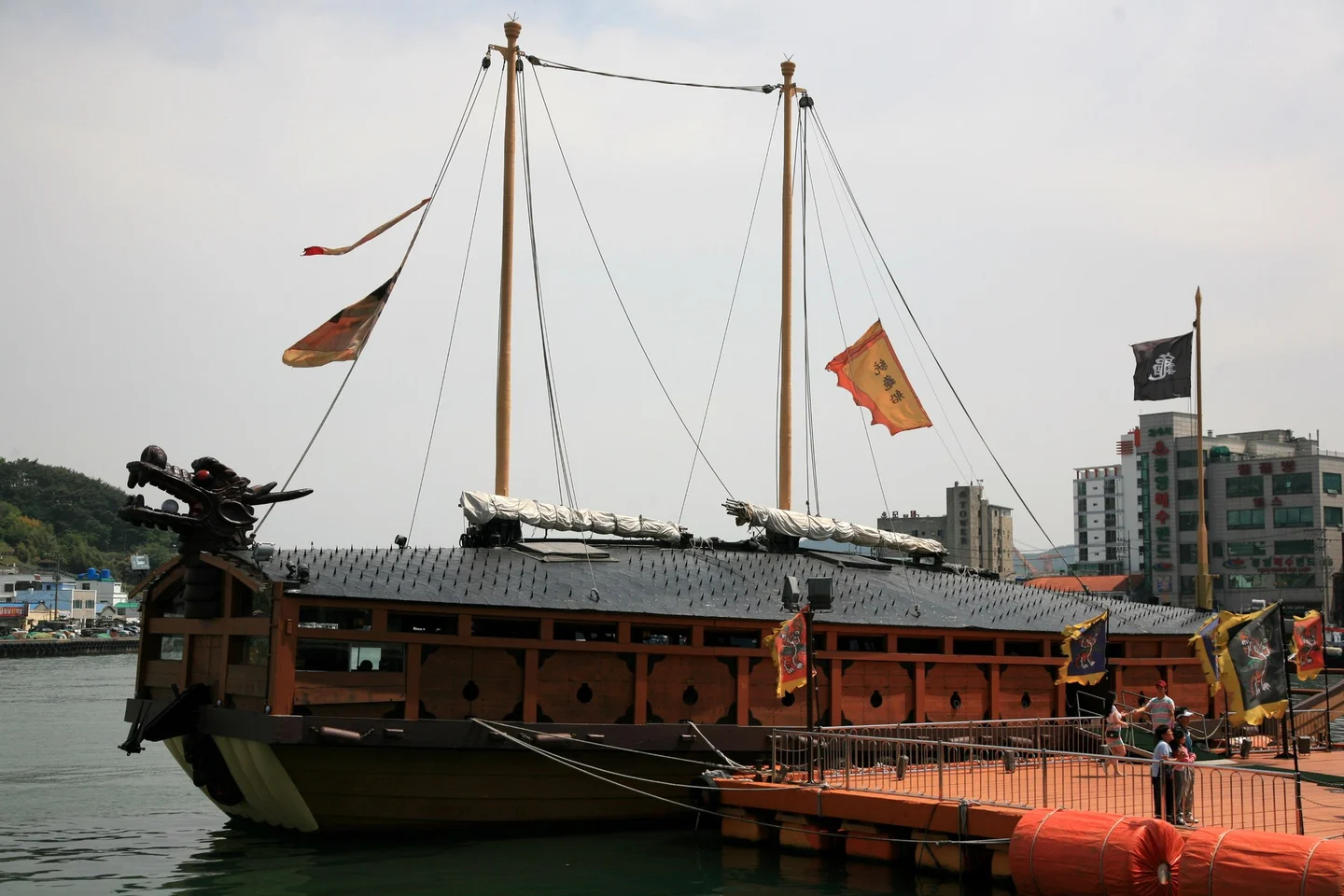
Gangguan is an inlet tucked into the city, so the harbor feels enclosed by streets and slopes rather than exposed to an empty horizon. From the waterfront plaza, you can see how closely the market, boats, and hillside neighborhoods fit together. It is a good place to sit after lunch and decide which direction to explore next. The turtle-ship replica recalls the region’s naval history. Its dragon-shaped bow and covered upper deck make a striking contrast with the fishing boats and modern buildings nearby. The vessel is a modern reconstruction, and interior access depends on the current on-site arrangements. For more historical context, head inland toward Sebyeonggwan and the Samdosugun Tongjeyeong naval headquarters site. Tongyeong’s name derives from Tongjeyeong, the command responsible for naval forces across three provinces. This gives the harbor walk a useful second subject beyond food: the town’s role as a maritime center. Gangguan’s displayed ships and working boats do not make every part of the waterfront a passenger departure point. If you are continuing to one of Tongyeong’s islands, follow the terminal and boarding instructions for your own ferry reservation.
Add Dongpirang, or keep the afternoon on level ground
Dongpirang rises behind Jungang Market. Its murals and small lanes give you a higher perspective over the harbor, but the approach includes slopes and steps. Allow roughly an hour for a relaxed detour, longer if you stop at a café. Go before collecting chilled seafood or bulky purchases, then return to the market for your final stop. For a lower-effort visit, concentrate on the market and the waterside promenade. You can see the harbor and Gangguan Bridge without making the hill part of the day. The market’s accessible entrance should not be read as a promise that Dongpirang’s lanes are equally straightforward. Tongyeong’s intercity bus terminal is outside this old-town waterfront district. Add a local bus or taxi transfer rather than expecting to step off the coach beside the fish stalls. Jungang Market and Gangguan Cultural Plaza are useful destination names to show a driver. If arriving by car, park once near the district and link the market, harbor, and optional hill on foot. The Mireuksan cable car is a separate excursion requiring a road transfer. It can fit into a longer Tongyeong day, but a market lunch and harbor walk need not become a race between distant sights.
Stay for the harbor lights
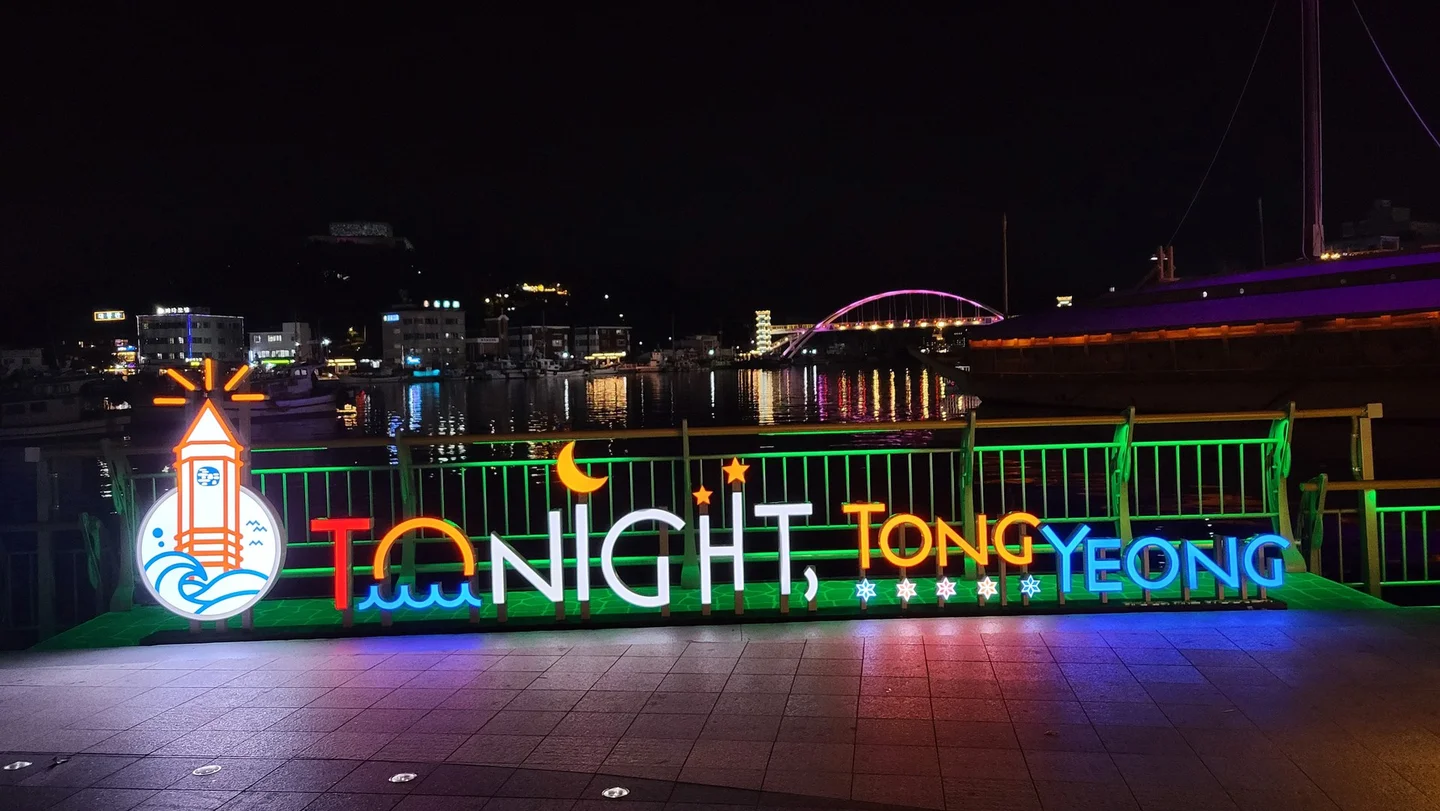
After dark, the bridge and waterfront lighting reflect across Gangguan, and the harbor has a different rhythm from the daytime market. A short walk after dinner is enough to enjoy the change. The open water makes it easier to appreciate the lights from a little distance than from directly underneath them. Tongyeong’s official smart-tourism introduction also highlights media art and programmed waterfront attractions. Check the current program if a particular show is the reason for your visit; an ordinary evening stroll works without one. For a compact first day, keep the sequence simple: market browsing, an optional climb to Dongpirang, dinner, then Gangguan by night. The local food and the harbor are the main reasons to come, and giving each a little unhurried time is more rewarding than collecting a long list of stops.