Naksansa Temple, Yangyang: Cliffside Shrines and an East Coast View
Konoponpokopon · Original · CC BY-SA 4.0 ·
At Naksansa, the sea is part of the temple visit. A small shrine clings to the cliffs, a pavilion stands among coastal pines, and a tall stone figure of Gwaneum looks out from higher ground. Paths between them pass through woods and temple courtyards before opening onto the East Sea. It is a particularly rewarding stop if you want both Korean Buddhist architecture and a coastal walk. The temple traces its founding to the monk Uisang in the seventh century and is associated with Gwaneum, the bodhisattva of compassion, also known as Avalokitesvara. Knowing that connection gives meaning to the great hilltop statue and the quieter prayer spaces along the shore. You do not need a detailed knowledge of Buddhism to appreciate how the buildings respond to their setting. Allow roughly two hours for a first visit that includes the main courtyards, the statue, Uisangdae Pavilion, and Hongnyeonam Hermitage. That is a planning suggestion, with extra time useful for rests or worship. The grounds cover a hillside, so the length of your visit depends partly on how much climbing you want to do. Naksansa is in Yangyang, south of Sokcho. Search for 낙산사 when arranging your approach, then choose the entrance that suits your route. Naksan Beach sits below the temple area and makes an easy second stop once you have left the grounds.
Choose Your Entrance Before You Arrive
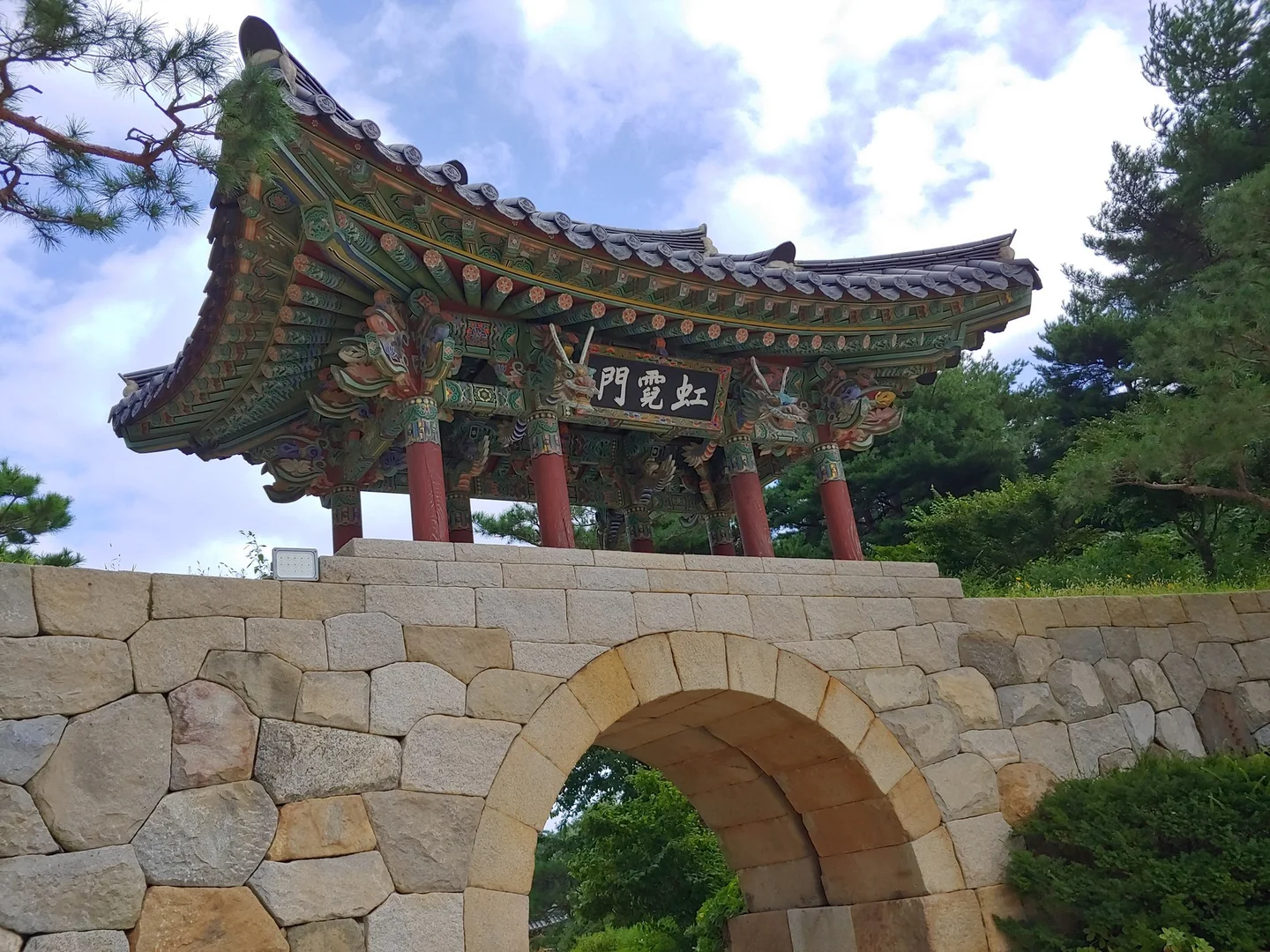
There are two useful approaches. Naksan Parking Lot, 낙산주차장, gives you the pine-forest approach and a natural start with the temple buildings. Uisangdae Parking Lot, 의상대주차장, is better placed for beginning with the coastal pavilion and Hongnyeonam. The Korea Tourism Organization's Yangyang itinerary describes this difference between the wooded and seaward approaches. If you are driving, save the actual parking-lot name rather than relying only on the temple's map pin. If you are taking a taxi or meeting someone, agree on the same entrance. Both approaches involve walking after arrival, and a bus stop on the lower road is not the same as reaching the cliffside shrine. Hongyemun Gate gives the inland approach a memorable threshold: a curved stone arch supports a painted wooden gate pavilion. Look at the contrast between the broad gray masonry and the colors under the eaves. From here, continuing into the courtyards puts the architecture first, with the sea opening up later in the visit. Naksansa has been rebuilt repeatedly over its long history, including after the devastating 2005 wildfire. The present complex brings restored wooden buildings together with surviving older stonework. It is more accurate to understand it as a living, renewed temple than to imagine every structure has stood unchanged since Uisang's time. The Korea Tourism Organization's temple overview explains that history. Parking is a separate expense from entering the temple. For a driving visit, finish with a route back to the lot you used; leaving toward the beach can otherwise add an uphill return.
Courtyards, the Seven-Story Pagoda, and the Great Statue
Konoponpokopon · Original · CC BY-SA 4.0 ·
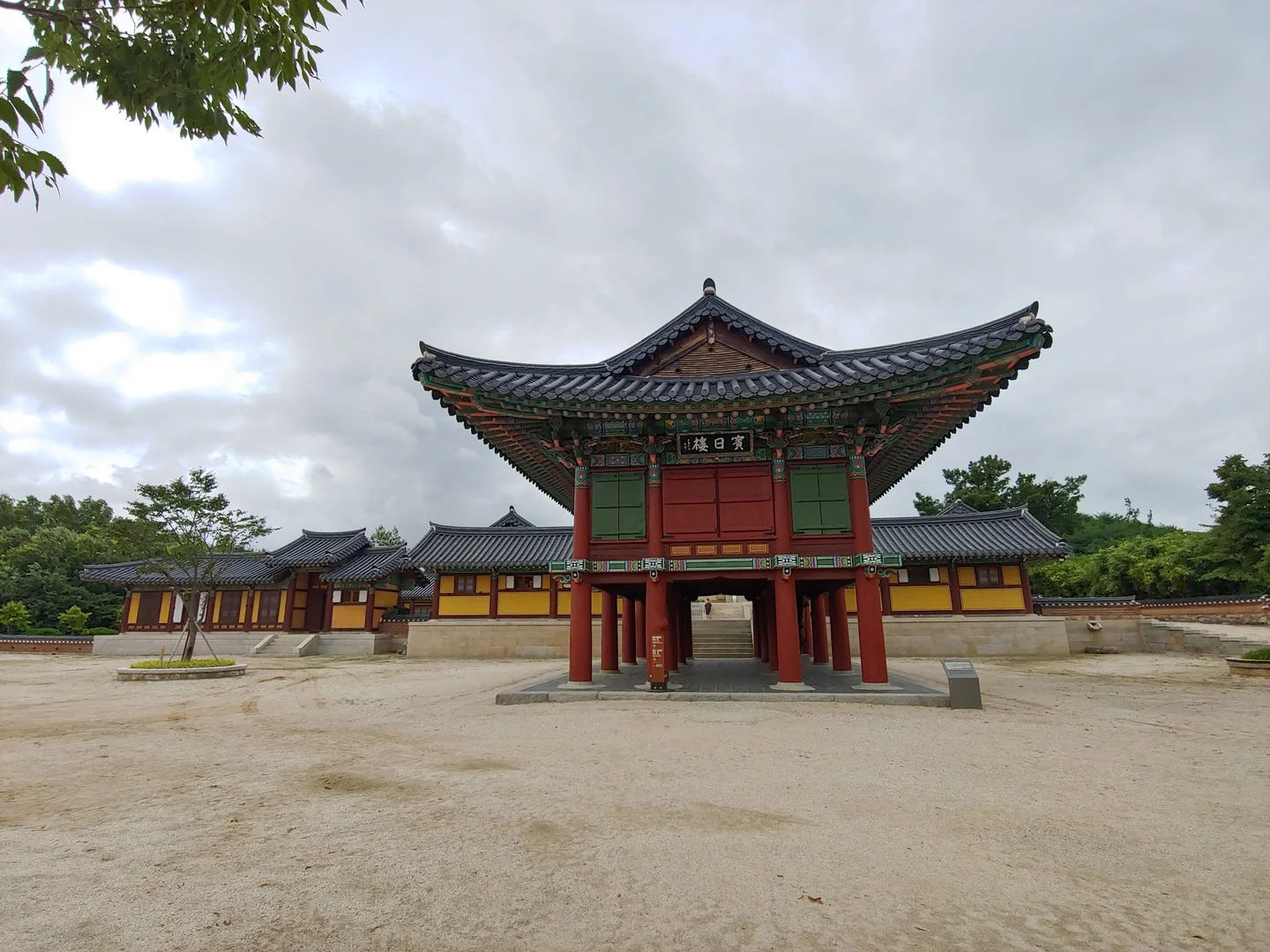
Binillu Pavilion introduces the layered layout of the temple. Its raised floor, red columns, and passage underneath draw you toward the courtyards beyond. Moving between these spaces reveals a different side of Naksansa from the exposed coast: tiled roofs, painted beams, and framed views across the hillside. Continue toward Wontongbojeon, the main worship hall, and the seven-story stone pagoda. The slender stone structure provides a useful point of comparison with the broader wooden hall. Take time here before heading uphill, particularly if architecture and Buddhist heritage are your main interests. The large Haesugwaneum statue stands above much of the complex. Gwaneum's association with compassion is central to Naksansa, and the statue's position facing the sea connects that religious identity with the coastal landscape. The approach adds climbing, but it also offers a wider view than the lower courtyards. You can shorten the route by focusing on the courtyards and the coastal pavilion, or make the statue the main uphill objective before coming back toward the shore. For wheelchair users, ask at the entrance about a practical route around steps. The temple offers wheelchair loans at its main information office with identification, but that service does not make every hillside path accessible. Naksansa remains an active place of worship. Visitors can enjoy much of the architecture from outside; when entering a hall, follow its shoe-removal and photography notices. Hongnyeonam's small prayer area is especially tight when worshippers are arriving. Around Wontongbojeon, horizontal tile fragments and rounded stones create a repeating wall pattern. The August 2021 photograph offers an architectural detail to notice between sea views. Observe from an open visitor path rather than leaning on or climbing the wall.
Uisangdae and Hongnyeonam: Leave Time for the Coast
Cacaokiwi · Original · CC BY-SA 3.0 ·
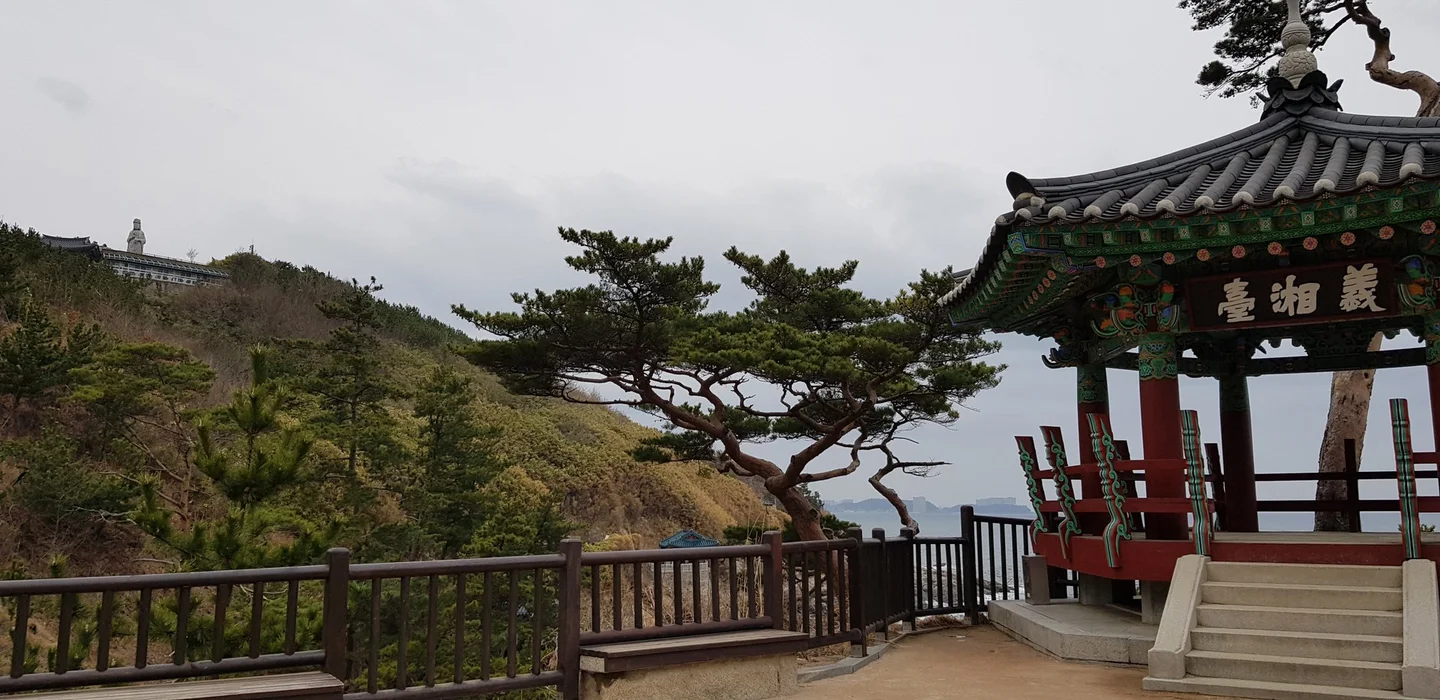
Uisangdae Pavilion is the place to pause over the view. Pine branches frame its tiled roof, and the cliffs fall away toward open water. The pavilion is associated with Uisang's meditation, giving a historical and religious context to what might otherwise seem simply a scenic lookout. The coastal path leads toward Hongnyeonam, a compact hermitage set close to the rocks above the sea. Its name is tied to a red-lotus legend associated with Uisang. The contrast in scale is striking: after the broad courtyards and monumental statue, the shrine feels intimate, with the water immediately below. Allow time for the approach rather than treating the two coastal landmarks as quick photo stops. Steps and narrower passages slow movement, and the small forecourt has limited room. The designated paths and railings provide the views; there is no beach shortcut down the cliff. Sunrise visits need particular planning. As checked October 12, 2026, the temple's official visitor notice lists entry from 6 a.m. to 5 p.m., with everyone out by 6 p.m. A sunrise before the opening time therefore cannot be assumed to be accessible from inside the temple. Use the current temple notice when setting an early or late arrival. The same notice says pets are not admitted. If you are traveling with a pet, arrange your temple visit accordingly before coming up from the beach.
Add Naksan Beach After the Temple
Grapesurgeon · Original · CC BY-SA 4.0 ·
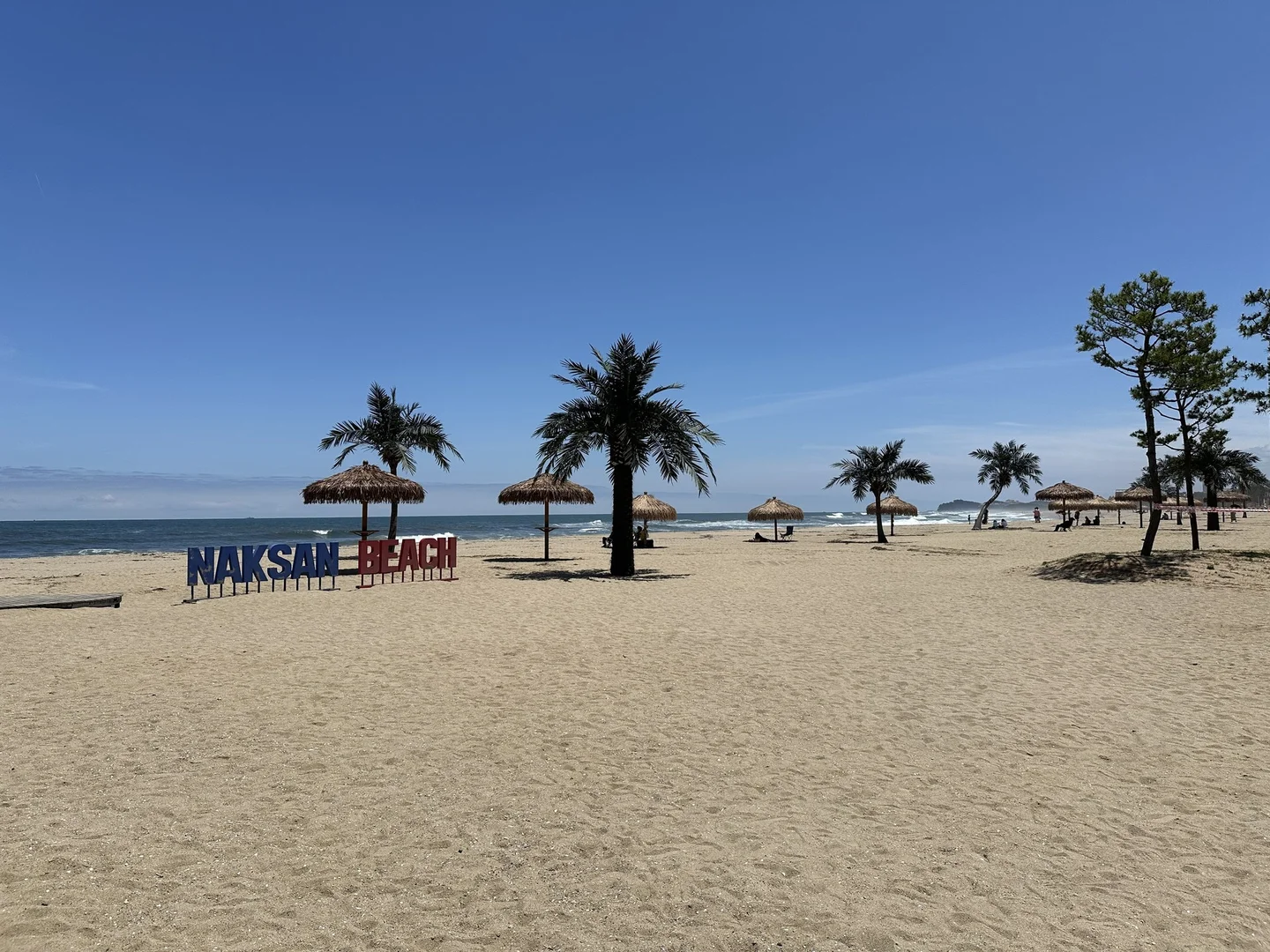
Naksan Beach changes the pace after the hillside paths. The shoreline is broad and sandy, with places to eat and stay nearby. From the temple you have been looking down over the coast; here you can walk at water level or sit down for a meal. Leave through an established temple exit and use the public approach toward the beach. A short shoreline stroll is enough to complement a temple visit, while a longer beach afternoon suits travelers staying locally. For a morning outing, visiting the temple first and eating near the beach afterward keeps the uphill walking ahead of lunch. If seeing the dawn is your priority and the sun rises before temple entry begins, the beach offers a separate way to start the day. You can then visit Naksansa after it opens. Swimming is a different activity again: use the designated bathing area during the supervised season and follow the day's restrictions. For the return journey, save the pickup or bus-stop location on the side where you will finish. A beachside departure and a return to Naksan Parking Lot lead in different directions, so settle that choice before walking away from the temple.