Mukho and Nongoldam-gil: a harbor walk with a lighthouse at the top
Cho Yungkwon · Original · KOGL Type 1 ·
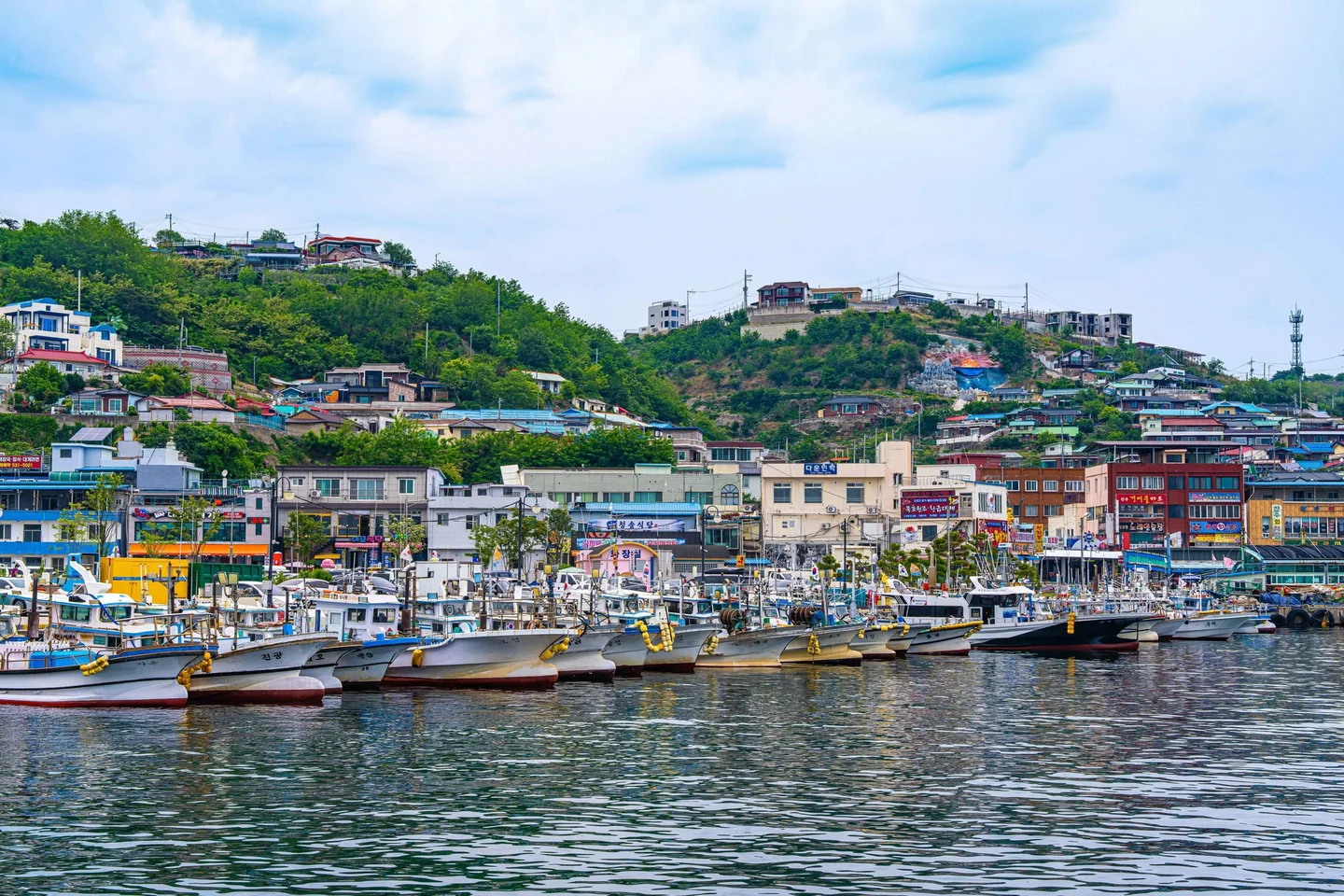
Mukho rewards the short climb behind its fishing harbor. Boats and seafood stalls occupy the waterfront; above them, small houses climb the hillside in layers, their blue, green, and red roofs broken up by narrow lanes. Follow Nongoldam-gil through those lanes and you reach Mukho Lighthouse, where the view opens from the village to the sea. This is one of Donghae's most satisfying neighborhoods to explore on foot because the walk connects places with different purposes. The harbor is still working, the mural lanes are still residential, and the lighthouse still guides vessels. Add Dojjaebigol's coastal viewpoints if you'd like a more dramatic finish, or spend the extra time on lunch and a cafe stop. For a first visit, allow roughly half a day for the waterfront, one route up Nongoldam-gil, the lighthouse area, and a meal. That's a flexible walking plan, not a marked trail duration. You can shorten it by taking a taxi toward the lighthouse and visiting the harbor separately, useful if steep slopes would be difficult for someone in your group. Mukho Station is the rail stop to look for when planning this neighborhood. Donghae Station is a different station elsewhere in the same city. From Mukho Station, allow for the local journey to the harbor or mural-lane entrance; neither is directly on the platform doorstep. A walk or short taxi connection can work, depending on where you want to start. Save seafood shopping until after the hill, so you aren't carrying your purchases through the stepped lanes.
Nongoldam-gil is a neighborhood, with four ways uphill
이다미 · Original · CC BY-SA 3.0 ·
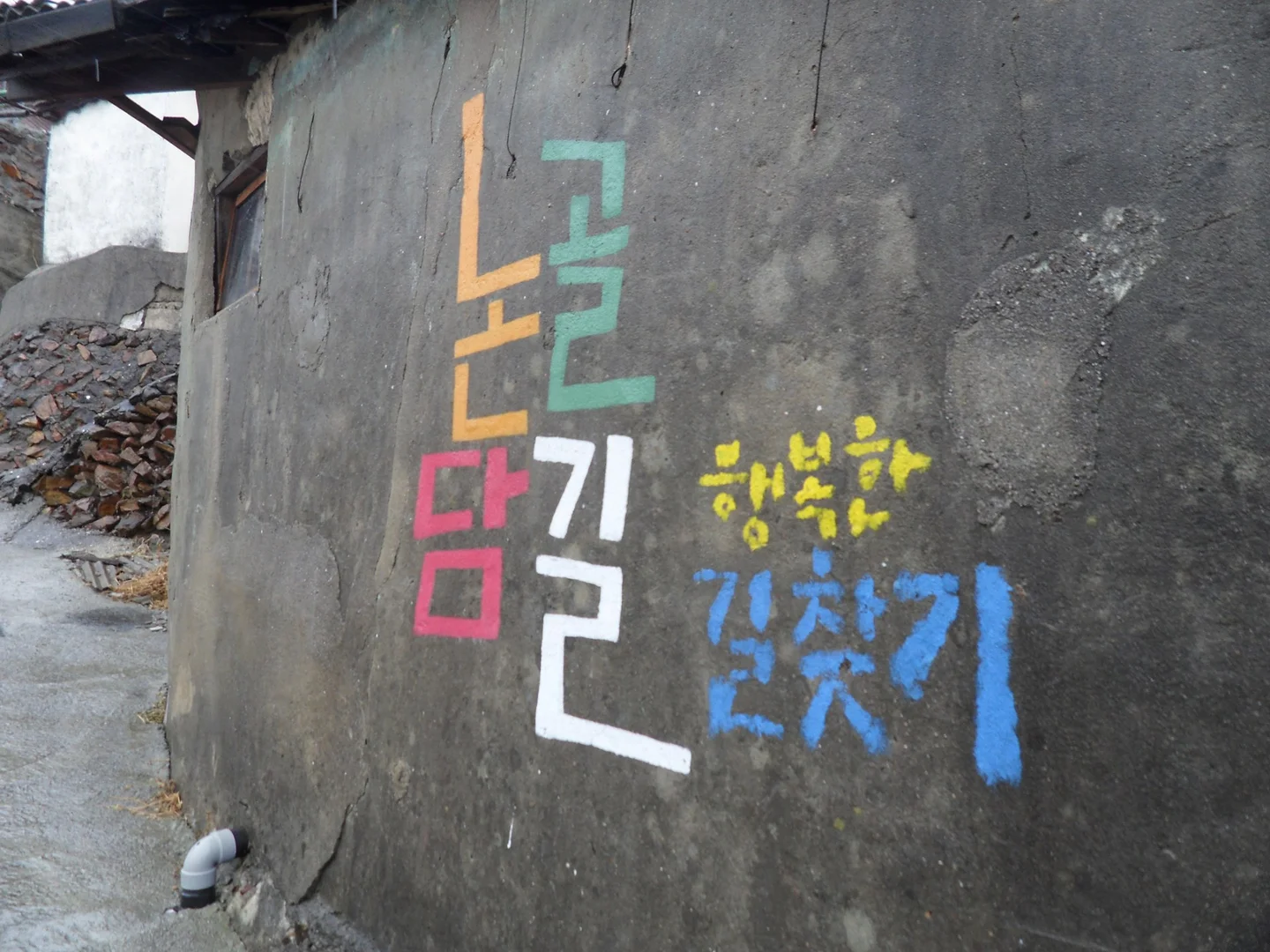
The name Nongoldam-gil covers four main routes: Nongol 1-gil, Nongol 2-gil, Nongol 3-gil, and Deungdae Oreum-gil, the lighthouse ascent. They connect through a compact hillside neighborhood rather than forming one straight mural street. Choose a signed route toward the lighthouse, then use another on the way down if you'd like to see more. The paintings grew out of a community project begun in 2010, with residents and artists drawing on memories of harbor life. Squid, pollack, rubber boots, fishing work, and everyday village scenes are recurring subjects. A little background makes the walls more interesting: fish once had to be carried uphill to drying areas, and the wet, muddy lanes helped give Nongol its name, associated with rice fields. The pleasure isn't just in individual paintings. A bend between houses may suddenly reveal the harbor; another stretch brings you past a low wall, a tiny garden, or a shop tucked into the slope. Murals can change over time, so following the neighborhood's layout is more rewarding than trying to locate every image from an older guide. Keep to the public lanes and leave residents' doorways clear. These are lived-in homes, and a decorated stairway or courtyard doesn't automatically invite visitors inside. Steps, steep surfaces, and narrow turns make a complete circuit unsuitable for a conventional stroller or wheelchair route. If you need step-free access, plan selected viewpoints by their actual entrance rather than joining every nearby map pin into one walk.
Rooftops below, open water beyond
이다미 · Original · CC BY-SA 3.0 ·
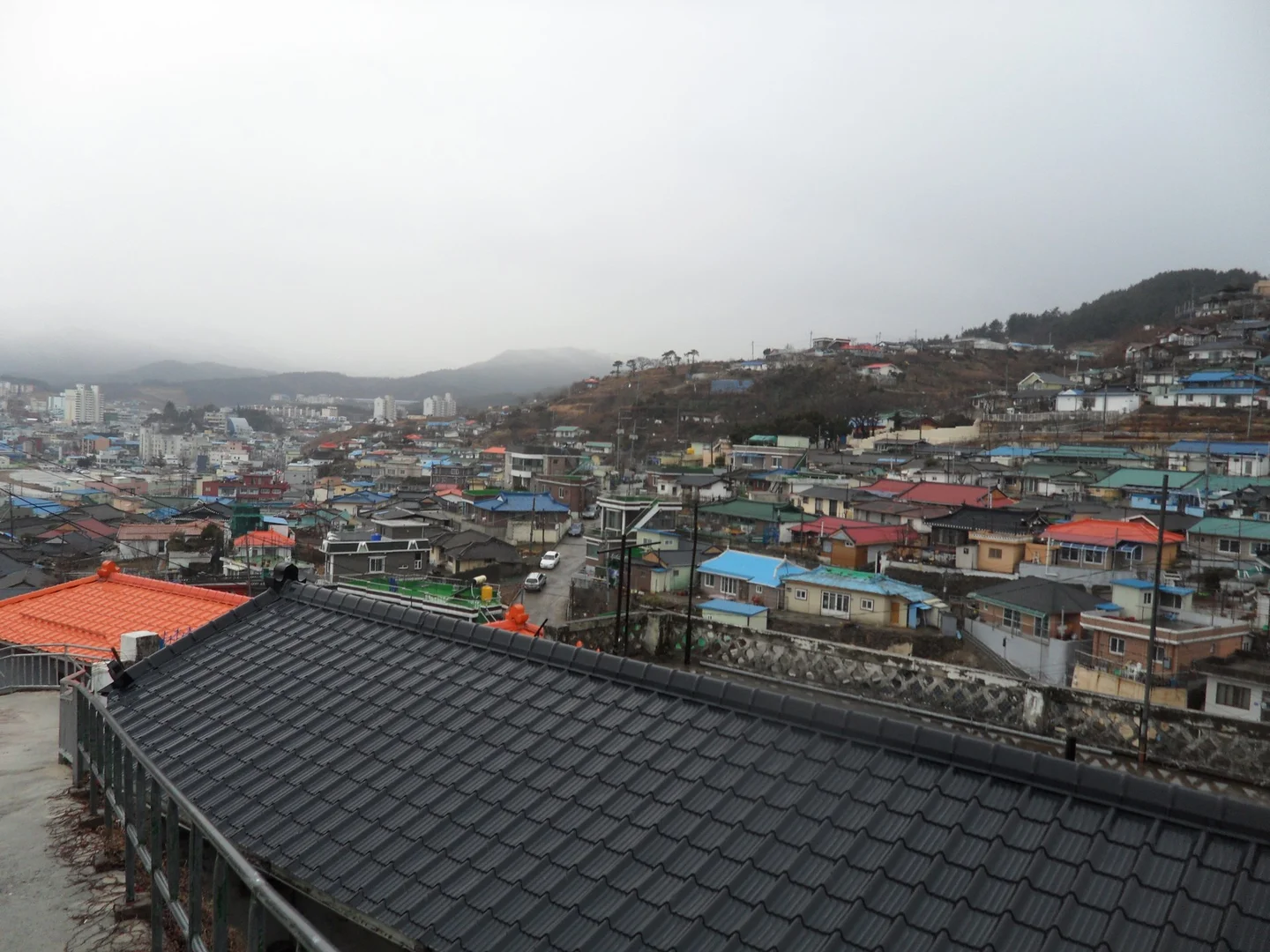
Higher on the slope, the rooftops become part of the view rather than the edges of the path. Looking back toward the harbor helps explain why the lanes take such tight turns: houses have fitted themselves into the hillside instead of following a regular street grid. Mukho Lighthouse is the natural destination at the top. Its first light shone in June 1963, and the white tower remains a landmark above the port. The surrounding viewing area is a good place to pause after the climb and look across the harbor entrance and coastline. Treat access inside the tower separately, according to the opening arrangements on arrival. For a cafe break, choose whether you want the high harbor panorama or a convenient stop nearer the station. A hillside cafe gives you a longer pause with the view; a station-side cafe is easier to fit around a return train. There's no need to descend and climb again simply to add both. If you're driving, use an established parking area at the harbor or near the lighthouse instead of following navigation into the residential alleys. Starting at the top can reduce uphill walking, but descending to the fish market still leaves you with the return to the car. Decide that connection before setting off.
Sky Valley and Haerang are two different viewpoints
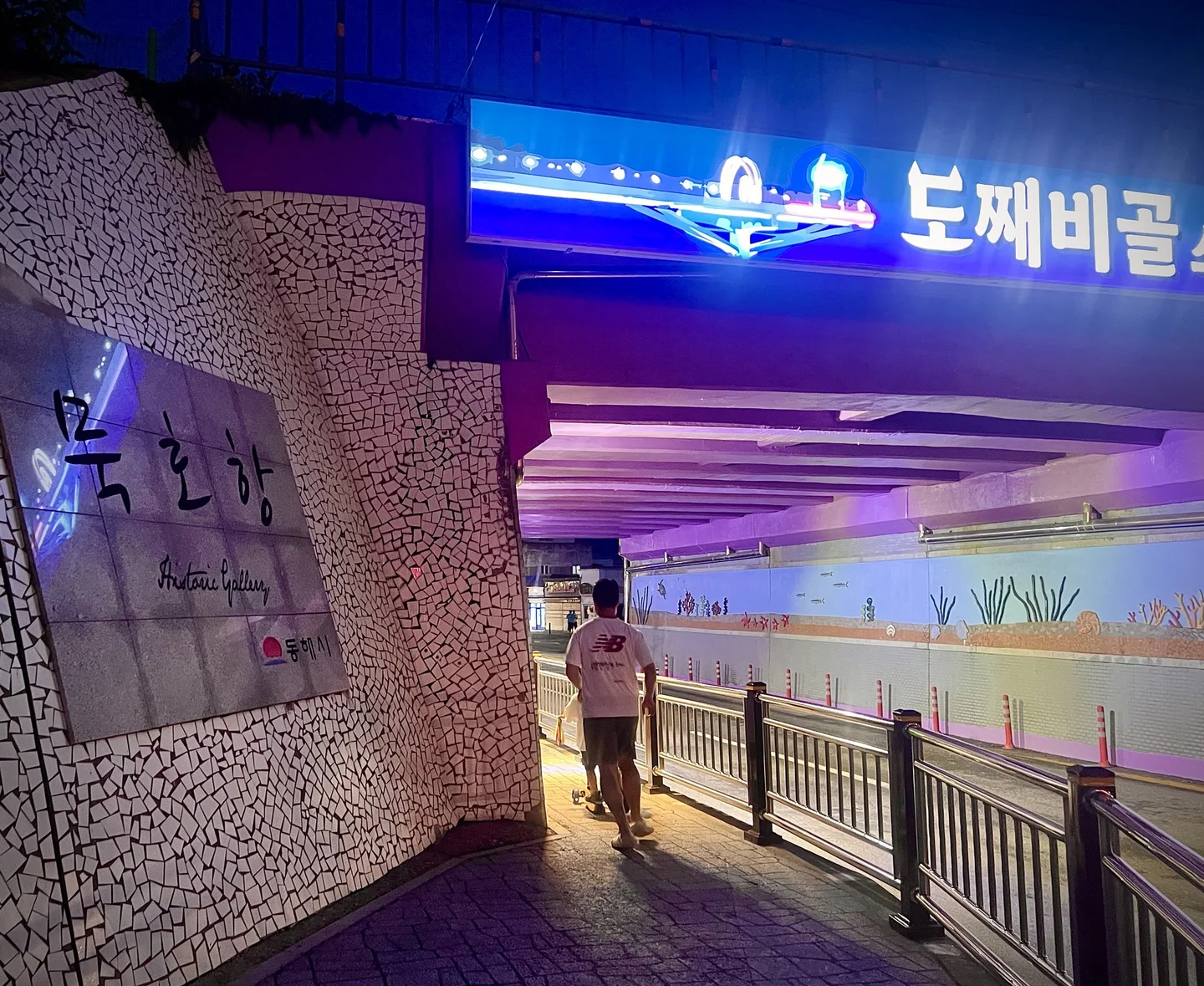
Dojjaebigol Sky Valley occupies the high ground near the lighthouse. Its elevated Sky Walk gives you the exposed, open-air perspective; the Sky Cycle and Giant Slide add separately charged activities. The cycle travels along a suspended wire, while the slide provides a rapid descent through a large tube. General admission doesn't include those experiences, and each has its own height or weight conditions. The city's Sky Valley guide, checked October 12, 2026, lists adult admission at 3,000 won. Hours are 10 a.m.–6 p.m. from April through October and 10 a.m.–5 p.m. from November through March, with ticket sales ending 30 minutes earlier. Mondays are normally closed; when Monday is a public holiday, closure moves to the next weekday. Activity facilities pause for inspection from noon to 1 p.m., so take that into account if a ride is the main reason for your visit. For wheelchair access to the viewing facility, the city specifies the entrance on the Mukho Lighthouse side. That is a useful route detail; it doesn't establish access to the cycle, slide, or Nongoldam-gil's stairways. Ask about the usable continuous route before approaching from the lower coastal road. Haerang Observatory is the separate walkway extending over the sea below. Glass and mesh sections let you see the water beneath your feet, and the setting feels much closer to the waves than Sky Valley does. The official Haerang information lists free admission, wheelchair access, and hours of 10 a.m.–9 p.m. It closes in unsafe weather. Its later hours can make it an evening option, but they don't apply to Sky Valley or the lighthouse.
Raw fish, grilled fish, or a stop before the train
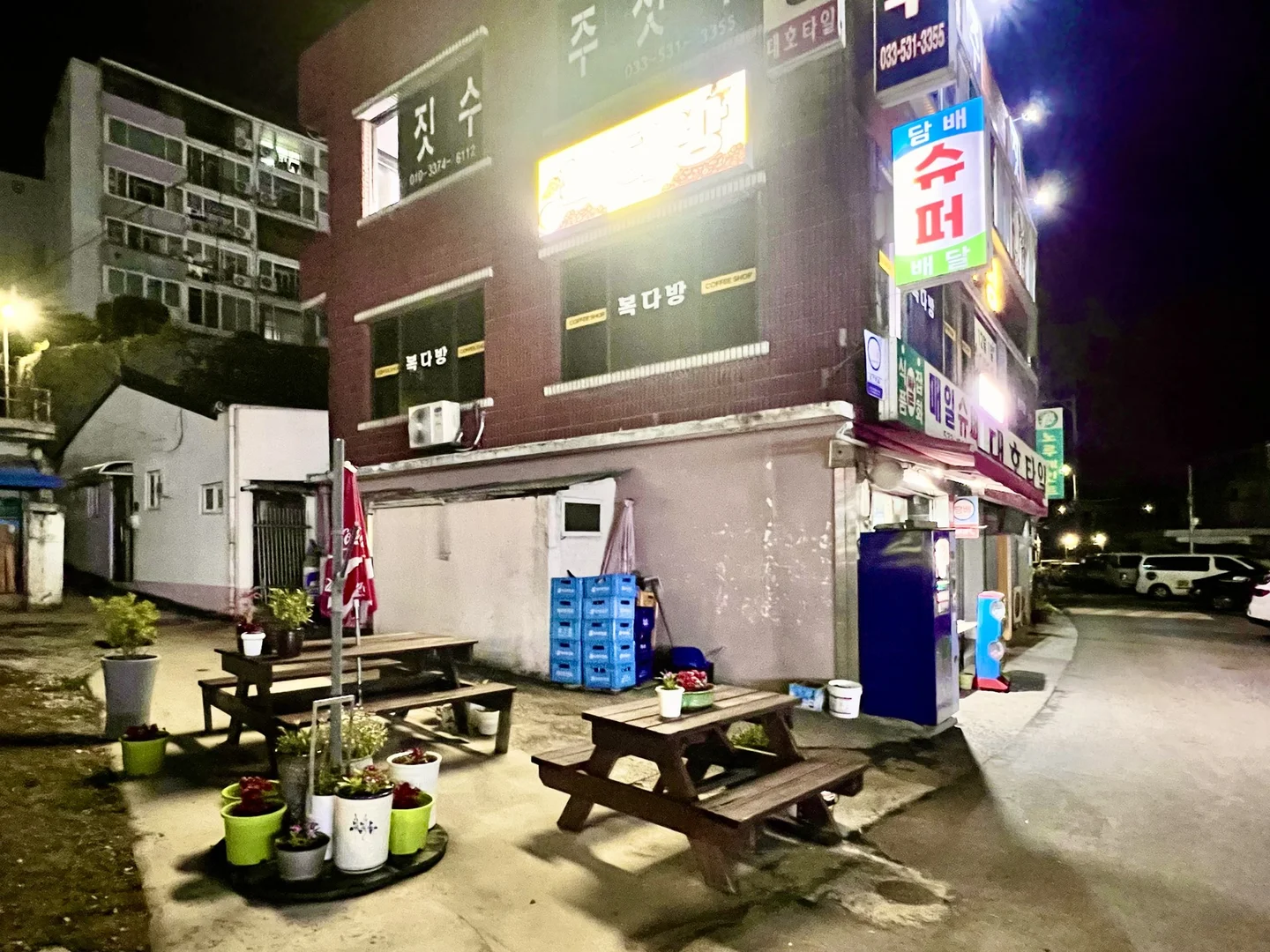
Back at the harbor, the live-fish sales center offers the market-style version of a seafood meal: choose your fish, then arrange preparation and a place to eat. Ask about the fish price, preparation, restaurant table charge, and any stew or rice separately before agreeing. Buying the seafood and sitting down for a complete restaurant meal aren't necessarily one bundled purchase. For a direct restaurant order, Buheung Hoetjip near the waterfront is listed by the Korea Tourism Organization for mulhoe, a cold raw-fish dish served with seasoned liquid, and assorted sliced raw fish. Mulhoe isn't a hot cooked-fish soup. If you prefer something cooked, Eohyang near Mukho Jungang Market is a grilled-fish option that KTO's 2026 car-free itinerary identifies as suitable for a solo meal. These give you two different ways to approach lunch without having to buy a group-sized fish platter. Closer to Mukho Station, Caramel Station occupies a remodeled former inn and offers corn coffee and caramel cream coffee. It works as a final cafe stop after the hill rather than another destination uphill. Allow enough time to get back to the station itself, even if the cafe feels close. If you're staying for the evening, the harbor's shop lights and illuminated coastal spaces create a different atmosphere from the daytime rooftops. Visit the mural lanes while there's enough light to see their details, then use the waterfront and open viewpoints after dark. For dried-seafood purchases, ask about storage and packaging, and check your destination country's food-import rules before taking them abroad.