Abai Village, Sokcho: A Ferry Ride and a Taste of Northern Korean Cooking
Grapesurgeon · Original · CC BY-SA 4.0 ·
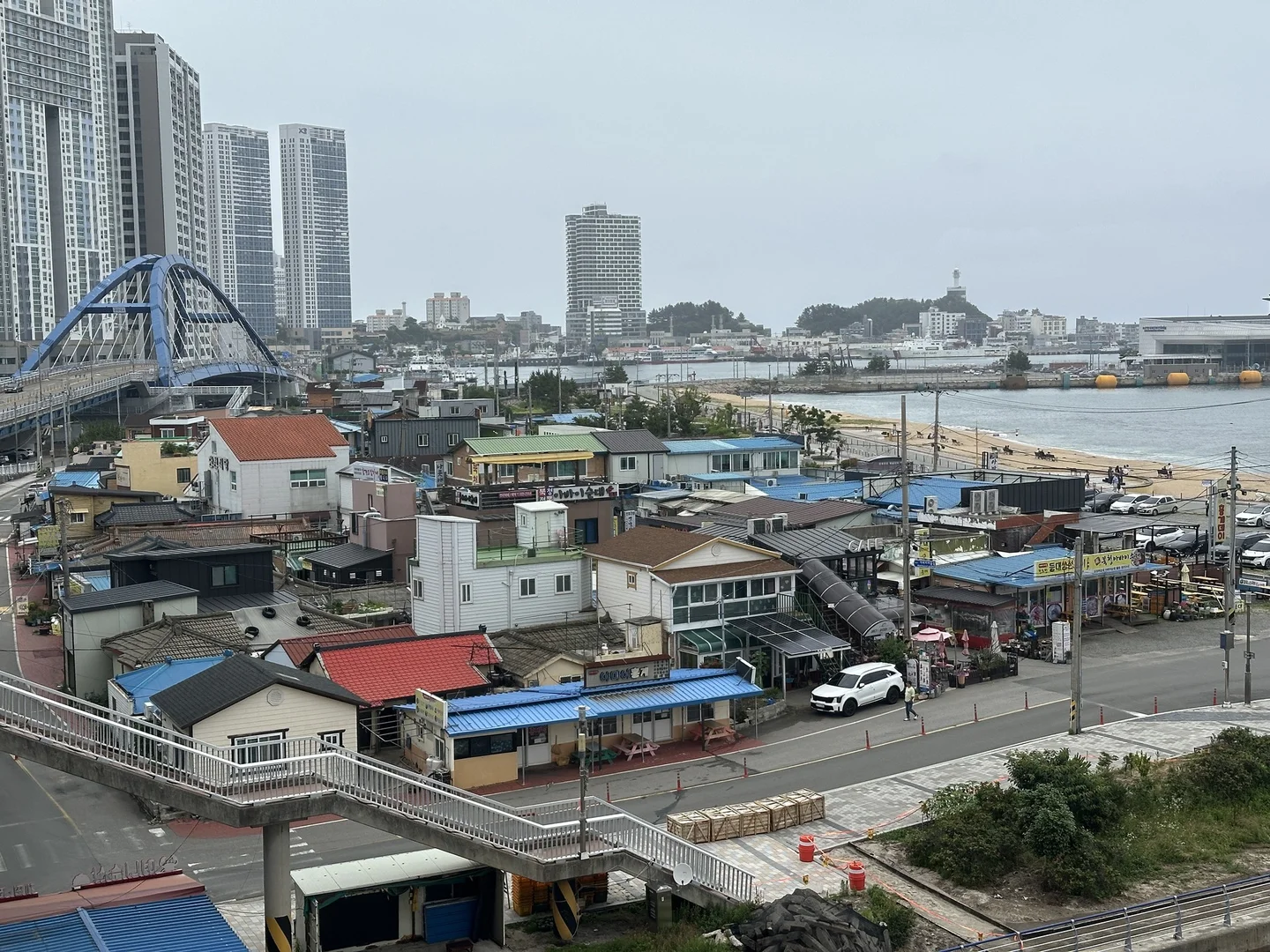
A hand-pulled ferry and a plate of stuffed squid make Abai Village one of Sokcho's most distinctive short outings. Across a narrow waterway from the central-market side of town, low-rise houses and restaurant lanes sit beneath the city's large bridges. Come hungry, leave time to wander, and finish with a look at the sea. The food has a particular history. Families displaced from Hamgyeong Province during the Korean War settled here, bringing recipes and traditions from the northern part of the peninsula. Many expected to return home. Their settlement became permanent, and the neighborhood's name preserves a Hamgyeong dialect word, abai, for an older man. That background makes the local cooking more than a collection of seaside snacks. Abai sundae, stuffed squid, cold noodles, and fermented fish carry connections to the communities that formed Cheongho-dong. A meal gives you an approachable way into that story. For a first visit, allow roughly two hours for a ferry crossing, lunch, and a short waterfront walk, adding time for restaurant lines or a longer neighborhood route. If you are already exploring Sokcho Tourist & Fishery Market, the ferry makes a natural next step. Coming from Sokcho Beach, you can approach by land and use the ferry afterward instead.
Riding the Gaetbae Ferry
Grapesurgeon · Original · CC BY-SA 4.0 ·
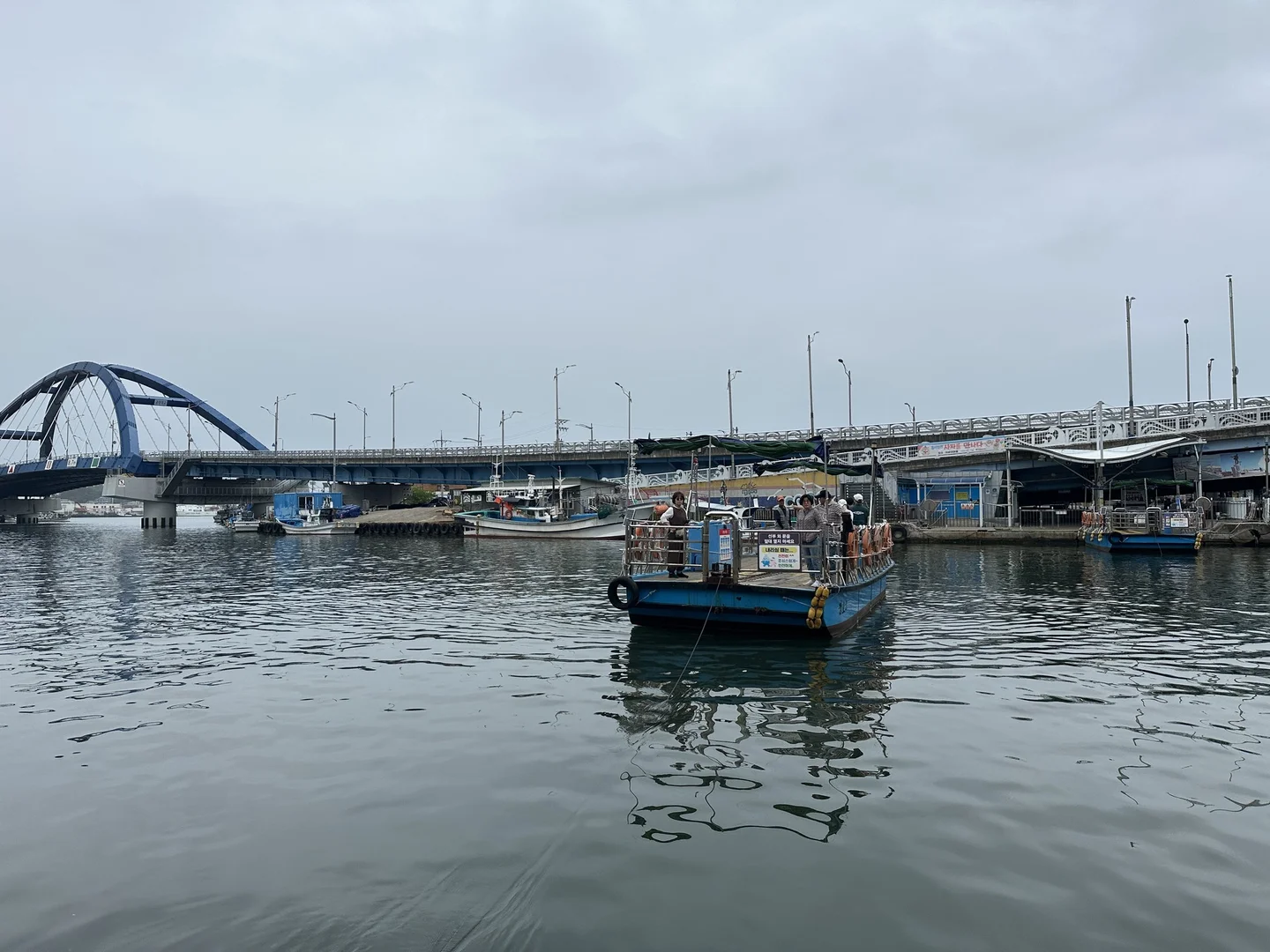
The gaetbae, 갯배, is a flat ferry pulled along a steel cable stretched across the channel. The opposite bank is close enough to see clearly, and the crossing is brief. Its appeal lies in the simple mechanism and the change of viewpoint as the boat moves between the town-side landing and the village.
Grapesurgeon · Original · CC BY-SA 4.0 ·
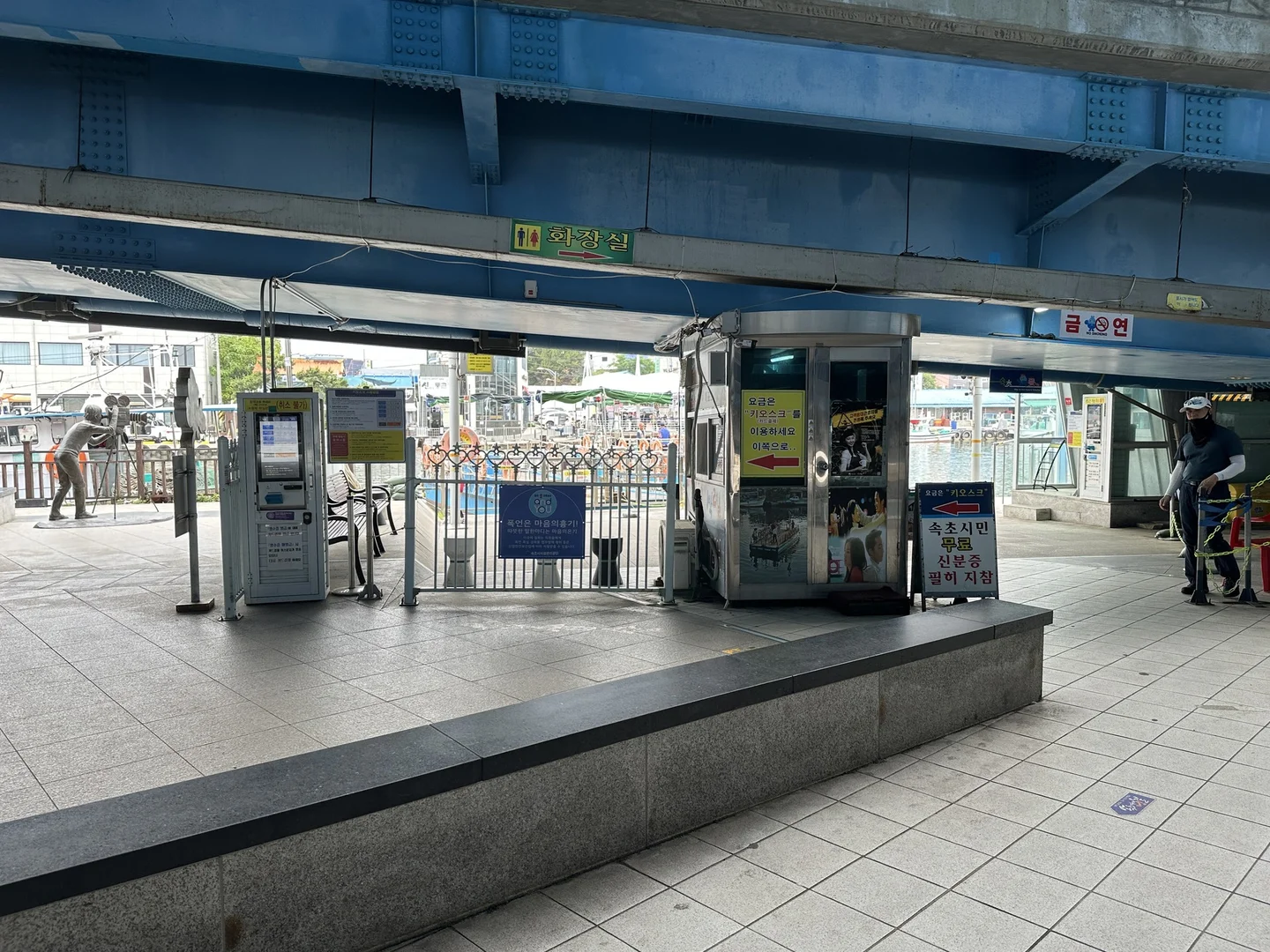
Check which landing you have selected in your map. A pickup or meeting point on the Abai Village side will not help if you intend to cross from the market side. The bridge overhead is a useful landmark, but it is worth naming the correct bank when arranging to meet someone. As checked October 12, 2026, Sokcho City's ferry guide lists a one-way fare of 500 won for adults and 300 won for elementary-school-age children. The listed hours are 5 a.m. to 11 p.m. from May through October and 5:30 a.m. to 10:30 p.m. from November through April, subject to weather. If you are traveling with a pet, confirm the current boarding conditions with the ferry operator before going. The Korea Tourism Organization advises checking pet-travel conditions in advance; do not assume that a general ban or unrestricted access applies. Follow the boarding staff's directions, including any invitation to help pull the ferry. The cable and pulling equipment are working parts of the boat, so let staff show you what to do. If you use a wheelchair or stroller, ask about the boarding edge and available help before joining the queue. The ferry is not the only way to reach the neighborhood. Road and bridge routes provide alternatives, including when service stops, though the walking route is longer than the short water crossing. If your return depends on the boat, note the last service before going off to dinner.
Beyond the Restaurant Lane
Grapesurgeon · Original · CC BY-SA 4.0 ·
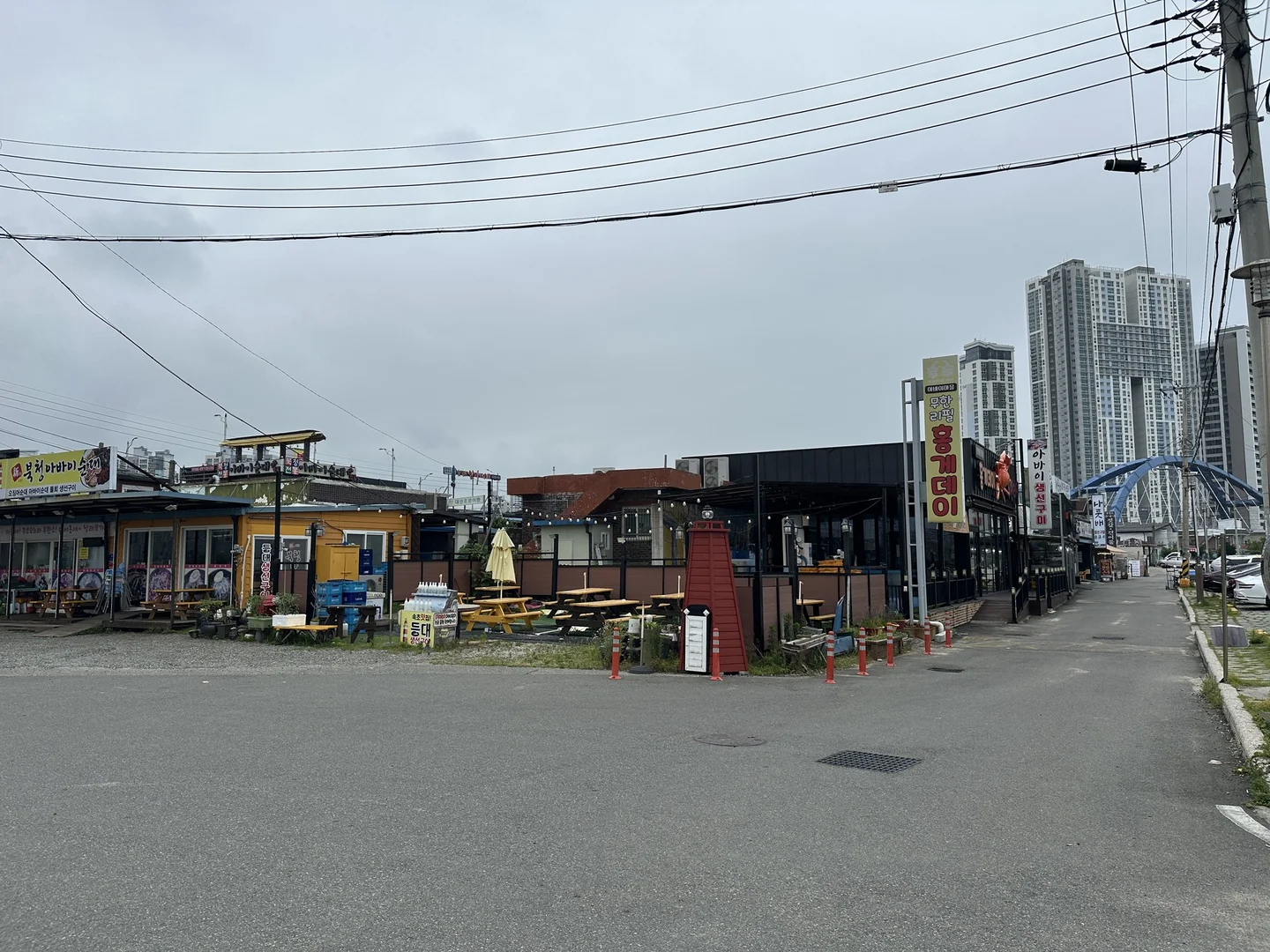
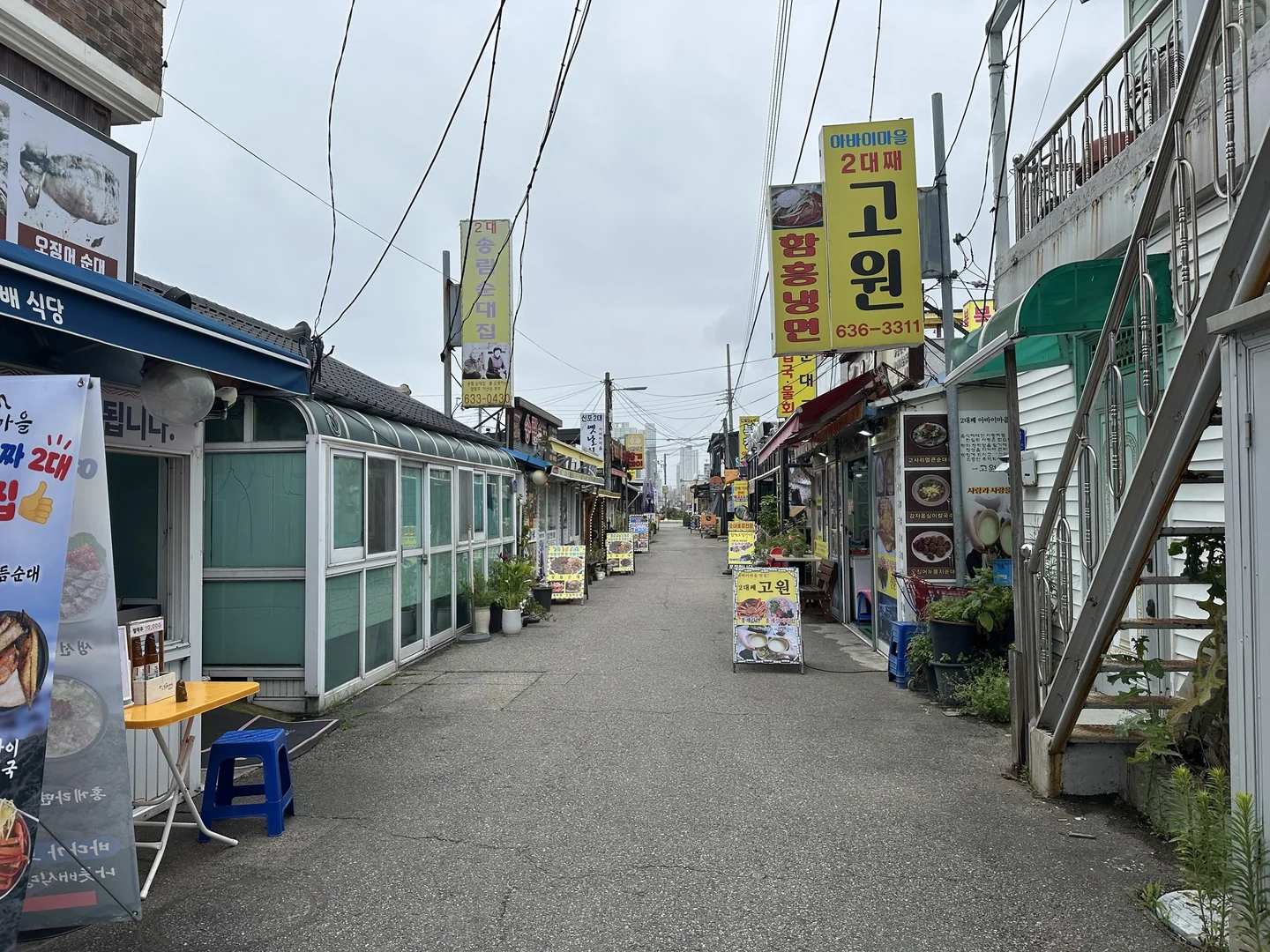
Near the landing, food signs and cafe fronts cluster around small streets. Farther into Cheongho-dong, the surroundings become more residential. This mixture is part of Abai Village's character: visitors come to eat, while people still live and work in the same neighborhood. You can keep the visit compact by linking the ferry landing, a restaurant, and the nearby waterfront. For a longer outing, Sokcho City's Abai Village walking route covers about three kilometers, taking in the market, ferry, beaches, bridge, and mural lanes. Some murals recall displacement and the lives people built after leaving their hometowns. They add context to the low houses and everyday streets, particularly if your first impression was simply a popular food district. Stay on public paths and give residents room at their doorways. The bridges help you understand the wider geography, but routes pass at different heights. Walking beneath a bridge does not necessarily put you at its pedestrian entrance. Find the stairs or elevator before planning a loop that relies on crossing above the water. If lunch is the priority, browse a few menus before joining the longest line. Decide whether you want a shared platter, noodles, or a bowl of soup. That makes the restaurant choice more useful than following a name without knowing what you intend to order.
What to Eat: Abai Sundae, Stuffed Squid, and Cold Noodles
Grapesurgeon · Original · CC BY-SA 4.0 ·
Abai sundae, 아바이순대, is a substantial Korean sausage made with a pork-intestine casing and a savory filling. Rice and vegetables are common components, and blood is also used. The Korea Tourism Organization's description of Dancheon Sikdang, a restaurant in the village, specifically describes a filling of blood and glutinous rice. Expect a rich, hearty dish rather than a lightly seasoned seafood snack. Ojingeo sundae, 오징어순대, uses a squid body as the casing. It is filled, cooked, and sliced so that each piece shows the stuffing surrounded by squid. The texture is quite different from pork-cased sundae. Fillings vary and may include meat as well as vegetables and tofu; the Korea Tourism Organization's stuffed-squid guide gives beef as one example. The word “squid” therefore does not establish that the whole dish is pescatarian. A mixed platter can be a good choice for two or more people who want to compare the styles. Check what is included and the serving size. For a meal in a bowl, look for sundae gukbap, sausage soup served with rice. If you avoid pork, blood, or a particular allergen, ask about the complete filling and broth before ordering. Hamheung-style naengmyeon offers another direction: cold noodles, often paired locally with seasoned fish. Ask whether your order comes with spicy sauce, broth, or a fish topping. At Dancheon Sikdang, the KTO listing includes myeongtae hoe naengmyeon, cold noodles with pollock, alongside the two sundae styles. You may also see gajami sikhae, a fermented flatfish preparation. Sikhae, 식해, is different from sikhye, 식혜, the sweet rice drink. The similar-looking English spellings can be confusing, so point to the Korean name when asking what a dish contains.
Finish by the Water or Return toward the Market
Grapesurgeon · Original · CC BY-SA 4.0 ·
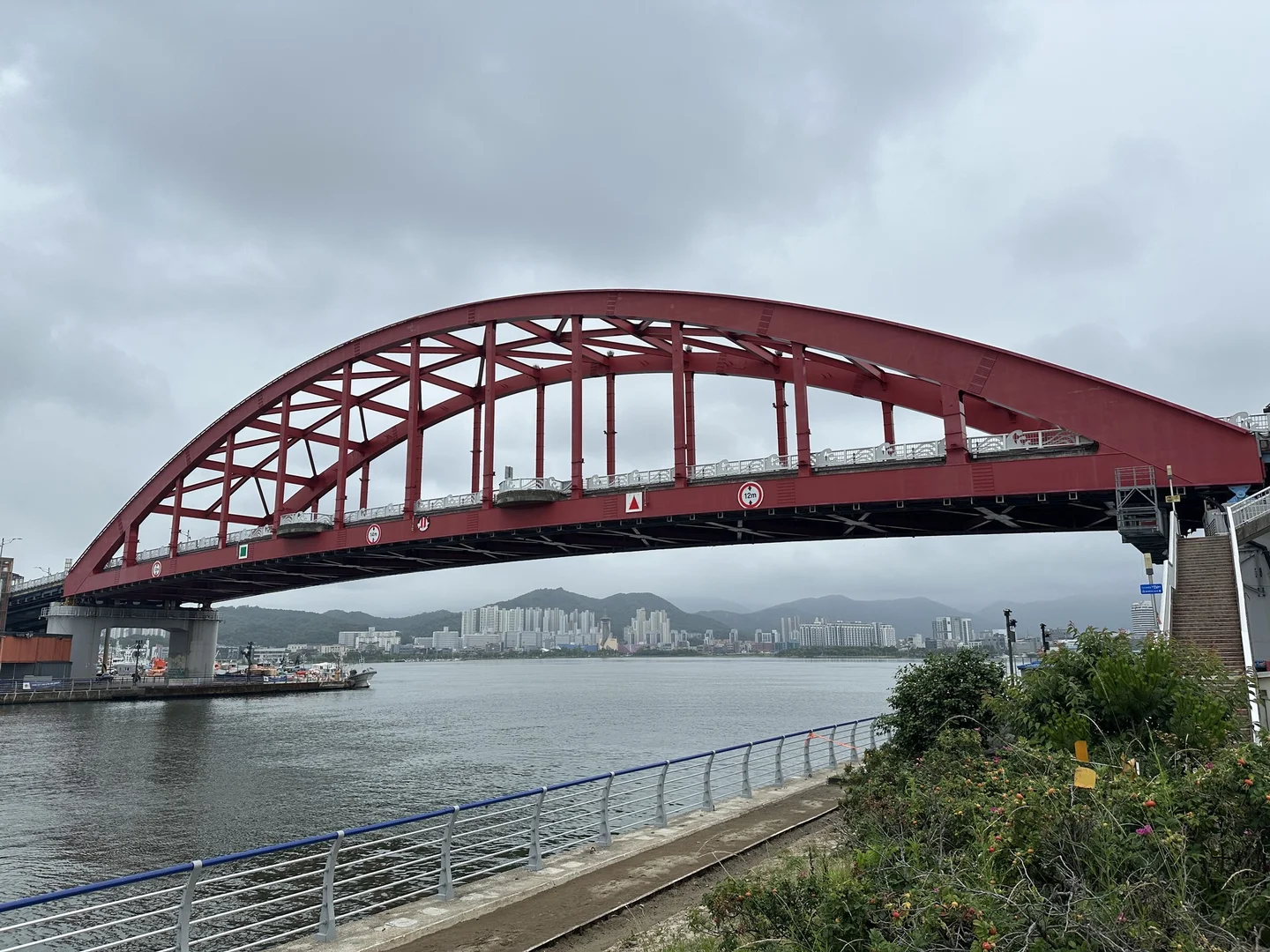
After lunch, the waterfront gives the visit a welcome change of scale. Narrow lanes open toward beach, channel, and sky. A short walk toward the nearby shore is enough if you want some sea air before returning to the ferry. For a higher viewpoint, the pedestrian routes around Seorak Bridge and Geumgang Bridge look over the neighborhood and Cheongchoho Lake. The city's bridge guide identifies stairs and elevators connecting the bridge level with Abai Village. If you need step-free access, confirm that the relevant elevator is operating before choosing this as your return route. A ferry-and-market combination works in either direction. Start with the market and cross for lunch, or eat in the village and take the boat back for a market stroll. If your accommodation is toward Sokcho Beach, continuing south through Cheongho-dong may fit better than crossing back immediately.