Jeongseon Rail Bike: a river-valley ride from Gujeolli to Auraji
Korea.net / Korean Culture and Information Service (Jeon Han) · Original · CC BY-SA 2.0 ·
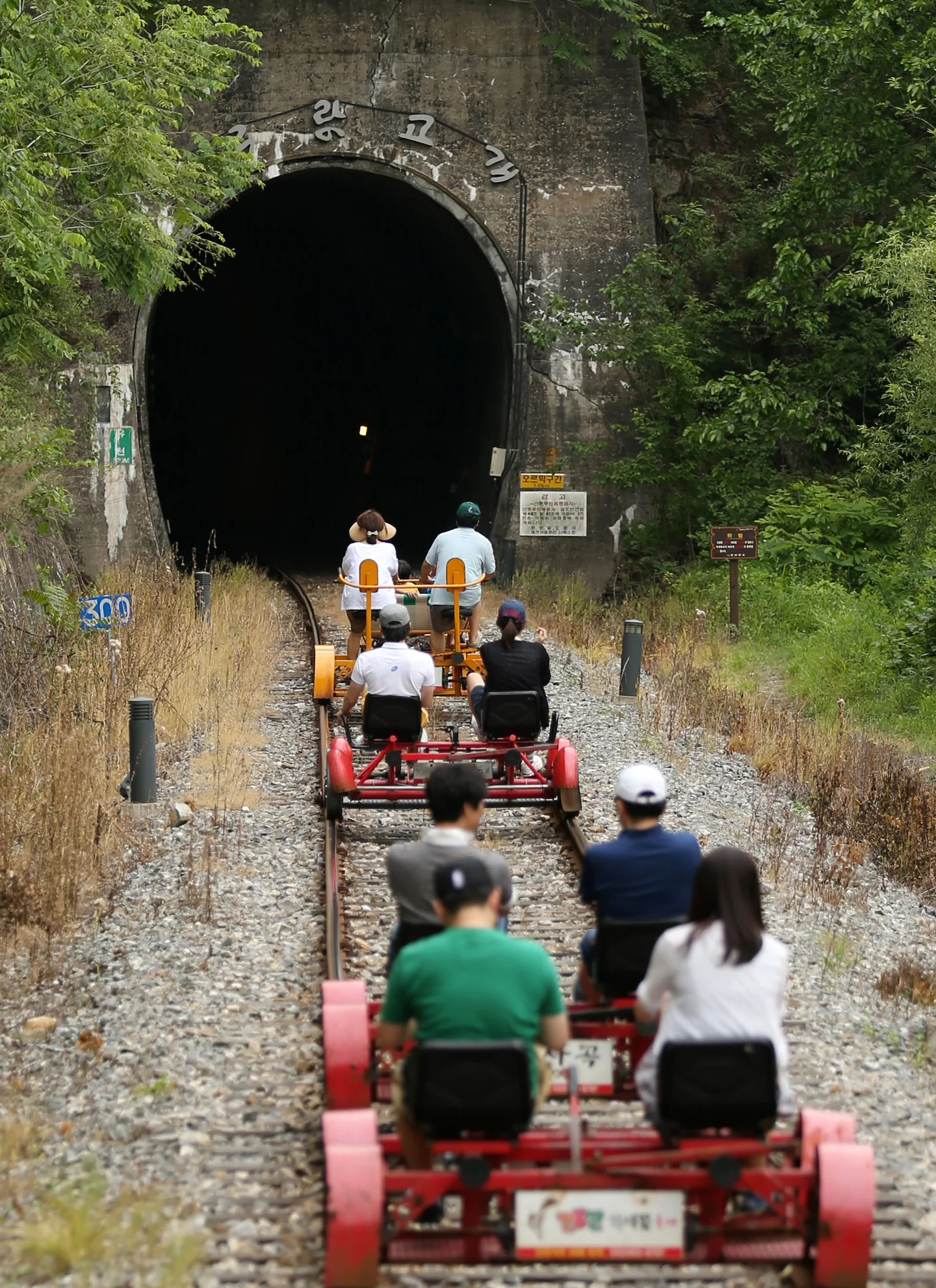
The appeal of Jeongseon Rail Bike is being out in the valley: following the river beneath wooded slopes, rolling into the cool darkness of a tunnel, and emerging into another stretch of mountain country. The 7.2-kilometer route uses an old railway between Gujeolli and Auraji in inland Gangwon. You pedal a two- or four-seat vehicle along the rails, then return on the attraction's scenic train. That combination makes this a good shared activity for people who want more involvement than a sightseeing bus, without committing to a mountain hike. The tracks guide the vehicle, so balancing a bicycle isn't part of the experience. Pedaling and braking are, however, and the four-seat vehicles take effort, particularly toward the end. Choose your riding group with that in mind. Allow about 90 minutes for the rail-bike ride and return train, plus time before departure. For a relaxed half-day, add a meal and a separate look around Auraji's river confluence or nearby Ojang Falls. Gujeolli, the starting point, is outside Jeongseon-eup, where the Arirang Market is located. Arriving in Jeongseon town doesn't put you at the boarding platform.
Book a vehicle, then plan the trip to Gujeolli
Korea.net / Korean Culture and Information Service (Jeon Han) · Original · CC BY-SA 2.0 ·
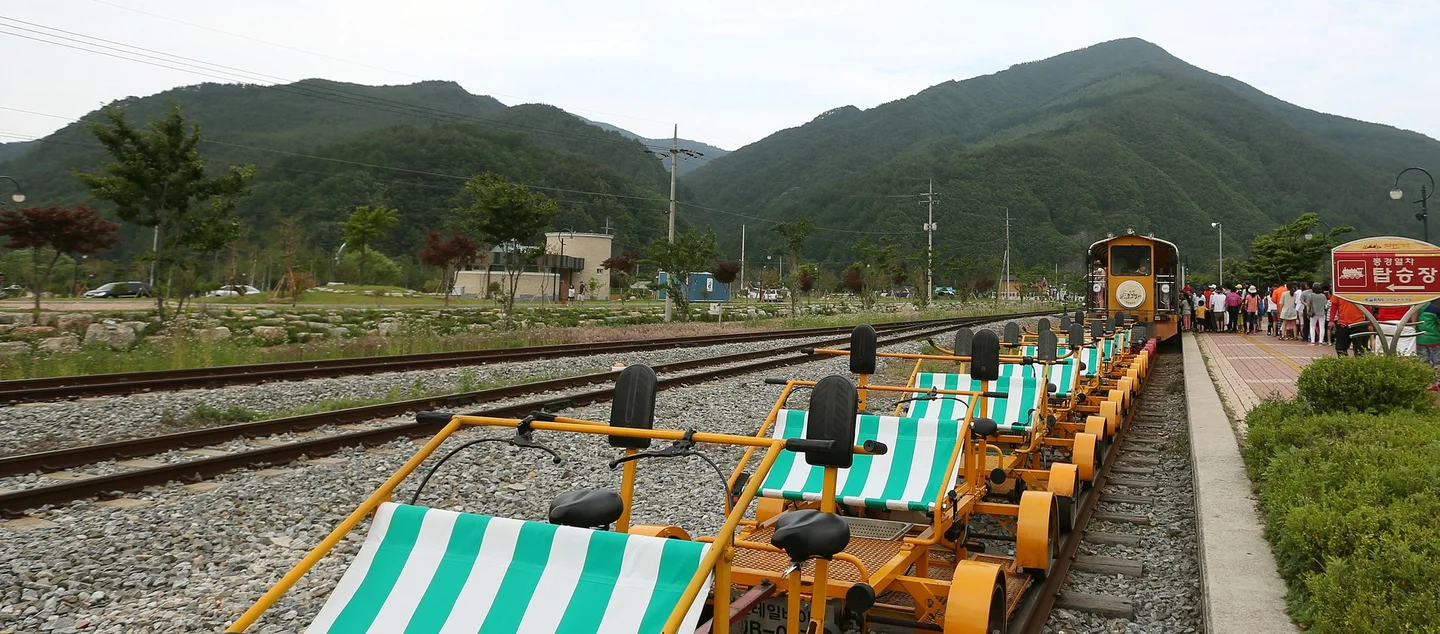
Search for the Jeongseon Rail Bike boarding area at Gujeolli Station when setting your destination. Auraji is the end of the pedal-powered leg. Tickets are sold by vehicle. As checked October 12, 2026, the standard fare is 30,000 won for a two-seat bike and 40,000 won for a four-seat bike, including the return scenic train. The operator's booking site shows departures and remaining availability for the selected date. Winter has fewer scheduled sessions than the warmer months. Walk-up sales depend on unsold inventory, so reserve ahead if the activity is the main reason for your journey. The published visitor guide asks riders to collect tickets at Gujeolli at least 20 minutes before departure. Allow additional time for parking and finding the ticket office. A booking time is the ride's departure, not the time to pull into the lot. Choose seats before booking, especially with children. There is a limited lap-child exception for a child younger than 36 months; older children count toward the vehicle's capacity. Read the age and seating conditions for your group rather than assuming every small child can sit with an adult. Parties split between two- and four-seat bikes may also depart in different groups and won't ride side by side. For a car-free visit, use Jeongseon's local bus information to work out the connection to Gujeolli and the journey afterward. A bus reaching Jeongseon-eup or Yeoryang isn't automatically a direct connection to the rail-bike platform. Check the complete trip before choosing a session, or arrange a taxi for the local leg. With a car, the return train brings you back to where you started.
What the ride involves
The operator estimates roughly 40–50 minutes on the rail bike. This is enough time to watch the valley change without turning the outing into a full cycling day. Forest edges, tunnel entrances, and open river stretches give the route its rhythm; the pleasure comes from moving through them at outdoor speed. Listen to the briefing on pedaling, braking, and spacing before departure. Once underway, the bikes form a procession on a single track. The operator prohibits photography while moving, sudden stops, and getting off at unauthorized points. Save pictures for permitted stationary stops; the rail bike isn't a vehicle you can pull over beside a particularly attractive view. Light rain doesn't necessarily cancel departures. A rain poncho is more practical than expecting shelter for the full ride. Severe rain, wind, or snow can affect service, so a poor forecast is a reason to check that session's operation before making the drive. If repeated pedaling or stepping into the vehicle would be difficult, ask about the actual boarding and riding requirements before reserving.
The return train is part of your session
Korea.net / Korean Culture and Information Service (Jeon Han) · Original · CC BY-SA 2.0 ·
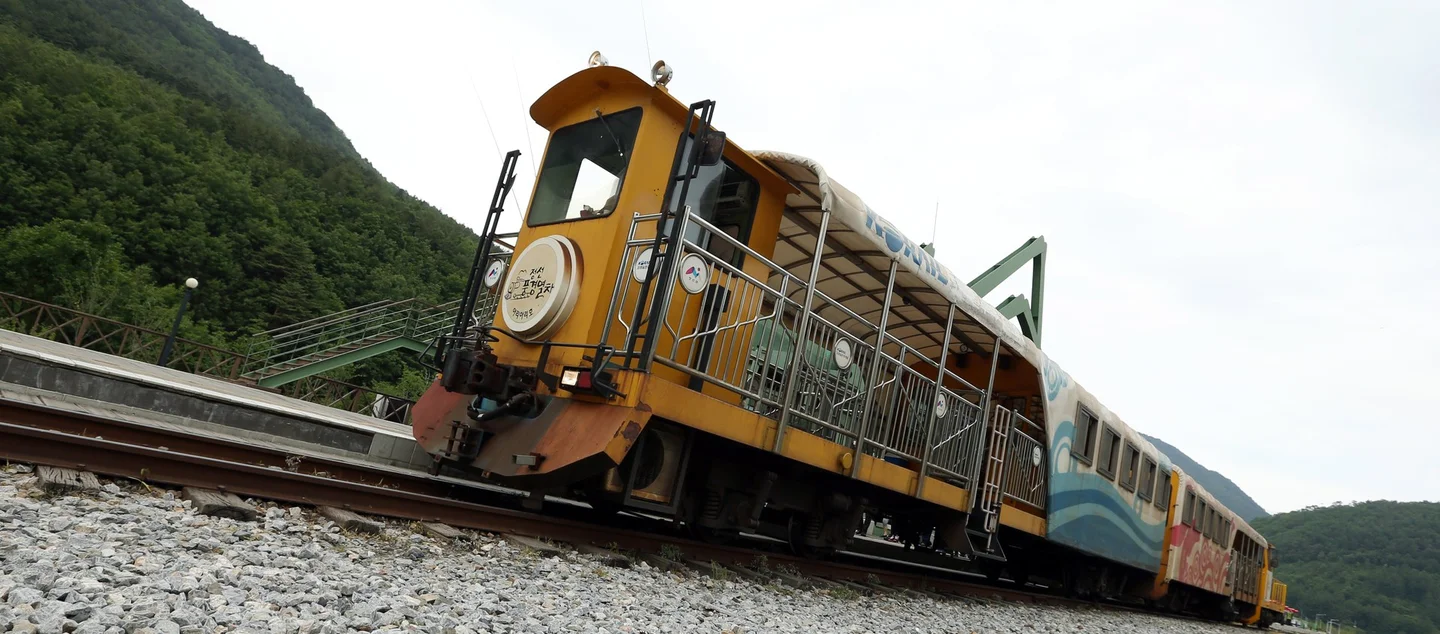
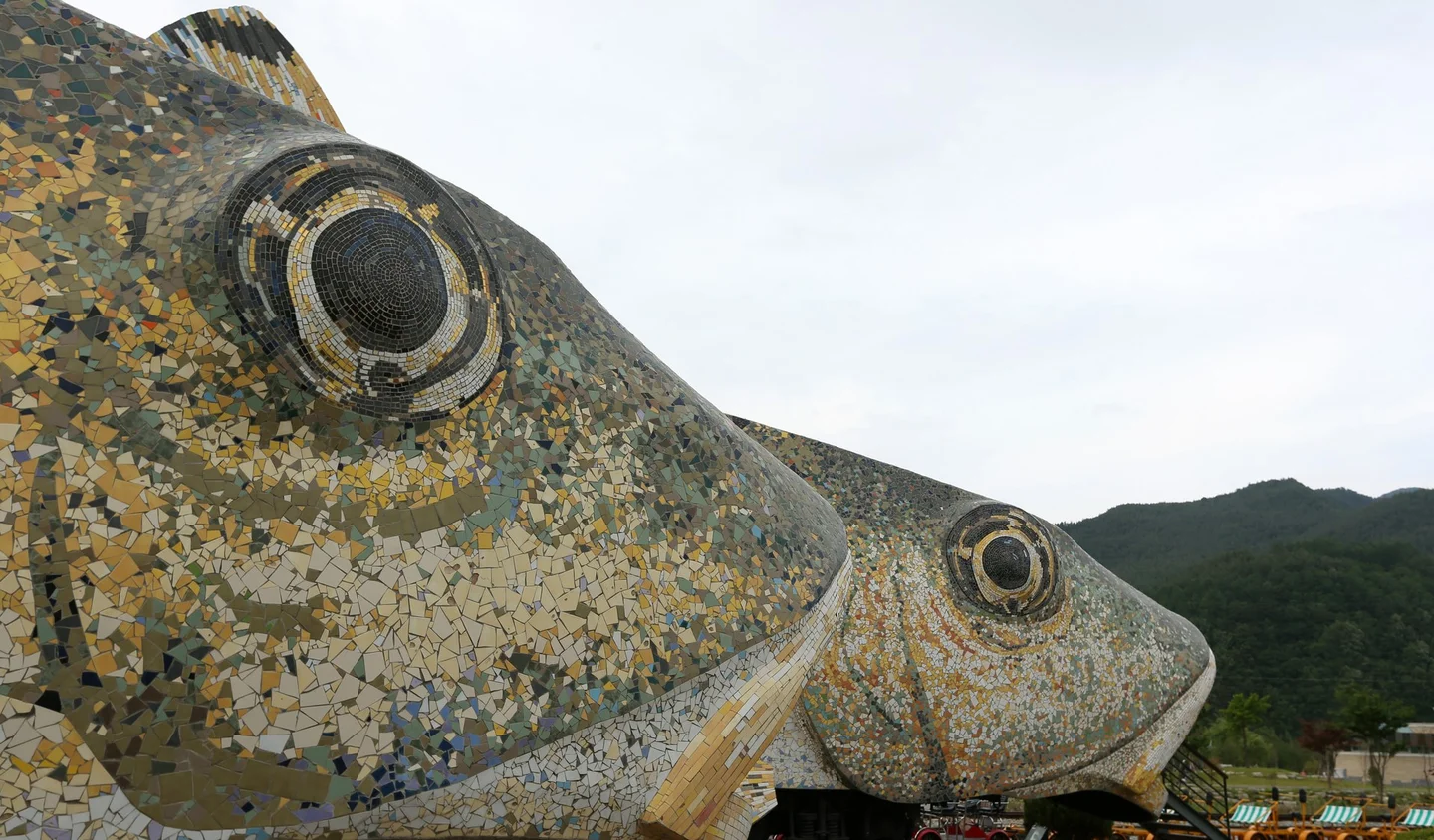
At the Auraji end, huge fish-shaped structures add a playful landmark to the arrival area. Follow the staff's directions to the scenic-train boarding point and keep track of your group's return. The train takes about 20–30 minutes back to Gujeolli. You don't pedal the route uphill again.
Korea.net / Korean Culture and Information Service (Jeon Han) · Original · CC BY-SA 2.0 ·
This train serves rail-bike passengers on the corresponding session. It isn't a regular intercity service or an all-day hop-on ticket. If you'd like to explore Auraji properly, schedule that as a separate visit after the return journey rather than turning a boarding interval into an extended riverside walk. Dog owners need a different return plan. The operator currently permits one small dog in a suitably sized enclosed carrier on the rail bike, but doesn't allow dogs on the scenic train. Its suggested arrangement is for one person to take the train back and collect the car while another stays with the dog at Auraji. Confirm the pet conditions when booking; this is a practical limitation for a solo traveler or a group without a vehicle.
Auraji: where two streams meet
Korea.net / Korean Culture and Information Service (Jeon Han) · Original · CC BY-SA 2.0 ·
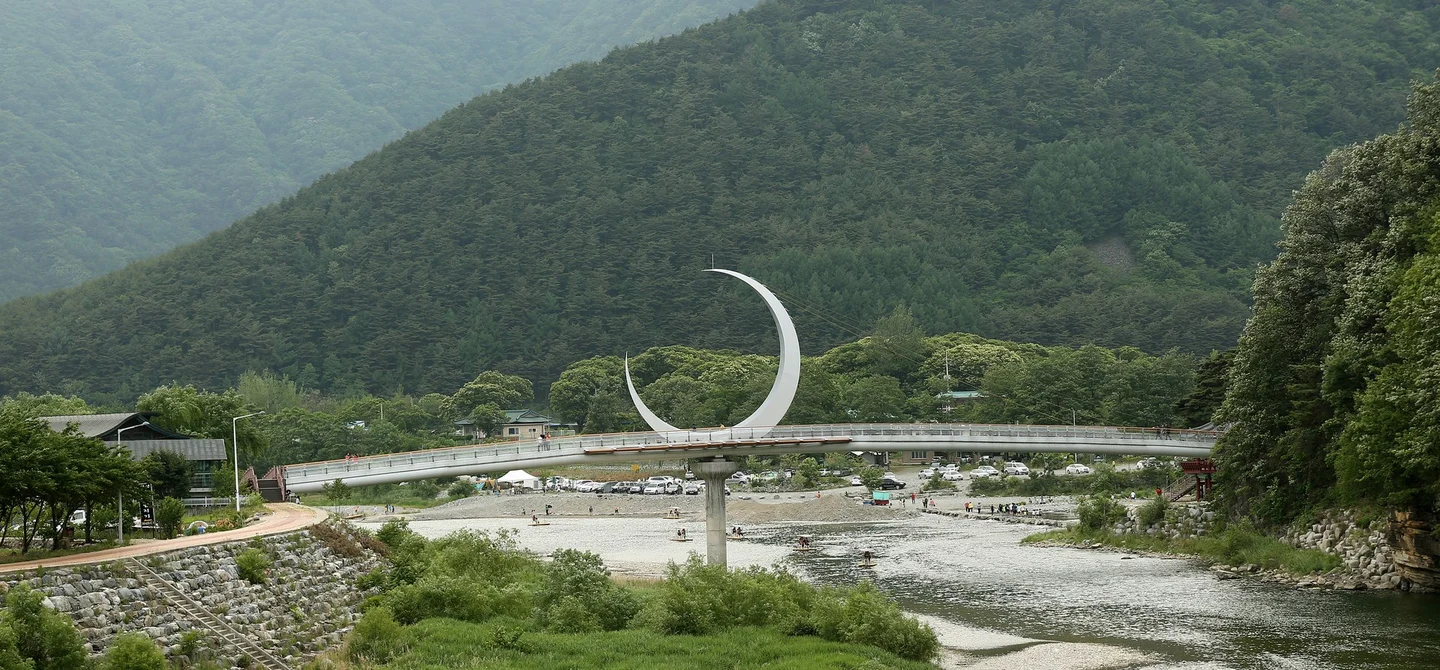
Auraji is the meeting point of the Songcheon and Goljicheon streams. The water, bridges, and surrounding hills make an inviting contrast to the timed rail-bike session: here you can linger beside the river rather than moving with a line of other vehicles. Auraji also features in Jeongseon Arirang, the area's traditional song culture. Local stories connect the river with lovers separated by rising water and with the timber rafts that once traveled downstream. Reading the interpretation at the riverside gives the landscape another dimension without requiring a separate museum visit. Use the bridges and established walking areas to see the confluence. Drivers can collect the car at Gujeolli before returning to Auraji, leaving the walk independent of the train timetable.
Add Ojang Falls near Gujeolli
Korea.net / Korean Culture and Information Service (Jeon Han) · Original · CC BY-SA 2.0 ·
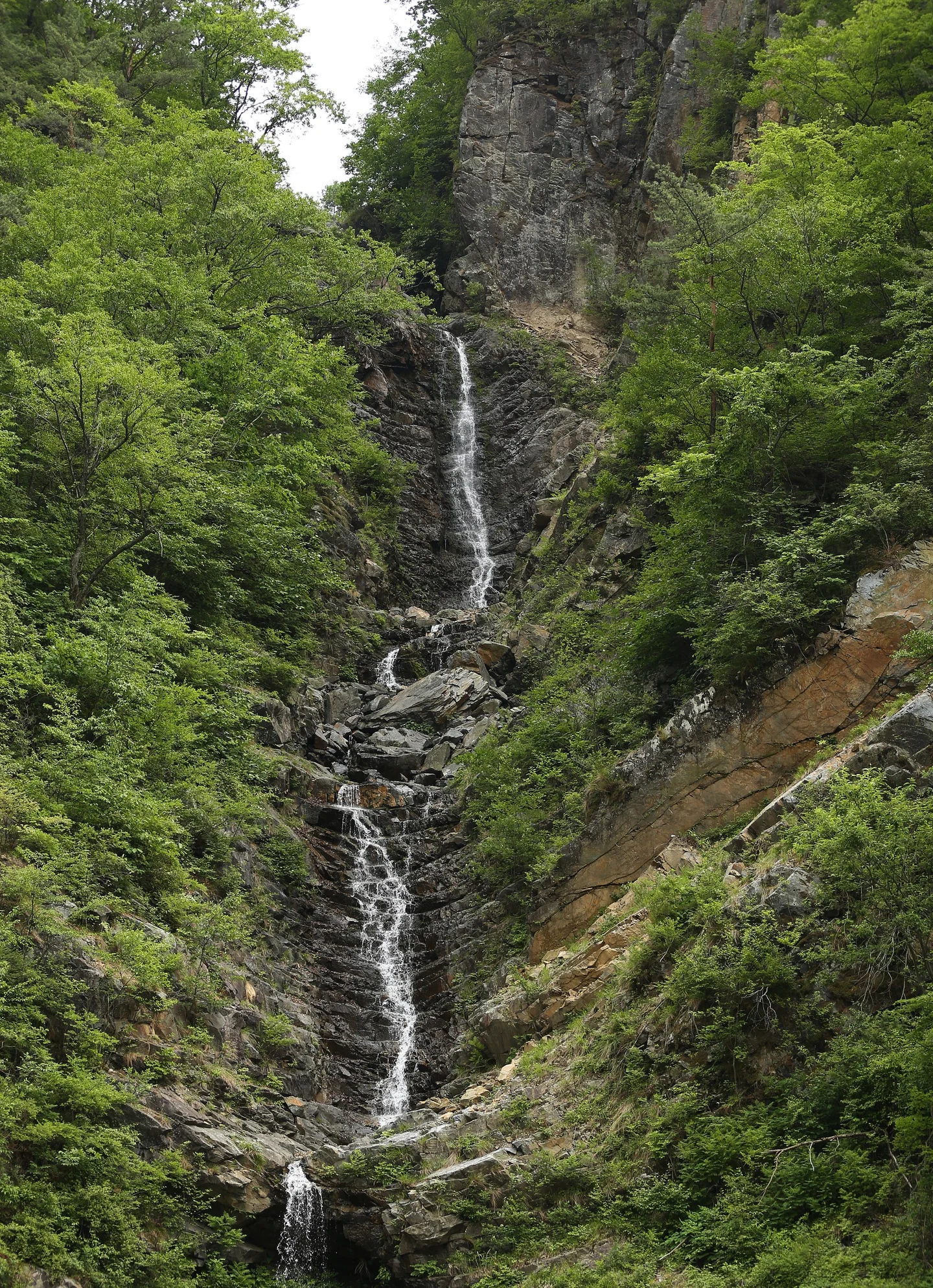
Ojang Falls is a separate stop near the departure side of the rail-bike route. Water descends a long, steep rock face framed by forest. Jeongseon County identifies it as an artificial waterfall fed from Nochusan, a useful distinction if you're picturing an untouched mountain cascade. Its scale makes it worth considering before or after your ride, particularly if you're already driving through Gujeolli. Water volume varies, and the waterfall isn't a place where passengers can leave the rail bike midroute. View it from the visitor area as a short addition to the day. If you're continuing to Jeongseon Arirang Market, allow for the separate road journey to Jeongseon-eup rather than treating the market as a walk from the station.