Yeonggeumjeong and Dongmyeong Port: Sokcho’s Pavilions by the Sea
Mobius6 · Original · CC BY-SA 4.0 ·
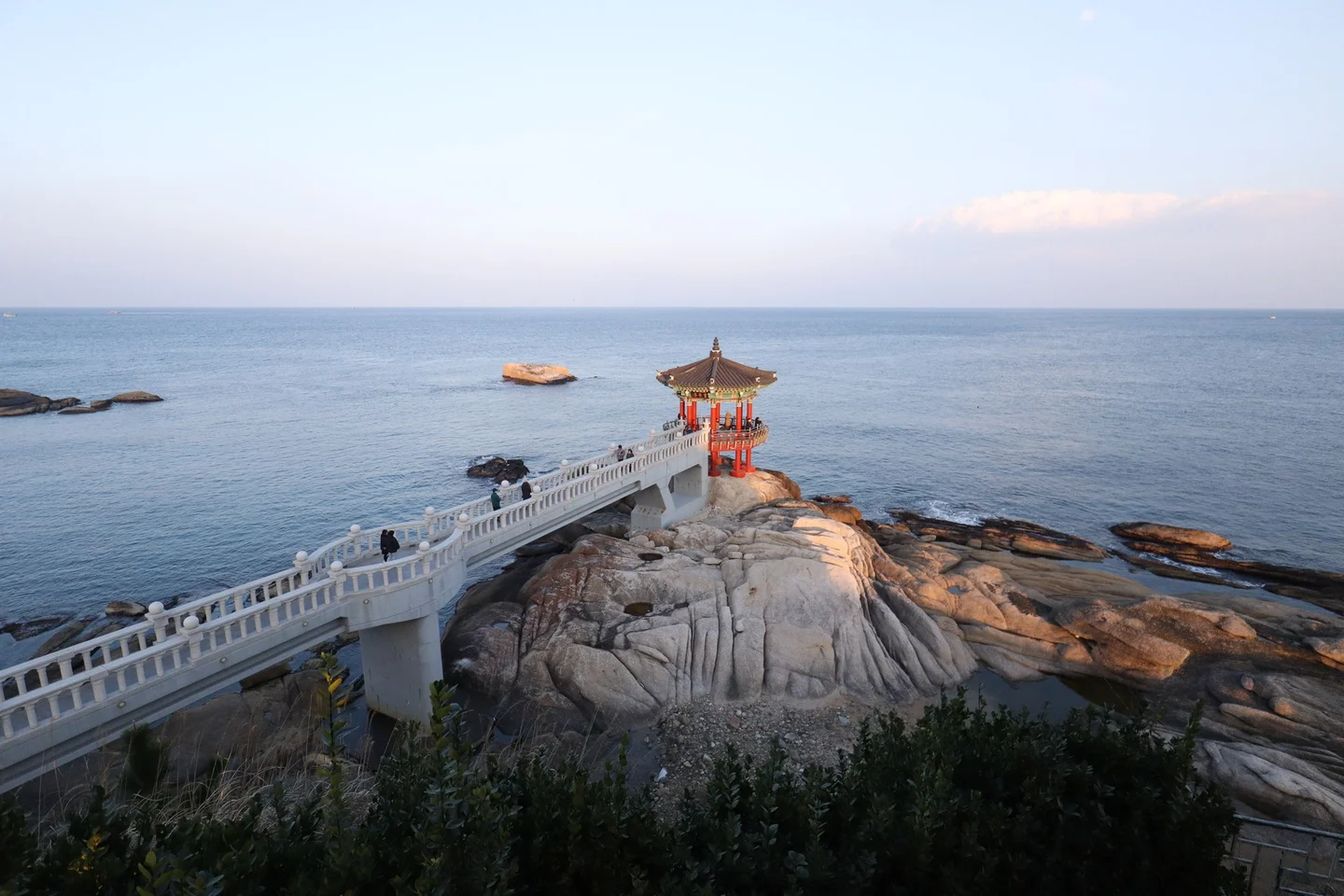
A white bridge reaches across pale coastal rock to a small, brightly painted pavilion. Beyond it, the East Sea fills the view. Yeonggeumjeong is one of Sokcho's most recognizable seaside scenes, and the neighboring Dongmyeong Port makes it easy to turn a short photo stop into a walk and a seafood meal. The setting offers a different experience from the city's sandy beaches. Waves meet exposed rock below the pavilion, a second pavilion stands on the low hill behind it, and the lighthouse rises higher still. You can change your view several times within a compact area. Yeonggeumjeong originally referred to the rocky shore below Sokcho Lighthouse. Its name recalls the sound of waves striking stone, compared in local tradition to a geomungo, a Korean string instrument. The city's account of Yeonggeumjeong connects that sound and landscape to the place now associated with the sea pavilion. Plan on roughly an hour for an unhurried look around the pavilions and waterfront, longer if you add the lighthouse or sit down to eat. The area is on the Dongmyeong-dong side of Sokcho, near the part of town served by the intercity bus terminal. Sokcho Express Bus Terminal is a different arrival point. For a taxi or map search, use Yeonggeumjeong, 영금정, if you want to begin at the coast; choosing the lighthouse may send you uphill first.
Two Pavilions, Two Different Views
Mobius6 · Original · CC BY-SA 4.0 ·
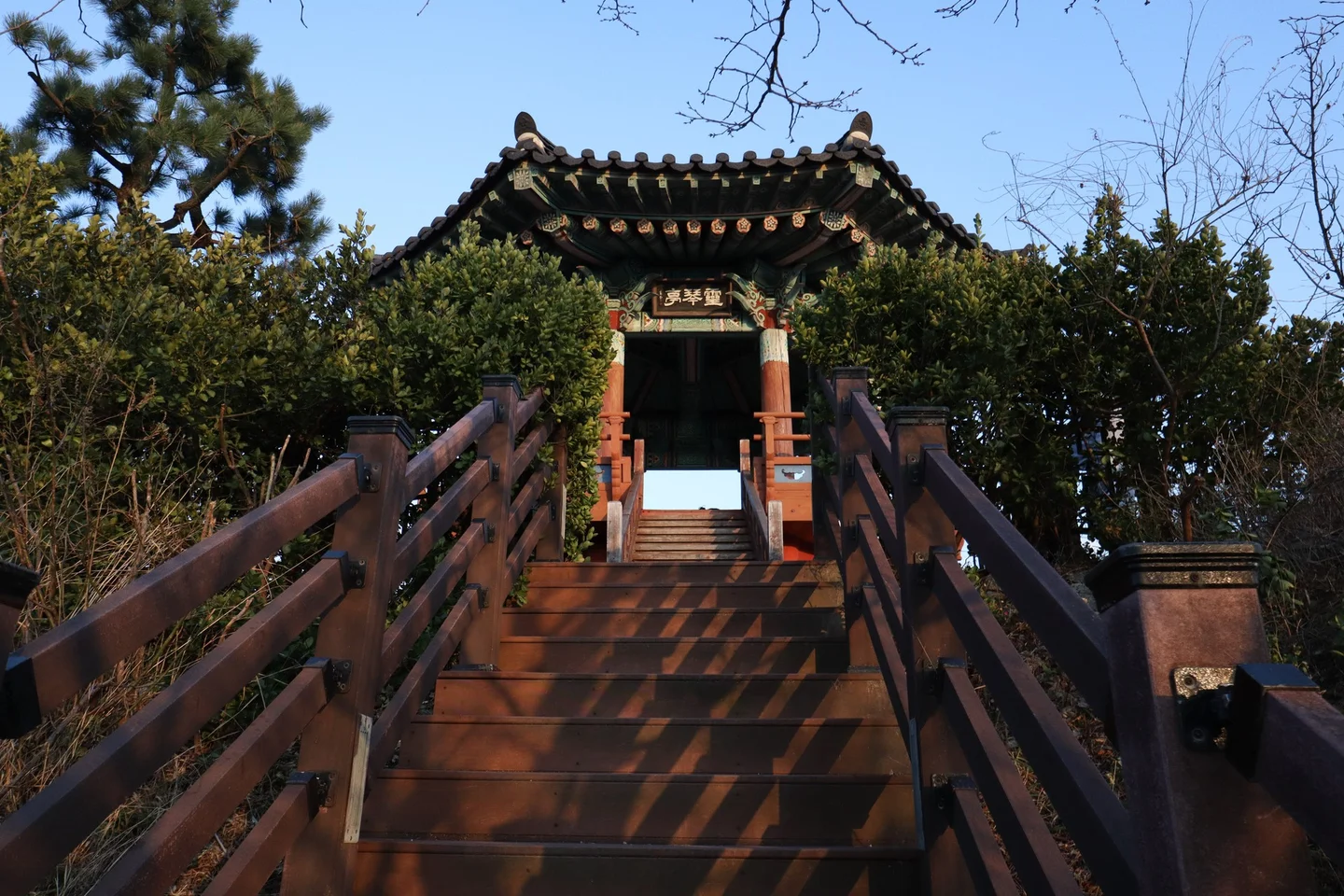
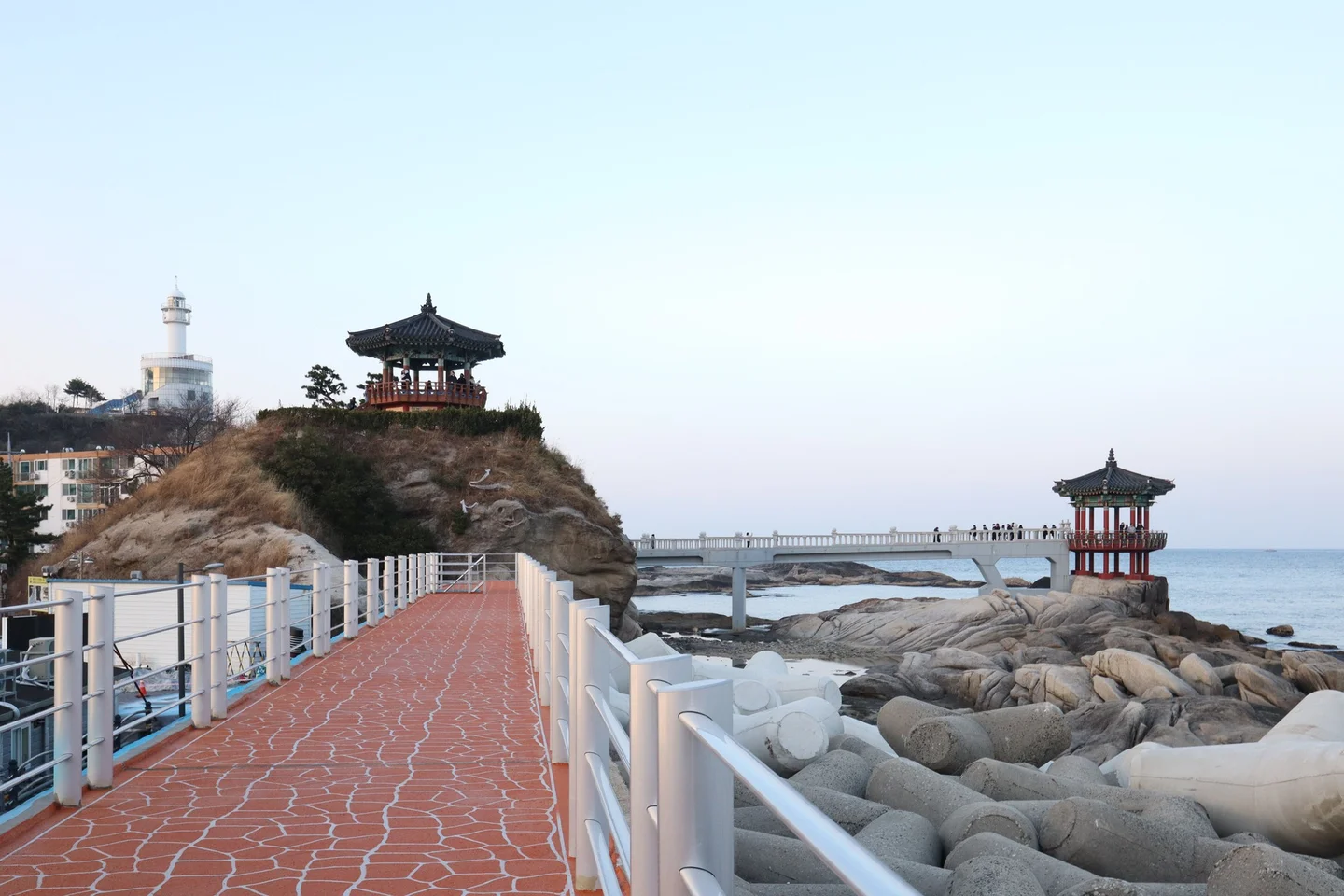
The pavilion over the water is reached by Dongmyeonghaegyo Bridge. Walk out, pause over the rocky shoreline, and return the same way. It is a short viewing spur rather than the beginning of a continuous path around the coast. From the sea pavilion, the horizon takes center stage. You are close enough to the shore to watch water move between the rocks below, with the roof providing a frame above the view. The bridge itself also gives you a changing angle on the pavilion as you approach. The hilltop pavilion is a separate stop reached by stairs. It offers the broader composition: bridge, sea pavilion, rock, and open water together. If your main aim is the classic view of Yeonggeumjeong reaching into the sea, the landward viewpoints are especially useful. You don't need to visit every platform. The steps to the hilltop pavilion may be inconvenient for someone with sore knees or a stroller, while the shore-level public spaces still provide a good sense of the setting. Ask on site about the appropriate approach if you need mobility assistance. Wind and waves determine how close you should go. Use the designated paths and railings, and follow any temporary closure at the bridge. The rock shelves and concrete wave barriers below are not additional viewing platforms. In rough conditions, a shorter look from the landward side is the better plan.
Add Sokcho Lighthouse for the Wider Panorama
Mobius6 · Original · CC BY-SA 4.0 ·
The lighthouse viewpoint adds height rather than another version of the same short shore walk. From above, you can see how the harbor, city, and coastline fit together. On a clear day, the mountains behind Sokcho give the sea view a particularly impressive backdrop. The approach involves an uphill walk and stairs, so make it an optional extension according to your group's energy. If you have already enjoyed the two pavilion viewpoints, heading straight to Dongmyeong Port for lunch is a perfectly complete outing. As checked October 12, 2026, Sokcho City's lighthouse guide lists free admission and opening hours of 9 a.m. to 5 p.m. The lighthouse continues its navigational work after dark, but that does not mean visitors can enter the viewpoint at night. Likewise, a sunrise visit to Yeonggeumjeong comes before the listed lighthouse opening time. For a longer daytime walk, consider continuing north toward Yeongnang Beach. The city's Jangsa and Yeongnang coastal route links those shores with the lighthouse and Yeonggeumjeong as part of an approximately 4.5-kilometer itinerary. Choose the section that interests you and work out how you will return, especially if you parked at Dongmyeong Port.
Dongmyeong Port: Boats, Fish Stalls, and Lunch
최광모 (Choe Kwangmo) · Original · CC BY-SA 4.0 ·
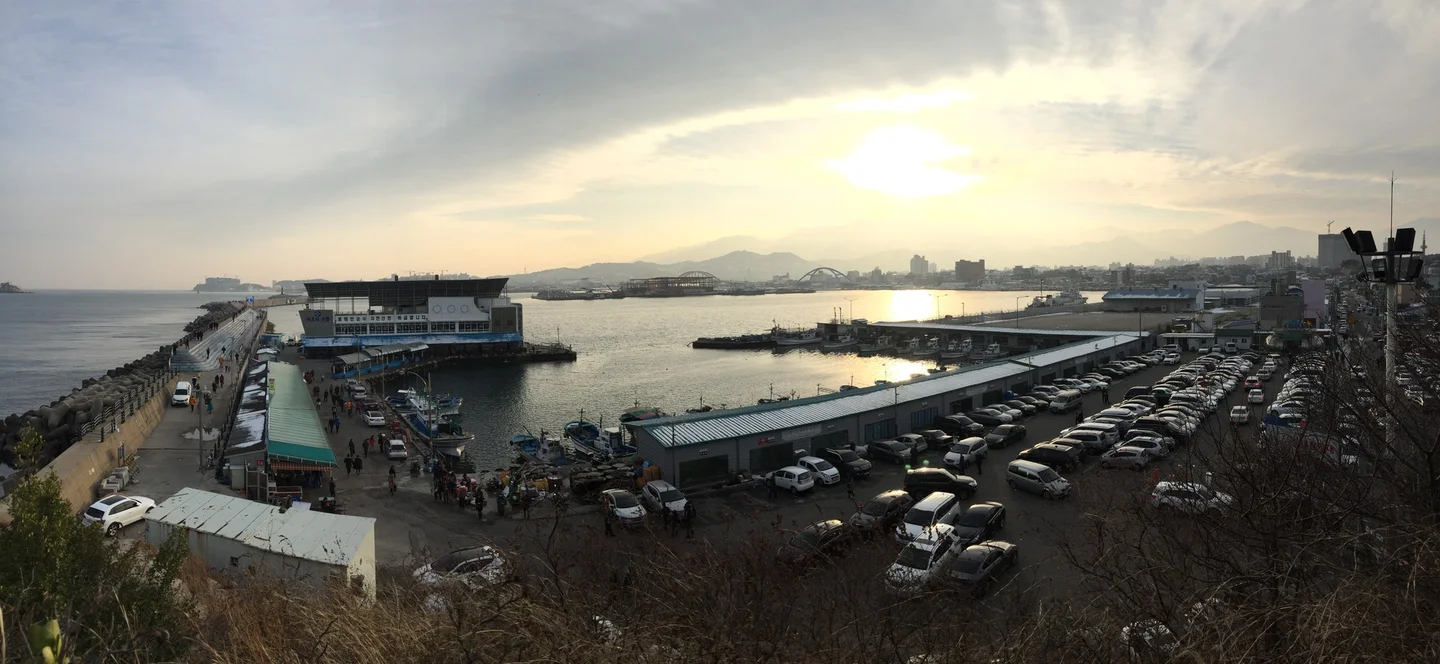
At the harbor, attention shifts from the open horizon to moored boats, fishing equipment, and the streets behind the quay. It is a working waterfront as well as a visitor destination. Stick to public walking areas and leave access clear for vehicles and people unloading boats. The city's Dongmyeong Port guide identifies its live-fish center and seafood dining as reasons to visit. That makes lunch an easy addition to the coastal walk, but it is worth deciding how you want to eat before selecting a fish. Hoe, 회, is Korean-style raw fish. If you buy from a live-fish seller, ask what the quoted amount covers: the species, weight or number of fish, preparation, and whether eating it at a table involves a separate charge. Rice, drinks, and soup may be additional items. Getting the complete arrangement clear is more useful than assuming a harbor purchase is automatically cheaper than a restaurant meal. For a group that includes people who don't eat raw fish, look for a menu with cooked choices such as grilled fish or a hot fish stew before sitting down. Ask what is available that day and whether a shared order is intended for your group size. If you come for sunrise, keep breakfast flexible. The fact that the waterfront is accessible early does not mean all seafood stalls and restaurants will already be serving. A later-morning pavilion visit followed by lunch is simpler for travelers whose main interest is the food.
Sunrise, Daylight, or an Evening Walk?
Mobius6 · Original · CC BY-SA 4.0 ·
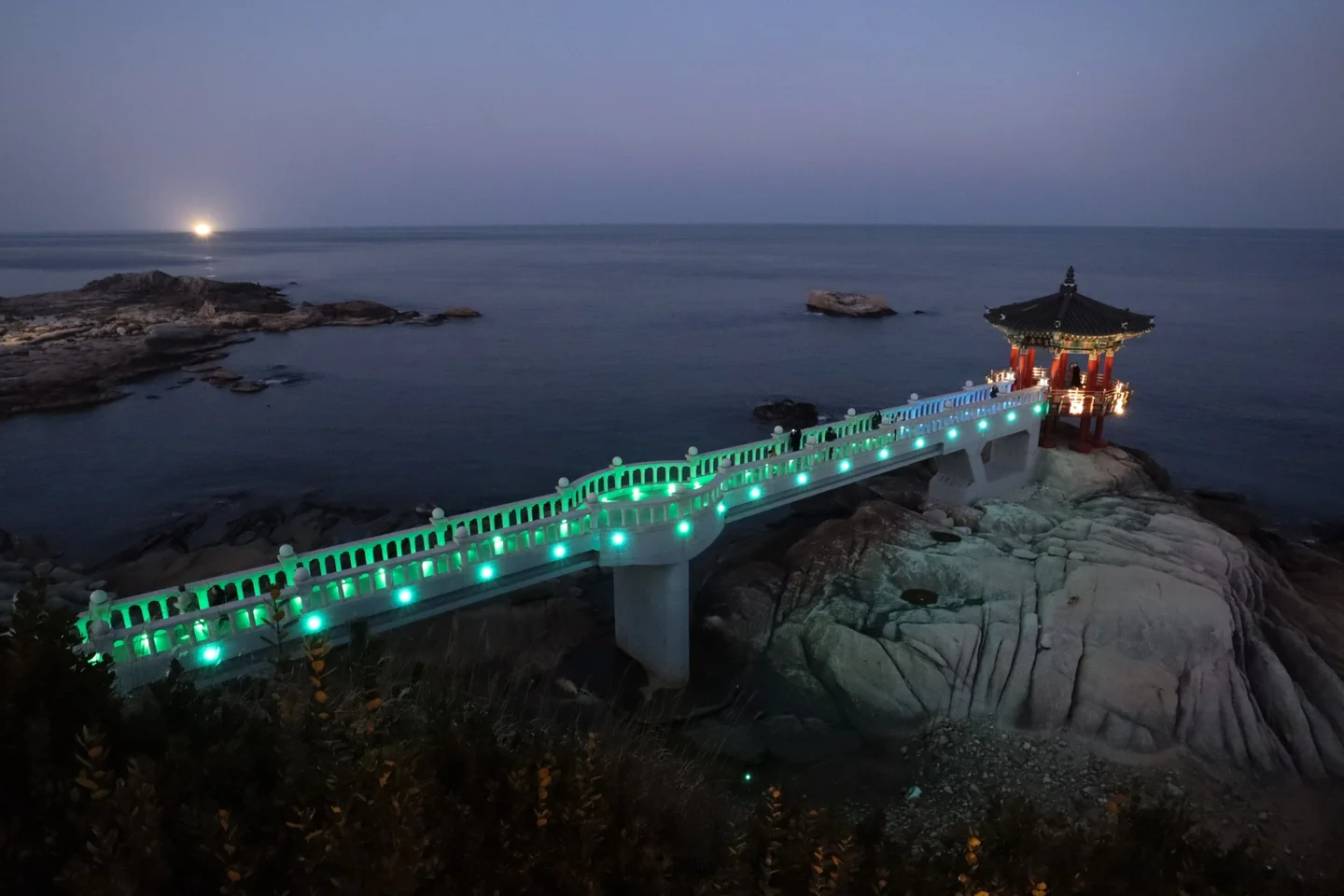
Sunrise suits the east-facing outlook. Arrive early enough to find the entrance and a comfortable viewing position before the light changes. Clouds may hide the sun itself, but the sky and sea can still produce a memorable morning. Check wind and swell conditions as well as the sunrise time. Daylight is best for seeing the coastline's shape and combining the pavilions with the lighthouse. It also gives you more flexibility to continue toward Yeongnang Beach or stop at the harbor for a leisurely meal. In the evening, lighting can pick out the bridge and pavilion against the dark sea. The display and colors may change, so think of it as an atmospheric waterfront stop rather than planning around a particular light effect. Keep to illuminated walking areas when the edges of the rock become harder to see. A practical late-afternoon plan is to visit the lighthouse within its opening hours, walk down to Yeonggeumjeong, and finish with dinner near the port. For a shorter stop, choose whichever pavilion approach suits you and stay by the shore. The combination of a small sea pavilion and a busy harbor gives this corner of Sokcho plenty to offer without a long itinerary.