Jeongseon Arirang Market: what to eat and when to catch market day
IRTC1015 · Original · Public domain ·
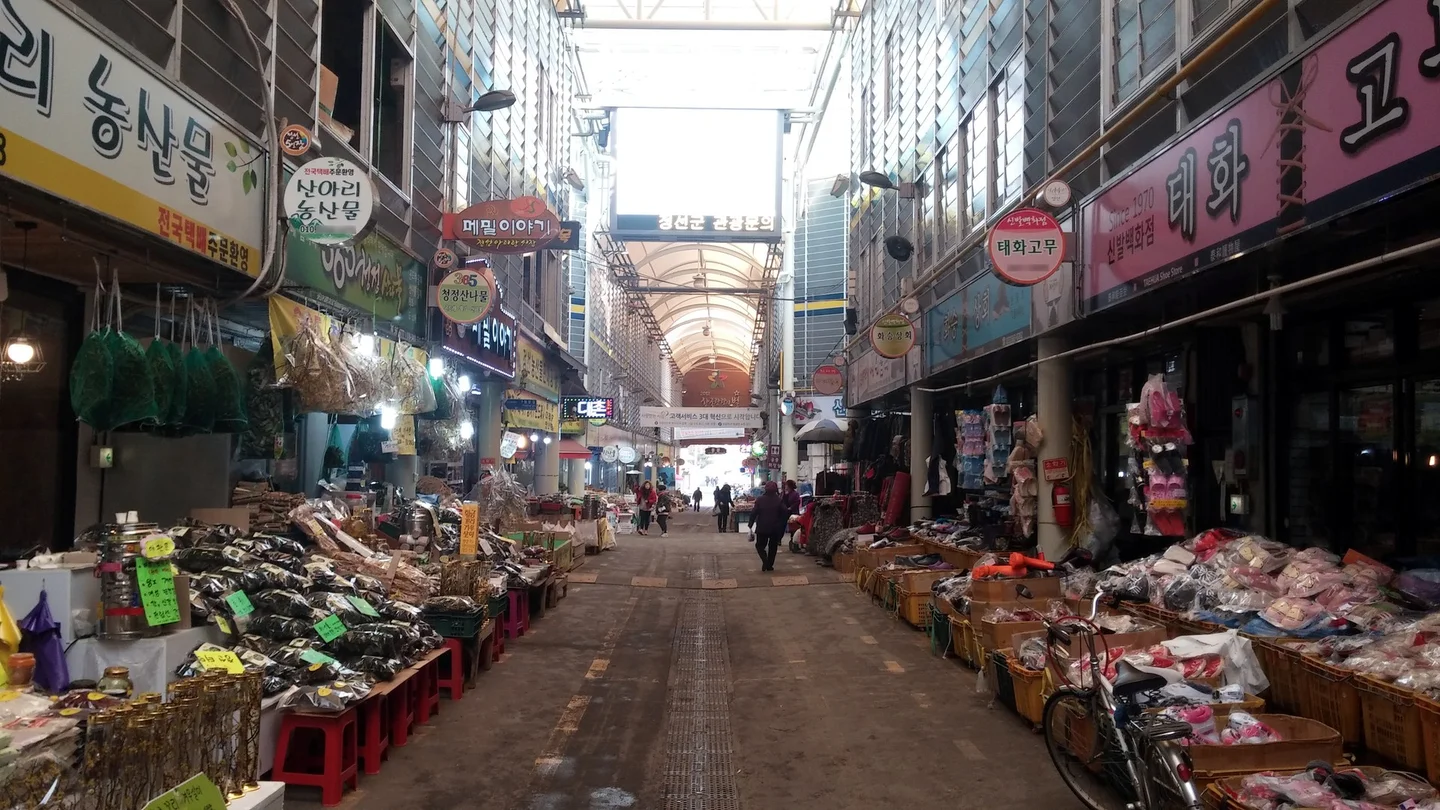
Buckwheat pancakes, soft corn noodles, rice with mountain greens: Jeongseon Arirang Market is a good place to get beyond the Korean dishes that usually make it onto an overseas restaurant menu. Its food reflects an inland, mountainous part of Gangwon, where potatoes, corn, buckwheat, and edible greens are central to the local table. Shopping bags here are as likely to contain dried vegetables as souvenirs. The market sits in Jeongseon-eup, the county's main town, surrounded by steep hills and river bends. Give it enough time for a meal and a walk through the produce stalls. Two or three hours is a useful starting allowance, longer if you're choosing food from several places or combining the visit with a scheduled performance. Arirang in the name refers to the folk-song tradition strongly associated with Jeongseon. You can explore that cultural side at the nearby Arirang facilities, while the market itself offers a more everyday introduction to the region through its ingredients and cooking. A town-centered day can pair lunch here with Arari Village instead of spending most of the afternoon driving between distant county attractions.
Which days is the five-day market held?
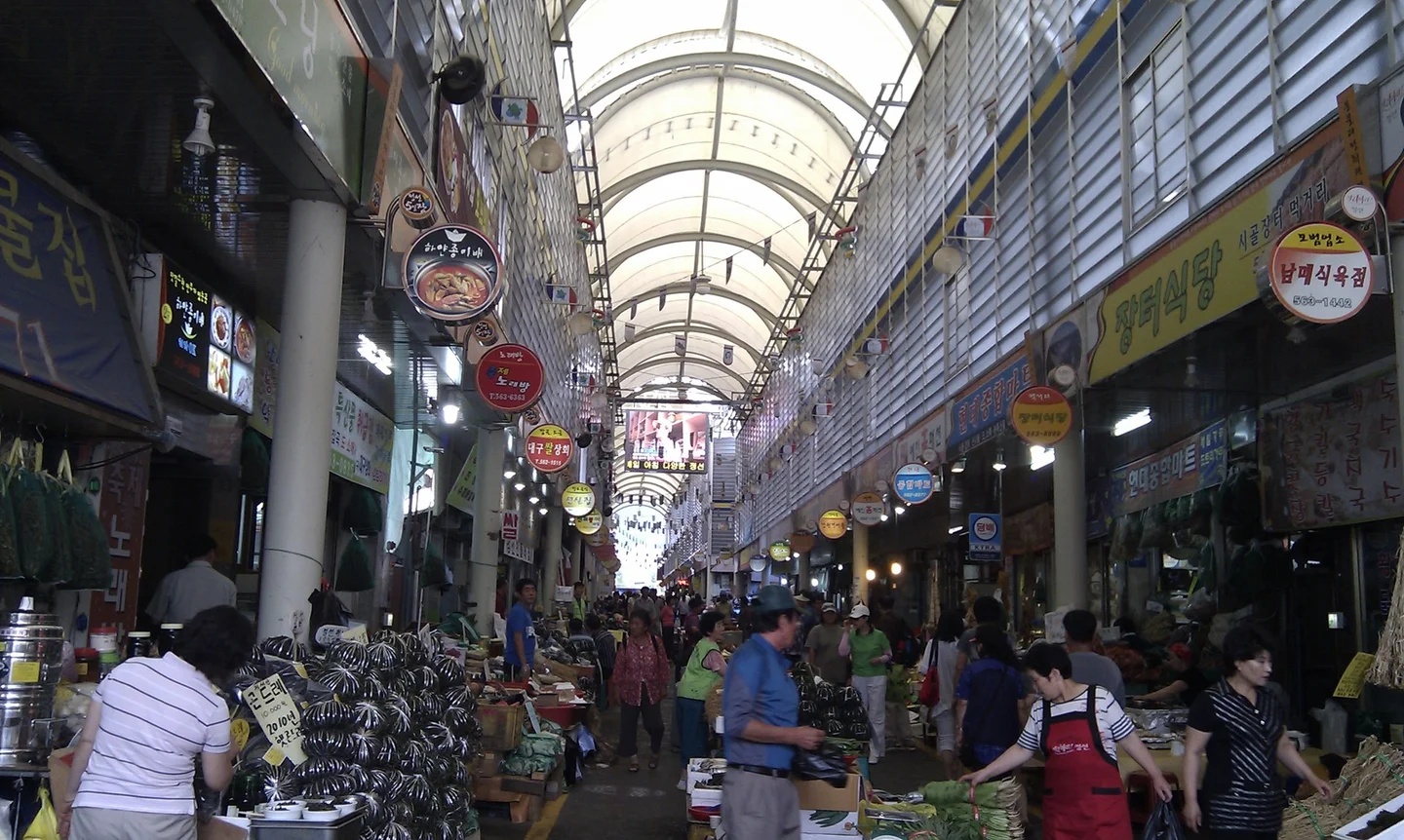
The traditional market dates are the 2nd, 7th, 12th, 17th, 22nd, and 27th of each month. There is also a Saturday weekend market. These dates were checked against Jeongseon County's official listing on October 12, 2026. The term five-day market describes the recurring pattern; it doesn't mean the fifth day of the month or five consecutive opening days. Permanent shops and restaurants also operate between market days, with individual schedules. If your priority is the fuller gathering of vendors and produce stalls, choose a traditional market date or Saturday. If you're coming mainly for a particular lunch, the restaurant's own opening day matters more. VisitKorea describes the permanent market as open daily, but that doesn't mean every business opens every day. The county gives general market hours of 9 a.m. to 6 p.m. A late-morning arrival is a practical choice for browsing and lunch, rather than expecting all vendors to stay until the final minute. The arcade provides shelter over the main lanes, although it isn't a fully enclosed, climate-controlled shopping center. Stalls, shoppers, and deliveries can narrow the usable aisle on busy days.
Start with the griddle: buckwheat, potato, or something sweet
Korea.net / Korean Culture and Information Service (Jeon Han) · Original · CC BY-SA 2.0 ·
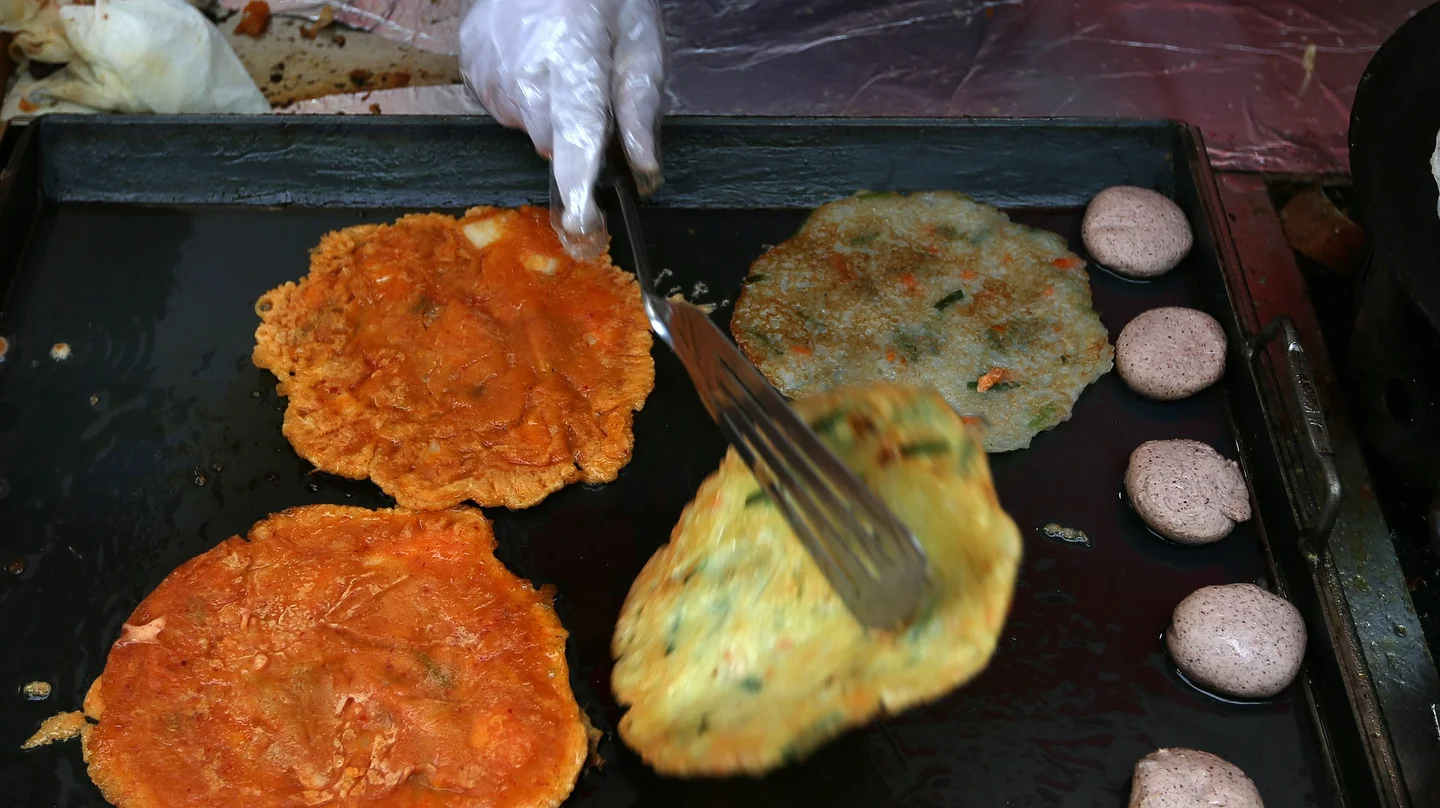
Several different foods share the hot griddles, so it helps to recognize the names before ordering. Memil-jeon is a thin buckwheat pancake, often spread around vegetables. Memil-jeonbyeong is the rolled version with a filling, commonly including kimchi and vegetables. The latter may have a noticeable chili kick even when the wrapper looks mild. Gamja-jeon is a potato pancake, with a different texture from the thin buckwheat version. Susubukkumi takes the snack in a sweeter direction: a chewy pan-fried cake made with sorghum and rice flour, typically folded around sweet red bean paste. A mixed plate, where offered, is a convenient way to compare the different batters and fillings without confusing everything on the griddle with one kind of pancake. Look at how a serving is sold: a single piece, a roll, or a plate can mean quite different amounts. Check whether the vendor has seats or is serving takeout before carrying food into another business. These practical details are more useful than assuming that the longest line or the lowest displayed number identifies the right stop for your lunch.
Gondre rice and two very different noodles
Republic of Korea from Seoul, Republic of Korea · Original · CC BY-SA 2.0 ·
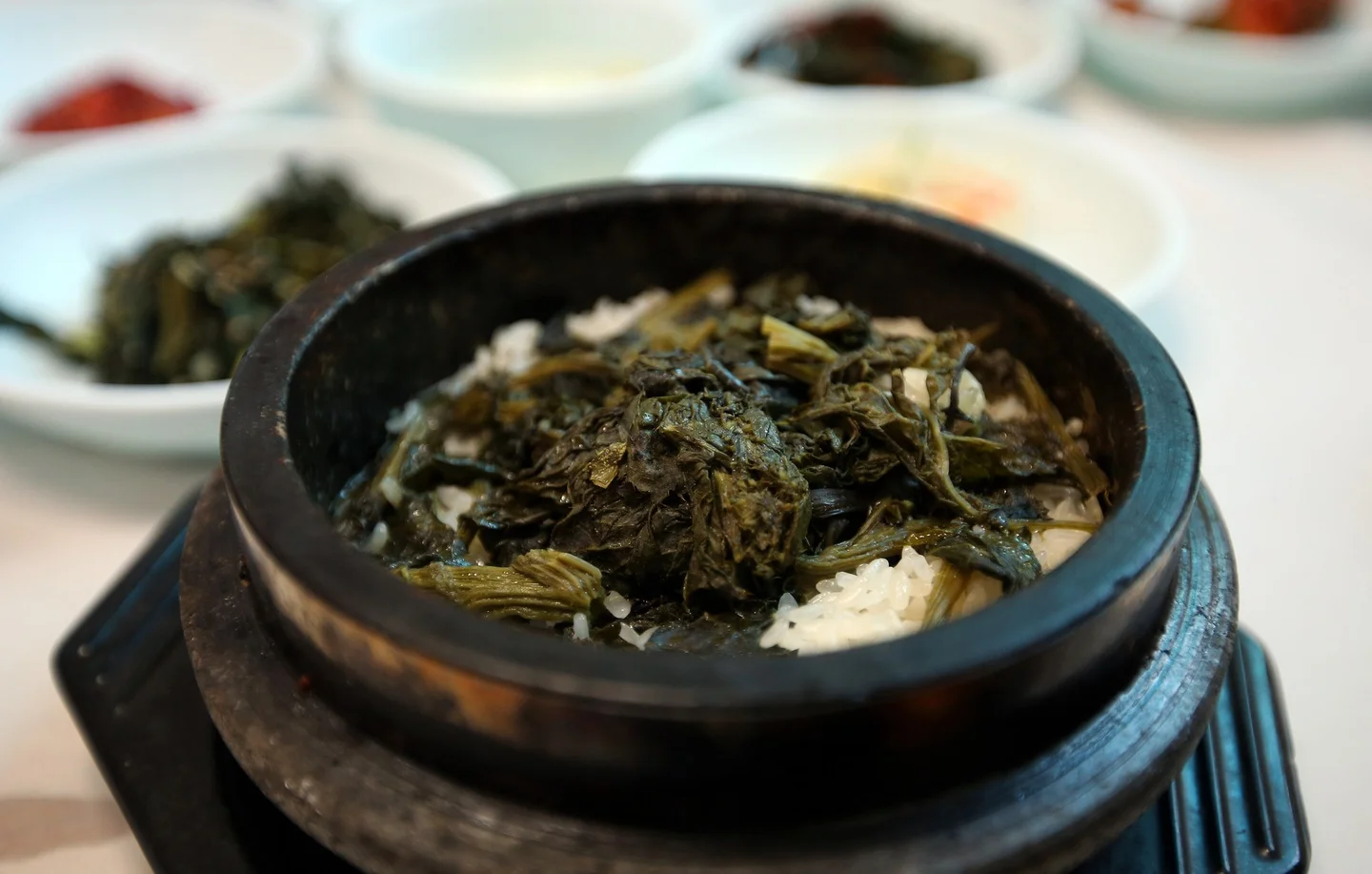
For a full meal, gondre-bap is one of Jeongseon's defining dishes. Gondre is an edible mountain green, served with rice and usually a seasoned soy-based sauce to mix in. The greens have a soft texture and a distinctive earthy aroma. Add the sauce a little at a time so the rice and vegetables don't disappear under the seasoning. Bowls, side dishes, and serving styles vary by restaurant. Olchaengi-guksu has a name that can stop an English-speaking visitor mid-order: tadpole noodles. The name describes the short, tapered pieces, made from a cooked corn mixture pressed through holes. There are no tadpoles in the noodles. Their soft texture makes a spoon more useful than trying to lift a long strand with chopsticks. Korea.net's account of Jeongseon food explains the corn-based preparation. Kotdeungchigi-guksu is a different dish, made with buckwheat noodles. Its playful name refers to noodles flicking against the bridge of your nose as you eat. A traditional version uses a soybean-paste broth with vegetables; some menus offer other preparations, so check whether you're ordering a soup or a mixed noodle dish. Jeongseon County's local-food guide distinguishes these recipes from the corn noodles. Buckwheat, corn, or mountain greens in a dish's name don't establish that the entire meal is vegetarian or free of wheat. Broths, sauces, and pancake fillings matter too. If an ingredient is important to you, ask about those components rather than relying on the main ingredient alone. Before leaving the market, take a look at the produce stalls. Fresh greens and dried greens need different preparation; ask how a purchase should be soaked, cooked, and stored, and keep its Korean name on the label. For travelers without access to a kitchen, tasting a prepared dish may be more useful than buying a bag of unfamiliar dried vegetables. Seasonal stock and where it was grown are worth checking rather than assuming every item is locally harvested that morning.
Add Arari Village for a look at mountain homes
Korea.net / Korean Culture and Information Service (Jeon Han) · Original · CC BY-SA 2.0 ·
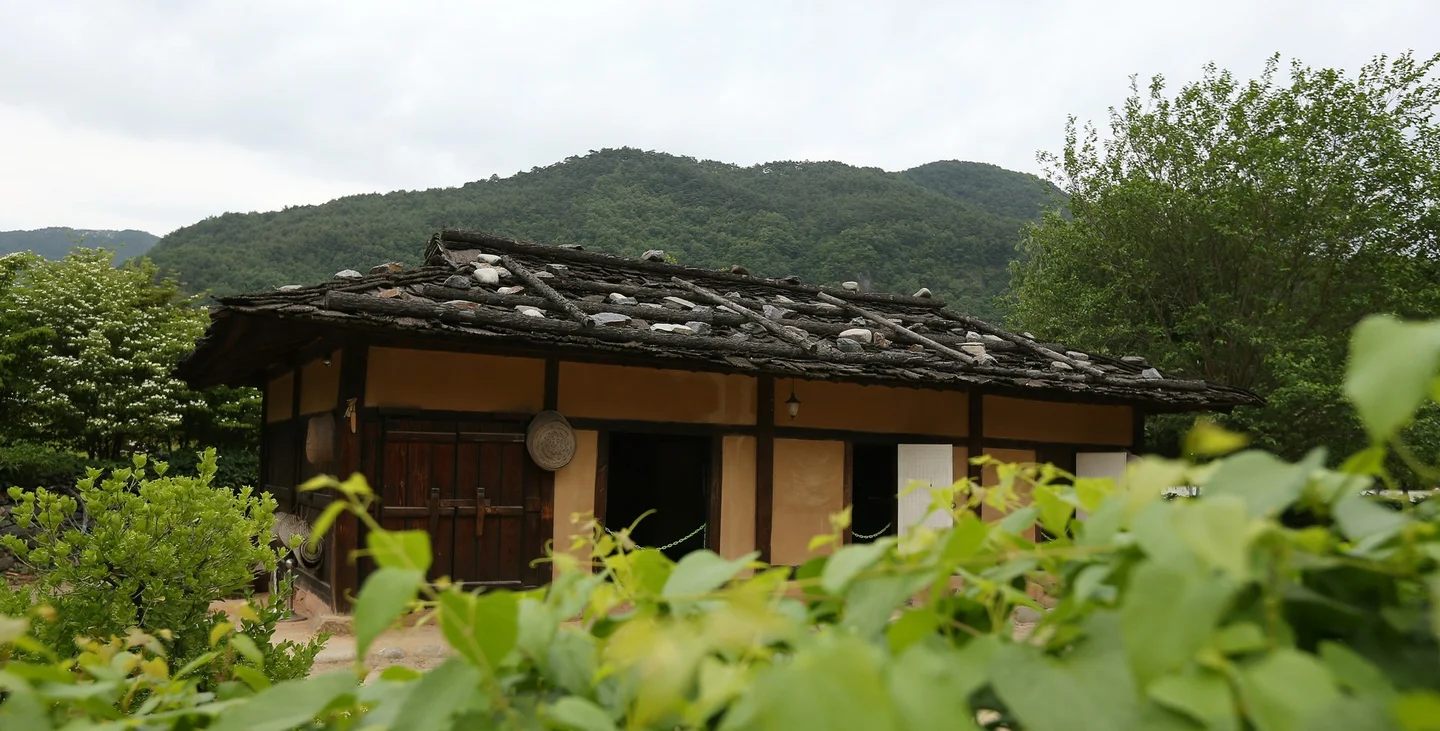
Arari Village, also called Ararichon, is a reconstructed heritage village beside the Joyang River. It shows forms of housing associated with Jeongseon and the surrounding mountain region. It makes a natural next stop after the market: the food introduces local crops, and the buildings show how people used available materials to live in the same landscape. Pay attention to the roofs as well as the rooms. Bark, plant stems, timber, and tiles produce different shapes and textures across the recreated buildings. The village is an interpretation of earlier life, rather than a neighborhood of centuries-old houses continuously occupied in their original setting. Sculptural scenes based on Park Ji-won's satirical story Yangbanjeon add another layer, introducing the social status and pretensions of the Joseon-era elite. The neighboring Arirang Museum explores the song tradition. A live show is a separate choice: the production ARI–The Spirit of Korea is presented at Jeongseon Arirang Center on a published schedule, not continuously as part of a market visit. If that interests you, choose a performance first and fit lunch around it. VisitKorea's performance listing identifies the venue and program.
Keep the journey centered on Jeongseon-eup
Academy of Korean Studies · Original · KOGL Type 1 ·
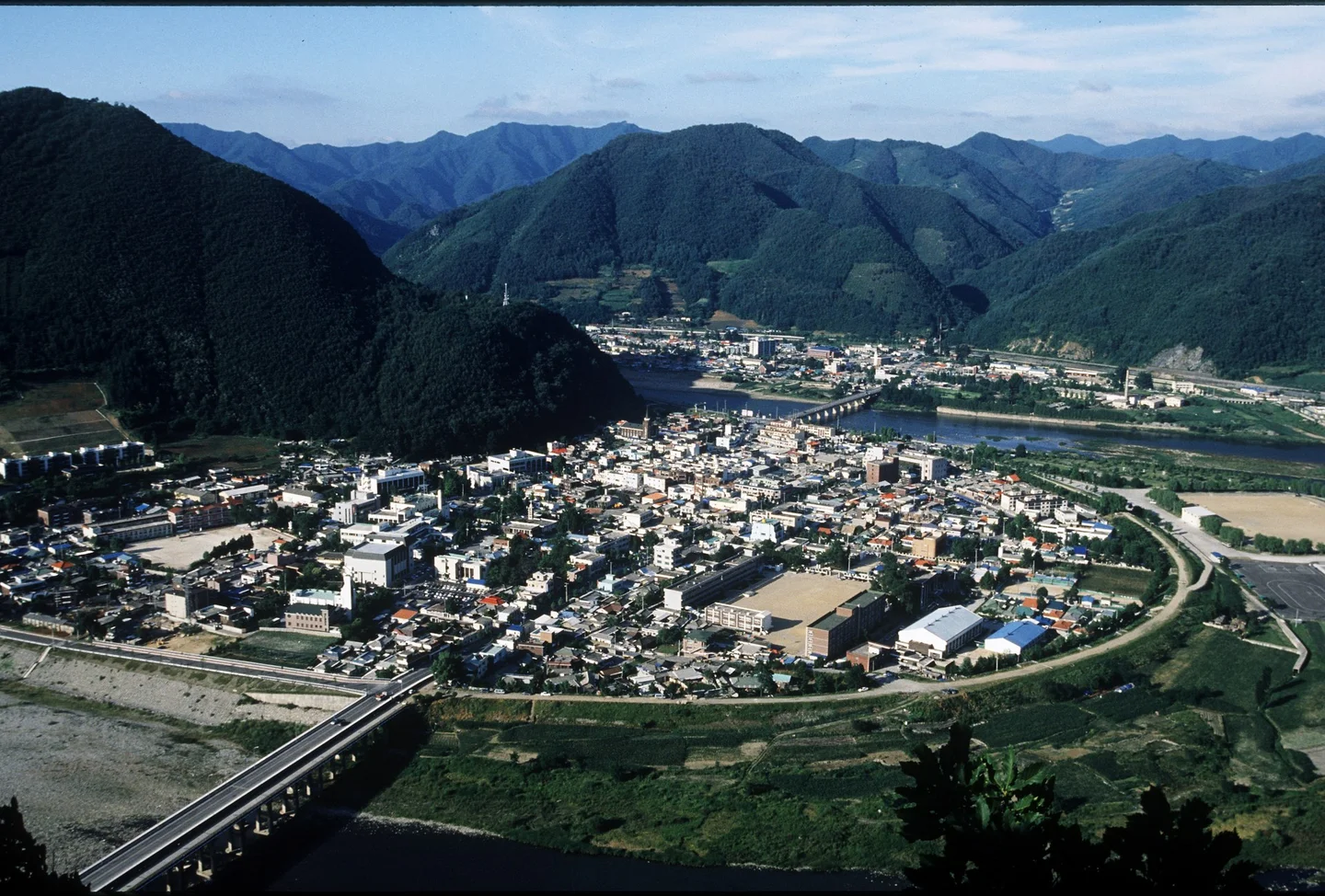
Jeongseon County covers a large mountain area. Gujeolli's rail bike, distant valleys, and resort districts require separate road journeys; their shared county name doesn't make them neighboring stops. Market lunch followed by Arari Village is a more manageable town-based plan when you have limited time. For public transportation, build your day around Jeongseon Bus Terminal and the specific service you will use to leave. The county bus-information system separates routes by area, which matters when checking a connection beyond the town. Leave time to get from the market back to the terminal rather than planning around the bus's departure time alone. If you're hoping to use the Jeongseon Arirang tourist train, check the actual service on your travel date before booking the rest of the day. Older travel features describe historic departures and connecting tours that shouldn't be treated as a current timetable. For a rail-bike reservation elsewhere in the county, work backward from its check-in time and allow for the road transfer after lunch.