Oeongchi in Sokcho: The Beach, the Harbor, and Badahyanggiro Trail
Mobius6 · Original · CC BY-SA 4.0 ·
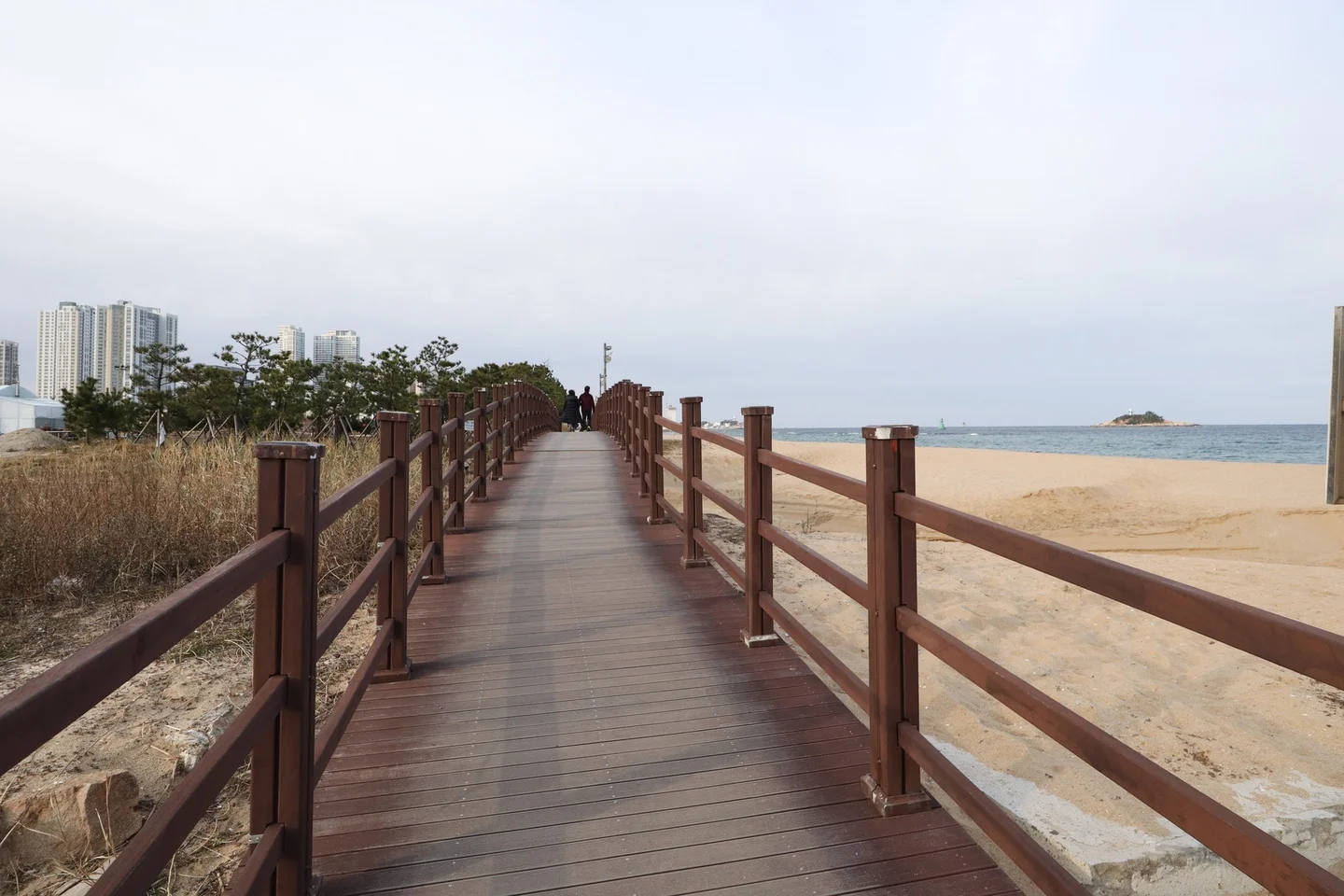
Oeongchi brings together three sides of Sokcho's coast: a sandy beach, a rocky headland, and a small fishing harbor. The beach is an easy place to linger over a sea view; the harbor offers boats, seafood restaurants, and a glimpse of the working waterfront. Badahyanggiro is the coastal walking route associated with the stretch between them. There is an important limit on planning that walk. As checked October 12, 2026, the official tourism guide-reservation page lists Badahyanggiro as closed for repairs from December 1, 2025, until completion. A reopening date has not been confirmed. For now, choose the beach or harbor as a destination in its own right and use an ordinary road connection if you want to visit both. The coast is still worth considering for a quieter stretch of a Sokcho itinerary. You can add Oeongchi Beach to a walk south from Sokcho Beach, or make the harbor a separate stop for a seafood meal. Save the headland boardwalk for a visit when reopening has been officially announced.
Which Oeongchi Should You Put in Your Map?
Mobius6 · Original · CC BY-SA 4.0 ·
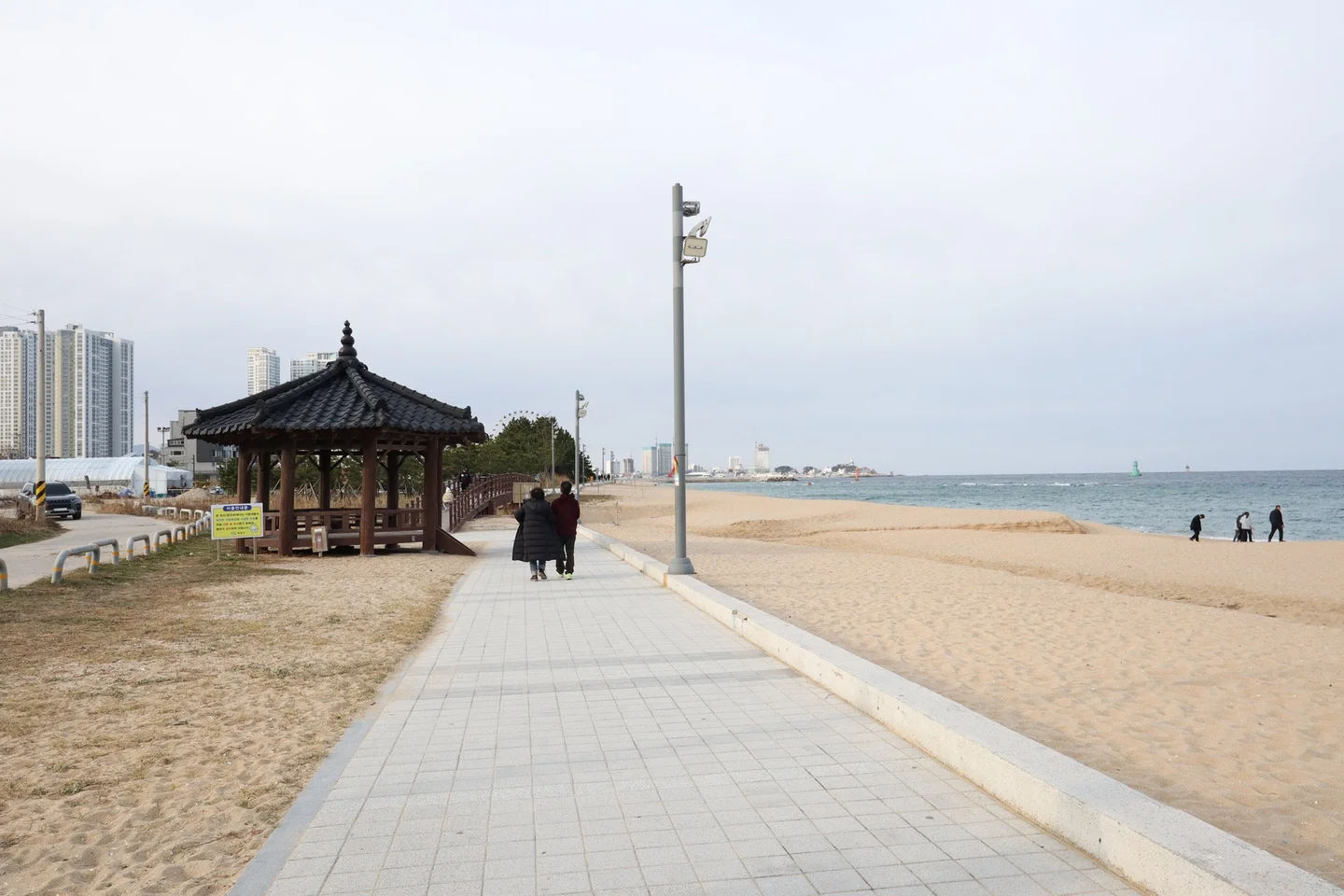
Search for Oeongchi Beach, 외옹치해변, or Oeongchi Port, 외옹치항, according to your plan. They sit on different sides of the headland. Selecting one makes the final approach much clearer than searching only for the trail name or a nearby resort. For travelers arriving without a car, the beach fits naturally after Sokcho Beach. Sokcho Express Bus Terminal is close to that larger beach, but the onward walk to Oeongchi takes additional time. Leave room for both parts of the journey, especially if you are carrying luggage or need to catch a bus later. Sokcho Intercity Bus Terminal is a different arrival point farther across town. A direct taxi trip can be useful for the harbor, particularly if lunch is your main reason for coming. Drivers should likewise choose the actual beach or harbor parking area. A resort entrance on the hill is not interchangeable with the public waterfront approach below it. Near the beach, a pavilion and firm walking surfaces make it easy to take a short break before deciding how far to go. Families do not need to commit to a long coastal outing from the start. Begin with the waterfront immediately in front of you, then extend the walk if everyone is enjoying it. For a wheelchair or stroller outing, focus on the accessible-looking beach approach and assess the actual surface as you arrive. That does not establish accessibility around the whole headland: beach paving, loose sand, and a coastal deck are different kinds of route.
A Small Beach with a Wide Sea View
Mobius6 · Original · CC BY-SA 4.0 ·
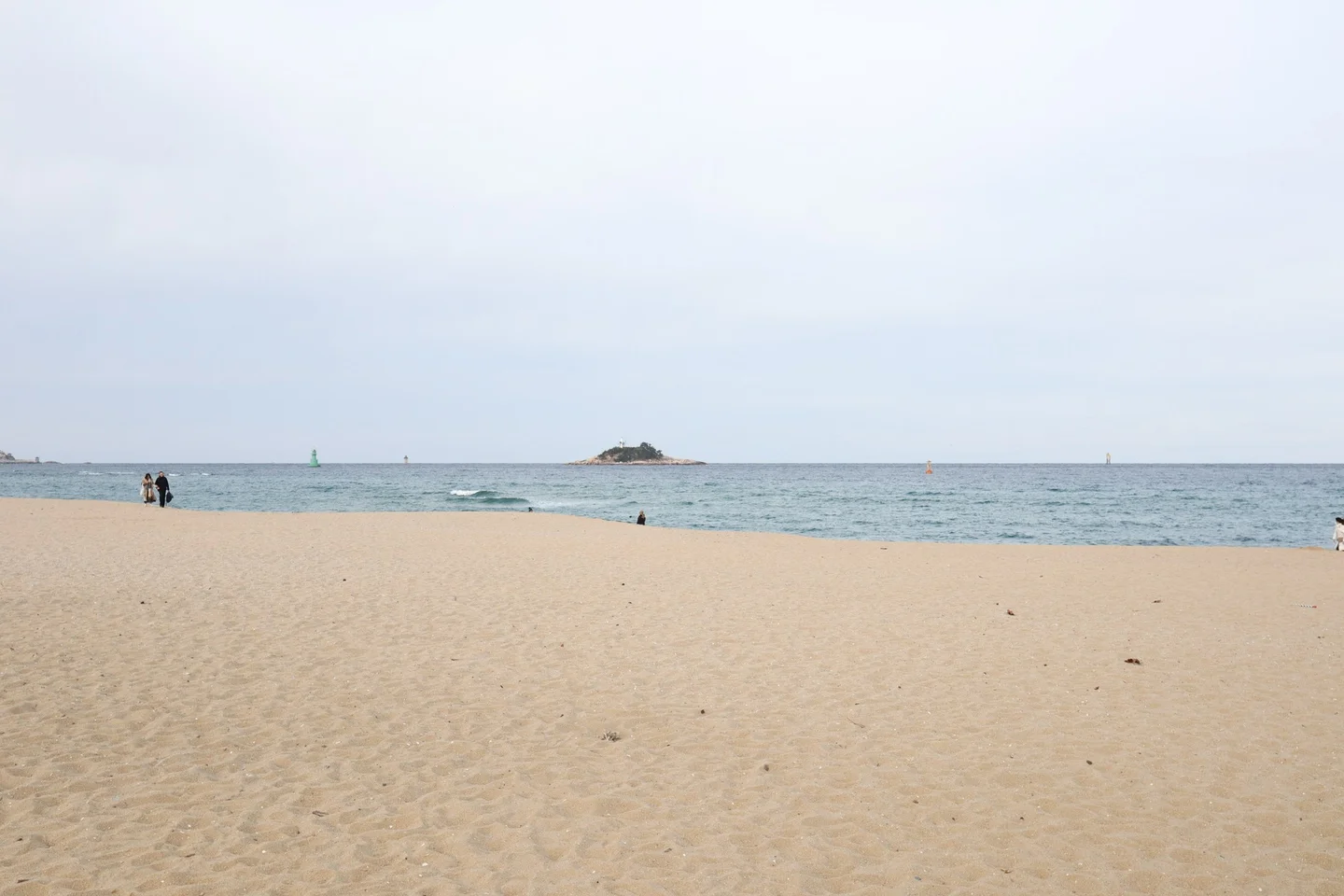
Oeongchi Beach occupies a shorter stretch of sand than central Sokcho Beach. The curve of the shore and the rising land at its southern end give it a more enclosed setting, while the view out to sea remains broad. The Korea Tourism Organization's beach guide places it between Sokcho Beach and Daepo Port and notes parking and restrooms.
Mobius6 · Original · CC BY-SA 4.0 ·
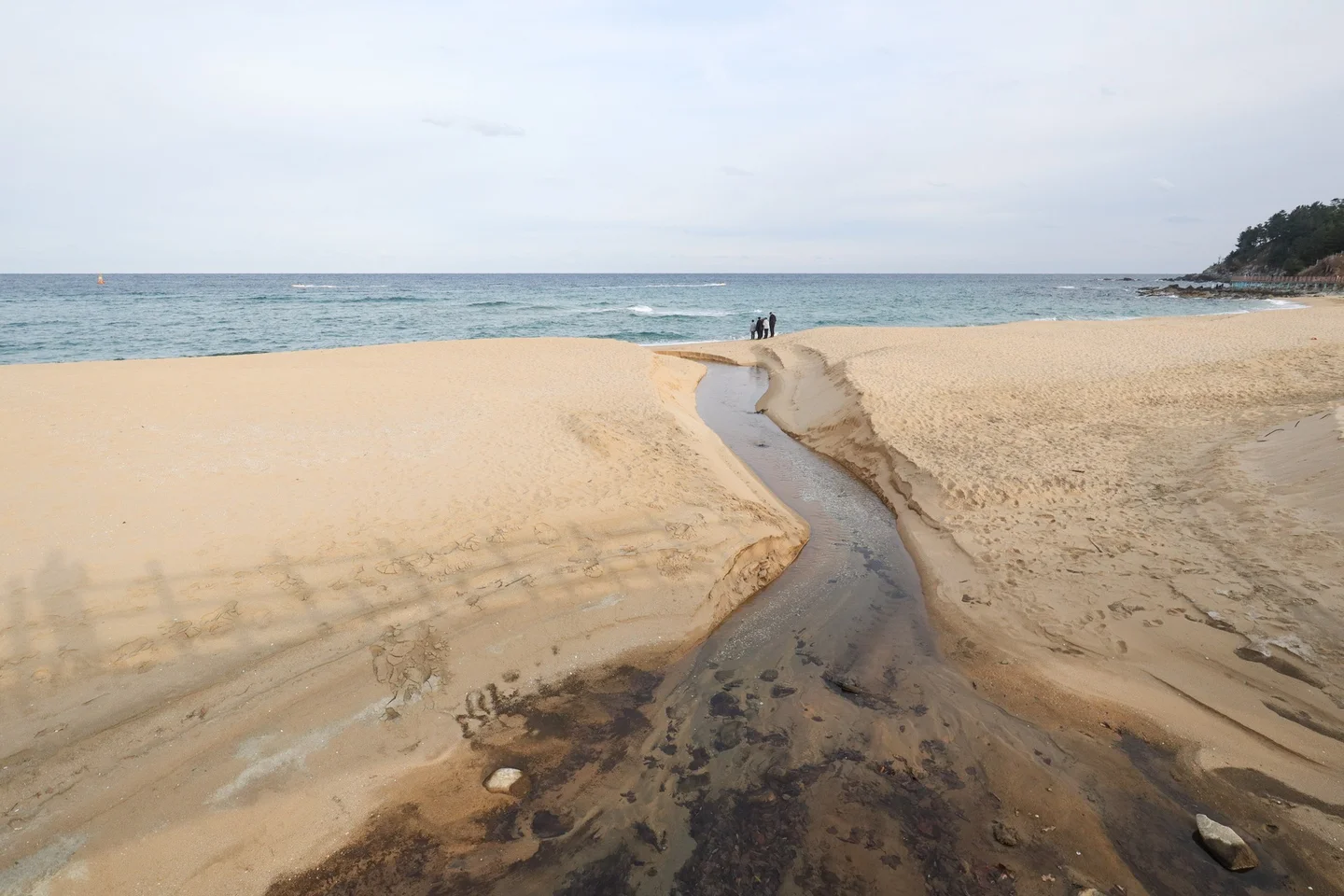
The simplest visit is a walk along the back of the sand, followed by time facing the water. That works well if you want the sea air without taking off your shoes. If you do go onto the beach, choose a comfortable place to rejoin the path before walking farther. Runoff channels and shifting banks of sand can make a straight-looking route less straightforward at ground level. There is enough variety here for a short photography stop: the broad horizon, small offshore markers, a wooded headland, and the changing color of the water. A low viewpoint on the sand emphasizes the sea; the promenade gives you more of the shoreline's shape. Neither requires entering the water or finding a way past a closed gate. Swimming is a separate seasonal activity. Follow the official bathing period, permitted zones, and on-site instructions rather than judging conditions from water color or a few quiet waves. On days with rough seas, keep the visit to the permitted landward areas. The Coast Guard warns that swells can arrive even in clear weather. If your time is limited, allow roughly half an hour to an hour for a beach-only stop, depending on how long you want to sit or walk. That is a suggested visit length, not a promise about the time needed for the full coastal route.
What the Headland Walk Offers When It Reopens
The different trail lengths in travel guides refer to different sections. The Korea Tourism Organization describes a 1.74-kilometer route, combining an 850-meter Sokcho Beach section and the 890-meter Oeongchi section. The shorter figure covers the headland portion rather than the entire beach-to-harbor itinerary. That headland section is the reason Badahyanggiro attracts walkers. The route follows the contours of the coast, moving between sea-facing decks, vegetation, and views down toward rock formations. Its named sections include a bamboo walk, a sky deck, a security-history section, and a rock-observation section. The security theme has a real background. Civilian access to this coast was restricted for decades, and part of the walking route retains traces of that guarded shoreline. Knowing this gives the remaining barriers and installations some context beyond their appearance in photographs. After reopening, check the permitted hours and weather restrictions for your actual date. Allow time to return if you have parked at the same end, and assess stairs, gradients, and surface changes before assuming that the whole route will suit a stroller or mobility aid. A closed gate is an endpoint for the day's walk; the rocks below it do not provide an alternative route.
Oeongchi Port and a Seafood Meal
Mobius6 · Original · CC BY-SA 4.0 ·
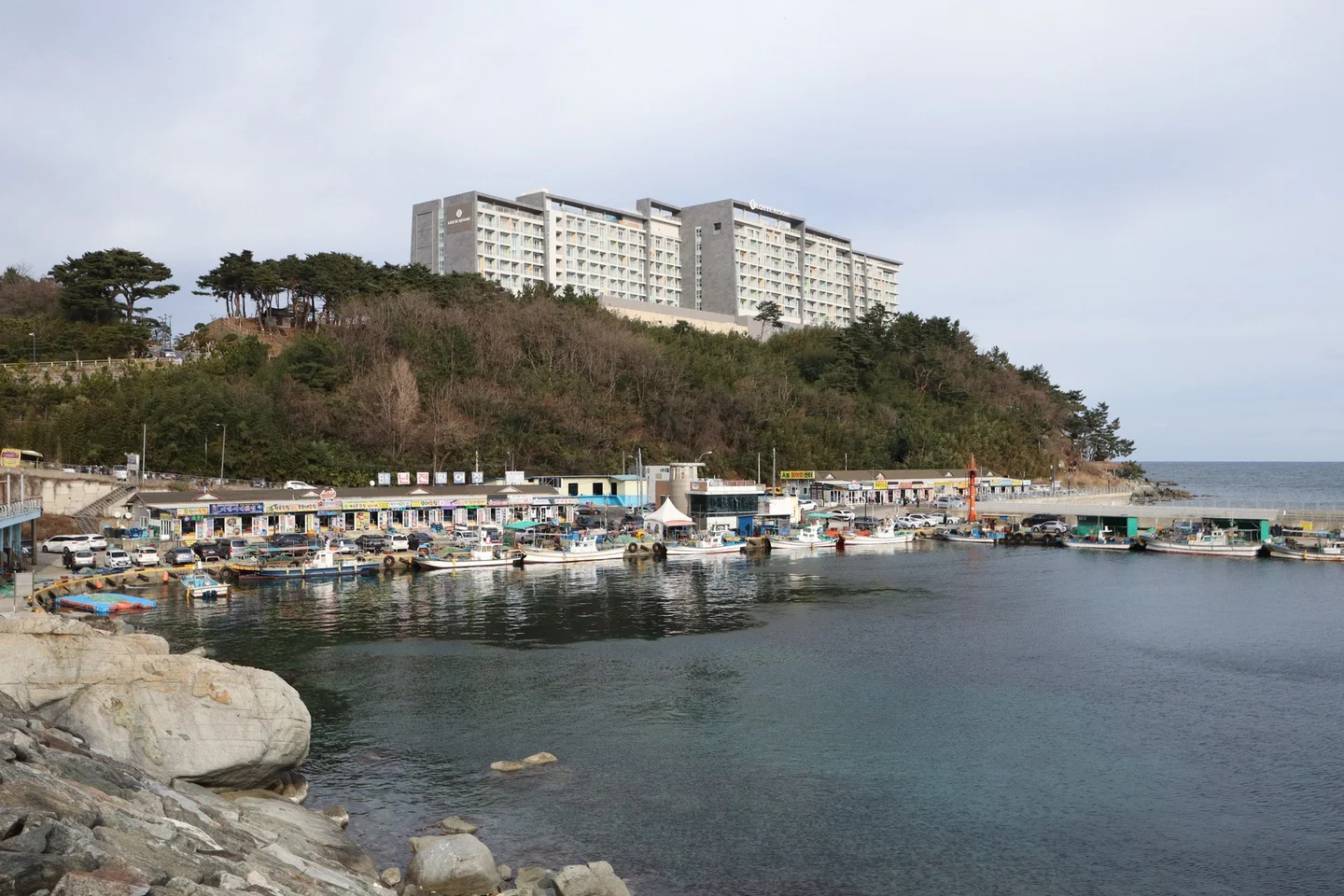
The harbor has a different scale from the open beach. Small fishing boats sit close to the quay, with a line of restaurants behind them and a large resort above the wooded slope. It is a compact place to look around, so a visit can be as simple as a waterfront stroll followed by lunch. Stay in the public walking areas, leaving room around mooring lines, unloading spaces, and working boats. The best part of the scene is the relationship between the village-sized harbor and the much larger sea outside it. You don't need to reach the end of a breakwater to appreciate that. For a meal, hoe, 회, means Korean-style raw fish. Before ordering, ask which fish is available, how much the portion serves, and whether the quoted price includes the table setting and any additional dishes. This is particularly useful when comparing a fish-based order with a fixed meal. Choose from the menu actually offered that day rather than assuming every harbor restaurant uses the same pricing arrangement. Daepo Port lies farther south if you want to continue the harbor theme. Treat it as an additional stop with its own travel time. If you came to Oeongchi Beach first, the current boardwalk closure makes a road-based transfer especially important; a short line along the coast on a map does not show a usable through-route. For a relaxed plan, choose one main experience: the beach for time by the water, the port for boats and a meal, or the headland trail once its reopening is confirmed. Oeongchi rewards that simple choice with a more focused visit to Sokcho's coast.