Jumunjin: Seafood Markets, a Hilltop Lighthouse, and the BTS Beach Stop
Mobius6 · Original · CC BY-SA 4.0 ·
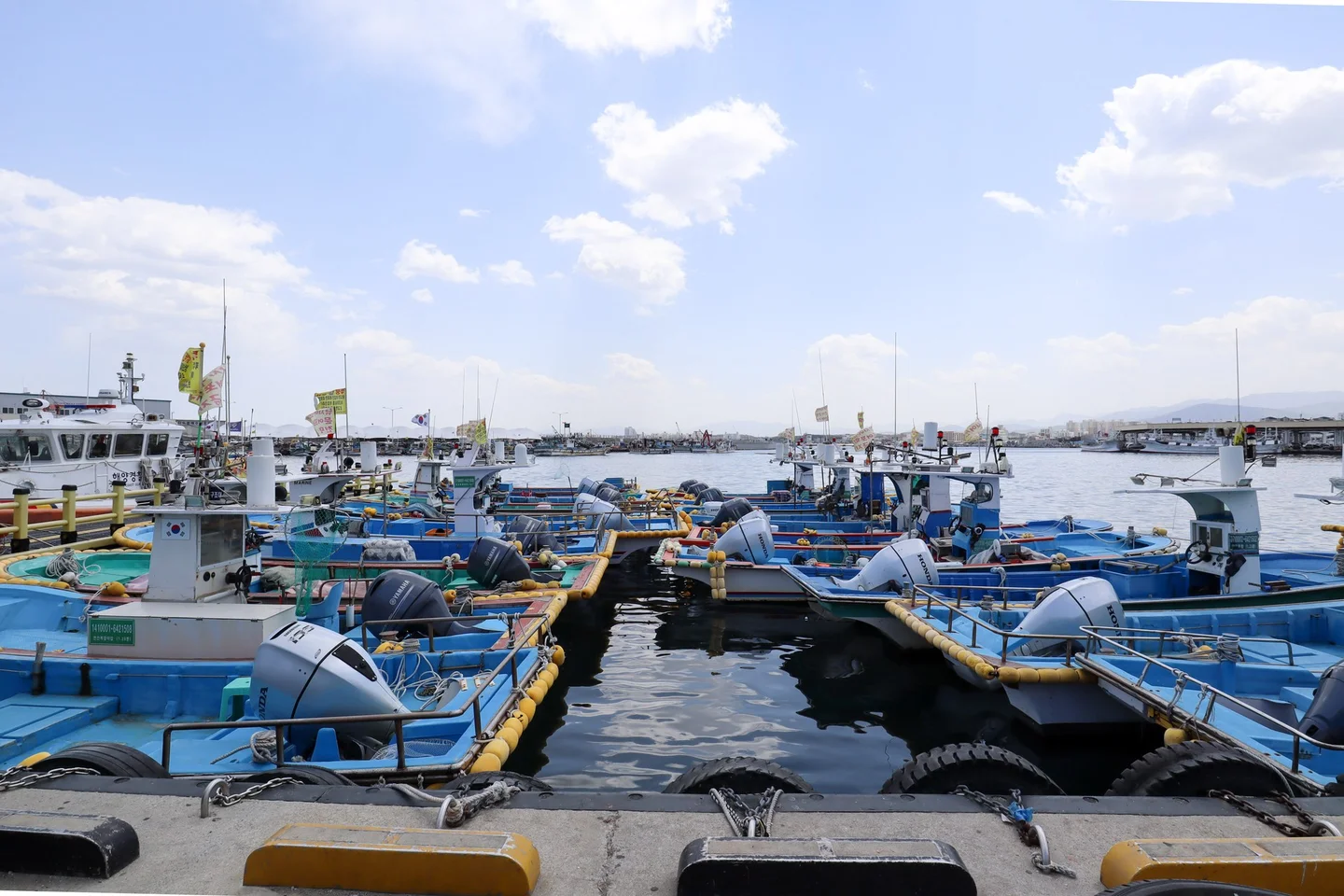
Jumunjin brings together two very different reasons to visit Gangneung's northern coast. Around the harbor, fishing boats and seafood markets give the town its working character. Farther north, sandy beaches and the BTS bus-stop photo spot draw travelers looking for open water and a memorable picture. The useful planning distinction is between the port and the northern beaches. They belong to the same wider town, but they are separate stops. Arriving at Jumunjin Harbor will not put you beside the BTS bench, and heading straight to Hyangho Beach means bypassing the market streets. For a food-focused trip, begin at the harbor, have lunch, and add the lighthouse or Sodol's rocky shore. For a BTS-focused visit, start with Hyangho and Jumunjin Beach, then come back toward the port for a meal. Either version can fill a half day, depending on how much coastline you walk. From Gangneung Station or the central bus terminals, plan the journey to Jumunjin as a separate leg. Save your first actual destination rather than a general town pin. A local bus or taxi between the port and beach areas can leave more time for browsing and walking where you most want to be.
How to Eat at the Fish Markets
Mobius6 · Original · CC BY-SA 4.0 ·
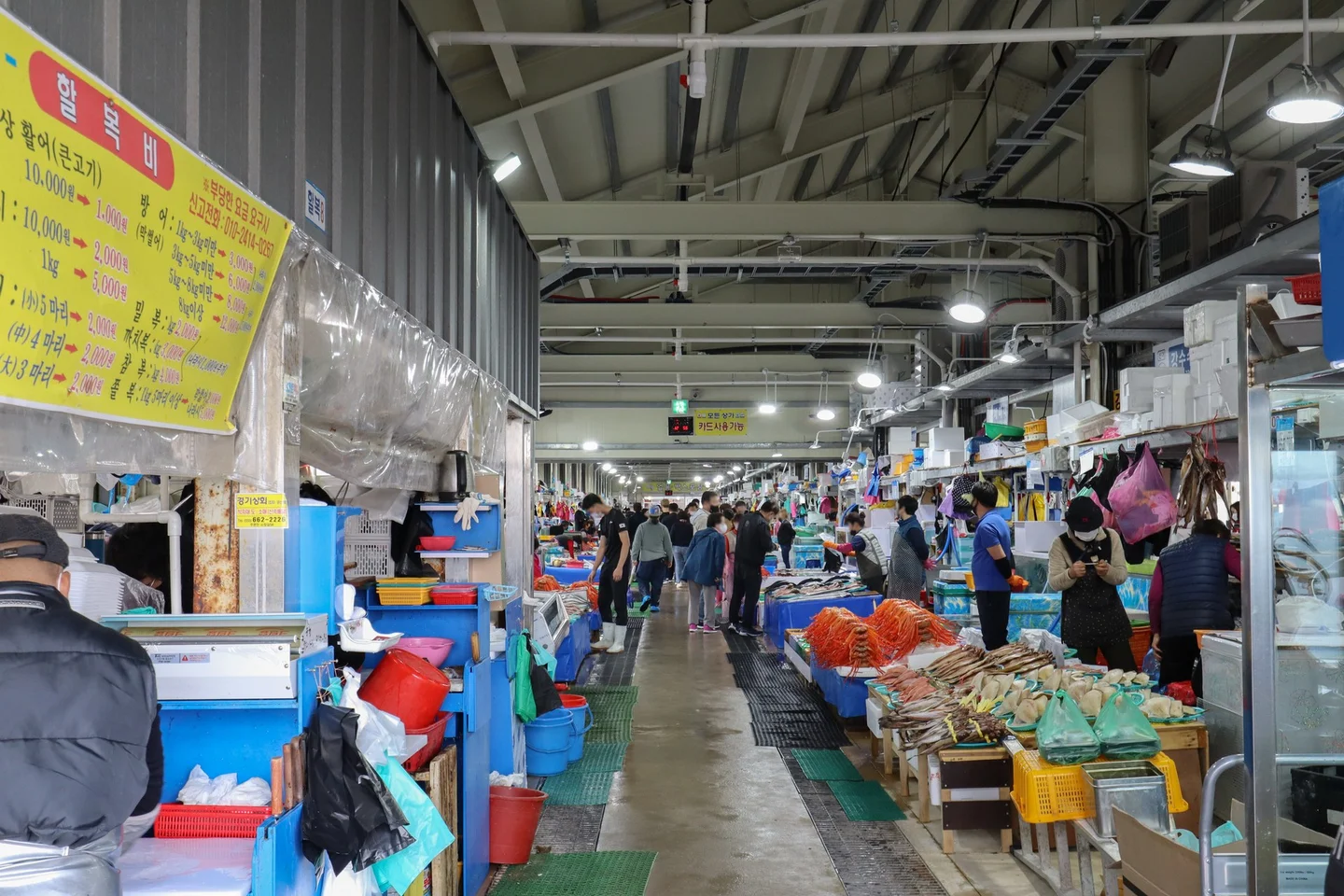
The harbor district contains several related markets. Jumunjin Fish Market, 주문진수산시장, includes fresh and dried seafood businesses. Jumunjin Pungmul Fish Market, 주문진항수산물좌판풍물시장, occupies a separate pier-side building across the road. Naming the one you want helps with taxi drop-offs and meeting up after browsing. Start by deciding whether you want a meal or something to take away. Live-fish tanks, fresh seafood counters, and dried-seafood shops serve different purposes. Squid is closely associated with the port, but the day's selection extends to other fish and shellfish. Read the origin labels and current prices rather than assuming everything was landed locally that morning. Hoe, 회, means sliced raw fish. If you choose a live fish for a meal, establish whether the quoted amount is per fish or by weight, then ask what preparation and dining charges are included. Tell the seller how many people are eating and confirm the total before the fish is prepared. For a cooked meal, look for saengseon gui, 생선구이, grilled fish, or ask which shellfish can be steamed. Menus and preparation services vary, so make the cooked-versus-raw preference clear at the start. A fixed-menu restaurant can be simpler than selecting seafood by weight if you want a straightforward lunch. The Korea Tourism Organization's Pungmul Market listing, checked October 12, 2026, identifies the second Wednesday of the month as its regular closing day. That applies to this market, rather than the entire harbor district. For a longer coastal outing, buy bulky takeaway items near the end so you can walk without carrying them all afternoon.
The White Lighthouse above the Harbor
Mobius6 · Original · CC BY-SA 4.0 ·
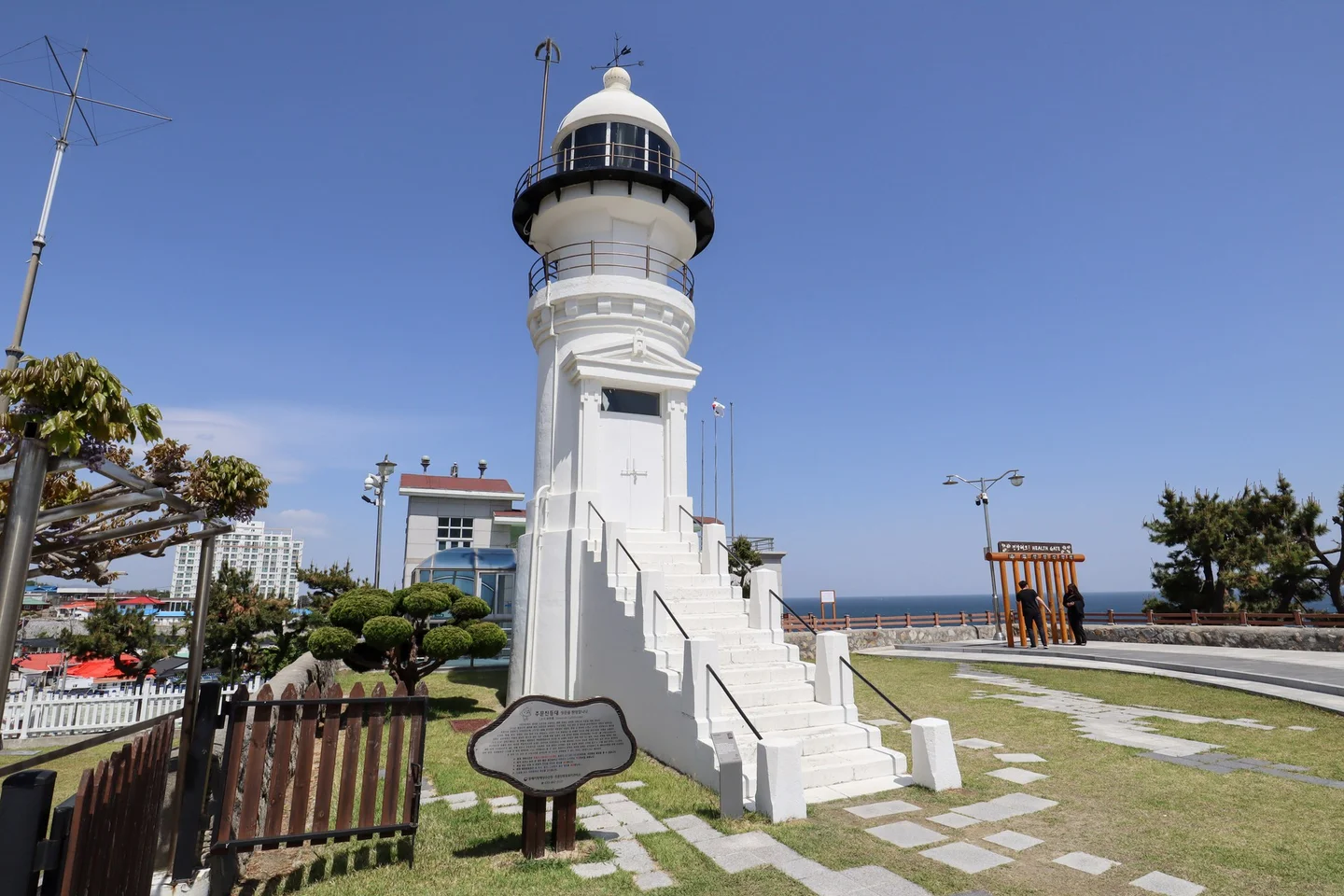
Jumunjin Lighthouse stands on a hill between the main port area and the direction of Sodol. It is the small white tower above the town, distinct from the navigation markers on the harbor breakwaters. The change in elevation lets you look back over the waterfront and out to sea. First lit on March 20, 1918, it was the first lighthouse on the Gangwon coast. The provincial government's June 2026 feature describes its brick construction and the role it played when Jumunjin was a stopping point for coastal shipping. The building's compact scale makes it an appealing short stop. Look at the shaped doorway and the gallery around the lantern, then use the publicly accessible grounds for the view. Plan around seeing the exterior and the coast rather than assuming you can climb inside the tower. The approach involves uphill streets or steps, so it asks more of your legs than browsing the market. If mobility is limited, establish the accessible approach before adding it. You can also keep the outing around the harbor and make the northern beach your next stop.
Sodol's Rocky Shore
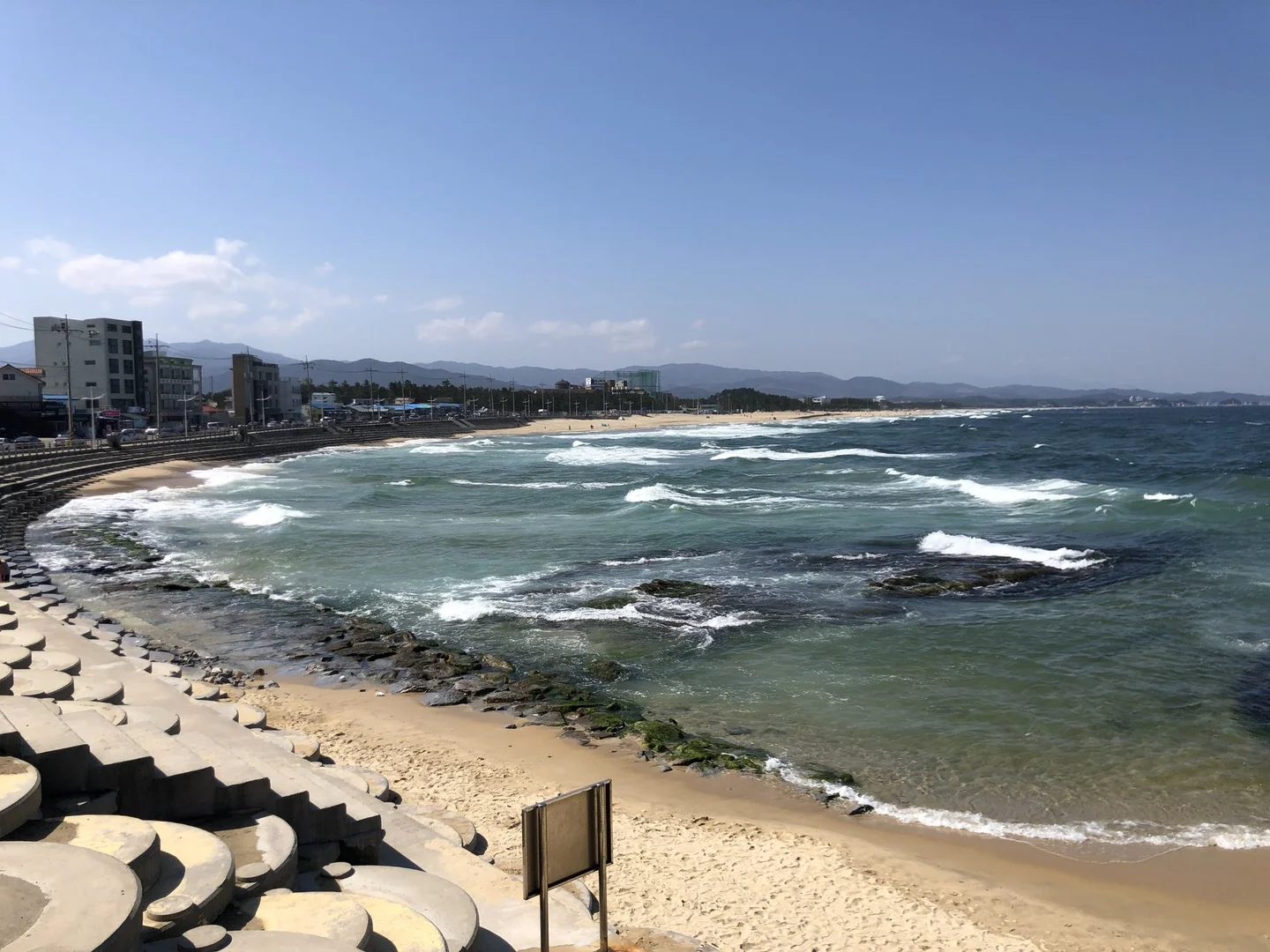
Sodol changes the scenery again. Exposed rocks interrupt the surf, the shoreline bends around the small harbor, and the sea has a more textured edge than the broad beaches farther north. Sodol Adeul Rock Park, 소돌아들바위공원, is a useful destination to save when you want to explore this stretch. The park's name is associated with a local legend about prayers for a son. For visitors, the immediate interest is the shape of the rock formations and their position against the water. Follow the public paths to see how the view changes as you move around the coast. On rough days, waves can wash over low rocks and shoreline steps. Keep to the open, dry public route and respect local barriers. You can enjoy the sea from farther back without making the exposed edge part of the walk. Sodol is a worthwhile short outing in its own right. If you want to combine it with the BTS stop, use transport for the longer connecting stretch rather than spending all your available time walking between landmarks.
Jumunjin Beach and Its Pine Shade
Mobius6 · Original · CC BY-SA 4.0 ·
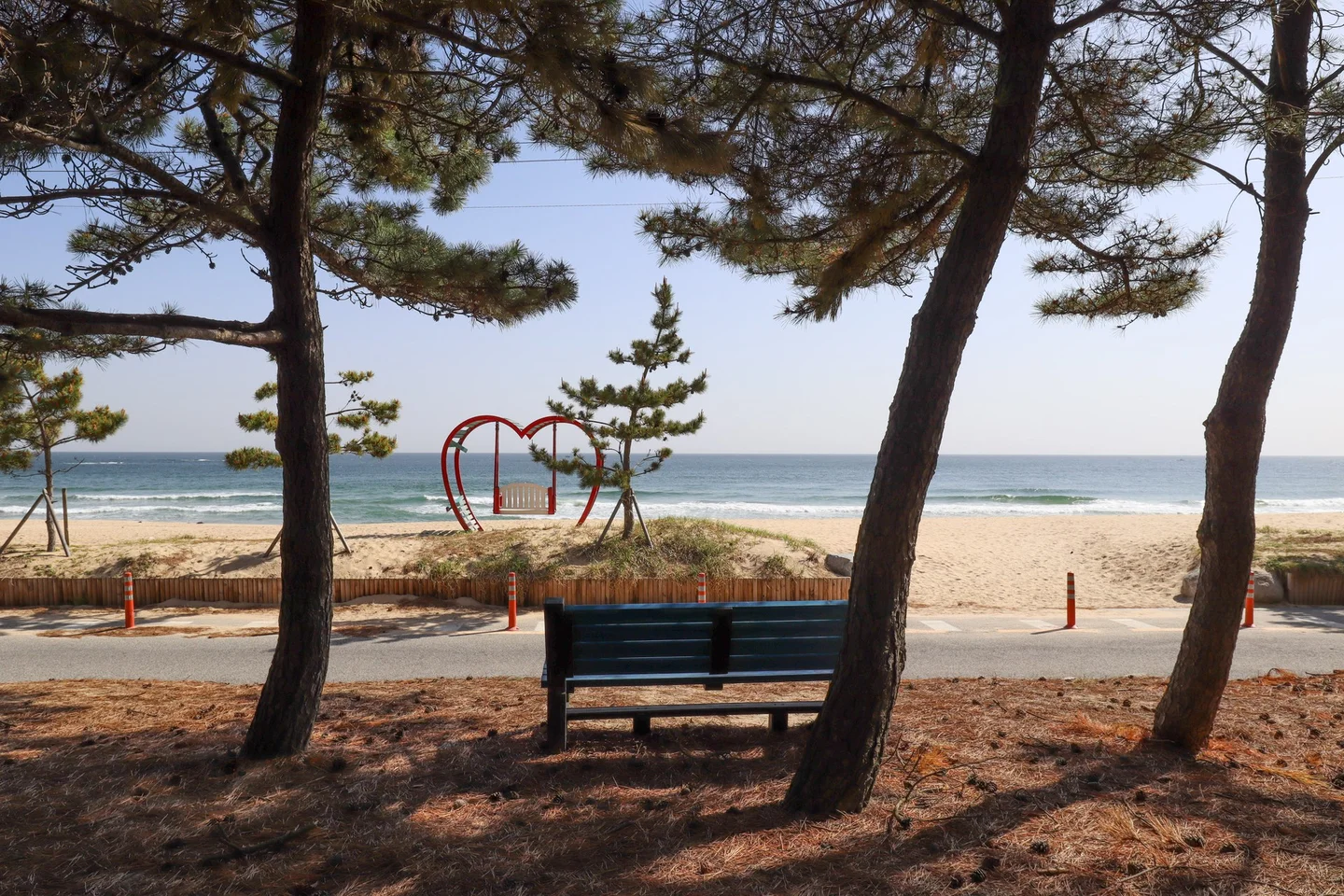
North of the harbor, Jumunjin Beach offers a broader sweep of sand backed by pines. It is a good place to slow down after the market: walk near the water, find a seat toward the trees, or spend time on the beach without another activity scheduled. The beach connects with Hyangho to the north. If the BTS photo site is your priority, choose your arrival point accordingly; a general Jumunjin Beach pin may leave additional walking to the bench. For a beach-focused visit, the sand and pine-lined edge are enough to occupy an unhurried afternoon. A shoreline walk is available beyond the summer bathing season, while swimming depends on the designated opening period and the day's restrictions. Families can choose between the firmer paths near the trees and the loose sand according to how far they want to go.
Finding the BTS Bus Stop, and Keeping It Separate from Goblin
Mobius6 · Original · CC BY-SA 4.0 ·
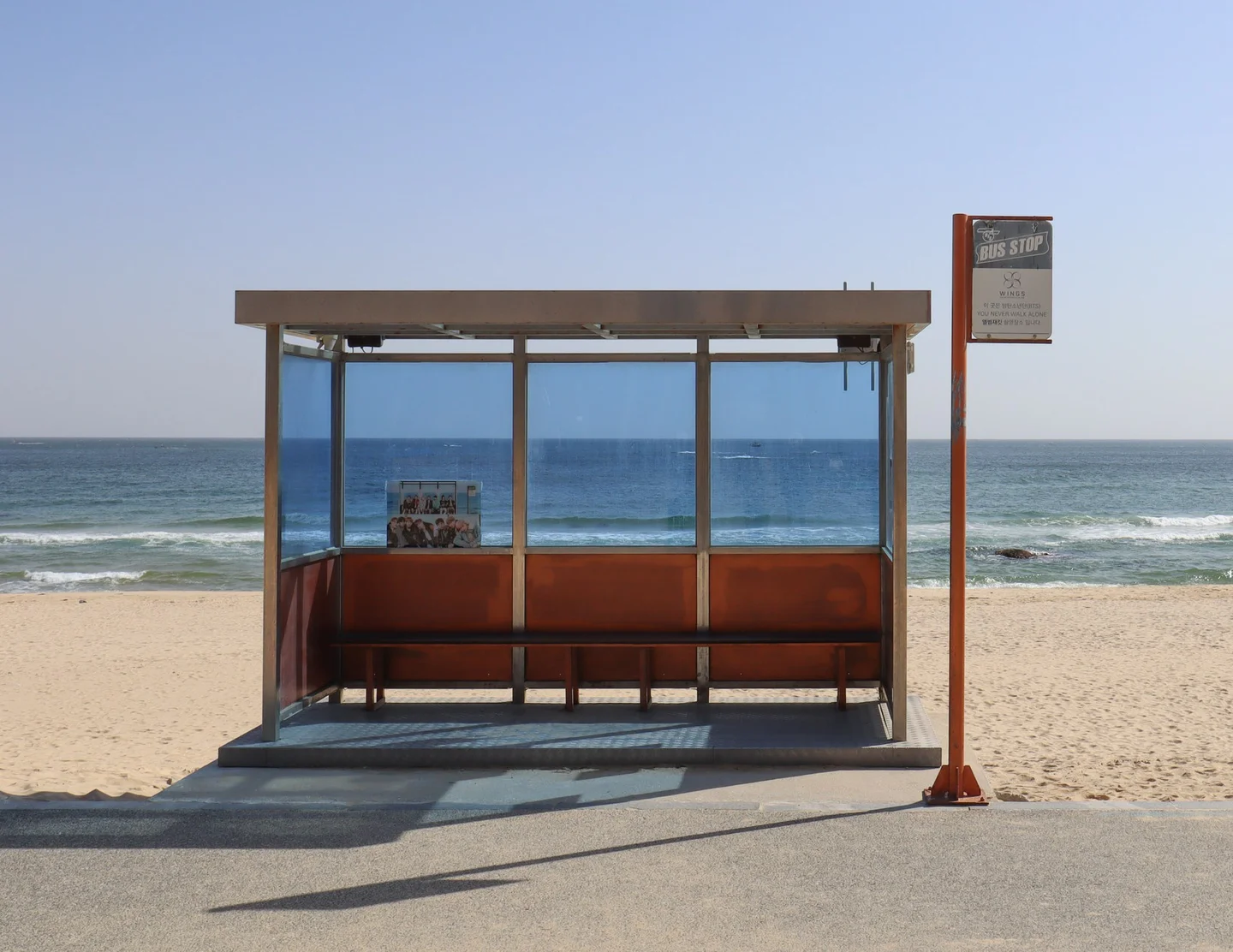
The BTS Bus Stop at Hyangho Beach recreates the seaside setting used for the album artwork of You Never Walk Alone. The official photo-route guide identifies the album, and the BTS Bus Stop listing explains that the original set was removed and later reinstalled as a visitor attraction. The clear-sided shelter frames the sea behind its bench, making the location recognizable even before you sit down. It is a photo installation, so find a real service stop separately for your return bus. Search for BTS 버스정류장 or 향호해변 to reach the right part of the coast. If there is a line, decide on your main picture while you wait. A seated portrait and a wider view of the shelter against the sea give you two different compositions without needing a long session. Afterward, the surrounding beach provides space to linger away from the bench. The filming spot for Goblin, also known as Guardian: The Lonely and Great God, is elsewhere at Jumunjin Breakwater. Save that location separately if you want both. A BTS beach visit and a Goblin breakwater visit need their own travel leg; they are not two names for the same photo spot.