Chuncheon Myeongdong: Dakgalbi, Market Lanes, and an Old-Town Walk
Beeniru · Original · CC BY-SA 3.0 ·
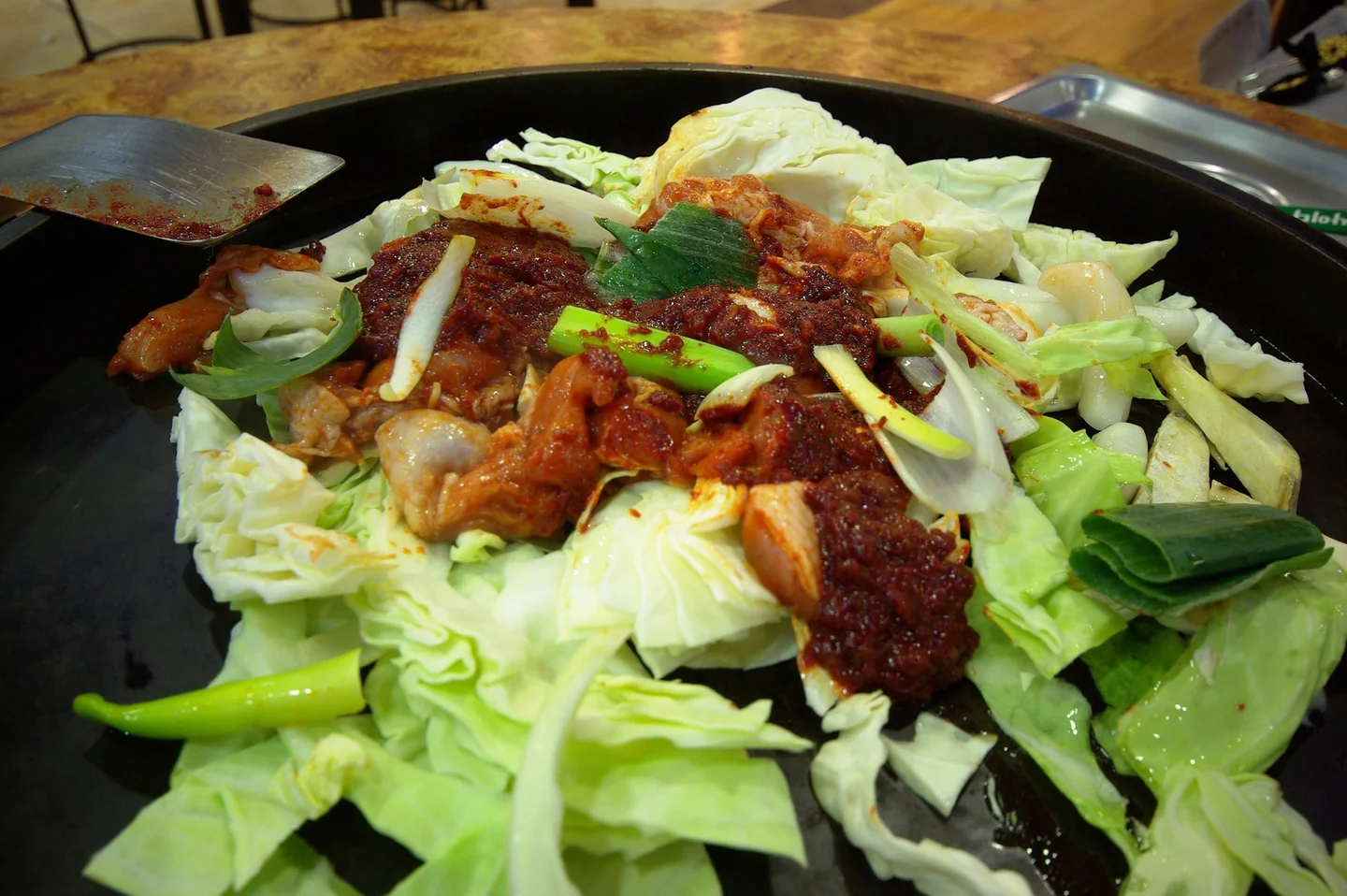
The meal is reason enough to stop in Chuncheon’s Myeongdong. Chicken, cabbage, and rice cakes cook together on a broad griddle, taking on a red, savory-sweet sauce; afterward, rice can be fried in what remains. Around the restaurants, the old city center adds clothes shops, a covered market, and a few unexpected historic buildings. It is an easy district to explore on foot once you arrive, especially if you want to put Chuncheon’s food at the center of the day. This is Myeongdong in Chuncheon, not the Seoul shopping district. Include “Chuncheon” in map searches for Myeongdong Dakgalbi Street. The restaurant alley sits within a larger shopping area, so a meal and a wander through the surrounding streets fit naturally together. Jungang Market is a nearby extension; the city’s lakeside attractions require a separate look at the map and, often, another ride. A compact visit can be lunch followed by Myeongdong Street and Jungang Market. With more time, add the Seven-story Stone Pagoda or Soyangno Catholic Church. These small heritage stops reveal a different side of the city without turning the day into a long-distance sightseeing circuit.
Arriving in Central Chuncheon
분당선M · Original · CC BY-SA 3.0 ·
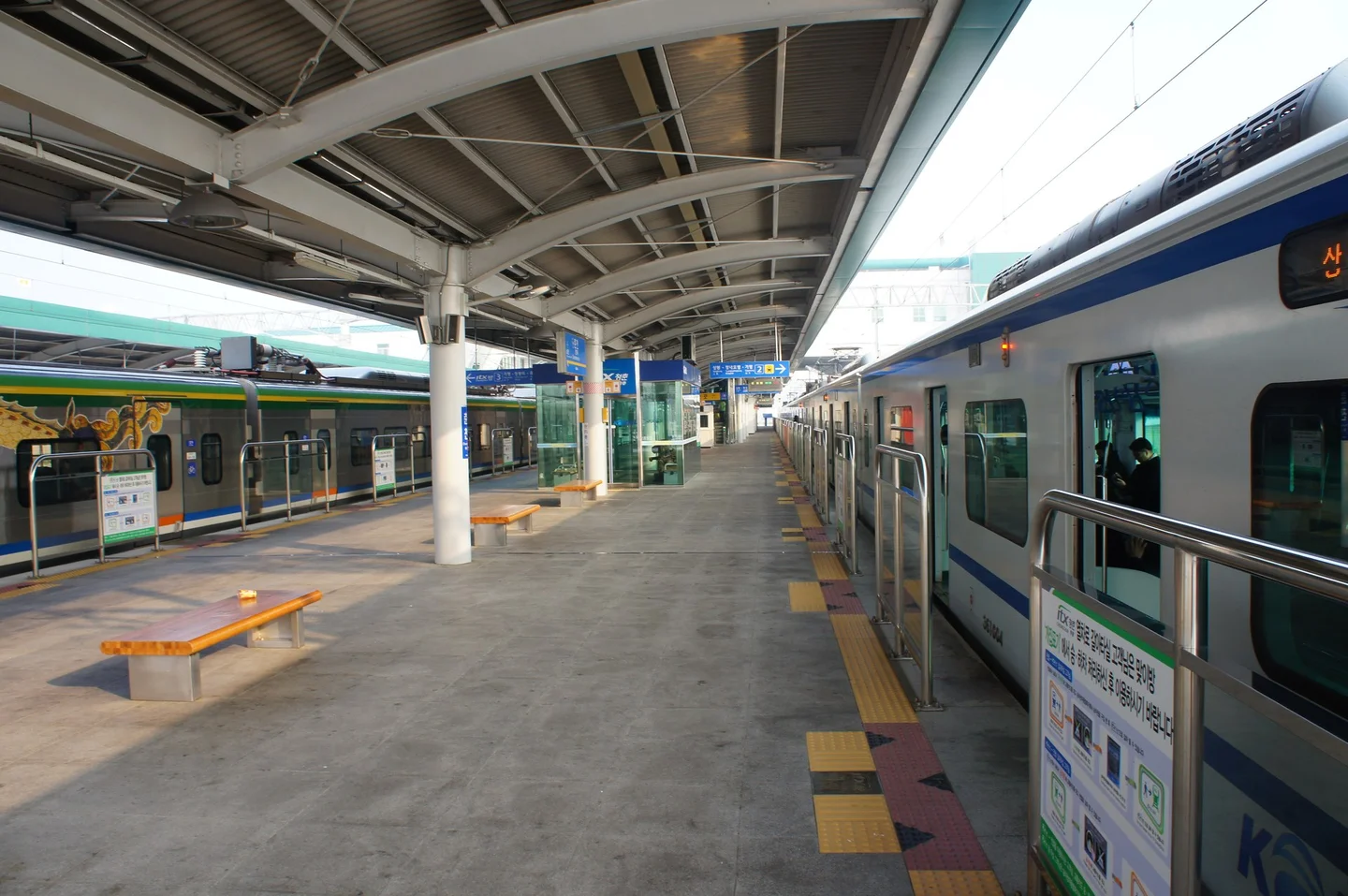
Chuncheon Station is a useful arrival point for this part of town. From Seoul, you can travel on the Gyeongchun Line or take an ITX-Cheongchun train. ITX requires its own rail ticket; a normal subway transit-card tap is not an ITX ticket. Use the service and departure time shown on your booking rather than boarding whichever train arrives on a shared platform. Myeongdong is walkable from the station, but it is not directly outside the exit. A local bus or taxi is a reasonable choice with luggage or in poor weather. Search for the dakgalbi street or your chosen restaurant rather than simply “downtown.” Restaurants around Namchuncheon Station and near Soyanggang Dam can also be excellent reasons to visit Chuncheon, but they are not all part of this one alley. If you have booked a return ITX train, leave a generous gap after the meal. A table wait and the time needed to cook a shared pan are harder to predict than a short market walk. For a relaxed day, eat first, browse afterward, and keep the final part of the route flexible.
Griddle or Charcoal: Which Dakgalbi Do You Want?
The name dakgalbi can be confusing on a first visit. Dak means chicken; although galbi often appears on menus for ribs, the familiar Chuncheon dish is not a beef-rib barbecue. Two styles coexist here, and choosing between them is more useful than comparing the word “original” on every restaurant sign. Cheolpan dakgalbi is the griddle version: marinated chicken cooked with vegetables, often including cabbage, sweet potato, and scallions. It is a shared, gradually cooked meal, with optional additions such as rice cakes, noodles, or cheese. Sutbul dakgalbi is charcoal-grilled chicken, with more emphasis on the meat and the grill. Depending on the restaurant, charcoal versions may use salt, soy sauce, or a spicy seasoning. For a concrete starting point, the Korea Tourism Organization’s food guide lists Umi Dakgalbi’s main branch in the central Myeongdong area for the griddle style. It also lists Wonjo Sutbul Dakbulgogi-jip in nearby Nakwon-dong for the charcoal tradition. They illustrate the choice rather than a ranking: decide which cooking style you want, then compare the current menu and availability. Do not assume every restaurant serves both. Before sitting down, check whether the menu price is per serving and whether there is a minimum number of servings. That matters particularly for a solo diner. Additional noodles, cheese, and finishing rice may be separate orders, so agree on the basic meal before adding extras. If spice is a concern, ask about a mild or soy-based option before ordering; adding cheese does not necessarily make a heavily seasoned dish mild. At a griddle restaurant, staff may manage the cooking. Wait for their signal that the chicken is ready, then try it on its own or wrapped in the leaves provided. Save some appetite for bokkeumbap, the fried-rice finish, if you want to try it. It is an optional final course, not a requirement to order rice and every extra at the start. Makguksu, Chuncheon’s buckwheat noodles, is another local specialty you may see on the menu. It offers a different texture and temperature alongside the hot griddle meal, but portions add up quickly. For two people, starting with the chicken and deciding on noodles or fried rice later is often easier than filling the table immediately.
Walk from Myeongdong Street into Jungang Market
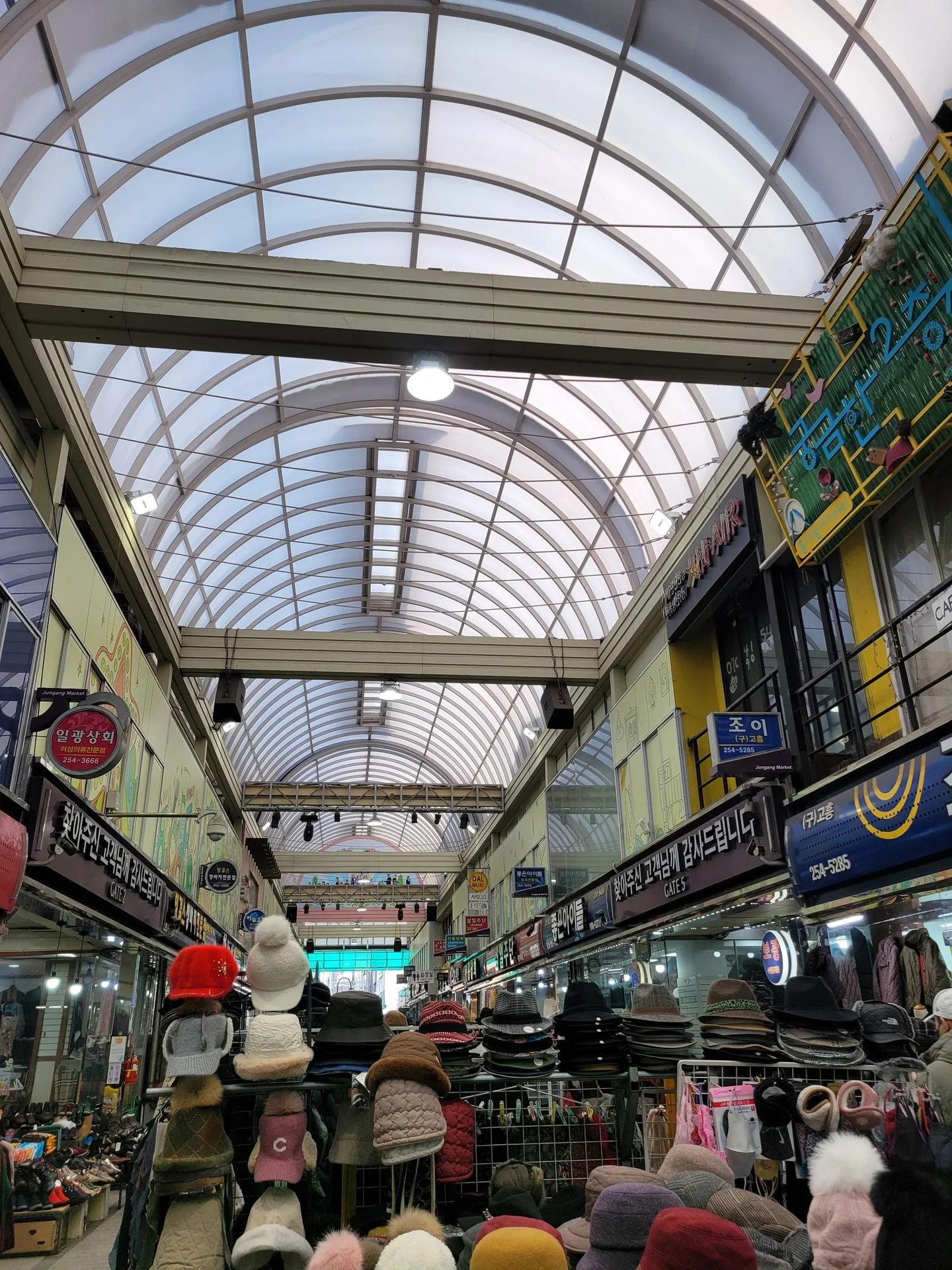
Myeongdong’s retail streets are part of everyday central Chuncheon: clothing, shoes, cosmetics, cafés, and places to meet friends. That ordinary city-center mix is part of the attraction after a meal. Fans of the television drama Winter Sonata can also look for the marker commemorating its filming connection on the main shopping street. Jungang Market, also called Central Market, changes the scale. Its covered lanes bring you close to stalls selling hats, clothes, household goods, and ingredients. Food businesses are part of the market, but this is not exclusively a street-food attraction. A walk through the clothing and general-goods sections gives a better sense of its role in local shopping. The arcade makes the market a useful stop in rain, although the whole route from the restaurant alley is not under one roof. Shop hours vary, so go during the active shopping part of the day if browsing is a priority. The main lanes are a better choice than adding the hillier streets when someone in the group prefers a flatter walk. Yukrim Pass, or Yukrim-gogae, is an optional extension toward a more sloping network of small lanes. Choose it for a café stop and a change of streetscape rather than a promise that a particular café from an old travel post is still there. If you are already satisfied after the market, the core Myeongdong circuit does not need this extra climb.
A Goryeo Pagoda in the Middle of Town
Youngjin · Original · CC BY-SA 4.0 ·
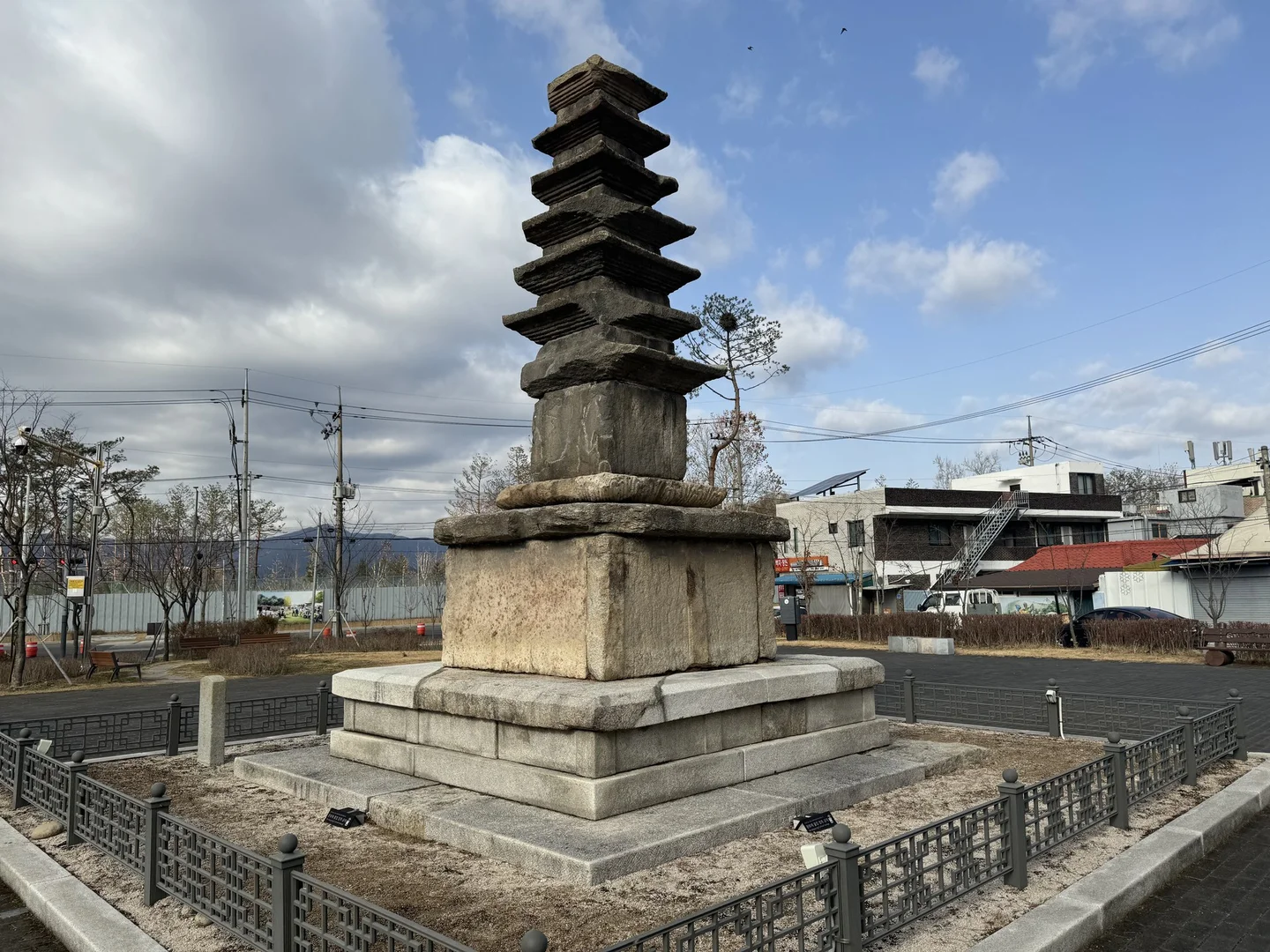
Chuncheon’s Seven-story Stone Pagoda stands among city streets rather than in front of a surviving temple hall. That setting is what makes the detour interesting: an old Buddhist monument shares its surroundings with ordinary buildings, traffic, and daily life. Put the pagoda itself into your map search, as it is outside the immediate restaurant-and-market lanes. The Korea Heritage Service dates it to the Goryeo period. It may have belonged to a temple called Chungwonsa, but that association is not certain. The tower was damaged during the Korean War, and restoration in 2000 revealed the full form of its base. Look at how the broad foundation supports a progressively narrower stack of stone roofs; the missing and repaired portions are also part of its story. This is a short outdoor heritage stop rather than a full temple visit. It works well if you enjoy noticing how older structures survive inside a modern city. Allow enough time to read the interpretation and walk around the monument without expecting a larger complex of halls beyond it.
Soyangno Catholic Church: A Different Kind of Landmark
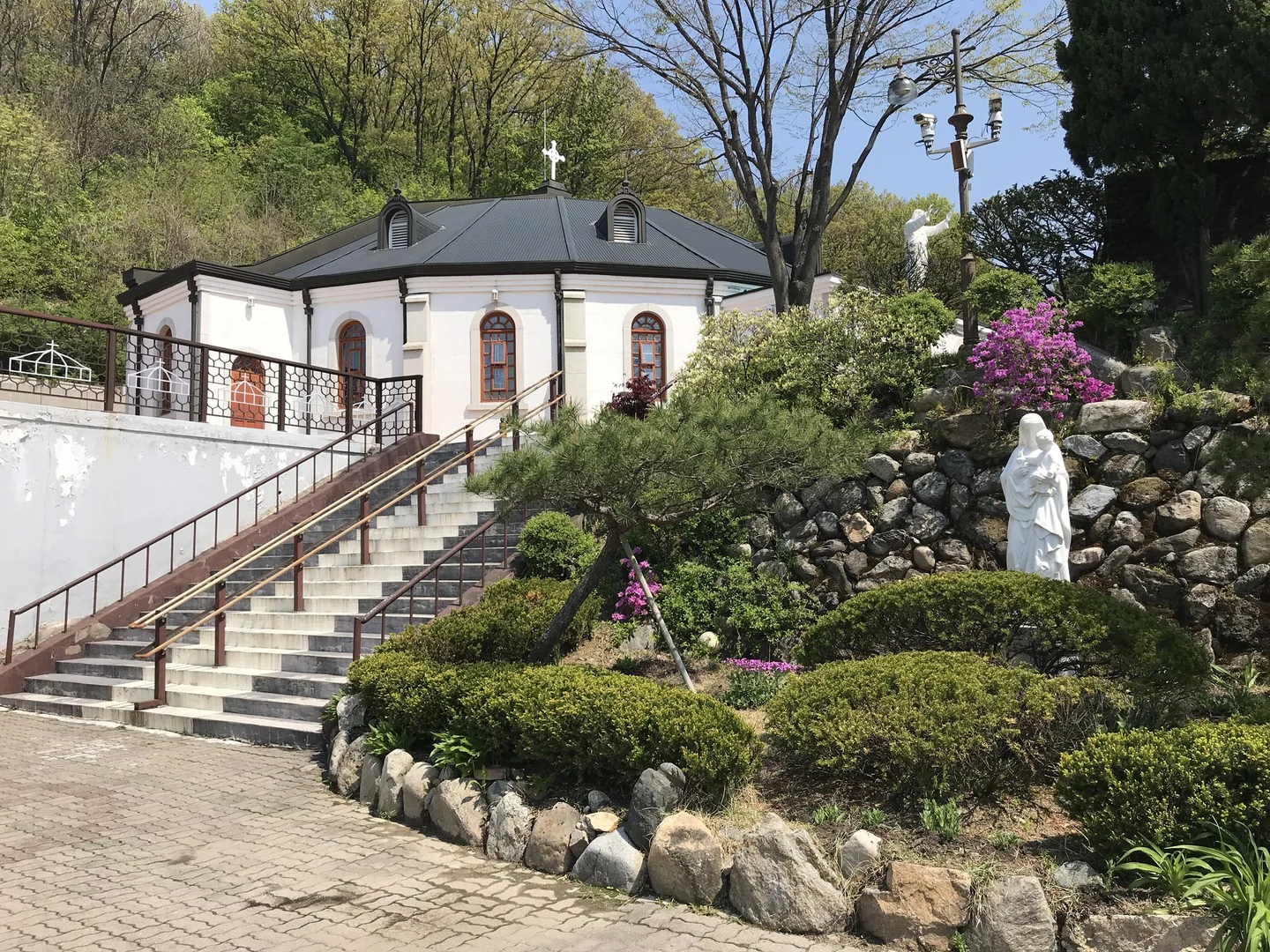
For architecture, Soyangno Catholic Church offers another worthwhile detour. Its low, curved form and white exterior are a change from the tall, narrow church silhouette many visitors expect. The semicircular plan arranges the congregation around the altar, making the building’s shape central to how it is used. Completed in 1956, the church belongs to Chuncheon’s postwar history. It remains a place of worship, so plan primarily around seeing the exterior unless visitor access is available. The approach includes steps and a slope; it is a different walking proposition from the flatter commercial streets. Check the name carefully: Soyangno Catholic Church and Jungnimdong Catholic Church are different places. For a short food-focused outing, choose this church or the pagoda as a single extra stop. Then return toward the station with time to spare, rather than adding a distant lake viewpoint after a leisurely meal.