Woljeonggyo Bridge and Gyochon Village: a Gyeongju walk from afternoon to evening
경주시청 시정뉴스 · Original · KOGL Type 1 ·
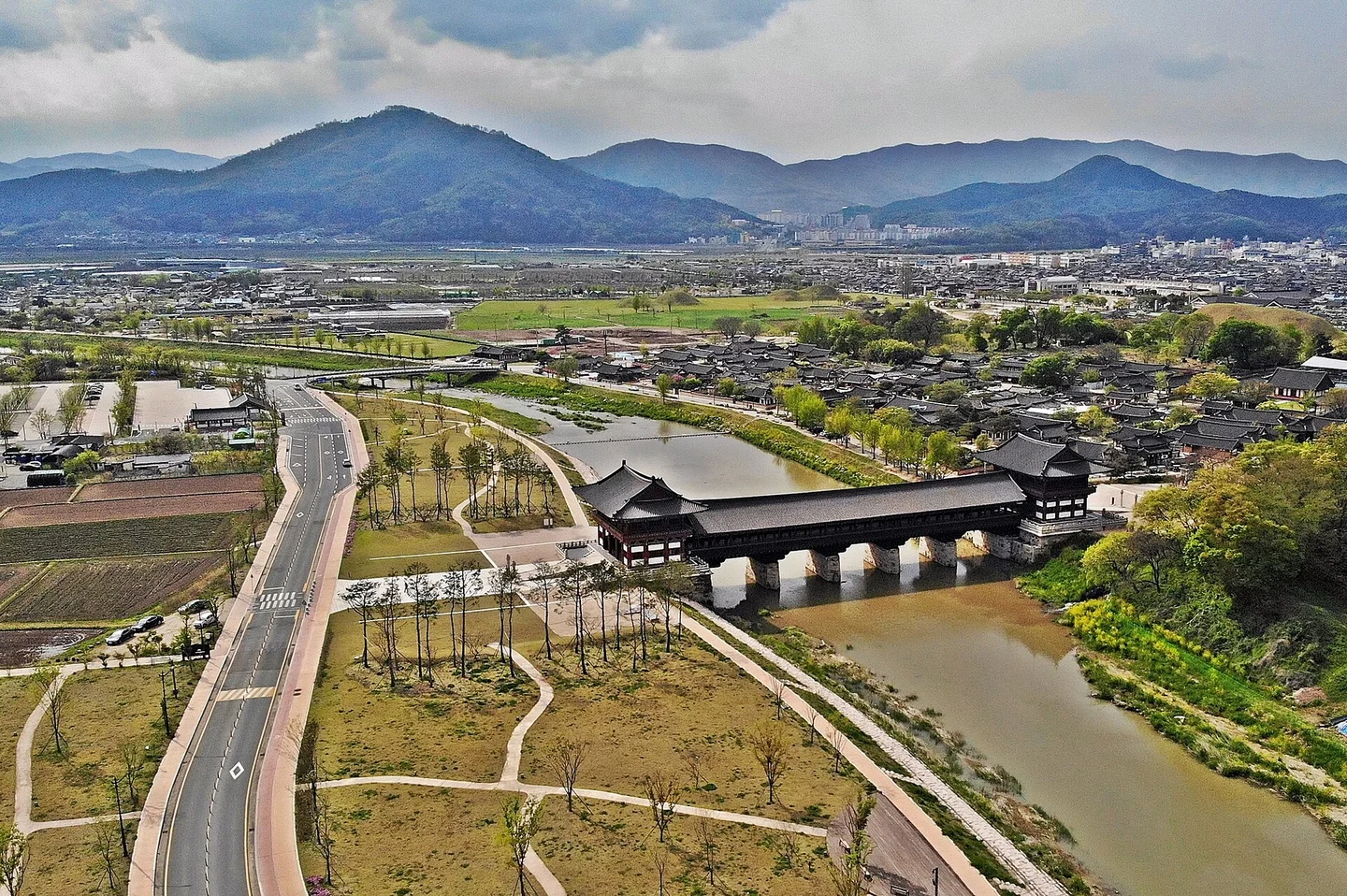
For one of Gyeongju's most satisfying evening walks, arrive before evening. Spend the afternoon among Gyochon Village's tiled roofs and courtyard houses, then head down to the Namcheon as the light changes. Woljeonggyo Bridge stretches across the river beneath a long covered roof, with a grand gatehouse at each end. When its lights come on, the bridge becomes the focus of the whole riverbank. The appeal is the easy combination of places: a historic family residence, an old Confucian school, small workshops, and an illuminated bridge, all within a walkable part of the city. You can connect them to Cheomseongdae and Gyerim Forest without turning the afternoon into another long transfer between sights. Allow two or three hours as a relaxed starting plan for the village and bridge, adding more for a workshop or meal. Arriving only after dark works for the river views, but misses much of what makes Gyochon interesting during the day.
Courtyard houses and the school that named the village
Seefooddiet · Original · CC BY-SA 4.0 ·
Gyochon's name comes from the hyanggyo, the Confucian school at the heart of the neighborhood. This connection gives the village a different history from Gyeongju's Silla royal tombs. Here, houses and institutions associated with the later Joseon era sit close to much older royal sites, alongside restored and newly built traditional-style spaces.
Christophe95 · Original · CC BY-SA 4.0 ·
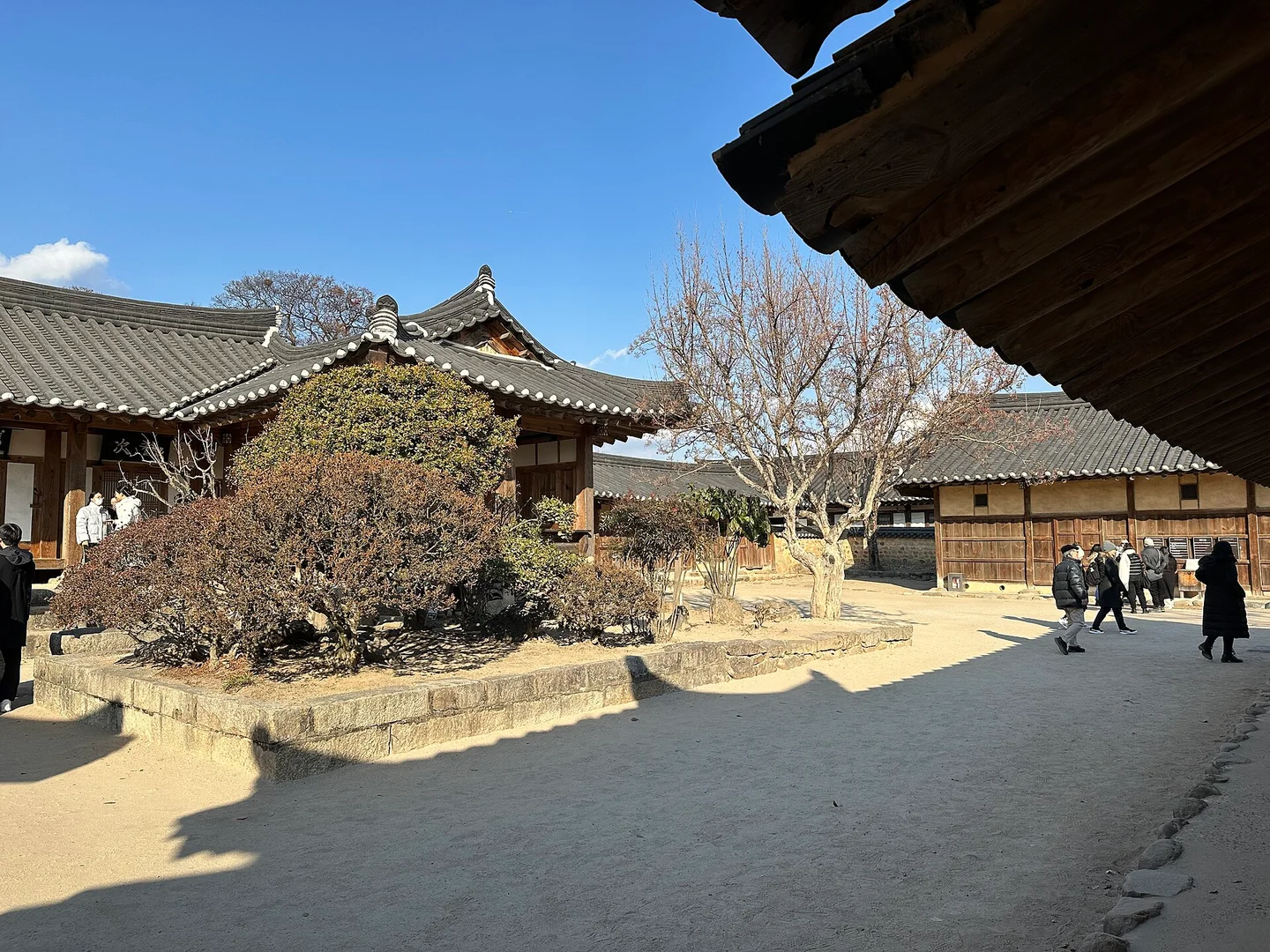
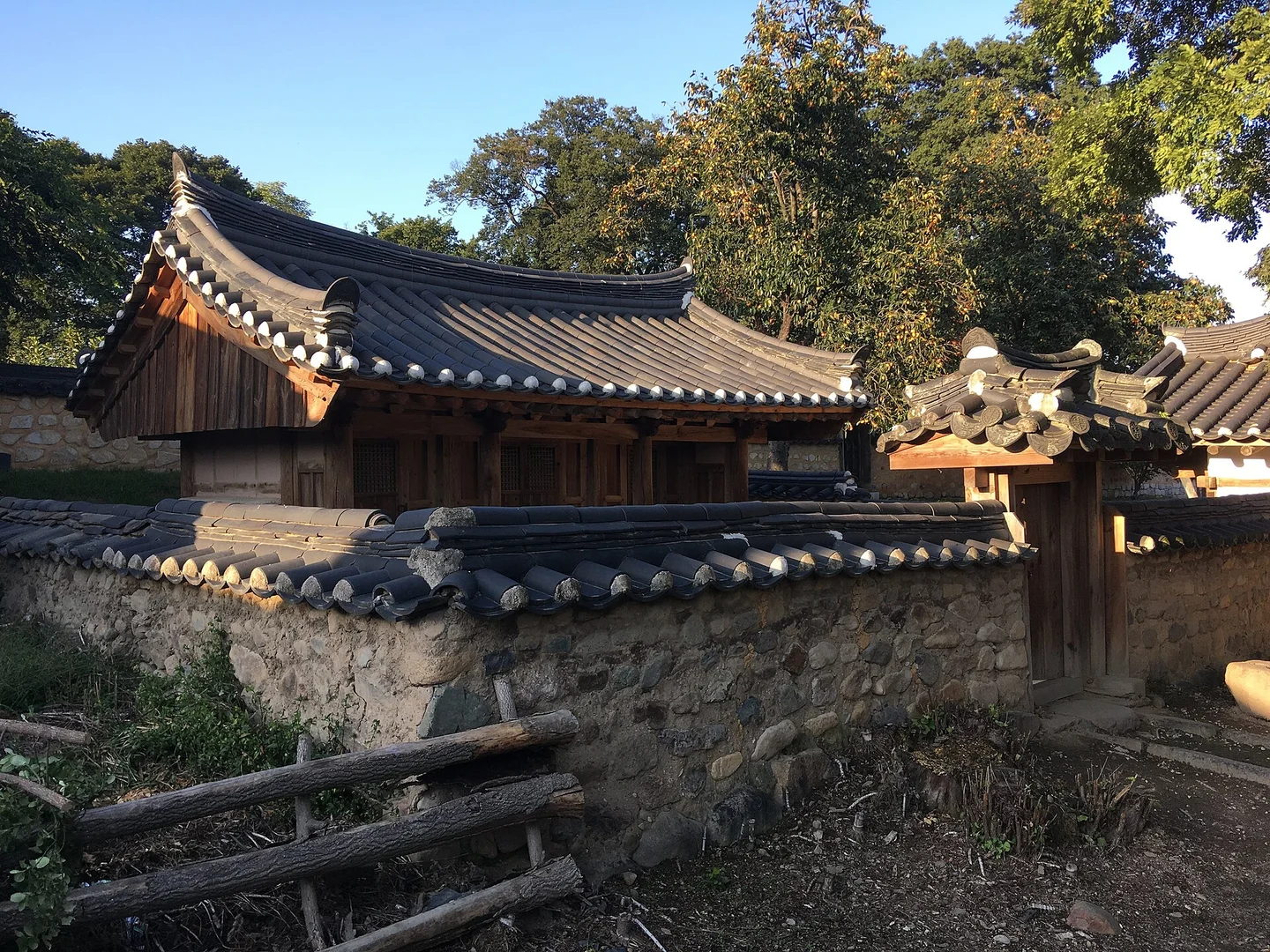
Begin with the Choe family's historic residence, often labeled Choe Rich Man's House or Choe Clan House in English. The family maintained considerable wealth over generations, and the village's official history traces its move here to the late eighteenth century. In the open visitor areas, the courtyard makes the household layout easier to understand: separate buildings face a shared outdoor space, with low stone foundations, wooden verandas, and deep eaves. Look at the relationship between the rooms and the yard rather than expecting furnished interiors everywhere. The shade under a roof, the raised wooden floor, and the position of a doorway are as revealing as a decorative detail. Keep to the areas opened for visitors; some rooms and adjoining properties remain private. Gyeongju Hyanggyo is next to the Choe residence. It served both teaching and Confucian ritual, and its buildings include spaces for those different functions. The city currently lists daytime visiting hours from 9 a.m. to 6 p.m., checked in October 2026. Traditional ceremonies and wedding demonstrations follow their own schedules, so consider them a possible addition rather than an everyday feature of a village walk.
Tea, ceramics, and local food traditions
Gyochon is also somewhere to spend an hour doing something. The village's pottery workshop lists painting on bisque-fired ceramics, wheel work, and hand-building among its activities. For travelers with children, decorating a mug or plate can give the afternoon a clear focus. Finished pieces need firing and later delivery, so ask about completion time and overseas shipping before signing up. More involved clay sessions require advance arrangements. For a shorter stop, Dayeon Traditional Tea House is listed by the village for individual tea-set and traditional tea-confection experiences. Another option, Migyeong Traditional Food Culture Institute, offers reserved sessions making barley-based gochujang, the fermented red-pepper paste used in Korean cooking. Program availability and the language of instruction need checking with the individual venue, rather than assuming every workshop accepts walk-ins. The neighborhood also has a distinctive brewing heritage. Gyeongju Gyodong Beopju is a clear, pale-gold rice wine associated with the Choe family, whose household tradition reaches back to the Joseon period. For adults interested in Korean food culture, it is a more locally specific name to look for than a generic souvenir bottle. A visit to the family house and a look at this tradition complement each other, even without a tasting session.
Walk through the covered bridge
Basile Morin · Original · CC BY-SA 4.0 ·
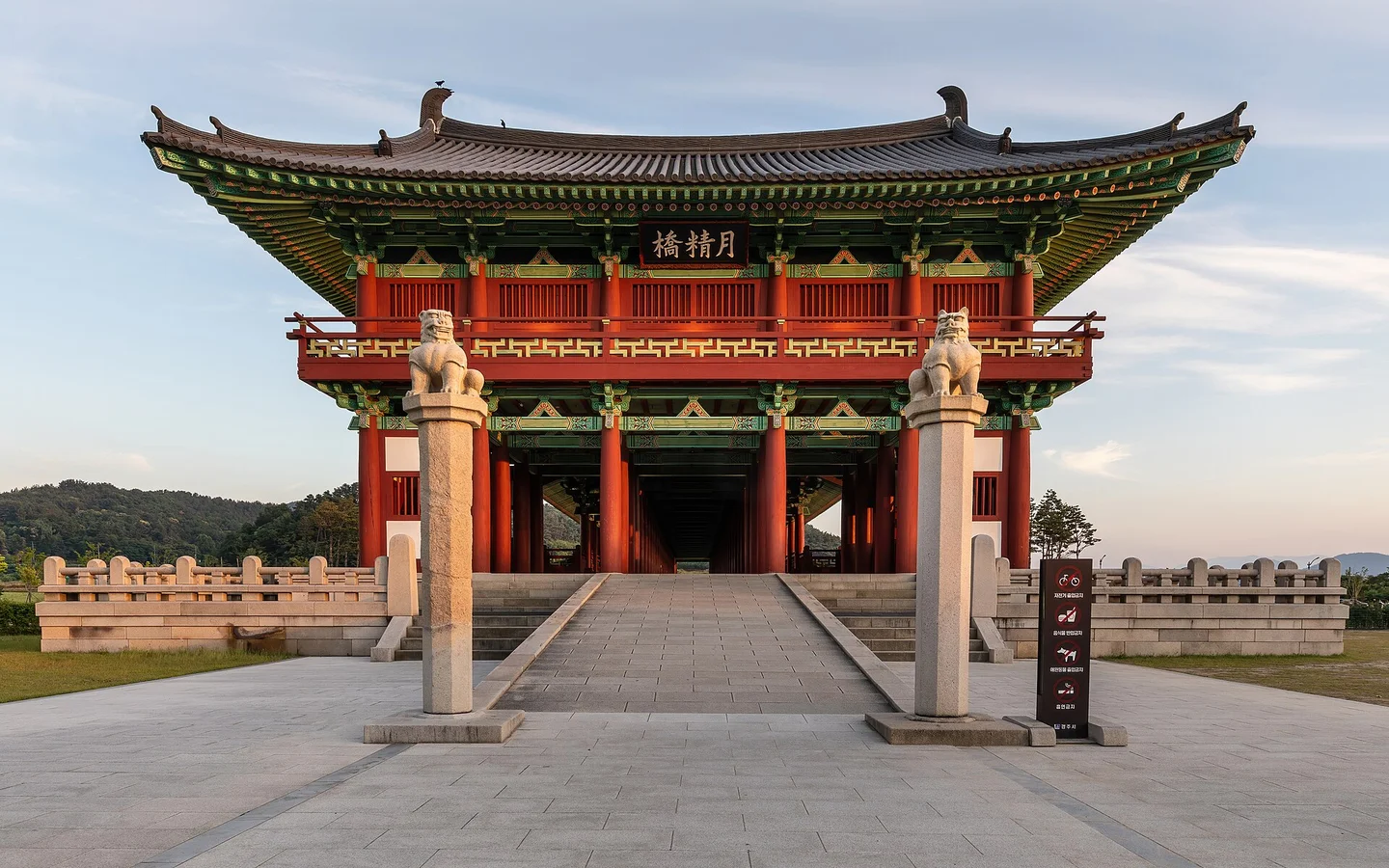
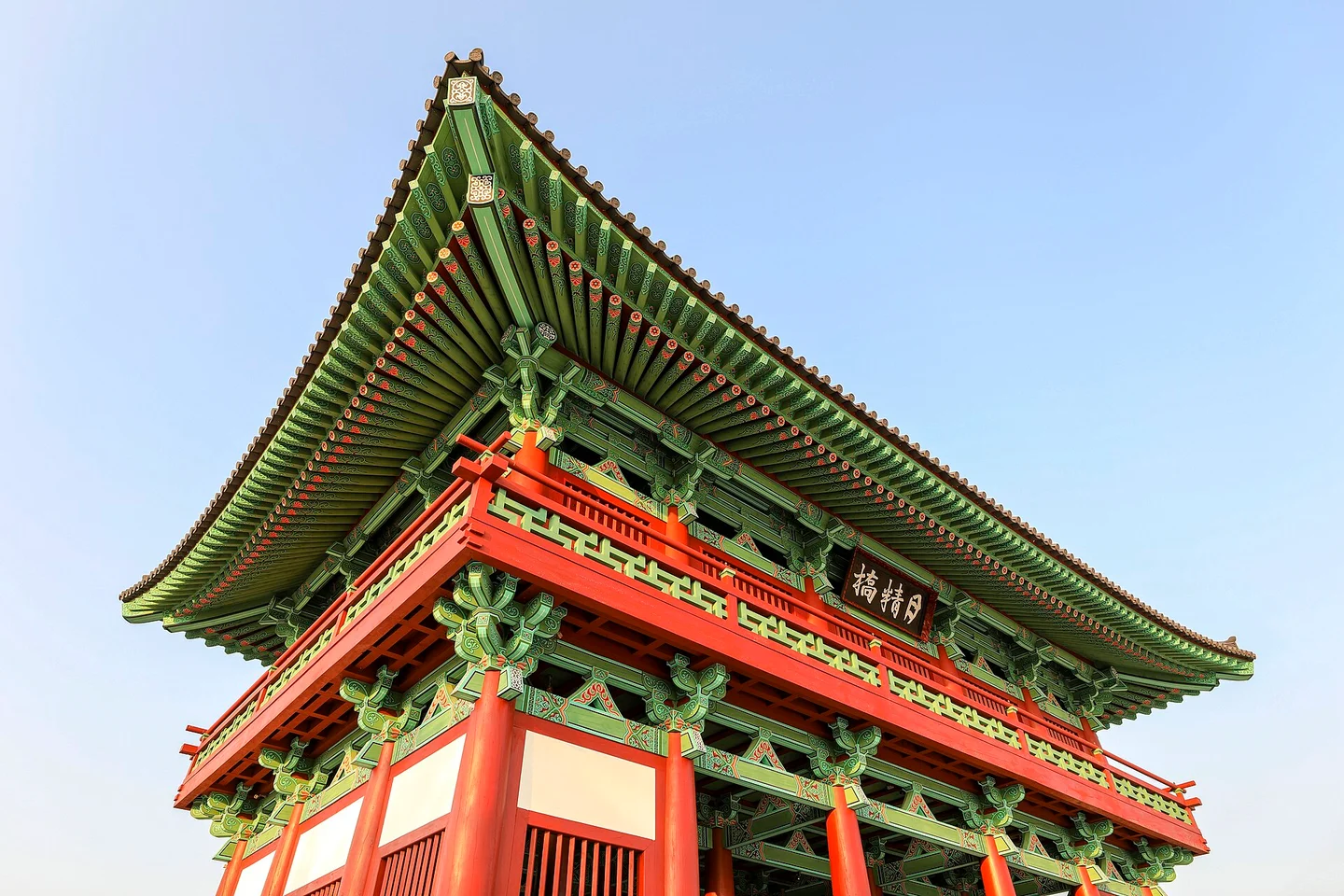
Woljeonggyo's red columns, green painted brackets, and sweeping tiled roof make it worth seeing close up. Approach through a gatehouse, then look along the covered passage: repeated columns draw the eye toward the opposite bank, while openings at the side frame the river. The painted woodwork, known as dancheong, becomes much easier to appreciate from below the eaves.
bryan... · Original · CC BY-SA 2.0 ·
The bridge's history begins in Silla records, but the structure you walk through today is a reconstruction completed in 2018 after research and archaeological investigation. That distinction is part of its interest. It restores a sense of the old crossing and its scale within the landscape, rather than presenting an untouched wooden bridge surviving from antiquity. When open, the upper gatehouse exhibition explains the reconstruction and displays related finds. There is no admission charge. Gyeongju's visitor information lists access from 9 a.m. to 10 p.m., checked in October 2026; the gatehouse exhibition may keep different hours. The passage is shared by people moving in both directions, so take your time with the details without blocking the center for photographs. Finish drinks or snacks before entering, and leave bicycles outside according to the posted entrance rules.
Stay by the Namcheon as the sky darkens
Basile Morin · Original · CC BY-SA 4.0 ·
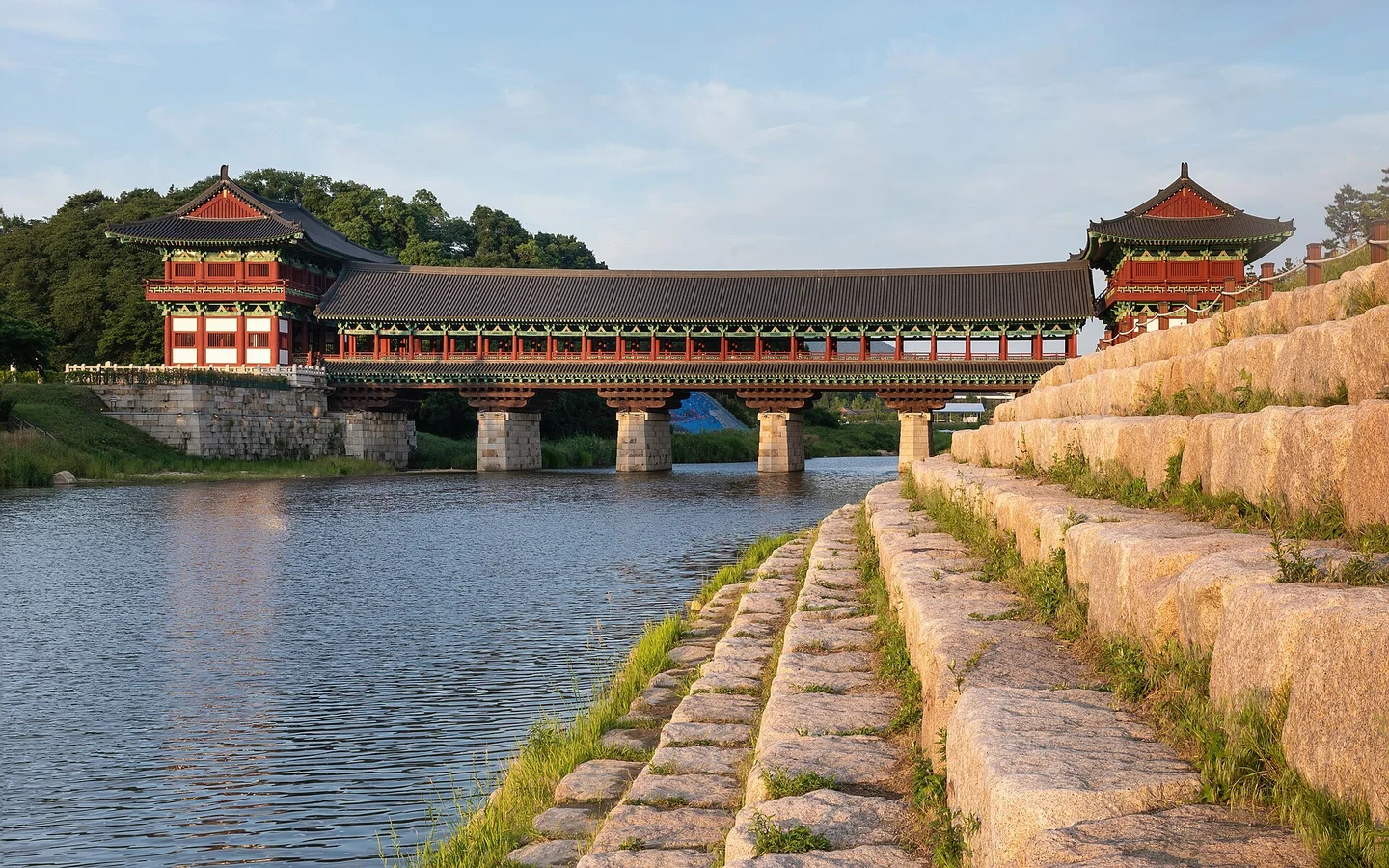
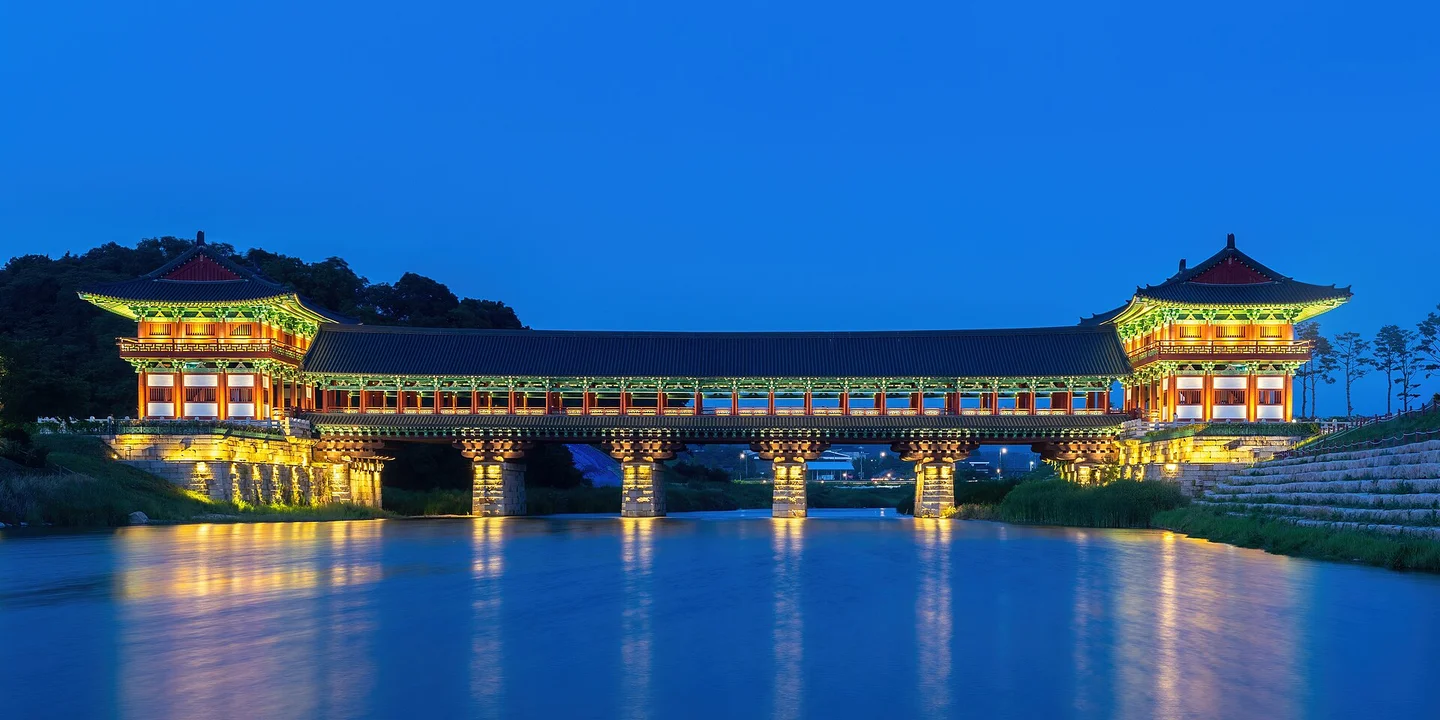
The full length of Woljeonggyo is best appreciated from the riverbank. In late afternoon, you can distinguish the stone piers, the long roofline, and the two gatehouses against the trees. Around twilight, the illuminated woodwork stands out while a little color remains in the sky. This is a particularly good time for a broad view of the bridge and its surroundings.
Basile Morin · Original · CC BY-SA 4.0 ·
Choose a place along the established bank paths and stay long enough to see the change. On a calm evening, light can stretch across the water in reflections; on a windy one, the moving surface gives a different effect. A phone camera often handles the bright roof more convincingly if you lower the exposure slightly instead of letting night mode brighten everything. Stepping stones offer another angle when conditions allow, but they are optional. After rain, with high water, or when access is restricted, remain on the bank. The stone embankment also has uneven levels, and going down toward the water becomes less convenient as it gets dark. Families and anyone with limited mobility can enjoy the long view from the upper paths without crossing the river on the stones. Use the day's sunset time to plan your arrival rather than expecting the same evening light in every season. Summer leaves more room for a meal before twilight; in winter, the river views may fit more naturally before dinner.
Connecting the walk to the rest of Gyeongju
A straightforward route from the historic center is Cheomseongdae, Gyerim Forest, Gyochon Village, then Woljeonggyo. If you begin around Hwangnidan-gil, work toward the village in the afternoon and return there for dinner after the bridge. Donggung Palace and Wolji Pond are another evening possibility, but they involve a separate visit with their own admission and closing arrangements. Choose both only if the transfer still leaves you time to enjoy each. For a direct arrival, use Woljeonggyo's public parking area or a taxi drop-off on an accessible road near the village. Specify which bank or parking entrance when meeting a driver; the bridge has two ends, and the river paths themselves are not pickup lanes. From Gyeongju KTX Station, allow for the journey into town before the walk begins. Travelers using a wheelchair or stroller will find the broad paths more useful than the lower stone steps, though individual hanok entrances and courtyards can have thresholds or uneven surfaces. With a pet, distinguish the riverbank walk from entering the bridge: KTO's current guidance permits pets only in certain bridge areas using a carrier or stroller, with no walking directly on the bridge. Follow the entrance staff's directions for the permitted route.