Bulguksa Temple: the stonework that makes Gyeongju's Silla heritage tangible
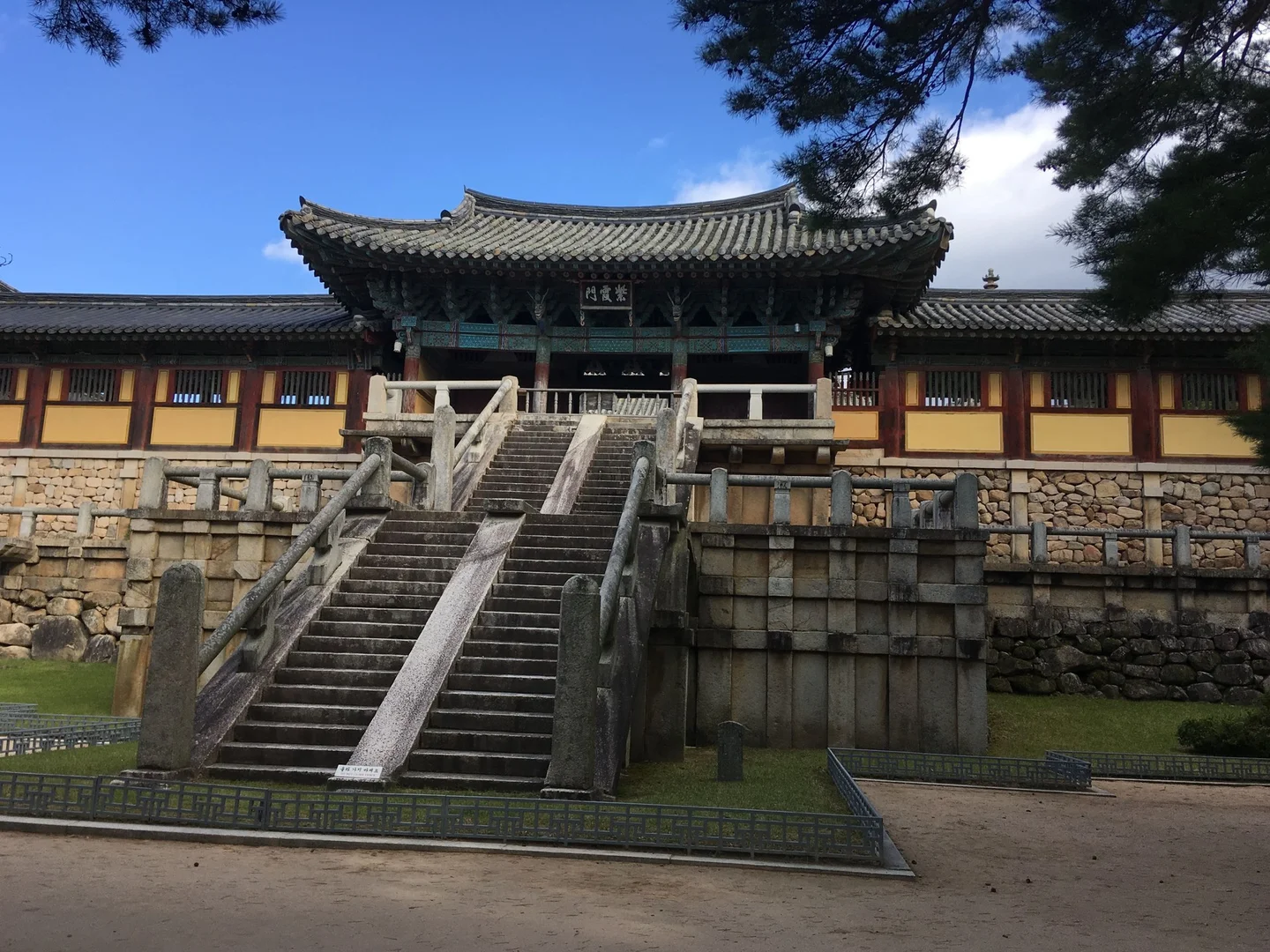
Christophe95 · Original · CC BY-SA 4.0 ·
At Bulguksa, two very different pagodas share one courtyard. One is spare and balanced, with three clearly defined stories; the other seems to turn solid stone into miniature staircases, railings, and sculpted ornament. Seeing Seokgatap and Dabotap together is a compelling reason to leave central Gyeongju for the wooded foot of Tohamsan Mountain. The temple's appeal extends beyond those famous objects. Massive stone terraces lift painted wooden halls above the ground, while gates and connecting courtyards reveal the complex a little at a time. You can enjoy the contrasts without prior knowledge of Korean Buddhism, though a few details about the layout make the visit richer. Bulguksa's major stone monuments belong to the eighth-century flowering of Silla culture. The wooden halls have been rebuilt and restored over later centuries, including after destruction during the Japanese invasions of the 1590s. This is a functioning temple with a long history of renewal, rather than a complete wooden complex untouched since Silla times. Bulguksa and nearby Seokguram Grotto were jointly inscribed on the UNESCO World Heritage List in 1995. Allow around two hours for an unhurried first visit, longer if you like reading architectural details or exploring the smaller halls. Travel from central Gyeongju is additional. If you have only one afternoon for both the temple and the city's royal tombs, decide which deserves most of that time before setting off.
A pond and guardian figures on the way in
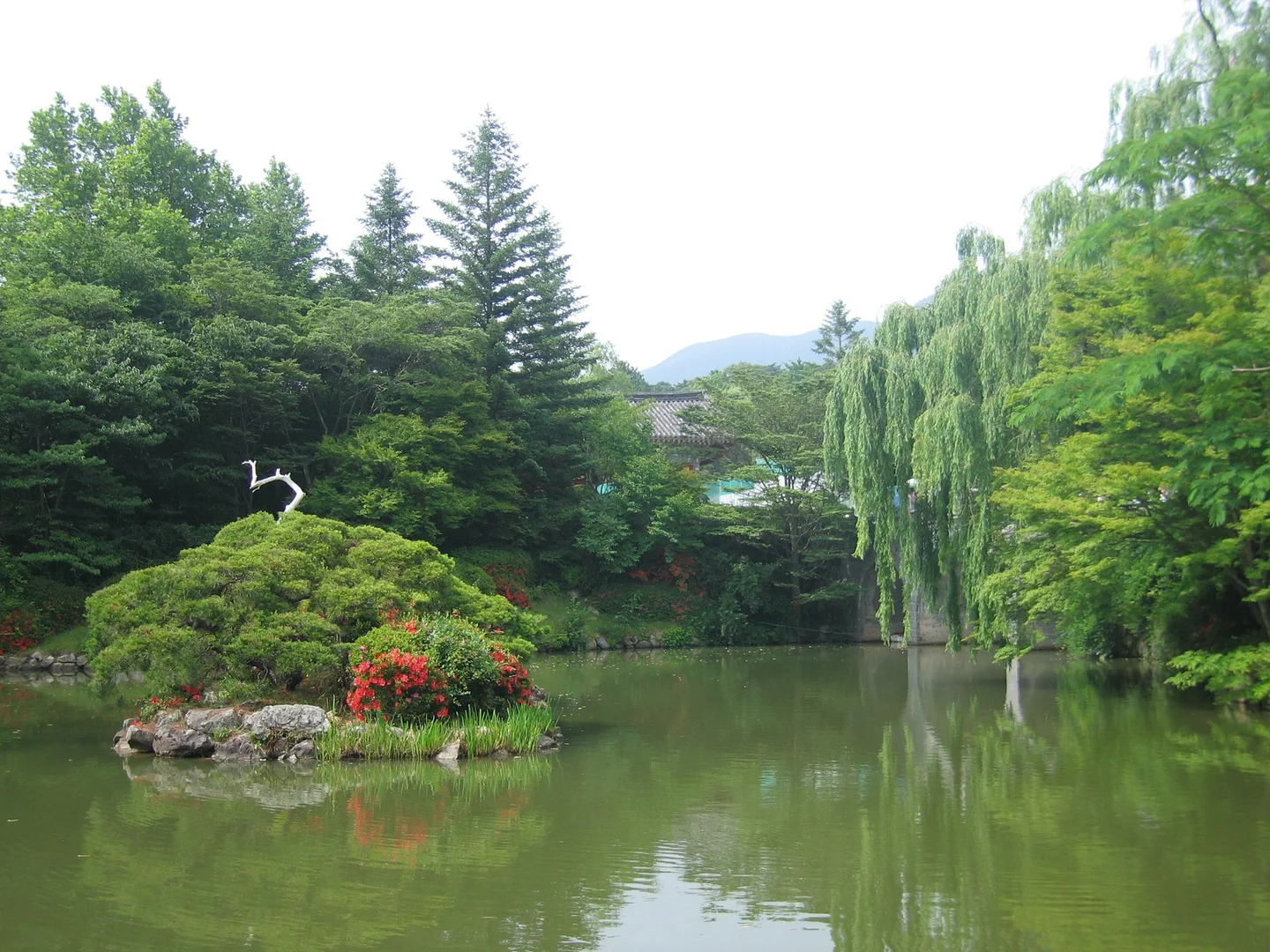
The wooded approach is part of the visit. Banya Pond brings water, reflections, and an island of greenery into the entrance landscape, a softer introduction before the heavy stone terraces. Take a moment here, then continue toward Cheonwangmun, the Gate of the Four Heavenly Kings.
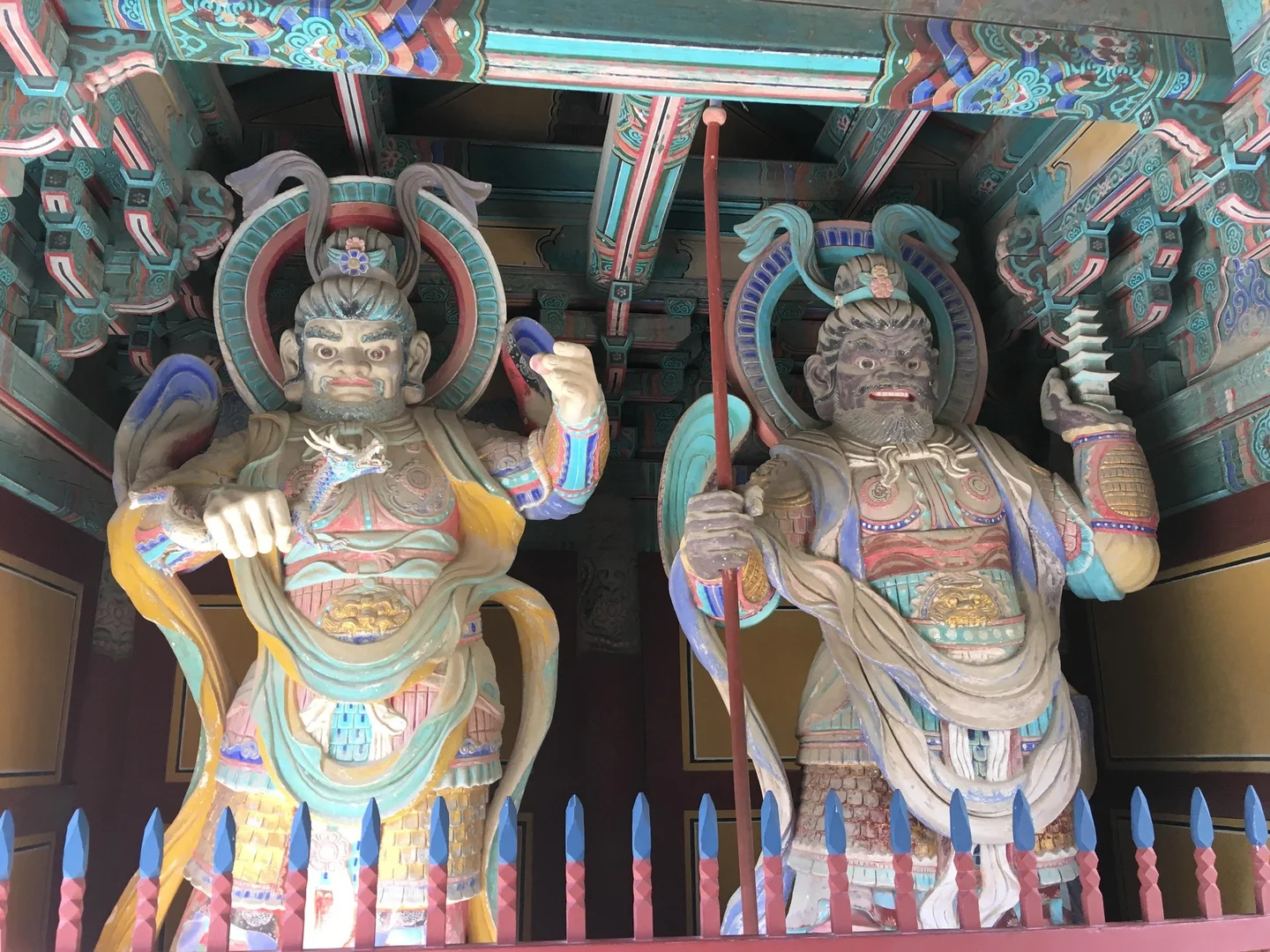
Christophe95 · Original · CC BY-SA 4.0 ·
Inside the gate, the guardian figures have emphatic faces, elaborate armor, and brightly painted details. Their role is to protect the Buddhist realm. Looking at the different objects they hold is an accessible starting point for visitors unfamiliar with the imagery; you don't need to memorize every figure's name to notice the craftsmanship. Beyond the gate, the scale changes. Trees give way to the broad temple frontage, with elevated buildings and stonework arranged across the slope. This approach helps explain Bulguksa's name, commonly translated as the Temple of the Land of Buddha: the route is designed as a transition into a sacred world. In autumn, foliage brings red and gold around the stonework; in greener months, the entrance feels more like a woodland walk. The architecture remains the main attraction outside foliage season, and cooler-weather visits can leave the lines of the roofs easier to see through bare branches.
Read the terraces from below
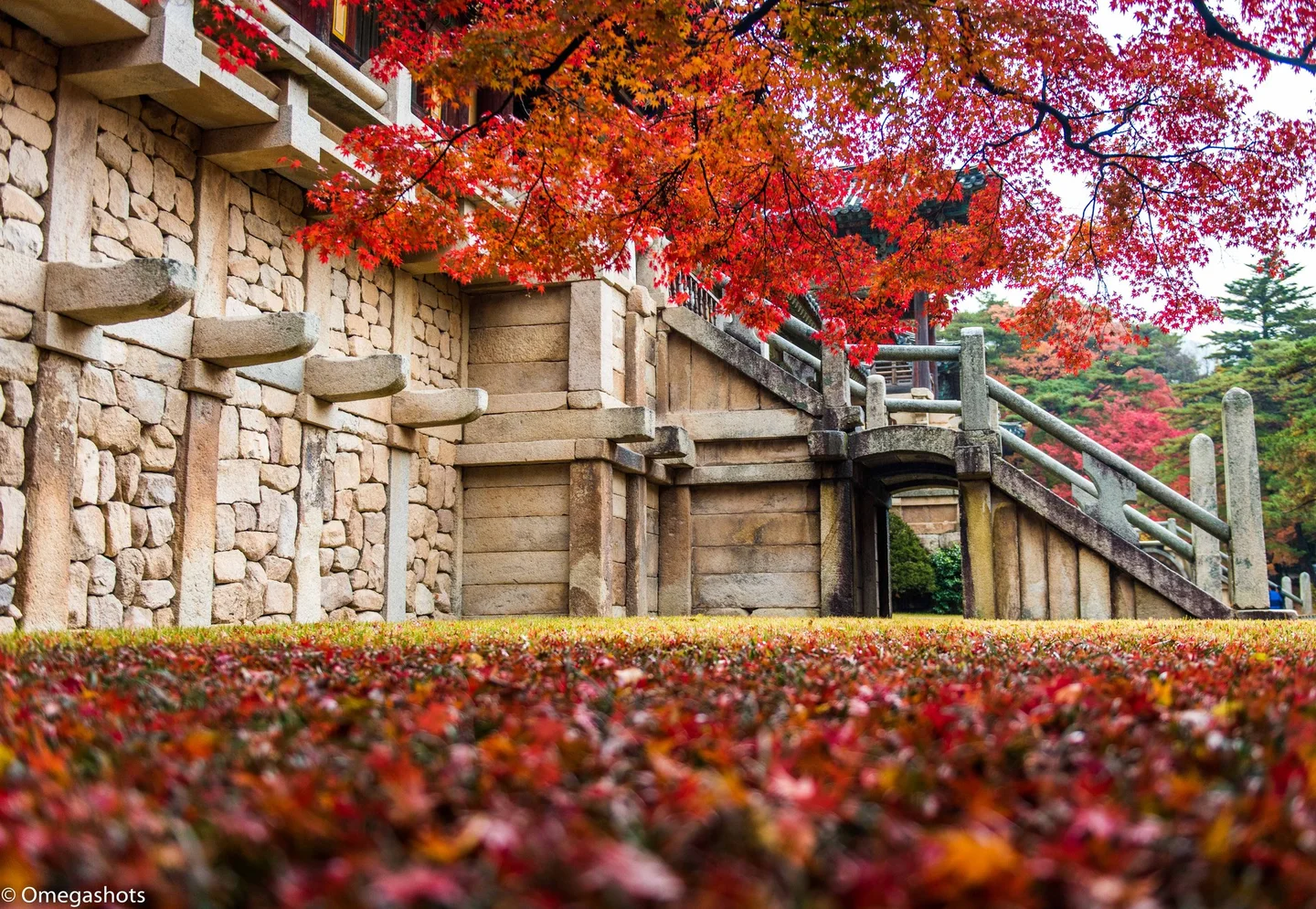
Macbest1982 · Original · CC BY-SA 4.0 ·
Pause below Jahamun Gate before entering the main courtyard. The paired Cheongungyo and Baegungyo bridges look like a grand stone staircase, with an arched opening beneath part of the structure. Seeing the stairs, supporting wall, and gate together is more revealing than concentrating on a single step or railing. The raised platform has a religious meaning as well as an engineering purpose. The lower level represents the everyday world, while the sacred spaces above express the Buddha's realm. Stone is doing two jobs here: supporting the halls and giving physical form to an idea. Notice how large shaped blocks and smaller, irregular stones fit into the supporting walls. Above them, the timber buildings introduce a different texture, with curved tiled roofs and painted brackets. The combination feels substantial without being visually uniform. The historic stair-bridges are protected monuments, not the visitor route to climb. Follow the designated side approach into the courtyard. That also gives you a useful change of perspective, from the temple rising above you to the enclosed space around the pagodas.
Dabotap and Seokgatap: start with the silhouettes
Christophe95 · Original · CC BY-SA 4.0 ·
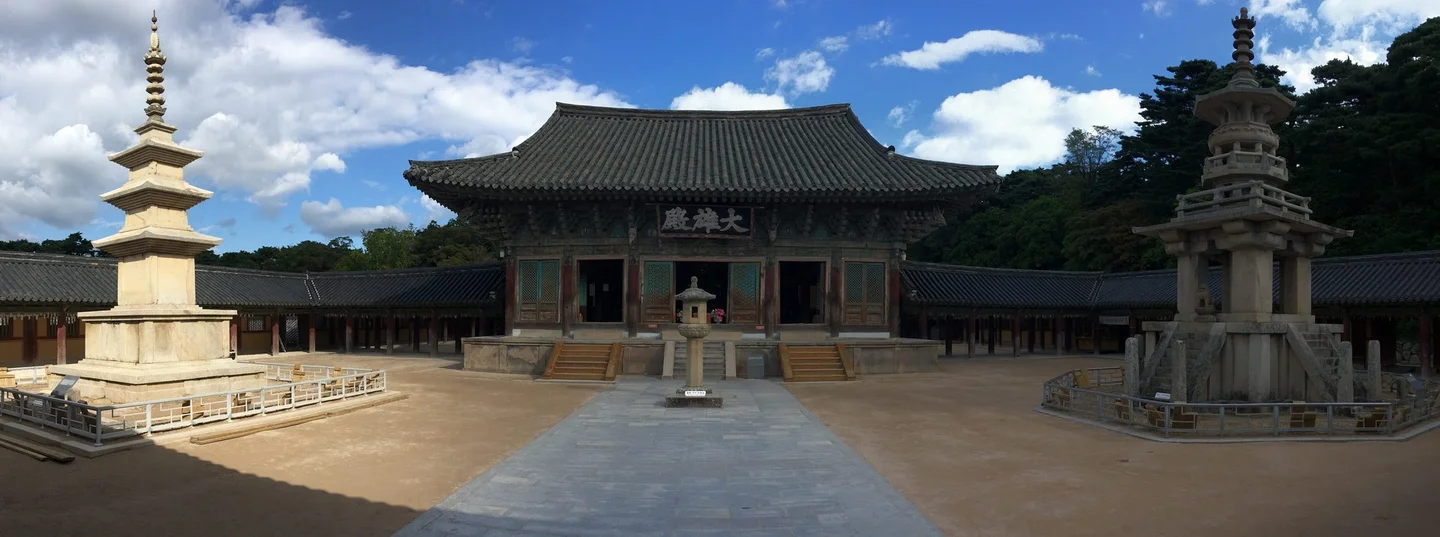
Facing Daeungjeon, the main worship hall, Seokgatap stands to the left and Dabotap to the right. Seokgatap is the three-story pagoda with a restrained shape: repeated roof stones, clean horizontal lines, and a carefully balanced taper. Dabotap is the more elaborate neighbor, with changes in shape and scale as your eye moves upward.
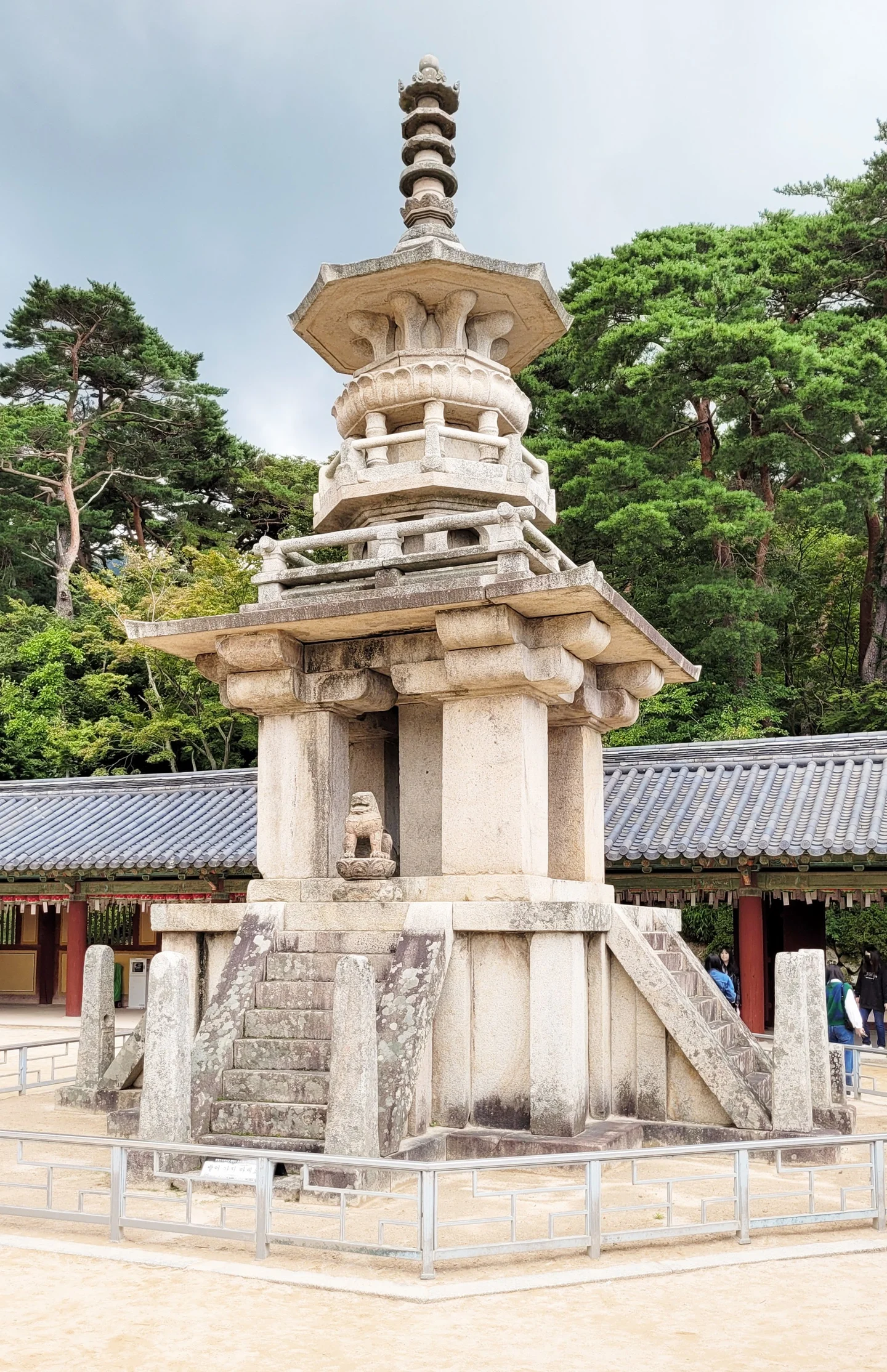
Compare their outlines first. Then look more closely at Dabotap's small stairways, railings, columns, and the stone lion near its lower section. Some details resemble wooden construction even though they are carved from stone. Seokgatap rewards the opposite approach: stand back enough to appreciate its proportions instead of hunting for decoration. The pair expresses ideas from the Lotus Sutra, associated with Shakyamuni Buddha and the Buddha of Many Treasures. Their difference is deliberate, not the result of one being an unfinished version of the other. The shared courtyard is what makes that contrast so easy to appreciate. Daeungjeon gives the pagodas their setting. Look at how the hall, surrounding covered corridors, and open ground frame the two towers. If worship is underway, you can still see this relationship from outside. Anyone entering an open worship hall should follow the posted shoe and photography rules and leave space for people praying. As of October 2026, the National Research Institute of Cultural Heritage describes major repairs to Daeungjeon as planned for late 2026. This is not a temple-wide closure announcement; consult Bulguksa’s current notices for any changes to the viewing route.
More halls, or Seokguram farther up the mountain?
If the main courtyard has whetted your appetite, use the temple map to continue toward Geuknakjeon or the rear halls. Bulguksa is arranged on several levels, and adding every building means more stairs. A short visit can comfortably concentrate on the pond and entrance, the main stone frontage, and the Daeungjeon courtyard without treating the remaining halls as a checklist. For wheelchair or stroller travel, ask the temple about the usable entrance and continuous viewing route in advance. Individual courtyards may be relatively level while the connection between them is stepped. A route that suits an independent walker isn't automatically a workable circuit for wheels. Seokguram is a separate mountain visit, not a chamber somewhere behind Bulguksa's main hall. You need another road journey, followed by the walk from its arrival area to the grotto. The city's visitor map identifies bus 12 for the Bulguksa–Seokguram connection. Match the outward and return departures before committing, particularly late in the day. Walking between the sites should be planned as a mountain route, not assumed to be an extension of the temple courtyard stroll.
Getting to Bulguksa and planning the rest of the day
From the central bus-terminal area, buses 10 and 11 reach Bulguksa by different sides of their loop: 10 goes through the Bomun resort area, while 11 passes the museum and Tongiljeon side. The city's transport map also lists express bus 711 from Gyeongju's KTX station via central stops to Bulguksa. Check the direction and live departure for your stop rather than assuming the same number always means the shortest journey. Temple admission is free; parking is separate. The temple’s own visitor guide, checked on October 12, 2026, lists entry from 9 a.m., with last admission at 6 p.m. from March through September, 5:30 p.m. in February and October, and 5 p.m. from November through January. Pets are not admitted. Allow enough time after arrival to see the main courtyards instead of treating the entry cutoff as a suggested arrival time. For an uncomplicated day, visit Bulguksa in the morning, have lunch outside the temple, then choose either Seokguram or a return to central Gyeongju. The first option keeps the day focused on Tohamsan's Buddhist heritage; the second leaves time for the royal-tomb district and an evening around the city's historic center.