Mungyeong Saejae: walk an old mountain road through three fortress gates
Republic of Korea from Seoul, Republic of Korea · Original · CC BY-SA 2.0 ·
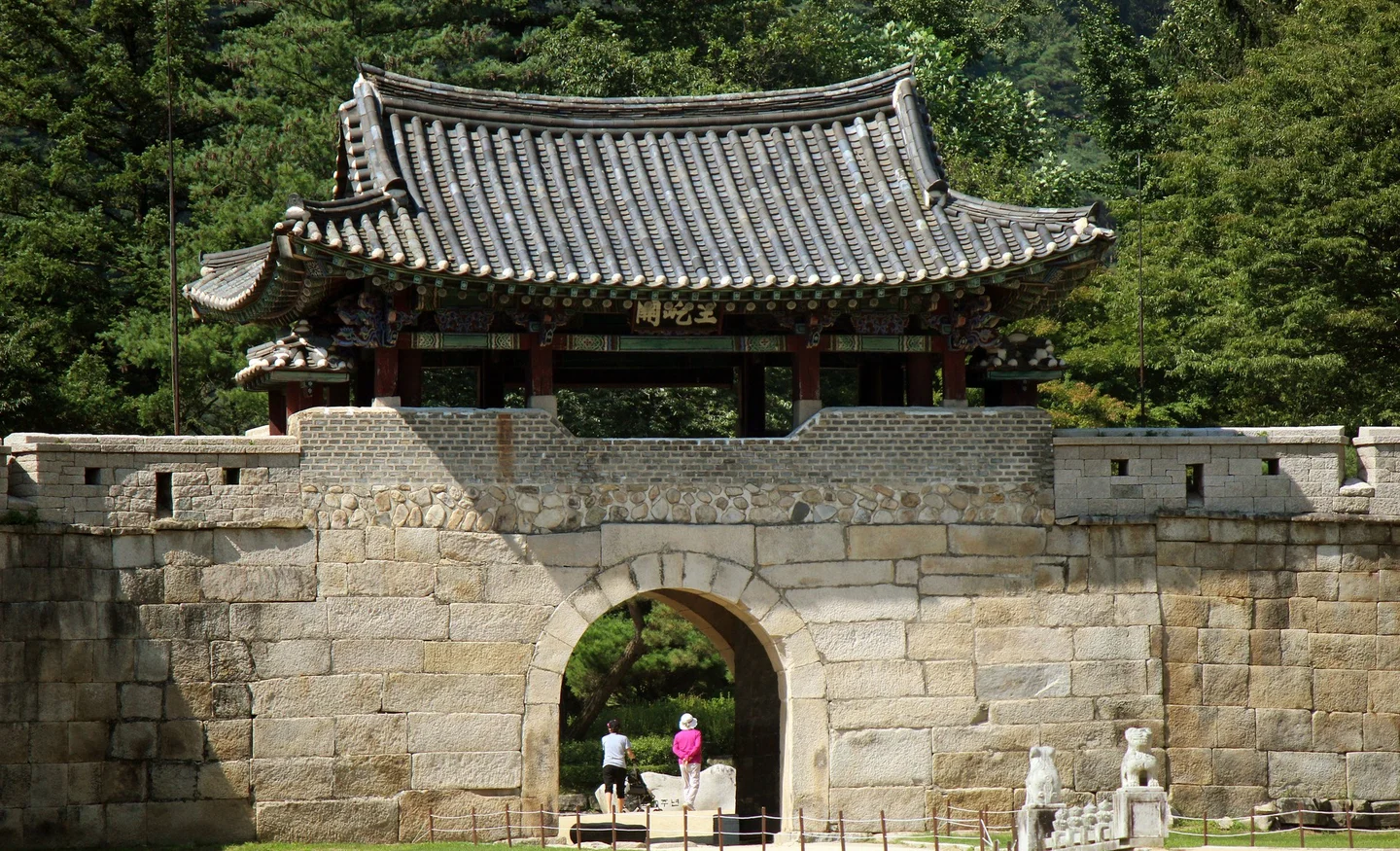
Mungyeong Saejae combines two kinds of travel: a wooded walk through an old mountain pass and a visit to landscapes familiar from Korean historical dramas. Stone walls cross the valley, streams run beside stretches of the road, and a large outdoor filming set sits near the lower end. You can make this a short cultural outing or a substantial day on foot, depending on how far you follow the pass. Start on the Mungyeong side at Juheulgwan, the first gate. Its arched passage and tiled gatehouse make a strong introduction, but the structure also explains the geography: this was a route worth controlling. During the Joseon period, the road connected the southeastern Yeongnam region with Hanyang, today’s Seoul, carrying officials, merchants, and scholars traveling toward the capital. The three gates developed at different times and have undergone repair and restoration. They are landmarks along a historic route rather than three adjacent monuments in one courtyard. Before setting off, choose whether your main interest is the film set, a valley walk to the second gate, or the longer climb to the third.
How far should you walk?
hyolee2 · Original · CC BY-SA 4.0 ·
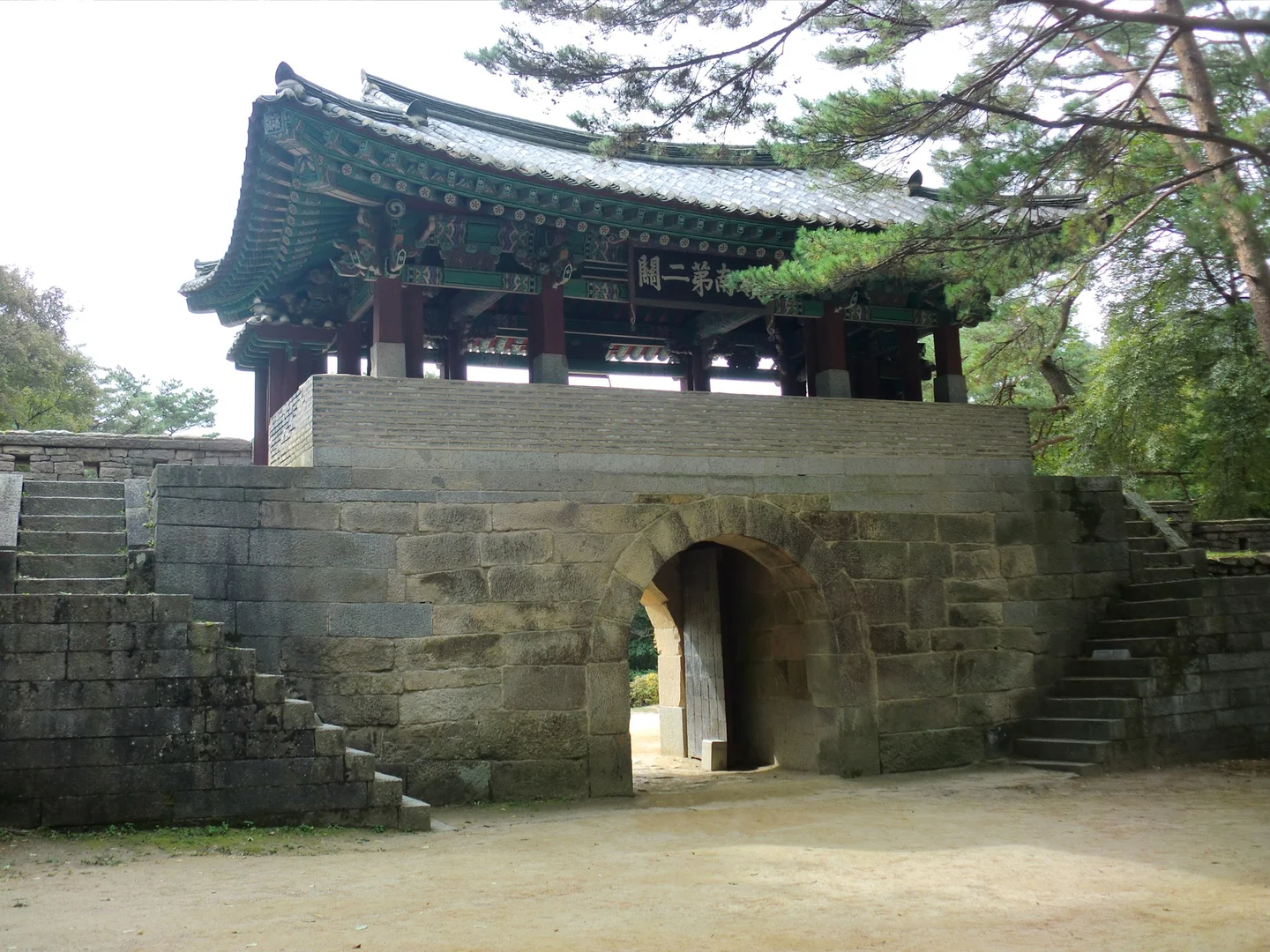
For many first-time visitors who enjoy walking, Jogokgwan, the second gate, is the most useful turnaround point. It is about 3 kilometers, or 1.9 miles, from the first gate. Returning the same way makes that portion roughly 6 kilometers, or 3.7 miles, with the approach from the parking area or bus stop added separately. Allow extra time for the smaller historic sites along the road. The second gate stands where the valley tightens, with stone walls, forest, and rocky slopes close together. Walk through the arch to see how the setting changes on either side, then pause before deciding whether to continue. A return from here works well when you want a proper outdoor walk and still have time for the lower visitor area. For a shorter outing, stay around Juheulgwan and the Mungyeong Saejae Open Film Set. That choice suits drama fans and groups whose members have different walking stamina. The set itself involves walking between streets and courtyards, so include it in your distance budget rather than treating it as a quick indoor stop.
What to look for between the gates
Yoonj · Original · CC BY-SA 3.0 ·
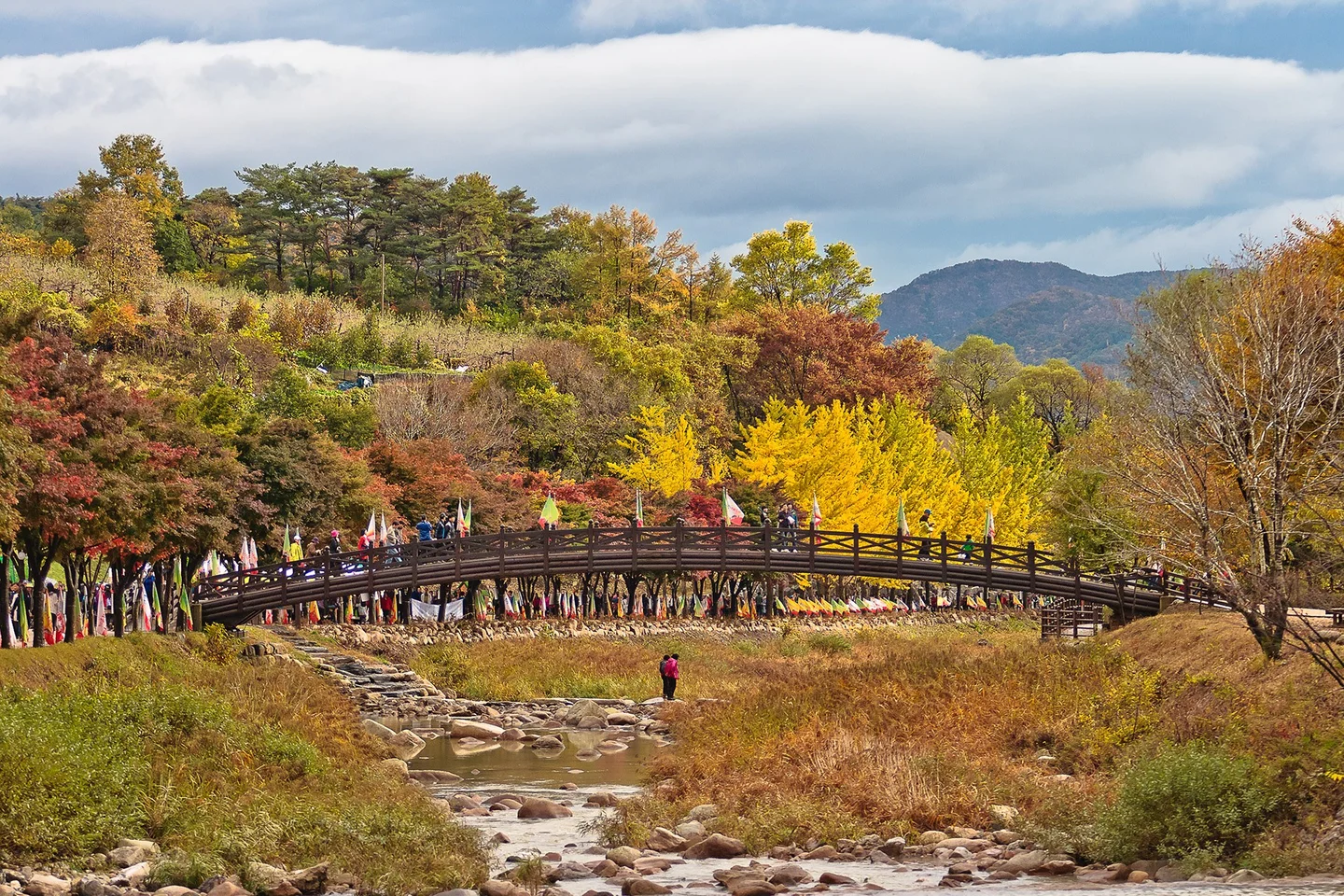
The old road has more to offer than its gatehouses. Joryeongwon was a stopping place for travelers, and its remains bring the practical business of crossing a mountain pass into focus. Gyogwijeong marks a place associated with the handover of office between incoming and outgoing provincial governors; the pavilion seen today is a reconstruction. Another small landmark is the stone warning against forest fires, inscribed in Korean script. It is a reminder that managing this wooded route was a concern long before it became a leisure destination. These stops give the walk variety without requiring a detour to a mountain summit. Choose a few that interest you and use the interpretive signs to connect them with the road’s working history. The scenery changes with the season. Fall brings color to the streamside trees and wooded slopes, while summer emphasizes shade and the contrast between water, rock, and foliage. Bridges give you views along the valley. Stay with the marked route rather than following the streambed; the walking surface can become muddy after rain. The broad path is more approachable than a steep summit trail, but it still rises through a mountain landscape. Comfortable walking shoes and water are worthwhile, especially if you are going beyond the film set. Bring what you need for the upper walk before leaving the main visitor area.
Continuing to Joryeonggwan, the third gate
No machine-readable author provided. Visviva assumed (based on copyright claims). · Original · Public domain ·
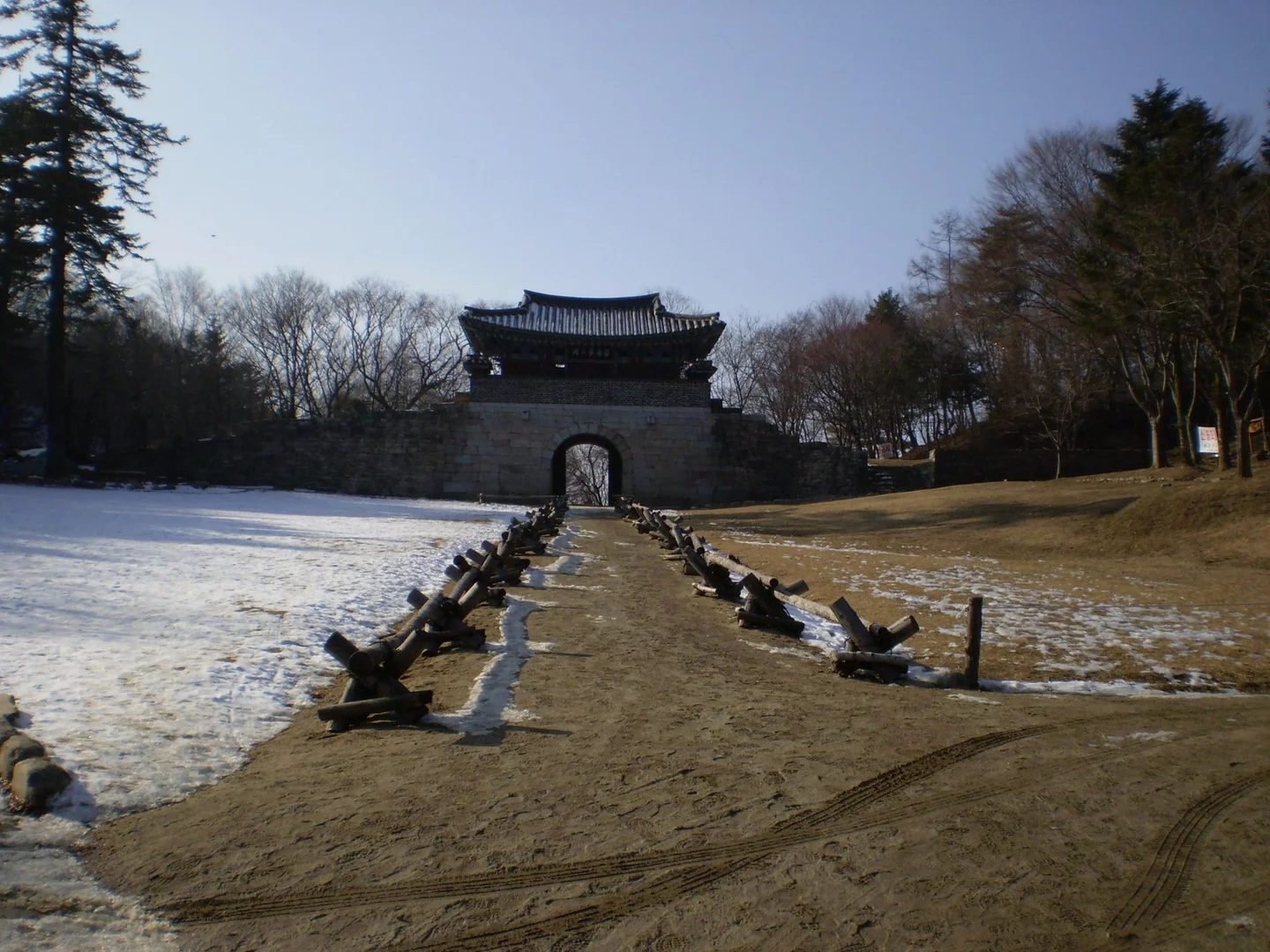
The next stage is about 3.5 kilometers, or 2.2 miles, from the second gate to Joryeonggwan. The city’s route diagram puts the first-to-third-gate journey at roughly 6.5 kilometers each way. An out-and-back visit therefore means about 13 kilometers, or 8 miles, between those gates alone, plus the lower approach. Treat that as the main walk of the day. The third gate marks the high end of the pass route and the boundary toward Chungcheongbuk-do. Reaching it gives the road a different scale: you have followed a corridor through the mountains rather than just entered a scenic park. The wooded approach and gate at the top are the destination; trails branching toward Juheulsan or Joryeongsan summits are separate hikes. Decide how you will get back before continuing over the pass. A through-walk toward the opposite side needs a pickup or onward transit plan, particularly if your car is still in the Mungyeong parking area. For a simple out-and-back trip, keep enough daylight and energy for the return when setting your turnaround time. In winter, shaded stretches may remain icy even when nearby ground looks clear. Check conditions and any trail restrictions before committing to the upper section. An early start gives you more flexibility if the surface is slow or you want to spend longer at a gate.
The outdoor set: a stop for historical-drama fans
Choi2451 · Original · CC BY-SA 4.0 ·
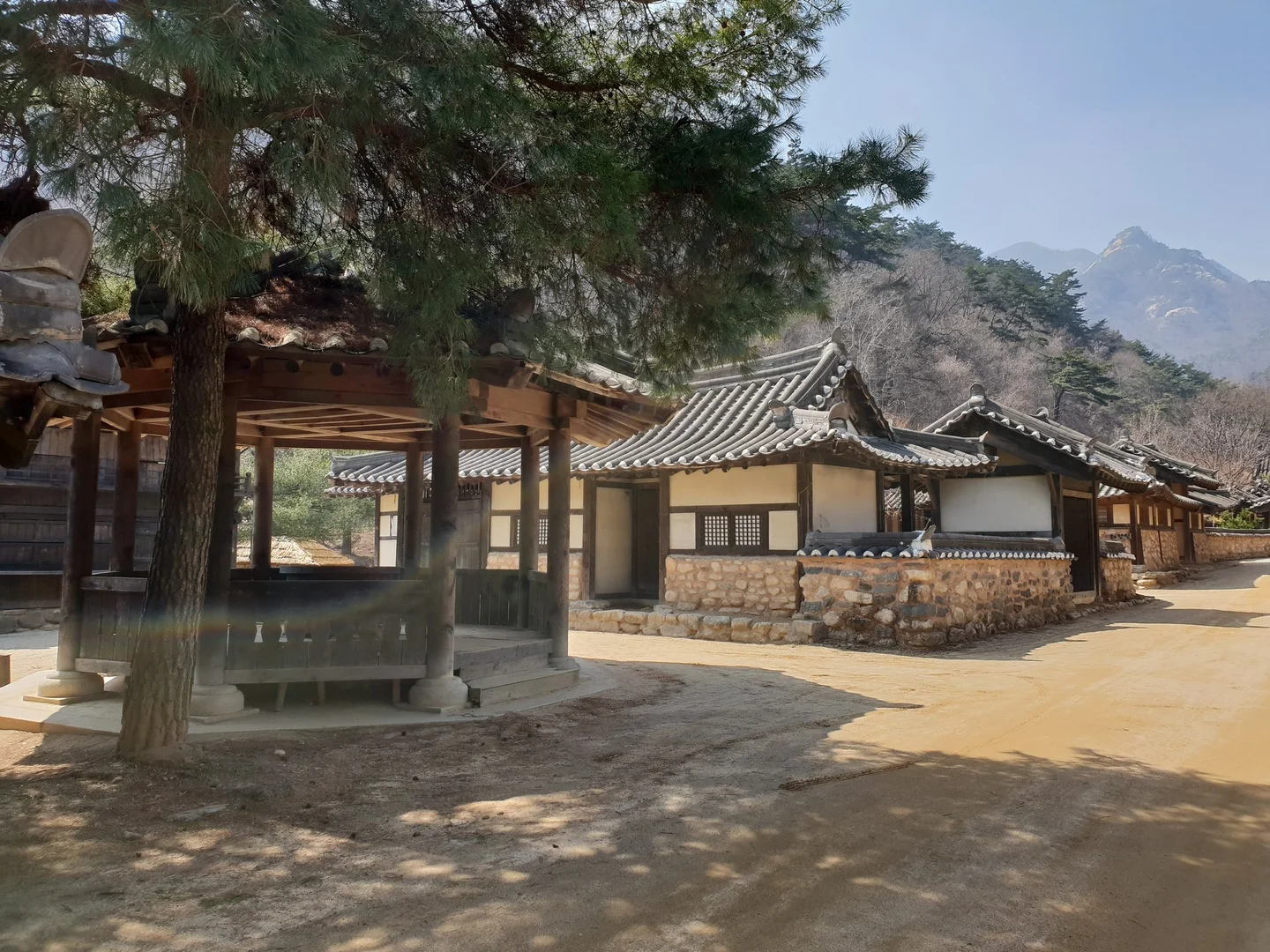
The Mungyeong Saejae Open Film Set contains streets, official compounds, palace scenery, and traditional-style houses built for filming. Its appeal is theatrical: you can move between the settings that help turn a modern production into a historical world. The park and set were used for Kingdom, whose mountain-gate scenes draw on Saejae’s real strategic role. Use the location information on site to find the productions and sets that interest you. Look at how a street narrows toward a gate, how courtyard walls hide neighboring buildings, and how the mountains provide a backdrop. Those choices are part of the filmmaking experience. Access to a particular area can be restricted during shooting or maintenance. The set has its own admission charge, separate from the free park trails. The operator’s visitor guide, checked in October 2026, lists hours of 9 a.m.–6 p.m. from March through October and 9 a.m.–5 p.m. from November through February. Regular closures include January 1 and the main days of Seollal and Chuseok. If the set is your main reason for coming, check its operating notice before booking the rest of the day around it.
Getting to the park and using the electric shuttle
KTX travelers need a local connection from Mungyeong Station to Mungyeong Saejae. The operator lists an express service linking Mungyeong Station and Mungyeong Saejae. Its timetable pages show differing local-route numbers, so check the current station-specific schedule and the destination sign before boarding. Use the current stop-specific timetable rather than the departure time from the bus depot, and match the return journey to your train. Mungyeong Station, Mungyeong-eup, and Jeomchon are separate transport points. Inside the park, the electric shuttle can reduce the lower approach on foot. Its published routes connect the Old Road Museum area with the film set and, on eligible operating days, the second gate. Weekend, holiday, festival, and seasonal restrictions can shorten the service to the film-set section. Confirm that day’s destination and final departure at the boarding point; plan the upper walk on the basis of what is actually running. Park admission, the film-set ticket, shuttle rides, and parking are separate items. Current official pages give conflicting parking information, so follow the charge posted at the lot you use. The city’s park guide also excludes pets. If you are arriving without a car, keep the bus stop location and return departure handy before you head up the old road.