Yangdong Village: a hillside walk through Gyeongju's traditional houses
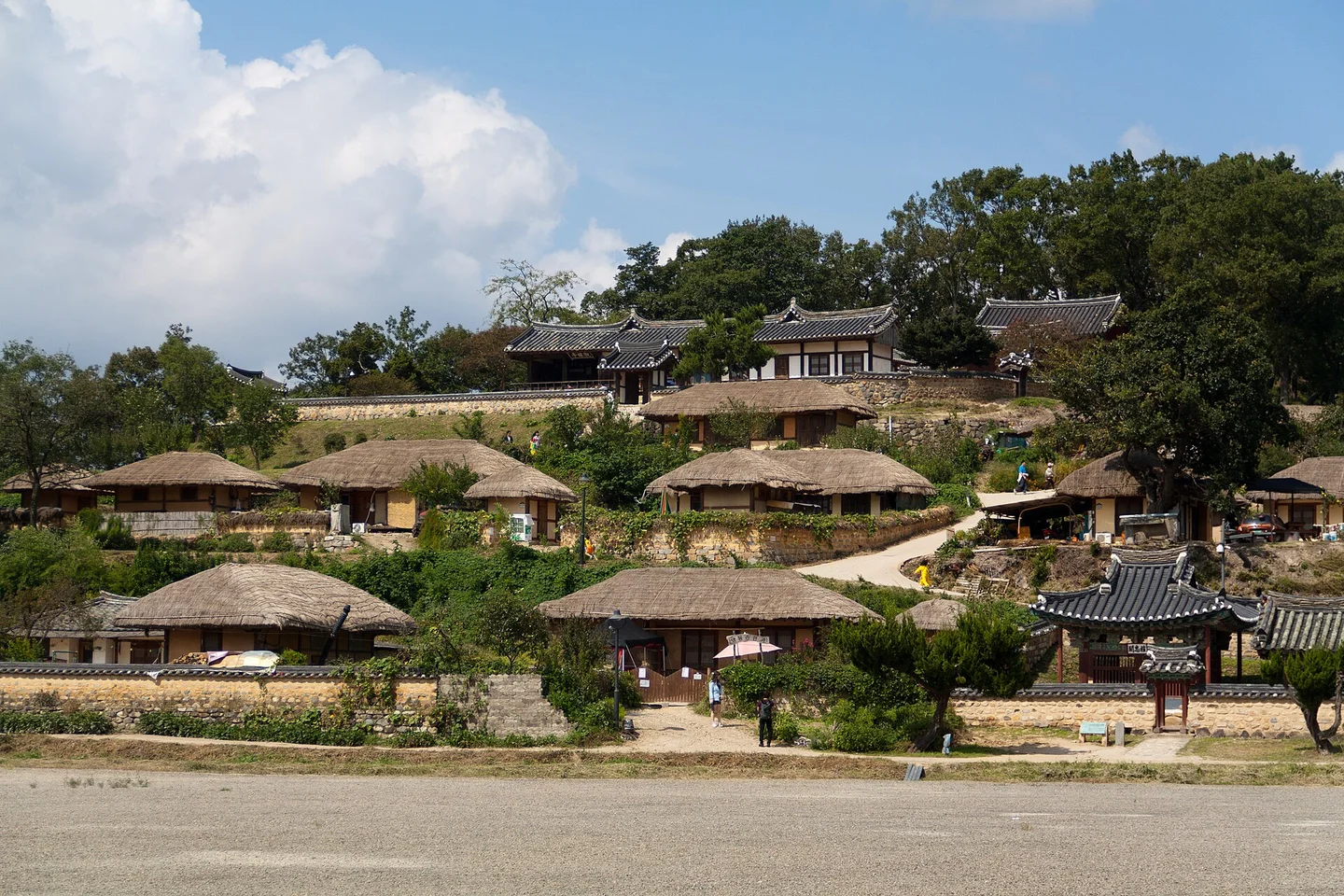
Own work · Original · CC BY-SA 3.0 ·
Yangdong's first impression is a pattern of roofs. Rounded thatch sits below long tiled ridges, stone walls follow the slope, and lanes bend between houses rather than cutting through a grid. A little climbing changes the view: a gate at eye level becomes part of a roofscape, and another courtyard appears farther up the hill. For anyone interested in Korean houses, this is a chance to see how they form a whole village. North of central Gyeongju, Yangdong tells a different story from the city's Silla tombs and Buddhist temples. Its heritage is closely connected to the Son and Yi clans and to the Confucian society of the Joseon dynasty. In 2010 it joined Andong's Hahoe Village in the UNESCO World Heritage inscription for Korea's historic villages. People still live here, and the visit is primarily a walk through their neighborhood and the publicly accessible heritage spaces. Allow roughly two or three hours on site as a starting estimate, with travel time from Gyeongju added separately. The village particularly rewards an interest in architecture, family history, and rural landscapes; its hillside paths call for more effort than a level shopping street lined with hanok cafes.
Start with the layout, then choose a route
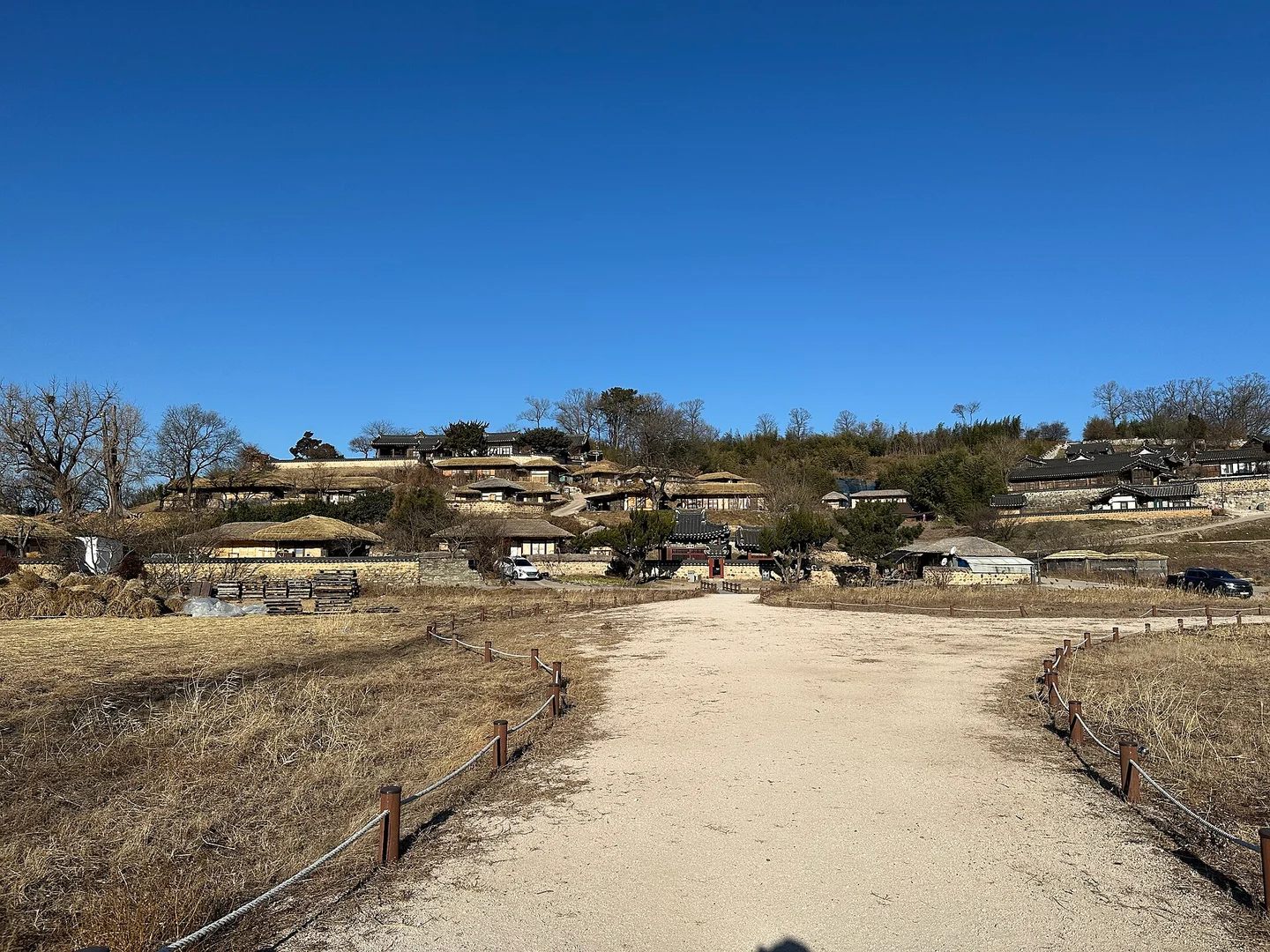
Seefooddiet · Original · CC BY-SA 4.0 ·
At the entrance, pause at the information map or visit the Yangdong Culture Hall if it is open. The model and displays help explain the arrangement of ridges, valleys, and important houses before those names begin appearing at junctions. Pick a manageable group of buildings rather than trying to follow every branch of the village lanes. For a shorter first visit, the Hyangdan and Gwangajeong area provides a useful focus near the front of the village. With more time and energy, continue toward Mucheomdang and Seobaekdang on another part of the hillside. Ask for a route suited to your walking ability; short distances on a map can involve a descent followed by another climb. The Culture Hall and the village keep different schedules. The hall closes on Mondays, while the village remains open for visits. As checked in October 2026, the village's own website lists visiting hours of 9 a.m. to 7 p.m. from April through September and 9 a.m. to 6 p.m. from October through March, with ticket sales ending an hour earlier. Standard adult admission is 4,000 won. Check the current visitor notice for any changes before making the journey.
Four houses that help explain Yangdong
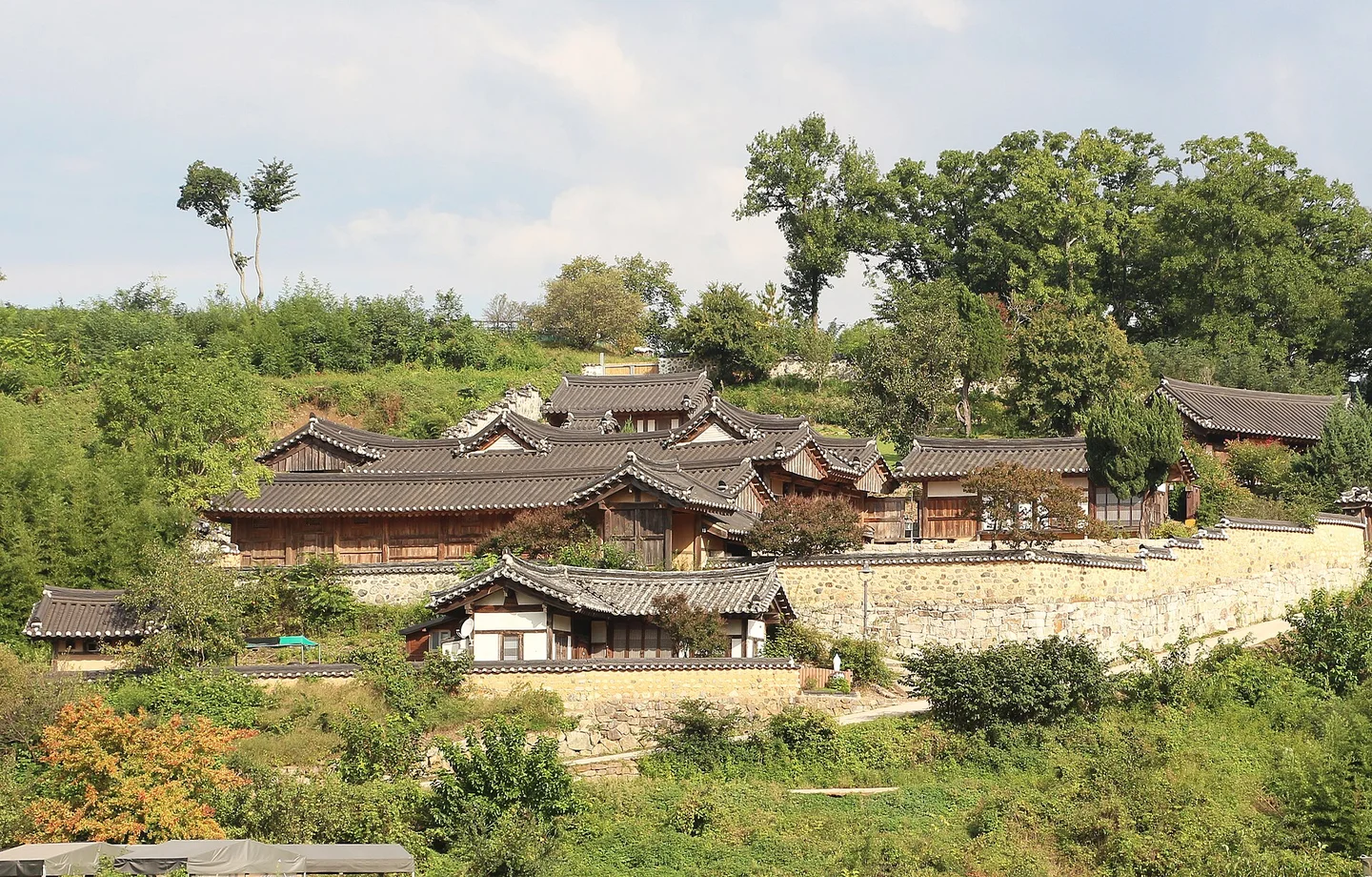
Hyangdan is associated with the scholar Yi Eon-jeok and occupies a prominent position near the village entrance. Its closely connected roofs and enclosed arrangement make it especially interesting to compare with a more open courtyard house. Much can be appreciated from the public approach, including how the complex sits above the lower buildings.
Seefooddiet · Original · CC BY-SA 4.0 ·
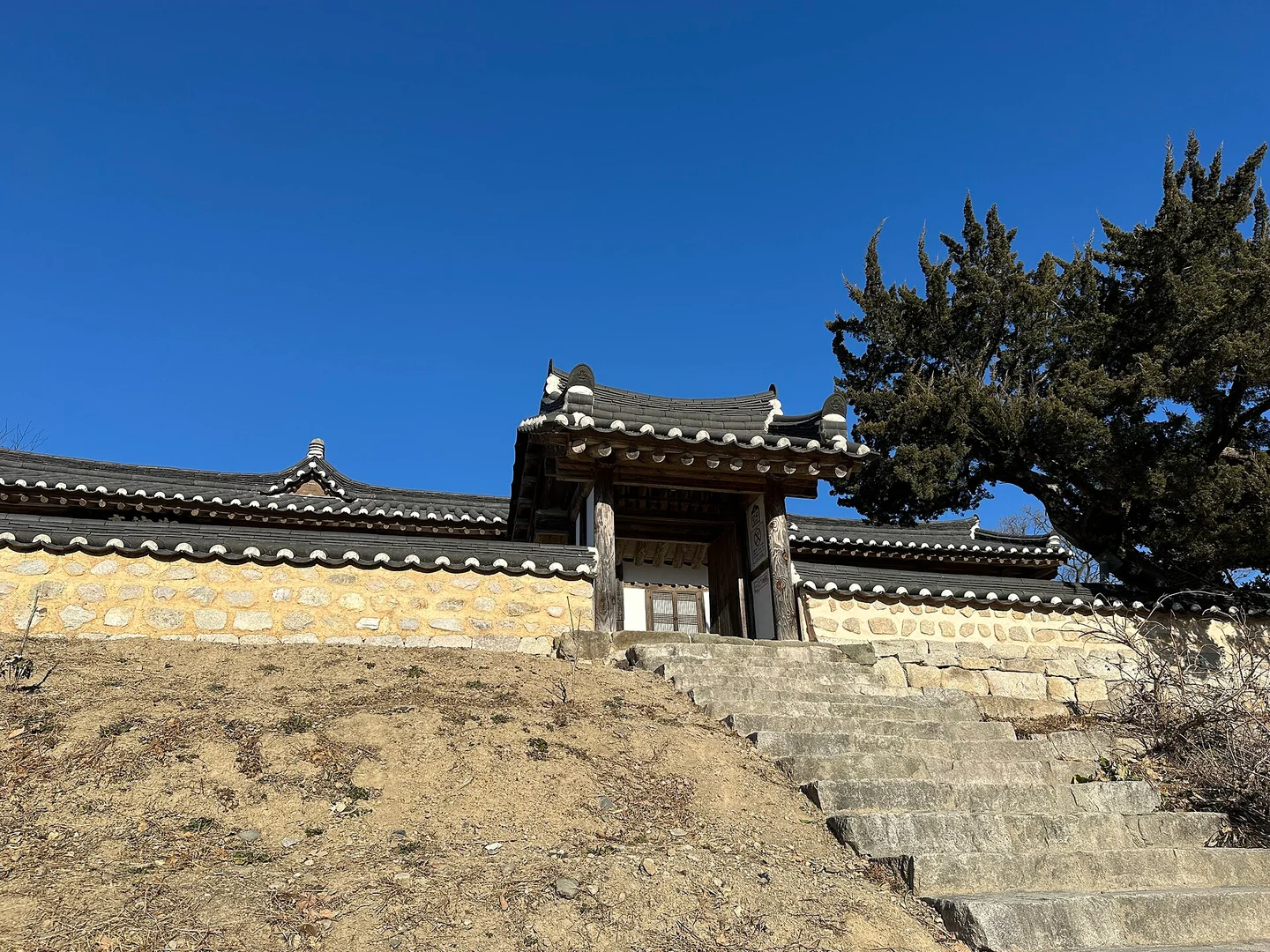
Gwangajeong, associated with the official Son Jung-don, faces outward toward the surrounding fields. The setting is as important as the house: the elevated position makes the relationship between a household and the agricultural landscape immediately visible. A route linking the Hyangdan area and Gwangajeong works well when you want a concentrated visit without going deep into every valley. Mucheomdang belongs to the wider heritage of Yi Eon-jeok's family. Seobaekdang is a head-family residence of the Son clan, with an old juniper in its grounds. You may also see Seobaekdang referred to as Songcheom Head House; the names point to the same property, not two separate stops. The village admission ticket does not make every room or courtyard freely accessible. Use the signed visitor route and the openings available on the day. The exteriors, gates, and changes in level already reveal a great deal, so a closed household entrance does not prevent you from understanding its place in the village.
How the houses meet the hillside
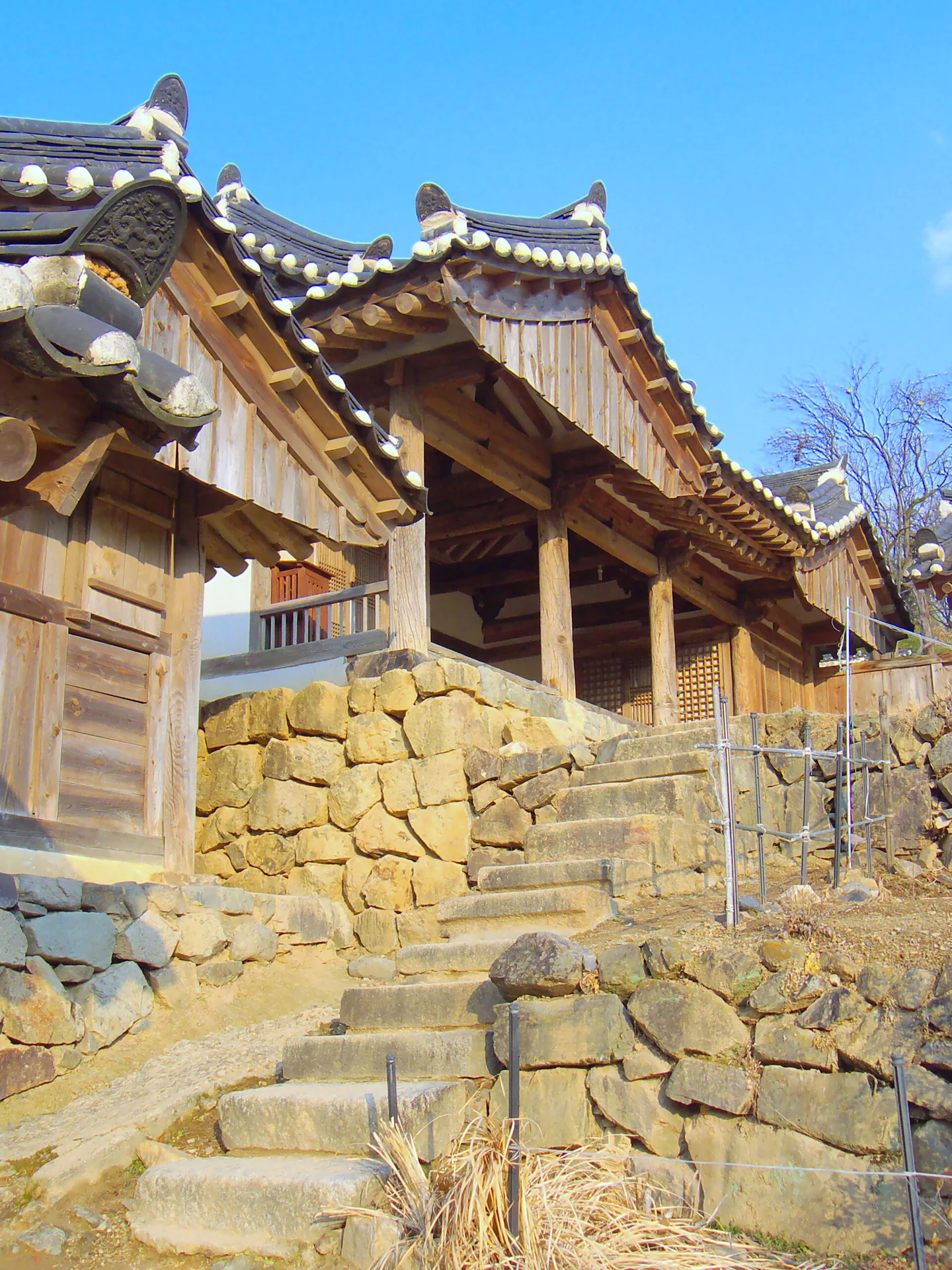
Look below the roofline. Stone retaining walls create platforms on sloping ground; wooden posts carry raised floors; steps link a lane to a gate or veranda above it. The result is a much more three-dimensional experience than walking past a row of houses on flat land. A building can feel enclosed from one side and open toward a view from another. The contrast between tiled and thatched houses also reflects the village's historical social organization. UNESCO identifies the larger clan residences, study spaces, and humbler houses as parts of a settlement shaped by Confucian ideas. The important point is the relationship between them, rather than the beauty of any one roof. Present-day residents' lives, of course, cannot be read simply from the material covering their homes. A guided walk can make these connections easier to follow. Gyeongju's tourism office lists guided sessions on the hour, with a midday break, and includes English-speaking guides at Yangdong. Confirm your language, departure time, meeting point, and expected duration when booking; not every departure should be assumed to offer every language. The city's Yangdong guide inquiry number is 054-762-2630. The guide chooses a route suited to the group's available time. This can be a good option if you want the stories behind the buildings without spending the whole walk decoding signs and deciding which lane to take.
A village visit, with time between landmarks
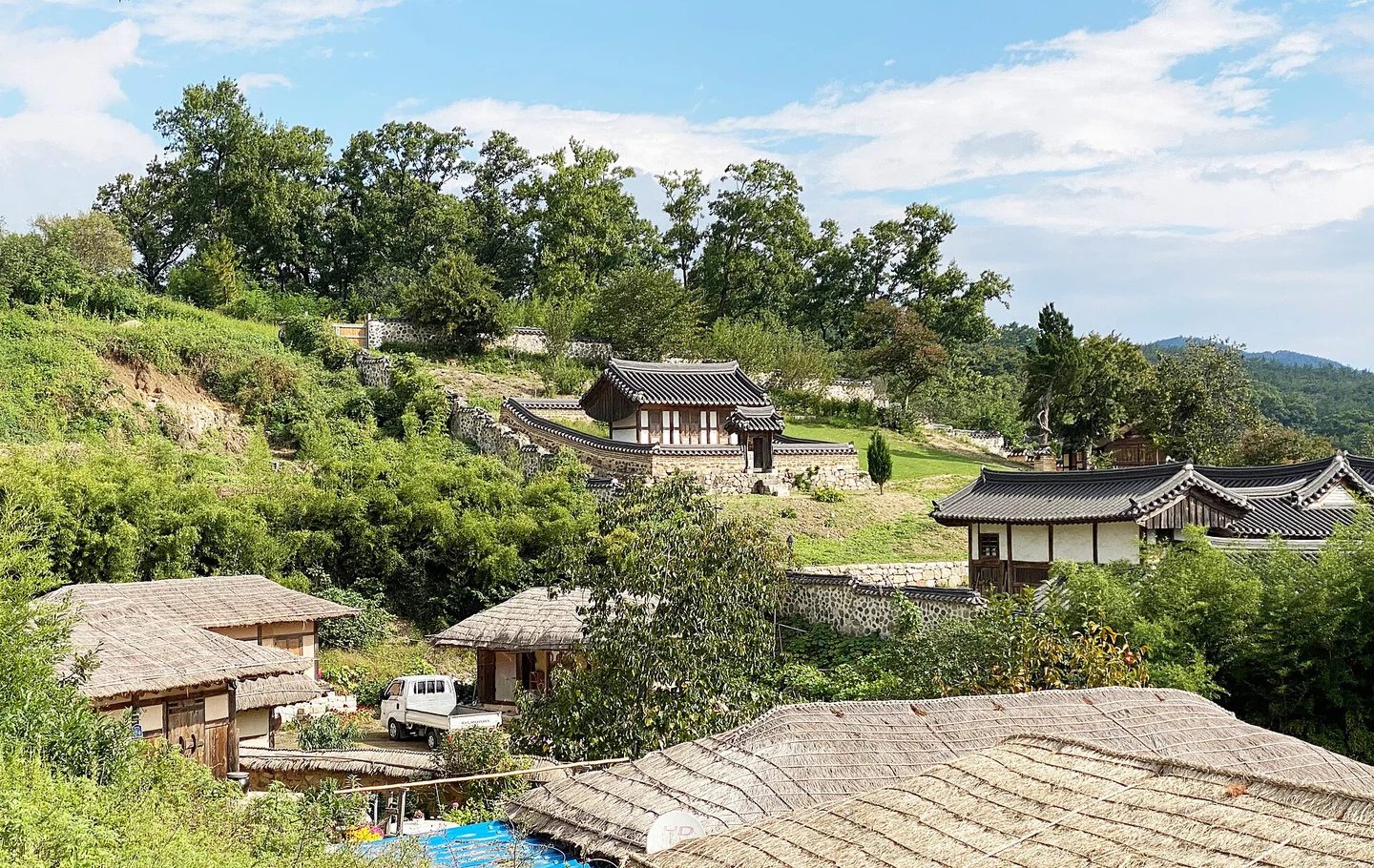
Leave some time between the named houses. The smaller details give the walk variety: straw tied over a roof, tile edging on a stone wall, a narrow gateway, or a patch of cultivated ground beside a lane. In spring and summer, foliage partly screens the houses; in winter, bare branches reveal more of their outlines. Autumn brings color to the walls and slopes. Resident vehicles, farm work, and ordinary household activity are part of Yangdong today. Keep entrances clear and ask before photographing people or the private interior of a home. Public lanes offer plenty of views without stepping onto a wall or into someone's yard. For something locally made to take away, the village promotes traditional foods including ssal-yeot, a rice-based candy, and yakgwa, a sweet fried confection. Look for the village producers' labels rather than treating every souvenir as a Yangdong specialty. If a meal or a particular food-making experience is important to your plan, check that venue's opening or booking arrangements in advance; this is a small residential village rather than a continuous dining district. Traditional-house stays are another way to spend longer here, with accommodation arranged directly through participating households. They are separate from daytime admission and are worth considering for travelers who would enjoy a quiet rural evening rather than returning to central Gyeongju's restaurants and nightlife.
Getting there and making the walk comfortable
Treat Yangdong as a separate outing from Gyeongju's downtown walking circuit. Drivers should head to the visitor parking area and continue on foot, rather than trying to reach individual houses through the narrow lanes. If using a taxi, arranging the return can make the visit easier to time. By bus, pay attention to the exact stop. The city's route guidance distinguishes Yangdong Village Entrance from Yangdong Folk Village, the stop closer to the visitor approach. Confirm that your chosen service reaches the latter, and check the return departures before starting the walk. Gyeongju's live bus-information service is more useful for this than an old printed timetable. Wear shoes suited to uneven stone and sloping paths. For a wheelchair or stroller, ask the entrance staff about a feasible lower-village route; individual houses often have steps and thresholds. On hot days, the exposed uphill stretches are best tackled earlier, with water available before you set out. Pets and bicycles are prohibited in the village under its current visitor rules. Oksanseowon Confucian Academy can extend a day exploring northern Gyeongju, especially if Yi Eon-jeok's history interests you. It is a separate destination requiring another journey, rather than a building you will reach by following Yangdong's lanes. Leave enough time for that transfer and the return to your accommodation.