Woryeonggyo Bridge: Andong’s Best Walk from Daylight into Dusk
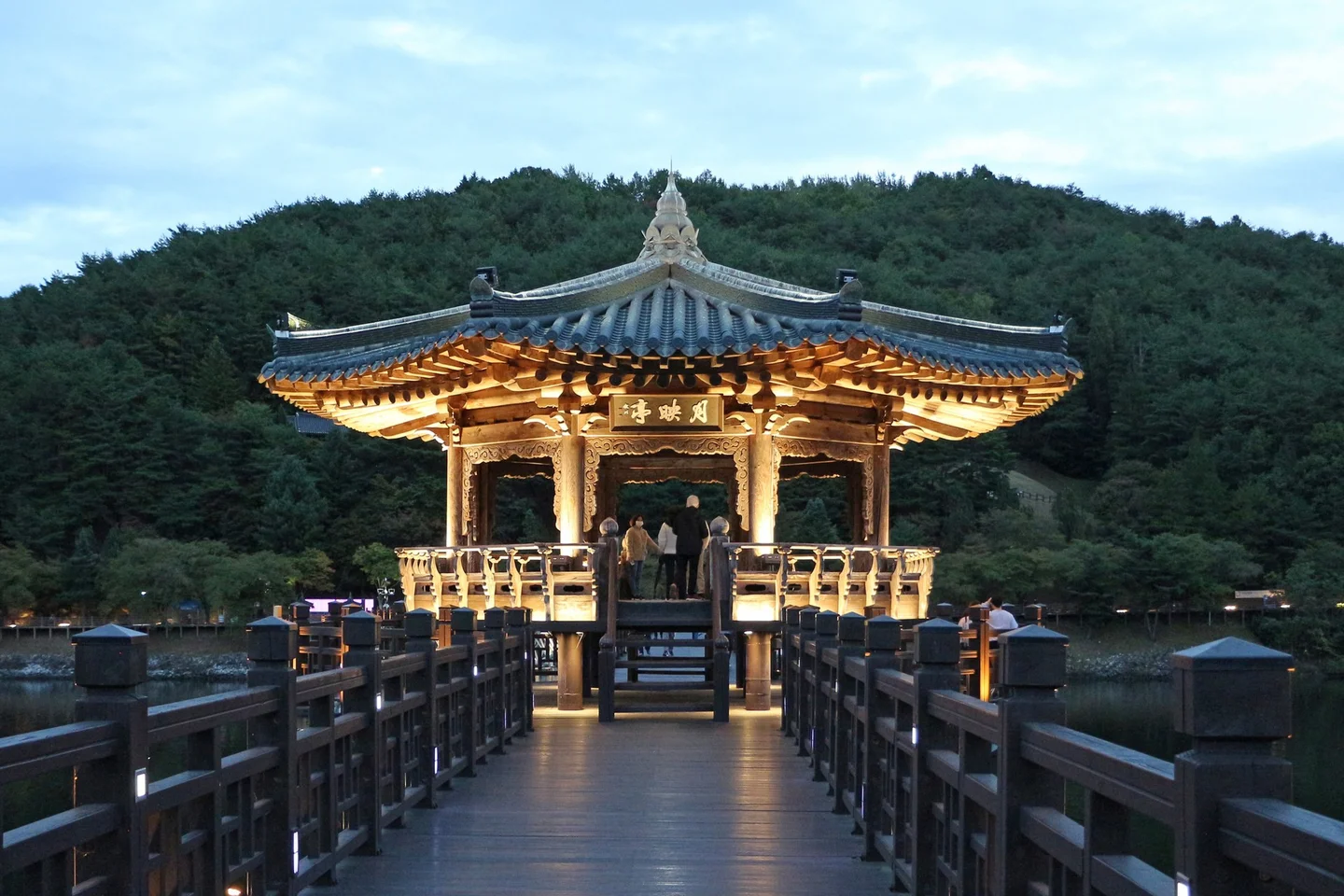
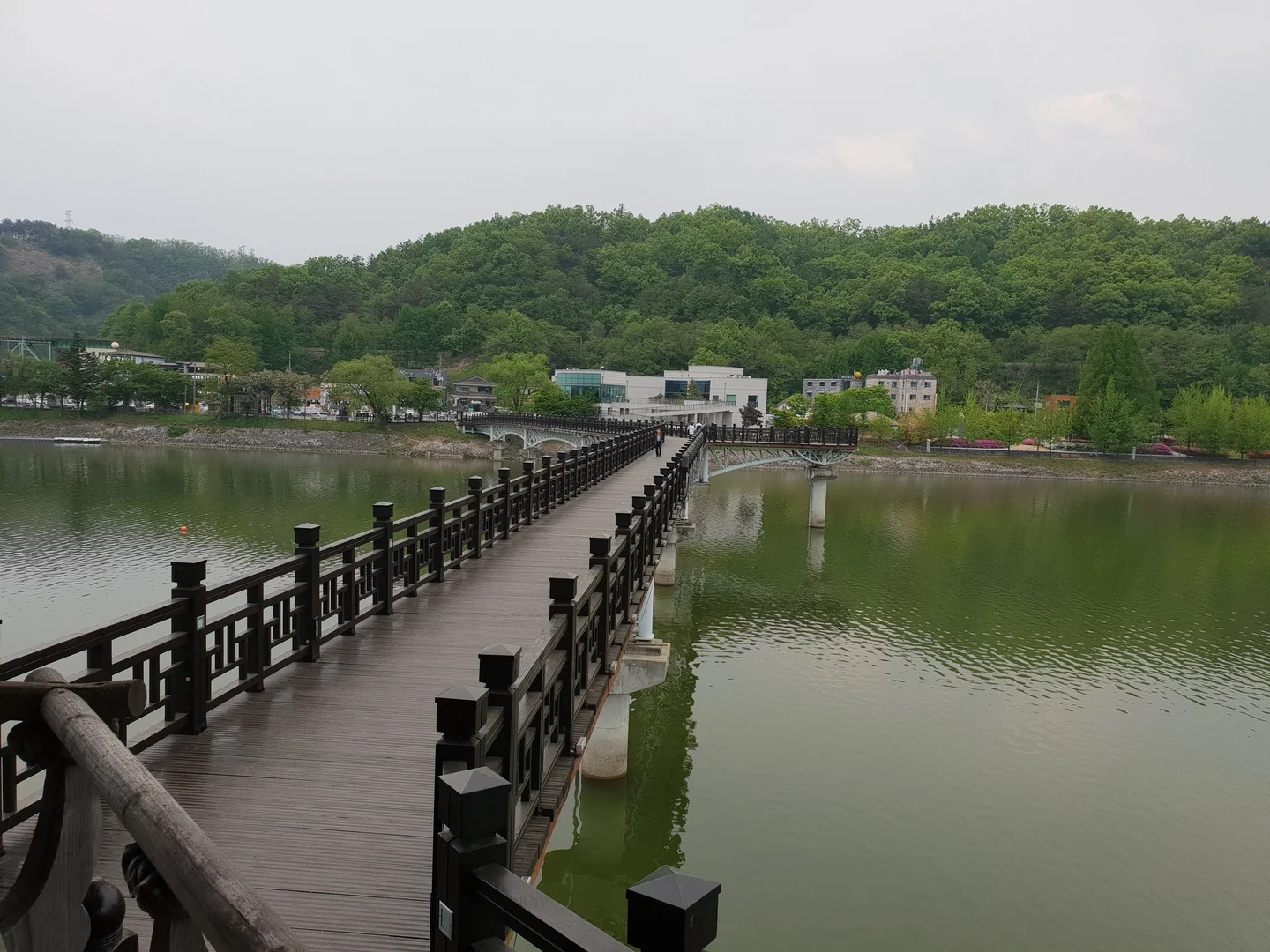
For an evening in Andong, make time for the water. Woryeonggyo Bridge carries a wooden walkway across the Nakdong River, with a tiled pavilion partway across and low, wooded hills beyond. Arrive while the landscape is still visible, cross at an unhurried pace, and watch the illuminated railings take over as the sky darkens. The attraction is the changing view, so this is one stop where a little waiting improves the visit. The bridge is 387 meters long, about a quarter of a mile each way. Allow roughly an hour to an hour and a half for a return crossing, a short walk along the bank, and time around sunset. That is a suggested sightseeing allowance, not the time needed simply to get across. With Andong City Museum, outdoor heritage buildings, and a meal nearby, the same area can fill a relaxed afternoon and evening. It works especially well after a day of Andong’s temples or Confucian sites: the river opens up the view, and there is no need to follow another sequence of exhibition rooms. Families can add the museum before the walk; couples may prefer to come later and stay for the lights.
A Modern Bridge with a Much Older Story
Choi2451 · Original · CC BY-SA 4.0 ·
The pavilion, Woryeongjeong, gives the crossing a natural stopping point. Timber decking and railings frame the water, while steel supports do the structural work below. This is a contemporary pedestrian bridge, rather than a surviving Joseon-era crossing. Its design draws on the story of Lee Eung-tae and his wife, remembered through a moving letter and a pair of mituri shoes associated with her devotion to him. The shoes, woven using her hair, inspired the bridge’s form. You do not need a detailed history lesson to appreciate the connection: an everyday object made for one person became the idea behind a public place for walking together. The bridge walkway and the pavilion platform are different propositions for anyone using wheels. There are steps up into the pavilion, but the river views are available from the surrounding deck. Korea’s accessible-tourism guide records improved approaches, accessible toilets, and parking, while identifying slopes on some neighboring park paths that may require assistance. Use its access map to choose a route beyond the crossing.
Leave Time for the Riverbank
Christian Bolz · Original · CC BY-SA 4.0 ·
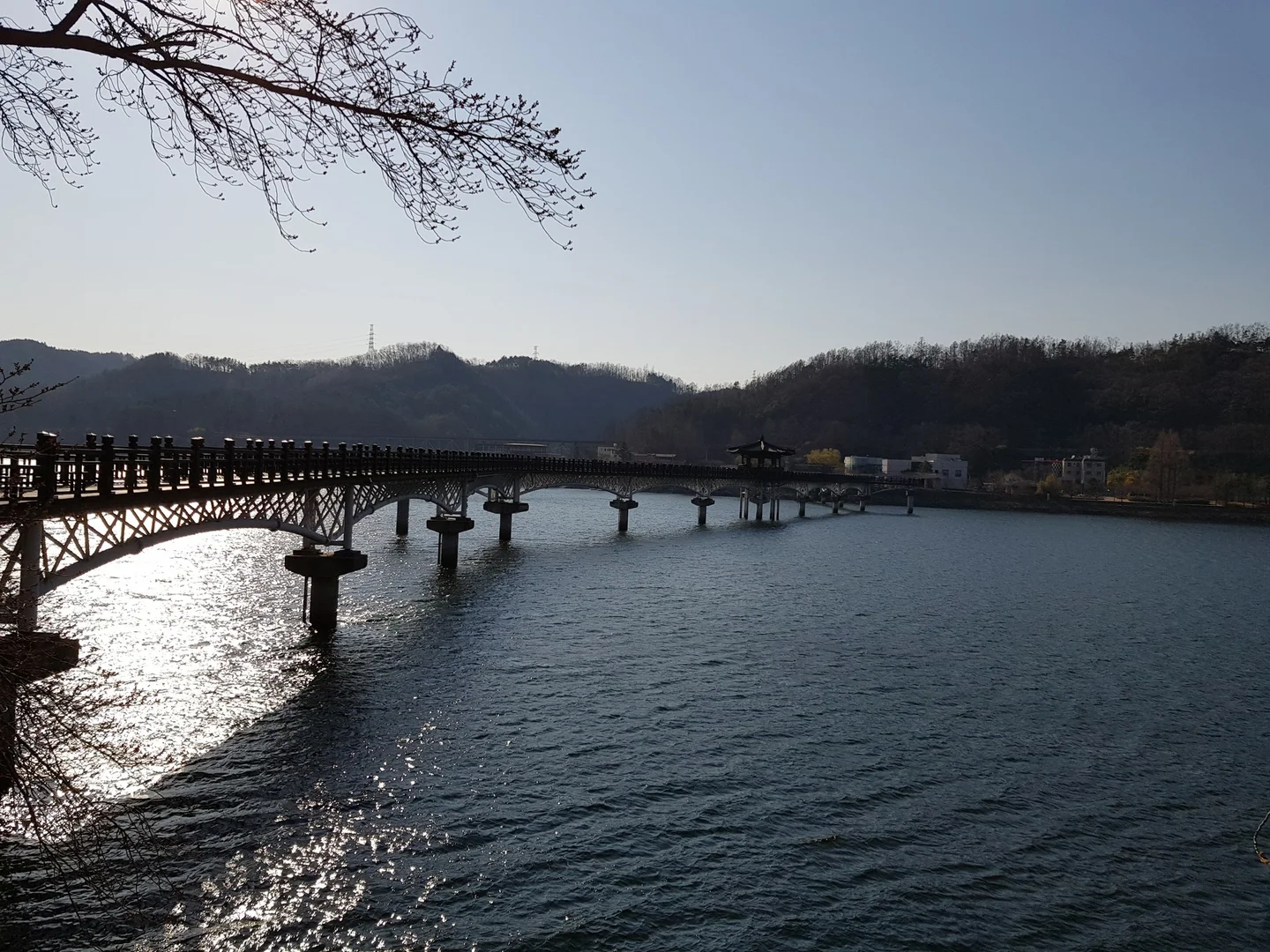
From the middle of the bridge, the view is mostly water, hills, and the opposite shore. From the bank, the whole structure comes into focus: its gentle curve, repeating posts, and pavilion roof. Walk a little way along the shore after crossing rather than immediately retracing every step. You get a better sense of how the bridge sits in the valley, as well as a different composition for photographs. Keep the outing centered on the bridge unless you have planned a longer park walk. The surrounding paths and outdoor heritage sites introduce more distance and changes of level. For a simple return trip, note which bank you started from and come back across to it. Search for “Woryeonggyo” or the Korean name 월영교 when planning the trip. Andong’s current railway station is outside the old downtown, so older directions based on the former station can be misleading. Check a live route from your actual starting point, and choose a return bus before settling in for the evening. A taxi meeting point should be on the road by an entrance, where the driver can stop, rather than at the pavilion.
A Museum and an Ingenious Icehouse
hyolee2 · Original · CC BY-SA 3.0 ·
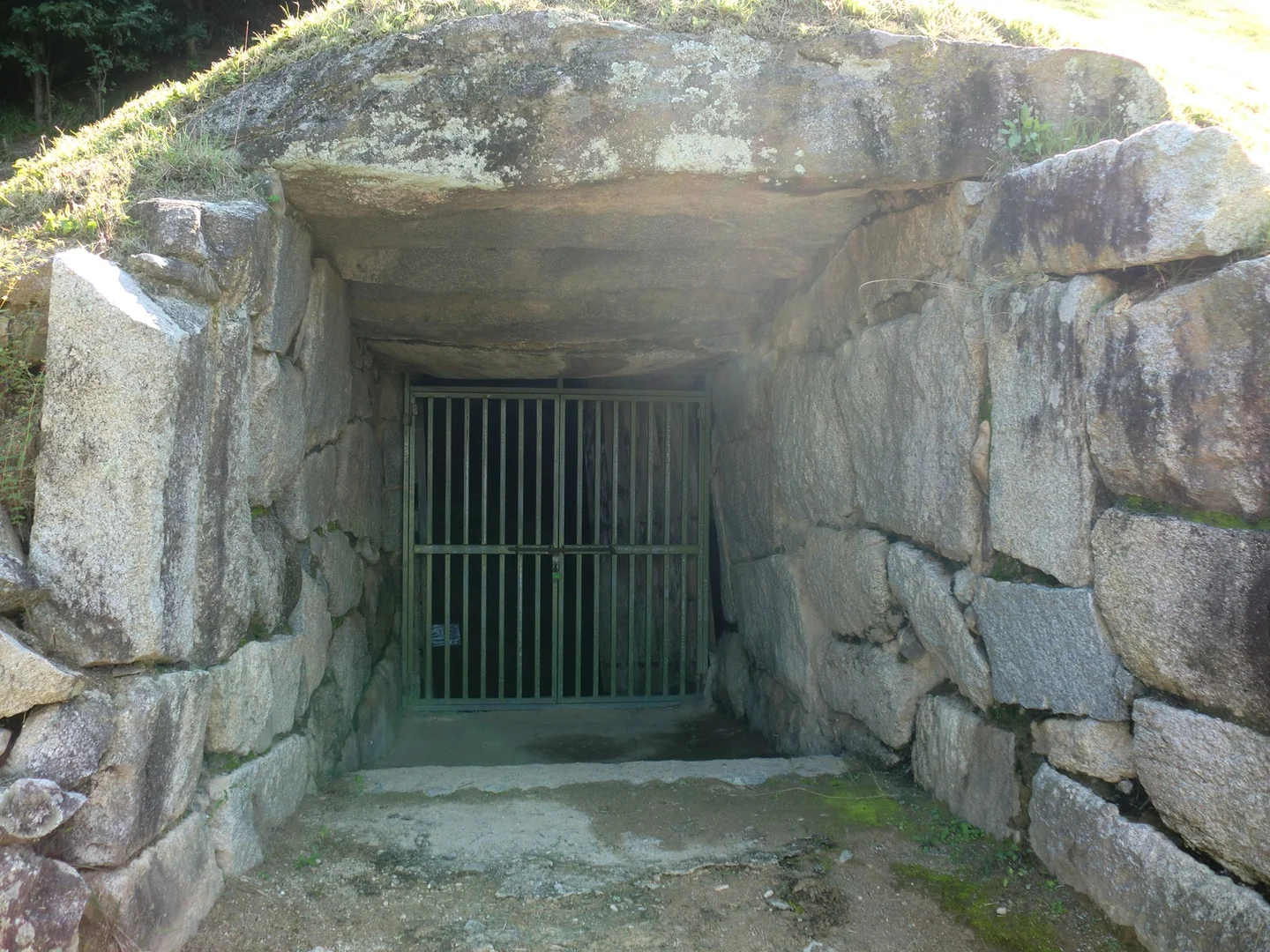
Andong City Museum gives the landscape a human dimension. It is also labeled Andong Folk Museum in older travel material. Alongside archaeological and Buddhist objects, the displays explore the homes, education, and family ceremonies of the region. A courtyard-house setting and a traditional village classroom make useful starting points, particularly if the finer distinctions between Confucian academies and local schools are still unfamiliar. See the indoor galleries before the evening walk. The museum’s official schedule, checked in October 2026, is 9 a.m. to 6 p.m., with last admission at 5:30 p.m.; it closes on January 1 and the actual days of Seollal and Chuseok. This makes an afternoon museum visit followed by the bridge a straightforward pairing. Outside, Andong Seokbinggo is easy to underestimate. The low, earth-covered stone building was an icehouse, originally built in 1737. Stored ice helped preserve sweetfish destined for the royal court. An arched chamber, ventilation, and drainage managed heat and meltwater long before mechanical refrigeration. It was moved here in 1976 because of the dam project. Look at the mound and stone entrance from the public viewing area; its interest lies in that clever construction, rather than an elaborate façade or an interior walk-through.
Stay for the Lights
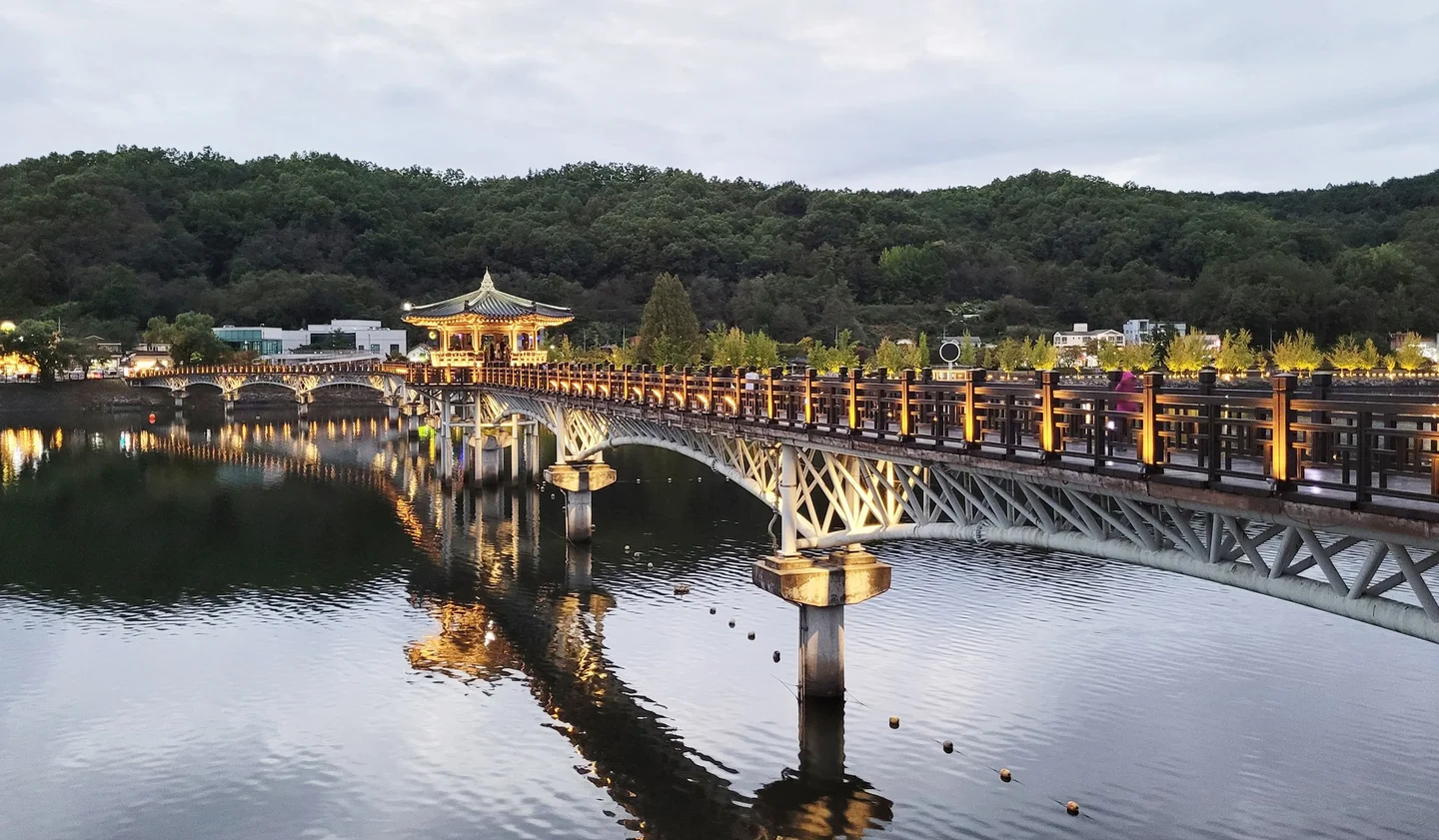
The most rewarding transition comes before complete darkness, when the bridge is already glowing but the blue sky and hills still have shape. The warm light along the railing draws out the curve, and calm water may double the pavilion in reflection. A breezy evening gives a more broken, shimmering version of the same scene. Start near the pavilion for the roof and timber details, then move to the bank for the wider view. The bridge lighting and fountain displays are separate attractions; if a fountain show matters to your plans, check its current operating notice rather than building the evening around an old timetable. For a different perspective, Gaemoknaru offers crescent-shaped electric Moon Boats. A ticket purchase does not reserve a departure time: the operator calls visitors in their on-site check-in order. Everyone wears a life jacket, and children under 14 need an accompanying guardian. Check the day’s sailing arrangements before buying, especially if you hope to ride after dark.
Try Andong’s Ceremonial Table Nearby
Heotjesabap is a particularly fitting meal in this part of Andong. It draws on foods associated with ancestral rites but is served as an ordinary restaurant meal. The rice and vegetables are seasoned with soy sauce, with accompaniments such as jeon, the lightly battered savory fritters familiar from ceremonial tables. It offers a different flavor from the spicy red-sauce bibimbap many visitors first encounter in Korea. Kkachi Gumeongjip, near the bridge, is one established place to try it, with a hanok-style setting. The Korea Tourism Organization also identifies tangpyeongchae, a mung-bean-jelly dish, among its specialties. This is a useful option for eating in the riverside area; if jjimdak is your priority instead, plan a separate stop at Andong Old Market downtown, allowing for the transfer between the two.