Dosan Seowon: A Scholar’s Retreat in Andong’s Lakeside Hills
Cultural Heritage Administation · Original · KOGL Type 1 ·
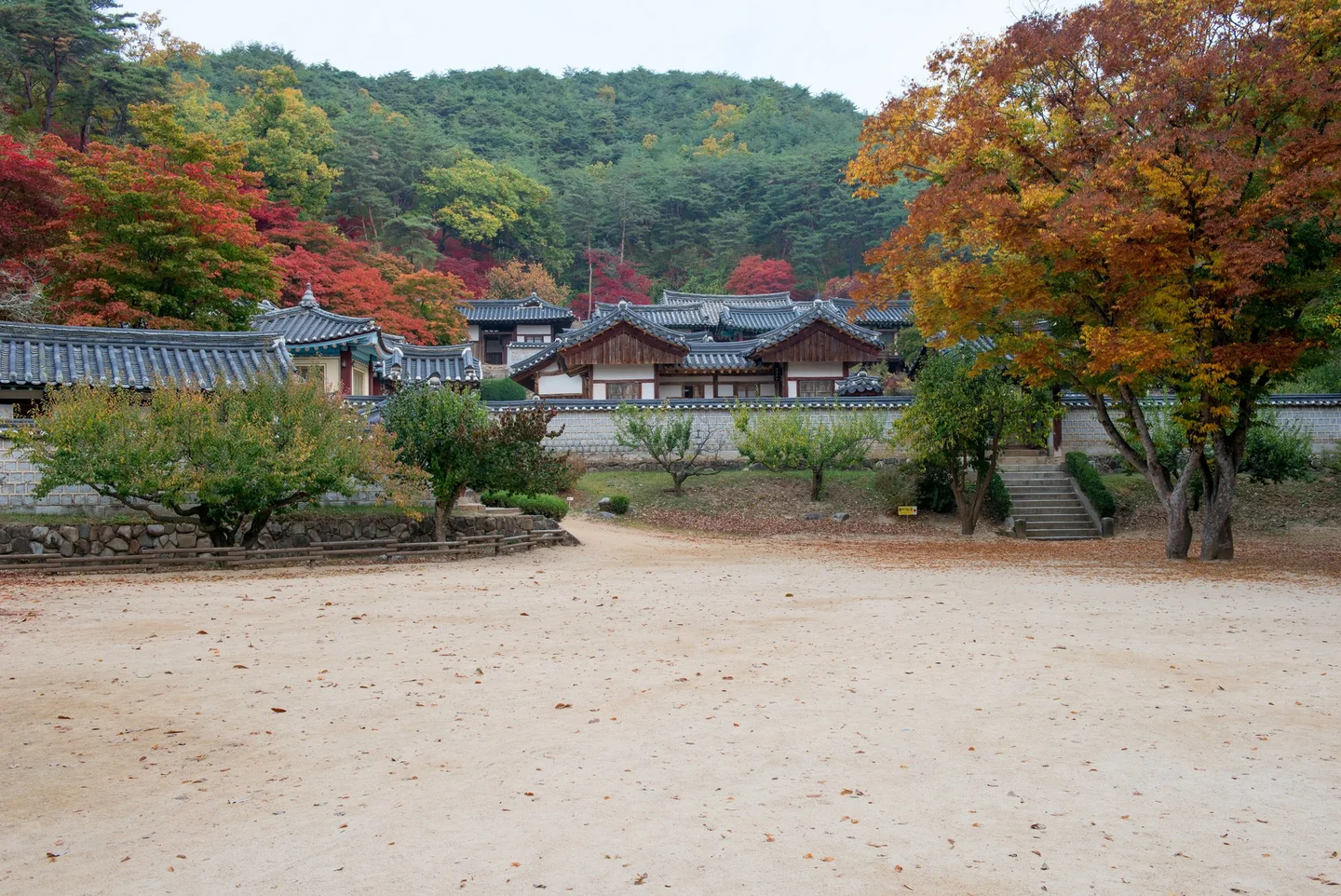
Dosan Seowon makes the journey out of central Andong worthwhile for two things: an unusually intimate look at Korea’s scholarly past, and a setting where tiled roofs, wooded slopes, and open water belong together. The buildings rise through a series of small courtyards, so the view changes as you climb. Outside the walls, the landscape suddenly feels much larger. A seowon was a Confucian academy with a dual purpose: teaching students and honoring respected scholars. Dosan is associated with Yi Hwang, better known by his pen name Toegye, one of the leading thinkers of sixteenth-century Korea. You can enjoy the visit without knowing the finer points of his philosophy. Look for the places where people studied, slept, stored books, and gathered, and the complex starts to make sense as a working institution. This is one of the nine Korean seowon inscribed together on UNESCO’s World Heritage List in 2019. Their relationship with mountains and water is part of that significance, not simply a pleasant backdrop. Allow about an hour and a half on site for the buildings, the small exhibition hall, and the waterfront outlook, then add your travel time from Andong. Architecture enthusiasts will find plenty to linger over.
Follow the Change from School to Academy
최옥석 · Original · CC BY-SA 4.0 ·
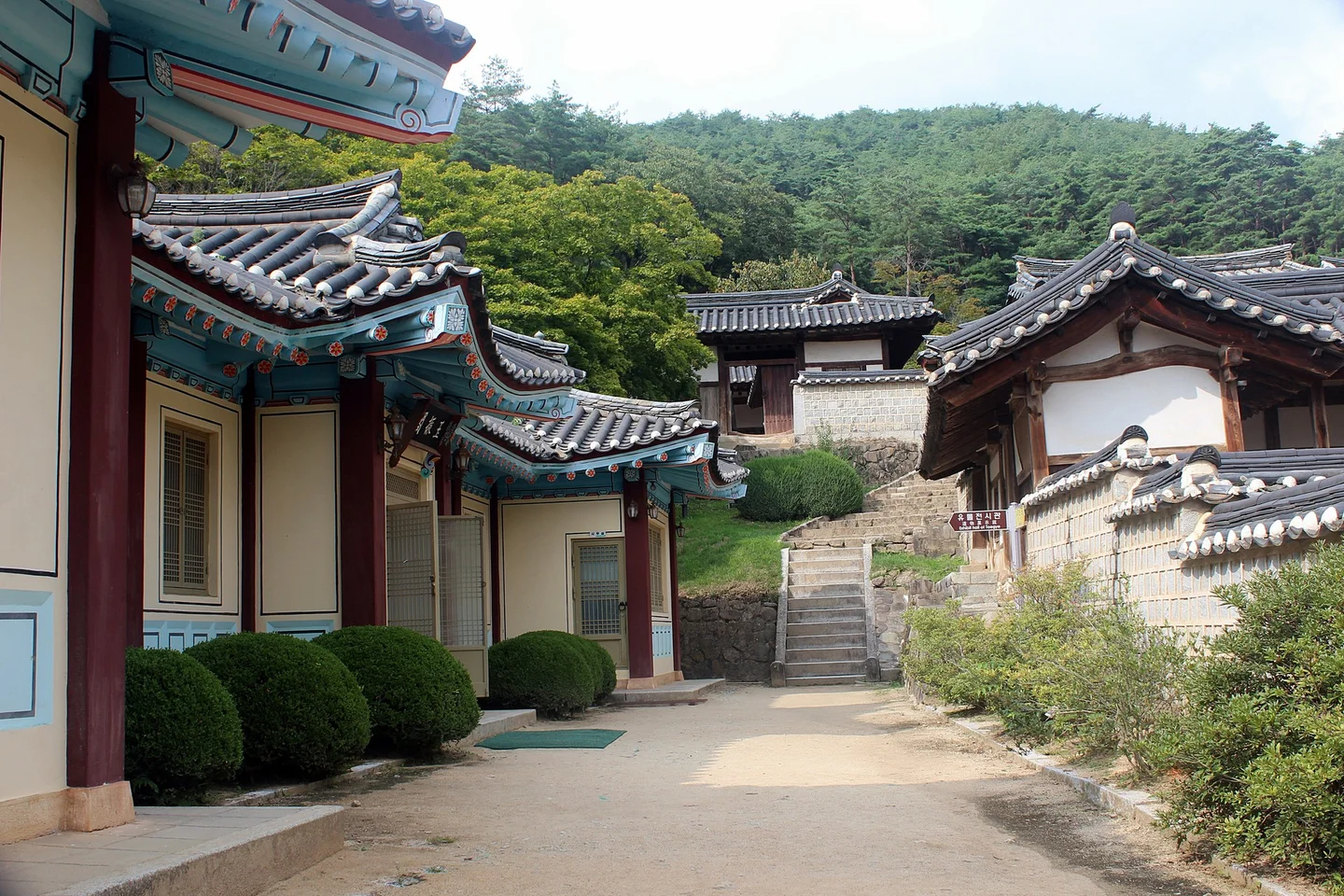
The key to Dosan is understanding that it developed in stages. Yi Hwang’s small school, Dosan Seodang, was completed in 1561 while he was alive. After his death in 1570, his followers created the larger academy to continue his teaching and honor his memory. Construction of the academy began in 1574, and royal recognition followed the next year. Start with the smaller buildings below, then move upward to the formal teaching courtyard. That sequence lets you compare the scale of a teacher’s own working space with the institution that grew around his legacy. A site plan is more useful here than trying to memorize every Korean building name before entering. Stone steps, walls, and offset roofs break up the route. Pause at a doorway and look back as well as ahead: one roof may fill the view from below, then become part of a whole group a few steps higher. The changing levels are central to the architecture, but they also mean this is not an entirely step-free visit. Anyone using a wheelchair or stroller should ask the office about accessible sections before buying a ticket.
Where Students Lived and Learned
Julie · Original · CC BY-SA 2.0 ·
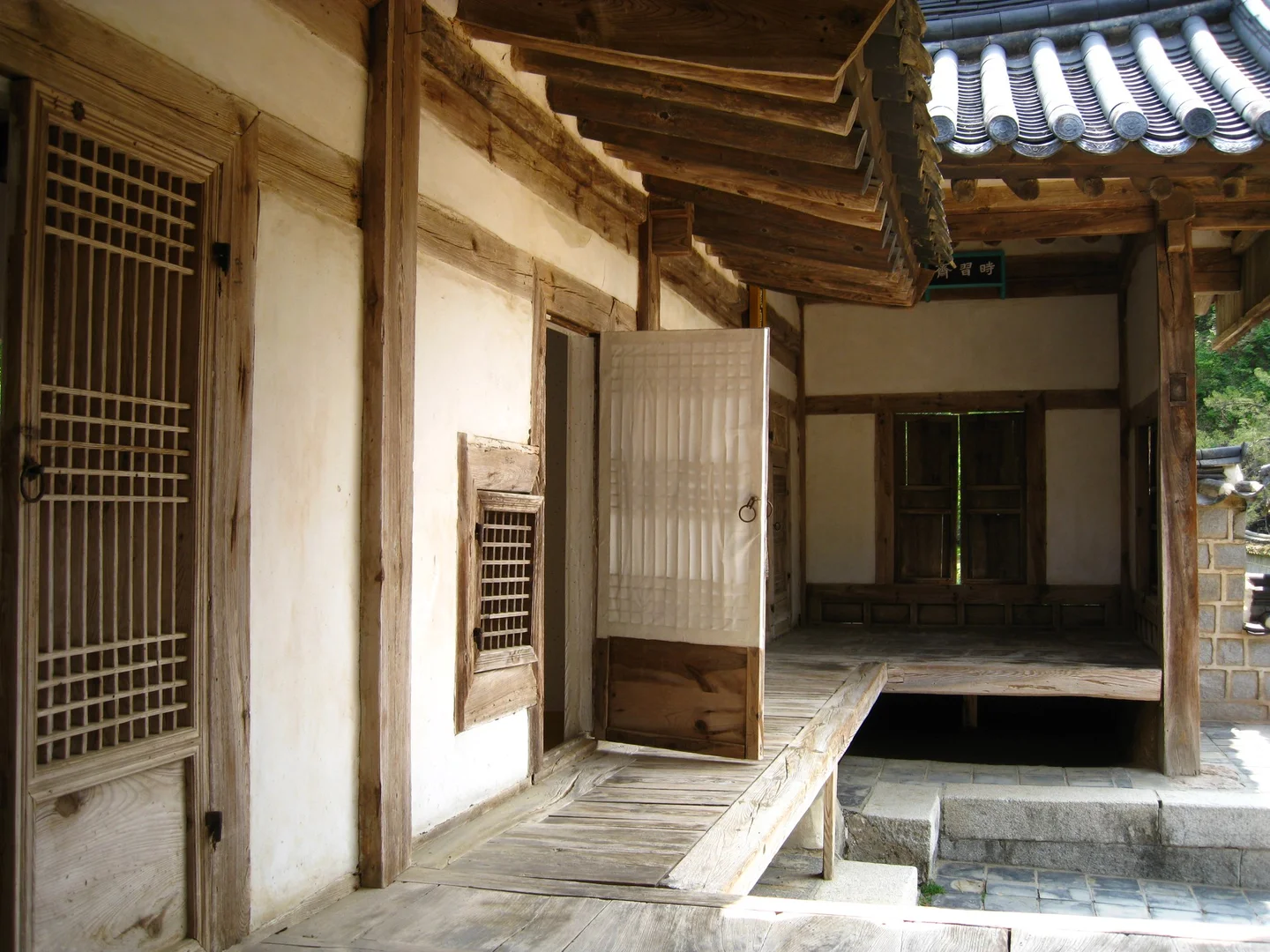
Dosan Seodang and the student quarters, Nongunjeongsa, bring the history down to a domestic scale. The school combined a kitchen, a heated room, and a wooden-floor space; the neighboring quarters provided accommodation for pupils. Compared with a grand ceremonial hall, these are modest buildings, concerned with everyday work and living. Look at how the raised wooden floors meet the enclosed rooms, and how deep eaves shade the space outside the doors. Weathered timber, pale plaster, and latticed woodwork give you plenty to notice at close range. It is easy to move too quickly between the better-known buildings and miss these details. For children, this is a good place to turn the visit into a few concrete questions. Which spaces seem suited to sitting together? Where do enclosed rooms give way to an open floor? Comparing the small quarters with the larger hall uphill is more engaging than treating every building as another name to learn. Keep to the areas open for visitors; the old rooms are preserved historic spaces.
The Lecture Hall and the Raised Libraries
Jeongyodang, the principal lecture hall, presides over the upper teaching courtyard. Its broad open frontage makes a strong contrast with the smaller rooms below. Step back far enough to take in the stone platform, stairways, and surrounding buildings together. This is where the academy’s more formal character becomes clear.
Cultural Heritage Administation · Original · KOGL Type 1 ·
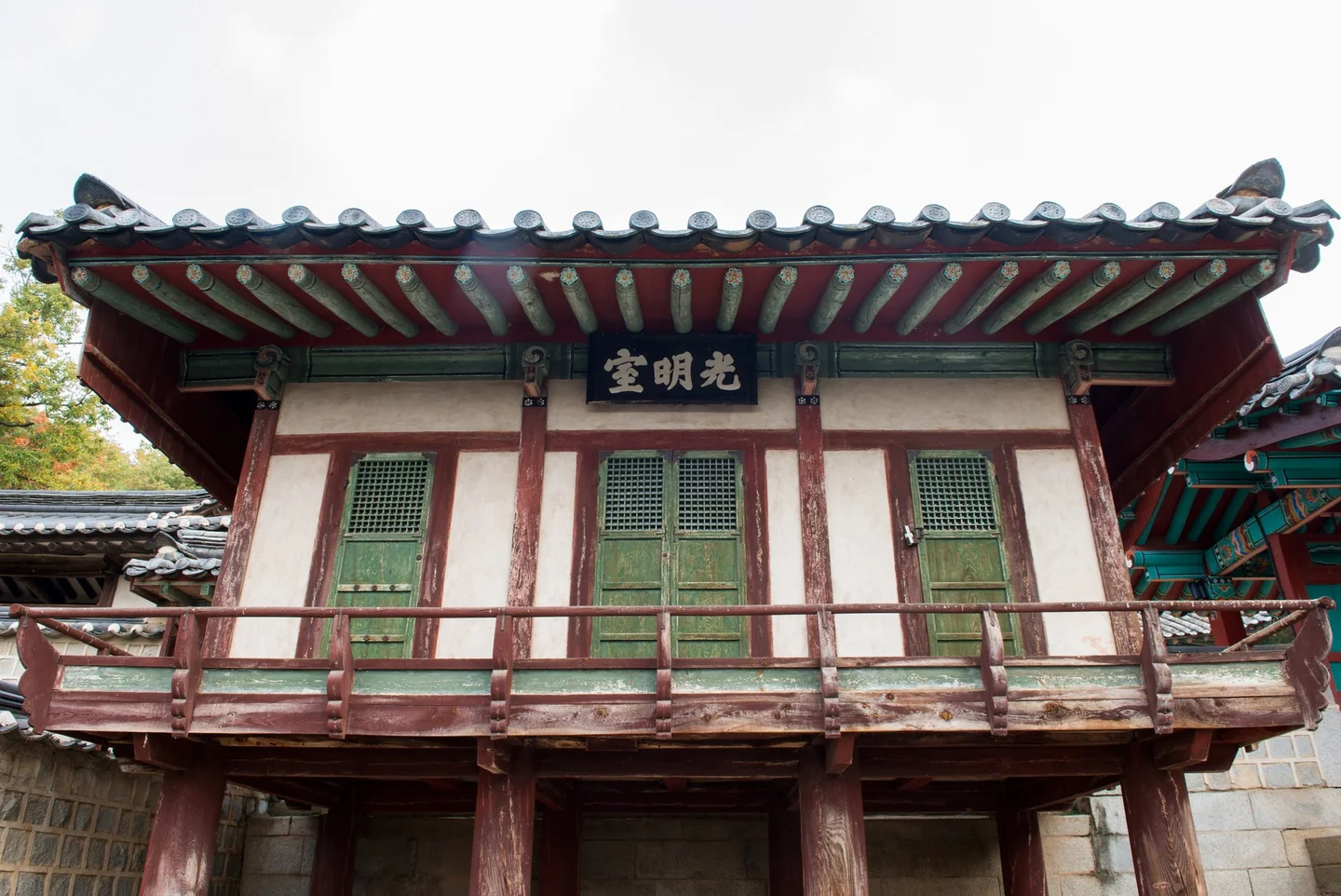
Gwangmyeongsil’s book repositories were raised above the ground to reduce damp. Their closed wooden doors and elevated floors are worth examining as practical architecture. The historic books and printing blocks are now preserved at the Korean Studies Institute, so the appeal here is the design of the storage buildings rather than shelves you can browse. Okjingak, the on-site exhibition hall, adds personal objects to the architectural story. The official collection description includes Toegye’s pillow and mat, as well as writing equipment such as an inkstone and paperweight. These small items make a useful counterpoint to the reputation of a major philosopher. Give the displays a few minutes after seeing the school and quarters, while those rooms are still fresh in your mind. Visitors who want more explanation can inquire about the academy’s guided programs. The free “Getting to Know Dosan Seowon” program is advertised on weekends and public holidays, but an English-speaking guide should be arranged or confirmed separately rather than assumed to be available on arrival.
The Tiny Pavilion across the Water
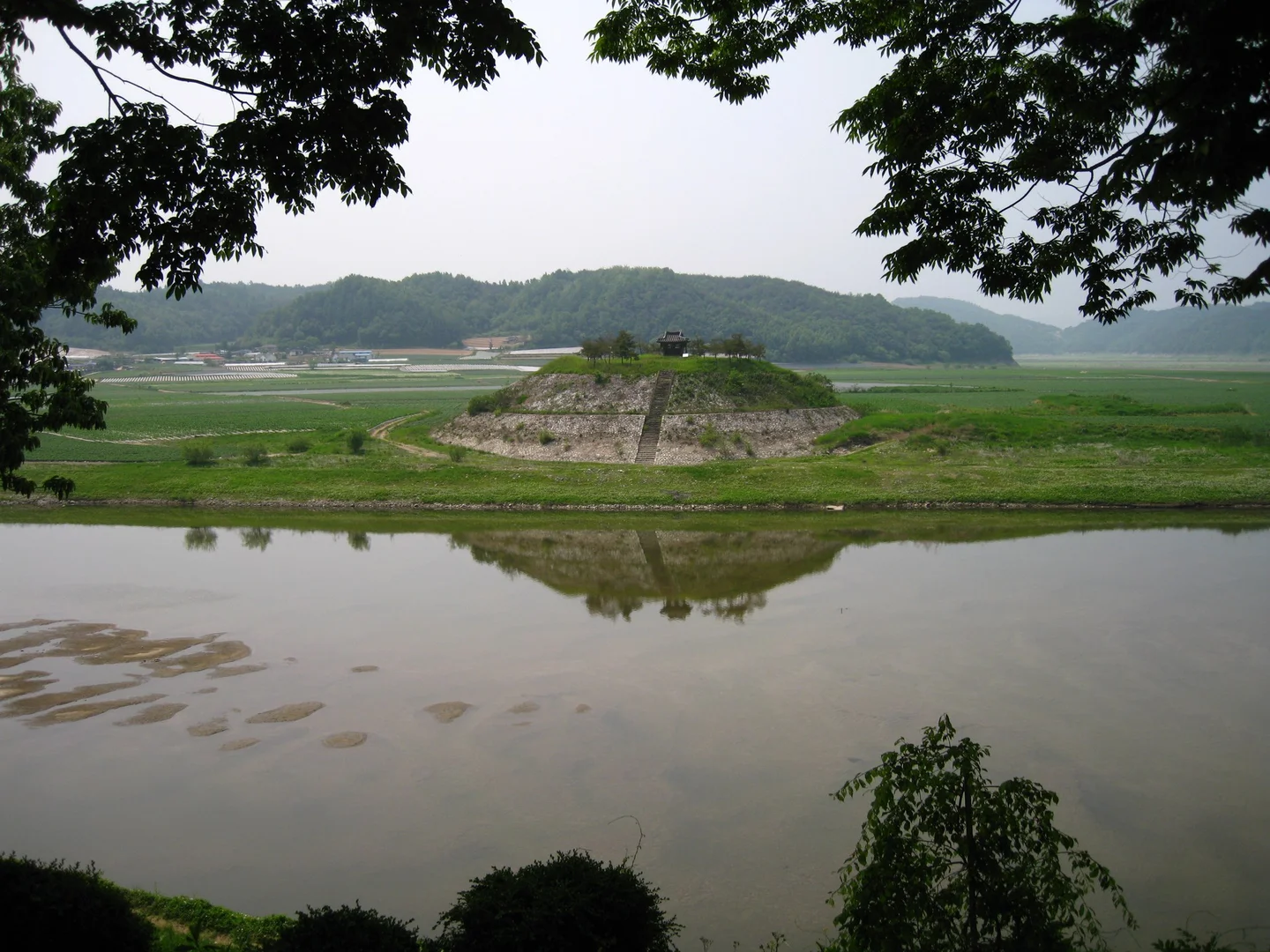
Julie · Original · CC BY-SA 2.0 ·
The little structure on a high mound opposite the academy is Sisadan. It commemorates a special state examination ordered by King Jeongjo in 1792 to honor Yi Hwang. So many candidates came that the examination was moved from the academy courtyard to the more spacious ground across the river. The height of the mound belongs to a later chapter. It was raised to protect the monument and pavilion from waters associated with Andong Dam. From the academy side, you can read both stories in the same view: an examination memorial and a landscape reshaped by a modern reservoir. Water levels alter how much surrounding ground is visible, so Sisadan does not always appear to float on a little island. Enjoy it as an outlook from the academy’s side of the water, rather than a building to add to the internal walking circuit. Autumn foliage gives the tiled roofs a colorful frame; in winter, bare branches make the lines of the buildings easier to pick out.
Getting There and Making a Day of It
Dosan Seowon is a separate trip into the Dosan area, not a walk-on stop from Andong Old Market or Woryeonggyo. As checked in October 2026, the official transport page lists Express Bus 3 from the terminal and current Andong Station, with a journey of around 45 minutes. Departures are limited, so match an outbound and return service using Andong’s live bus information. Large tour vehicles must use the signed approach via Togye Bridge because the older entrance road is too narrow. The current official visiting hours are 9 a.m. to 6 p.m. from February through October, and 9 a.m. to 5 p.m. from November through January. Last entry is 30 minutes before closing. Standard adult admission is 2,000 won, checked in October 2026; use the academy’s latest notice for changes. Pets are not admitted. For a second stop in the same part of Andong, Yekki Village offers mural-lined lanes, small galleries, and the lakeside Seonseong Susang-gil floating walkway. Travelers interested in literature can instead look at Yi Yuksa Literary Museum, devoted to the poet and independence activist; its own schedule includes a Monday closure. Choose one that suits your interests and transport, rather than trying to fit both Dosan and Hahoe into a tightly timed public-bus day.