gil.KOREA

Bongjeongsa Temple: Two Courtyards and Centuries of Korean Woodwork
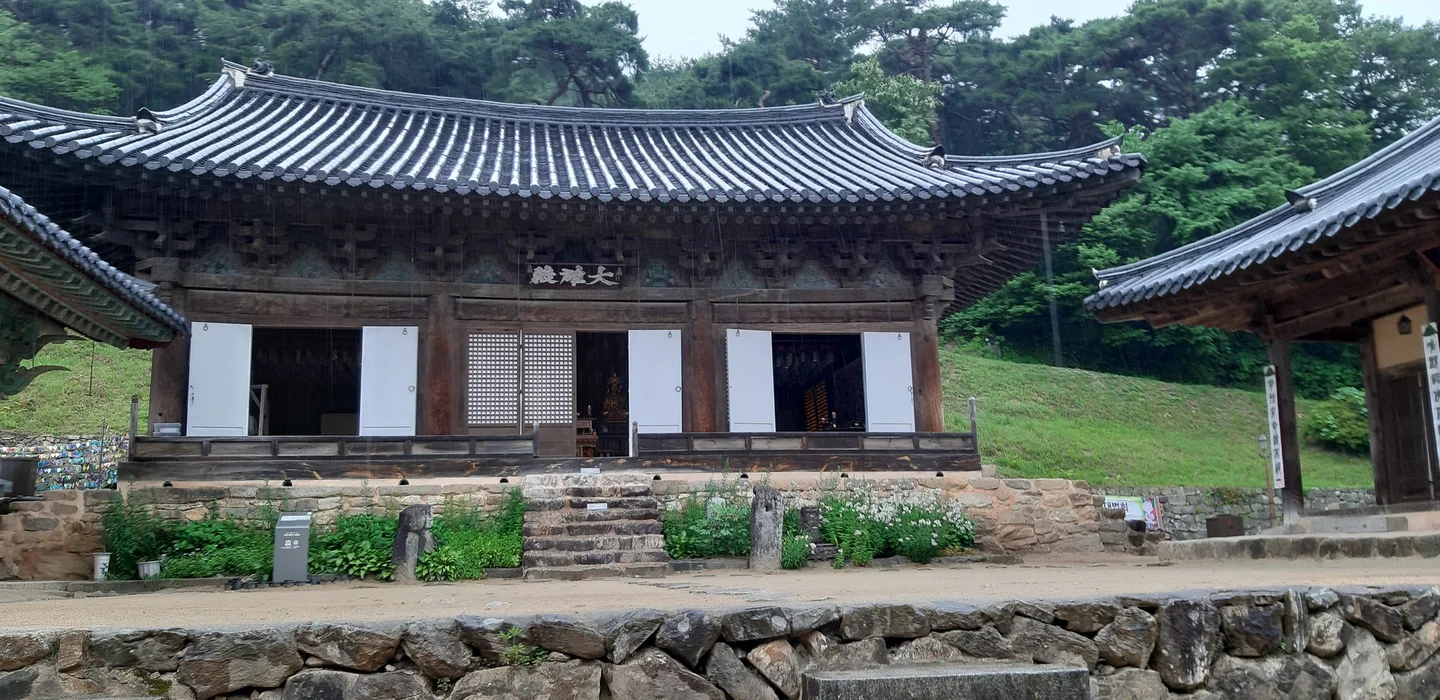
Daeungjeon Hall and courtyard at Bongjeongsa Temple

YI sumin · Original · CC BY-SA 4.0 ·

Source notices and processing details

Daeungjeon Hall and courtyard at Bongjeongsa Temple

Photo: YI sumin · commons.wikimedia.org — 봉정사 대웅전.jpg · CC BY-SA 4.0

WebP conversion; proportionally reduced where needed; no cropping or upscaling.

Processed copies are provided under the same license shown above.

CC BY-SA 4.0 https://creativecommons.org/licenses/by-sa/4.0 · 저작자 표시 필수 · 동일조건변경허락(변경 시 같은 라이선스)

360 × 175: Existing supplied proportional WebP rendition; no new crop, resize, upscaling, distortion or synthesis in this connection batch.

720 × 350: Existing supplied proportional WebP rendition; no new crop, resize, upscaling, distortion or synthesis in this connection batch.

1440 × 700: Existing supplied proportional WebP rendition; no new crop, resize, upscaling, distortion or synthesis in this connection batch.

Bongjeongsa is the Andong temple to choose if old buildings matter more to you than monumental scale. Its best-known hall, Geungnakjeon, is regarded as Korea’s oldest surviving wooden building, but the real pleasure is seeing it alongside a second courtyard with a very different character. Within a compact mountain setting, you can compare roof shapes, timber supports, stone platforms, and the way each hall faces the space in front of it. The temple stands on the slopes of Cheondeungsan, northwest of central Andong. It became part of the UNESCO-listed “Sansa, Buddhist Mountain Monasteries in Korea” in 2018, together with six other temples. These places preserve a continuing religious life as well as historic structures. Bongjeongsa is particularly rewarding for a slow visit, with time to look at the craftsmanship between the famous halls. Daeungjeon, the principal Buddha hall, is a highlight in its own right. Its long front porch is an unusual feature for a Korean temple hall. Stand across the courtyard to take in the broad roof and raised stone base, then look more closely at the dense wooden brackets beneath the eaves. A record found inside identifies a rebuilding in 1435, although the original construction date is uncertain. If the hall is open for visitors, its decorated ceiling and canopy offer another level of detail. Let worship take priority, and follow the local entry and photography instructions. Much of the building’s character is visible from the courtyard without stepping inside.

Arrive beneath the Pavilion
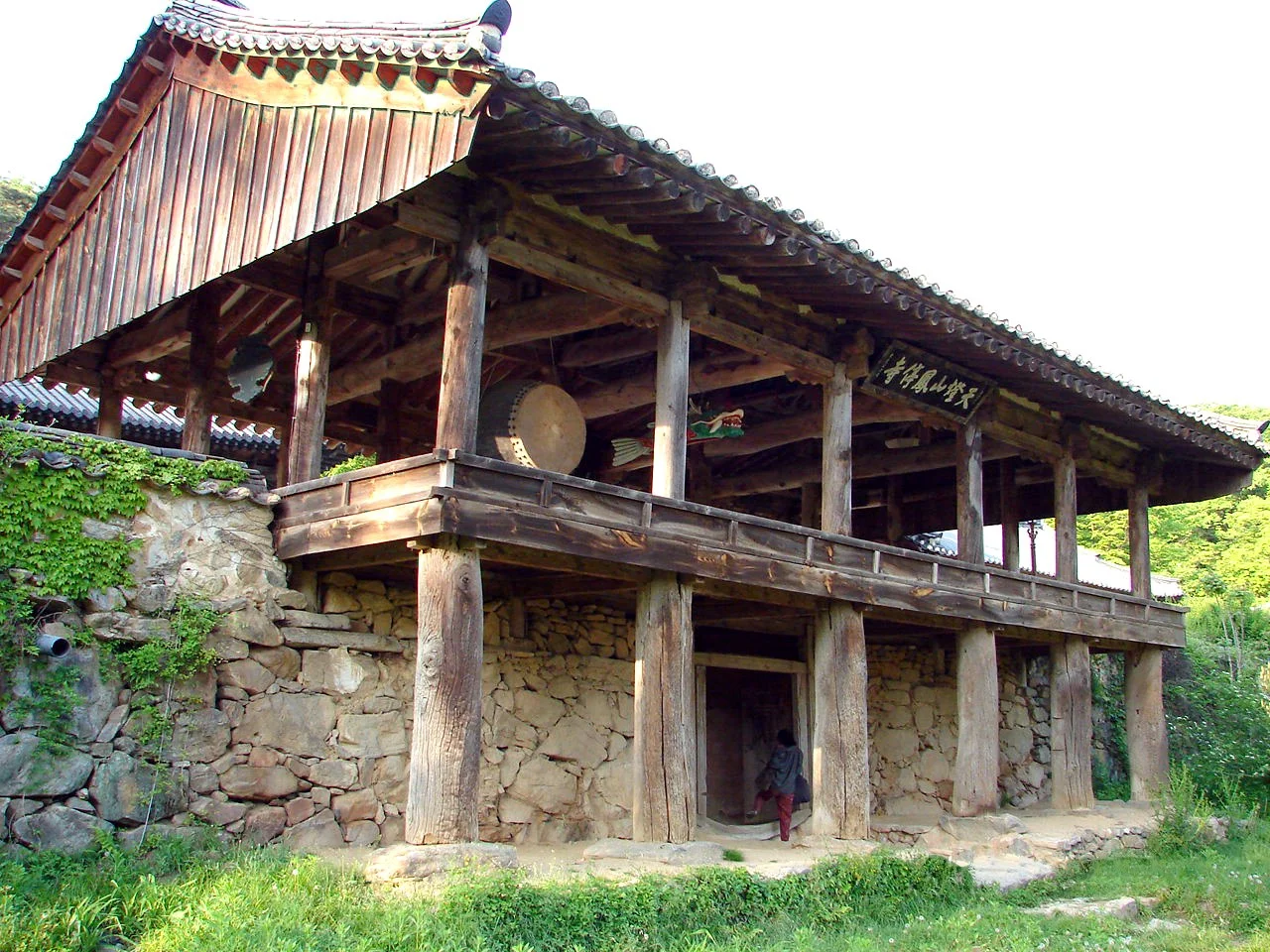
Manseru Pavilion built above a stone terrace

Steve46814 · Original · CC BY-SA 3.0 ·

Source notices and processing details

Manseru Pavilion built above a stone terrace

Photo: Steve46814 · commons.wikimedia.org — Korea-Andong-Bongjeongsa 3034-06 Maseru.JPG · CC BY-SA 3.0

WebP conversion; proportionally reduced where needed; no cropping or upscaling.

Processed copies are provided under the same license shown above.

CC BY-SA 3.0 https://creativecommons.org/licenses/by-sa/3.0 · 저작자 표시 필수 · 동일조건변경허락(변경 시 같은 라이선스)

360 × 270: Existing supplied proportional WebP rendition; no new crop, resize, upscaling, distortion or synthesis in this connection batch.

720 × 540: Existing supplied proportional WebP rendition; no new crop, resize, upscaling, distortion or synthesis in this connection batch.

1280 × 960: Existing supplied proportional WebP rendition; no new crop, resize, upscaling, distortion or synthesis in this connection batch.

Manseru creates one of Bongjeongsa’s most memorable transitions. Seen from below, the pavilion is held up by long wooden posts above a rough stone retaining wall. Its open upper level stretches across the approach, with the temple buildings largely concealed behind it. The structure functions as both a pavilion and an entrance to the main courtyard. This is architecture worth looking at from more than one height. Below, you see the underside of the floor, the heavy posts, and the texture of the stonework. Above, the same building helps enclose the courtyard facing Daeungjeon. The change makes the temple feel more layered than its small footprint suggests.
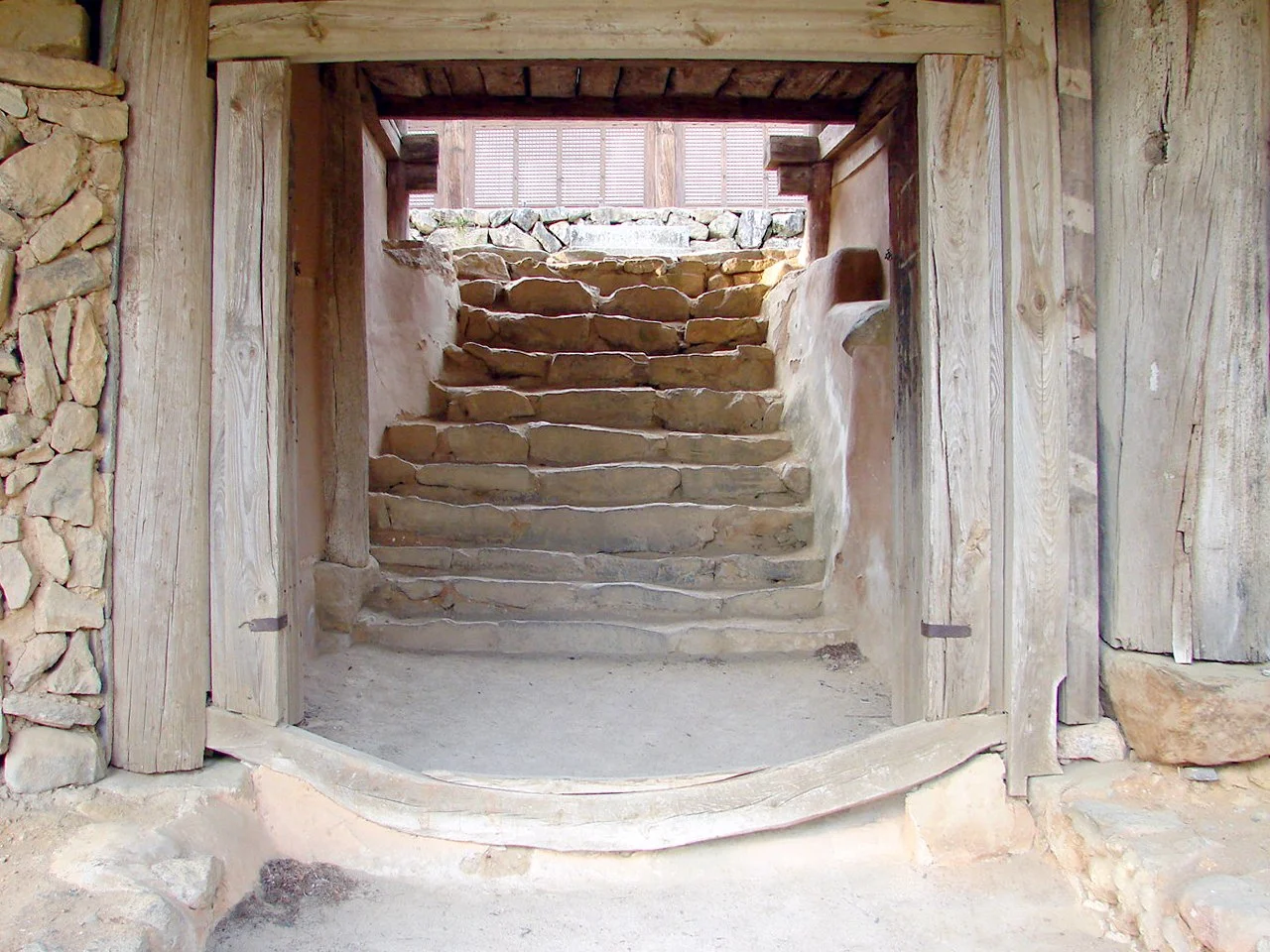
Stone-step passage beneath Manseru Pavilion

Steve46814 · Original · CC BY-SA 3.0 ·

Source notices and processing details

Stone-step passage beneath Manseru Pavilion

Photo: Steve46814 · commons.wikimedia.org — Korea-Andong-Bongjeongsa 3035-06 Maseru.JPG · CC BY-SA 3.0

WebP conversion; proportionally reduced where needed; no cropping or upscaling.

Processed copies are provided under the same license shown above.

CC BY-SA 3.0 https://creativecommons.org/licenses/by-sa/3.0 · 저작자 표시 필수 · 동일조건변경허락(변경 시 같은 라이선스)

360 × 270: Existing supplied proportional WebP rendition; no new crop, resize, upscaling, distortion or synthesis in this connection batch.

720 × 540: Existing supplied proportional WebP rendition; no new crop, resize, upscaling, distortion or synthesis in this connection batch.

1280 × 960: Existing supplied proportional WebP rendition; no new crop, resize, upscaling, distortion or synthesis in this connection batch.

The passage under the pavilion leads toward a flight of uneven stone steps. Follow the route currently open to visitors, taking the climb slowly enough to notice how the enclosed, shaded approach gives way to daylight in the courtyard. The entrance itself is part of the experience, rather than merely a way of reaching the halls. The slopes, steps, and thresholds are important practical considerations. A bus stop or parking space is not the end of the approach, and travelers using a wheelchair or stroller should ask about suitable access and the extent of possible sightseeing before planning the whole circuit. Allow for the walk back down when arranging a pickup.

Geungnakjeon: The Older, Smaller Courtyard
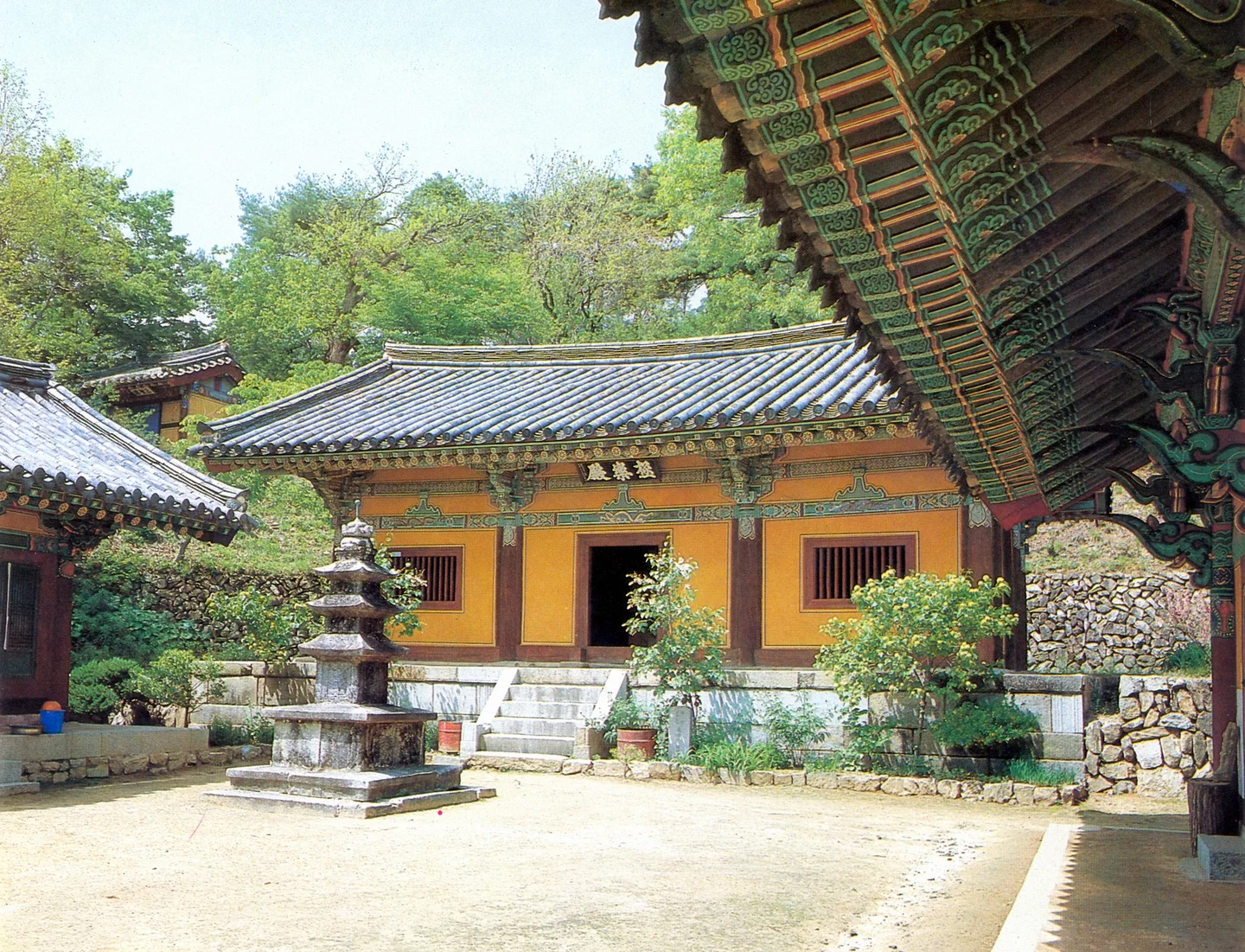
Courtyard with Geungnakjeon Hall and a three-story stone pagoda

Unknown authorUnknown author · Original · Public domain ·

Source notices and processing details

Courtyard with Geungnakjeon Hall and a three-story stone pagoda

Photo: Unknown authorUnknown author · commons.wikimedia.org — 안동봉정사극락전.jpg · Public domain

WebP conversion; proportionally reduced where needed; no cropping or upscaling.

Public domain · 퍼블릭 도메인 · 저작자 표시 권장

360 × 275: Existing supplied proportional WebP rendition; no new crop, resize, upscaling, distortion or synthesis in this connection batch.

720 × 550: Existing supplied proportional WebP rendition; no new crop, resize, upscaling, distortion or synthesis in this connection batch.

1440 × 1101: Existing supplied proportional WebP rendition; no new crop, resize, upscaling, distortion or synthesis in this connection batch.

Move across to Geungnakjeon rather than stopping after Daeungjeon. The halls form two neighboring centers, each with its own courtyard. Here, a three-story stone pagoda stands before a smaller hall with a straightforward gabled roof. The contrast is easy to appreciate even without architectural vocabulary: compare the roofline, the supports beneath it, and the amount of open space around the building. Geungnakjeon’s age needs a little explanation. Its exact founding date is not known; the heritage interpretation places its construction around the late twelfth or early thirteenth century. A record discovered during twentieth-century repairs says the roof was repaired in 1363. That is evidence of an already existing building, not its original construction date. Later generations repaired it again, and work in 1972 restored parts of the front to their understood Goryeo-period form. Thinking of the hall as something repeatedly cared for is more useful than imagining every surface has remained untouched for eight centuries. It is a Buddhist worship hall associated with Amitabha, the Buddha of the Western Paradise. From the open courtyard, the stone pagoda and timber hall make a satisfying pair. The pagoda’s stacked horizontal stones emphasize its height, while the hall spreads low across the background. Step to either side within the visitor area to see how the neighboring roofs frame it.

The Details of a Working Temple
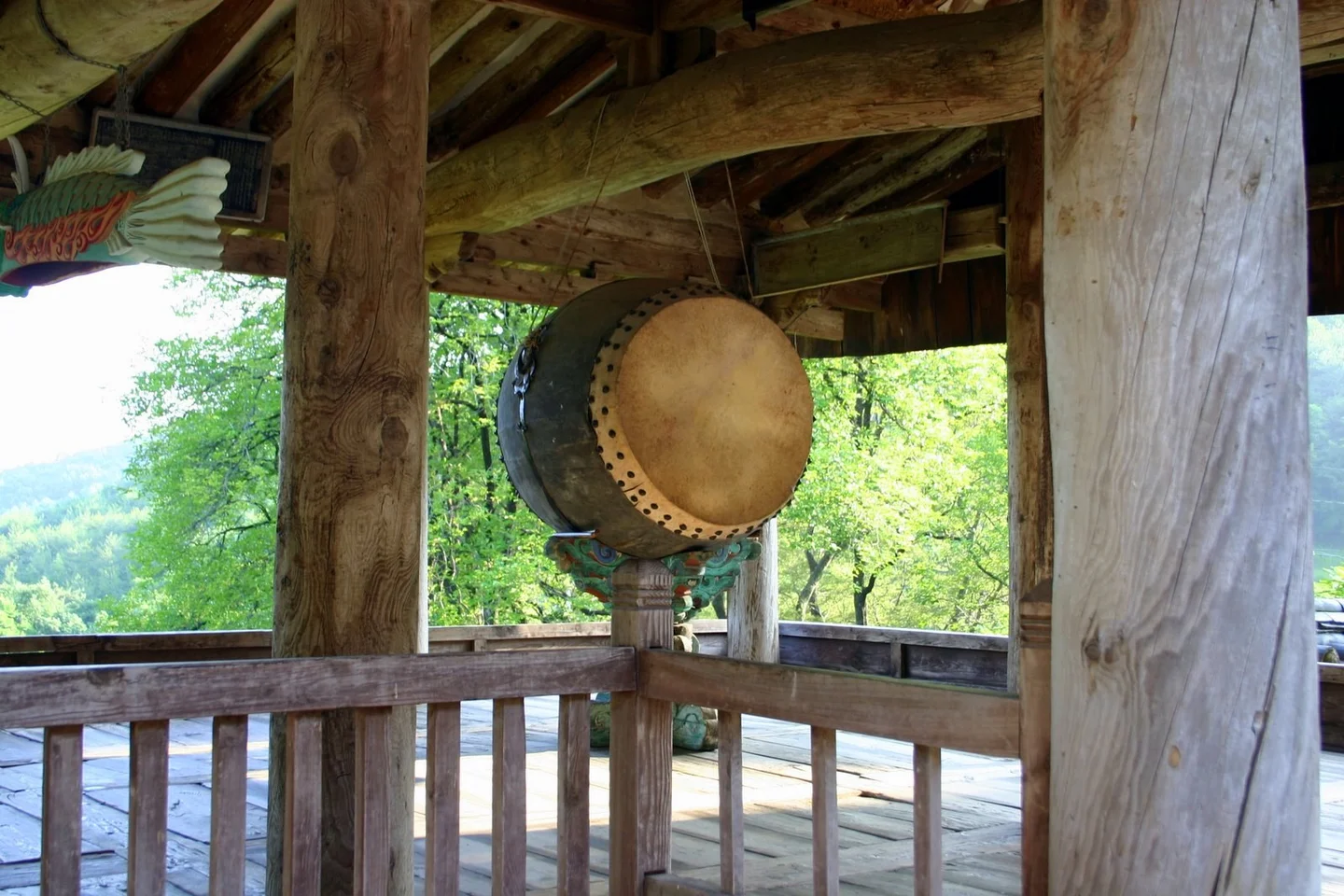
Beopgo drum and wooden pillars at Manseru Pavilion

Robert at Picasa · Original · CC BY 3.0 ·

Source notices and processing details

Beopgo drum and wooden pillars at Manseru Pavilion

Photo: Robert at Picasa · commons.wikimedia.org — Korea-Andong-Bongjeongsa-Maseru-Drum-01.jpg · CC BY 3.0

WebP conversion; proportionally reduced where needed; no cropping or upscaling.

CC BY 3.0 https://creativecommons.org/licenses/by/3.0 · 저작자 표시 필수

360 × 240: Existing supplied proportional WebP rendition; no new crop, resize, upscaling, distortion or synthesis in this connection batch.

720 × 480: Existing supplied proportional WebP rendition; no new crop, resize, upscaling, distortion or synthesis in this connection batch.

1440 × 960: Existing supplied proportional WebP rendition; no new crop, resize, upscaling, distortion or synthesis in this connection batch.

The large temple drum at Manseru brings a different material into the scene: a rounded skin surface against the grain of the surrounding wooden posts. Look above and around it for the supporting beams and painted details. These instruments belong to religious practice, so leave them to the temple’s community rather than treating them as hands-on exhibits.
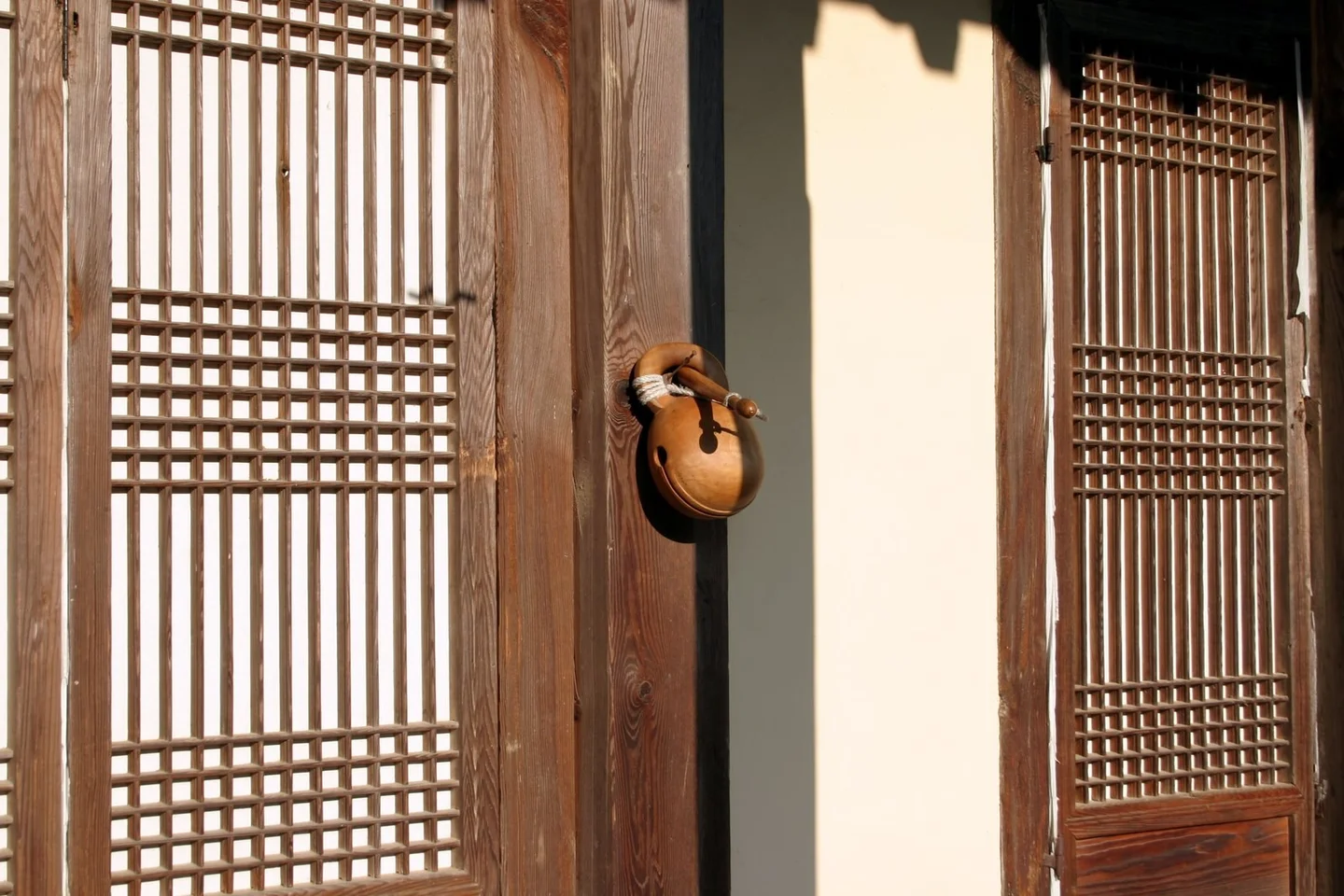
A moktak hanging beside lattice windows and wooden pillars

Robert at Picasa · Original · CC BY 3.0 ·

Source notices and processing details

A moktak hanging beside lattice windows and wooden pillars

Photo: Robert at Picasa · commons.wikimedia.org — Korea-Andong-Bongjeongsa-Papered door and motak-01.jpg · CC BY 3.0

WebP conversion; proportionally reduced where needed; no cropping or upscaling.

CC BY 3.0 https://creativecommons.org/licenses/by/3.0 · 저작자 표시 필수

360 × 240: Existing supplied proportional WebP rendition; no new crop, resize, upscaling, distortion or synthesis in this connection batch.

720 × 480: Existing supplied proportional WebP rendition; no new crop, resize, upscaling, distortion or synthesis in this connection batch.

1440 × 960: Existing supplied proportional WebP rendition; no new crop, resize, upscaling, distortion or synthesis in this connection batch.

There is as much to notice at the scale of a doorway. Paper-backed latticework filters light; a small moktak, the wooden percussion instrument used in chanting, may hang beside a room. Such everyday details connect the large historic buildings with their continuing use. They also give photographers subjects beyond a succession of front-on views of halls. If you have more time, add Yeongsanam, the affiliated hermitage across a small stream within the temple area. Its buildings wrap around an intimate courtyard, with a layout that also recalls a traditional house. This is a natural extension for visitors interested in how spaces are arranged. Continuing into the Cheondeungsan hiking trails is a separate undertaking, with substantially more walking than a temple visit.

Plan a Daylight Visit from Andong

Allow around 90 minutes to two hours for the main temple and a leisurely look at its details, adding time for the hermitage and your journey from town. That is a suggested sightseeing allowance. Arriving in daylight makes the changes of level and the timber construction easier to appreciate. As checked in October 2026, the official Visit Korean Heritage campaign lists free admission, with visiting hours of 9 a.m. to 7 p.m. from May through September and 9 a.m. to 6 p.m. from October through April. Check the temple’s current arrangements if a ceremony or a late arrival affects your plans; older travel listings still show a paid entrance fee. For public transportation, use Andong’s current bus information to find a service to 봉정사 from your starting point and choose the return journey at the same time. Services into the countryside need more planning than a downtown hop. If taking a taxi, arrange the return meeting place as part of the outing. A useful additional stop is the Icheon-dong Stone Buddha, often called Jebiwon, on the approach toward Andong. Its body is carved into a rock face, with a separately sculpted head placed above: a striking change from Bongjeongsa’s timber architecture. It is part of the city’s recommended Bongjeongsa-area route, but requires another transfer rather than a short walk out of the temple gate.

SourcesUNESCO directly read:2018Sansa,sevenlivingmonasteries,courtyardform: https://whc.unesco.org/en/list/1562/ Korea Heritage Agency campaign directly read:twocourts,freeadmissionandseasonalhours;busnumbernotused: https://www.kh.or.kr/visit/kor/road/4/view.do?key=2408220004 Academy of Korean Studies Geungnakjeon directly read:uncertaindate12th/13thcentury,1363roofrepair,1972restoration,Amitabha: https://dh.aks.ac.kr/~heritage/wiki/index.php/%EC%95%88%EB%8F%99_%EB%B4%89%EC%A0%95%EC%82%AC_%EA%B7%B9%EB%9D%BD%EC%A0%84 Academy of Korean Studies Daeungjeon directly read:1435rebuilding,rarefrontporch,decoratedcanopy: https://dh.aks.ac.kr/~heritage/wiki/index.php/%EC%95%88%EB%8F%99_%EB%B4%89%EC%A0%95%EC%82%AC_%EB%8C%80%EC%9B%85%EC%A0%84 Manseru heritagepanel directly read:entrancepavilionandtwolevels: https://dh.aks.ac.kr/~heritage/wiki/index.php/%EC%95%88%EB%8F%99_%EB%B4%89%EC%A0%95%EC%82%AC_%EB%A7%8C%EC%84%B8%EB%A3%A8 Jogye Order directly read:parallelcourtyards,Yeongsanamacrossstreamandhouse-likecourtyard;conflictingfoundationdate/Maitreyaerrornotused: https://jokb.org/bbs/board.php?bo_table=1020&wr_id=33 City regionalitinerary directly read:Bongjeongsa/Jebiwon/Hakbonghouse;mountainhike separate: https://www.tourandong.com/public/sub1/sub1_3.cshtml?idx=&keyword=&seq=1212 City stoneBuddha directly read:bodycarvedinrock,separatehead,Jebiwonname: https://www.tourandong.com/public/sub1/sub1_3.cshtml?seq=1175 City transport directlyread andlinksrealtimesystem;fixedroute/timetableomitted: https://www.tourandong.com/public/sub5/sub1_2.cshtml 확인일: 2026-10-12 (Asia/Seoul). 기본 근거: gyeongbuk-daegu-014 한국어 완료 원고의 사실·선택 사진. 영어는 독립 구성·집필.

Travel guide