Andong Old Market and Jjimdak Alley: A Food Lover's Walk Through Downtown
Jjw · Original · CC BY-SA 4.0 ·
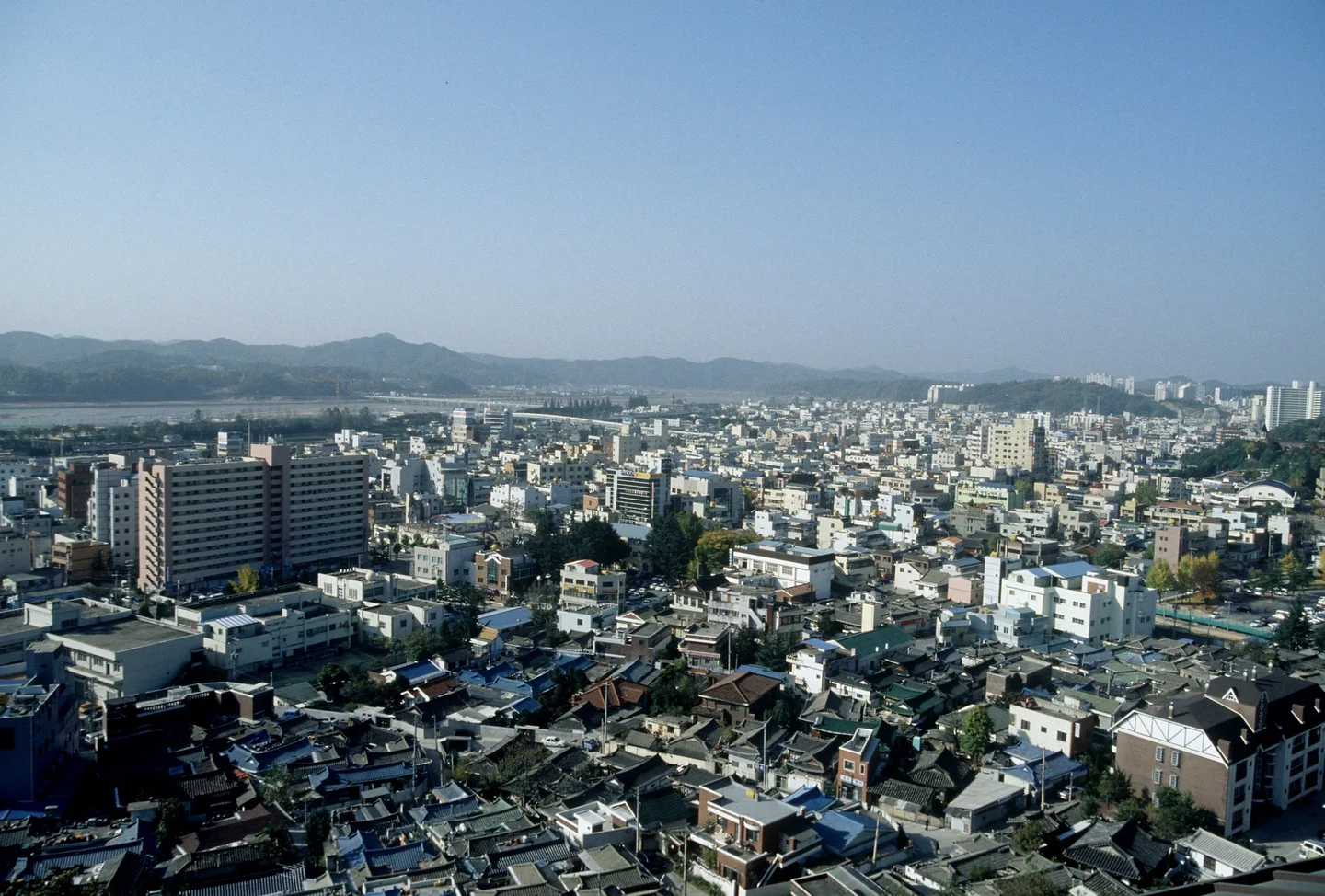
A wide platter of chicken, potatoes, vegetables, and glossy glass noodles is a good reason to stop in central Andong. At the Old Market's Jjimdak Alley, restaurants turn the city's best-known chicken dish into the centerpiece of lunch, with enough choice to compare menus before sitting down. Afterward, Culture Street's shops and cafés, the old railway station, and nearby parks give you somewhere to walk off a generous meal. This is Andong's everyday downtown: market lanes, modern storefronts, and people going about their shopping. It complements the historic villages and Confucian academies outside the city with something more immediate. You can taste a dish in the neighborhood where it developed, then spend the afternoon among the streets that still sustain it. Search for Andong Gusijang (안동구시장), meaning Andong Old Market, or Andong Jjimdak Golmok (안동찜닭골목). The chicken alley is inside the market. Allow roughly two to three hours for lunch and an easy downtown walk, with extra time if you intend to attend a performance or browse an exhibition. Plan around the meal first; restaurant hours are individual rather than a single opening-and-closing time for the entire market.
What is Andong jjimdak, and how do you order it?
Andong jjimdak (안동찜닭) is chicken braised with vegetables and glass noodles in a soy-based sauce. The combination is sweet, savory, and often quite peppery, even though the sauce is brown rather than red. Potatoes soak up the seasoning while the noodles become glossy and chewy. It is a substantial shared dish, not a small bowl automatically ordered once per person. Menus commonly offer sizes such as small, medium, and large, or describe the amount of chicken. Tell the staff how many people are eating and ask which size they recommend. For a solo visit, check whether a smaller order is possible before joining a long line. If a boneless option is offered, sunsal (순살) is the word to look for; its price and serving size may differ from the bone-in version. Discuss spice when ordering. “Deol maepge haejuseyo” (덜 맵게 해주세요) means “Please make it less spicy.” For no chili at all, explain that explicitly and ask whether the kitchen can accommodate it. Rice, extra noodles, and drinks may be separate additions. If you have a food allergy, describe it rather than relying on the English phrase “soy-braised chicken” to tell you every ingredient in the sauce. Once the platter arrives, help yourself to some noodles while they still have a springy texture; they continue absorbing the sauce as the meal goes on. A bowl of plain rice works well alongside the chicken and vegetables. Kitchen scissors make long noodles easier to divide, and a small spare plate is useful for bones. These are easy things to request even if the restaurant has only a Korean menu. The dish's market identity is relatively modern. Korea Tourism Organization traces today's version to the chicken sellers of the Old Market in the 1980s. That makes this an interesting stop in a city otherwise famous for much older traditions: a popular meal grew out of local commerce and became a national favorite.
Choosing a restaurant and a second taste of Andong
Compare the available sizes, spice options, and seating when choosing a restaurant. At Andong Sinsegye Jjimdak (안동신세계찜닭), you can request a different spice level or try jjorimdak, chicken cooked until the sauce is more intensely reduced. Choose ordinary jjimdak if the sauce-soaked noodles are what brought you here; ask about jjorimdak if you prefer a more concentrated sauce. If someone in your group would rather have a different meal, the adjoining boribap alley offers barley rice with vegetable accompaniments. Check the complete set before assuming it is vegetarian, since fish or an animal-based broth can be included. The Old Market and nearby Culture Street also connect through a snack-food area with items such as tteokbokki, fried snacks, and hotteok. For a later sweet stop, Mammoth Bakery (맘모스베이커리) on Munhwagwangjang-gil is known for cream cheese buns and yuja, or citron, pound cake. It dates to 1974 and makes an easy addition to a downtown stroll. A cake or bun to take away also works if lunch has left you too full for another sit-down stop.
The old station is a sightseeing stop, not your KTX departure point
hyolee2 · Original · CC BY-SA 3.0 ·
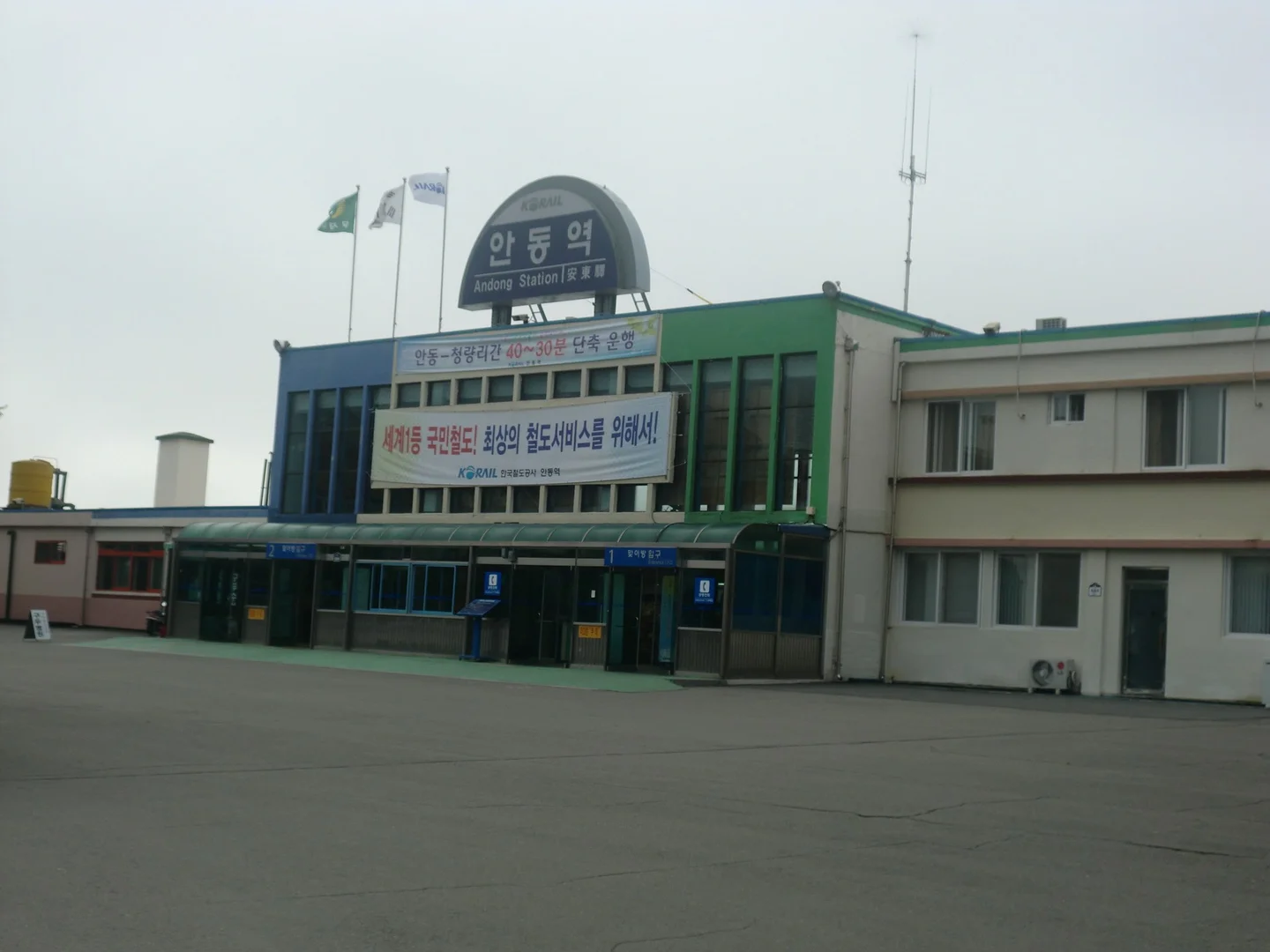
Andong's former downtown station and the present railway station are in different places. Train services left the old site at the end of 2020. The former station and disused track area are now being used as Jungangseon 1942, a cultural space with exhibitions, performances, and community events. It is worth including if a listed program appeals to you, or simply as a landmark in the old downtown. For arrival and departure, use the current Andong Station beside the intercity bus terminal. From there, take a bus or taxi to the Old Market. Check the live bus route for the stop closest to your chosen restaurant, and allow a separate transfer back before a booked train. Drivers can leave the car in a public parking area and explore the market on foot. If a restaurant offers a parking discount, give it the name of the lot you used; benefits are not automatically valid at every nearby facility. Travelers needing step-free access should check the particular restaurant entrance and seating, since neighboring businesses can have quite different layouts.
Walk Culture Street, then choose a quieter corner
Academy of Korean Studies · Original · KOGL Type 1 ·
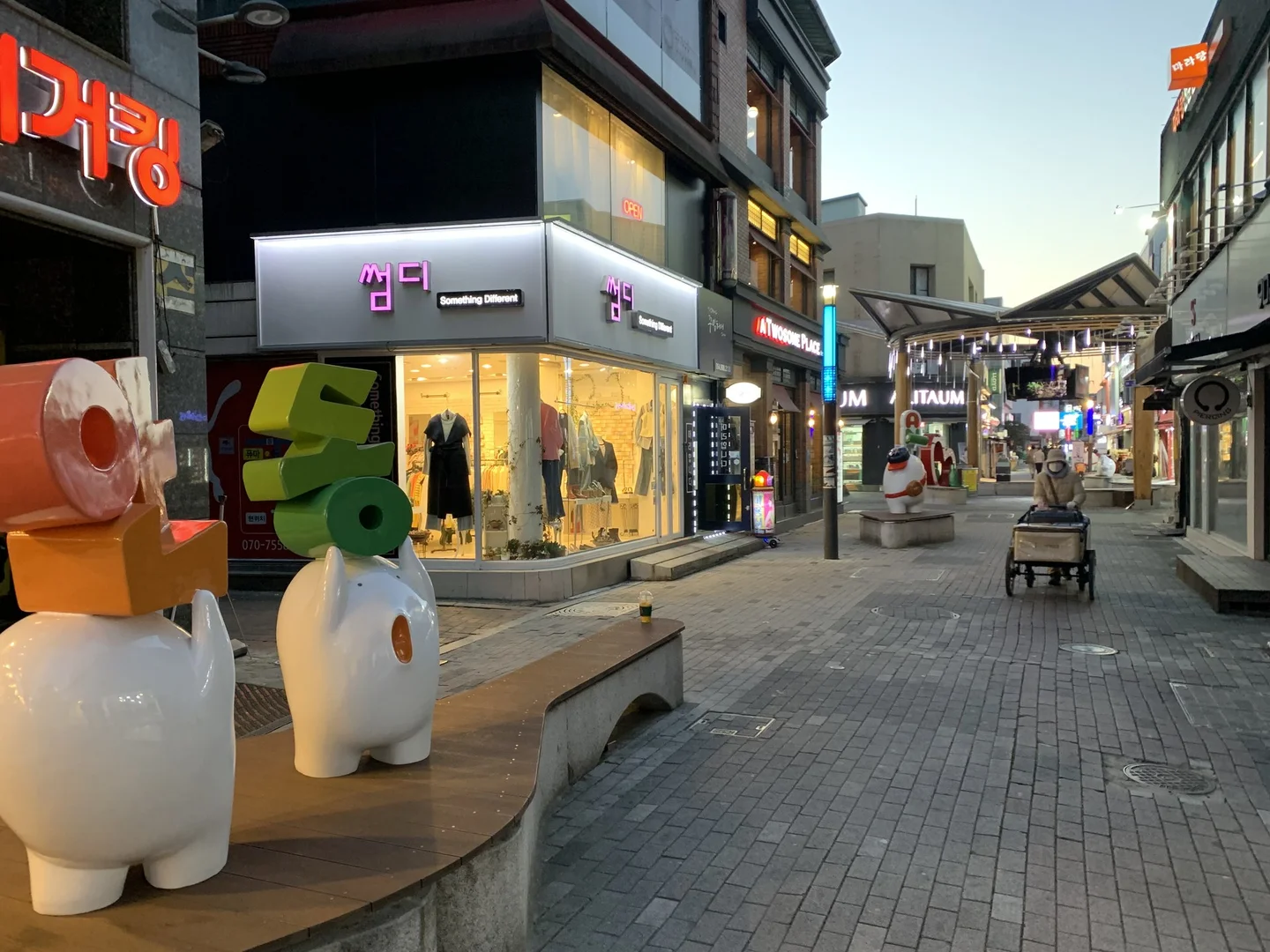
Culture Street, or Munhwa-ui Geori (문화의거리), is the natural place to continue after lunch. Shop windows, street decorations, and café tables bring the pace down after the restaurant bustle. You can keep the walk short, stopping for coffee or browsing a few stores, without needing to travel across the city for another attraction. For more greenery and traditional rooflines, continue toward Ungbu Park (웅부공원). Its traditional-style buildings include Yeonggaheon Hall, Daedongnu Pavilion, and a bell pavilion; the adjacent Culture Park adds a pond and lawn. These are manageable downtown choices. Hahoe Village and Dosanseowon are much farther-flung excursions that need their own transport plans, while Wolyeonggyo Bridge works better as a separate onward stop than an incidental turn out of the market.
If you visit during the Maskdance Festival
hyolee2 · Original · CC BY-SA 3.0 ·
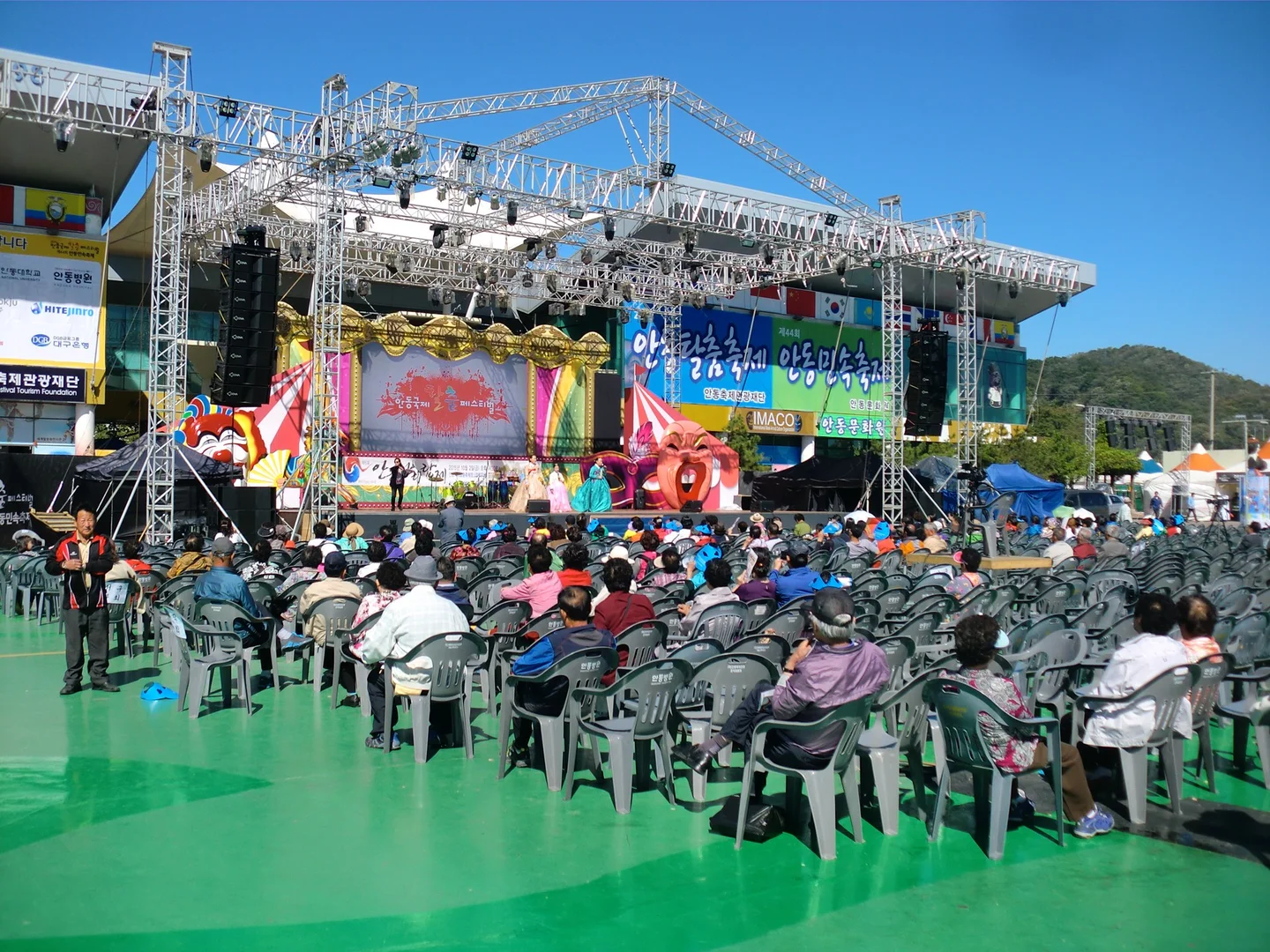
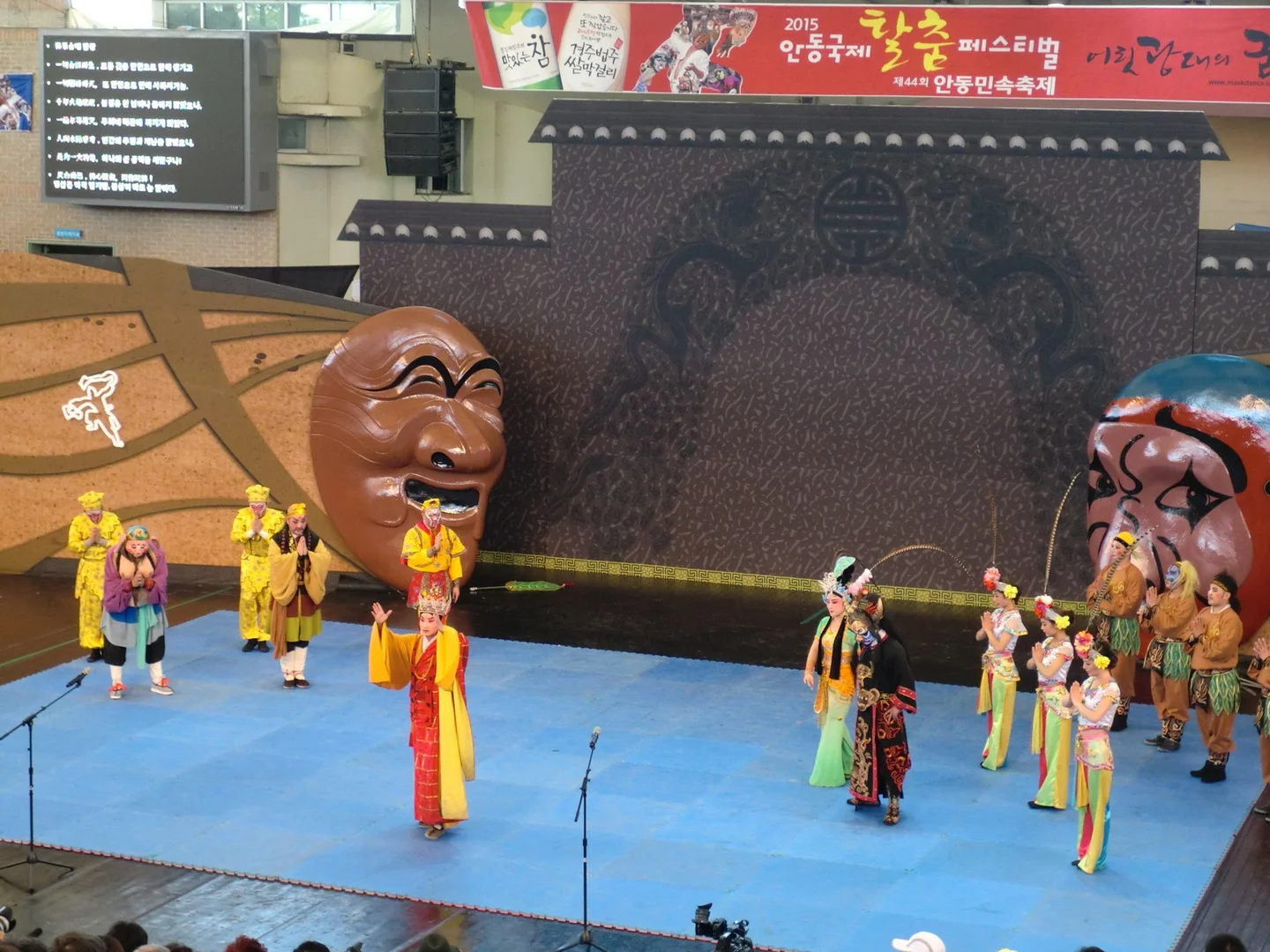
The Andong International Maskdance Festival brings a different energy to downtown, with Korean and international performances, parades, and busy event spaces. It is a seasonal festival, so choose a visit during its announced dates if performances are part of your reason for coming. A regular market lunch does not include a daily mask-dance show.
hyolee2 · Original · CC BY-SA 3.0 ·
The organizer distinguishes venues around Jungangseon 1942, the Maskdance Park, downtown, and Hahoe Village. Pick the performance first, then locate its actual stage and arrange lunch around that timetable. Check the program's admission or seating arrangements as well as its start time. During festival days, an earlier meal can leave useful room for a restaurant wait and the walk to your chosen venue.