Seokguram Grotto: Gyeongju's mountain sanctuary in granite
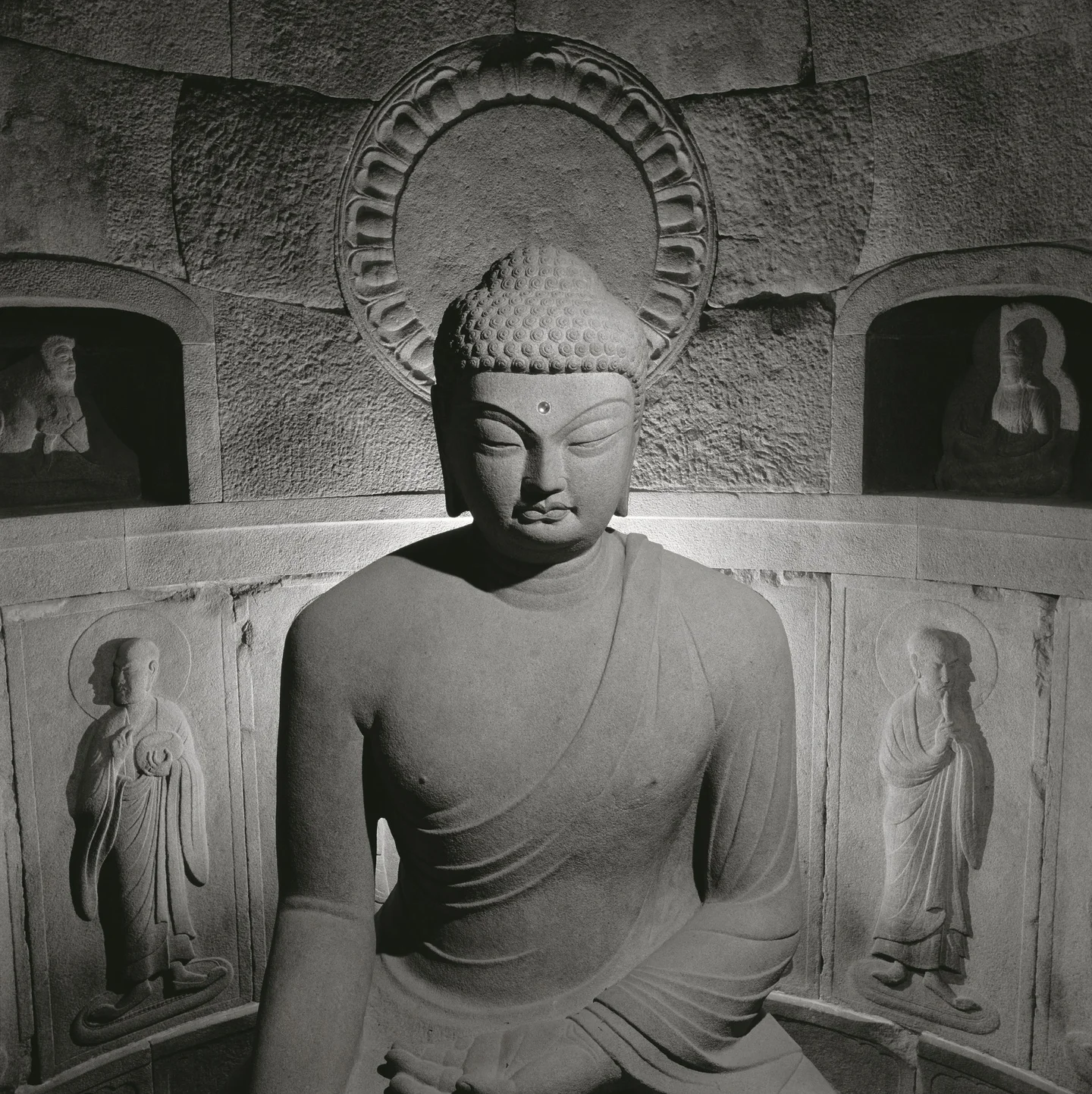
한석홍 · Original · KOGL Type 1 ·
High on Tohamsan Mountain, a seated Buddha occupies the center of a stone chamber built more than twelve centuries ago. The shoulders are broad, the robe falls in measured folds, and the face has an extraordinary composure. Seokguram's power comes from the relationship between that figure and the carefully assembled space around it. This is one of the most rewarding places in Gyeongju for travelers interested in sculpture, Buddhist art, or the engineering behind an ancient building. The grotto was constructed in the eighth century, during the Silla kingdom, and shares a UNESCO World Heritage inscription with Bulguksa Temple. Despite its name, it is an artificial granite sanctuary, built from individual stones rather than hollowed out of a natural cave. A rectangular entrance area leads toward a round, domed chamber containing the Buddha and an assembly of carved figures. A regular visit gives you a frontal view through protective glass. You cannot walk around the central statue, and photography is prohibited inside the viewing hall. The encounter is relatively brief, but the mountain approach and the chance to see this remarkable original sculpture make the journey worthwhile. Allow roughly an hour to an hour and a half at the site as a planning estimate, plus transportation and any line at the hall.
Admission and the mountain approach
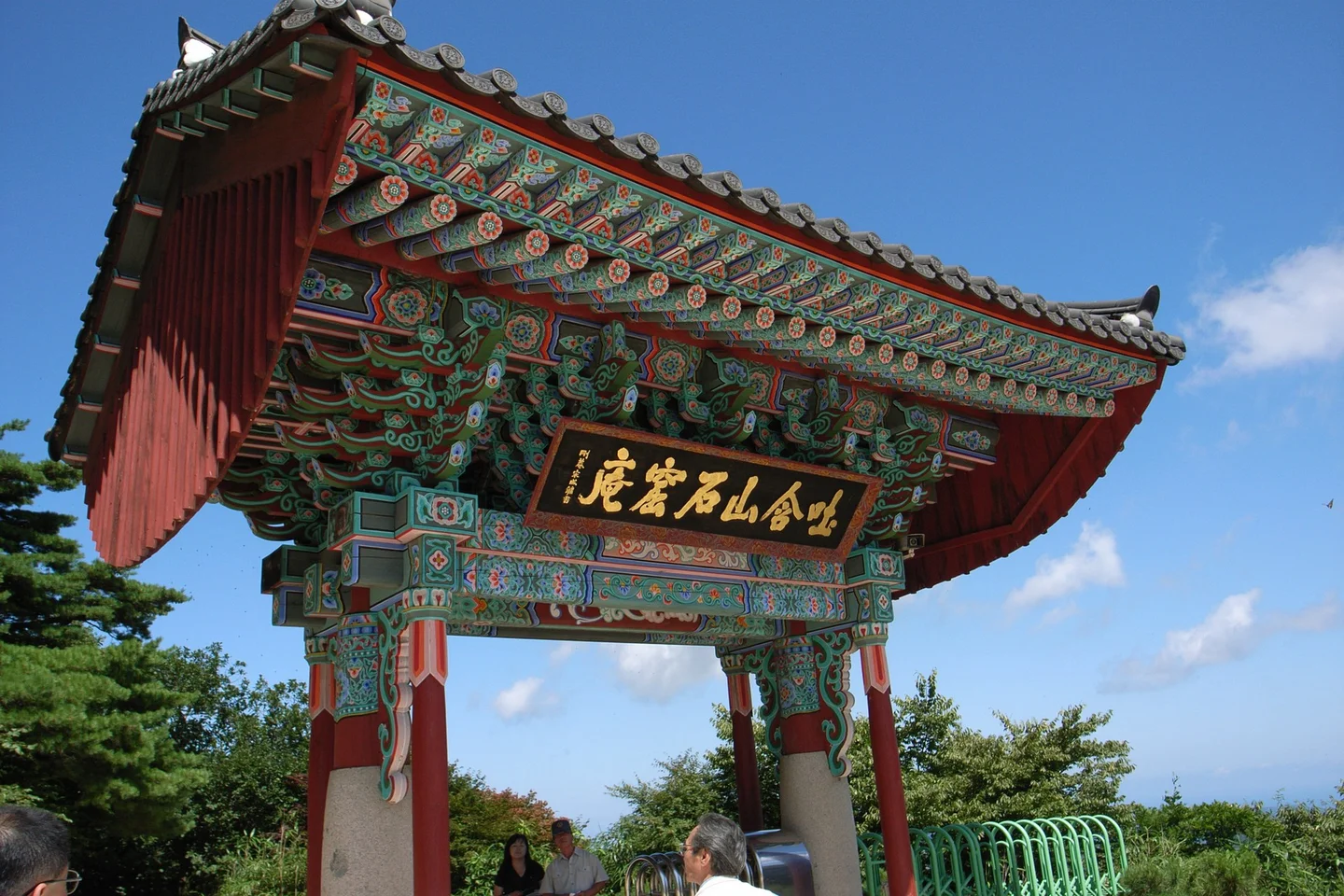
The painted Iljumun gate marks the approach to the sanctuary. Its wide roof and mountain backdrop announce the change from the parking area to the wooded temple grounds. Admission is free; parking is charged separately. Seokguram's own visitor page, checked in October 2026, lists a 9 a.m. opening, with last admission at 6 p.m. from March through September, 5:30 p.m. in February and October, and 5 p.m. from November through January. The grounds may close during severe-weather alerts. Pets are not admitted. Those hours matter if you are combining the grotto with a long morning at Bulguksa. Plan to arrive comfortably before the admission cutoff, rather than treating it as the time to reach the parking lot. Sunrise is often associated with Tohamsan, but ordinary 9 a.m. entry does not provide dawn access to the sanctuary; a sunrise outing needs its own confirmed access arrangements. The temple describes the walk from the parking area to the grounds as about ten minutes. For most visitors, the journey continues on foot beyond the gate, with a final climb to the viewing hall.
Through the woods to the grotto
The forest path is a substantial part of the visit. Trees screen the road, low railings follow the edge, and the broad dirt surface leads toward the shrine. Fresh leaves give the approach a sheltered feel in spring and summer; autumn adds color along the slope. This short temple approach should not be confused with the longer hiking route between Bulguksa and Seokguram. There are slopes and steps, including the ascent near the hall. Korea Tourism Organization's accessibility listing identifies accessible parking and restrooms, wheelchair rental at Iljumun, and an approach ramp where assistance may be necessary. Those facilities do not establish step-free access to the entire viewing route. Travelers who need a wheelchair-accessible visit should ask the temple specifically about reaching the Buddha viewing area before traveling up the mountain. Leave time for the return walk when choosing a bus departure. The bus stop is back by the parking area, rather than directly outside the grotto, so a departure listed on a timetable is not the time to leave the hall.
What to look for in the Buddha chamber
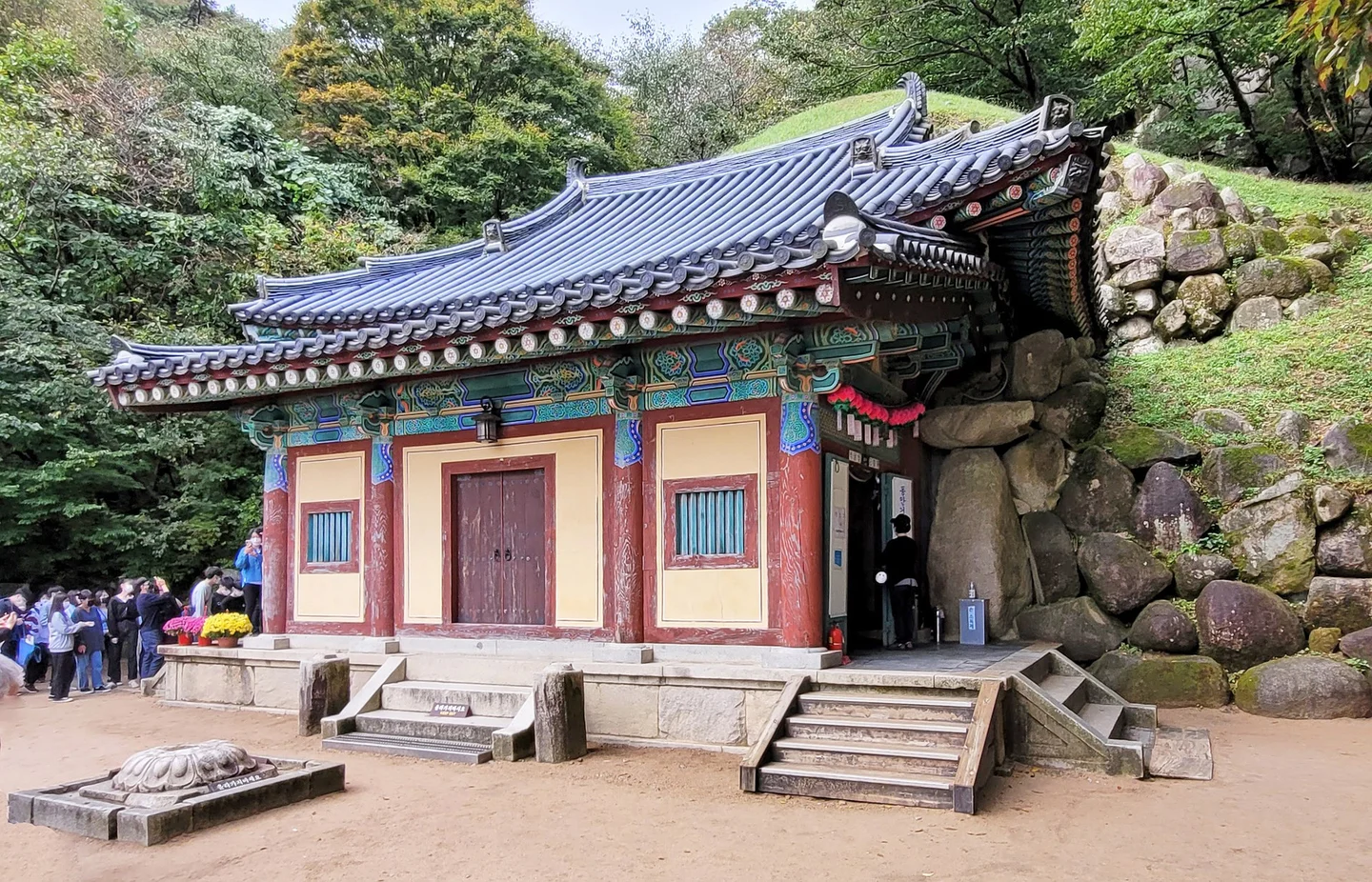
A small wooden hall stands against the stone-covered mound that shelters the grotto. Inside, start with the main Buddha, identified as Shakyamuni, the historical Buddha. The left hand rests in meditation while the right reaches down toward the earth. In Buddhist imagery, this earth-touching gesture recalls the moment of enlightenment, calling the earth to witness it. Notice how the stillness of the seated figure is reinforced by the curve of the chamber and the halo behind its head. The surrounding sculptures include disciples, bodhisattvas, and guardian figures, arranged as a complete sacred setting. The disciples differ in their faces, poses, and the objects they hold. The full layout is easier to understand from the temple's plan and official interior images, which are useful to examine before entering the viewing area. The glass is part of a long conservation history. Earlier repairs altered the grotto's environmental conditions, and temperature and humidity control became essential to protecting the stonework. Knowing this helps explain the present viewing arrangement without diminishing the achievement: a precisely organized granite interior, conceived on a mountainside in the eighth century.
A pause in the courtyard
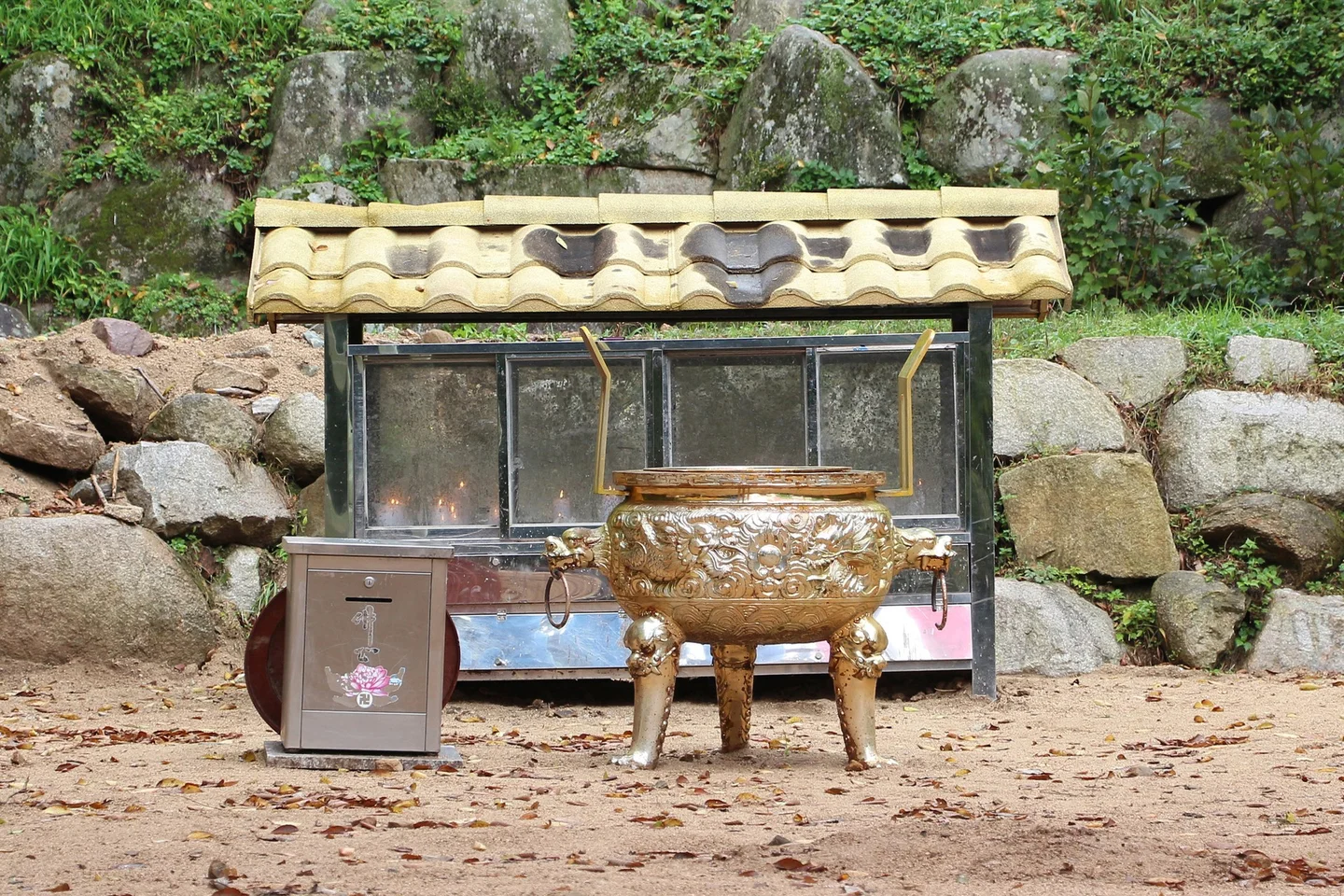
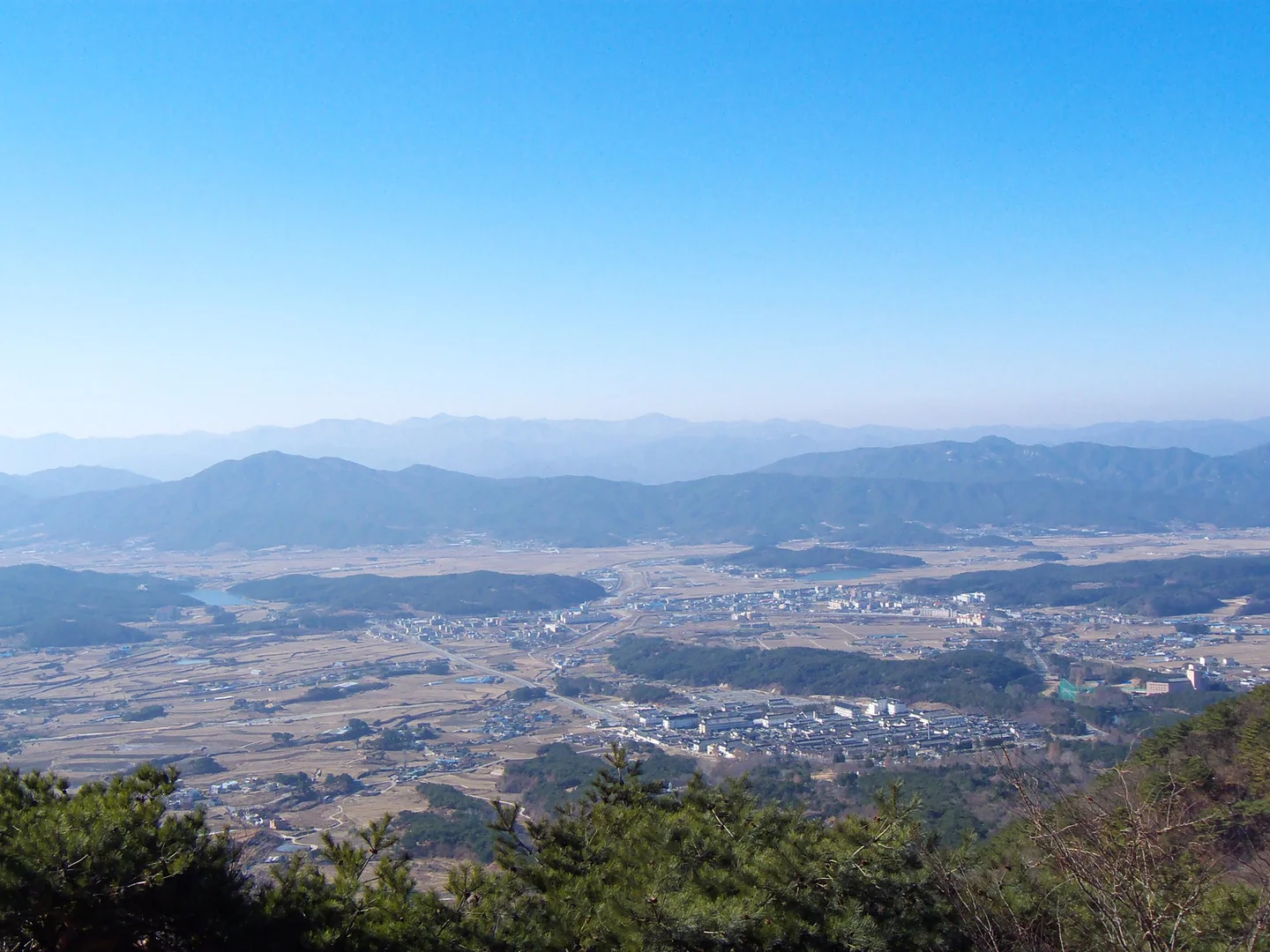
Outside the hall, the incense burner, candles, and people making offerings place Seokguram within the life of a Buddhist sanctuary. Allow worshippers space around the prayer area. You can appreciate the architecture and sculpture without taking part in a religious observance. This is also a good place to let the visit settle before walking back. From the courtyard, the layered mountain landscape gives the enclosed chamber a very different setting. If you are continuing to Bulguksa, the contrast is especially interesting: Seokguram concentrates attention on one sheltered interior, while Bulguksa opens out into stone terraces, pagodas, and several worship halls.
Getting there from Gyeongju and Bulguksa
Seokguram and Bulguksa are separate stops on the mountain. Bus 12 connects the Bulguksa area with Seokguram; check the current departures in both directions before heading uphill. The mountain road winds considerably, and a taxi can be useful for a small group, especially if you arrange the return pickup rather than relying on finding one at the top. For the first leg from central Gyeongju, city buses 10 and 11 serve Bulguksa by different routes. The city's current tourist map also lists bus 711 from Gyeongju's KTX station toward Bulguksa. That station is outside the historic center, so allow for the onward journey instead of treating a train arrival as arrival at the temple. A half day or more is a sensible allowance for both heritage sites, depending on your transport connections and how long you spend at Bulguksa. Put a meal in the Bulguksa area before returning toward central Gyeongju, or continue toward Bomun if that is where you are staying. For a shorter outing, travel directly up to Seokguram and leave the rest of Tohamsan's trails for another day.