Dodong and Jeodong: two harbors for a first look at Ulleungdo
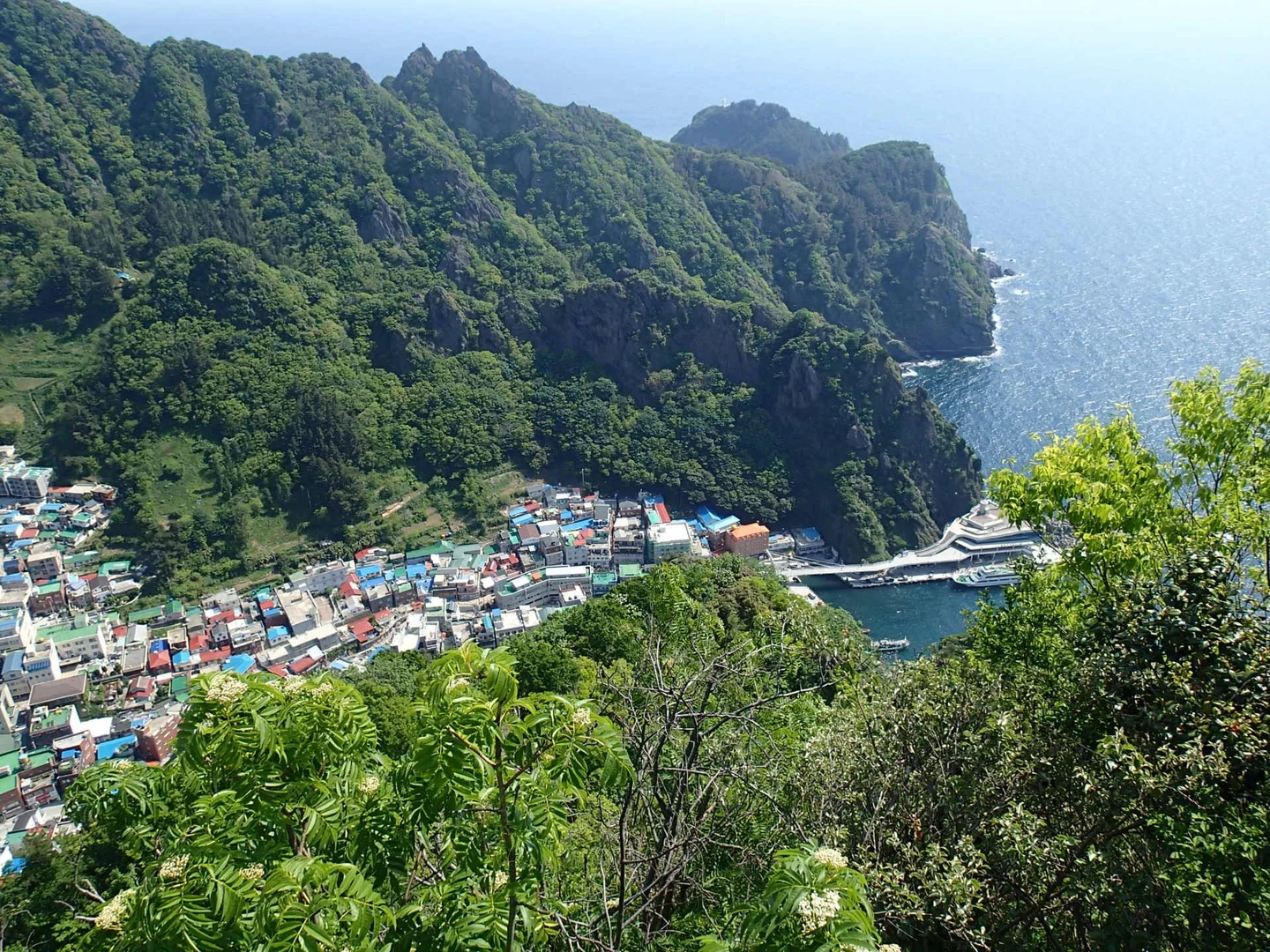
Ulleungdo’s east coast makes the island’s unusual shape immediately clear. Steep green slopes rise behind compact streets, and harbors occupy the narrow spaces where the mountains meet the sea. Dodong and Jeodong are good places to get your bearings: one offers a tightly packed visitor town around a small port, while the other opens onto a larger working fishing harbor. Together they make a rewarding introduction to the island without taking on a full circuit of the coast. Spend time in Dodong’s streets, travel to Jeodong for the fishing boats and harbor views, then add a higher viewpoint if the weather is clear. This is a trip built around cliffs, port life, and seafood, with frequent changes in elevation. A half day is a useful planning allowance for the two towns and a meal, excluding your mainland ferry journey. Leave more time if you want the Naesujeon viewpoint or a walk on an open section of coastal path. Use road transport between the harbors as the basis of the plan; the shoreline route has access restrictions.
Check which port your ferry uses
Republic of Korea from Seoul, Republic of Korea · Original · CC BY-SA 2.0 ·
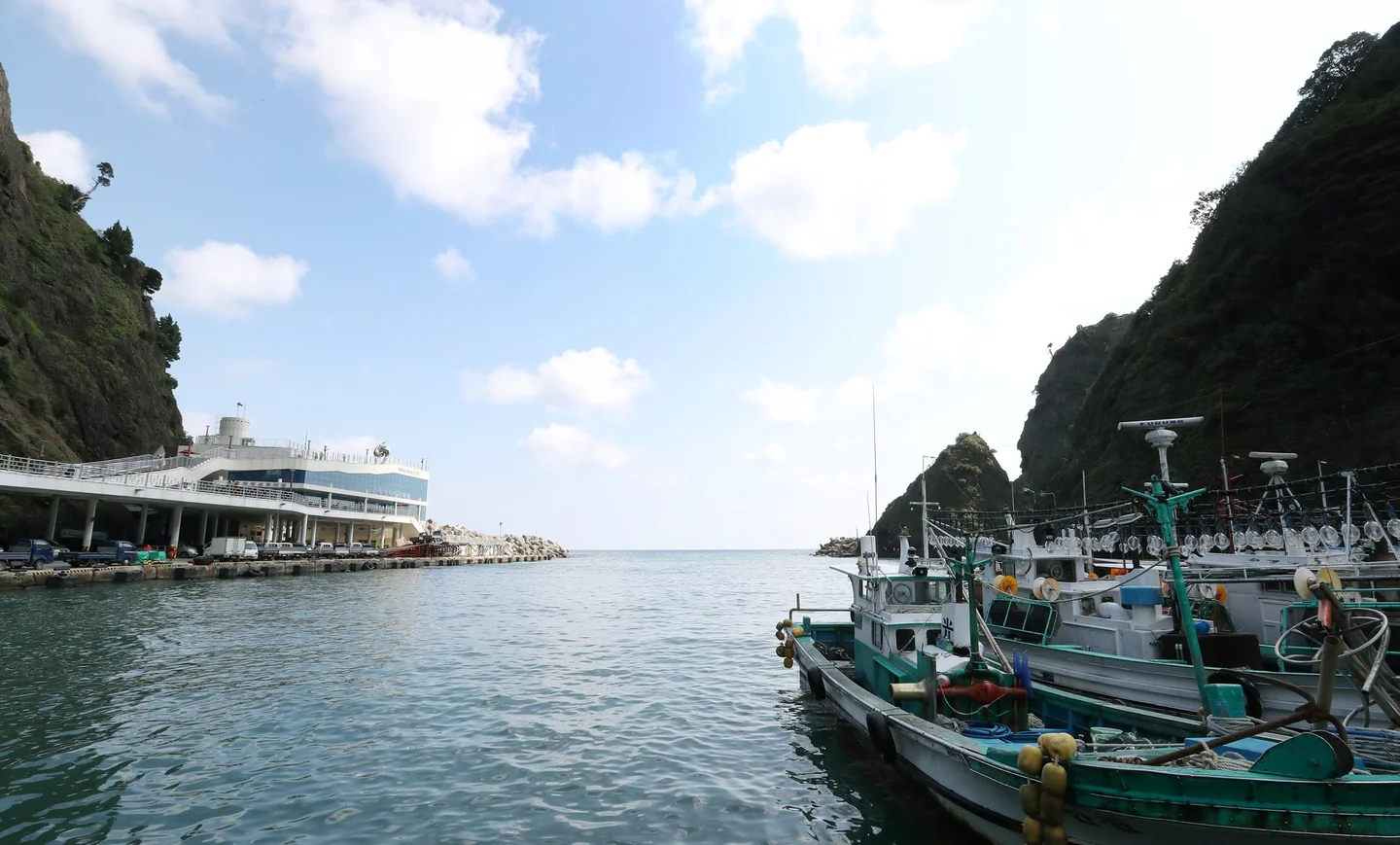
Dodong, Jeodong, and Sadong are separate ports. Your arrival point depends on the operator and sailing, so read the port name on your booking before choosing a hotel or arranging a pickup. For example, Ulleung Cruise’s official FAQ specifies Sadong as its island terminal. A room in Dodong will need an additional transfer if you arrive on that service. For Ulleung Cruise, the guidance checked in October 2026 asks passengers to reach the terminal at least an hour before departure. International visitors should carry their original valid passport or another identification document specifically accepted by the operator; photographs and photocopies are not accepted. Check your own carrier’s requirements and check-in deadline when booking. Weather can delay or cancel island sailings. Leave flexibility between the return ferry and an international flight or other difficult-to-change booking on the mainland. The day you depart is better suited to a meal and a short walk near the correct terminal than an excursion across the island. Once in Dodong, the passenger terminal is a useful landmark for understanding the town. The harbor lies seaward, while shops, restaurants, and guesthouses fill the valley behind it. Look up as well as along the street: buildings sit close beneath the slopes, and a short distance on the map may involve a steep approach. Ask a hillside lodging about vehicle access before arriving with a suitcase.
Jeodong’s fishing boats and harbor scenery
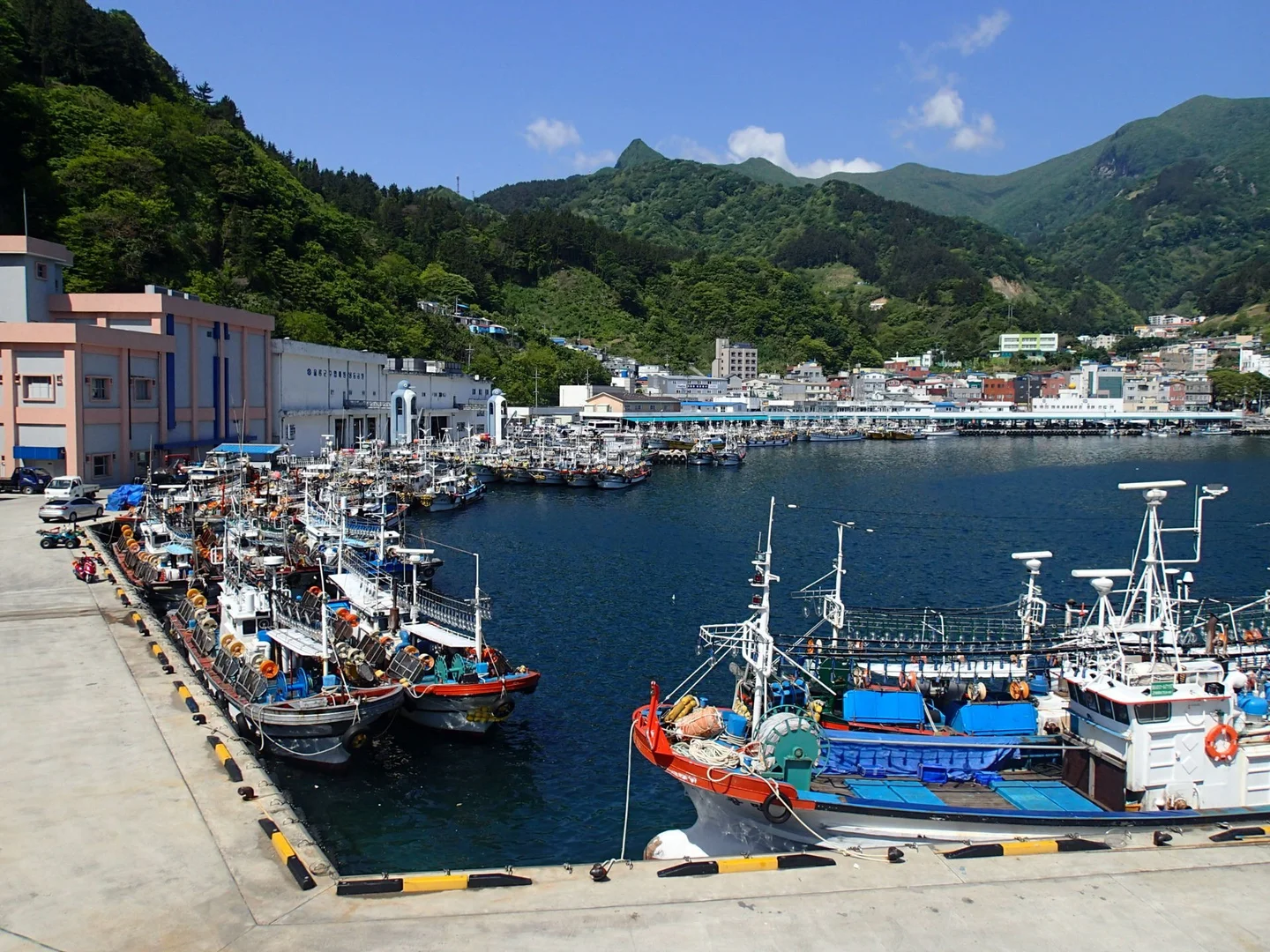
Jeodong gives you more room to see the port as a whole. Fishing boats line the quays, their masts, rigging, and rows of lamps forming a dense pattern against the town and green mountains. Those lamps are associated with squid fishing, a trade closely linked with Ulleungdo’s food and identity. The lights of boats offshore are known locally as Jeodong Eohwa and are counted among the island’s celebrated views. Whether you see them depends on fishing activity and sea conditions. During the day, the boats themselves offer plenty of detail to notice, from the arrangement of their lamps to the equipment on deck. Chotdaebawi, or Candlestick Rock, is another landmark near the harbor breakwater. Include it from the currently open public walkway or a viewpoint around the harbor. Keep clear of unloading areas and ropes, since this is an active fishing port with vehicles and crews moving between the boats and shore. Jeodong works well as a lunch stop or as the lower half of an outing to Naesujeon. Use the town and harbor to get a sense of distance before heading uphill: the viewpoint involves a separate road journey followed by a walk, rather than a staircase immediately above the waterfront.
Coastal walking: plan a short out-and-back section
The Haengnam coastal route is appealing because it brings you close to the island’s rock walls and open water. However, it should not be treated as a guaranteed walking connection from Dodong to Jeodong. The county’s facility status page, checked October 12, 2026, lists partial restrictions on the Dodong left-bank coastal walkway because of safety concerns. Check the county’s current facility information and the signs at the entrance, then walk only the section that is open. Return the same way if you reach a closure. The presence of a route on a tourism map does not establish that every bridge, stairway, and connecting section is usable that day. For the town-to-town journey, take a bus or taxi along the road. The county notes that bus schedules vary with the season, including winter, so confirm the relevant stop and direction locally. If you are traveling with someone who cannot manage stairs, concentrate on accessible harbor viewpoints and arrange road transfers rather than using the cliffside paths as the connecting route.
Naesujeon: a higher view toward Jukdo
Senkaku Islands · Original · CC BY-SA 4.0 ·
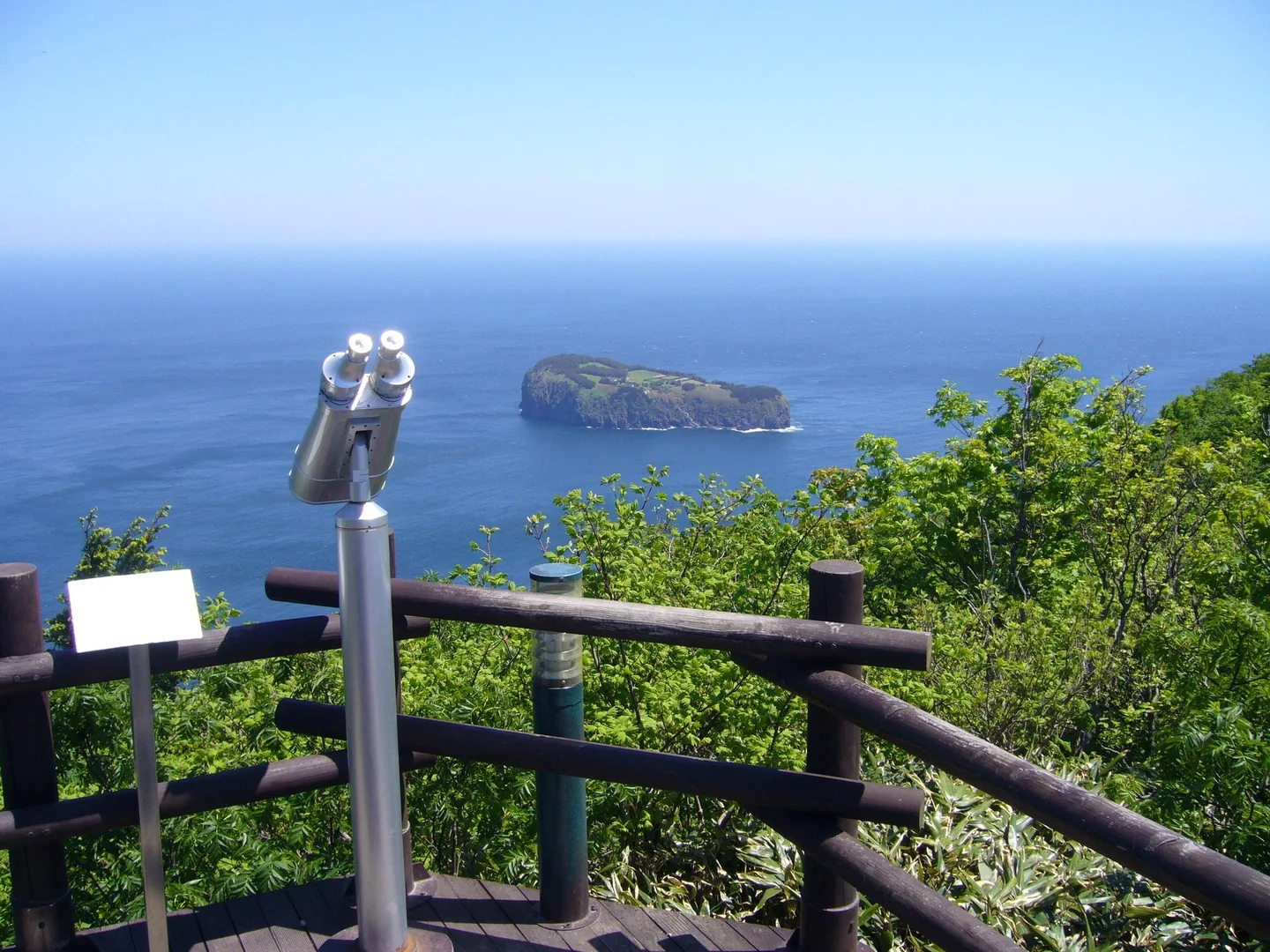
Naesujeon Sunrise Observatory is worth considering on a clear day even if you have no plans to wake before dawn. The higher perspective reveals the relationship between the steep island slopes, Jeodong’s harbor, and the smaller islands offshore. Jukdo is especially distinctive, with a relatively flat green top above sheer coastal cliffs. The approach is a short uphill walk through trees with wooden steps. The marine tourism guide describes about 15 minutes on foot from the trail entrance to the viewpoint. That is the walking segment, not the total journey from Jeodong, so add the road transfer, time at the top, and the descent when arranging a taxi pickup. Low cloud can hide much of the distant view. If conditions are poor, spend longer at the harbors or over a meal instead. For a sunrise visit, arrange transportation in advance and bring a light for the approach. Daytime is the simpler choice for a first visit, especially when you want to identify Jukdo and trace the coastline below.
What to eat in Dodong and Jeodong
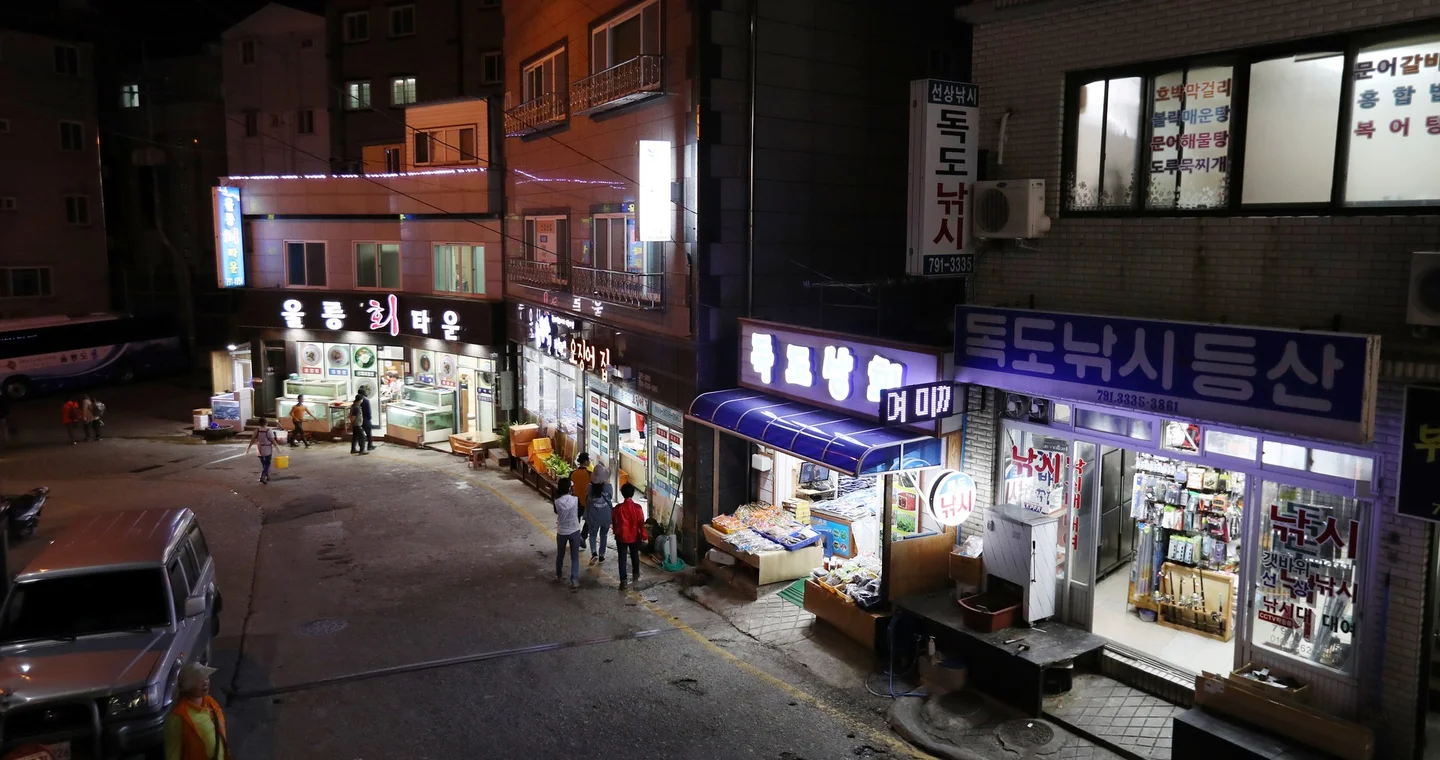
Republic of Korea from Seoul, Republic of Korea · Original · CC BY-SA 2.0 ·
The port towns are useful places to try Ulleungdo’s seafood dishes. Honghapbap is rice cooked with mussels, often served with a seasoning sauce and side dishes. It makes a satisfying cooked meal after time outdoors. Ttagaebi appears in rice dishes, porridge, and kalguksu, a knife-cut noodle soup, using small local shellfish for the meat and broth. Squid comes in several forms. Ojingeo hoe is raw squid, while ojingeo naejangtang is a soup made with squid innards and vegetables. The distinction matters if you are reading a translated menu and want a cooked dish. Ask what is available that day, then confirm the serving size and total price before ordering a seafood platter. Myeongi, a type of wild garlic leaf commonly served pickled, and mountain greens offer another taste of the island alongside seafood. If you have a food allergy, ask about the stock, sauce, and side dishes as well as the main ingredient. Menu names alone do not describe everything used in the kitchen. After dark, Dodong’s restaurant streets offer a compact place to eat and walk back to your lodging. Choose dinner before the evening gets too late, then keep the following morning’s plan tied to your actual departure port. A stay in Dodong can still end with boarding at Sadong or Jeodong, depending on the ferry you booked.