Namyangju’s Bukhangang Cafés: River Walks, Big Views, and Sujongsa Temple
Sadopaul · Original · CC BY-SA 4.0 ·
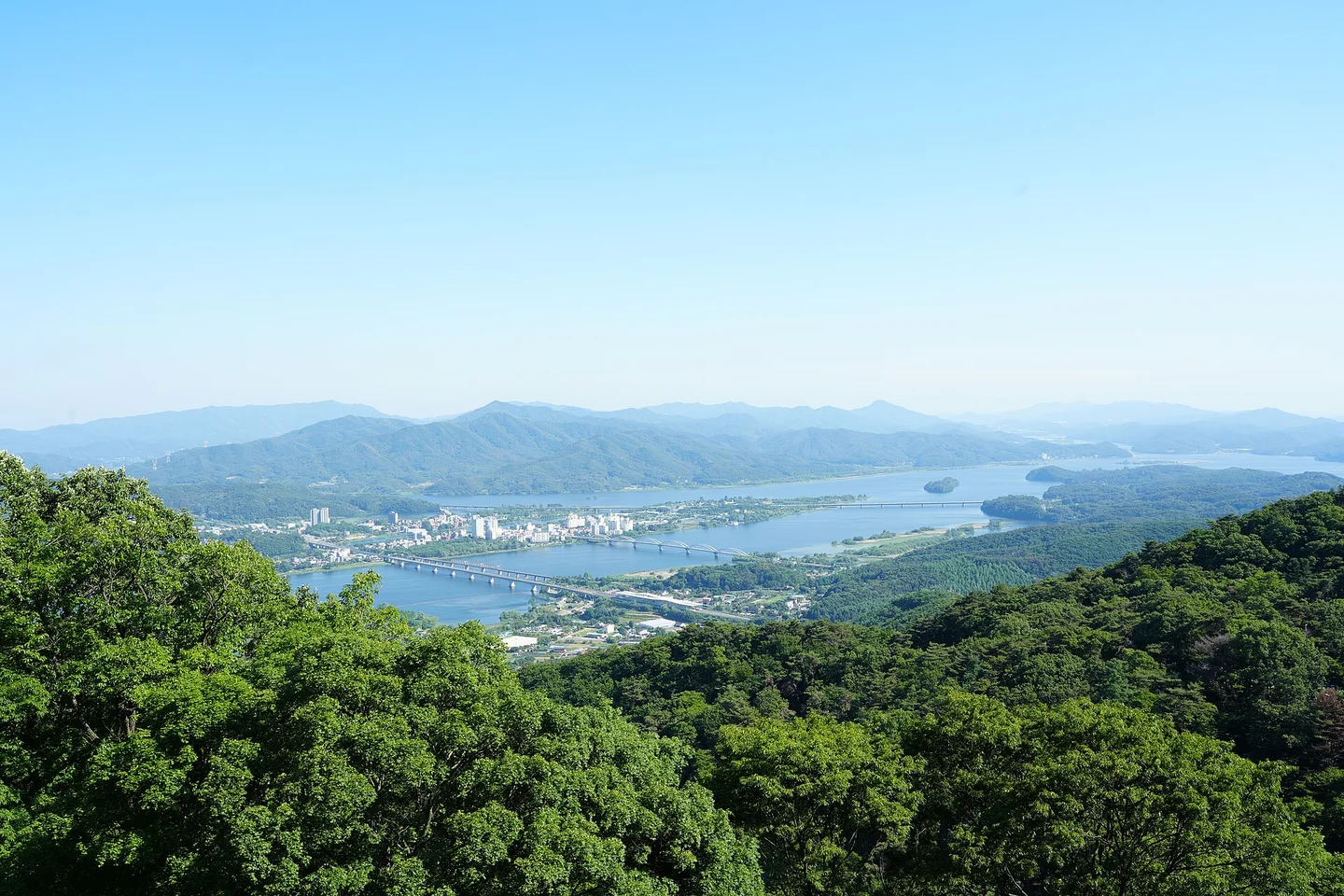
The Bukhangang River gives Namyangju’s cafés something a city coffee shop cannot: room for the view to stretch across water to wooded hills. Come for an unhurried window seat, then add a riverside walk or, for a more active day, the climb to Sujongsa Temple. The two experiences reveal different scales of the landscape, from ripples near the bank to the meeting of rivers below the mountain. This is a dispersed riverside area, not a compact café street. Places in Joan-myeon and farther north in Hwado-eup can require a separate bus, taxi, or drive. Choose one main café and one outdoor stop instead of planning to browse from door to door. Geography matters when you search. Seojong and Yangsuri, across the river in Yangpyeong, may appear beside Namyangju recommendations, but getting between them means finding a bridge and following the actual road network. Decide which bank you want to explore before comparing café interiors.
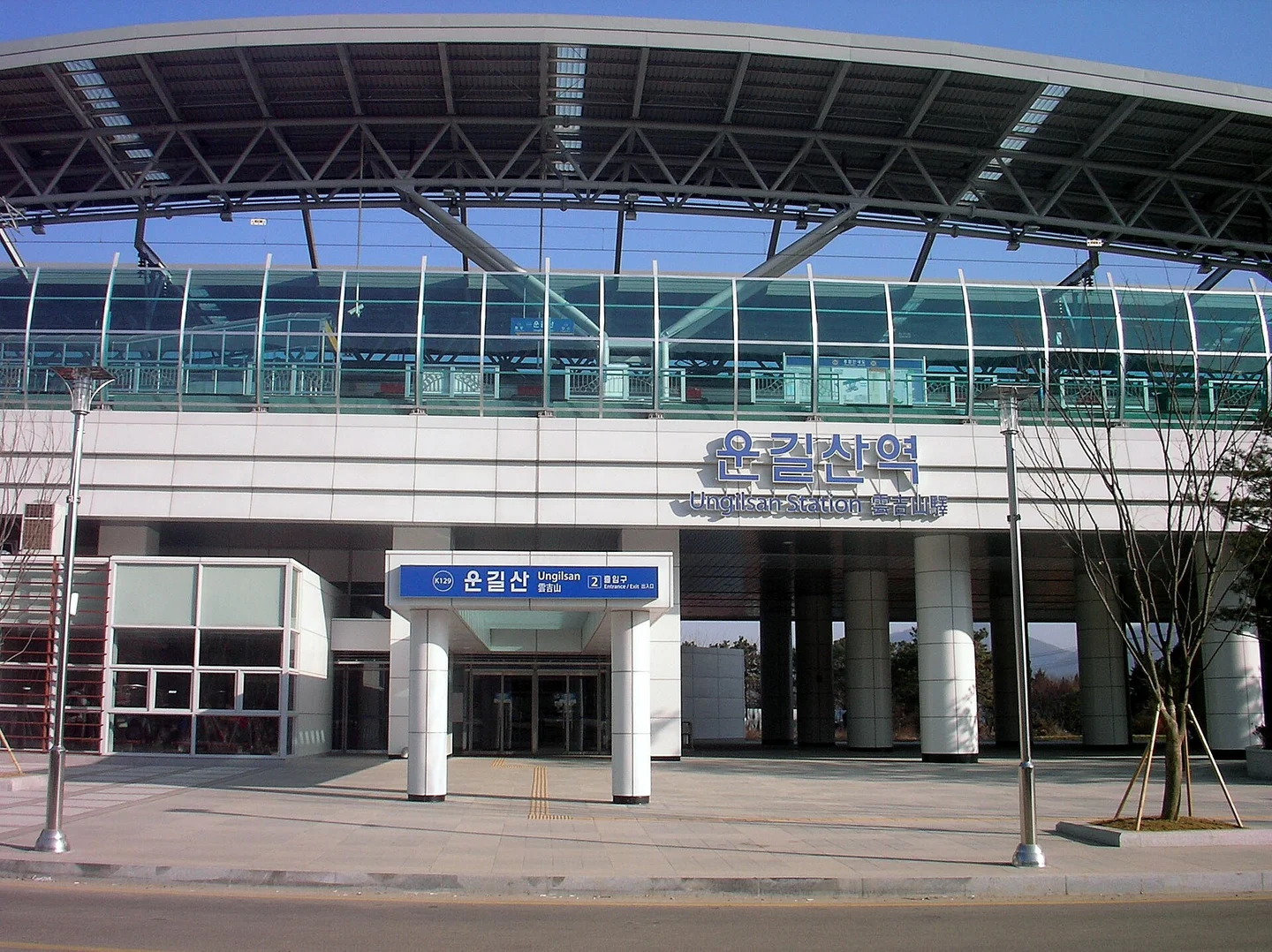
A car-free outing starts at Ungilsan Station
Integral · Original · CC BY-SA 2.0 ·
Ungilsan Station on the Gyeongui–Jungang Line is a practical base for a visit without a car. Mul-ui Jeongwon, usually translated as the Garden of Water, is accessible from the station area and provides a straightforward first stop. From there, choose somewhere to eat or have coffee whose full walking route you have checked. For a café farther along the Bukhangang, compare the final connection as carefully as the train journey. A short drive on a map can mean an awkward walk beside a road with limited sidewalk. Look at the route from the last bus stop to the café entrance, and ask the venue about access if that final stretch is unclear. If you plan to use a taxi, keep some flexibility around the return journey. A car may not be immediately available at an outlying café. For the simplest train-based day, stay around the station and riverside paths; choose a more distant destination only when its onward transport fits your schedule. Drivers have more choice, but should check parking arrangements and which direction the entrance is approached from. One well-chosen stop leaves more time by the water than repeatedly finding parking at a string of cafés.
Which café fits the day you want?
Start with how you want to spend the visit. A bakery café works well for coffee and a snack after walking. A longer conversation calls for comfortable indoor seating. A terrace is appealing in good weather, but an interior you would enjoy on a gray afternoon is a useful fallback. Families should check stroller access and any age restrictions at the individual venue. Two established names provide different starting points for your search. Café Daenerys, 카페대너리스, is described by the Korea Tourism Organization as a riverside café with vintage-style surroundings and baked goods. Its appeal is a setting where the river remains part of the room, rather than a quick takeaway stop. Starbucks The Bukhangang R, 스타벅스 더북한강R점, in Hwado offers a larger destination-store format built around river views. The operator’s introduction explains the space’s waterside design. Do not confuse it with The Bukhansan store in Seoul: one name refers to this river, the other to the mountain. Compare both places with your transport plan before deciding. Neither a familiar brand nor a scenic location tells you whether it is convenient from Ungilsan Station. Check the current menu, opening time, and parking terms for the venue you choose. If a particular view-facing table is occupied, it helps to have selected a café whose other seating you would also enjoy. For ordering, decide whether the stop replaces lunch or follows it. Bread and a drink can be a snack, while a full brunch menu requires checking the kitchen’s ordering hours. There is no reason to commit to a second meal simply because the bakery display is large.
Garden of Water, the riverside square, and the old railway bridge
Jhcbs1019 · Original · CC BY-SA 4.0 ·
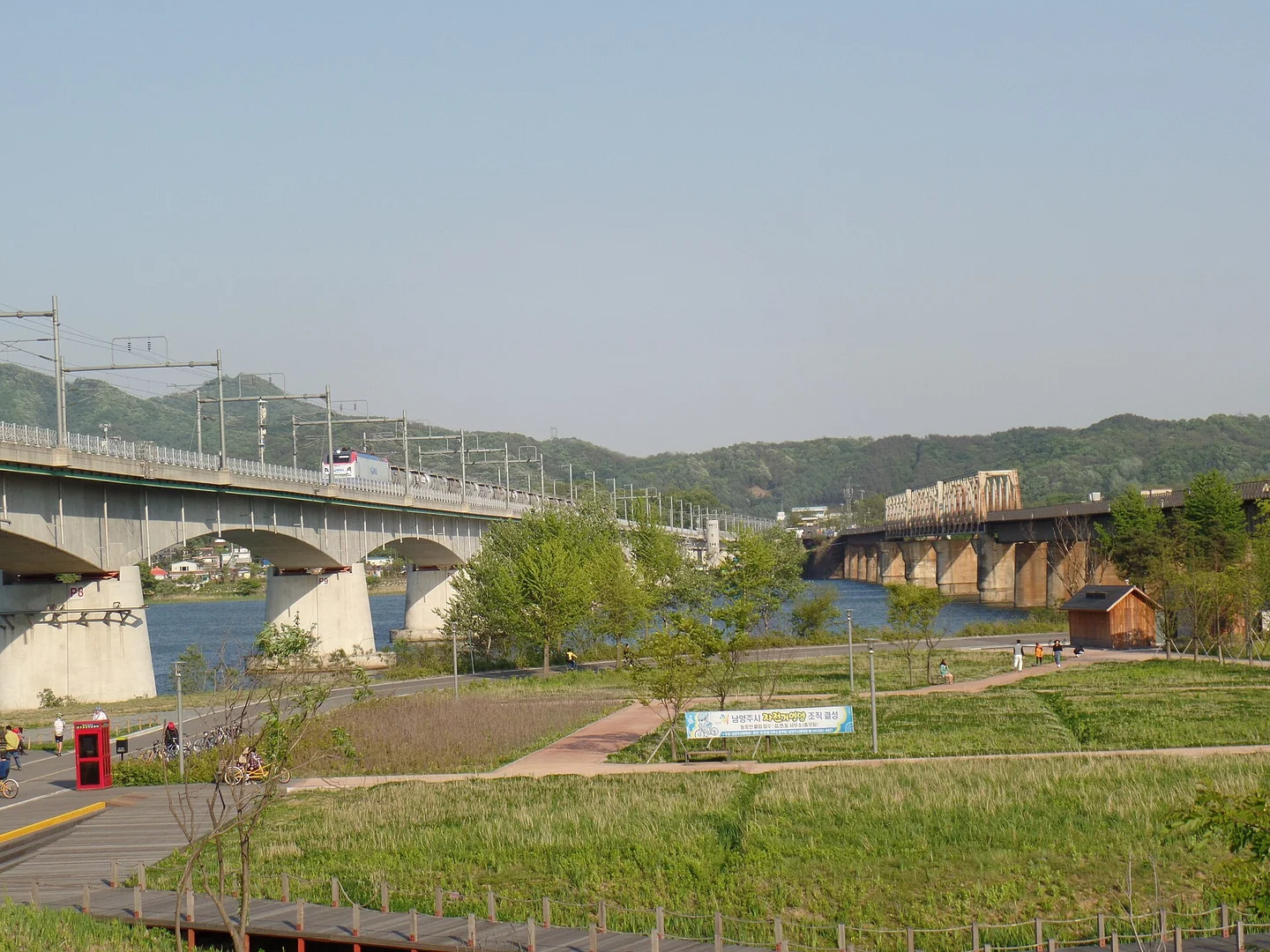
Mul-ui Jeongwon offers paths near the river, open planting areas, and views toward the opposite bank. Baetnadeuri Bridge is one of its landmarks. Seasonal flower beds add color when they are in bloom, but the underlying attraction is a walk close to the water. Namyangju’s park introduction outlines the different walking areas. Around Balgeun Plaza and the Bukhangang railway crossings, the landscape also reveals the area’s role in Korea’s cycling network. An active railway bridge and the former railway bridge have different functions; follow signs for the public walking and cycling routes. Keep to the indicated pedestrian space where cyclists share the corridor. If you rent a bicycle, choose a direction and a turnaround point before setting off. The Bukhangang and Namhangang routes are parts of a much wider network. A short out-and-back ride can fit comfortably before a café stop, whereas continuing toward another town becomes the main activity of the day. Ask the rental operator about return time and the route that matches your experience. After heavy rain, respect any riverside closure or diversion. Otherwise, you can adjust the length of the walk easily: turn back when you have had enough open-air time and keep the rest of the outing for the café.
Sujongsa Temple is a separate uphill excursion
Sadopaul · Original · CC BY-SA 4.0 ·
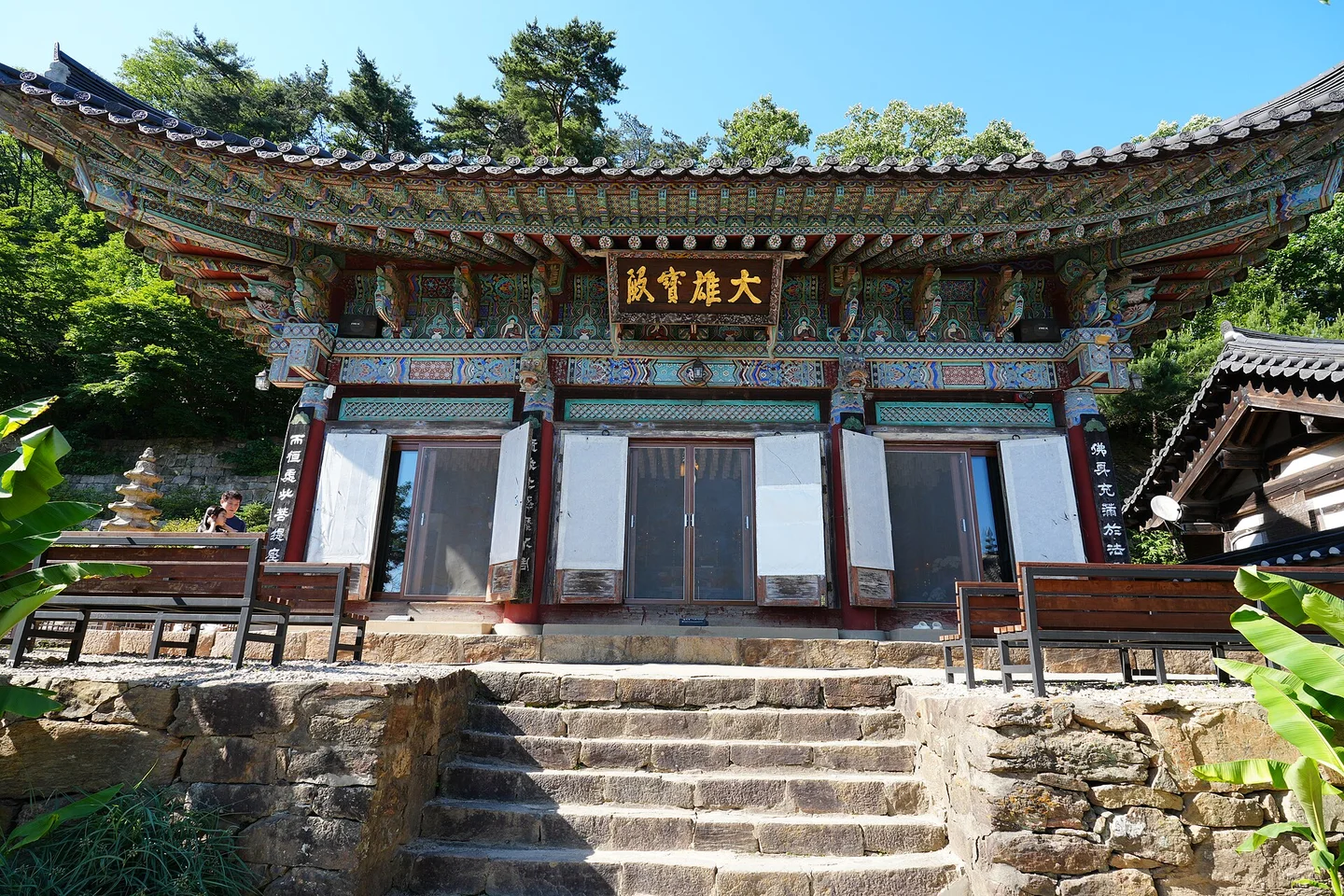
For the wider view, Sujongsa sits on the slopes of Ungilsan above the river junction around Dumulmeori. From the temple area, the water, bridges, and surrounding ridges become a coherent landscape. This is the more rewarding choice if you enjoy combining a temple visit with an uphill walk. Set aside time for the approach, slopes, and steps. A bus stop named for the temple entrance does not put you directly in the temple courtyard. Visiting Sujongsa and climbing all the way to Ungilsan’s summit are also different undertakings. Decide which one you want before heading uphill. The main hall, Daeungbojeon, and the smaller buildings sit within a working Buddhist temple. Give the grounds time beyond the viewpoint: the painted woodwork, stonework, and arrangement of the buildings add interest even when distant views are hazy.
Sadopaul · Original · CC BY-SA 4.0 ·
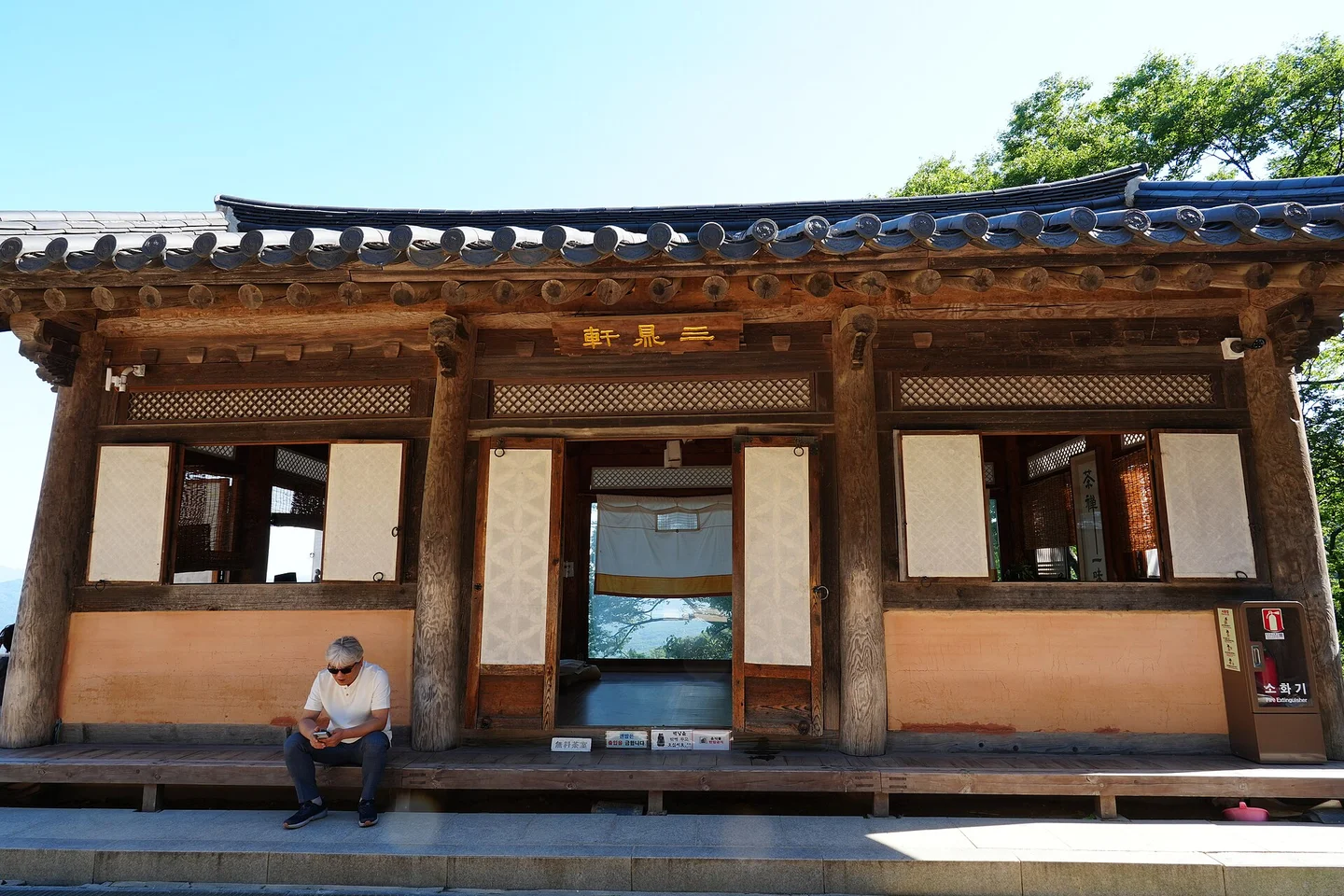
Samjeongheon, the temple’s tea room, reflects Sujongsa’s long association with Korean tea culture. The city’s account connects the place with the scholar Jeong Yak-yong and the tea master Choui. That background gives a visit here a different character from ordering coffee at a commercial riverside café. Tea-room opening and participation arrangements should be checked locally; do not make a guaranteed tea service the condition for enjoying the temple. Follow the temple’s guidance about entering halls and removing shoes, and leave time for the descent before continuing to the river.
Put the route together
For a shorter car-free day, take the train to Ungilsan, walk in the Garden of Water, and stop for food or coffee on a confirmed route back to the station. With a car, select a riverside café and add a nearby walking area. For a more active day, visit Sujongsa first and use the café as the break afterward. If a second café across the river catches your attention, check the bridge crossing and full journey before changing plans. Staying on one bank often makes the difference between an afternoon looking at the river and an afternoon driving around it.