Pocheon Art Valley: A Granite Quarry Reborn Around Cheonjuho Lake
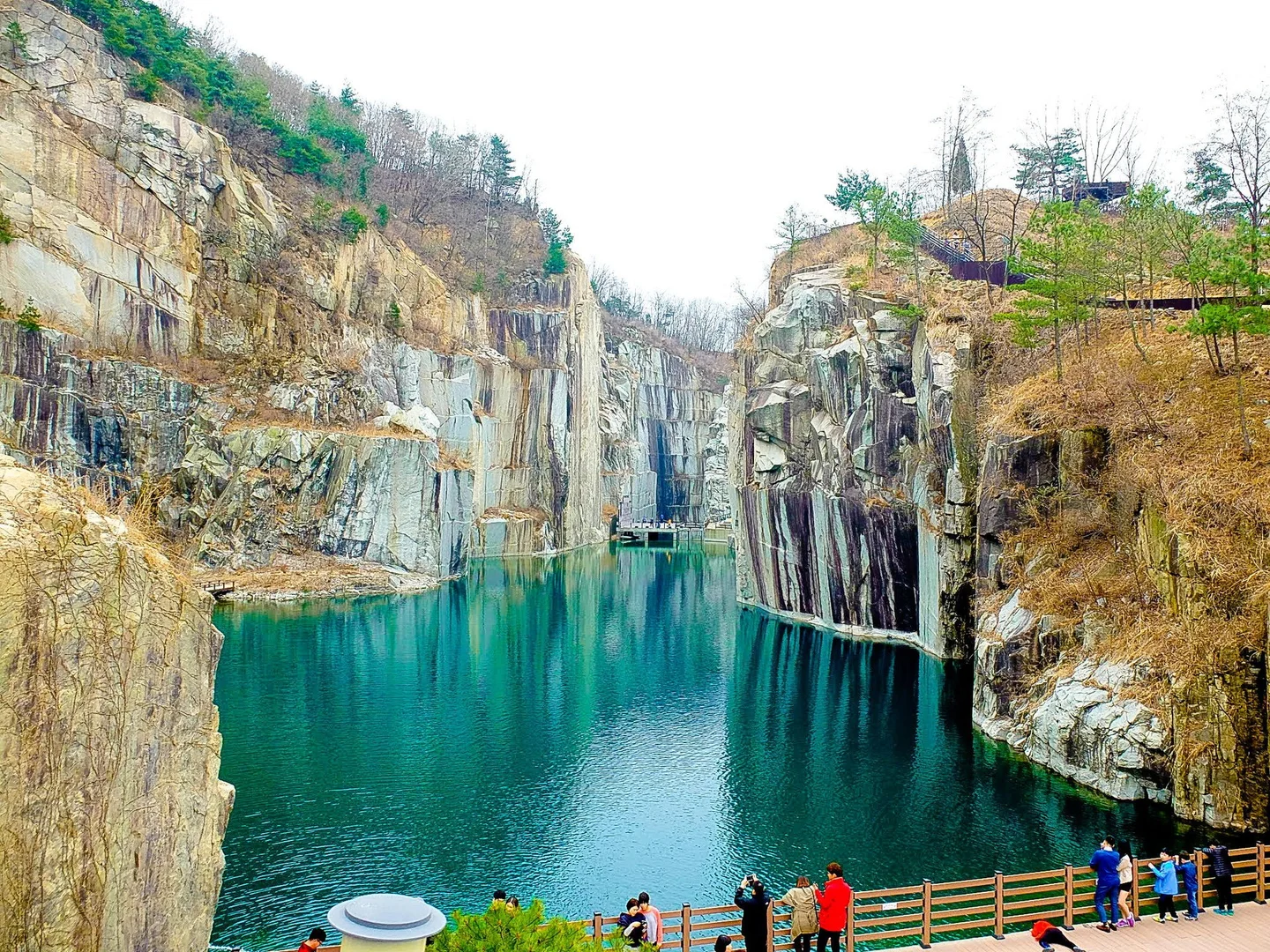
Pocheon Art Valley's most striking feature is a space left behind. Granite was cut from these cliffs for decades; water later collected in the excavation to form Cheonjuho Lake. Today, pale rock faces rise above deep-colored water, with walking paths, sculpture, and cultural facilities occupying the former quarry. The scale of the cutting is still visible, which makes the landscape more interesting than a scenic backdrop alone. Come for the lake and stay to explore how the industrial site has been reused. Outdoor art and an astronomy museum add variety, making this a good choice for families or travelers who enjoy unusual landscapes with a little history. A leisurely visit might take two to three hours, with extra time for a film screening or scheduled event. The main practical decision comes at the entrance: walk uphill or take the monorail. Either way, the upper visitor area is explored on foot, so plan the outing around both the initial climb and the walking you want to do afterward.
Admission and the Monorail: Two Separate Tickets
Seongbin Im · Original · CC BY-SA 2.0 ·
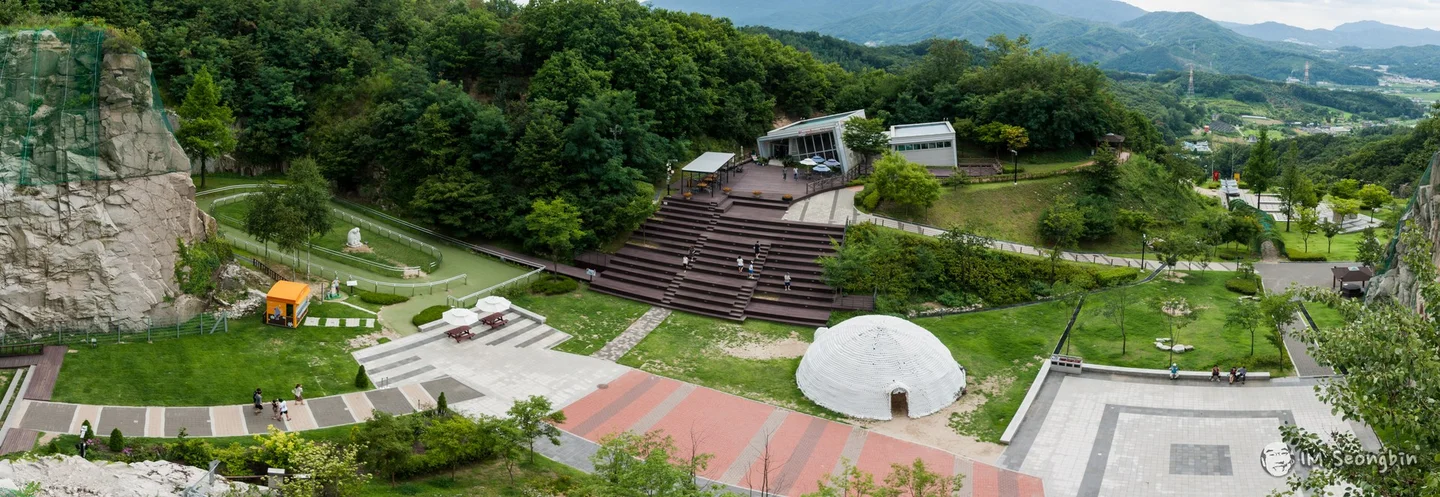
The monorail connects the lower entrance with the upper visitor area. It saves the uphill approach; it does not circle the lake or provide a seated tour of the whole park. The operator's route explanation estimates about six minutes uphill by monorail, compared with roughly 15 minutes on foot. Walking time depends on your pace, and the gradient matters more than the short distance suggests. As checked on October 12, 2026, standard adult admission is ₩6,000. For visitors from outside Pocheon, an adult monorail ticket costs an additional ₩5,800 round-trip or ₩4,800 one-way. Choose according to the return descent as well as the climb: a downhill walk can be uncomfortable for someone with knee problems. Park admission concessions and monorail discounts have separate conditions. Monday mornings are reserved for monorail maintenance, with no fixed finishing time given in the current notice. If you need the monorail to make the visit possible, confirm its operation before traveling. Wheelchair users should also ask about boarding and the upper-area route together, rather than treating the ride as a guarantee of access to every viewpoint. Once at the top, find Cheonjuho and the museum on the site map. If a film screening is important to your group, check for available reservations first, then visit the lake while waiting for your session.
Cheonjuho Lake and the Marks of the Quarry
Beeniru · Original · CC BY-SA 3.0 ·
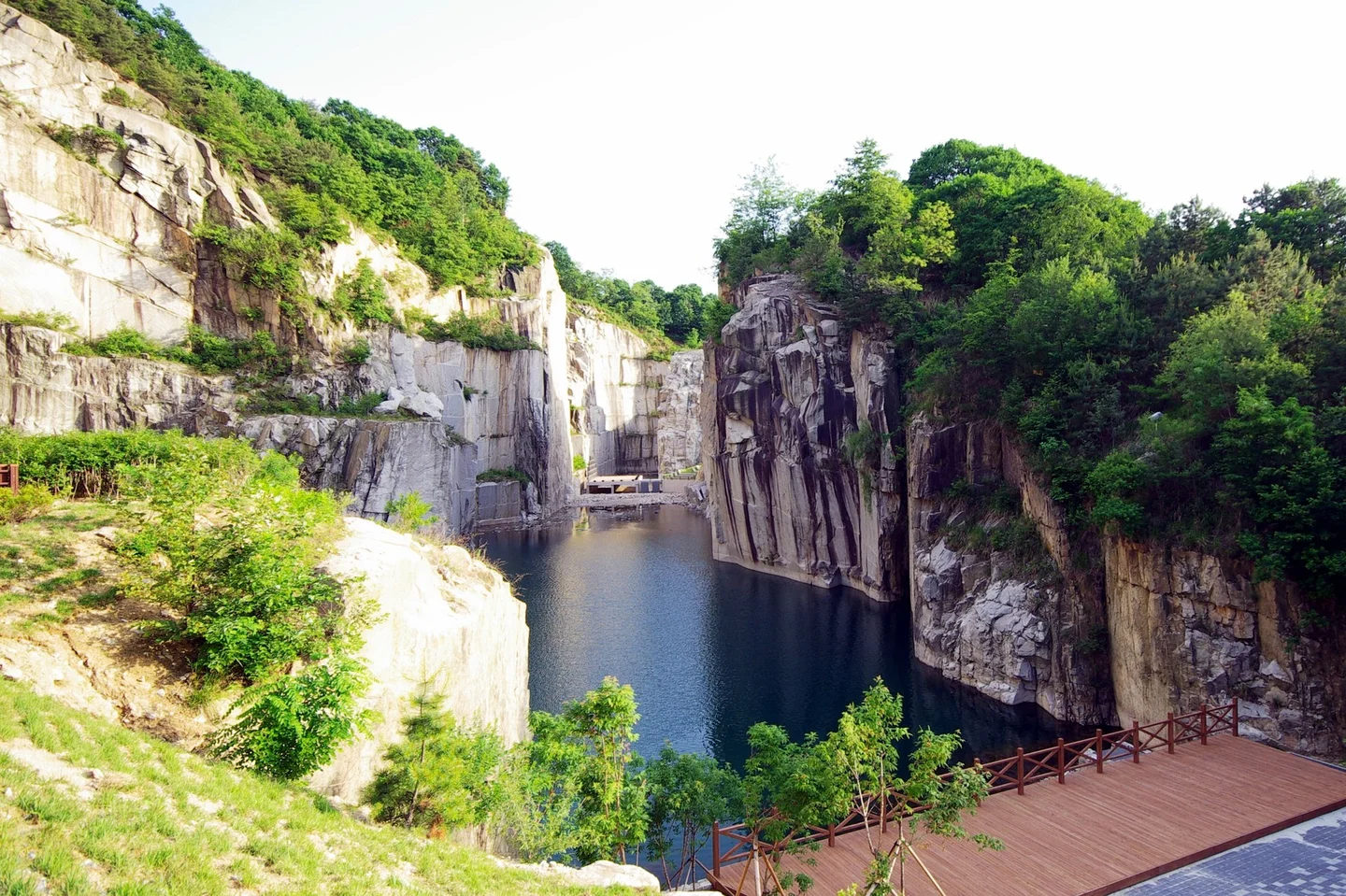
At Cheonjuho, the contrast between the water and the cut rock is the main attraction. Some cliff faces look almost architectural, with broad vertical planes and repeated lines; trees soften the upper edges. Walk between the designated viewing areas to see how the proportions change. From one angle the lake opens out, while another makes the rock walls seem to close around it. Spring water and rain filled the former excavation. Its color changes with light, weather, and the surrounding foliage, from bright blue-green to a darker reflection of the cliffs. The official lake guide explains its formation and why entering the water is prohibited. This is a lake to enjoy from the viewing paths, not a swimming or waterside paddling stop.
Beeniru · Original · CC BY-SA 3.0 ·
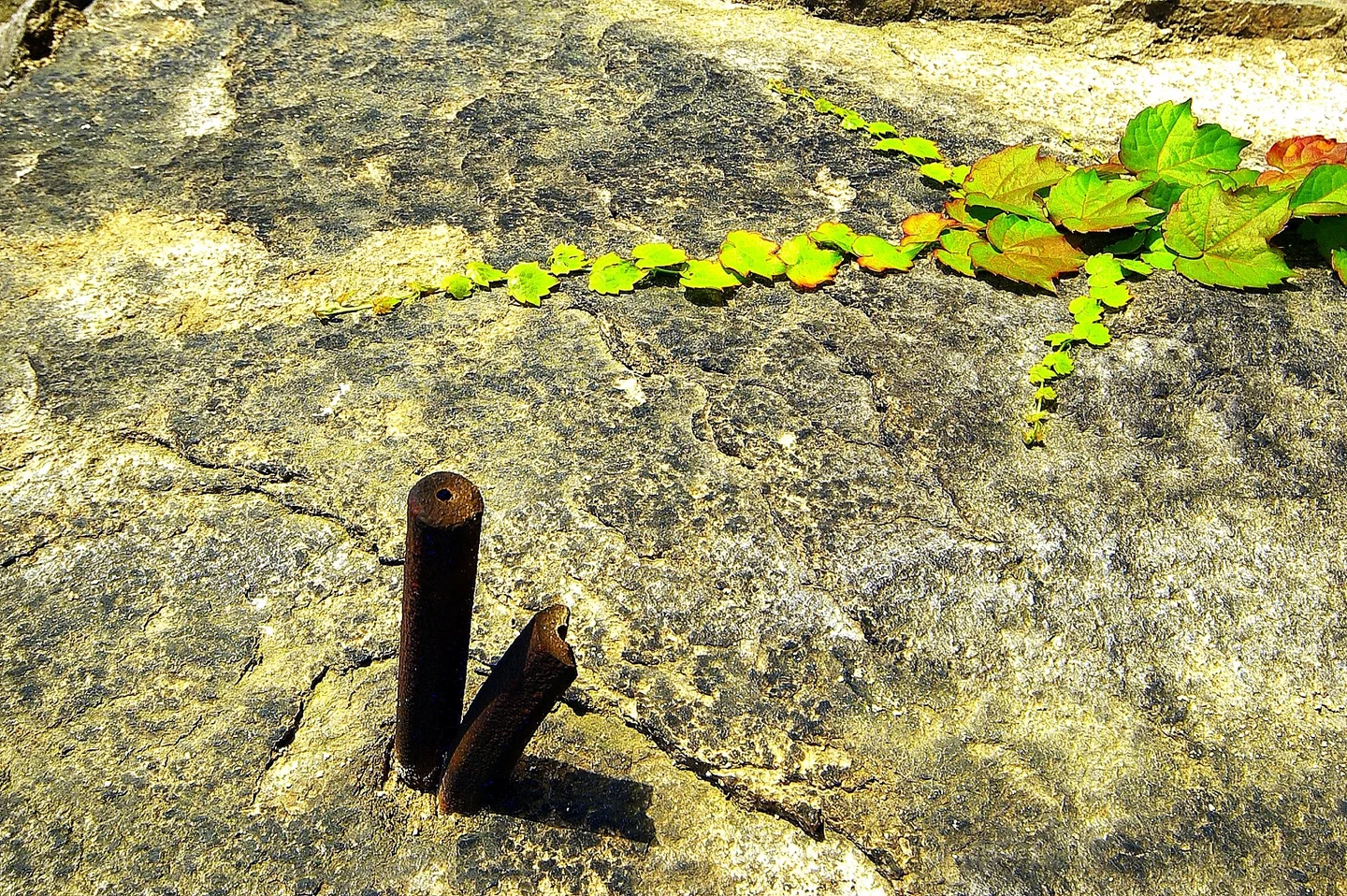
The smaller details help explain the larger scene. Look for cut surfaces and traces of quarrying in the rock beside the visitor route. Pocheon's granite supplied major buildings, and this quarry operated from the 1960s before declining in the 1990s. The city redeveloped the site as a cultural park between 2004 and 2009, retaining parts of the industrial landscape. That history of reuse is visible throughout the visit. With children, try comparing a rough fracture with a deliberately cut face. It turns the walk into a simple question about how the landscape was made, without requiring a geology lesson or collecting pieces of stone.
Sculpture and a Stage Between the Cliffs
Beeniru · Original · CC BY-SA 3.0 ·
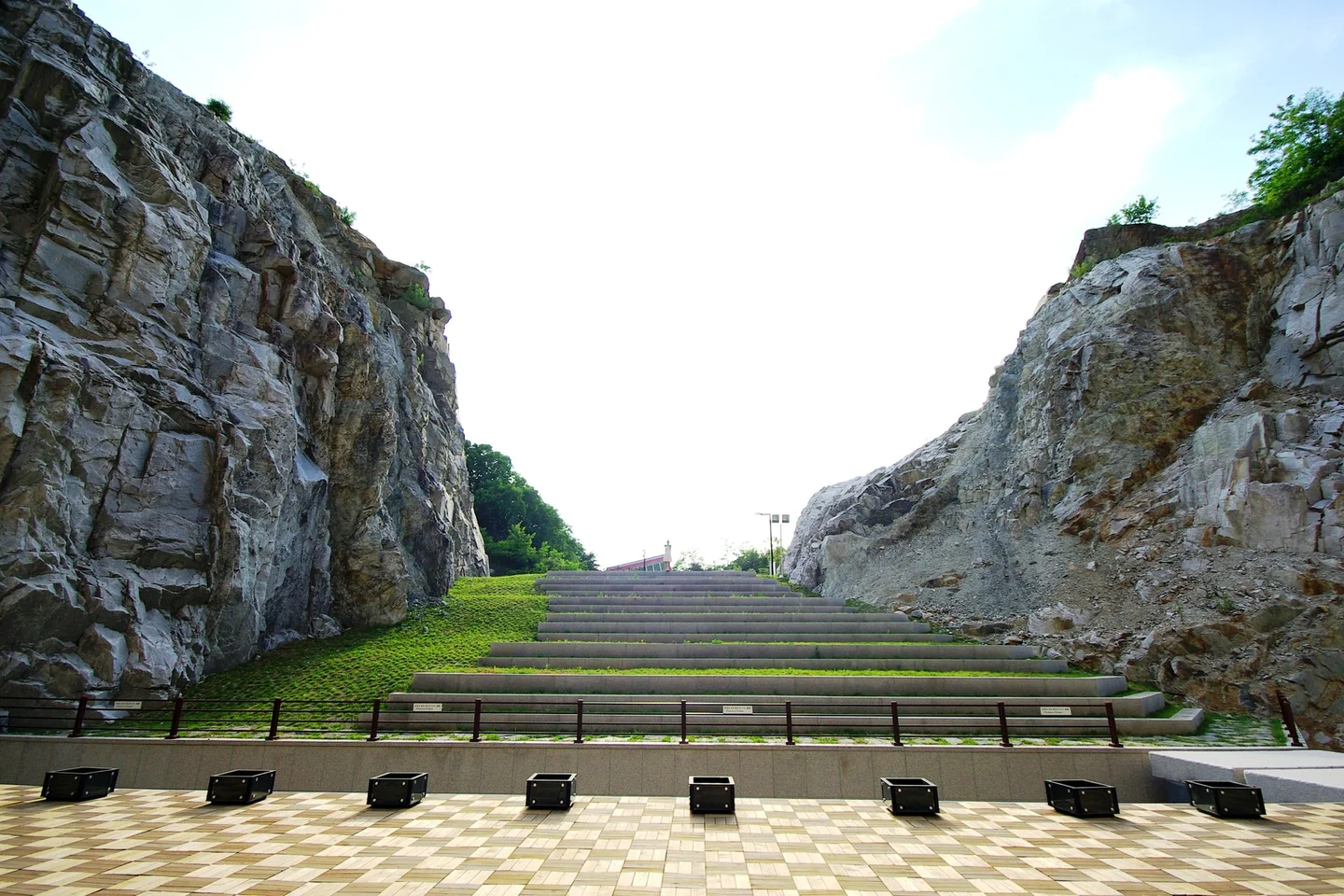
The outdoor performance spaces use the quarry's stone walls as a dramatic setting. Seating, stage areas, and the surrounding cliffs make it easy to see why the site became a cultural venue. Even without a performance, the relationship between the built space and the rock is worth a look. If seeing a show is a priority, choose your date from the event calendar; performances are scheduled separately from ordinary admission. Continue through the sculpture park for a different way of looking at the same materials and setting. Read an artwork's title after forming your own impression, or compare how a sculpture appears against rock, grass, and sky. This section makes a natural extension to the lake visit rather than a separate attraction requiring another journey. Higher viewpoints add steps and steeper connections. They are optional: the lake, main paths, and sculpture areas provide a coherent visit on their own. Groups with strollers or limited walking stamina can choose the accessible connections available that day instead of following every staircase between levels.
Adding the Astronomy Museum and a 4D Screening
The on-site Astronomical Science Museum offers space-themed exhibits and an indoor change of pace after the quarry walk. General museum admission has no additional charge beyond entering Art Valley. The museum's visitor information distinguishes the exhibition floors from the third-floor 4D theater and the rooftop observation facilities. The 4D theater uses on-site, first-come reservations. Reserve at the first-floor lobby desk or the museum's reservation machine; it is not a room you can enter at any moment during a walk through the exhibits. The current screening rules require visitors to be at least 100 centimeters tall and to occupy their own seat. Children cannot ride on an adult's lap, and additional restrictions apply to the motion seats. Telescope observation is a separate activity, subject to the program and observing conditions. If your main interest is the night sky, confirm an actual observation session rather than assuming that a late park opening includes one. Art-focused visitors can instead add the Kim Kwang-woo Art Museum, choosing an indoor stop around the current exhibition.
Getting to Pocheon Art Valley and Choosing Your Visit Time
For public transportation, distinguish Sinbuk-myeon Administrative Welfare Center bus stop from the Art Valley entrance. The operator's access guide directs visitors to an onward bus or taxi and emphasizes the long interval between connecting buses. Check that final connection in both directions. A stop that looks close on a regional map can still leave a substantial walk before the park's own uphill approach. The current opening-hours notice, checked October 12, 2026, gives 9 a.m.–6 p.m. on most days, with last admission at 5 p.m.; Saturdays extend to 10 p.m., with last admission at 8 p.m. The regular closure is the first Tuesday of the month, moving to the following day when that Tuesday is a public holiday. Facility and monorail closing times are separate. Daylight is the best starting point for a first visit focused on the cliffs, and the operator currently advertises only basic lighting at night. If bringing a dog, read the site's admission conditions before choosing a museum-based itinerary. Pets have restricted indoor access, and the monorail requires a carrier; a pet stroller cannot be used on board. Keep the upper-area walk, any indoor visit, and the return connection in the same plan so that one member of the group isn't unexpectedly left unable to join the next stop.