Suwon Chicken Street and Paldalmun: A Fortress Gate, Market Lanes, and Fried Chicken
Mobius6 · Original · CC BY-SA 4.0 ·
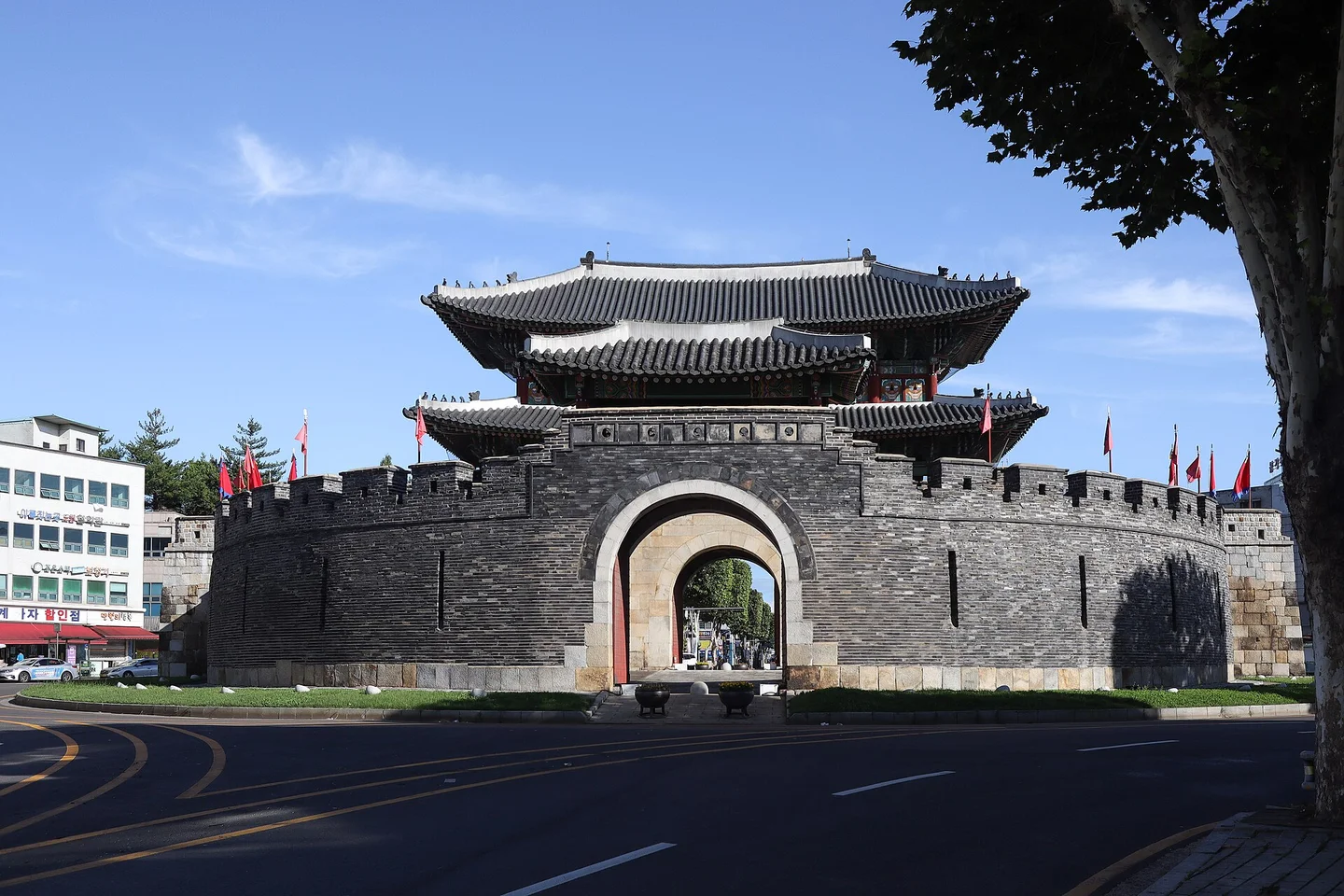
A plate of crisp fried chicken is a persuasive reason to finish a Suwon day trip near Paldalmun. Around the fortress's southern gate, traditional markets, neighborhood shops, and chicken restaurants sit within an easy walking area. You can browse fabric and food stalls, examine the gate's unusual defenses, then settle in for a meal without crossing the city again. This is a busy commercial district, with buses and traffic circulating around the historic monument. Paldalmun provides the landmark; Suwoncheon, the stream to its east, helps orient the walk toward Chicken Street. The markets have several names and entrances, so save a specific meeting point rather than simply agreeing to meet at “the south gate.” The Korean name Nammun, meaning south gate, is also used for the surrounding market area. Allow a relaxed half-day for the gate, a market walk, and a meal. If you are already visiting Hwaseong Fortress or Hwaseong Haenggung Palace, make this the food-focused end of the itinerary. From Suwon Station, leave time for an onward city bus or taxi to Paldalmun; the rail station and historic center are separate arrival points.
Read the Gate from the Surrounding Sidewalks
Piotrus · Original · CC BY-SA 4.0 ·
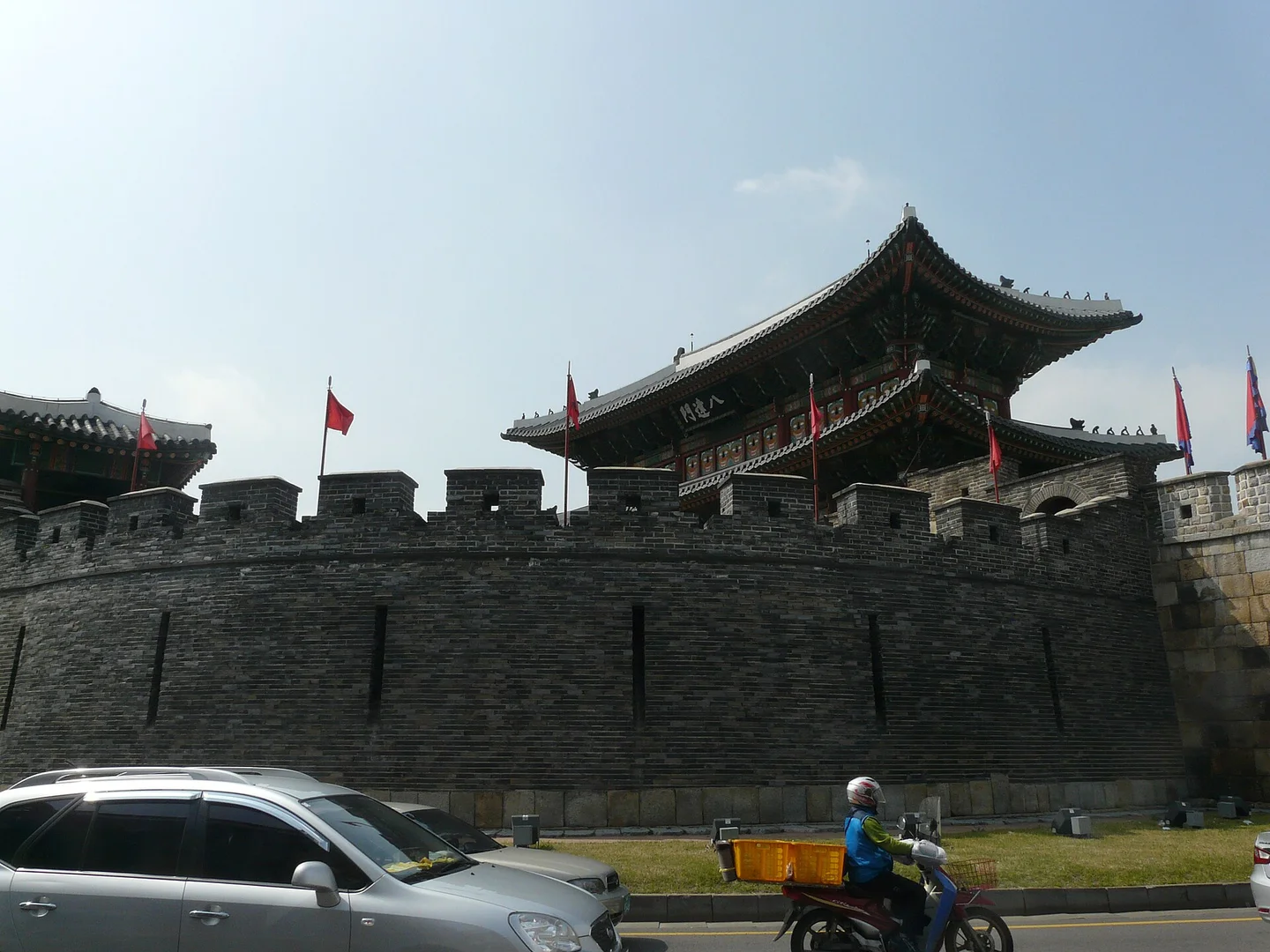
Paldalmun was built in 1794 as the southern entrance to Hwaseong Fortress. Its position on a route used by people and goods traveling from the south helps explain the markets nearby. That relationship between a defensive gateway and a trading district remains easy to understand, even with modern traffic flowing past. The Suwon Cultural Foundation's gate guide describes its history and construction. Look for three different materials doing three different jobs: the stone base and arched entrance, the brick outer defense, and the wooden pavilion above. The curved wall in front is an ongseong, a protective enclosure that makes the approach to the main gate less direct. From an angle, the layers become much clearer than they are in a straight-on view.
De-Shao Liu ( Terry850324 ) · Original · CC BY-SA 4.0 ·
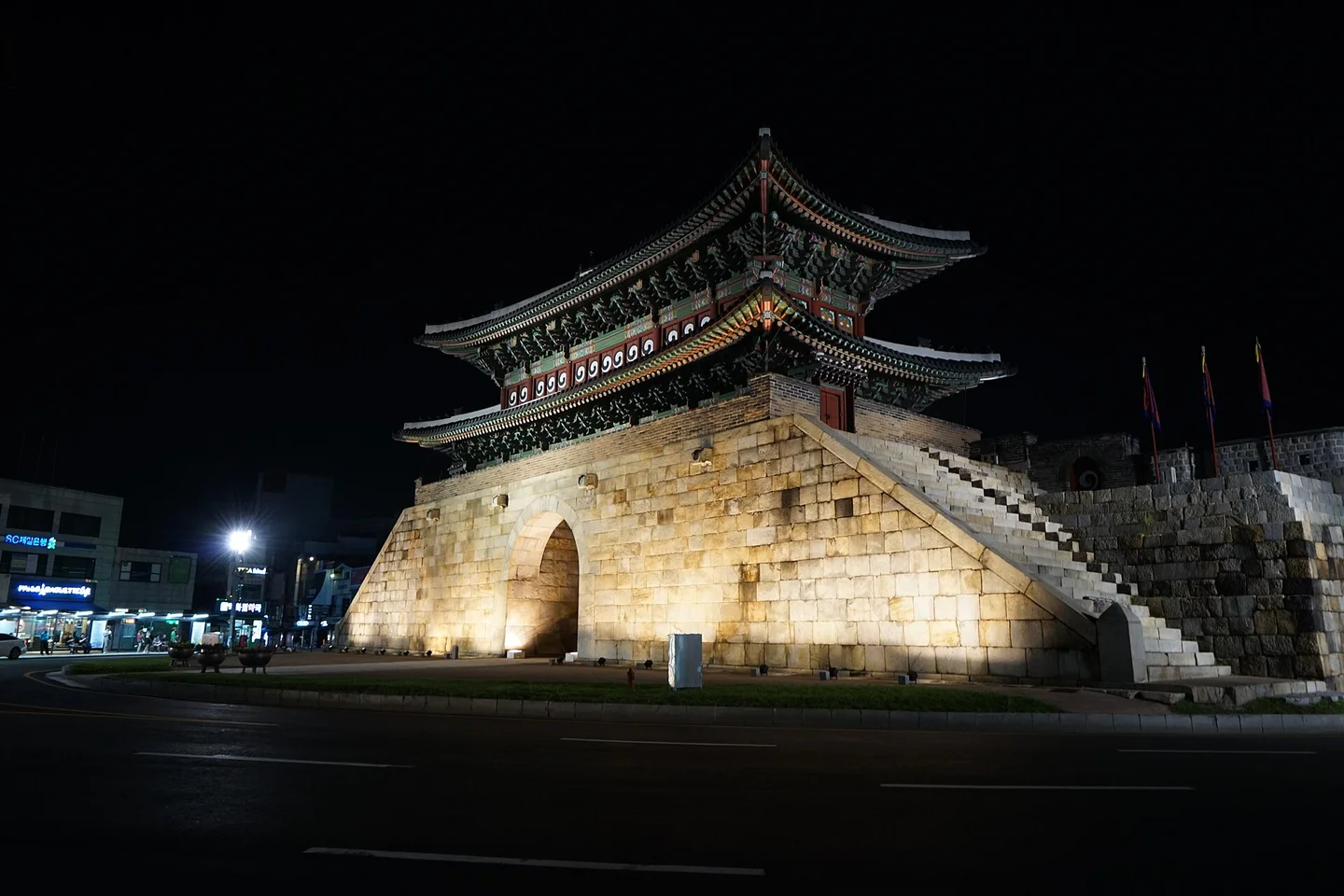
The inner face has a different profile, with the stone structure and access stairs more exposed. Make your way around using the surrounding sidewalks and designated crossings. Plan on an exterior visit and follow any posted access arrangements; a visible staircase does not establish that the pavilion is open to climb. The fortress walls no longer connect directly to both sides of Paldalmun. If you want a wall walk, identify a separate access point before setting off. Walking toward Dongnamgakru gives you the southeastern option; the Paldalsan side adds a hill climb. Both take more time and effort than circling the gate and exploring the markets below.
Choose a Market by What You Want to See
Jpbarrass · Original · Public domain ·
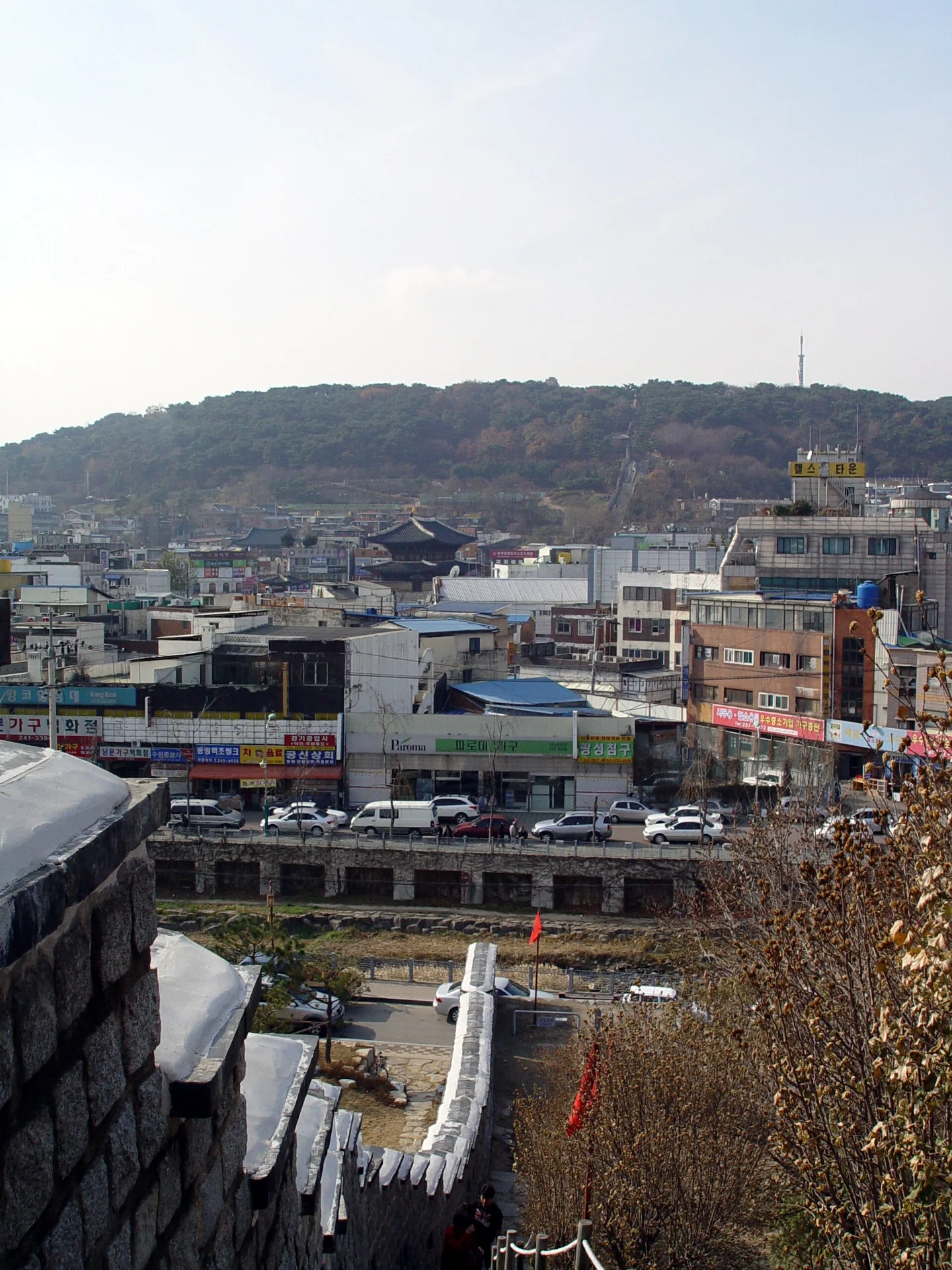
Several markets cluster around Paldalmun, and their specialties make a better guide than trying to cover every named lane. Yeongdong Market is associated with hanbok and textiles. Motgol Market focuses on everyday food shopping, including prepared side dishes, meat, and fish. Jidong Market's sundae restaurants offer another substantial lunch option. The city's traditional-market route distinguishes these neighboring stops. Sundae is Korean blood sausage, commonly made with a noodle-based filling; at Jidong, it also appears in cooked dishes such as stir-fries with intestine. It is a different meal from fried chicken, so choose the one that interests you most rather than treating every market specialty as a small snack. For a mixed group, browsing first makes it easier to agree on the main meal. If chicken is the priority, keep the market tasting modest. A few shared bites leave room for the restaurant portion, while a long grazing session may be a better lunch in its own right. Shopping works best before dinner: open restaurants in the evening do not mean that all the textile and grocery stalls are still trading. For an overview of the district, add the climb toward Dongnamgakru. From the southeastern wall area, the gate, low-rise commercial streets, and Paldalsan form a legible townscape. If you prefer to avoid steps, the market lanes and street-level route toward Suwoncheon provide plenty to explore without this detour.
What Should You Order on Suwon Chicken Street?
The restaurant cluster around Maehyanggyo and Suwoncheon is known for tongdak, or whole-chicken orders, with a tradition of frying in large cauldrons. The appeal is the hot, crisp chicken itself, served in a casual setting that works well after a day of walking. The Korea Tourism Organization's Chicken Street guide introduces the area's long-established food tradition. Start with the style you want. Plain fried chicken emphasizes the coating and meat. Yangnyeom chicken comes coated in a seasoned sauce, commonly sweet and spicy. Suwon wanggalbi tongdak uses a sweet-savory, galbi-style seasoning; despite the name's reference to ribs, you are ordering chicken, not a platter of grilled beef ribs. Menus and recipes vary between restaurants. A whole-chicken order is commonly shared. Tell the server how many people are eating and ask about the portion before ordering one each. If you want two flavors, look for a banban, or half-and-half, option. Half orders and boneless versions are not universal, so ask rather than assuming the English word “chicken” describes a single standard serving. For a weekend meal, compare the menu, available seating, and wait before choosing a restaurant. A takeaway line may work separately from the dine-in queue. If you order to go, establish the pickup time before leaving to browse elsewhere. A long restaurant wait is easier to absorb before an open-ended evening than immediately before a booked train. There is no useful single opening time for the entire street. Restaurants set their own hours and closing days, and a tourism listing describing the street as accessible around the clock is not a promise of 24-hour food service. For a late arrival, check the particular restaurant you intend to use.
Put the Timed Sightseeing Before the Meal
For a short visit, walk around Paldalmun, choose one market, and finish at Chicken Street. That keeps the afternoon compact and leaves room to linger over food. If Hwaseong Haenggung is part of the day, visit the palace before its admission cutoff, then head south for the gate and dinner. Let the ticketed attraction set the schedule rather than trying to fit it in after an unpredictable lunch queue. Suwoncheon offers a useful walking connection between parts of the district. Follow the bridges as landmarks, and use the upper streets if the lower stream paths are closed after heavy rain. Continuing north toward Hwahongmun and Banghwasuryujeong is worthwhile when you have extra time; it is a longer extension, not an essential part of a chicken-and-market visit.
Return to Paldalmun After Dinner
Kimnamhyun · Original · CC BY-SA 4.0 ·
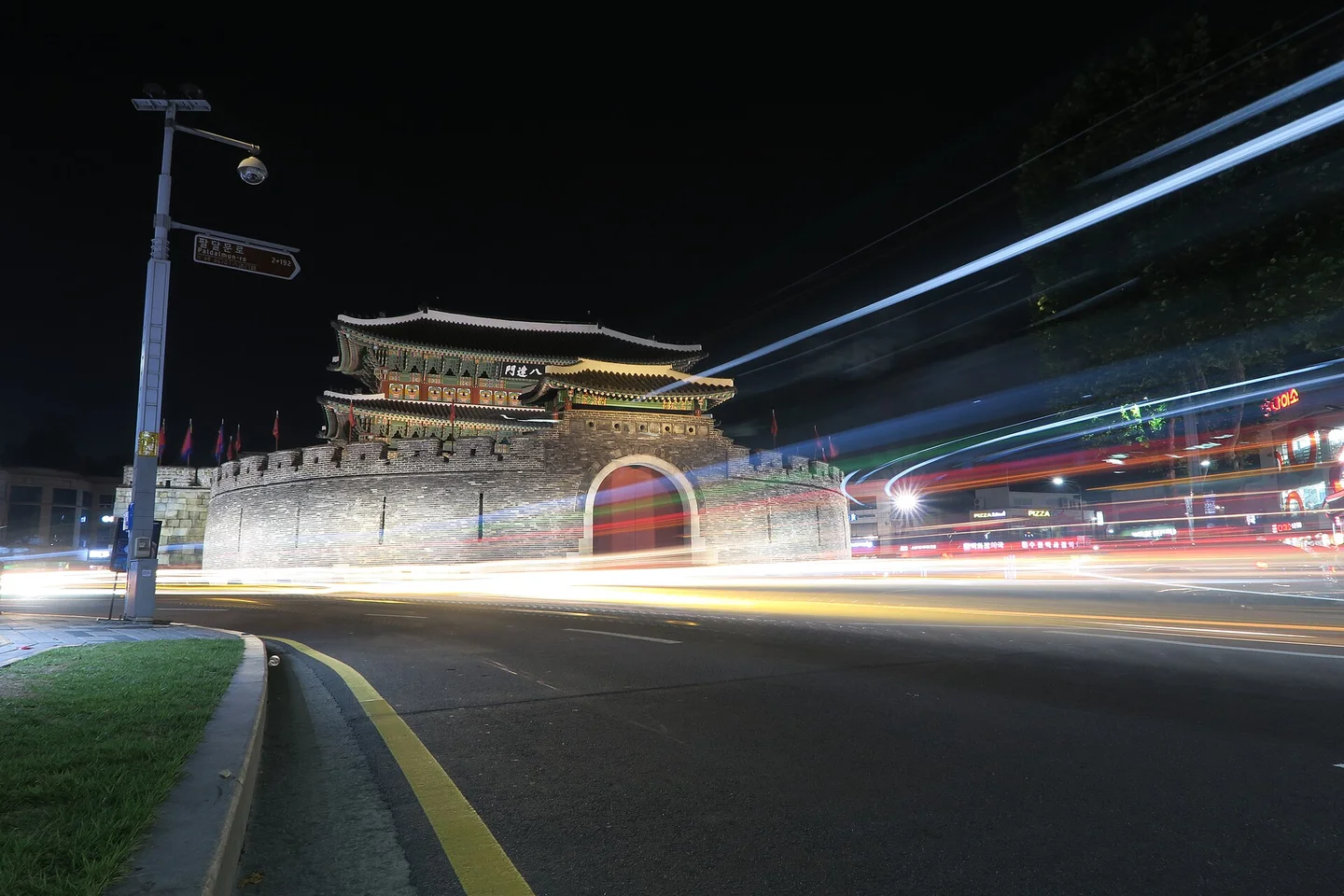
After dark, lighting brings out the wooden pavilion and curved brick enclosure above the surrounding traffic. Returning for an exterior view gives the same gate a different presence from the daytime market visit. The surrounding sidewalks are the places to stop, with the road remaining an active traffic route. Before leaving the restaurant area, locate the correct bus stop for your next destination. The return stop may not be directly opposite the one where you arrived. If you parked, plan the final market purchases and takeaway pickup on the way back to that lot. With those small logistics settled, dinner and the illuminated gate make a straightforward finish to a Suwon outing.