Icheon Ceramics Village: Studio Shopping and Pottery Classes at Yes Park
Real rism · Original · CC BY-SA 4.0 ·
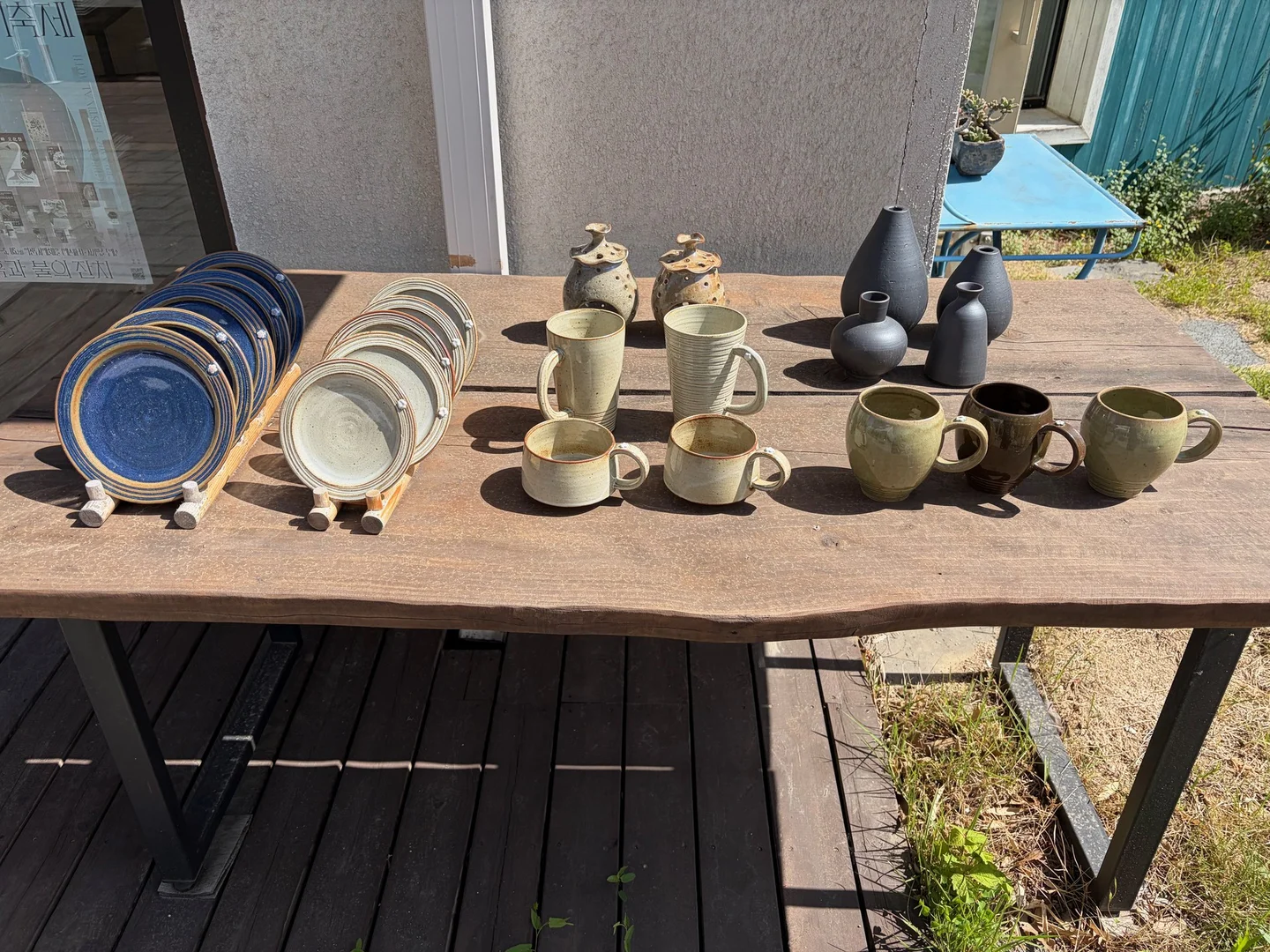
A good reason to visit Icheon is to come home with something you will actually use: a coffee cup with a comfortable handle, a small plate in a color you love, or a bowl that turns an ordinary meal into a reminder of the trip. At Yes Park, Icheon’s ceramics arts village, you can compare work across independent studios rather than choose from one souvenir shop’s selection. The appeal is the variety. Some makers emphasize restrained shapes and earthy surfaces; others work with bright glazes, painted flowers, or sculptural decoration. You can spend a few hours browsing, build the visit around a pottery class, or combine the two with lunch. An interest in good objects is enough; you do not need to know the technical vocabulary of ceramics before arriving. Icheon joined UNESCO’s Creative Cities Network in Crafts and Folk Art in 2010. That recognition concerns the city’s living craft culture, including the continuity between traditional and contemporary ceramics. Yes Park is a place to encounter that work in studios and shops, not a collection of ancient buildings carrying a World Heritage designation.
Which Ceramics Village Should You Search For?
Use “Yes Park” or “Icheon Ceramics Arts Village” when planning this visit. The Korean names 예스파크 and 이천도자예술마을 are useful for map searches. Sagimakgol Pottery Village is another ceramics destination in Icheon, while the museums around Seolbong Park form a separate area. Save the name of a particular studio as well as the village if you have a booking. For rail travel from Seoul, look at the Gyeonggang Line connection to Sindundoyechon Station, then plan the onward bus or taxi ride to your first studio. The station’s pottery-village name does not put you at the shop entrance. Use a live route search for the final connection, especially for an early class or the return journey with purchases. Once there, treat Yes Park as a neighborhood of workplaces. The official directory groups studios into areas including Gama Village, Sabujak-gil, Hoerang Village, Byeol Village, and Café Village. Pick a small cluster around your main destination, walk between those shops, and expand only if you still have time. This works better than starting at one edge with a plan to cover every street. Shop hours are set individually. As checked on October 12, 2026, the Korea Tourism Organization describes the village streets as continuously accessible but explicitly notes that store opening days vary. Contact a specific maker before traveling for their work. A festival adds stalls and special events, but an ordinary studio-shopping day has its own quieter rhythm.
How to Browse When Everything Looks Tempting
Real rism · Original · CC BY-SA 4.0 ·
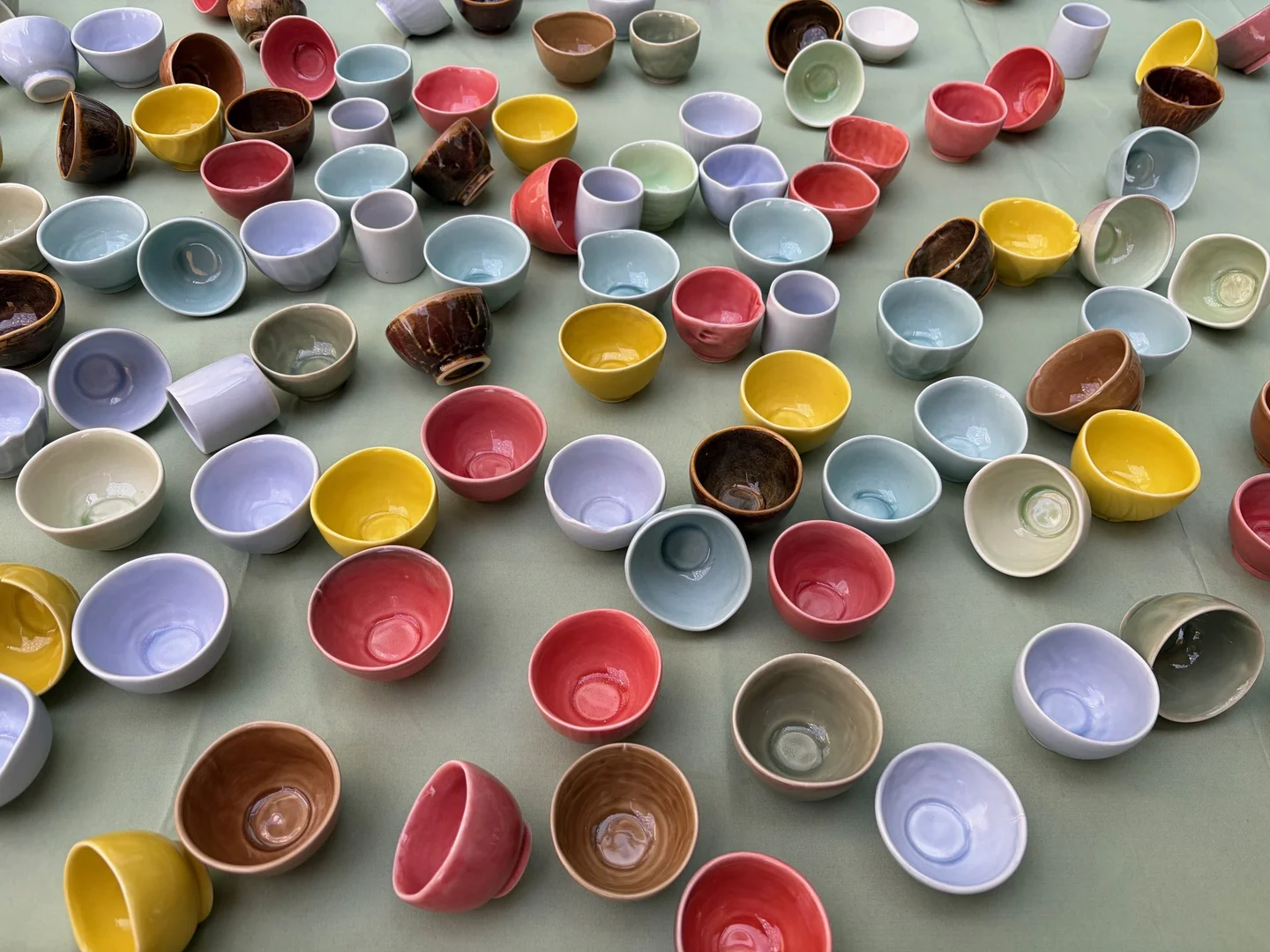
Start by comparing objects with the same job. A rice bowl’s depth affects how it sits in your hand; a plate’s raised rim changes how useful it is for sauces; a mug’s handle may matter more in daily use than its color. Choosing a category gives you something concrete to compare as you move from one studio to the next. Color is an easy way into the work. A small yellow bowl can become an accent among plain white dishes, while a group of soft blue cups can create a more coordinated setting. Think about the dishes you already own. Buying two pieces that fit your habits can be more satisfying than choosing a large matching set simply because it is displayed together.
Nurim0695 · Original · CC BY-SA 4.0 ·
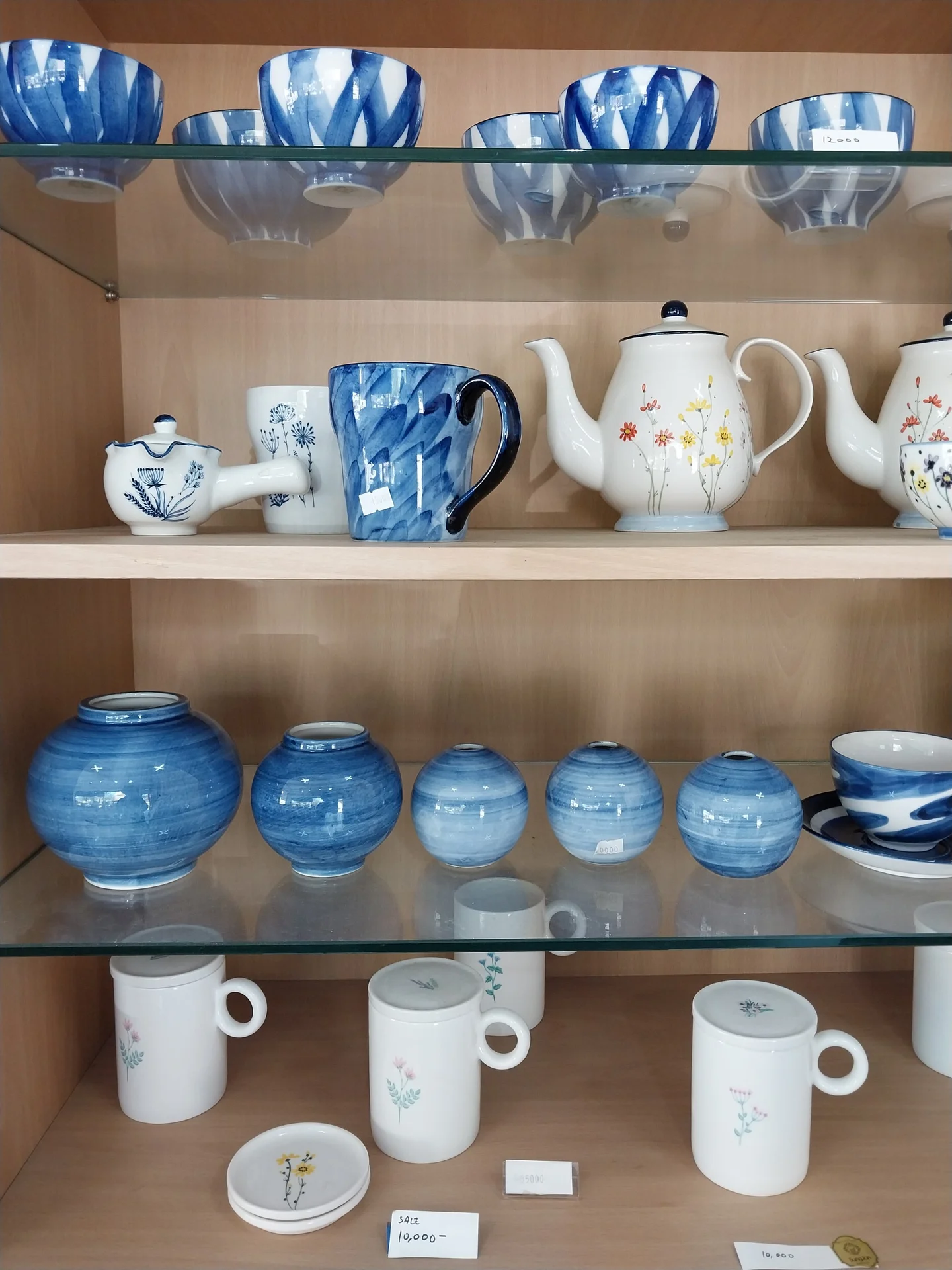
Painted ceramics reward a slower look. Broad blue brush marks, fine floral patterns, and a glossy glaze create very different effects even on similar forms. Ask how a piece was made if it catches your eye. Wheel-thrown, molded, and hand-built objects involve different processes; a display alone does not reliably tell you which was used.
Real rism · Original · CC BY-SA 4.0 ·
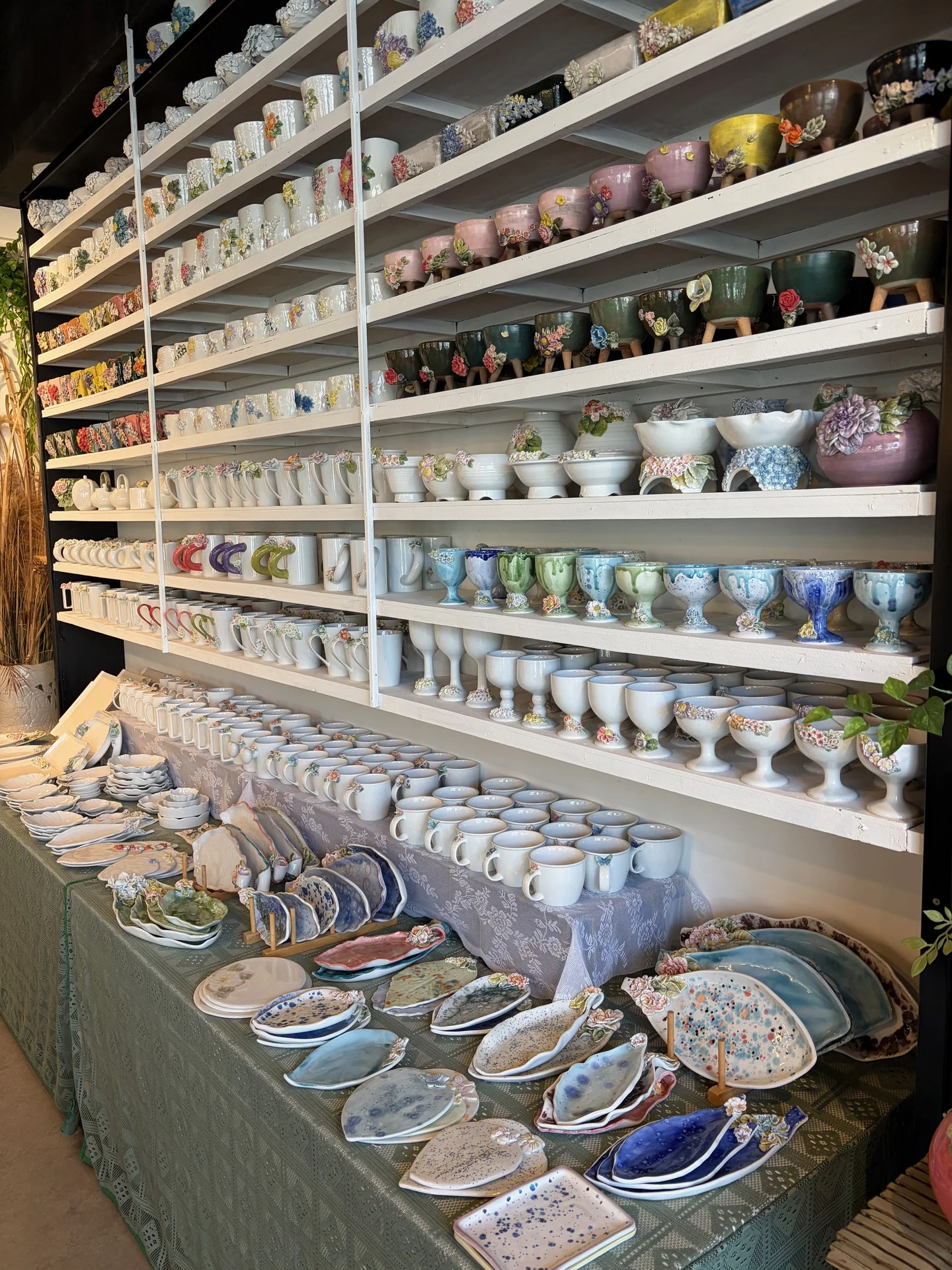
Raised floral decoration and pedestal shapes move closer to sculptural objects. They may still be functional, but their care requirements can differ from those of a plain everyday mug. Ask the maker whether the piece is intended for food, hot drinks, or decoration, and whether it is dishwasher- and microwave-safe. Those answers are more useful than a general assumption that all ceramics can be treated alike.
Real rism · Original · CC BY-SA 4.0 ·
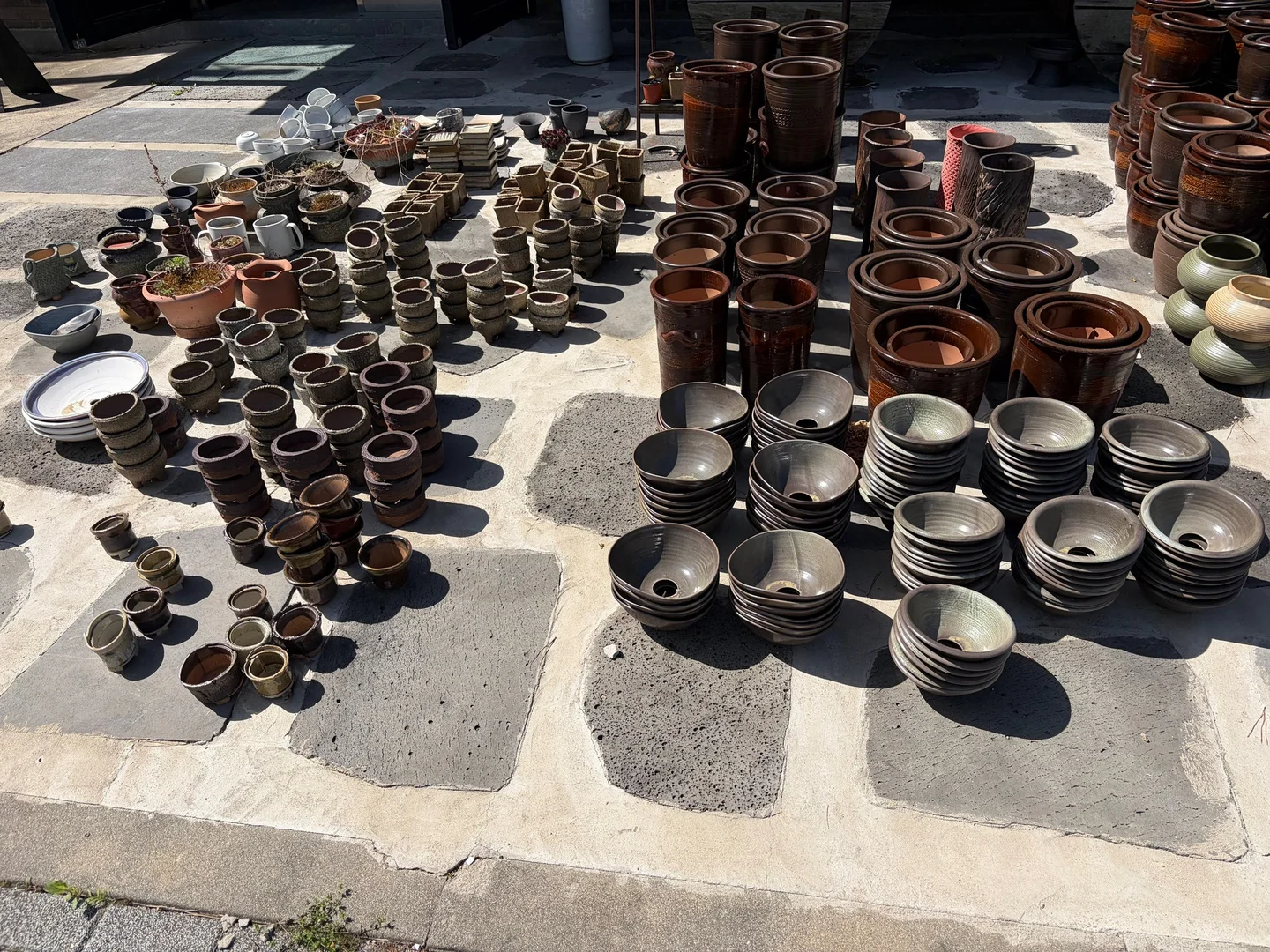
Planters and vases widen the choice beyond the dining table. Rough clay, dark glaze, and visible throwing lines can be as attractive as polished porcelain. Check the intended use before buying: a planter with a drainage hole will not serve as a watertight vase. For international travel, a small empty vessel is also easier to pack than a planted arrangement.
Choosing a Pottery Class
The village’s experience directory separates programs by studio. Wheel throwing, hand-building, and painting are different activities, so choose the process you want rather than booking the first listing labeled “pottery.” Wheel throwing centers on shaping rotating clay; hand-building lets you form an object without a wheel; painting focuses on the surface of a prepared piece. For examples to investigate, the official directory lists Radang Pottery’s wheel session with individual instruction and a second piece made independently, Studio Yul’s hand-painting program, and Hanmaru’s hand-building activity. These are useful starting points for comparing classes, not a shared village-wide timetable. Confirm the available date, duration, language of instruction, and age requirements with the studio you choose. The key question for a short-stay visitor is what happens after the class. Clay pieces generally need drying and firing before they become finished ceramics. Do not schedule a workshop on your final day expecting to put a newly made bowl straight into your suitcase. Ask for the expected completion date and whether the studio offers pickup, domestic delivery, or international shipping, including the full additional cost. If delivery is to a hotel, the completion date must fit your stay and the hotel must be willing to receive the package. If those details cannot be settled, ready-made shopping is the simpler option. You can still enjoy a class for the experience, but agree beforehand on what will happen to the finished piece.
Buying and Packing Your Ceramics
Photograph the studio name or save its map pin when you find something promising. Similar-looking streets and a succession of shops can make it surprisingly hard to retrace a favorite display. Take a café break before deciding on a large purchase, then return to that studio toward the end of the walk. Check the number of pieces in a set, ask for individual cushioning, and leave enough room in your luggage for the packaging. Thin rims, handles, and applied decorations are the vulnerable parts. Keep the maker’s care instructions and receipt with the purchase. For a handmade piece, the specific advice from its studio matters more than a generic rule about pottery. Wheelchair users will find designated accessible parking and restrooms listed in the Korea Tourism Organization’s village information, including parking areas 2 and 4. Individual studio thresholds and interiors still vary. If a particular class is the main reason for the trip, ask that studio about its entrance and workspace before booking.
Make Time for an Icheon Rice Meal
Icheon is also known for rice, and ssalbap jeongsik is a fitting lunch after browsing bowls and plates. It is a set meal built around locally grown rice, often cooked to order in a stone pot, with accompanying vegetable dishes and mains such as fish or pork. The exact spread varies by restaurant; the point is the rice itself as much as the number of side dishes. Choose a restaurant on your route back rather than assuming every rice restaurant is inside Yes Park. With a class, lunch, a café stop, and several studios, the village can comfortably fill most of a day. Add Sagimakgol or the Seolbong Park museums only as a separate transfer, after checking how much time remains for the place you came to see.